Punk rock, a genre of music that originated in the 1970s, is known for its rebellious and anti-establishment attitude. The Sex Pistols, a band from London, England, are considered the pioneers of the punk movement and their impact on the world of music is undeniable. Their raw and unfiltered sound, combined with their provocative lyrics and attitude, changed the music industry forever.
The Birth of a Musical Revolution: Punk’s Rebel Roots!
The punk movement emerged in the mid-1970s as a response to the mainstream music scene, which was dominated by commercial bands with polished and manufactured sound. Punk rock was a reaction against this, with its raw and aggressive sound, and lyrics that challenged societal norms and values. The Sex Pistols, formed in 1975, quickly became the symbol of this new movement with their anti-establishment attitude and rebellious spirit.
Punk rock was not just about the music, but also about the lifestyle and fashion. The punk subculture was associated with leather jackets, ripped jeans, and spiky hair, and it was a way for young people to express themselves and rebel against the status quo. The Sex Pistols embodied this punk spirit with their outrageous behavior, controversial lyrics, and provocative fashion.
How the Sex Pistols Changed the World of Music Forever!
The Sex Pistols’ impact on the world of music cannot be overstated. They paved the way for punk and alternative rock bands that came after them, and their influence can still be heard in music today. Their debut album, “Never Mind the Bollocks, Here’s the Sex Pistols,” is considered one of the greatest albums of all time and it has inspired generations of musicians.
The Sex Pistols were not just a band, they were a cultural phenomenon. Their rebellious attitude and provocative lyrics challenged societal norms and values, and they became the voice of a generation. They influenced not just music, but also fashion, art, and politics. The Sex Pistols’ impact on the world of music is a testament to the power of rebellion and the importance of challenging the status quo.
In conclusion, the Sex Pistols were more than a band, they were a symbol of rebellion and the pioneers of a musical revolution. Their impact on the world of music is still felt today, and their legacy continues to inspire future generations of musicians. The Sex Pistols’ rebel roots are a reminder that music has the power to challenge the status quo and change the world. So, turn up the volume, and let the punk rock spirit live on!
Are you ready to get down to some music that will get your heart pumping and your toes tapping? Look no further than Reggae Roots Rock Punk! A fusion of three of the most vibrant and energetic genres in music, this style is sure to get you moving and grooving. Let’s dive in and explore what makes this unique genre so special.
Uniting Music’s Most Vibrant Genres: Reggae, Roots Rock, and Punk!
Reggae Roots Rock Punk is a genre that brings together the best of three different musical styles. Reggae music, originating in Jamaica, features a distinctive beat and a focus on social justice and equality. Roots rock, on the other hand, is a style that evolved from 1970s rock and roll, featuring a mix of blues, folk, and country music. And finally, punk rock – a genre that emerged in the 70s with a focus on anti-establishment themes and high-energy performances.
As you can imagine, bringing together these three styles creates something truly unique. Reggae Roots Rock Punk music is characterized by its fast-paced rhythms, catchy melodies, and socially conscious lyrics. It’s a style that has something for everyone, whether you’re looking to dance, sing along, or just rock out.
Get Your Groove On with the Ultimate Reggae Roots Rock Punk Playlist!
If you’re ready to experience the best of Reggae Roots Rock Punk, then it’s time to put together the ultimate playlist. Start with classic reggae tracks like Bob Marley’s “Redemption Song” and “No Woman No Cry.” Move on to roots rock legends like The Band with “The Weight” or Bruce Springsteen’s “Thunder Road.” And finish things off with some high-energy punk rock from bands like The Clash and Bad Religion.
Don’t forget to include some of the newer bands that are making their mark on the Reggae Roots Rock Punk scene. Bands like The Interrupters and The Aggrolites are bringing a fresh sound to the genre that’s sure to get you moving.
So put on your dancing shoes and get ready to experience the best of Reggae Roots Rock Punk. It’s a style that’s sure to put a smile on your face and a beat in your step.
In conclusion, Reggae Roots Rock Punk is a genre that’s not afraid to break the rules and create something entirely new. It’s a style that’s sure to appeal to music lovers of all stripes, whether you’re a fan of reggae, rock, or punk. So the next time you’re in the mood for some high-energy music that will get your blood pumping, give Reggae Roots Rock Punk a try. You won’t be disappointed!
When we think of Hawaii, we often imagine the beautiful beaches, the hula dance, and the sweet sound of ukuleles. However, did you know that Hawaii has influenced some of the greatest musicians of all time, including one of the greatest dancehall artists of all time, Buju Banton? In this article, we’ll explore how Buju Banton’s connection to Hawaii has influenced his music and helped him become the king of dancehall music.
Buju Banton: The King of Dancehall Music
Buju Banton, born Mark Anthony Myrie, is a Jamaican reggae and dancehall artist who has been active in the music industry for over three decades. With his unique voice and powerful lyrics, Buju Banton quickly became one of the biggest names in dancehall music. He has won numerous awards, including a Grammy for Best Reggae Album in 2011, and he has collaborated with some of the biggest names in the music industry.
Hawaiian Roots: Buju’s Connection to the Island
Buju Banton has a special connection to Hawaii, as his mother, Merlene Collins, is from the island. Growing up, Buju spent time in Hawaii and was exposed to the culture, music, and language of the island. This influence can be heard in his music, as he often incorporates Hawaiian rhythms and melodies into his songs. In fact, his album ‘Inna Heights’ features a track called “Hawaiian Son,” which is a tribute to his Hawaiian roots.
Bringing Island Vibes to the World: Buju’s Musical Journey
Buju Banton’s musical journey has taken him all over the world, but no matter where he goes, he always brings a little bit of Hawaii with him. His music has been influenced by the island’s laid-back vibe and beautiful scenery, and he often uses Hawaiian instruments in his songs, such as the ukulele. Buju’s music has helped to spread the island’s culture and has brought people from all over the world together through the power of music.
In conclusion, Buju Banton’s connection to Hawaii has not only influenced his music but has also helped to spread the island’s culture to people all over the world. His unique sound and powerful lyrics have made him one of the greatest dancehall artists of all time, and his love for Hawaii can be heard in every song he produces. So the next time you’re listening to Buju Banton, listen closely, and you might just hear a little bit of Hawaii in his music.
A life that is so far from where I am now, took place starting at age 14, when I first caught on to the skinhead idea. I remember in July and August of 1992, when the standoff with Randy Weaver happened on his property between his family on government agencies. I remember watching in horror as the feds first invaded his property without a warrant, and killed young Sammy Weaver who was Randy Weaver’s 14 year old son. He was my age, and the government just wiped his existence off of the face of the earth, and shot him in the back none the less.
Then they sniped his mother Vickie Weaver while she was in her own home, holding their new born baby. I really didn’t know much about the backstory, why they wanted to kill Randy Weaver’s family so bad. Why Janet Reno had such a vendetta, or why this small American family was in the crosshairs of snipers on their own property. But one thing that I definitely noticed was the only visible presence that was standing up against the dark forces that was killing this family, were the skinheads. There were a wide variety of skinheads and white nationalists standing up against the feds, and making a lot of noise about what is going on.
While in some ways this was negative attention, it was in fact for most of the standoff the only presence that was resisting this tyranny. Despite that most of my friends were rockers, skaters and 2nd wave hippies, I didn’t really care. I wanted to resist also. What happened to young Sammy Weaver infuriated me! So I shaved my big blue mohawk off, and I started changing my outward appearance to protest. It was this year that I started tattooing my body as well. By the time I was age 15, I had been hanging out with punkers, and I talked my friend Irick into giving me a tattoo of a spider on the side of my head. Then I continued to get more and more tattoos.
I disconnected from my main group of friends. The friends that had came to all of my birthday parties, and who I skated with daily. They went off on the faux hippy thing, and I was a skinhead. Plus my parents had separated once again, and had moved apart from each other. So I had moved in with my grandma who lived several towns away from where I went to elementary and middle school. I think it was at this point I got sort of jaded and cynical and I started telling racist jokes. It was basically the same jokes that I heard my father tell, and also ironically the same jokes that I heard Eddie Murphy and Richard Pryortell. However, here I am as a self identified skinhead, and telling racist jokes. It was sort of ironic, especially knowing who my friends were, being that even in Utah which is a mostly white state, that at least as many of my close friends were not white as I had friends who were white. Many of my girlfriends, the girl who taught me who to drive stick shift at age 15 and several of my close mates were either Native American or Hawaiian.
It wasn’t long after this period, when I was still 15 years old that I moved out of my grandma’s house and then moved in with my cousin whom I grew up with and her self-identifying skinhead boyfriend, who also happened to have a swastika tattooed on his ankle. I lived with two of my cousins during this period. My gay cousin, who I once lived with at my grandma’s house, and then later lived with her and her gay lover for a few months when I was 14-15, and then I moved in with my other cousin who lived with the skinhead. It was sort of a paradox. However my gay cousin had the skinhead and my other cousin living with her, and randomly after a verbal disagreement, the gay cousin called the police on the skinhead and my other cousin and turned them in for growing marijuana. At this point, trust was destroyed and I stopped talking to the gay cousin after this, and I lived in 3 different homes with the skinhead and my other cousin. We spent about 2 years together, got a lot of tattoos together, skated together, and traveled together. We eventually both moved on from the skinhead identity, at least the identity that we had been accustom to. My cousin’s boyfriend grew dreadlocks, and I got tattooed with a bunch of anti-racist tattoos from a new movement that I was trying to start.
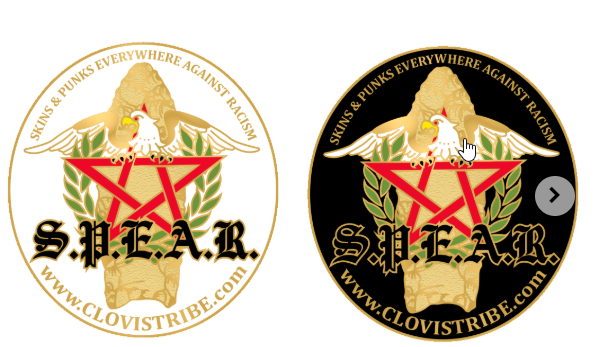
At the age of 17 I got my first anti-racist tattoo on my foot that said S.P.E.A.R. Which was a new and never coined acronym, and it meant Skins and Punks Everywhere Against Racism.
Skins and Punks Everywhere Against Racism
A year later when I was in Southern Utah, I got a tattoo on my chest that said the same thing, S.P.E.A.R. I made a stand on this, because my gay cousin and others tried to lump me in with racist skinheads. I was venomously against racism, and I worried that my non-white friends would be hurt by this association. So I made a solid stand against racism, and disconnected from the two racialist skinheads that I knew, which was my cousin’s boyfriend and his best friend at the time. I moved to Seattle, and I got into activism, getting signatures for medical marijuana and environmental causes. I got an earth tattooed on my shoulder and more tats about my love for activism and the earth. My gay cousin ever since I was 15 has tried to portray me as an oppressor of gays and others, she does this with pretty much every aspect of her life, always a victim. But I wasn’t going to let that hold me down, or effect the world that I lived in to be influenced by racism. She complains now saying that I got racist tattoos removed from my body with laser surgery, but despite living with her for years, both at my grandma’s house, and with her and her gay lover, she has no photo evidence of me having racist or nazi tattoos. I had a recent spat with her, and I challenged her to produce some evidence of this. I have plenty of evidence going back as far as age 17 showing pictures of my anti-racist tattoos, and as far back as age 12, where I have pictures of me with my arms around Native American girlfriends. Yet she, nor ANYONE else will EVER be able to produce photos of me with racist or nazi tattoos. So I will let that issue lay where it lies. It is unfortunate though that people need to dream up oppression and abuse that doesn’t exist. This is no different that you see these days in pop-culture with “social justice warriors”. But one thing is clear, when I was 15 years old, this gay cousin was 24 years old. When I was 15, she was a friend, she bought me alcohol, she bought me drugs like ephedrine (trucker speed), and sniffed inhalants with me. We had good times, until I started siding with skinheads, and then all of the sudden I am an oppressor. She was always larger than me, either in height or in size. So her faux oppression story is just so sad and so typical.
These are some past videos that I made on this subject;
When I was a kid I knew a few guys that called themselves “SHARPS” and they would hang out at dance clubs that I went to. This stands for “Skin Heads Against Racial Prejudice”. One of these guys attended a computer user group that I went to every week, and he was a classy guy. But the reason that I never brought myself to be a part of this group, is that these people for the most part we like the typical gangsta thugs, who craved violence and drank a lot. I neither liked violence nor did I drink much. It was almost like if these kids were in an inner city like Compton, they would be bloods or crips. Their cause against racism was lost or veiled in negative violence and lifestyles. One guy named Chad Wilright, was sort of their “leader”, and he ended up in jail multiple times for beating his spouse, and many of his little friends were cool unless they were around Chad, and then they followed the leader quite a bit. I remember having good conversations with a guy who was in the SHAPRs and wasn’t my friend from the computer user group. He was half black and half white, named Octavio, and he was one of the most reasonable, and logical people that I have ever met. But I just couldn’t bring myself to be in a “gang”. Which is why I started S.P.E.A.R. Which to me was a statement to stand in solidarity with others against racism, but was not a gang in anyway.
One thing that I loved then and still love now about skinhead, was the music. I loved SKA when I was a teenager, and I saw many SKA shows like Mighty Mighty Bosstones and local bands in Utah like Swim Hershel Swim and Stretch Armstrong, and later starting at age 17 I go in to roots reggae. Since my wife and I got married many years ago, we have saw many reggae shows, with our kids too. Our first concert together was Reggae Sunsplash with UB40. This is skinhead culture 101.
Skinhead was born in the mid-1960’s in the UK with a unique combination of both white working class culture and Jamaican reggae, which then formed the genre of SKA, or otherwise known as Skinhead Reggae.
At this current time in our lives, we live in the Caribbean which has been my plan for retirement since I was 20 years old. I told my life 15 years go when I met her, that we would be retired in the Caribbean by the time I am 40. I am 40 now, and we are retired in the Caribbean. We have sweet sweet reggae shows going on all around us, and lots of good vibes. I still hold a candle for righteous skinhead culture.
This is the story of skinhead, in the video below. What an amazing documentary.
To buy a pin for the S.P.E.A.R movement and show your solidarity against racism, use the button below.
Skins and Punks Everywhere Against Racism
As an after thought, I wanted to point out a modern version of what I consider skinhead culture, without the same name.
This is a great movement IMHO the Poud Boys, which was started by conservative political commentator Gavin McGinnis, in response to the psychotic Antifa movement.
It has people of all creeds and colors, and essentially they hold all of the same conservative values that I have held for most of my life.
The Proud Boys differ from SHARPs in the same ways that I did as a kid, yet still have that traditional skinhead vibe.
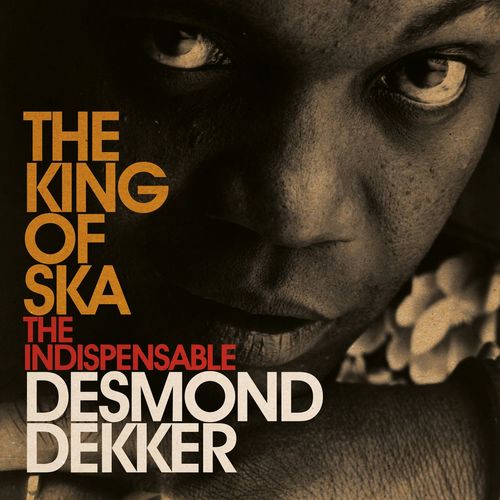
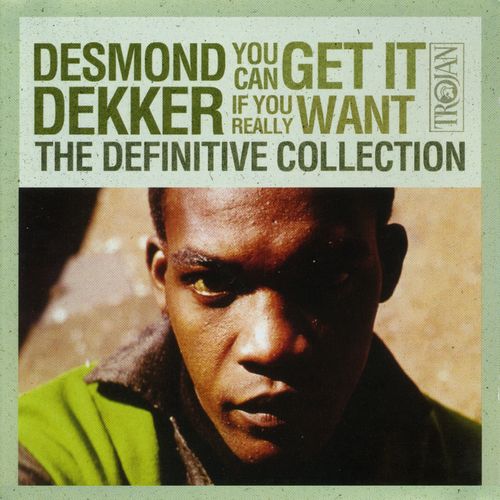
Desmond Dekker was a Jamaican ska, rocksteady and reggae singer-songwriter and musician. Together with his backing group the Aces, he had one of the earliest international reggae hits with “Israelites”. Other hits include “007”, “It Miek” and “You Can Get It If You Really Want”.Wikipedia
Jamaican reggae singer and songwriter, leader of Desmond Dekker & The Aces.
Born : July 16, 1941 in Kingston, Jamaica.
Died : May 25, 2006 in Thornton Heath, Surrey, England.
Often cited as the first superstar of reggae. He made his recording debut in 1963 (with a single titled “Honour Your Mother And Father”) and made his international breakthrough with “007 (Shanty Town)” in 1967.More
On 180-gram audiophile vinyl. Rock-solid 12-track Trojan set of skinhead reggae faves by Symarip, The Pioneers, Desmond Riley, Derrick Morgan, The Charmers and others! (“ORIGINAL SKINHEAD REGGAE CLASSICS”)
Track Listings
Disc: 1
1. Skinhead Moonstomp – Symarip
2. Skinheads a Bash Them – Claudette & the Corporation
3. Trouble in the Town – Dandy Livingstone
4. Skinhead Speaks His Mind – the Hot Rod All Stars
5. Skinhead Revolt – Joe the Boss & Joe’s All Stars
I don’t really care much about this Tekashi 6ix9ine crap, nor do I like his music. I have been following this case however, because anytime I see the FBI getting involved in the life of a high profile person of influence, it grabs my attention.
Well it was interesting to find out while I have been following this case, that the prosecutors in the case reveal that they had a confidential informant planted in the mix with the blood gang that Tekashi 6ix9ine was affiliated with. Apparently there was someone very close to this cliche that had been wearing a wire, and had been reporting back to the FBI.
The advice that the elders gave Daniel Hernadez AKA 6ix9ine would have been well served if he would have listened to them.
I myself have always said, don’t talk about your business, especially around people who you have questionable feelings about, and don’t talk on the phone.
I am not a fan of his, buy I do sympathize with him. He is an adult, but a very young adult, who got caught up in something way bigger and badder than he can handle.
I will say that I believe the lowest vessel in the human species next to a pedophile is a snitch.
The skinhead subculture was originally associated with black music genres such as soul, ska, rocksteady, and early reggae. The link between skinheads and Jamaican music led to the UK popularity of groups such as Desmond Dekker, Derrick Morgan, Laurel Aitken, Symarip and The Pioneers. This is a very disruptive and easily identified culture or genre of music, which it is definitely both. Their music and social niche was disruptive in the 1950s and 1960s Britain, because these were white working class lads listening to West Indies Reggae and SKA music and going to the bar with other lads of all different backgrounds and ethnicity, so simply celebrate being alive and doing their best in life.
Some of the original founders of what would be “Skinhead” or “Skinhead Reggae”, or “Original Skins” or “Trad (Traditional) Skins” and many other various names.



 Skinhead Reggae Hour Disruptarian Radio


Submit a Comment