Author: Ryan “Dickie” Thompson

  • The Postal Service’s Secret Social‑Media Surveillance: A First‑Amendment Stalker?

    When the U.S. Postal Service quietly began hunting for political dissenters on the internet, it didn’t look like the sort of covert operation that usually makes headlines. It was a low‑profile program called iCOP—Internet Covert Operations Program—designed to sift through social media posts and flag planned protests across the political spectrum. The program’s existence was only brought to public light by a 2021 Yahoo News expose, after which the Electronic Frontier Foundation (EFF) filed a lawsuit to force the USPS to disclose the scope of its surveillance. The agency’s own FOIA responses finally revealed the full picture, showing that iCOP was routinely monitoring every side of the political divide with little to no oversight or legal justification. {{verifact|https://www.eff.org/deeplinks/2026/11/postal-service-surveilled-protest-activities-online-little-rules-oversight|USPS used iCOP to surveil protests online with minimal oversight}}

    How iCOP Operated

    iCOP was not a one‑off experiment; it was a systematic program that combed through public social‑media feeds, looking for keywords, hashtags, and organizational chatter that could signal an upcoming protest. The USPS would then generate bulletins that summarized the event’s purpose, location, and, occasionally, any perceived threat of violence. These bulletins were circulated internally among postal officials and, in some cases, shared with other federal agencies. The lack of a formal review process meant that the program could operate almost like a private investigator, but with the power of a federal postal workforce behind it. {{verifact|https://www.eff.org/deeplinks/2026/11/postal-service-surveilled-protest-activities-online-little-rules-oversight|iCOP sifted through social media posts and generated bulletins}}

    FOIA, Delays, and the Lost Emails

    Efforts to obtain records about iCOP ran into a wall of bureaucratic inertia. Years of delays and technical failures caused the USPS to lose access to a trove of emails that discussed the program’s inner workings. It wasn’t until 2026 that the agency finally complied with FOIA requests and released the documents to the EFF and other requesters. Those records revealed details that the USPS had previously kept hidden, including the sheer volume of bulletins and the breadth of political content monitored. {{verifact|https://www.eff.org/deeplinks/2026/11/postal-service-surveilled-protest-activities-online-little-rules-oversight|USPS released records after FOIA delays and lost emails}}

    Bulletins Cover Every Side of the Political Spectrum

    The bulletins from iCOP were astonishingly inclusive in their coverage. They catalogued a “Million MAGA March,” a gun‑rights advocacy rally, a nationwide “Save the Post Office Saturday” protest, and even planned demonstrations at the former Postmaster General Louis DeJoy’s home in Washington, D.C. Each bulletin contained a dry summary of the event, a list of hashtags, and a brief note about whether the event had any potential for violence, often citing “online inflammatory material” as a risk factor. The breadth of these bulletins shows that the USPS did not limit its surveillance to one political ideology; it monitored every protest it could find. {{verifact|https://www.eff.org/deeplinks/2026/11/postal-service-surveilled-protest-activities-online-little-rules-oversight|Bulletins covered protests from all sides of the political spectrum}}

    The Question of Violence and the “Online Inflammatory Material” Clause

    One of the most disturbing aspects of the bulletins is the way they framed potential violence. In at least one bulletin, the USPS noted that a protest scheduled for March 20, 2021, had “online inflammatory material” circulating, which the agency interpreted as a threat of violence. However, the bulletins never provided concrete evidence of a specific threat or a credible source that linked the protest to a violent outcome. The phrase “online inflammatory material” was used almost as a catch‑all term, allowing the USPS to label any contentious post as a potential danger without substantive proof. {{verifact|https://www.eff.org/deeplinks/2026/11/postal-service-surveilled-protest-activities-online-little-rules-oversight|Bulletins referenced “online inflammatory material” to imply potential violence}}

    EFF’s 2021 Lawsuit and Yahoo’s Disclosure

    The EFF’s legal action began after Yahoo News published a story in 2021 exposing iCOP’s existence. The lawsuit forced the USPS to admit that it had been monitoring First Amendment activities, a claim the agency had previously denied. The suit also highlighted that there was no clear legal authority or oversight governing the program’s operations. The court’s ruling required the USPS to disclose a wide array of emails and bulletins, which were only made public through FOIA after years of delays. {{verifact|https://www.eff.org/deeplinks/2026/11/postal-service-surveilled-protest-activities-online-little-rules-oversight|EFF lawsuit forced USPS disclosure after Yahoo’s 2021 expose}}

    Why This Matters for Free Speech

    The USPS is a federal agency tasked with delivering mail, not policing political expression. By turning its vast network into a surveillance apparatus, it blurred the line between public service and private enforcement. The sheer scale of the data collection—spanning every major protest—raises alarming questions about the potential for a chilling effect on free speech. If citizens know that their online posts about a future protest could be flagged by a government program, they may self‑censor to avoid falling under a vague “inflammatory” label. This is a classic example of how surveillance can undermine the very rights it claims to protect. {{verifact|https://www.eff.org/deeplinks/2026/11/postal-service-surveilled-protest-activities-online-little-rules-oversight|Surveillance of protests threatens free speech}}

    USPS’s Justification Versus EFF’s Findings

    The USPS defended iCOP as a tool to “monitor and report” on protest activities, implying a neutral, protective role. EFF’s analysis, however, showed that the program operated without oversight, with no clear legal basis, and that it was used to pre‑emptively label dissent as dangerous. The discrepancy between the agency’s narrative and the documented reality is not just a matter of semantics; it is a sign of a deeper institutional failure to respect constitutional limits. The lack of a formal review process meant that anyone with enough administrative rank could create a bulletin and potentially influence law‑enforcement priorities. {{verifact|https://www.eff.org/deeplinks/2026/11/postal-service-surveilled-protest-activities-online-little-rules-oversight|USPS justified iCOP as neutral, but was lacking oversight}}

    What Comes Next?

    The USPS’s release of the iCOP records is a rare glimpse into the inner workings of a federal surveillance program. But the damage is already done. The program’s existence, coupled with the vague language used to flag potential violence, gives law‑enforcement agencies ample ground to push back against dissent. The next step must be robust oversight: independent audits, clear legal mandates, and transparent reporting. Without these safeguards, the USPS—and potentially other federal agencies—can continue to weaponize ordinary citizen data under the guise of public safety. {{verifact|https://www.eff.org/deeplinks/2026/11/postal-service-surveilled-protest-activities-online-little-rules-oversight|Need for oversight and transparency}}

    Conclusion: A Stark Warning

    The iCOP program shows that a federal agency can quietly turn its widespread infrastructure into a surveillance tool that targets civic engagement. The lack of oversight, the vague rationale for labeling protests as violent, and the sheer breadth of political coverage all point to a systemic threat to First Amendment rights. As citizens, we must demand transparency and accountability from those who claim to protect us. The USPS’s covert surveillance of protests is not an isolated incident; it is a warning that institutional power can slip into the shadows when unchecked. {{verifact|https://www.eff.org/deeplinks/2026/11/postal-service-surveilled-protest-activities-online-little-rules-oversight|iCOP is a warning of unchecked institutional power}}

  • I Don’t Need My Children to Choose Me. I Want Them to Choose Themselves.

    I Don’t Need My Children to Choose Me. I Want Them to Choose Themselves.

    I Don't Need My Children to Choose Me. I Want Them to Choose Themselves.

    A father stands at an open doorway as five independent paths lead into a sunrise landscape

    There comes a point in life when you have to ask yourself a difficult question. How much fighting are you willing to endure in the name of love? And at what point does loving someone mean accepting that you cannot save them from the choices they make, or the influences they allow to shape their lives? I came across a post today by Candi Morris that struck a nerve. She wrote about something that most estranged parents probably think about, but few are willing to say out loud. "I don't think I want them back." She went on to discuss parents who have spent years dealing with arguments, accusations, and emotional conflict, only to finally find some peace in the distance. And then she asked a question: If your estranged child called tomorrow wanting to reconcile, would you welcome them back, or would you have some serious reservations? Well, Candi, you've opened one hell of a can of worms. Because I have an answer. And it's probably not the answer some people want to hear.

    I Never Wanted My Children to Choose Sides

    Let me make one thing clear. I love my children. All five of them. That has never changed. What has changed is my willingness to continually fight battles that I never wanted to fight in the first place. My children were put in a horrible position. They were made to feel that they had to choose between their mother and their father. That should never happen. Children should never have to demonstrate their loyalty to one parent by rejecting the other. But that is the position I believe my children were placed in. For more than five years, they lived with enormous pressure, conflict, and the expectation that they should fall in line with what their mother wanted. And eventually, they did. I don't necessarily blame them for that. When you're young, dependent on a parent, and constantly dealing with emotional pressure, sometimes the easiest thing to do is go along to get along. It's the path of least resistance. That doesn't make it the strongest choice. But it certainly makes it understandable. The unfortunate part is that the path of least resistance can become a way of life. And that's what concerns me most.

    The Victim Mentality Is an Inheritance I Never Wanted Them to Receive

    One of the greatest disagreements I've had with their mother is over personal responsibility. I believe that people have far more control over their lives than they are often willing to acknowledge. Not everything that happens to us is our fault. Life can be cruel. People can betray us. Opportunities can disappear. Sometimes we get dealt a genuinely rotten hand. But at some point, we have to decide whether we're going to spend the rest of our lives blaming everyone else, or take responsibility for what we do next. Their mother and I have always seen this differently. From my perspective, she has spent much of her life explaining her disappointments through the actions of other people. Her brother. Her parents. The Mormon Church. The wealthy kids she grew up around. There always seemed to be someone standing between her and the artistic success she believed she deserved. Perhaps some of those experiences genuinely hurt her. I'm not dismissing that possibility. But I watched someone who, in my opinion, had opportunities, talent, and resources that could have been used to build something meaningful. And instead of owning the decisions that followed, the explanation too often became that someone else had taken her greatness away. That is how I experienced it. And now I see what I believe are the same patterns developing in my children. Everything becomes an offense. Every disagreement becomes an attack. Every difference of opinion becomes evidence of some injustice. And responsibility for one's own reactions seems to disappear somewhere along the way. I don't want that for them. I don't want them spending the next thirty years searching for people to blame for the lives they didn't build. I want them to understand that their lives belong to them. Not their mother. Not me. Not some political movement, social ideology, church, activist group, or fashionable victimhood competition. Them.

    When Political Ideology Becomes a Substitute for Identity

    Let's address another uncomfortable subject. My children and I have developed some very serious cultural and political disagreements. They have embraced a worldview that is far more progressive than my own. That's their right. I'm a libertarian. I believe people should be free to live their lives, make their decisions, and pursue their own happiness. But that freedom also means accepting that other people are allowed to disagree with you. Somewhere along the way, disagreement itself seems to have become an offense. I can't express an opinion without it being interpreted as an insult. I can't question a political position without someone treating it as a personal attack. And heaven forbid we disagree about pronouns, gender ideology, or any of the other cultural battles that seem to consume so much energy these days. I'm not interested in spending the rest of my life arguing over those things. I have my beliefs. They have theirs. I don't expect them to abandon their convictions to make me comfortable. But I am equally unwilling to abandon mine just to be permitted to participate in their lives. Love should not require ideological surrender. And family should not function like a political loyalty test. I raised my children to think for themselves. Or at least, that was always my intention. So if they genuinely arrive at conclusions that differ from mine, fine. But I want those conclusions to be theirs. Not positions adopted because they're afraid of disappointing someone. Not beliefs held because questioning them might cost them approval. And certainly not an identity constructed entirely around being offended by everyone who sees the world differently.

    My Younger Children Never Should Have Been Forced Into This

    This is the part that hurts the most. My younger children are not adults. They should be enjoying their childhood, building confidence, learning about the world, and developing into the people they are going to become. They should have both parents in their lives. They should be able to love their mother without feeling guilty about loving their father. And they should be able to love their father without feeling that they're betraying their mother. Unfortunately, that isn't the relationship I believe they have been allowed to experience. Over the years, I have watched them struggle with pressures that no child should have to carry. And eventually, they chose the household and parent they felt they needed to align themselves with. I believe that choosing a relationship with me has carried emotional consequences for them. And that's a terrible position for a child to be in. Of course I want them in my life. Of course I want to raise them, teach them, spend time with them, and share in the important moments of their lives. I'm their father, for God's sake. I didn't stop being their father because someone else decided our relationship should become complicated. But I also don't want my children living in constant conflict because they feel caught between two parents. I don't want them being shamed for loving me. I don't want them having to explain or defend every conversation, visit, or positive feeling they have toward their father. So for now, I do what I can. I love them. I pray for them. And I hope that someday they will have the freedom and confidence to build relationships without feeling they need someone's permission. That doesn't mean I've stopped wanting to be their father. It means I refuse to make them responsible for a conflict that should never have been theirs.

    I Don't Pray for Them to Come Back Anymore

    This is probably the hardest thing for some people to understand. I used to pray for reconciliation. I wanted the phone calls. The visits. The family gatherings. The chance to put everything behind us. And of course, part of me still wants those things. But my prayers have changed. I no longer pray primarily for my children to come back to me. I pray for them to find the strength to become who they really are. I pray that they learn to own their decisions. I pray that they discover that personal responsibility isn't a punishment. It's freedom. I pray that they stop measuring their worth by the approval of other people. And I pray that they recognize the greatness and wholeness already inside them. Because I believe every one of my children has tremendous potential. They don't have to become like me. They don't have to share my political views. They don't have to follow my career choices, my religious beliefs, or my expectations for their lives. They just need to become strong enough to make their own decisions and accept responsibility for the results. That's what I want for them. Not obedience. Not allegiance. Independence.

    The Million-Dollar Inheritance and What I Want It to Mean

    Here's something else I've thought about quite seriously. I've arranged for a million-dollar life insurance policy. And I've spent time considering how I want that money to benefit my children and future grandchildren. Not because I believe money solves everything. It doesn't. But I've lived enough life to understand just how difficult it can be to build financial security while raising a family. The rent or mortgage doesn't care whether you've had a bad month. The grocery bill doesn't care whether your employer cut your hours. Children need food, clothing, education, healthcare, and a roof over their heads. And saving money while paying for all of those things can be brutally difficult. I want to leave something behind that makes that burden easier. My desire is to create an inheritance that helps my children who choose to raise families, and especially the grandchildren who may come after me. I've considered allocating $50,000 for each grandchild as part of that legacy. That doesn't mean I expect all five of my children to get married and have children. If they choose not to, that's their decision. I don't get to make it for them. And I don't believe money should be used to purchase someone's affection or political agreement. But I do believe there's value in helping the next generation build something lasting. I'd rather leave behind a foundation that helps a young family find stability than watch an inheritance disappear into a collection of meaningless purchases. It's not about rewarding obedience. It's about building a legacy. And those are two very different things. The precise financial arrangements are something to be structured carefully. But the principle matters to me. I want what I've built to help my descendants build something of their own.

    I Am Done Fighting to Be Allowed to Love My Own Children

    There is something exhausting about spending years trying to prove that you deserve a place in your own children's lives. At some point, you begin to realize that every conversation cannot be another trial. Every disagreement cannot become another indictment of your character. Every attempt at communication cannot end with a new list of accusations. And every political opinion cannot become grounds for another family dispute. I don't want the fighting back. I don't want the insults. I don't want the constant accusations, the victim mentality, or the endless arguments over whatever cultural controversy is making headlines this week. I don't want a relationship where everyone has to walk on eggshells, afraid that one wrong word will set off another explosion. Life is too short for that nonsense. And I've already spent far too much of it in that kind of conflict. Does that mean I don't want my children back? No. It means I don't want the relationship we had back. Those are two entirely different things. If one of my children called tomorrow and genuinely wanted to rebuild a relationship, I would welcome that opportunity. But I would want us to build something better. Something based on mutual respect. Something where disagreement doesn't mean hatred. Something where we can acknowledge past hurts without turning every conversation into a courtroom. And something where both sides can take responsibility for their own behavior. That includes me. I'm not pretending I've handled every situation perfectly. I'm a father, not a saint. I've said things I regret. I've made mistakes. I've gotten angry. I've probably made situations worse at times when I thought I was defending myself. I can own that. But reconciliation cannot mean one person accepting all the blame while everyone else gets a lifetime exemption from accountability. That's not reconciliation. That's surrender. And I've had enough of that.

    My Children Don't Owe Me Their Agreement. And I Don't Owe Them My Silence.

    I believe one of the most important lessons a parent can teach a child is the ability to disagree without destroying a relationship. You can love someone and think they're dead wrong. You can respect someone's freedom without celebrating every decision they make. And you can maintain your own principles without demanding that everyone around you adopt them. I don't need my children to be libertarians. I don't need them to vote the way I vote. I don't need them to share my religious views or reject the same institutions I've questioned. I don't need them to live the life I would choose. But I do hope they learn that being offended is not the same thing as being harmed. That disagreement is not automatically abuse. That having a difficult childhood doesn't mean you must have a miserable adulthood. And that blaming someone else for every disappointment is a terrible way to spend the one life you've been given. Because here's the thing about personal responsibility. It can be uncomfortable. Sometimes it's downright painful. It forces you to look in the mirror and admit that some of the problems in your life have your fingerprints all over them. But it also gives you something far more valuable than the temporary comfort of blaming everyone else. It gives you the power to change. And that is what I want my children to discover.

    Love Doesn't Always Look Like Holding On

    Candi Morris asked whether estranged parents would welcome their children back or have serious reservations. My answer is both. Of course I would welcome my children into my life. I never wanted them gone in the first place. But would I have reservations about returning to the same accusations, the same conflicts, the same political hostility, and the same emotional exhaustion? Absolutely. I don't want to spend my remaining years fighting with the people I love most. And I don't want them spending their lives fighting with me. There is no victory in that. For my adult children, I hope time, experience, and independence bring a different perspective. For my younger children, I hope they eventually reach a place where loving both parents doesn't feel like a choice they have to defend. And for all five of them, I hope they find something much more important than winning an argument with their father. I hope they find themselves. Their real selves. Not the person their mother wants them to be. Not the person I want them to be. Not the person social media, political movements, or society tells them they ought to be. The person they choose to become when they finally realize that their life is their own. I want them to be strong. I want them to be capable. I want them to find love, build meaningful lives, and experience the satisfaction of accomplishing something through their own effort. I want them to become better than me. Hell, that's supposed to be the goal of raising children in the first place. And if they accomplish all of that without ever seeing eye to eye with me, I will still be proud of the people they've become. Because fatherhood was never supposed to be about producing five copies of myself. It was supposed to be about giving five human beings the tools to build lives of their own. So no, I don't spend my prayers asking God to make my children come back to me anymore. I ask Him to give them courage. I ask Him to give them wisdom. I ask Him to help them recognize their own worth without needing to make someone else the villain in their story. And I ask Him to help them find the strength to stand on their own two feet. My door isn't closed. My love hasn't disappeared. But I am finished believing that love requires endless conflict. If we find our way back to one another someday, I hope it will be because we have all grown enough to build something better. And if that day doesn't come, I will still want the very best for them. I don't need my children to choose me. I want them to be free enough, strong enough, and whole enough to choose themselves. And that, more than anything, is what I pray for.

    Sources and Evidence

    This is personal commentary based on Ryan Thompson’s supplied first-person draft and a Candi Morris post excerpt supplied with it. Family, custody, relationship, and financial details are presented as Ryan’s account and perspective, not as independently verified findings. Veracity Integrity was unavailable during preparation, so no external reliability score is claimed.

    Related media: Disruptarian Radio media about parental alienation and estrangement.

    Referenced article: Candi Morris’s article.


    The shortlink was copied to your clipboard

    X
    f
    r

    Related Reading

    Similar posts

  • She Praised American Freedom. Now a Michigan Assault Video Raises Hard Questions

    On November 1, 2026, a circulating video appeared to show a woman physically assaulting two people at a political event in Michigan. Reports identify one of the people involved as conservative commentator Liz Benichou. The woman was reportedly arrested after the confrontation.

    The video answers one question: a physical assault happened. The remaining questions are who the woman is, what led to the confrontation, and what charges will follow.

    Online observers have identified the arrested woman as Temulun Togochog. That identification appears plausible, but it has not yet been conclusively confirmed through an official police statement, charging document, or court record. For now, the honest description is a woman identified online as Temulun Togochog.

    That uncertainty does not erase what the video appears to show. Nor should it become an excuse for pretending that political violence is acceptable when the target is conservative, Jewish, or simply on the other side of an argument.

    The contrast is impossible to miss

    In December 2024, Temulun Togochog testified before the Congressional-Executive Commission on China. She was then described as a 17-year-old, American-born Southern Mongolian human-rights activist whose parents had fled persecution from communist China.

    Her written testimony praised the United States as a free and democratic country where she could learn her language, practice her traditions, and express her opinions without fear. She contrasted that experience with the suppression of Mongolian language, culture, and political expression in Inner Mongolia.

    That testimony made a straightforward moral argument: coercion is wrong even when it is used in the name of a political cause. The state should not erase a people’s identity, and individuals should not be attacked for exercising their rights.

    If the woman in the Michigan video is Temulun, the contrast is stark. A person who publicly defended liberty against authoritarian oppression now appears to have used physical force against political opponents in the United States. The irony is hard to avoid: condemning coercion when it comes from Beijing while allegedly embracing coercion when it is directed at domestic rivals.

    Freedom cannot be selective

    The larger lesson is not limited to one activist or one political faction. Human rights cannot mean freedom only for people who share our politics. Free speech cannot mean protecting only speech we approve of. Opposition to political violence cannot depend on whether the alleged victim is conservative, Jewish, liberal, Christian, Mongolian, or anything else.

    There may be facts that are not yet public. There may be additional footage, provocation, or context. Those questions should be investigated through evidence rather than social-media rumor. But the available video should also be confronted honestly: a physical confrontation occurred, and two people appear to have been attacked.

    An arrest is not a conviction, and online identification is not official confirmation. Those questions belong in the justice system. Yet the same United States praised in congressional testimony is precisely the country where an accused person receives due process and where alleged political violence should be investigated regardless of ideology.

    Freedom is not proven by praising America before Congress. It is proven by respecting the freedom of people standing across the political divide.

    Sources: official congressional testimony, Voice of America profile, and Yahoo News report.

  • Don’t Let Legacy Media Cartels Weaponize Copyright to Kill Fair Use

    Every time a disruptive technology threatens legacy gatekeepers, the corporate playbook remains identical: run straight to the federal bench, wrap monopolistic rent-seeking in righteous victimhood, and demand that the state erect insurmountable tollbooths across the public square. We are witnessing this exact maneuver unfold in the legal war over generative artificial intelligence. Major legacy publishers, media conglomerates, and institutional copyright holders have lined up federal lawsuits against AI developers, framing the entire dispute as a simple David-and-Goliath showdown between humble starving creators and rapacious Silicon Valley giants {{verifact|https://www.eff.org/deeplinks/2026/10/rewriting-copyright-law-generative-ai-would-hurt-everyone|EFF documented the federal lawsuit In re OpenAI over generative AI training datasets}}.

    Do not buy the narrative. This battle is not about protecting independent writers working out of their garages or ensuring working-class musicians get paid pennies on streaming platforms. It is about whether concentrated corporate cartels can rewrite American copyright doctrine to choke out open-source development, outlaw computational analysis, and turn the fair use doctrine into a gated luxury good that only trillion-dollar balance sheets can afford. When the Electronic Frontier Foundation stepped into the consolidated federal litigation known as In re OpenAI with an amicus brief, they were not running defense for Big Tech boardrooms; they were sounding the alarm for the rest of us {{verifact|https://www.eff.org/deeplinks/2026/10/rewriting-copyright-law-generative-ai-would-hurt-everyone|EFF confirmed its amicus brief filing warning about narrowing fair use}}.

    The Bedrock of Digital Liberty: Why Fair Use Matters

    To understand what is actually at stake, we have to look past the hysteria surrounding artificial intelligence and examine the legal foundation being targeted. The fair use doctrine is not some obscure statutory loophole cooked up by tech lobbyists. It is the vital safety valve embedded within copyright law that prevents state-granted monopoly privileges from completely swallowing the First Amendment. Fair use is what allows an investigative reporter to quote leaked corporate memos, a political satirist to parody a corrupt politician’s campaign speech, a teacher to distribute excerpts of historical texts, and a researcher to index vast libraries of published science without asking permission from a syndicate of corporate lawyers.

    For decades, federal courts have consistently recognized that computational analysis—ingesting, indexing, and processing lawfully accessible text and data to create entirely new, non-infringing insights or transformative outputs—falls squarely within fair use {{verifact|https://www.eff.org/deeplinks/2026/10/rewriting-copyright-law-generative-ai-would-hurt-everyone|Legal precedent supports fair use for transformative computational analysis of public texts}}. Ingesting text to analyze patterns, build language models, and generate new expression is the digital equivalent of reading every book in a public library, taking notes on syntax and structure, and writing something original. The plaintiffs in In re OpenAI are demanding that courts dismantle this standard, arguing that merely analyzing copyrighted expression to train mathematical weights requires upfront commercial licenses for every word digested {{verifact|https://www.eff.org/deeplinks/2026/10/rewriting-copyright-law-generative-ai-would-hurt-everyone|EFF noted plaintiffs argue training models on copyrighted work remains unfair even when outputs are transformative}}.

    The Cartel Playbook: Building an Unbeatable Moat

    Look at the secondary incentives here through a ruthless free-market lens. If legacy publishers succeed in gutting fair use and mandating that every single training token requires a negotiated license, who actually wins? It will not be the independent author, the freelance artist, or the family trying to build a self-reliant digital business. The only entities capable of surviving that legal regime will be the entrenched tech behemoths who already possess billions in free cash flow to buy up exclusive, closed-door licensing agreements with mega-publishers.

    In practice, rewriting copyright law will not kill generative AI; it will merely nationalize and centralize it into a closed corporate oligopoly. OpenAI, Google, Microsoft, and Meta will cut private licensing checks to massive media conglomerates, while the garage engineer, the decentralized open-source developer, and the university research lab running localized models on open hardware will be litigated out of existence. It is classic regulatory capture disguised as creator advocacy. Big Media gets a perpetual rent-collection pipeline, Big Tech gets an impenetrable regulatory moat, and the decentralized open-source ecosystem gets starved of oxygen.

    The Devastating Collateral Damage on Free Speech and Research

    The broader tragedy of this legal offensive is that shrinking fair use will ripple far beyond machine learning. When you dismantle the legal standard that protects automated text ingestion, you pull the rug out from under the entire digital research infrastructure. As the EFF rightly highlighted in their filing, narrowing fair use will severely handicap public-interest investigative journalism, biomedical research, accessibility software for disabled individuals, and privacy-preserving data tools {{verifact|https://www.eff.org/deeplinks/2026/10/rewriting-copyright-law-generative-ai-would-hurt-everyone|EFF analysis detailed risks to researchers, journalists, and privacy software}}.

    Consider the independent investigative journalist scraping thousands of public records, corporate filings, and local government press releases to expose municipal corruption. If automated scraping and data ingestion are treated as prima facie copyright infringement whenever proprietary text is processed, hard-hitting watchdog reporting becomes an existential legal liability. Consider open-source medical researchers mining millions of academic whitepapers to identify novel chemical compounds or drug interactions. Imposing licensing tollbooths on every scanned abstract guarantees that life-saving research remains the exclusive domain of pharmaceutical mega-corps with multi-million-dollar legal departments.

    State Monopolies vs. Real Property Rights

    As libertarians and constitutionalists, we must never confuse authentic private property rights with government-granted monopoly privileges. Real property rights exist in scarce, tangible goods—your land, your home, your physical tools, and your capital. Copyright, by contrast, is an artificial statutory monopoly created by the state to promote the public progress of science and useful arts. It was never intended to grant copyright holders absolute, perpetual veto power over the human mind’s ability to study, deconstruct, and learn from ideas circulating in the public square.

    When you read a book, absorb its stylistic patterns, and write your own novel inspired by those mechanics, you have committed no theft. You have exercised human cognition. Demanding that computers be legally prohibited from doing the exact same computational learning without paying tributary fees to a legacy publishing cartel is an assault on intellectual freedom. It turns the entire internet into a private pay-per-view preserve controlled by a handful of corporate conglomerates.

    Holding Power Accountable Without Torpedoing Open Innovation

    None of this means Silicon Valley monopolists should be immune from scrutiny. Big Tech companies routinely engage in predatory surveillance, censor dissident political speech, and leverage state subsidies to crush decentralized alternatives. When AI systems directly output verbatim copies of copyrighted material without authorization, existing copyright laws already provide clear, enforceable remedies for direct infringement.

    Holding tech giants accountable for actual harms, privacy violations, or direct plagiarism is entirely distinct from blowing up the core doctrine of fair use for all 330 million Americans. We cannot burn down the digital commons simply to punish OpenAI. The solution to corporate centralization is not to grant legacy media cartels a new monopoly racket; the solution is radical decentralization, open-source competition, and defending the constitutional boundaries of fair use against all institutional predators.

  • Co‑Curating Digital Freedom: How Parents Can Take the Lead This Digital Parenting Week

    Co‑Curating Digital Freedom: How Parents Can Take the Lead This Digital Parenting Week

    When the internet becomes a playground and a battlefield, families need a plan that keeps privacy, sanity, and freedom intact. The Electronic Frontier Foundation (EFF) has just released a set of “Tech Tips for Parents this Digital Parenting Week” that urges households to co‑create a digital safety plan rather than rely on corporate gatekeepers. {{verifact|https://www.eff.org/deeplinks/2026/10/tech-tips-parents-digital-parenting-week|EFF releases family‑friendly digital safety guide}}.

    What’s on the table? The guide is simple: start with conversation. Talk about favorite apps, games, and social media platforms. By inviting kids to explain why they love Roblox or TikTok, parents turn the digital space into a joint conversation rather than a lecture hall. {{verifact|https://www.eff.org/deeplinks/2026/10/tech-tips-parents-digital-parenting-week|Guide recommends open dialogue about favorite platforms}}.

    During that dialogue, ask three hard questions that frame the entire safety plan: (1) What do we want to protect? (2) Who do we want to protect it from? (3) How bad are the consequences if we fail? The first question is often a family’s most neglected guard: privacy. The second is a reminder that threats come from strangers, bots, and even well‑meaning acquaintances. The third forces a reality check— losing money to a scam, an uncomfortable chat with a stranger, or a late‑night gaming session that bleeds into a child’s sleep schedule. {{verifact|https://www.eff.org/deeplinks/2026/10/tech-tips-parents-digital-parenting-week|Guide lists key protective questions}}.

    In practice, this translates into a living document you and your kids can update. It’s not a legal contract with a tech company, it’s a conversation that turns into a list of do’s and don’ts. For instance, you might decide that the family’s privacy rule is “no personal data on public gaming servers.” This rule is not a blanket ban— it’s a boundary you all agree on. When the kid says, “I want to share my birthday on Snapchat,” you can ask, “What do you think the consequences are?” and make a joint decision. The point is to keep the family in control, not to hand over your data to a corporate algorithm. {{verifact|https://www.eff.org/deeplinks/2026/10/tech-tips-parents-digital-parenting-week|Guide encourages co‑creation of safety rules}}.

    Why is this so important in the age of doxxing, grooming, and cyberbullying? Because the internet’s power is not just in its services but in the data streams that feed advertisers, governments, and hostile actors. The EFF warns that every click, every game purchase, and every photo upload feeds a machine that can be weaponized. Parents who simply mute or block are playing a short‑sighted game of “filtering” rather than “protecting.” By designing a family plan, you lift the burden from a single parent and create a system that adapts to new threats without waiting for a corporate patch. {{verifact|https://www.eff.org/deeplinks/2026/10/tech-tips-parents-digital-parenting-week|EFF highlights dangers of data harvesting}}.

    Another cornerstone of the guide is the idea that security should be a shared responsibility, not a top‑down mandate. It suggests using secure messaging apps like Signal instead of the default platform that comes pre‑installed on every phone. Secure messaging is not a luxury; it is a public good that keeps conversations out of the hands of advertisers and state snoops. Switching to Signal is a small technical tweak that can make a huge difference in privacy. {{verifact|https://www.eff.org/deeplinks/2026/10/tech-tips-parents-digital-parenting-week|Guide recommends secure messaging as a standard practice}}.

    But the guide also knows that technology is only an enabler, not a silver bullet. It calls for setting clear boundaries about what is worth protecting. For example, you might decide that spending money on in‑game purchases is fair game, but buying a new virtual costume for a game that already uses your child’s real name is a no‑no. The family can then decide whether the cost of a virtual item is justified versus the potential risk of oversharing personal details. In this way, families do not become passive consumers of corporate marketing funnels. {{verifact|https://www.eff.org/deeplinks/2026/10/tech-tips-parents-digital-parenting-week|Guide stresses clear boundaries on spending and privacy}}.

    One of the most unsettling aspects of modern online culture is the idea that privacy is negotiable. The EFF’s guide encourages parents to ask, “How likely are we to need to protect a child’s online experience because of our own habits?” This is a sobering reminder that parents are not isolated from the digital ecosystem. If a parent shares a location on a public platform, that data can be scraped and used in targeted political ads or even criminal investigations. By reflecting on this question, families realize that protection starts at home— in the way they talk, the apps they use, and the data they share. {{verifact|https://www.eff.org/deeplinks/2026/10/tech-tips-parents-digital-parenting-week|Guide urges self‑reflection on parental habits}}.

    Beyond the technical and the tactical, the guide is a political statement. It says that the only legitimate authority over a child’s digital life should be the family, not a corporation or a state. That is why the EFF frames Digital Parenting Week as a rallying cry for parents to reclaim agency. In a world where “privacy” is a buzzword sold by advertisers and “security” is a commodity, the family’s collective voice has a unique power. It can demand that tech companies respect boundaries, or it can choose to stay off the platform entirely. The choice is yours. {{verifact|https://www.eff.org/deeplinks/2026/10/tech-tips-parents-digital-parenting-week|EFF positions Digital Parenting Week as a family‑centric movement}}.

    So how do you get started? Pick a low‑stakes platform and run a test conversation. Imagine you’re at a family dinner, but the topic is “Which game is most fun?” It’s a neutral entry point that can quickly evolve into deeper territory. Ask your child, “What would you do if a stranger asked you to share your address?” That opens a dialogue that can lead to a rule: “Never share personal details with strangers.” The family can then create a chart or a visual checklist that lives on the fridge— a tangible reminder that keeps the conversation alive. {{verifact|https://www.eff.org/deeplinks/2026/10/tech-tips-parents-digital-parenting-week|Guide advises incremental conversations and visual aids}}.

    Another practical tip: schedule a monthly review. At the end of each month, sit together and ask, “Did we run into any new threats?” or “Did we notice any new apps that we want to add to our list?” By treating the safety plan as a living document, families avoid becoming complacent. The digital landscape changes faster than any corporate policy, but a family can pivot in real time. This is an empowering approach that turns the parents from passive recipients of corporate mandates into active architects of safety. {{verifact|https://www.eff.org/deeplinks/2026/10/tech-tips-parents-digital-parenting-week|Guide recommends regular reviews of safety protocols}}.

    It’s not enough to talk about privacy in isolation; you must also address the mental health aspect. The guide reminds parents that online harassment, cyberbullying, and the constant pressure to perform can take a toll on a child’s self‑esteem. Encouraging open conversation about feelings and feelings about online content is a protective layer that no algorithm can replace. When a child feels safe talking about a harassing comment, they are more likely to seek help before it spirals into depression or self‑harm. Families that foster trust can detect early warning signs, a strategy that is far more effective than relying on platform moderation. {{verifact|https://www.eff.org/deeplinks/2026/10/tech-tips-parents-digital-parenting-week|EFF stresses mental health considerations}}.

    Digital parenting is a rebellion against the status quo. The EFF’s guidance is not about creating a fortress; it’s about building a flexible, family‑owned shield that can adapt to the shifting threats of the internet. By focusing on open conversation, clear boundaries, secure tools, and mental health, families can reclaim the narrative that has been monopolized by corporate giants and state actors. The result is a digital ecosystem where freedom and privacy coexist, and where children learn to navigate the web like independent citizens, not passive consumers. {{verifact|https://www.eff.org/deeplinks/2026/10/tech-tips-parents-digital-parenting-week|Guide promotes a family‑owned shield against corporate power}}.

    In the end, Digital Parenting Week is a call to arms for every household that refuses to let a corporation dictate how its children will learn, play, and grow. It is a reminder that the tech industry’s promise of “seamless connectivity” often comes with a hidden price tag: loss of autonomy, privacy, and self‑determination. The EFF’s Tech Tips for Parents are a roadmap for families to step away from the corporate tunnel and onto the open road of digital liberty. Start the conversation today and let your family write the rules that keep you safe and free. {{verifact|https://www.eff.org/deeplinks/2026/10/tech-tips-parents-digital-parenting-week|EFF’s guide encourages families to take control of digital safety}}.

  • Data Sovereignty Wins a Tiny Patch War: The iOS 27.2 Victory for Privacy

    The digital age has long been a war of attrition between the user and the machine. For years, the argument has been simple: convenience versus control. Every time we update our operating systems, we are asked to surrender more of our private data in exchange for the promise of smarter assistants, better recommendations, and features that feel like magic but are actually just mining our attention. But the landscape shifts when the machine finally listens to us when we tell it to stop making a move. Apple has just updated its iOS software to version 27.2, and for the first time, we have a direct lever to stop the artificial intelligence from digging into the apps we use, specifically those designed for secure messaging.

    This is not a minor tweak in a sea of corporate updates. This is a significant victory in the ongoing battle for digital sovereignty. According to the Electronic Frontier Foundation, this update introduces a specific setting called “Exclude Apps” that allows users to tell the operating system’s AI to not access an application, even if that application requires cloud processing or has end-to-end encryption protections.

    {{verifact|https://www.eff.org/deeplinks/2026/10/victory-you-can-now-exclude-apps-siri-ai|EFF confirms iOS 27.2 introduced ‘Exclude Apps’ setting for Siri AI}}

    We have demanded this for a long time. The “Encrypt It Already” campaign pushed for years against the default behavior of AI systems that scan content across the device without clear user opt-ins. The concern was always about the interaction between new AI features and end-to-end encrypted content. Many AI features require cloud processing, and despite privacy protections engineered into these systems, the content of secure messaging apps may leave a user’s device without their knowledge. That changes the privacy concerns around using those tools is a fundamental shift in the power dynamic between the platform and the person using it.

    {{verifact|https://www.eff.org/deeplinks/2026/10/victory-you-can-now-exclude-apps-siri-ai|EFF campaign ‘Encrypt It Already’ asked users to block AI from accessing certain apps}}

    In a perfect world, users would be able to put a barrier up to ensure data from certain apps doesn’t leave the device. That specific ask has finally been addressed in the code. One of our main concerns with new AI features on devices is how those features interact with end-to-end encrypted content, particularly with secure messaging apps. The update allows users to explicitly tell Siri not to access specific apps, including secure messaging apps and those requiring cloud processing. This is the kind of granular control that was missing in previous versions of the operating system.

    {{verifact|https://www.eff.org/deeplinks/2026/10/victory-you-can-now-exclude-apps-siri-ai|Setting allows blocking Siri AI from accessing specific apps including secure messaging apps}}

    However, we must not look at this as a silver bullet. Technology is rarely a win-win without consequences. At launch, the settings to control Siri AI’s app access behavior were found to be pretty confusing. You had to toggle several options to block Siri AI off from accessing an app, or disable Siri AI entirely. The new update is far more clear and does more to protect your data. But this clarity comes with a price. The article notes that the setting is effective because the features not working shows that the new setting is effective. You lose the shiny new AI capabilities when you opt out. That is a good thing, actually.

    {{verifact|https://www.eff.org/deeplinks/2026/10/victory-you-can-now-exclude-apps-siri-ai|Excluding apps means user may lose some features like on-screen awareness for Signal}}

    When a user chooses to exclude an app from AI processing, they may miss out on on-screen awareness for Signal or similar functions. That is the reality of opting into privacy. The features not working shows that the new setting is effective, which is a relief. But the loss of convenience is the trade-off for the gain of sovereignty. It forces the user to make a conscious choice: do I want the AI to know what I am reading, or do I want my data to stay where it belongs, on my device?

    {{verifact|https://www.eff.org/deeplinks/2026/10/victory-you-can-now-exclude-apps-siri-ai|Excluding an app means the user may lose some features}}

    This is the philosophy of the free market applied to software. You get what you pay for, and in this case, you get a trade-off for your privacy. Turning off Siri AI and reverting to Siri Classic is, for now, still a good option if you’d prefer to use the older version. The most recent update is far more clear and does more to protect your data. But the ability to opt out is the crucial element. It prevents the system from forcing the integration of AI upon the user as a mandatory feature.

    {{verifact|https://www.eff.org/deeplinks/2026/10/victory-you-can-now-exclude-apps-siri-ai|Turning off Siri AI and reverting to Siri Classic is still an option}}

    How to add apps to the exclusion list, once you’ve updated to 27.2, is straightforward enough for those who care about the details. Open Settings > Siri > Excluded Apps. Tap “Add Apps” and select any apps you’d like to add to the exclusion list. This path provides the interface for the control. It is not buried deep in a developer menu, though it is tucked away past the main Siri toggles. It requires intent. It requires you to remember to update, to check the settings, and to make the choice. That is the burden of liberty.

    {{verifact|https://www.eff.org/deeplinks/2026/10/victory-you-can-now-exclude-apps-siri-ai|Path to add apps is Settings > Siri > Excluded Apps}}

    There is a broader context to this update that goes beyond the mechanics of a settings menu. We are seeing a trend where companies are building walls around their data, but this update allows the user to build a wall around their usage. It is a small step, but in the world of digital rights, small steps are the only ones we can always count on. The setting is called “Exclude Apps” in iOS 27.2. It is a name that suggests control rather than permission.

    {{verifact|https://www.eff.org/deeplinks/2026/10/victory-you-can-now-exclude-apps-siri-ai|The setting is called ‘Exclude Apps’ in iOS 27.2}}

    We must remain vigilant. The initial ask was that you should be able to tell the operating system’s AI to not access an app, even if that comes at the “cost” of missing out on some features. The setting should be straightforward and easy to understand in ways the Gemini and Apple Intelligence controls currently are not. Now it is more straightforward. But we must ensure that the cost of opting out does not become the cost of existence. If the AI features become so integrated that excluding them breaks the device, then we have lost the battle. This update suggests that is not true, yet.

    {{verifact|https://www.eff.org/deeplinks/2026/10/victory-you-can-now-exclude-apps-siri-ai|The setting should be straightforward and easy to understand in ways the Gemini and Apple Intelligence controls currently are not}}

    In conclusion, this is a victory for the user. It is a victory for the idea that the software should serve the human, not the other way around. The update allows users to block Siri AI from accessing specific apps, including secure messaging apps and those requiring cloud processing. We should use this leverage to hold the line on privacy. The future of technology should not be about what the machine can do, but what the human wants it to do. Until then, we keep checking the settings, we keep the exclusion list updated, and we keep demanding that the right to disconnect is a right we do not have to fight for every time we update.

    {{verifact|https://www.eff.org/deeplinks/2026/10/victory-you-can-now-exclude-apps-siri-ai|Update allows users to block Siri AI from accessing specific apps, including secure messaging apps and those requiring cloud processing}}

  • Old Enough to Vote, Old Enough to Choose: Age Gaps, Billy Corgan and the Adulthood We Keep Taking Back

    Old Enough to Vote, Old Enough to Choose: Age Gaps, Billy Corgan and the Adulthood We Keep Taking Back

    Old Enough to Vote, Old Enough to Choose: Age Gaps, Billy Corgan and the Adulthood We Keep Taking Back

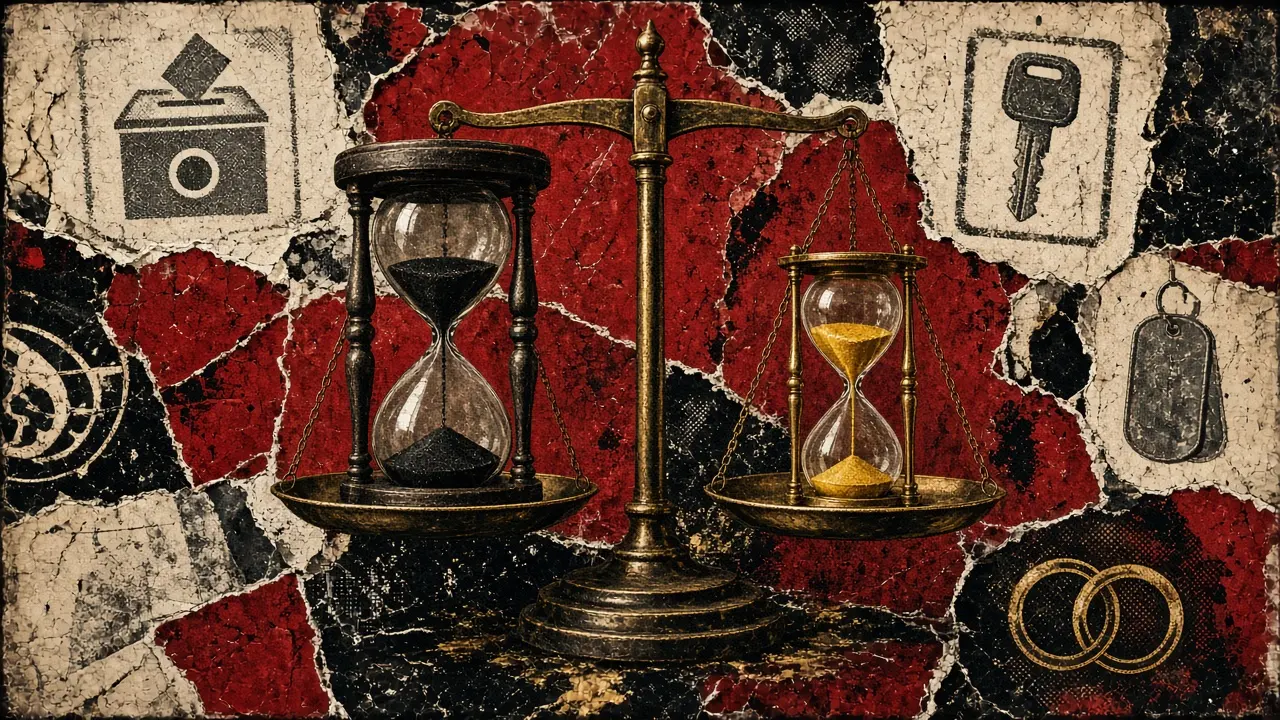
    Punk wheatpaste poster of a brass balance scale holding a large dark hourglass and a small golden hourglass in perfect balance, surrounded by torn posters of a ballot box, car key, dog tag and wedding rings

    Billy Corgan just set the internet on fire again, and this time it had nothing to do with music.

    On the October 22 episode of The New York Times’ Popcast, the Smashing Pumpkins frontman was asked about the age gap with his wife, Chloé Mendel. He met her in 2012, when she was 19 and he was 44. Today he is 59, she is in her early thirties, and the gap runs about 25 and a half years. They married in September 2023, and they have three children: Augustus, born in 2015, Philomena, born in 2018, and Juno, born in March 2025.

    Corgan said the gap was an “advantage.” In his words, his wife “hadn’t been wounded like so many people are,” and she was “really open to love.” He was careful to say there was “nothing wrong” with the women of his own generation. His point was that two hurt people struggle to build something whole. The Independent reported the backlash within days: sexist, patronising, infantilising, out of touch. You can watch the clip from Popcast yourself and decide.

    I am not here to defend every word Billy Corgan says. I am here to ask the question nobody in that pile-on wants to answer. If a 19-year-old woman is an adult, why do we keep talking about her like a child?

    The Adulthood We Hand Out, Then Take Back

    Look at what the United States already trusts an 18-year-old to do.

    She can vote. The 26th Amendment settled that in 1971, on the argument that anyone old enough to be sent to war was old enough to choose the government that sends them. She can sign contracts and take on debt. She can enlist in the armed forces, carry a rifle, and come home in a flag-draped box. She has been driving since she was 16. She can be tried and imprisoned as an adult.

    But when one of them chooses a husband who is twenty years older, a large part of our culture suddenly discovers that the frontal lobe isn’t finished until 25, and that she couldn’t possibly have known what she was doing.

    You can’t have it both ways. Either an adult is an adult, or the age of majority is a lie. If 19 is too young to choose a partner, then it is too young to vote and too young to die in a uniform. If it is old enough for those things, then it is old enough to say “I do,” to whoever she wants, at any age he happens to be.

    Notice which choices get reopened. Nobody voids a 19-year-old’s vote or her enlistment contract because she was “so young.” The adult choices that get revoked after the fact are the personal ones, and almost always in one direction.

    Maturity Is Not a Number

    I am not pretending there is no such thing as predation. A 44-year-old pursuing a 15-year-old is a crime, and it should be. Coercion, fraud and abuse are wrong at any age.

    But “he was older” is not an accusation. It is a fact about two birth certificates. Maturity is measured by what a person does: whether she supports herself, makes plans, keeps her word and owns the results of her choices. I have met 19-year-olds running households and 40-year-olds who could not keep a job.

    The age-gap panic depends on treating young women as permanently impressionable. That is not feminism. It is a polite way of saying women cannot be trusted with their own decisions, and that the people around them, especially later, get to decide what those decisions “really” meant.

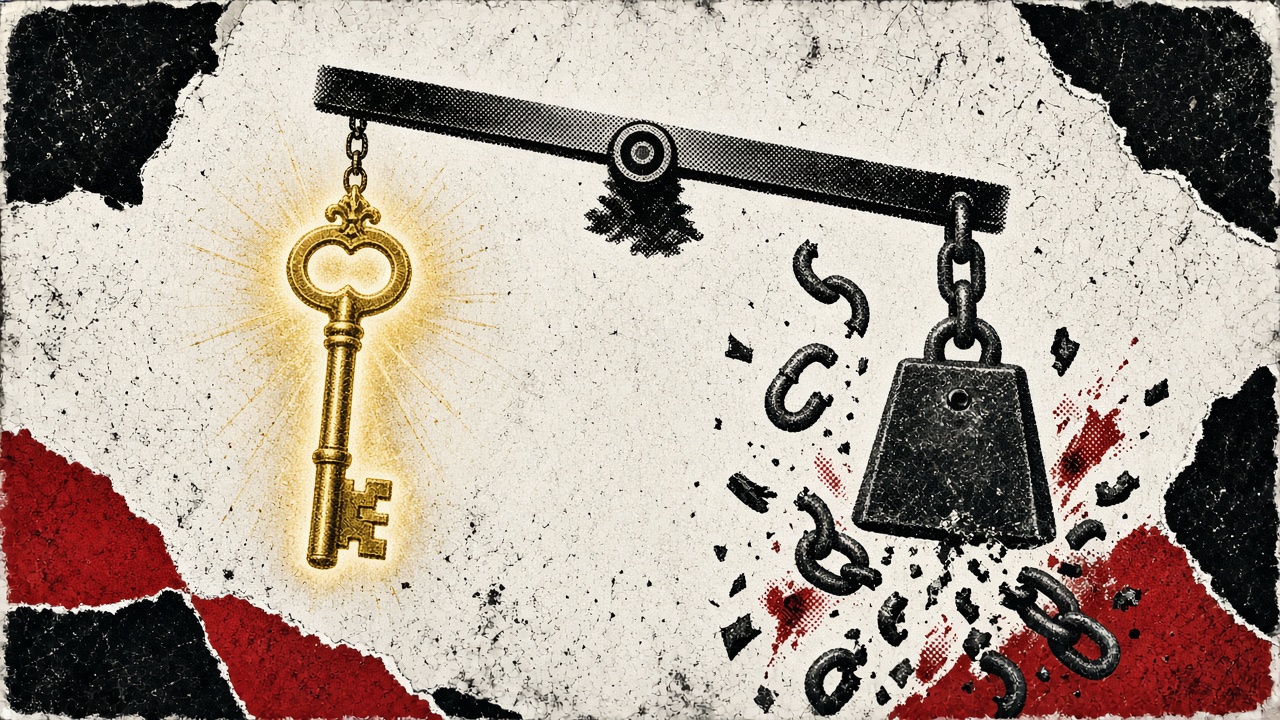
    Punk poster illustration of a golden key rising on a balance beam while a heavy iron weight breaks loose from its chain
    Rights without responsibilities is not equality. It is a one-way deal.

    The Responsibility Gap

    Here is the pattern I keep seeing. Western culture tells women they are fully equal: equally capable, equally rational, equally entitled to every door men walk through. But when an adult woman’s choices go wrong, a different script often comes out. Suddenly it is youth. It is hormones. It is pressure. It is a decision that, years later, has to be reinterpreted.

    Take the case of Lindsay Clancy in Duxbury, Massachusetts. In January 2023 she strangled her three children, Cora, Dawson and Callan, then tried to take her own life. She has admitted to the killings. Her defense argued she was suffering from postpartum psychosis and could not be held criminally responsible. Prosecutors argued she knew what she was doing was wrong. In September 2026 her murder trial ended in a mistrial, with the jury deadlocked 11 to 1 in favor of acquittal by reason of insanity. On October 1 the judge denied her request for a not-guilty finding, ruling that the evidence was enough for a jury to find her criminally responsible. As I write this, prosecutors have not said whether they will retry her.

    Postpartum psychosis is real. What struck me was the public conversation around the case, which often boiled down to this: her hormones made her do it, she could not control her hormones, so she is not responsible. Think about what that argument means if you take it seriously. If biology can erase a woman’s responsibility for the worst act a human being can commit, then on what basis do we say she is fully responsible for anything? You cannot argue that women are the equals of men in judgment and then argue that their judgment evaporates when the consequences arrive.

    Then there is the Cornell case. A former student says she was sexually assaulted in October 2024 by seven members of the Chi Phi fraternity, now dubbed the “Cornell Seven.” In a public statement on September 28, 2026, Tompkins County District Attorney Matthew Van Houten said her sworn six-page statement to police in November 2024 “did not allege that she was drugged against her will or gang raped,” and described her participation in drug use and sexual conduct as “voluntary, conscious, and consensual.” His office declined charges on that basis. Nearly two years later she filed a civil lawsuit alleging something very different. Her lawyers say the police summary left out key parts of what she told investigators. Cornell’s own Title IX panel sanctioned several of the men, two of them with expulsion. Under public pressure, the DA has now reopened the case for a grand jury. No one has been charged, and none of it has been proven in a court.

    I don’t know what happened in that room, and neither do you. The question is not whether this particular woman is telling the truth. The question is what a sworn statement from an adult is worth. If an adult’s account of her own consent can be revised two years later, and seven young men’s lives hang on the revision, then consent stops being something an adult gives. It becomes something that can be reassigned after the fact.

    I’ll say plainly what I see. Many western women today want the privileges that men have always had, the freedom, the authority and the final say over their own lives, without always accepting the responsibility that came attached to them. Men have never been allowed to say, “I was young, my hormones were raging, and I’ve since decided I didn’t really mean it.” Equality that only runs one way is not equality. It is a ratchet.

    This is not a claim that women are weaker or less intelligent. It is the opposite: women are fully capable adults, which is exactly why they should be held to the same standard as everyone else.

    My Own “Age Gap”

    I don’t write about this from a distance.

    I married my ex-wife when she was 19 and I was 25. Six years. Today she tells people I took advantage of her youth, that I was “much older” than she was.

    Here is who she was when we married. She had already moved out of her parents’ house. She was attending a top university on an academic scholarship. She was not naive and she was not dumb. She made her own decisions, including the decision to marry me.

    Six years. If a six-year gap between a university scholar and a 25-year-old man is predatory, then the word has no meaning left. The story changed because the marriage ended, not because the facts did. When the outcome went bad, the choice was rewritten into something that happened to her rather than something she did.

    What hurts most is that my children now repeat the same thing: that the age gap was “unfair.” They didn’t reach that conclusion by examining a marriage that began before they were born. They absorbed it. I love my kids, and I don’t blame them for echoing the parent they heard it from. But I want them to know the truth. Their mother was an intelligent adult who chose her life, and her choices were real. Taking that away from her, even in hindsight, does her no honor.

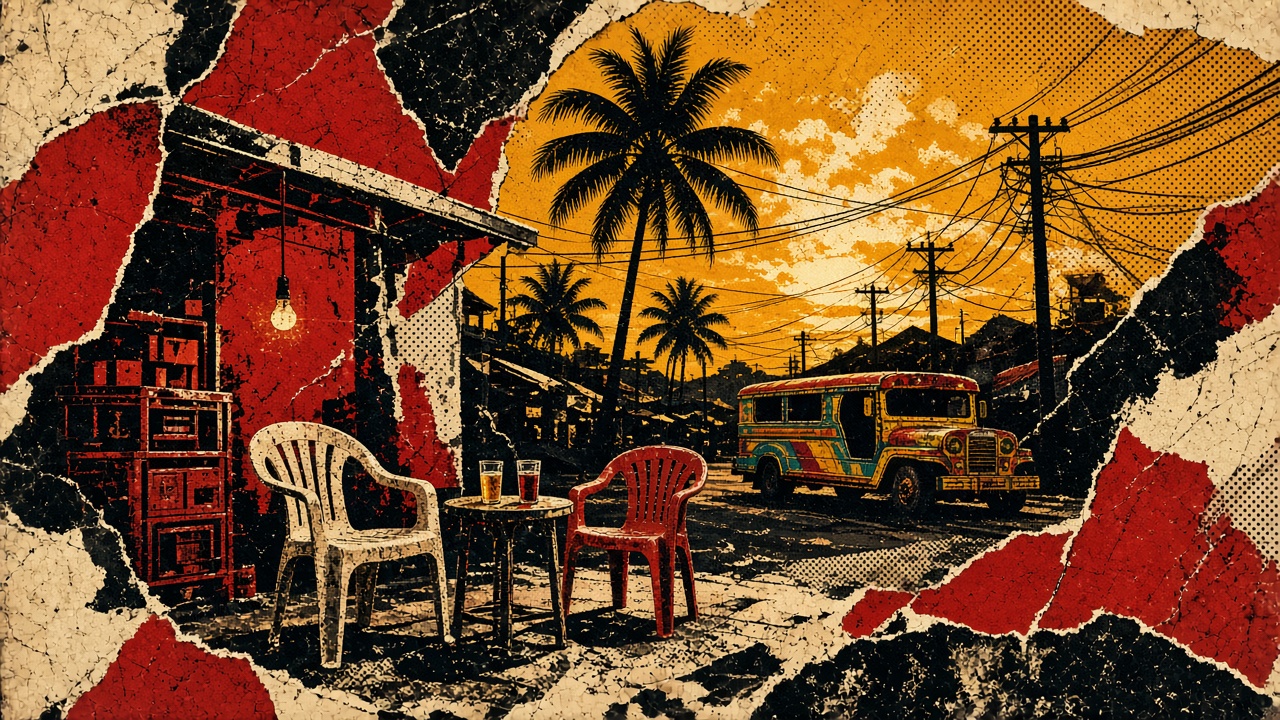
    Punk poster illustration of a Philippine street at golden hour with palm trees, a jeepney and two empty plastic chairs at a small store table
    Different culture, different assumptions about who gets to choose.

    What I See in Southeast Asia

    I now live in the Philippines, and the contrast is impossible to miss.

    Here, a woman of 18 or in her early twenties partnering with a man in his sixties or even seventies is not a scandal. I see these couples all around me: at the market, at church, at the mall, at the next table over at dinner. Some are happy and some aren’t, like relationships everywhere. Plenty of these matches are as practical as they are romantic, which was the norm for most of human history.

    The difference is that the culture treats her as an adult who made a choice. She is expected to live with that choice, good or bad, and so is he. Nobody waits ten years to announce that she was a victim of the calendar.

    I am not saying every age-gap match here is wise. I am saying it exposes how odd the western position has become. The West preaches female empowerment louder than anywhere on earth, yet it is often the place most eager to declare young women incapable of choosing a husband.

    Adulthood Is a Package Deal

    So back to Billy Corgan. His comments were clumsy, and I understand why “wounded” landed badly with women his own age. But Chloé Mendel was 19 when she met him, came from a family running an international fashion house, and has spent the 14 years since building a life, a family and businesses alongside him. She has defended the marriage herself as a partnership of equals. The people insisting she was too young to choose are not protecting her. They are overruling her.

    Here is where I land. Adulthood is a package deal. It comes with agency, the right to choose your partner, your faith, your work and your life, and it comes with accountability, which means owning those choices when they go wrong. You don’t get one without the other. Not men, not women, not at 19 and not at 59.

    If we want young women treated as equals, and I do, then we have to stop rewriting their decisions the moment those decisions become inconvenient. That is what we expect of every adult man, and it is the only standard that treats women as full human beings.

    Anything less isn’t protection. It’s a permanent childhood, handed out selectively, and it’s dressed up as progress.

    Sources

    1. The Independent: Rock star’s comments about 26-year age gap with wife spark backlash (Oct 28, 2026)
    2. Popcast (The New York Times): Billy Corgan Talks About His ‘Age Gap’ Marriage
    3. Entertainment Weekly: Billy Corgan on the age gap with Chloé Mendel
    4. CNN: What’s next for Lindsay Clancy after judge denies motion for not guilty verdict (Oct 1, 2026)
    5. Boston Globe: Judge rejects request for not guilty verdict (Oct 1, 2026)
    6. Tompkins County District Attorney: Statement regarding Jane Doe v. Cornell University, et al (Sept 28, 2026)
    7. The New York Times: How Cornell punished each of the 7 men accused of sexual assault (Oct 3, 2026)

    The shortlink was copied to your clipboard

    X
    f
    r

    Related Reading

    Similar posts

  • 💾 Fighting DOGE’s Data Grab | EFFector 38.19

    EFF Wins Court Battle Over DHS Data Dump: What It Means for Your Privacy

    When you file your taxes, apply for that new job, or cast a ballot, you hand the government a bundle of private data. You expect that information to stay locked away, protected from future misuse. That expectation—once a cornerstone of civil liberty—has been shattered by an unprecedented data grab by the Department of Homeland Security’s DOGE program, a private contractor now in possession of confidential personnel files of federal employees. The Electronic Frontier Foundation (EFF) fought back, and the courts ruled in their favor—sending a resounding message that the government can’t simply open a vault and hand it to anyone. {{verifact|https://www.eff.org/deeplinks/2026/10/fighting-doges-data-grab-effector-3819|The EFF publicly announced the lawsuit victory against DHS’s DOGE program}}.

    The Anatomy of the DOGE Data Grab

    In the early 2020s, the DHS established DOGE—a private contractor tasked with analyzing federal personnel data to predict and prevent security threats. To build its predictive models, DOGE received highly sensitive files from dozens of federal agencies, including detailed personnel histories, performance assessments, and even disciplinary records. These files, protected under the Privacy Act of 1974, were never meant for public or third‑party consumption. Yet, under a vague congressional directive, the DHS transferred them to DOGE without adequate safeguards or oversight. {{verifact|https://www.eff.org/deeplinks/2026/10/fighting-doges-data-grab-effector-3819|EFF detailed the unauthorized transfer of confidential files to DOGE}}.

    Imagine a library of personal dossiers, each containing a person’s career trajectory, health disclosures, and private correspondence, suddenly copied onto a cloud server that anyone with a password could access. That is the reality that DOGE’s data dump created—an unfiltered, unprotected trove of federal employee information on a private platform. The breach exposes not only individual privacy but also the integrity of the entire civil service system. {{verifact|https://www.eff.org/deeplinks/2026/10/fighting-doges-data-grab-effector-3819|EFF highlighted the breadth of data transferred}}.

    The Legal Battle Begins

    The EFF, along with a coalition of privacy advocates, filed a lawsuit in 2024, arguing that the DHS had violated the Privacy Act and the Federal Records Act by transferring confidential files to a private contractor without proper authorization. The plaintiffs contended that the data was “public domain” once it entered the contractor’s ecosystem, making it vulnerable to future leaks and misuse. The case hinged on whether the government could legitimately outsource sensitive data to a private entity for “national security” purposes without a clear, narrowly‑defined legal basis. {{verifact|https://www.eff.org/deeplinks/2026/10/fighting-doges-data-grab-effector-3819|EFF’s lawsuit filing is documented}}.

    In a landmark ruling on September 15, 2026, the U.S. District Court for the District of Columbia held that the DHS’s transfer of personnel files to DOGE was illegal. The court found that the contractor’s access violated the Privacy Act’s requirement that personal information remain in the public domain only when it is truly public and that the DHS had failed to provide adequate safeguards against future abuse. The decision also mandated that all files be returned to the DHS and that a comprehensive audit be conducted before any future data transfers. {{verifact|https://www.eff.org/deeplinks/2026/10/fighting-doges-data-grab-effector-3819|Court ruling cited by EFF}}.

    Why This Verdict Matters

    At first glance, the case seems niche—federal employees, a private contractor, and a handful of legal briefs. In reality, it sets a precedent that ripples far beyond the civil service. The ruling reaffirms the Privacy Act’s core principle: that personal data shared with the government must not become a free‑for‑all commodity. It also signals that private contractors cannot become de facto data brokers for the state without strict oversight. This is a win for any citizen who has ever wondered whether their data is truly safe in the hands of the government. {{verifact|https://www.eff.org/deeplinks/2026/10/fighting-doges-data-grab-effector-3819|EFF’s analysis of the ruling’s implications}}.

    Moreover, the decision reinforces the importance of transparent data governance. The DOJ’s initial rationale—that DOGE would “enhance national security” without explicit congressional oversight—was deemed insufficient. The court’s insistence on clear, narrowly‑defined mandates underscores that the government cannot bypass existing privacy safeguards under the pretext of security. This is a check against a slippery slope where the state can silently hand over personal data to private entities and then claim ignorance when the data is leaked or repurposed. {{verifact|https://www.eff.org/deeplinks/2026/10/fighting-doges-data-grab-effector-3819|Court’s emphasis on oversight}}.

    What This Means for Everyday Citizens

    While federal employees were at the center of the lawsuit, the underlying principle is universal: when the government processes your personal information—whether for tax purposes, voting records, or job applications—it must keep that data insulated from future misuse. The DOGE case demonstrates that even with the best intentions, data can be weaponized if it falls into the wrong hands. The court’s decision sends a clear message that the state cannot simply hand over your data to a private contractor and walk away, especially when that contractor has no explicit legal authority to retain or analyze the data. {{verifact|https://www.eff.org/deeplinks/2026/10/fighting-doges-data-grab-effector-3819|EFF’s commentary on implications for general privacy}}.

    What should you do? First, stay informed. The EFF’s newsletter offers timely updates on privacy battles, and their new tracker blocker for Safari is now live—protecting you from hidden data collectors on the web. Second, demand transparency. When you submit personal information to any government agency, ask how it will be stored, who can access it, and whether it will be shared with private contractors. Third, support organizations that fight for digital rights. The EFF’s ongoing advocacy, from net neutrality to privacy litigation, is essential to keeping data in check. {{verifact|https://www.eff.org/deeplinks/2026/10/fighting-doges-data-grab-effector-3819|EFF’s call to action for readers}}.

    Beyond DOGE: The Broader Fight for Data Sovereignty

    The DOGE victory is just the latest chapter in a larger narrative about data sovereignty. The EFF’s recent newsletter also highlighted their new tracker blocker for Safari, a crucial tool for preventing invisible data harvesters from tracking your online behavior. They called for a statewide net neutrality law in California, arguing that ISPs must not throttle or discriminate against traffic. And they underscored how the legal community can use the DOGE case to challenge future data grabs by the federal government. {{verifact|https://www.eff.org/deeplinks/2026/10/fighting-doges-data-grab-effector-3819|EFF’s coverage of related initiatives}}.

    In the long run, the DOGE ruling could influence how Congress drafts future data‑sharing laws. The Privacy Act’s language may see revisions to tighten the definition of “public domain” and to require explicit, case‑by‑case approvals for any private data transfer. Meanwhile, watchdog groups will likely continue to press for audits and stricter penalties for non‑compliance, ensuring that the state’s hand remains a protective glove rather than a data‑monopolizing glove. {{verifact|https://www.eff.org/deeplinks/2026/10/fighting-doges-data-grab-effector-3819|EFF’s analysis of potential legislative changes}}.

    Listen to the Full Story

    For a deeper dive, the EFF’s podcast episode featuring F. Mario Trujillo explains the technical and legal nuances of the DOGE data grab. Trujillo discusses how the breach could have affected thousands of federal employees and why the legal victory matters for protecting personal data on a national scale. The episode is available on all major podcast platforms—just click below to listen. {{verifact|https://www.eff.org/deeplinks/2026/10/fighting-doges-data-grab-effector-3819|Podcast embed source}}

    Final Thoughts

    The EFF’s triumph over the DHS’s DOGE data grab is a stark reminder that data is power, and power must be checked by law. Freedom of information is not a free‑for‑all license for the government to hoard personal data. When the state must justify every data transfer to a third party—especially a private contractor—citizens gain a measure of control over their own information. The court’s decision reaffirms that the government’s role is to protect, not to profit from, personal data. This case serves as a beacon for future privacy battles, ensuring that the state can no longer simply hand over data to a private entity and claim ignorance when the data is misused. Stay vigilant, stay informed, and keep fighting for the digital liberties that keep the state from becoming a data‑collector. {{verifact|https://www.eff.org/deeplinks/2026/10/fighting-doges-data-grab-effector-3819|EFF’s concluding remarks on the case}}.

  • This Ragged Life Renewed: The 2026 Edition

    This Ragged Life Renewed: The Story I Started in 1999, and the Chapters Life Wrote Afterward

    By Ryan Thompson (DJ Disruptarian) | Disruptarian.com | October 27, 2026

    Rebellion. Faith. Loss. Fatherhood. Survival. And the long, sometimes painful business of starting over. After more than twenty-five years, several editions, and more life experiences than I ever intended to collect, I am announcing the re-release of my autobiography, This Ragged Life Renewed: A Life of Rebellion, Faith, Loss, and Renewal. This is not simply another printing of an old book. The 2026 edition brings the story forward to the present, revisits events that needed more explanation, restores material from earlier editions, and includes the experiences that changed my life after the original story ended. Some of those experiences were blessings. Others nearly killed me. And a few taught me lessons I apparently wasn't bright enough to learn the first time. This book is not the story of a perfect man. It is the story of a man who has made mistakes, questioned authority, wrestled with faith, experienced both success and failure, and occasionally discovered that survival is an accomplishment all by itself.

    A Story That Began in 1999

    I first started writing This Ragged Life Renewed in 1999. I was a young man who had spent years living a rather unconventional life. I had grown up in Utah, rebelled against the culture surrounding me, become involved in the punk rock scene, lived on the streets, struggled with drugs, and spent time in jail. I was angry at the world, and not always without reason. But I was also responsible for a good deal of the trouble I found myself in. I was trying to understand how a young man could wander so far from the person he wanted to become. Then, shortly after Christmas in 1998, something happened on an icy road near Deer Park, Washington. I was driving an unreliable car without a license, with bald tires, as a blizzard approached. I slid off the road and found myself stranded. I prayed. What followed became a turning point in my relationship with God and ultimately inspired me to write my story. I released the first version of the book in 2001. After my youngest brother, Justin, died in 2002, I updated the manuscript and began preserving the story online. Other revisions followed in 2003 and 2009. Years later, I revisited the manuscript again, including a published edition in 2023. But the original story ended long before much of what would ultimately define my adult life. And that is why I decided it needed to be revisited once more.

    What Has Changed in the 2026 Edition?

    The new edition maintains the original story and its spiritual foundation, but the narrative now reaches much further into my life. It follows my experiences as a husband and father, my years building technology businesses, my travels, my injuries, the loss of financial security, the end of my marriage, and the ongoing process of rebuilding. Several chapters have undergone substantial revisions, while previously missing context has been restored.

    1. A More Complete Account of My Early Life

    The revised book takes a closer look at my childhood in Utah, including the influence of my father, grandparents, and the family circumstances that shaped my early decisions. I write about growing up in a struggling household, moving frequently, and feeling like an outsider in communities where conformity was often treated as a virtue. I also revisit my teenage years, the punk rock movement, the choices that led me toward homelessness and crime, and the people who helped me along the way. Some of those memories are difficult to revisit. Others remind me that even during the worst periods of my life, there were decent people willing to extend a hand.

    2. Faith, Rebellion, and the Search for Something Worth Believing

    Faith is central to this book, but it isn't a story about somebody who discovered Christianity and suddenly became a model citizen. That would be a considerably shorter book, and a work of fiction. My faith developed through experiences that challenged what I thought I understood about religion, responsibility, forgiveness, and the relationship between God and man. I have spent much of my life questioning authority, including religious authority. But questioning the institutions built around faith is not necessarily the same thing as rejecting faith itself. The 2026 edition explores that distinction more clearly. It also examines how my convictions have changed with age, experience, and fatherhood, including beliefs I held in earlier years that I now regret.

    3. The 2013 Accident That Changed Everything

    One of the most important expanded sections concerns a serious automobile accident in May 2013. While traveling for work between California and Washington, I was struck by a drunk driver on Interstate 5 in southern Oregon. The other driver died. I survived with forty-two fractures and extensive injuries to my arm, shoulder, legs, and feet. The accident changed my ability to work and contributed to a long period of physical and financial difficulties. In earlier editions, I had not explained the full extent of those injuries or their lasting consequences. The revised Chapter Eleven, Still Standing, provides a more complete account. It also looks at the relationship between my health, my career, and the difficulties developing within my marriage. Surviving an accident is one thing. Learning to live with the consequences years afterward is another.

    4. Losing Nearly Everything in Puerto Rico

    In September 2017, my family was living in Puerto Rico when Hurricanes Irma and Maria devastated the island. We lost our home, vehicle, sailboat, business equipment, and years of accumulated work. Our plans for the future disappeared along with much of our property. We spent weeks in a hurricane shelter before leaving the island with little more than the clothes and belongings we could carry. Chapter Twelve, Changes in Latitude, Changes in Attitude, recounts those experiences and the travels that followed. It also includes our time in Ireland, where a family provided us with shelter after the hurricanes. That experience remains an important part of my personal history, and it is one reason Ireland continues to hold a special place in my life.

    5. Marriage, Divorce, Fatherhood, and Regret

    Some of the most difficult material in this edition concerns the end of my marriage and the changes in my relationship with my children. I have five children, and being their father remains one of the most important parts of my identity. The revised chapters explore marriage, loyalty, conflict, divorce, and the consequences of decisions made over many years. They also examine events in Ireland and Oregon, including personal confrontations and injuries that I had not previously described in sufficient detail. These are events presented from my own experiences and recollections. I recognize that other people involved may remember or interpret some things differently. I do not pretend to have handled every situation properly. There are decisions I regret, opportunities I missed, and moments when I should have listened more carefully or acted differently. The book also includes A Letter to My Children, written to explain where I came from, what I learned, and what I hope they will understand about me. It is among the most personal things I have ever written.

    6. New Details About My Later Injuries and Recovery

    The latest revisions also clarify injuries sustained during a 2021 confrontation in Ireland and an April 2024 accident involving a ladder. These accounts help explain the physical difficulties I continue to face. I am currently living in the Philippines, where recovery and the practical realities of disability remain part of my daily life. I have not abandoned my work, my writing, or my plans for the future. But I've had to accept that the life I imagined at twenty is not necessarily the life I can live at fifty. That does not mean the story is finished.

    7. Restored Poetry, Earlier Editions, and Family History

    One of the more meaningful parts of this project has been recovering older writings that had effectively disappeared. Using the Internet Archive, I was able to recover earlier versions of my autobiography and poetry that I had written decades ago. The new edition includes six poems, an account of the earlier editions, and a connection to my family history archive. It also incorporates updated cover artwork and revised formatting for print and electronic reading. My goal was not to erase the earlier versions. It was to preserve them while finally bringing the story forward. Readers who are interested in the historical material can explore the earlier writings at CreativeGrace.org.

    The Audiobook Has Also Been Updated

    For those who prefer listening rather than reading, an updated audiobook has been produced. The latest production edition runs approximately 1 hour and 34 minutes, with 27 audio tracks covering the introductory material, chapters, personal reflections, poetry, and concluding material. It uses computer-generated narration. The revised audiobook reflects the latest manuscript changes, including the expanded accounts of the 2013 accident and later events. I wanted the story to be accessible in multiple formats, whether somebody prefers reading an EPUB, opening a PDF, holding a printed book, or listening during a long drive.

    Why I'm Releasing This Book Again

    There is something rather humbling about reading your own words from twenty-five years ago. You remember who you were when you wrote them. You remember what you believed. You remember the things you thought you understood. And then you realize just how much life has taught you since. When I first wrote this book, I thought renewal was largely about leaving an old life behind. I still believe that is part of it. But I have come to understand that renewal is not necessarily a single dramatic event. Sometimes it means getting sober. Sometimes it means accepting responsibility. Sometimes it means forgiving somebody. Sometimes it means acknowledging that the person who needs to change is the one looking back at you in the mirror. And sometimes it simply means waking up tomorrow and trying again. The libertarian in me still believes strongly in individual liberty and personal responsibility. But freedom without responsibility eventually becomes another form of selfishness. That is a lesson I have encountered more than once. My faith has also changed over the years. It has become less about winning arguments and more about understanding what I believe God expects of me. I still have questions. I still challenge conventional thinking. I still believe institutions, governments, and powerful people deserve scrutiny. But I have learned that questioning everything is not nearly as difficult as being willing to question yourself.

    This Isn't a Victory Lap

    I want to make something clear. This Ragged Life Renewed is not a celebration of every choice I have made. It is not an attempt to rewrite my history, excuse my failures, or convince readers that I have always been the good guy. I have been wrong. I have hurt people. I have been hurt. I have made decisions I would change if given another opportunity. And I have experienced kindness and grace from people who had no obligation to offer either. The purpose of this book is to tell the story as faithfully as I can, including the uncomfortable parts. I wrote it for my children, for the people who knew me along the way, and for readers who may recognize something of their own struggles in mine. If somebody reads this book and discovers that they are not beyond forgiveness, beyond learning, or beyond making a new start, then sharing my story will have been worthwhile.

    Where to Read, Download, Listen to, or Purchase the Book

    The 2026 manuscript is available in digital formats, while distribution of the newest commercial print and ebook editions is still being completed. Latest 2026 edition, direct digital access

    – Read or download the complete 2026 PDF

    – Download the 2026 EPUB ebook

    – Listen to or download the updated M4B audiobook

    These files are shared for public reading and listening. Internet Archive

    – This Ragged Life Renewed, audiobook archive address

    The archive address is provided for readers to check. Its current accessibility and whether it contains the latest revision have not yet been independently confirmed. Lulu, printed books and ebooks

    – Ryan Thompson's Lulu author bookstore

    – Earlier Lulu ebook listing

    The latest hardcover and ebook projects were still marked private during the final production update. Older product links may refer to earlier editions and may not currently accept orders. Amazon and other retailers Distribution outside Lulu has not yet been confirmed for the revised 2026 edition. I will provide direct retailer links when those listings are live and verified. Earlier editions and recovered writing

    – Creative Grace, books and earlier editions

    – Creative Grace, recovered poetry

    – House of Thompson Family History Archive

    Verified edition links supplied for this announcement:

    A Final Word

    This book has followed me through more than half my life. It began when I was a young man trying to make sense of the past and has now become a record of experiences I never could have imagined when I first started writing. Some of the people who helped shape that story are no longer here. Some relationships have changed beyond recognition. Some wounds have healed, while others remain. But I'm still here. Still writing. Still asking questions. Still trying to become a better man, a better father, and a more faithful Christian. I named this book This Ragged Life Renewed because I believed people could change. Twenty-five years later, I believe that more strongly than ever. A ragged life does not have to be a wasted life. Sometimes it is simply a life that has not finished telling its story.

    Ryan Thompson

    DJ Disruptarian

    Disruptarian.com | CreativeGrace.org

  • $40 Trillion in Debt, Layoffs at My Kids’ School, and Billions for Gender Identity

    $40 Trillion in Debt, Layoffs at My Kids’ School, and Billions for Gender Identity

    The United States is more than $40.4 trillion in debt. That’s the Treasury’s own number as of October 22, 2026. Every child in my house was born owing a share of it.

    At the same time, my children’s school district, Eugene School District 4J, sent layoff notices to 177 people this year: 102 teachers and licensed staff, 66 classified employees and 9 managers. It cut 265 full-time positions in all. Now the district says it’s facing another $30 million to $35.5 million hole for 2027–28, and the superintendent won’t promise classrooms will be spared.

    So where did the money go?

    Billions, documented, for gender identity

    Over the last decade, governments in this country spent at least $1.45 billion in taxpayer money on programs built specifically around sexual orientation and gender identity. Every dollar of that has a source link. Count what isn’t published, and the likely figure is $3.3 billion, and it could be as high as $5.5 billion.

    Here’s some of what we could prove:

    • $613 million in NIH research grants with sexual- or gender-minority terms in the title, plus another $351 million in HIV studies limited by title to men who have sex with men.
    • $62.7 million for a dedicated LGBTQ “Press 3” option on the 988 suicide line in two years.
    • $52 million for gender-transition care in the military.
    • $141 million in state Medicaid claims for gender transition, and that’s just from the states that published a number.
    • $96 million from California, $53 million from Illinois and nearly $50 million over the past decade from my own state of Oregon.

    None of this counts the $3.4 billion in federal grants that list LGBTQ people among their target groups, or the billions in HIV spending. Those were left out on purpose so the numbers can’t be called inflated.

    And then we shipped it overseas

    As if spending it here wasn’t enough, we exported it. At least $154 million went into LGBTQ programs abroad through the State Department and USAID. In just two years, FY2022 and FY2023, Congress gave the State Department’s Global Equality Fund $40 million and USAID’s LGBTQI+ protection line another $35 million. PEPFAR, the HIV program, tagged $15 million more for transgender people, which brings the total we found abroad to $168.6 million. Another $749 million of its “key population” money was never broken down by group, and our estimate puts up to $289 million of it toward the same groups.

    Think about that. A country $40 trillion in the hole borrowed money to pay for identity programs in other people’s countries.

    Put it next to the classroom

    4J’s cuts this year saved $27.7 million and eliminated 265 positions. That works out to about $105,000 per position.

    • The 988 “Press 3” line alone, at $62.7 million, would cover roughly 600 of those positions.
    • The $75 million that Congress sent to two foreign LGBTQ funds in two years is nearly three times what 4J saved by gutting its staff.
    • Oregon spent nearly $50 million on identity programs over the past decade, more than 4J’s entire $44.1 million budget gap this year.

    Meanwhile, fewer than half of 4J’s students can read and write at grade level, and barely more than a third are proficient in math.

    This is how a country goes broke

    Nobody is going to fix a $40 trillion debt with one budget line. But this is exactly how you get there: one “small” grant at a time, one program nobody votes on directly, one foreign fund nobody back home ever hears about. Every one of them gets defended as a rounding error. Added up, the rounding errors come to billions.

    Families in Eugene are watching teachers get pink slips. They’re told there’s no money. There’s money. It’s just going to the wrong places.

    It’s time to rein it in. Washington should end foreign funding for identity programs, stop paying for gender-transition procedures through Medicaid, the military and federal health plans, and put every identity grant up for an open vote. Oregon should publish what it spends before it asks parents for another dime. And 4J’s board should answer one question before it hands out the next round of layoff notices: what is it spending on identity programming, and why does that come before the teachers?


    The research: what we found, and what we estimated

    The numbers above come from a sourced nationwide study of FY2016–FY2026. The full report (PDF) has every line item. Found money and estimates are kept in separate columns. The middle estimate is about $3.3 billion.

    The full range

    Lowest Highest
    Verifiable sums (found money only) $1.45B $2.03B
    With estimated unknowns $2.04B $5.51B
    Line Found (verifiable) Estimate, low Estimate, high
    Federal, documented
    NIH research grants (excluding MSM-only HIV studies) $613.2M
    SAMHSA grants $45.0M
    988 “Press 3” LGBTQ youth line (FY23–24) $62.7M
    CDC grants $35.9M
    Justice Department grants and contracts $27.3M
    HUD grants $20.3M
    HHS Administration for Children and Families $16.1M
    HRSA grants $15.3M
    Other agencies (NSF, NEH, NEA, IMLS, USDA, Labor, Education, DoD contracts, other HHS) $35.0M
    State Department and USAID foreign programs $153.6M
    PEPFAR money tagged for transgender people $15.0M
    Military gender-transition care (TRICARE) $52.1M
    Federal Bureau of Prisons $1.6M
    Federal subtotal $1,093.2M
    States, documented
    State Medicaid gender-transition claims $140.6M
    State grants, offices and community funds $124.7M
    State prisons $20.6M
    Other state items (Covered California) $13.4M
    State education departments $4.5M
    State employee health plan settlements $1.4M
    Oregon (full 10-year report, net of federal grants) $48.5M
    State subtotal $353.5M
    Verifiable floor $1,446.7M
    NIH HIV studies limited by title to men who have sex with men $350.9M
    State items found but not fully confirmed $1.8M
    Foreign awards found but shared or borderline (refugee, HIV, list-style, PEPFAR money tagged for MSM) $228.7M
    Verifiable maximum $2,028.1M
    Estimated unknowns (ESTIMATE)
    State Medicaid, covering states with no published total $314.3M $969.8M
    State Medicaid, missing years in states with partial records $52.3M $130.6M
    State employee health plans $27.1M $108.3M
    State prisons (hormones, surgery, housing units) $19.3M $154.5M
    State grants and offices not yet found $16.5M $82.3M
    Local governments, school districts, public universities $16.5M $82.3M
    988 “Press 3” LGBTQ youth line, FY2025 (not yet published) $26.0M $26.0M
    Veterans Affairs gender-dysphoria care $4.8M $47.5M
    Shared federal grants listing LGBTQ among groups ($3.41B) $68.2M $317.1M
    NIH sexual/gender-minority research beyond title matches $0.0M $506.7M
    Federal employee health plans (FEHB) $50.4M $201.7M
    Medicare gender-transition claims $0.0M $159.9M
    Global Equality Fund US money, FY2016–19 (not in USAspending) $0.0M $43.6M
    State/USAID LGBTQ programs, FY2024–25, with no budget line $0.0M $28.1M
    PEPFAR key-population money, FY2016–20, not split by group $0.0M $168.9M
    US share of Global Fund money for MSM and transgender programs $0.0M $152.8M
    US share of UNAIDS key-population work $0.0M $9.3M
    US share of the UN expert on sexual orientation and gender identity $0.0M $1.6M
    PEPFAR key-population money, FY2021–24, not split by group $0.0M $289.2M
    Estimates subtotal $595.2M $3,480.1M
    Lowest total (verifiable floor + low estimates) $2.04B
    Highest total (verifiable maximum + high estimates) $5.51B
    Foreign aid inside these totals (USAID, State, PEPFAR, UN, Global Fund) $168.6M found, plus $228.7M in the maximum $0.0M $693.4M

    USAID and foreign aid

    Foreign aid for LGBTQ and gender-identity programs ran from $169M (found) to as much as $1,091M for FY2016–2026, with a middle estimate of $202M. These figures are already part of the federal totals and the full-range table, so they are not added a second time. The $168.6M of found money is inside the verifiable floor. The foreign estimate lines add $0 in the low case, $34M in the middle and about $693M in the high case. The $228.7M of shared or borderline awards counts only toward the verifiable maximum.

    Foreign aid, $M Low Middle High
    Found: State Department and USAID awards 153.6 153.6 153.6
    Found: PEPFAR money tagged for transgender people 15.0 15.0 15.0
    ESTIMATE: Global Equality Fund US money, FY2016–19 (not in USAspending) 0.0 30.4 43.6
    ESTIMATE: State/USAID LGBTQ programs, FY2024–25, with no budget line 0.0 2.1 28.1
    ESTIMATE: PEPFAR key-population money, FY2016–20, not split by group 0.0 0.0 168.9
    ESTIMATE: PEPFAR key-population money, FY2021–24, not split by group 0.0 0.0 289.2
    ESTIMATE: US share of Global Fund money for MSM and transgender programs 0.0 0.0 152.8
    ESTIMATE: US share of UNAIDS key-population work 0.0 0.0 9.3
    ESTIMATE: US share of the UN expert on sexual orientation and gender identity 0.0 1.3 1.6
    Found but shared or borderline (refugee, HIV, list-style, PEPFAR money tagged for MSM), high case only 0.0 0.0 228.7
    Foreign aid total 168.6 202.4 1090.7

    By year, $M (high estimates include PEPFAR money not split by group):

    FY State/USAID found PEPFAR transgender-tagged found Found total Shared or borderline found (maximum only) Estimate, middle Estimate, high
    FY2016 4.0 0.0 4.0 7.1 7.6 59.4
    FY2017 2.4 0.0 2.4 15.7 7.8 50.9
    FY2018 3.8 0.0 3.8 6.6 7.8 60.8
    FY2019 6.8 0.0 6.8 8.1 7.8 57.7
    FY2020 12.8 0.0 12.8 12.0 0.2 49.3
    FY2021 16.5 1.8 18.3 21.9 0.2 92.0
    FY2022 25.5 1.8 27.3 22.8 0.2 92.1
    FY2023 50.5 2.8 53.3 26.4 0.2 92.1
    FY2024 24.5 8.6 33.1 102.1 2.3 118.1
    FY2025 7.0 0.0 7.0 5.9 0.0 20.8
    FY2026 -0.1 0.0 -0.1 -0.1 0.0 0.2
    FY16–26 153.6 15.0 168.6 228.7 33.8 693.4

    Found money. State and USAID awards come from USAspending.gov, using the full transaction history of every LGBTQ-titled award. For FY2020 through FY2023, the figures use the amounts Congress wrote into the budget instead: the Global Equality Fund, USAID’s LGBTQI+ line and the special envoy got $12.75M in FY2020, $16.5M in FY2021, $25.5M in FY2022 and $50.5M in FY2023. PEPFAR transgender money comes from the State Department’s key-population report to Congress. FY2025 isn’t zero: USAspending shows $6.96M obligated on LGBTQ-titled rights awards in FY2025, including Outright International ($2.38M) and the American Bar Association’s SHIELD program ($2.0M). USAID was folded into the State Department on July 1, 2025, and spending falls to nearly zero in FY2026.

    Global Equality Fund, FY2016–19 (ESTIMATE). Congress set no budget line for these years, and the fund’s awards barely appear in USAspending. The middle case uses $7.6M a year, the amount the US sent through the fund in 2014. The high case uses $10.9M a year, the fund’s total awards from all donors in 2015. The Obama White House said the fund had allocated more than $30M from December 2011 to mid-2016.

    State and USAID, FY2024–25, with no budget line (ESTIMATE). The FY2024 spending bill has no LGBTQ line. The middle case is the State Department’s $2.1M FY2024 Global Equality Fund grant notice. The high case assumes FY2024 spending stayed at the FY2023 level ($50.5M), minus what was found, plus $2.1M for FY2025.

    PEPFAR money not split by group (ESTIMATE, high case only). PEPFAR spent $749M on “key populations” in FY2021–2024 without saying which group got it. In FY2023, gay and bisexual men plus transgender people received 38.6% of the key-population money that was split by group, so the high case applies that share: $289.2M. FY2016–2020 uses the same share of PEPFAR’s key-population spending ($115.4M in FY2018 and $111.0M in FY2019, PMC8242967; other years use the FY2018–19 average), less the HIV awards already counted in the maximum, for $168.9M. This money also went to sex workers, drug users and prisoners, and PEPFAR doesn’t publish the split, so it isn’t in the low or middle case.

    UN agencies and the Global Fund (ESTIMATE, high case only). The US pays up to 33% of the Global Fund by law, and the Global Fund spent $30.3M in 2019, $45.2M in 2020 and $145.3M in 2021–2023 on programs for men who have sex with men, plus $2.7M, $4.8M and $23.3M for transgender people. A 33% share gives $152.8M over the period. This is the biggest single guess in the foreign section. For UNAIDS, the US contribution ($45M a year through FY2021, $50M a year in FY2022–24, nothing in FY2025, according to UNAIDS’s audited financial reports and its 2025 update, which says the “US$ 50 million from the US for 2025 was not secured”) times 5.72%, the key-population share of UNAIDS’s total core funding, times 38.6%, gives $9.3M. The UN’s expert on sexual orientation and gender identity costs $718,600 a year under the UN’s 2025 cost statement (A/HRC/59/L.2), and the US pays 22% of the UN regular budget, about $0.16M a year. The 2025 cost is used as a stand-in for earlier years.

    Shared or borderline awards (verifiable maximum only). These are $5.3M in refugee awards for LGBTQI people (FY2022–23), $55.4M in HIV awards that name LGBT people, men who have sex with men or transgender people, $4.4M in awards that list LGBTQI people among several groups, and $163.6M in PEPFAR money tagged for men who have sex with men (FY2021–24).

    Not counted. The LGBTI Global Development Partnership raised $11M over four years from all partners. USAID’s own share was never published, and its awards to partner groups (Astraea, the NGLCC Foundation and the Victory Institute) are already in the found money. UN Free & Equal lists the US as a donor but publishes no amount. No US money was found in the World Bank’s sexual-orientation trust funds.

    Watchdog counts land inside this range. American Principles Project counted about $18M in USAID grants plus $31M in USAID contracts for “gender ideology” in FY2021–2024. Most of the White House’s 2025 USAID examples, such as the Guatemala and Colombia items, turned out to be State Department awards, or the claims were disputed.

    The federal government: $1.09 billion documented, peaking in 2023

    Washington is the largest single payer. Federal awards whose titles or recipients are specifically LGBTQ, together with dedicated programs, came to $1.09 billion from FY2016 to FY2026. That counts only what we could prove.

    • NIH research grants: $613 million, not counting another $351 million in HIV studies limited by title to men who have sex with men. NIH’s own office counted far more “sexual and gender minority” research, then stopped publishing the number and deleted the category in March 2025.
    • Other domestic grants and contracts: $195 million, from SAMHSA, CDC, the Justice Department, HUD, HRSA and others. Examples include a $1.5 million federal prison contract for a “transgender programming curriculum.”
    • Foreign programs: $154 million, through the State Department’s Global Equality Fund and USAID. U.S. taxpayers funded LGBTQ advocacy overseas while American schools cut staff.
    • The 988 suicide line’s “Press 3” LGBTQ youth option: $62.7 million in FY2023 and FY2024 alone.
    • Military gender-transition care: $52.1 million for about 4,240 service members from 2015 to 2024.
    • PEPFAR money tagged for transgender people: $15 million, plus $1.65 million for federal prison hormones and surgery.

    Documented federal spending was $71 million in FY2016. It peaked at $258 million in FY2023, more than three and a half times higher, before the 2025 grant terminations brought it down.

    On top of that, $3.41 billion in federal grants listed LGBTQ people as one of several target groups. We did not count those in full. Only a stated share appears in the estimates.

    The states: Medicaid leads the bill

    State governments add at least $354 million in documented spending. The biggest driver is Medicaid paying for gender-transition drugs and surgery:

    • Illinois: $40.8 million (2018 to September 2023), including $14.3 million for patients 17 and under
    • Oregon: $30.0 million (2018 to 2022)
    • Washington: $27.1 million (2018 to September 2023), including $5.8 million for minors
    • Virginia: $13.9 million (2020 to 2022)
    • Maryland: $11.8 million, and Nevada: $10.1 million

    California is the largest state spender in our records at $95.8 million. That includes a dedicated “Transgender Wellness and Equity Fund,” $10 million for LGBTQ community centers, $13.4 million a year to cover state-mandated benefits through Covered California, $10 million for gender-transition care for children and youth in the 2026 budget, and more than $4 million in prison sex-change procedures for 157 inmates. New York follows with over $15 million through its Lorena Borjas transgender fund and $12.3 million in LGBT health contracts. Colorado requested $8 million in a single year for transgender prison housing and surgery. Washington set aside $7.8 million for the same purpose.

    What governments don’t publish

    About 20 states pay for gender-transition procedures through Medicaid and have never released what it costs, including New York, New Jersey, Pennsylvania, Massachusetts, Minnesota, Connecticut and California for adults. Prison costs, state employee health plans, federal employee health plans, Medicare and the VA are largely undisclosed too. City and school-district spending isn’t tracked nationally at all.

    To estimate these gaps, we used each state’s own records where they exist. The nine states that released Medicaid totals paid a median of $0.54 per resident per year. We applied that rate, along with a low and a high version, to states that cover the same services but keep the numbers private. The same approach was used for prisons and employee plans, using the costs that California, Washington, Colorado, New Jersey and North Carolina did publish. The report explains every assumption.

    The full-range table at the top of this article shows every estimate line next to the verifiable sums.

    What this is not

    These totals leave out HIV treatment and prevention programs (roughly $1.9 billion a year serves mostly gay and bisexual men), because those are disease programs, not identity programs. They also leave out about $1.9 billion in private foundation grants from 2016 to 2024, because that is not taxpayer money. Including either would make the numbers much larger.

    Why it matters

    While states and Washington built permanent funding lines for gender-identity programs, school districts were cutting teachers. In Eugene alone, the 4J district eliminated 265 positions and issued 177 layoff notices (our earlier report). Billions went to identity programs over the same decade. Taxpayers are entitled to know what their money bought, and most governments still won’t tell them.

    Sources

    Sources for the opinion section

    Full research sources (194, as listed in the report)

    1. https://mapresearch.org/wp-content/uploads/2026/01/citations-medicaid.pdf
    2. https://www.courtlistener.com/docket/7047744/fletcher-v-state/
    3. https://www.courtlistener.com/recap/gov.uscourts.akd.60107/gov.uscourts.akd.60107.69.0.pdf
    4. https://assets.aclu.org/live/uploads/2019/02/361-Order-denying-in-part-granting-in-part-PTS-AYS-Fees-approving-consent-decree.pdf
    5. https://www.arkleg.state.ar.us/Home/FTPDocument?path=%2FAssembly%2F2021%2F2021R%2FFiscal+Impacts%2FHB1570-DFA1.pdf
    6. https://www.arkleg.state.ar.us/Home/FTPDocument?path=%2FACTS%2F2021R%2FPublic%2FACT626.pdf
    7. https://www.lao.ca.gov/Publications/Report/5210
    8. https://laist.com/news/health/california-gender-affirming-care-funds-should-have-enough-to-cover-medi-cal-youth-patients
    9. https://www.ebar.com/story/58614
    10. https://ebudget.ca.gov/2026-27/pdf/Enacted/GovernorsBudget/4000/4265.pdf
    11. https://www.nbcnews.com/nbc-out/out-news/california-budget-includes-3-million-train-teachers-lgbtq-issues-rcna1423
    12. https://calpers.healthnetcalifornia.com/health-wellness/lgbtq-plus-care-support.html
    13. https://www.johnlocke.org/california-taxpayers-spend-millions-on-prisoners-gender-treatments/
    14. https://voz.us/en/society/231107/3922/california-spent-4-million-sex-reassignment-surgeries-prisoners.html
    15. https://coloradosun.com/2026/08/21/medicaid-gender-affirming-care-federal-rule/
    16. https://content.leg.colorado.gov/sites/default/files/fy24-25_corbrfsum.pdf
    17. https://www.cga.ct.gov/2025/FN/PDF/2025HB-07164-R00-FN.PDF
    18. https://cga.ct.gov/current/PUB/chap_814g.htm
    19. https://outaccountabilityproject.org/lgbtq-justice-and-opportunity-network-funding/
    20. https://legis.delaware.gov/SessionLaws/Chapter/GetPdfDocument?fileAttachmentId=644845
    21. https://legis.delaware.gov/docs/default-source/cipdocuments/crf/fy24crfawardlist-consolidated.pdf?sfvrsn=8ab48938_2
    22. https://legis.delaware.gov/docs/default-source/cipdocuments/communityreinvestmentfundawards-fiscalyear2023.pdf
    23. https://legis.delaware.gov/docs/default-source/cipdocuments/crf/FY26CRFAwardList-Consolidated.pdf
    24. https://cfo.dc.gov/sites/default/files/dc/sites/ocfo/publication/attachments/aq_olgbtqa_chapter_2026o.pdf
    25. https://cfo.dc.gov/sites/default/files/dc/sites/ocfo/publication/attachments/ja0_dhs_chapter_2025j.pdf
    26. https://dccouncil.gov/wp-content/uploads/2026/03/DHS-Responses-to-Pre-FY25-POH-Questions-FINAL.pdf
    27. https://www.flsenate.gov/Session/Bill/2023/254/Analyses/2023s00254.hp.PDF
    28. https://apnews.com/article/georgia-transgender-health-insurance-lawsuit-f2bb1c89449bf62aceab6ee7460291c3
    29. https://transequality.org/news/open-enrollment-begins-tldef-settles-lawsuit-state-georgia-ending-exclusion-transgender-health
    30. https://www.legis.ga.gov/legislation/70386
    31. https://medquest.hawaii.gov/content/dam/formsanddocuments/provider-memos/qi-memos/qi-memos-2026/QI%202623%20FFS%2026-10%20Gender%20Affirming_final.pdf
    32. https://humanservices.hawaii.gov/wp-content/uploads/2024/11/R.Yamane_Annual-Report-of-the-LGBTQCommission_sec-369-58HRS_signed.pdf
    33. https://idahonews.com/news/local/court-idaho-must-give-transgender-inmate-gender-surgery
    34. https://apnews.com/article/business-prisons-lawsuits-idaho-boise-27a48c702b98f34d1036ca1609bc5b41
    35. https://legislature.idaho.gov/wp-content/uploads/sessioninfo/2024/legislation/H0668SOP.pdf
    36. https://dailycallernewsfoundation.org/2024/12/02/exclusive-biden-harris-admin-opened-floodgates-for-taxpayer-funded-sex-changes-on-kids/
    37. https://omb.illinois.gov/PUBLIC/GATA/CSFA/Program.aspx?csfa=3227
    38. https://www.dhs.state.il.us/page.aspx?item=154738
    39. https://iga.in.gov/pdf-documents/123/2023/house/bills/HB1569/HB1569.04.ENRS.pdf
    40. https://www.legis.iowa.gov/docs/publications/LGE/91/Attachments/HF1049_ADA.pdf
    41. https://kslegislature.gov/b2025_26/bills/sb63/
    42. https://apps.legislature.ky.gov/recorddocuments/note/25RS/sb2/CI.pdf
    43. https://ldh.la.gov/assets/docs/LegisReports/HR158_2022RS_LDHReport.pdf
    44. https://mgaleg.maryland.gov/2023RS/fnotes/bil_0000/sb0460.pdf
    45. https://mgaleg.maryland.gov/2021RS/fnotes/bil_0000/hb0130.pdf
    46. https://governor.maryland.gov/media/792/download
    47. https://www.scribd.com/document/672300008/Gender-Transition-Services-Payment-to-Boston-Children-s-Hospital
    48. https://budget.digital.mass.gov/summary/fy25/enacted/health-and-human-services/public-health/09500050/
    49. https://budget.digital.mass.gov/summary/fy26/enacted/health-and-human-services/public-health/09500050/
    50. https://www.doe.mass.edu/sfs/lgbtq/
    51. https://senatedems.com/moss/2023/08/24/lgbtq-health/
    52. https://www.michigan.gov/corrections/-/media/Project/Websites/corrections/Files/Policy-Directives/PDs-04-Institutional-Operations/PD-0406-Medical-and-Mental-Health-Services/04-06-184-Gender-Dysphoria-effective-06-26-17.pdf
    53. https://www.wxyz.com/news/michigan-transgender-inmates-to-receive-hormone-therapy
    54. https://mn.gov/lgbtqia2s/assets/2024%20MNQT%20Annual%20Report_PrintVersion_tcm1215-669759.pdf
    55. https://www.lrl.mn.gov/docs/2025/mandated/250720/lgbtqia2s-minnesotans-council.pdf
    56. https://www.revisor.mn.gov/laws/2023/0/53/
    57. https://mhponline.org/publications/2024-legislative-session-summary/
    58. https://www.lrl.mn.gov/docs/2025/mandated/251291.pdf
    59. https://www.health.state.mn.us/communities/equity/funding/csirfp2023/rfp.pdf
    60. https://senate.mo.gov/FiscalNotes/2023-1/0202S.01I.ORG.pdf
    61. https://apnews.com/article/transgender-healthcare-ban-minors-montana-049eb8f098ce297b52ce2973839ad1f4
    62. https://dphhs.mt.gov/assets/montanahealthcareprograms/medicaid/MontanaMedicaidandCHIPStatePlanAmendmentsOctober2026.pdf
    63. https://mapresearch.org/equality-map/state-employee-health-benefits/
    64. https://justthenews.com/nation/culture/data-nevada-spent-millions-sex-change-surgery-trans-gendering-hormones-including
    65. https://www.leg.state.nv.us/Division/Research/Documents/RTTL_2023_SB341_Center_2025.pdf
    66. https://www.allianceforstudentdiversity.org/copy-of-gender-diversity
    67. https://njbudget.com/all-funding/fy26a/
    68. https://www.nj.gov/humanservices/dmhas/documents/pdf/funding/RFP_Awards/RFP%20Award%20Notice%20LGBTQ%20Prev%20Svcs%202nd%20Round.pdf
    69. https://whyy.org/articles/nj-lgbtq-curriculum-still-faces-hurdles-three-years-after-mandated/
    70. https://nj1015.com/nj-transgender-inmates-surgery-prison/
    71. https://www.nmlegis.gov/sessions/24%20Regular/AgencyAnalysis/HB0289_665.pdf
    72. https://www.influencewatch.org/non-profit/transgender-resource-center-of-new-mexico-tgrcnm/
    73. https://www.governor.ny.gov/news/during-pride-month-governor-hochul-reaffirms-commitment-supporting-new-yorks-lgbtq-community
    74. https://www.nysenate.gov/sites/default/files/open-data/fy-2026-adopted-budget-report-may-8-2025.pdf
    75. https://www.health.ny.gov/funding/single_source/c33701gg.htm
    76. https://content.govdelivery.com/accounts/NYOMH/bulletins/42b752a
    77. https://omh.ny.gov/omhweb/rfp/2026/lgbtqia-yyacl/lgbtqia_hotline_rfp.pdf
    78. https://www.budget.ny.gov/pubs/archive/fy26/ex/30day/atl-amendments.pdf
    79. https://srlp.org/wp-content/uploads/2025/01/Its-Still-War-In-Here-1-2.pdf
    80. https://caselaw.findlaw.com/court/us-dis-crt-m-d-nor-car/2183201.html
    81. https://www.shpnc.gov/documents/board-trustees/3aii-3-segal-company-transgender-cost-estimate-memorandumpdf/open
    82. https://stoptheharmdatabase.com/state/ohio/
    83. https://www.fox43.com/article/news/local/contests/state-rep-wants-to-ban-taxpayer-dollars-from-being-used-for-inmates-gender-confirmation-surgery-hormone-therapy/521-87cf11e6-7a3a-44d8-804d-6398c8b8de2d
    84. https://pilp.org/news/doe-surgery
    85. https://www.pa.gov/content/dam/copapwp-pagov/en/governor/documents/20230606_Governors-Advisory-Commission-on-LGBTQ-Affairs_Final-Executed.pdf
    86. https://transgender.agency/dvw/DOC%20184-20%20PL%20355.pdf
    87. https://www.riaclu.org/app/uploads/2025/12/Declaration-%E2%80%93-Youth-Pride.pdf
    88. https://ride.ri.gov/sites/g/files/xkgbur806/files/2023-06/Guidance-Rhode-Island-Schools-Transgender-Gender-Nonconforming-Students.pdf
    89. https://www.tdcj.texas.gov/divisions/cmhc/financial_reports.html
    90. https://www.urs.org/documents/byfilename/@Public%20Web%20Documents@URS@External@FiscalNotes@PEHP@2024@HJR2@@application@pdf/
    91. https://stoptheharmdatabase.com/state/utah/
    92. https://legislature.vermont.gov/
    93. https://legislature.vermont.gov/Documents/2022/WorkGroups/House%20Appropriations/FY%202022%20Budget%20Adjustment/7.%20FY22%20BAA%20-%20Public%20Hearing%20-%201-6-2022/W~FY22%20BAA%20Public%20Hearing~Mike%20Bensel%20-%20Pride%20Center%20of%20Vermont~1-6-2022.pdf
    94. http://legislature.vermont.gov/Documents/2024/WorkGroups/House%20Education/FY2025%20Budget%20Requests/W~Dana%20Kaplan~Ouright%20Vermont%20FY%202025%20Budget%20Request%20Supplimental%20Documentation~2-21-2024.pdf
    95. https://www.prisonlegalnews.org/news/2015/jun/3/fourth-circuit-finds-no-sex-reassignment-surgery-evaluation-states-claim-13000-settlement/
    96. https://cdn01.dailycaller.com/wp-content/uploads/2024/11/PDR-23-0620-Planned-Parenthood.pdf
    97. https://www.insurance.wa.gov/sites/default/files/2025-12/2026-mandated-benefits-report.pdf
    98. https://app.leg.wa.gov/committeeschedules/Home/Document/259751
    99. https://lawfilesext.leg.wa.gov/biennium/2025-26/Pdf/Bills/Session%20Laws/Senate/5167-S.SL.pdf
    100. https://educationvoters.org/2025-27-biennial-budget-summary/
    101. https://ospi.k12.wa.us/sites/default/files/2024-09/rfp_2025-08_inclusive_materials.pdf
    102. https://voz.us/en/society/241001/16862/surgeries-medical-inmates-trans-cost-500-000-dollars-four-years-washington.html
    103. https://www.wvlegislature.gov/Fiscalnotes/FN(2
    104. https://www.relmanlaw.com/media/cases/501_Flack%20-%20Summary%20Judgment%20Decision%20_8-16-19_.pdf
    105. https://healthlaw.org/wp-content/uploads/2025/05/119-Williams-Supp-Dec-1.pdf
    106. https://storage.courtlistener.com/recap/gov.uscourts.wiwd.39821/gov.uscourts.wiwd.39821.91.0.pdf
    107. https://disruptarian.com/blog/assets/reports/oregon-lgbtq-identity-spending-fy2016-2026.pdf
    108. https://apnews.com/article/transgender-military-trump-ban-troops-deb9e388ff588d9d25fb0d8cc58e540f
    109. https://www.courtlistener.com/recap/gov.uscourts.wawd.344431/gov.uscourts.wawd.344431.73.3.pdf
    110. https://www.military.com/daily-news/2021/06/18/heres-how-much-pentagon-has-spent-so-far-treat-transgender-troops.html
    111. https://www.conservativenewsdaily.net/breaking-news/new-policy-to-save-millions-previously-spent-on-transgender-procedures/
    112. https://www.nytimes.com/2024/10/16/us/politics/trump-prisons-transgender-care-harris.html
    113. https://williamsinstitute.law.ucla.edu/publications/foreign-aid-eo-impact/
    114. https://web.archive.org/web/20241217211310/https://dpcpsi.nih.gov/sites/default/files/2023-09/SGMRO_2016_Portfolio_Analysis_Final_RF508_508_07192018.pdf
    115. https://web.archive.org/web/20241217211310/https://dpcpsi.nih.gov/sites/default/files/2023-09/SGMRO_2018_PortfolioAnalysis_RF508_FINAL.pdf
    116. https://web.archive.org/web/20241217211310/https://dpcpsi.nih.gov/sites/default/files/2023-09/SGMRO-Overview-Snapshot-2020-508.pdf
    117. https://pmc.ncbi.nlm.nih.gov/articles/PMC11845831/
    118. https://www.nytimes.com/2025/05/04/health/trump-administration-slashes-research-into-lgbtq-health.html
    119. https://www.nbcnews.com/nbc-out/out-news/trump-administration-axes-125m-lgbtq-health-funding-upending-research-rcna199175
    120. https://pubmed.ncbi.nlm.nih.gov/41247747/
    121. https://www.usaspending.gov/award/CONT_AWD_15BNAS21C00000194_1540_-NONE-_-NONE-
    122. https://democrats-appropriations.house.gov/sites/evo-subsites/democrats-appropriations.house.gov/files/State%2C%20Foreign%20Operations%2C%20and%20Related%20Programs%20FY23%20Summary.pdf
    123. https://nastad.org/sites/default/files/2024-04/FY25-Congressional-Request-on-LGBTQI%2B-Funding.pdf
    124. https://globalphilanthropyproject.org/wp-content/uploads/2025/04/GRR_2021-2022_WEB-SinglePage-Colour_EN.pdf
    125. https://www.state.gov/wp-content/uploads/2024/08/HIV-and-AIDS-Prevention-and-Treatment-Programs-for-Key-Populations-006129-Accessible-8.12.2024.pdf
    126. https://pmc.ncbi.nlm.nih.gov/articles/PMC8242967/
    127. https://2017-2021.state.gov/wp-content/uploads/2020/07/PEPFAR_Key-Populations-Investment-Fund_Fact-Sheet_2020.pdf
    128. https://www.cdc.gov/healthy-youth/funded-programs/nofo.html
    129. https://ryanwhite.hrsa.gov/about/budget
    130. https://www.hiv.gov/federal-response/funding/budget
    131. https://www.kff.org/quick-insights/new-regulation-prohibits-federal-medicaid-funds-from-covering-gender-affirming-medical-care-for-young-people/
    132. https://www.congress.gov/crs_external_products/R/PDF/R48569/R48569.2.pdf
    133. https://marylandmatters.org/2025/07/03/as-congress-debates-ban-on-funds-for-gender-affirming-care-trans-advocates-watch-worry/
    134. https://www.theepochtimes.com/us/in-depth-us-gives-more-than-4-1-billion-in-grants-for-lgbt-and-transgender-initiatives-worldwide-5498747
    135. https://capitalresearch.org/article/more-transgender-specific-grants-to-childrens-hospitals-and-universities/
    136. https://justthenews.com/nation/states/center-square/report-128-million-federal-grants-spent-gender-ideology
    137. https://www.foxnews.com/politics/hhs-slashes-over-350-million-grant-funding-gender-ideology-dei-research-projects
    138. https://www.whitecoatwaste.org/blog/2024/12/21/wcw-investigation-10m-wasted-to-create-transgender-mice-and-monkeys/
    139. https://www.paul.senate.gov/dr-rand-paul-releases-2023-festivus-report-on-government-waste/
    140. https://politifact.com/article/2024/nov/18/fact-checking-elon-musks-amplified-posts-on-us-spe/
    141. https://www.whitehouse.gov/fact-sheets/2025/02/at-usaid-waste-and-abuse-runs-deep/
    142. https://www.factcheck.org/2025/02/sorting-out-the-facts-on-waste-and-abuse-at-usaid/
    143. https://www.snopes.com/fact-check/usaid-guatemala-gender-affirming-care/
    144. https://stoptheharmdatabase.com/method/
    145. https://grantwitness.org/nih/updates/2025-05-20-700-new-terminations
    146. https://www.americanprogress.org/article/by-cutting-support-for-trans-health-care-the-va-saves-merely-saves-pennies-per-veteran/
    147. http://www.palmcenter.org/wp-content/uploads/2016/11/VHA-cost-estimate-1.pdf
    148. https://news.va.gov/press-room/va-to-phase-out-treatment-for-gender-dysphoria/
    149. https://oneill.law.georgetown.edu/wp-content/uploads/2025/04/2023-ryan-white-annual-data-report.pdf
    150. https://www.cdc.gov/hiv/data-research/facts-stats/index.html
    151. https://www.chapinhall.org/wp-content/uploads/VoYC-LGBTQ-Brief-FINAL.pdf
    152. https://nn4youth.org/wp-content/uploads/2024-RHYA-Policy-Brief.pdf
    153. https://news.gallup.com/poll/656708/lgbtq-identification-rises.aspx
    154. https://www.samhsa.gov/about/news-announcements/statements/2025/samhsa-statement-988-press-3-option
    155. https://lgbtfunders.org/research-item/2016-tracking-report/
    156. https://lgbtfunders.org/research-item/2018-tracking-report/
    157. https://lgbtfunders.org/research-item/2022-tracking-report/
    158. https://lgbtfunders.org/research-item/2024-tracking-report/
    159. https://democrats-appropriations.house.gov/sites/evo-subsites/democrats-appropriations.house.gov/files/SFOPS%20FY21%20Fact%20Sheet%20v2.pdf
    160. https://democrats-appropriations.house.gov/sites/evo-subsites/democrats-appropriations.house.gov/files/State%2C%20Foreign%20Operations%2C%20and%20Related%20Programs.pdf
    161. https://docs.house.gov/billsthisweek/20240318/Division%20F%20SFOPs.pdf
    162. https://2021-2025.state.gov/drl-fy24-global-equality-fund-programs/
    163. https://www.usaspending.gov/
    164. https://www.usaspending.gov/award/ASST_NON_AIDOAAA1200034_072
    165. https://www.usaspending.gov/award/ASST_NON_7200AA19CA00011_072
    166. https://www.usaspending.gov/award/ASST_NON_AIDOAAA1400014_072
    167. https://www.usaspending.gov/award/ASST_NON_7200AA22CA00008_072
    168. https://www.washingtonblade.com/2013/04/09/usaid-launches-partnership-to-promote-lgbt-rights/
    169. https://windycitytimes.com/2014/03/26/astraea-starts-20-million-world-push-for-lgbtqi-equality/
    170. https://w05.international.gc.ca/projectbrowser-banqueprojets/project-projet/details/p008316001
    171. https://globalphilanthropyproject.org/wp-content/uploads/2020/05/InternationalFunding_GRR_2017-2018_Color-4.pdf
    172. https://obamawhitehouse.archives.gov/the-press-office/2016/06/09/fact-sheet-obama-administrations-record-and-lgbt-community
    173. https://globalphilanthropyproject.org/wp-content/uploads/2025/02/Dangerously_off_track_EN_web.pdf
    174. https://www.kff.org/global-health-policy/the-u-s-the-global-fund-to-fight-aids-tuberculosis-and-malaria/
    175. https://unwatch.org/wp-content/uploads/UN-Watch-Special-Procedures-Funding-Database-October-2026.csv
    176. https://www.ohchr.org/sites/default/files/Documents/AboutUs/Evaluation/Evaluation_UN_Free_and_Equal_campaign_report.pdf
    177. https://documents1.worldbank.org/curated/en/876381612262242877/pdf/April-2019-2020.pdf
    178. https://www.kff.org/hiv-aids/u-s-federal-funding-for-hivaids-trends-over-time/
    179. https://www.unaids.org/sites/default/files/media_asset/20151103_UNAIDS_UBRAF_PCB37_15-19_EN.pdf
    180. https://www.unaids.org/sites/default/files/2026-06/PCB58_Interim_Financial_Update_3.pdf
    181. https://www.ohchr.org/en/special-procedures/ie-sexual-orientation-and-gender-identity
    182. https://hrcportal.ohchr.org/sites/default/files/2026-07/AHRC59L.2_SOGI.pdf
    183. https://docs.un.org/en/A/RES/79/249?direct=true
    184. https://docs.un.org/en/A/RES/70/245?direct=true ; https://docs.un.org/en/A/RES/73/271?direct=true ; https://docs.un.org/en/A/RES/76/238?direct=true
    185. https://www.unaids.org/sites/default/files/media_asset/20170531_PCB40_2016-Financial-Report-17.7_EN.pdf
    186. https://www.unaids.org/sites/default/files/media_asset/20180530_UNAIDS_PCB42_Financial_Report_EN.pdf
    187. https://www.unaids.org/sites/default/files/media_asset/UNAIDS_PCB44_2018-Financial-Report_EN.pdf
    188. https://www.unaids.org/sites/default/files/media_asset/PCB46_Financial_Reporting_EN.pdf
    189. https://www.unaids.org/sites/default/files/media_asset/PCB48_Financial_Report_EN.pdf
    190. https://www.unaids.org/sites/default/files/media_asset/PCB50_Financial_Report_2021_EN.pdf
    191. https://open.unaids.org/sites/default/files/2024/PCB52_Financial_Report-EN.pdf
    192. https://www.unaids.org/sites/default/files/media_asset/PCB54_Financial_Report_2023_EN.pdf
    193. https://open.unaids.org/sites/default/files/2025/PCB56_Financial_Report_rev1_0.pdf
    194. https://fiscaldata.treasury.gov/datasets/debt-to-the-penny/