Author: Ryan “Dickie” Thompson

  • From Chaos to Legend: Tracing John Lydon’s Transformation

    Advertisement: [ad_1]

    The punk rock scene, known for its anarchic spirit and disdain for authoritarian control, has always been a canvas for radical and often clashing ideologies. Central to this movement in the 1970s was John Lydon, a.k.a. Johnny Rotten, the frontman of the legendary band the Sex Pistols. Lydon’s transformation from a punk icon into a figure who openly supported Donald Trump’s presidency is a journey that narrates a broader story about the evolving political landscape in music and the converging ideals of libertarianism and the free market within the once rebelliously leftist punk community.

    John Lydon rose to fame during a time of economic turmoil and social disenchantment in the UK. The Sex Pistols, with their raw sound and provocative lyrics, became symbols of youthful rebellion and a voice against the establishment. Songs like “Anarchy in the U.K.” and “God Save the Queen” became anthems of a disaffected generation. Yet, these rebellious roots, which seemed purely anti-establishment at first glance, carried within them the seeds of individualism and personal freedom that align closely with libertarian thought.

    As Lydon aged, his outspokenness did not wane, but the direction of his ire shifted. His support for Trump, revealed in a 2020 interview, might seem contradictory to his punk roots. However, it underscores a nuanced shift seen across some sectors of the music industry, where libertarian values are gaining traction. Musicians, particularly in the alternative and rock genres, have increasingly viewed the libertarian emphasis on personal freedom as a vital antidote to what they perceive as a stifling political correctness imposed by the cultural establishment.

    Libertarians advocate for minimal state intervention in personal and business lives, resonating with those in the creative industries who cherish autonomy over their art and livelihoods. The free market, a cornerstone of libertarian ideology, is praised for promoting competition and innovation — qualities that many musicians, like Lydon, see as essential for artistic growth and expression without governmental or corporate censorship.

    Trump’s presidency, controversial as it was, appealed to some artists including Lydon for its anti-establishment rhetoric and promise to dismantle what some see as an overreaching federal government. This is where the libertarian and punk ethos intersect — a shared skepticism about centralized power and a profound belief in the sanctity of personal freedom and responsibility. Trump’s emphasis on deregulation and his confrontational stance against the political norms resonated with Lydon’s lifelong posture of defying the status quo.

    Of course, this alignment is not without its critics. Many fans and contemporaries in the punk scene view any cooperation with mainstream political figures as a betrayal of punk’s fundamentally anti-authoritarian roots. However, from a libertarian viewpoint, the punk movement has always been about more than just resistance — it is about reasserting individual power and responsibility in the face of perceived oppression, which can come from both governmental and non-governmental sources.

    In retrospect, Lydon’s evolution is not as surprising when seen through the prism of his ongoing commitment to personal liberty. His move from anarchy to an icon who can freely express controversial political views is consistent with the libertarian belief in the primacy of individual judgement and skepticism of collective dicta.

    This transition also speaks to a broader reevaluation within the alternative and rock music spheres, which are increasingly embracing a variety of ideologies. The resonance of libertarianism in these communities today suggests a movement towards a more complex understanding of freedom, beyond simple rebellion against traditional norms.

    Conclusion

    John Lydon’s journey from punk rock provocateur to a supporter of Donald Trump illustrates a fascinating evolution of thought within the music industry. It underscores a growing appeal of libertarian ideals among musicians — ideals that champion the free market and personal freedom. This broadening of political discourse in music is a healthy development, reflecting a world where artists seek to challenge not only governmental authority but any force that threatens creative and personal autonomy.

    FAQs

    1. Why would a punk icon like John Lydon support Donald Trump?
    John Lydon’s support for Trump can be seen as an extension of his anti-establishment ethos, aligning more with Trump’s stance on reducing governmental control and promoting individual freedoms, which resonate with libertarian values.

    2. Doesn’t supporting Trump contradict the punk movement’s anti-authoritarian roots?
    While at first it might seem contradictory, Lydon’s support for Trump is consistent with punk’s deeper ethos of individualism and skepticism toward centralized authority. It emphasizes personal judgment over collective beliefs.

    3. What does libertarianism have to do with the punk movement?
    Libertarianism and punk both value individual freedom and express skepticism of centralized power. Although their expressions can differ, at their core, both advocate for a reduction in governmental influence over personal and economic lives.

    4. Are there other musicians who share similar political views to Lydon?
    Yes, there are several musicians in the rock and alternative scenes who have expressed similar sentiments, aligning with libertarian principles or supporting political candidates who challenge the status quo. Their support varies based on issues like economic freedom, personal liberty, and skepticism of government intervention.

    In the current cultural and political landscape, the intersection of celebrity influence and politics has become more pronounced. Below, we delve into the careers and political stances of five artists, each of whom has, in their own way, been linked to or expressed support for former President Donald Trump. It is crucial in these discussions to consider the broader context in which these endorsements or expressions of support occur, as they can influence public opinion and contribute to the broader political discourse.

    1. Kanye West:
      Perhaps one of the most high-profile and complex relationships with Donald Trump has been that of Kanye West. The rapper-turned-designer has been both criticized and praised for his outspoken support of Trump. West famously visited Trump Tower in December 2016, and later sported a “Make America Great Again” hat during several public appearances. He lauded Trump for his “dragon energy” and emphasized what he described as shared traits between himself and the former president. While West’s support seemed to be rooted in a perceived shared outsider status and approach to leadership, his endorsements stirred significant debate within his fan base and the public. Over time, West’s position appeared to shift; he distanced himself somewhat from politics, focusing more on his creative and business endeavors.

    2. Kid Rock:
      Kid Rock, a musician known for his fusion of rock, hip-hop, and country, has been an avid supporter of Donald Trump. Hailing from Detroit, Kid Rock’s endorsement of Trump resonated with many of his fans, particularly those who feel marginalized by the political establishment. He has visited the White House and appeared at several of Trump’s rallies, wearing the campaign’s merchandise and vocally supporting Trump’s policies, particularly those regarding the working class and national pride. Kid Rock’s alignment with Trump is consistent with his musical themes of American pride and personal freedom.

    3. Roseanne Barr:
      Actress and comedian Roseanne Barr’s career took a contentious turn following her vocal support for Donald Trump. Best known for her lead role in the sitcom “Roseanne,” which was revived in 2018, Barr’s public endorsement of Trump was followed by a series of controversial tweets that led to the cancellation of her show. Her support was rooted in her appreciation for Trump’s economic policies and his approach to political correctness, which she saw as a challenge to establishment views. However, the consequences of her tweets highlight the potential risks celebrities face when they share their political views in highly visible ways.

    4. Ted Nugent:
      Rock musician Ted Nugent has been a staunch supporter of Republican politics for decades, with his support of Donald Trump being a continuation of his political advocacy. Nugent, who is also a vocal advocate for gun rights, has praised Trump’s support for the Second Amendment and his commitment to conservative values. Nugent’s endorsement aligns with his outspoken opinions on freedom, patriotism, and conservative American values. His performances at Trump rallies and public appearances endorsing Trump further solidify his alignment with Trump’s political views.

    5. Jon Voight:
      Academy Award-winning actor Jon Voight has been one of Hollywood’s most vocal supporters of Donald Trump, often taking to social media to express his unwavering support. Voight’s endorsements often praise Trump’s leadership and achievements in office, framing him as a figure who could rescue American values from decline. His videos and public statements supporting Trump echo a narrative of national revival and moral realignment, themes that resonate with many conservative Americans.

    These artists represent a spectrum of engagement with political themes, each bringing their unique influence and platform to bear in support of Donald Trump. Their endorsements shed light on the varied reasons celebrities might align themselves with political figures, ranging from shared values and outsider status to economic policies and governance style. As always, the support of public figures for political leaders plays a significant role in shaping public discourse, reflecting the ongoing interplay between celebrity culture and politics.

    #Anarchy #Icon #Evolution #John #Lydon

    from-anarchy-to-icon-the-evolution-of-john-lydon

    Advertisement: [ad_2]

    Spun Web Technology SMART SEO
    Spun Web Technology SMART SEO

  • Unveiling the Mysteries: An Overview of the Gnostic Texts Discovered at Nag Hammadi

    Advert: Advertisement: [ad_1] Unveiling the Mysteries: An Overview of the Gnostic Texts Discovered at Nag Hammadi

    In 1945, in the quaint Upper Egyptian town of Nag Hammadi, a trove of texts quietly waited beneath the earth, harboring secrets of the ancient Gnostics. These texts were not resting; they were merely biding their time, gathering dust and cosmic significance, until they could spring upon the world and declare, “Surprise! Everything you know about early Christian theology is about to get a lot more complicated!”

    Imagine, if you will, a group of local farmers happening upon the find. Among them, one Muhammad ‘Alí al-Sammán, who, while perhaps hoping for gold or jewels, ended up unearthing a different kind of treasure: thirteen leather-bound papyrus codices. This collection, written in Coptic and stuffed into a large jar (presumably not for freshness but for secrecy), offered new insights into early Christian thought and the enigmatic sect known as the Gnostics.

    But who were these Gnostics, you might ask? Were they the medieval version of conspiracy theorists? Not quite, but almost. Gnostics were religious mystics who believed in gnosis – a Greek word for knowledge – the type of spiritual insight that one doesn’t simply stumble upon, or find under a rock (or even in a jar), but through profound inner revelation. They were the sort who wouldn’t merely look at the stars but would seek to know what the stars were plotting.

    The Gnostic texts, which likely date back to between the 3rd and 4th centuries AD, provide a fascinating, alternative look at early Christian thought. These texts include the Gospel of Thomas, the Gospel of Philip, and the Gospel of Truth – works that did not make the cut for the final draft of the Bible as we know it today. They were considered so radical, in fact, that they were suppressed by early church fathers, and only whispers of their contents lingered like the faint aroma of a forbidden ancient brew.

    Among the most captivating of these works is the Gospel of Thomas, which consists not of a narrative, but of 114 sayings attributed to Jesus. Some of these sayings mirror those found in the New Testament, albeit with a twist in perspective that could turn orthodox theology on its head. For instance, saying 77 states, “Jesus said, ‘It is I who am the light which is above them all. It is I who am the All. From me did the All come forth, and unto me did the All extend. Split a piece of wood, and I am there. Lift up the stone, and you will find me there.’” Thomas’ version of Jesus comes across not just as the shepherd of lost sheep but as an omnipresent guru who transcends conventional religious boundaries.

    The texts found at Nag Hammadi are complex, filled with esoteric language and ideas – like a conversation at a coffee shop between philosophers who have had far too much caffeine. They delve into themes of divine realms, human souls led astray by ignorance, and the universe being governed not by one supreme being but rather a committee of divine entities – some of whom would not win any divine popularity contests.

    For those accustomed to the standard Christian theological menu, the Gnostic texts are the food truck pulling up outside, offering wild, exotic flavors that you can’t pronounce but are inexplicably drawn to. The dietary laws of Leviticus are nowhere to be found here!

    Moving beyond the initial “Gnostic shock” of discovering these texts, scholars have toiled tirelessly to translate and make sense of this formidable body of work. Their efforts have revealed the diversity and depth of early Christian thought, illustrating that the path to spiritual knowledge has never been a straightforward one.

    In essence, the Nag Hammadi library serves as a powerful reminder of the rich tapestry of human belief and the perennial quest for understanding. Its discovery has ushered in a greater appreciation for the diversity of Christian origins, turning a straightforward tale into a tantalizing theological thriller. As with any good plot twist, it leaves us with more questions than answers – a fitting outcome for texts devoted to the pursuit of deeper knowledge.

    Frequently Asked Questions About the Nag Hammadi Library:

    • What are the Gnostic texts?
      The Gnostic texts are ancient religious writings found in Nag Hammadi, Egypt, in 1945. They include a range of scriptures, from gospels and mystical texts to philosophical treatises, thought to offer insight into Gnostic spirituality and theology.

    • Why were the Gnostic texts buried?
      The prevailing theory is that the Gnostic texts were buried to protect them from being destroyed during a period of religious conflict and orthodoxy when texts deemed heretical were being destroyed.

    • How do the Gnostic texts differ from the New Testament?
      The Gnostic texts offer different perspectives and interpretations of Jesus’ teachings, often emphasizing mystical knowledge (gnosis) over orthodox doctrines and hierarchies. They are more symbolic and less concerned with historical narrative.

    • Who wrote the Gnostic texts?
      The texts are thought to have been written by various early Christian sects with Gnostic beliefs. The exact authors are unknown.

    • Can I read the Gnostic texts today?
      Yes, translations of the Nag Hammadi library are widely available in books and online. They offer an intriguing glimpse into early Christian and Gnostic thought.

    This exploration into the Gnostic texts of Nag Hammadi unravels not just a “heretical” appendix to Christian history, but a profound inquiry into the nature of knowledge, divinity, and self. So, the next time you lift a stone or split a piece of wood, ponder perhaps, just for a moment, the Gnostic wisdom that might just be lurking beneath.

    #Unveiling #Mysteries #Overview #Gnostic #Texts #Discovered #Nag #Hammadi

    Advert: Advertisement: [ad_2]

    Spun Web Technology SMART SEO

    Spun Web Technology SMART SEO

  • Trump’s Ethics Issues

    Advertisement: [ad_1]


    Ethical Concerns Surrounding Donald Trump

    Throughout his presidency from 2017 to 2021, Donald Trump remained a controversial figure, not least for his business dealings and ethics-related challenges. From the very onset, Trump’s refusal to divest from his sprawling business empire laid the groundwork for countless ethical dilemmas. Critics pointed out numerous potential conflicts of interest, stemming from his continued profit from the Trump Organization, despite a proclaimed transfer of management control to his sons.

    One of the most contentious points was the alleged violations of the Emoluments Clause of the U.S. Constitution. This clause prohibits federal officeholders from receiving gifts, payments, or other benefits from foreign states without the consent of Congress. Lawsuits and allegations abounded that foreign government dealings at Trump’s hotels and properties could fall foul of this clause. Moreover, the unparalleled global reach of his businesses raised flags about potential foreign influence in U.S. policy, challenging the traditional libertarian view of limited government interference.

    From a free-market perspective, while private business success is often lauded as a model of beating the odds in a competitive market, issues arise when business dealings potentially intersect with the responsibilities and powers of public service. The opacity surrounding Trump’s financial disclosures did little to dispel concerns, as comprehensive tax records and detailed financial disclosures were not fully provided. This veneer of secrecy is at odds with the libertarian principle of transparency, which supports the idea that clearly visible actions allow for better judgment by the public and the market.

    Policy Making and Market Reactions

    Another considerable area of ethical concern was how Trump’s policies and statements as President influenced markets and industries in which he had formerly operated or held interests. For instance, his vocal support for coal and deregulation of environmental protections could be seen to favor businesses aligned with fossil fuels, industries he had been connected with through investments. While deregulation is a core component of libertarian belief, the selective nature of such policies seemed aligned more closely with personal business affiliations rather than a broad-based free-market approach.

    Trump’s approach to tax legislation also caused ripples of concern. His administration’s significant corporate tax cuts were popular among many libertarians for potentially encouraging investment and economic growth. However, the details suggested disproportionate benefits for wealthy individuals and larger corporations, raising ethical questions about the balance of his economic policies favoring certain sectors and economic groups, potentially at the expense of overall economic fairness and equality before the law.

    In dealing with China, Trump’s tariffs upended the traditionally free-market approach favoring open trade. While addressing China’s non-competitive behaviors is a legitimate concern, imposing tariffs risks harming U.S. consumers and other industries. This action highlights a departure from a libertarian standpoint, which typically advocates for fewer trade barriers and more international cooperation from a standpoint of mutual benefit, rather than engaging in retaliatory economic policies.

    Public Perception and Long-term Implications

    Public perception of ethical standards plays a critical role in democratic societies. In Trump’s case, the constant stream of allegations and ethical concerns undeniably shaped his presidency and influenced public trust. From a libertarian standpoint, one of the ultimate freedoms is the ability to hold government accountable. However, the tangled web of ethical dilemmas during Trump’s tenure often seemed to eclipse crucial policy discussions, diverting attention from substantive libertarian issues like government overreach, individual freedoms, and privacy concerns.

    In conclusion, Trump’s presidency demonstrated complexities when a business magnate takes on a major political role without sufficient divestment from private interests. The ethical challenges presented serve as a critical case study of the importance of transparency, accountability, and the adherence to principles like those of the Emoluments Clause designed to protect the integrity of public office. Moving forward, ensuring that leaders can be free from potential conflicts of interest is essential in preserving trust in public institutions and promoting the true libertarian values of transparent, minimal government that inherently serves the people first.

    FAQs

    Q: What is the Emoluments Clause?
    A: The Emoluments Clause is a provision in the U.S. Constitution that prohibits federal officeholders from receiving any gift, payment, or other thing of value from a foreign state or its rulers, officers, or representatives.

    Q: How do Trump’s ethical dilemmas reflect on Libertarian principles?
    A: While Trump’s policies occasionally aligned with libertarian ideals such as deregulation and tax cuts, his numerous ethical challenges, involvement in personal enterprises while in office, and opaque governance contrast sharply with libertarian values of transparency, minimal government and individual liberty.

    Q: What long-term implications could Trump’s presidency have on public trust?
    A: The ethical concerns and the perceived conflicts of interest during Trump’s presidency could erode public trust in governmental institutions and leaders, potentially increasing cynicism and reducing civic engagement, which are crucial for the functional democracy valued in libertarian philosophy.

    For more in-depth coverage and updates on Trump’s executive orders, continue reading here .

    #Trumps #Ethical #Dilemmas


    Advertisement: [ad_2]

    Spun Web Technology SMART SEO

    Spun Web Technology SMART SEO

  • Trojan Records: The Unsung Hero of Reggae’s Global Evolution

    [ad_1]

    Greetings, music lovers! Gather ‘round, because today we’re diving into a treasure trove of tunes that’ll get your head bobbing and your feet moving. We’re talking about the legendary Trojan Records , the little record label with a massive impact on Reggae’s global journey. So, hold onto your hats—your imaginary fedoras of course—as we groove through the rich history and influence of this iconic institution.

    The Birth of a Beat

    Picture it: London, 1968. A city bursting with creativity, unrest, and a desire for fresh sounds. In this melting pot of culture, record producer Chris Blackwell was like a mad scientist in a lab of melodies, concocting the perfect potion for music lovers everywhere. But it was not just Blackwell’s genius we have to thank; Trojan Records emerged like a phoenix from a urinal-haired Rastafarian, birthed from the mind of the legendary island-rooted Jamaican music scene.

    Set up to promote ska, rocksteady, and later reggae, Trojan Records became the sizzling bastion of Jamaican sound in the UK. It wasn’t just a record label; it was a movement—a beautiful cacophony of vibrant beats, danceable rhythms, and socially conscious lyrics rolling in like a tropical breeze.

    Ska-ting Around the World

    Under the banner of Trojan, the world was introduced to artists and bands that still make us shuffle today. Think about it: Bob Marley, Toots and the Maytals, Desmond Dekker—these reggae luminaries were all in Trojan’s musical milieu. It’s like the Avengers of Reggae, folks, and Trojan was the SHIELD of Jamaican music in the ‘60s and ‘70s!

    Now, reggae is more than just music; it’s an emotion, a way of life. With Trojan as the global envoy, this genre went on to charm hearts and decks worldwide. While the Beatles were busy dodging cameras, reggae was infiltrating the UK festivals like a pacifist ninja. Talk about a cultural revolution!

    The Ups and Downs: A Rollercoaster Ride

    But no good story is without its bumps along the way. In the late ‘70s, as disco fever swept the globe like an out-of-control conga line, reggae started to fade from the spotlight. Trojan faced its own turmoil, going through financial difficulties faster than you can say “Jah bless.” But the music, my friends—oh, the music never truly faded. It stirred quietly in the back alleys, during garden parties, and family get-togethers. You can’t keep the power of reggae down for long!

    Finally, the ‘80s saw a revival, and guess who was back? That’s right! Trojan Records returned to reclaim its throne, reminding the world that reggae was not just a phase but a lifelong groove. In the meantime, collecting vinyls became hipster-cool, and Trojan’s catalog became the crown jewels of music aficionados everywhere. Talk about a second-wind samba!

    Reggae Goes Global: A Spicy Melting Pot

    Trojan Records wasn’t merely content with being a superstar in the UK. No sirree! These folks wanted to sprinkle their reggae magic everywhere—like a goat roving on grass, causing chaos while doing its thing. They made reggae irresistible to the pop charts wrapping its roots around genres such as punk, hip-hop, and even rock—stay with me here!

    Who can forget how the likes of The Clash and The Police peppered in reggae influences? Or how hip-hop artists sampled legendary rhythms, making old skool reggae beats a cornerstone of modern music? Trojan stands proudly as that mischievous uncle who gets everyone dancing at family parties, irrespective of what genre you thought you loved!

    A Lasting Legacy: Reggae for Everyone!

    Today, Trojan Records continues to represent the very essence of reggae, introducing new listeners to classic sounds while working with an array of contemporary artists. Mainstream music may have taken a wild detour, but the pulse of reggae throbs through our speakers, thanks to the label’s unyielding dedication.

    So, here’s a toast, dear listeners! Raise your imaginary glasses, because Trojan didn’t just break down barriers; they captured hearts and made music history in ways that deserve not only recognition but reverence.

    In the swirling, twirling tapestry of music history, Trojan Records is like a fine piece of artisanal cheese: complex, deeply flavorful, and absolutely necessary for any musical platter.

    FAQs about Trojan Records

    • What is Trojan Records?

      • Trojan Records is a UK record label founded in 1968, primarily dedicated to promoting reggae, ska, and rocksteady music.
    • Who are some of the famous artists associated with Trojan Records?

      • Some of the big names include Bob Marley, Toots and the Maytals, Jimmy Cliff, Desmond Dekker, and many more.
    • What styles of music does Trojan Records represent?

      • Trojan started with ska and rocksteady and eventually focused on reggae, but has evolved to include various influences and collaborations.
    • Is Trojan Records still active?

      • Yes! While the original lineup may have changed, Trojan still holds a key role in promoting reggae music and introducing it to new generations.
    • What impact did Trojan Records have on other music genres?
      • Trojan’s sound has influenced various genres such as punk, hip-hop, and even pop, contributing to the creation of fusion styles and broadening reggae’s international reach.

    So, the next time you put on a record and hear that infectious groove, just remember: without the unsung hero of Trojan Records, you might just be nodding your head to something a whole lot less flavorful! Now go crank those tunes, hit the dance floor, and let the magic of reggae take over your soul!

    trojan-records-the-unsung-hero-of-reggaes-global-evolution

    [ad_2]

    Spun Web Technology SMART SEO

    Spun Web Technology SMART SEO

  • Rocking to the Rhythm: Discovering Reggae’s Hub on Sirius Radio

    Advertisement: [ad_1]

    Reggae music, with its rhythmic beats and soulful lyrics, has long found its groove on the world stage. For lovers of this genre, Sirius Radio has carved out a special home that broadcasts its vibrant rhythms to a global audience. But what truly enhances the Reggae listening experience on platforms like Sirius is the libertarian, free-market perspective that underscores their operation.


    In a free-market system, services and goods are produced in various quality and quantity levels to meet consumer demand. This economic framework champions minimal government intervention, which can often facilitate greater innovation and flexibility. Applying this perspective to broadcast media, specifically Sirius Radio’s handling of reggae programming, we see a platform that can pivot quickly based on listeners’ tastes and preferences. This agility is key in keeping pace with the ever-evolving music landscape.


    Platforms like Sirius Radio have capitalized on the niche marketing potential of reggae. They’ve tailored their offerings to appeal to specific audiences, creating dedicated channels that feature both mainstream and underground reggae hits. This not only satisfies the diverse palates of reggae enthusiasts but also fosters an environment where lesser-known artists can thrive. The freedom to curate unique content without heavy regulatory burdens has allowed Sirius and similar platforms to innovate and experiment with their musical offerings.


    Moreover, the essence of reggae—with its themes of freedom, resistance, and cultural expression—resonates well with the libertarian ethos. Reggae music itself is a product of a cultural free market, born out of unique musical styles like ska and rocksteady, which were themselves responses to international musical influences. In a similar vein, Sirius Radio’s freedom to stream diverse reggae content without extensive censorship encourages a rich, authentic listening experience that honors the genre’s roots and its evolution.


    Disruptarian Radio serves as an exemplary model in embracing these libertarian principles in its business model and programming. As a platform, it could look into expanding its podcasting offerings by delving deeper into the roots of reggae, exploring stories of its pioneers, or discussing its socio-economic impact globally. Podcast topics could include the history of reggae in different countries, interviews with past and present reggae icons, or analyses of reggae’s influence on other music genres. This would not only enrich listener knowledge but also engage them in cultural economic discussions pertinent to libertarianism.


    Adopting a libertarian, free-market approach offers listeners a wide range of choices enabling them to navigate towards content that aligns most closely with their preferences. This is crucial in the media landscape, where one-size-fits-all solutions often leave niche audiences underserved. By leveraging podcasts and shows dedicated to specific themes or subgenres within reggae, Disruptarian Radio can cater to a fragmented audience while also attracting new listeners keen on deep, diversified content.


    Here’s why this matters especially today: in an age where digital platforms face increasing scrutiny over content control and bias, advocating for a free-market, minimal-intervention approach can be revolutionary. It ensures content creators can experiment and express themselves without fear of repressive oversight, while audiences enjoy a broader spectrum of musical explorations.


    Conclusion


    The preservation and propagation of reggae on platforms like Sirius Radio, underpinned by a libertarian, free-market approach, not only enrich the listener’s experience but also foster a healthy, competitive market that benefits both creators and consumers. As digital media platforms continue to evolve, embracing these principles will be key to sustaining the vibrant diversity of content that audiences seek and enjoy.


    FAQs


    1. What makes Sirius Radio’s approach to reggae unique?


    Sirius Radio offers a specialized, diverse range of reggae programming that caters to both mainstream audiences and niche listeners, facilitating a comprehensive reggae experience unique to its platform.


    2. How does a libertarian, free-market perspective benefit reggae programming on digital platforms?


    This perspective allows for less government oversight and more creative freedom, meaning platforms can offer a wider variety of reggae content that remains truthful to its roots and innovative in its presentation.


    3. Can expanding podcast topics help Disruptarian Radio grow its listener base?


    Absolutely, by covering a broader range of subjects within the reggae genre, Disruptarian Radio can attract listeners with varied interests, enhancing both educational and entertainment value.


    4. What are the benefits of minimal censorship in reggae music broadcasting?


    Minimal censorship ensures that the socio-political themes in reggae music, which are central to its identity, are preserved and transmitted without dilution, allowing listeners to receive a more authentic and impactful experience.


    Reference URLs


    #Grooving #Beat #Exploring #Reggaes #Home #Sirius #Radio

    Advertisement: [ad_2]

    Spun Web Technology SMART SEO

    Spun Web Technology SMART SEO

  • Hollywood Star Breaks Down as Trump Fulfills His Promises

    Advertisement: [ad_1]

    In this week’s gripping episode of Power Hour, we delve into the pivotal actions of Donald Trump as he makes significant strides to reverse the detrimental policies enacted during Joe Biden’s administration. The episode unfolds with a detailed analysis of Trump‘s efforts aimed at undoing the damage inflicted on various fronts by his predecessor. With a unique blend of critical insights, we explore how these decisions could shape the future of American governance and its impact on citizens.

    The discussion opens with a focus on Trump‘s renewed commitment to restoring the rule of law and reinforcing immigration enforcement. With a pointed warning to Biden regarding potential pardons, viewers gain a keen understanding of the stakes involved. Under Trump‘s border czar, the administration is taking a hardline stance on deportations, signaling a return to accountability and order at the southern border. This move not only addresses the chaos that reigned during the previous administration’s lax immigration policies, but also resonates deeply with the libertarian ethos—upholding sovereignty while ensuring that American citizens feel secure in their communities.

    Trump‘s reassertion of control also extends into the complexities of national security. As he navigates the harrowing waters of immigration policy, one cannot overlook the broader implications for American families and their sense of safety. For many, the enforcement of immigration laws is not merely a political issue; it is a personal one that impacts their day-to-day lives, neighborhoods, and the stability of the nation as a whole. Here, Trump‘s policies reflect a long-overdue recalibration, striving for a balance that many believe was lost during the Biden years.

    As the episode progresses, another thrilling development surfaces: Barron Trump is making headlines for his foray into the luxury real estate market. Trump‘s youngest son proves that the family’s entrepreneurial spirit runs deep, and his entry into this competitive landscape signals a new generation of Trump‘s vision for business success. This narrative serves as a poignant reminder of the American Dream—the idea that through hard work and initiative, each generation can reach new heights of achievement. Barron’s involvement in real estate underscores the importance of free enterprise, a cornerstone of libertarian philosophy that champions individual initiative as the engine of economic prosperity.

    The episode also includes a compelling exposé that takes aim at the high-profile couple of Prince Harry and Meghan. This segment unmasking their lifestyle provides a critical lens not only on celebrity culture but also on the contrasts between traditional values and modern indulgence. Here, the libertarian perspective encourages a debate about the intersection of fame, privilege, and personal accountability. Viewers are invited to reflect on the sociopolitical narratives that surround the monarchy and its relevance today, particularly in light of a couple that has made headlines often for their critique of established institutions. This criticism leads to broader discussions on how individuals navigate privilege within the framework of modern ideals.

    By the end of the episode, it becomes clear that Trump is not merely a figurehead attempting to regain previous governing strategies. Instead, he presents a concerted effort to understand, confront, and reverse a series of contentious policies that have left many Americans frustrated. This is an invitation for viewers to reassess the consequences of political rule, matching one’s convictions with the real-world effects of policy decisions.

    A noteworthy element in this week’s report is the notion of personal responsibility and accountability that permeates Trump’s approach to governance. Libertarians often emphasize the importance of individual liberties along with the responsibility that accompanies them. In Trump’s posture regarding immigration and national security, he seeks to create a framework in which the law is respected, and individuals who wish to become part of the American tapestry do so through rigorous means of assimilation and respect for the country’s regulations. This focus on lawfulness encourages citizens to advocate for their rights while also recognizing the need for societal structure—a balance that often seems elusive in contemporary dialogues.

    Moreover, as Trump engages in these policies, it is essential to acknowledge the message of hope that resonates within American communities. For many, the prospect of returning to a level of stability defined by lawful governance is invigorating; it speaks to a larger narrative of what it means to live in a society that respects individual freedoms while ensuring safety and order. This delicate equilibrium is what libertarian philosophies aspire to achieve, and Trump‘s current trajectory reflects a resonance with these ideals—a commitment to reversing policies that have cultivated division and confusion rather than unity and clarity.

    In conclusion, this week’s Power Hour not only scrutinizes the consequences of Trump’s ongoing attempts to reverse Biden’s actions but also celebrates a hopeful narrative of personal initiative and civic duty. With Barron engaging in luxury real estate, the saga of Prince Harry and Meghan challenging societal norms, and a strict focus on immigration enforcement, viewers are presented with a dynamic interplay between policy and personal agency. This episode encourages an essential view that champions both individual liberty and collective responsibility, underscoring the themes that lie at the heart of the libertarian movement. By supporting a return to sanity in governance, Trump’s actions invite everyone to consider the profound implications of leadership choices that resonate across the landscape of American life.

    source of this video: ‘Cry me a river’: Hollywood star in ‘tears’ as Trump delivers on his promise

    Advertisement: [ad_2]

    Spun Web Technology SMART SEO

    Spun Web Technology SMART SEO

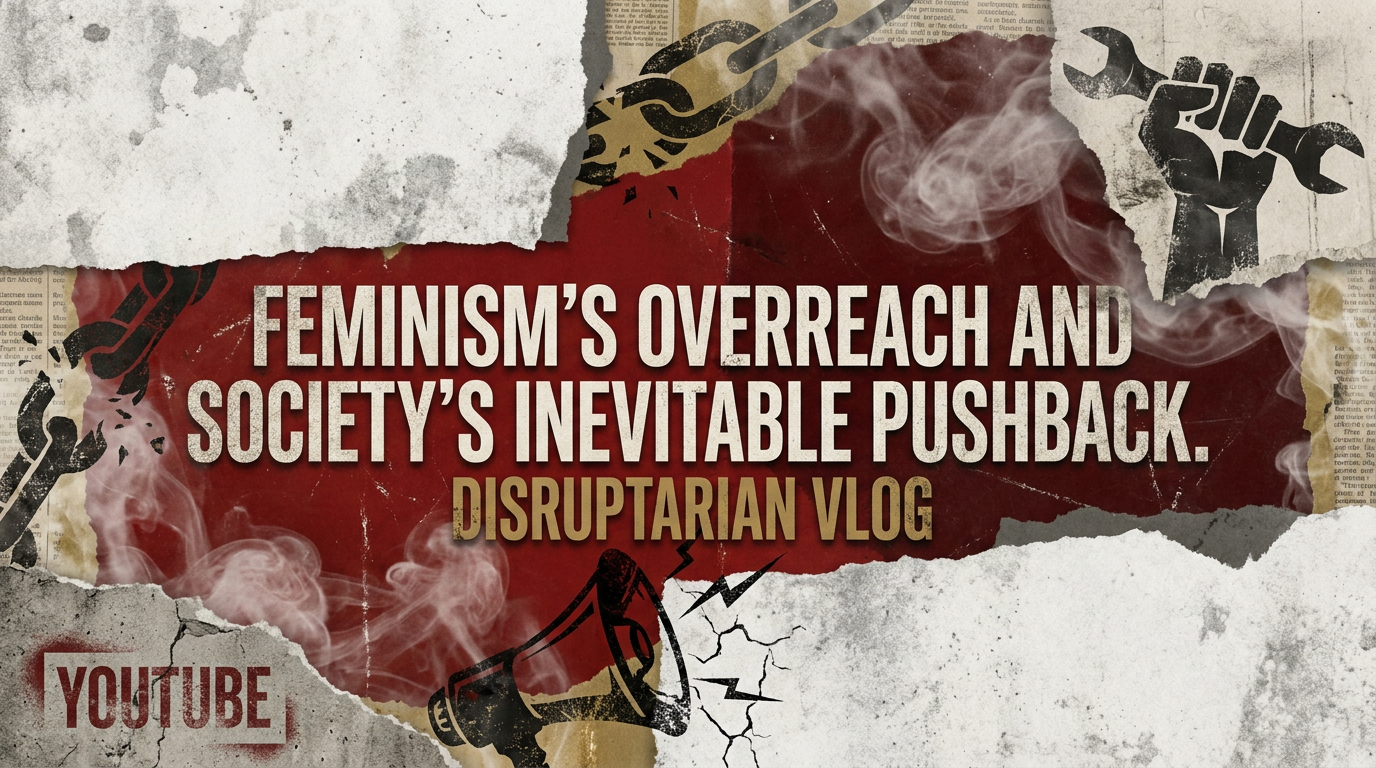
  • Feminism’s Overreach and Society’s Inevitable Pushback

    Feminism's Overreach and Society's Inevitable Pushback | Disruptarian Vlog

    Disruptarian featured image for Feminism's Overreach and Society's Inevitable Pushback | Disruptarian Vlog

    In this thought-provoking episode of Disruptarian Vlog, host Ryan Thompson delves into the complex dynamics of modern feminism and its impact on society. He explores the concept of "feminism's overreach" and discusses the potential consequences of pushing beyond the movement's original goals. Ryan examines how certain aspects of contemporary feminism may lead to societal pushback, analyzing the balance between advocating for equality and respecting diverse perspectives.


    The shortlink was copied to your clipboard

    X
    f
    r
  • Behind the Music: The Creative Journey of Silent Voices’ ‘Disruptive Echoes’ EP

    Advertisement: [ad_1]

    Behind the Music: The Making of Silent Voices’ “Disruptive Echoes” EP

    In the eclectic world of music, where genres blend and personalities clash, there exists a space where creativity burgeons at the fringes of harmony and chaos . That space has been fully embraced by DJ Disruptarian – alias Ryan Richard Thompson – whose latest EP, “Disruptive Echoes,” promises to be a riveting exploration into the kindred spirits of silence and noise.

    The Conception of “Disruptive Echoes”

    The journey into the making of “Disruptive Echoes” began in a studio, cluttered with half-empty coffee cups and weathered vinyl, where genius often thrives on the precipice of disorder. It’s here, amidst a labyrinth of cords and glowing screens, that DJ Disruptarian, accompanied by the enigmatic Silent Voices, decided to merge the pulsating rhythms of Reggae with the rebellious tones of punk – a volatile yet intriguing concoction.

    Drawing inspiration from tracks like “The Siren’s Spell” and “Rasta Gnosis,” found intricately woven into the fabric of his past projects, DJ Disruptarian crafted each track of the EP like a sonic alchemist turning leaden silence into auditory gold. These tracks,, are available for listening pleasure on platforms such as Apple Music (Apple Music – DJ Disruptarian) and Spotify (Spotify – Disruptarian Show).

    Channeling Chaos and Harmony

    With track titles like “Disrupt The Darkness” and “Hidden Scrolls Rising Truth,” one might assume a sinister unraveling of melodies, but, true to his name, DJ Disruptarian balances disruption with poise. The process, as described by the artist himself in one of his more introspective podcast episodes on Apple Podcasts (Apple Podcasts – Disruptarian), involves “a dance of decibels” where every soundwave tells a story, and every echo shapes a thought.

    “Was it disorganized? Absolutely. But so is a hurricane, and look at the art it leaves behind,” muses DJ Disruptarian in an episode, a reference that could either be about his music or his notoriously unkempt studio.

    Recording: Where Magic Meets Mayhem

    The EP’s recording sessions were anything but dull. Band members and vocalists from various backgrounds brought not just their instruments, but also their distinctly flavorful anecdotes, creating an atmosphere that was as culturally diverse as it was melodically rich. “Silent Voices aren’t just heard, they’re felt,” joked DJ Disruptarian, in a nod to both his collaborators and the ethereal quality of their production.

    Every track was layered meticulously, a testament to the obsessive attention to detail that DJ Disruptarian dedicates to his craft. From the rebellious fire of “Legends of the Dancehall” to the serene wisdom of “The Gospel of Judas,” available for deeper review in LANDR Network (LANDR Network – Disruptarian), the EP serves as a tour de force of what it means to revolutionize soundscapes while staying true to one’s roots.

    The Release and Reception

    Upon its release, “Disruptive Echoes” was met with a cacophony of both applause and critique – much like any pioneering venture in the arts. Fans lauded the fusion of fierce punk energy with Reggae’s laid-back rhythm, while traditionalists scratched their heads, unaccustomed to such audacious musical experimentation.

    Curious listeners can delve into the disruptive yet rhythmic world of DJ Disruptarian through his YouTube playlist (YouTube Playlist), where every track is a testament to his radical approach to sound.

    FAQs and Additional References

    • Where can I stream DJ Disruptarian’s music?
      DJ Disruptarian’s music is streamable on various platforms, including Apple Music, Spotify, and Amazon Music (Amazon Music – Ryan Richard Thompson).

    • What are some must-listen tracks from DJ Disruptarian?
      For newcomers, tracks like “Echoes of Power,” “With Pride We Ride,” and “Disruptive Vibes” are essential. These songs encapsulate the ethos of DJ Disruptarian’s musical philosophy.

    • Any recommended podcasts to understand DJ Disruptarian’s inspiration?
      Definitely check out the Disruptarian Radio Podcasts on YouTube – (YouTube – Disruptarian Radio Podcasts) for deeper insights into his creative process.

    • Where can I find more about the Celtic Reggae Movement?
      DJ Disruptarian is a fervent promoter of this movement. More information can be found on his official website, echaos.org (EChaos.org), which serves as a hub for his musical and ideological explorations.

    “Disruptive Echoes” isn’t just an EP; it’s a bold statement in the world of music, crafted by a maestro who dances on the edges of musical norms, making silence and chaos his partners in tune.

    #Music #Making #Silent #Voices #Disruptive #Echoes

    Advertisement: [ad_2]

    Spun Web Technology SMART SEO

    Spun Web Technology SMART SEO

  • Trump to Attend Super Bowl for Social Engagement

    Advertisement: [ad_1]

    On Friday’s episode of a popular political discussion program, hosts Alison Maloni, Julia Sun, and Rich “Big Daddy” Salgado delved into President Donald Trump‘s much-anticipated appearance at Super Bowl LIX. As we approach this grand event, it’s impossible to overlook the significant implications and the broad spectrum of reactions it stirs in the political landscape, especially among those of us who hold a skeptical yet empathetic view of Trump’s policies and approach to governance.

    The Super Bowl, a cultural phenomenon in the United States, transcends the realm of sports. It emerges as a highly anticipated event that captures the attention of millions, making it a prime opportunity for political figures to connect with the populace. Trump‘s attendance at Super Bowl LIX is not just a trivial visit; it signals his ongoing role in the political narrative and his enduring connection with the American electorate. Since his departure from the White House, Trump has remained a dominant figure in the Republican party, and his presence at such a public event serves to reinforce his relevance in the political discourse as the 2024 election race heats up.

    Why should libertarians, in particular, be empathetic toward Trump‘s policies? Although he may not fully embody the libertarian ethos—prioritizing maximum individual liberty and minimal government intervention—there are aspects of his presidency that resonate with libertarian ideals. For instance, his approach to deregulation has spurred economic growth and innovation in numerous sectors. Under his administration, there was a concerted effort to reduce the regulatory burden on businesses, fostering an environment where entrepreneurship could thrive. For libertarians who believe in the power of free markets and voluntary exchange, these policies are commendable.

    Moreover, Trump‘s tax reforms are noteworthy from a libertarian perspective. By significantly lowering corporate tax rates and offering reduced rates for individuals, his policies aimed to keep more money in the hands of American citizens and businesses. This emphasis on tax reduction aligns with libertarian values, as it effectively empowers individuals to make their own financial decisions without excessive government interference.

    That being said, Trump‘s presidency was not without its controversies and critiques, especially concerning issues such as civil liberties and foreign intervention. Libertarians often express concerns about the expansion of government powers during his tenure, particularly in areas like surveillance and law enforcement. Trump‘s approach to certain social issues also raises questions among libertarians who advocate for personal freedom and minimal state involvement in individual life choices. However, it is crucial to recognize that political landscapes are complex, and even within movements like libertarianism, there can be room for differing viewpoints and shades of thought.

    As we look ahead to the Super Bowl and Trump‘s expected appearance, it is essential to understand the spectacle of this event as more than just a game. The Super Bowl serves as a backdrop for political messaging and a chance for leaders like Trump to reinforce their identity with voters. It is a space where emotion often trumps rationality, and where individuals from various walks of life come together—all holding hopes and dreams for the future of their country.

    This dynamic emphasizes the need for empathy in political discourse. Whether we agree or disagree with Trump‘s policies, it is vital to recognize the emotional connections that many Americans have with him. For supporters, Trump‘s message of America First resonated deeply, conjuring feelings of patriotism and national pride. Many view his blunt, unfiltered communication style as a refreshing change from traditional politicians who often come across as polished but robotic. In a world saturated with political correctness, Trump‘s willingness to speak his mind has garnered a loyal base that appreciates his straightforward approach.

    Furthermore, the Super Bowl represents an opportunity for Trump to maintain his momentum as a political candidate. By appearing at this influential event, he capitalizes on the intersection of sports and politics, hoping to galvanize supporters and bring attention to key issues he wishes to champion in the coming election cycle. As libertarians who value personal agency and free markets, we must critically analyze the implications of candidates’ messages and use events like these to highlight our own values effectively.

    In addition to sports, the implications of cultural events such as the Super Bowl extend to social issues, where President Trump‘s presence can serve as a rallying point for conversations around policy changes and reforms. From healthcare to civil liberties, these moments of connection can effectively convey ideas and principles that may resonate with diverse audiences, especially when likened to the spirit of competition and unity that sports often embodies.

    Ultimately, President Trump’s attendance at Super Bowl LIX is much more than an appearance; it’s a reiteration of his place in American politics. It embodies the intersection of sporting culture and political aspirations, providing an opportunity for connection, expression, and perhaps even a path toward renewed conversations about policy and governance. As we reflect on this event, it is crucial for those of us who value freedom and personal responsibility to engage thoughtfully with the messages being shared and the implications they hold for the future of our nation. By fostering an empathetic and open discourse, we can create a foundation for understanding amidst the often-chaotic world of politics.

    Download the video at:

    source of this video: Trump attending Super Bowl to be around people | American Agenda

    Advertisement: [ad_2]

    Spun Web Technology SMART SEO

    Spun Web Technology SMART SEO

  • The Spending Scandal No One Wants to Talk About

    Washington is in full meltdown mode. Not because of a foreign crisis, a natural disaster, or a cyberattack. No, the political class is in panic because of something far more dangerous to them: accountability. President Trump assigned Elon Musk to audit federal spending, and what he’s uncovering is enough to make taxpayers sick to their stomachs.

    Let’s be clear—what Musk is doing isn’t some wild, out-of-bounds move. It’s exactly what Trump promised on the campaign trail. He vowed to scrutinize government spending, line by line. And that’s precisely what’s happening now. So why are Democrats and the media acting like the sky is falling?

    The Real Reason Washington Is Panicking

    The outrage isn’t about some procedural concern or ethical dilemma. It’s about fear. Fear of the truth. Fear of the waste, fraud, and outright corruption that Musk’s audit is exposing.

    For years, politicians have spent taxpayer dollars like Monopoly money. And now, when someone finally dares to look under the hood, the response is hysteria. Instead of discussing the actual findings, the political class is throwing a tantrum about the process. That alone should tell you everything you need to know.

    Shocking Findings: Where Your Money Is Going

    Let’s talk about what Musk has discovered so far. Here’s just a fraction of the jaw-dropping waste he’s exposed:

    • Foreign Aid Gone Wild: The U.S. is sending taxpayer dollars to Afghanistan, Yemen, and Syria—some of which has allegedly ended up in the hands of terrorist-linked organizations.
    • LGBT Advocacy in Foreign Countries: Millions have been funneled into LGBTQ+ initiatives in Serbia, Macedonia, Jamaica, and Nepal. While Americans struggle with inflation, the government is funding “equity and inclusion education” overseas.
    • Sex Changes in Guatemala: Yes, you read that correctly. American tax dollars are being used to fund gender transition procedures in Guatemala.
    • Sesame Street in Iraq: The U.S. spent $20 million on a new version of Sesame Street in Iraq. Apparently, Elmo diplomacy is now a budget priority.
    • Teaching Sri Lankan Journalists to Avoid “Binary Gendered Language” – Because clearly, that’s where our money should go in a time of economic crisis.
    • Millions to Hamas-Controlled Organizations in Gaza – If this isn’t insanity, what is?
    • $280 Billion to Subsidize Big Tech Through the CHIPS Act – Because struggling small businesses don’t need help, but semiconductor giants do?

    The Establishment’s Predictable Outrage

    Instead of addressing these findings, Washington elites are attacking Musk himself. They’re calling him unqualified, accusing him of having conflicts of interest, and even suggesting he’s collecting private data for personal gain.

    This is classic political theater. When corrupt bureaucrats get caught, they attack the messenger. But here’s the reality: Musk has a top-secret security clearance, he’s arguably the most successful businessman on the planet, and he’s doing exactly what Trump said he would do.

    So what’s the problem? The problem is that Washington is being audited, and they don’t like what’s being exposed.

    $36 Trillion in Debt—And This Is How They Spend?

    America is now $36 trillion in debt. To put that into perspective:

    • If you counted to a billion, it would take you 32 years.
    • If you counted to a trillion, it would take 31,000 years.
    • At 36 trillion, it would take over a million years to count to our national debt.

    Yet Washington acts like more spending is the only solution. Under Biden, the budget has exploded by 55% since 2019, while the population has only grown by 2%. The numbers don’t lie—our leaders are spending us into oblivion.

    What Needs to Happen Next

    First, Musk needs to continue his audit. But not just of USAID—he should investigate every single federal agency. Waste isn’t limited to foreign aid; it’s embedded in every department of government.

    Second, Congress should be thanking Musk, not attacking him. If they had any integrity, they’d invite him to testify—not to scold him, but to learn from him. Senator Mark Warner has called for Musk to speak before Congress. That’s a good start, but it should be about solutions, not political grandstanding.

    Finally, the American people need to demand accountability. The spending porn Musk uncovered is just the tip of the iceberg. It’s time to demand audits, transparency, and actual consequences for those who treat our tax dollars like a slush fund.

    The Bottom Line

    Washington doesn’t want you to know where your money is going. But now, the truth is out. Musk’s audit is exposing a system built on corruption, waste, and arrogance. Instead of debating how to fix the mess, politicians are throwing a fit because their gravy train is being derailed.

    The question is simple: Do we want more of the same reckless spending, or do we want real accountability? If you’re angry about what Musk has uncovered, good. You should be. Now, let’s demand that something be done about it.

    Spun Web Technology SMART SEO

    Spun Web Technology SMART SEO