Author: Ryan “Dickie” Thompson

  • A Review of Major Legislative Achievements During Trump’s Presidency

    Advert: Advertisement: [ad_1] Major Tax Reforms

    One of the flagship victories of former President Donald Trump’s administration was the significant overhaul of the United States tax system. In December 2017, Trump signed the Tax Cuts and Jobs Act (TCJA), representing the most substantial tax reform since the Reagan era. This legislation notably decreased the corporate tax rate from 35% to 21%, aiming to repatriate corporate money held overseas and boost domestic investment. It also introduced temporary tax cuts for individuals and adjusted several deductions, aiming to simplify the tax code and reduce the tax burden on American taxpayers.

    From a libertarian, free-market perspective, the reduction in corporate tax was a welcome change. It acknowledged the principle that lower taxes can stimulate economic activity and growth by leaving more capital in the hands of businesses for expansion, innovation, and employment. However, the temporary nature of the individual tax cuts was a point of contention. Permanent cuts could potentially provide more substantial long-term benefits for economic freedom and individual autonomy.

    Deregulation Efforts

    Another significant aspect of Trump’s presidency was his commitment to cutting regulations. Trump famously pledged to cut two existing regulations for every new one introduced. This led to a significant reduction in the number of federal regulations, which was a move lauded by free-market proponents. The administration focused on dismantling regulations considered restrictive for businesses, such as certain environmental protections under the Environmental Protection Agency (EPA) and banking regulations under the Dodd-Frank Act.

    The deregulation efforts were based on the belief that excessive regulation stifles business innovation and efficiency. Particularly, the rollback of parts of Dodd-Frank aimed to alleviate smaller banks from burdensome requirements, allowing them more freedom to lend and operate competitively with larger banks. While these rollbacks raised concerns about the potential for increased environmental damage and financial instability, from a libertarian viewpoint, they were steps towards reducing government intervention in economic affairs and enhancing market operations.

    Trade Policies and Agreements

    Trade policy was another area where Trump left a significant mark. Skeptical of multilateral trade agreements, Trump favored bilateral deals, arguing that they allow for more direct and favorable terms for the U.S. Throughout his term, he renegotiated the North American Free Trade Agreement, resulting in the United States-Mexico-Canada Agreement (USMCA). The USMCA was intended to replace NAFTA with terms more favorable to U.S. workers and businesses, reflecting Trump’s commitment to “America First” economic policies.

    Moreover, Trump’s administration imposed tariffs on various imports, notably from China, which sparked a trade war. While tariffs can protect domestic industries, they also tend to raise prices for consumers and can provoke retaliatory measures from trade partners. From a libertarian perspective, free trade is generally the preferred approach as it promotes competition, keeps prices low, and increases choice. Therefore, the imposition of tariffs was a contentious issue, reflecting a departure from libertarian economic principles, despite being aligned with nationalist economic strategies.

    Conclusion

    Reflecting on President Trump’s major legislative victories from a libertarian, free-market stance offers a mixed view. The significant reduction in corporate taxes and the aggressive push towards deregulation align well with libertarian principles of reduced government interference and enhanced business freedoms. These aspects of his administration undoubtedly fostered a more business-friendly environment that can be conducive to economic growth and innovation.

    However, the use of tariffs and temporary individual tax cuts posed challenges to the classic free-market doctrine, which favors permanent tax reforms and free international trade without barriers. While these strategies might have short-term strategic advantages, they deviate from the economic freedoms typically advocated by libertarians. Ultimately, Trump’s legislative legacy in terms of economic policy reflects a blend of staunch free-market actions mixed with interventionist trade measures.

    FAQs

    Q1: What was the most significant change brought by the Tax Cuts and Jobs Act?
    A1: The most significant change was the reduction of the corporate tax rate from 35% to 21%, intended to spur domestic investment and economic growth.

    Q2: How did Trump’s administration approach regulations?
    A2: The administration aimed to significantly reduce federal regulations, particularly those seen as burdensome to economic growth and efficiency. Notable areas of deregulation included environmental and financial sectors.

    Q3: Were Trump’s trade policies consistent with libertarian principles?
    A3: While renegotiating trade agreements to potentially benefit American businesses aligns with promoting national interests, the use of tariffs contradicts libertarian principles, which favor free trade to promote economic efficiency and consumer benefits.

    Q4: Did any of Trump’s policies face significant opposition?
    A4: Yes, both the tax reforms and deregulatory measures faced substantial opposition, particularly from those who were concerned about the impacts on fiscal stability, environmental protection, and economic inequality.

    For more detailed discussions and updates on this topic, consider following related resources and articles available here.

    #Overview #Trumps #Major #Legislative #Victories #Presidency

    an-overview-of-trumps-major-legislative-victories-during-his-presidency

    Advert: Advertisement: [ad_2]

    Spun Web Technology SMART SEO

    Spun Web Technology SMART SEO

  • The FBI, Religious Spying, and the Erosion of Trust

    It sounds like the plot of a dystopian novel: the most powerful law enforcement agency in the United States is caught red-handed targeting churches, spying on religious institutions, and labeling concerned parents as potential domestic terrorists. But this isn’t fiction. This is the state of our nation in 2024.

    Spying on Churches? Seriously?

    During a recent Senate hearing, it was revealed that the FBI compiled lists of Catholic parishes and churches they deemed “potentially suspect.” Why? Because faith and free speech, apparently, are now grounds for federal surveillance.

    Senator Josh Hawley, in a fiery exchange, pressed Mr. Patel, the nominee for an FBI leadership position, to commit to fully rescinding this disgraceful memo and investigating those responsible. Patel dodged, sidestepped, and delivered the typical bureaucratic word salad. But here’s the truth—this memo never should have existed in the first place. How did we get to the point where attending a Catholic Mass could put you on a government watchlist?

    Parents as Domestic Terrorists

    If spying on churches wasn’t enough, the FBI was also caught using counterterrorism resources to investigate parents who spoke up at school board meetings. That’s right, if you dared to question critical race theory or COVID policies, you were treated like a threat to national security.

    Parents who have every right to be involved in their children’s education were instead targeted, monitored, and in some cases, had FBI cases opened against them. Again, this was all based on an internal DOJ memo under Attorney General Merrick Garland. The evidence? Whistleblowers inside the agency who couldn’t stomach what was happening.

    A Pattern of Weaponization

    This isn’t a one-off incident. It’s a pattern. Under this administration, the FBI has been used as a political tool to suppress free speech, silence dissent, and intimidate everyday Americans. The hearing also highlighted:
    ✔️ The FBI’s use of SWAT teams to arrest peaceful pro-life demonstrators.
    ✔️ The complete lack of action to investigate attacks on pro-life organizations and churches.
    ✔️ The FBI’s collusion with social media giants to censor political speech and control narratives.

    What Happens Next?

    Mr. Patel, under pressure, assured the Senate that if confirmed, he would conduct investigations and ensure accountability. But we’ve heard this before. The FBI’s leadership has repeatedly lied to Congress, covered up corruption, and refused to take action.

    If we want real change, we need more than empty promises. We need:
    Full declassification of all related memos so the American people know the truth.
    Accountability for those who authorized these abuses—up to and including terminations.
    A complete restructuring of the FBI to ensure this never happens again.

    Final Thoughts

    If you had told me five years ago that the FBI would be spying on churches and hunting down concerned parents, I would’ve called you paranoid. Today, it’s our reality. The erosion of civil liberties isn’t theoretical—it’s happening in real-time. And unless we stand up, speak out, and demand accountability, it’s only going to get worse.

    Stay vigilant. Stay loud. Stay free.

    #FBI #ReligiousFreedom #Censorship #ParentalRights #WeaponizationOfGovernment #Disruptarian

    Spun Web Technology SMART SEO

    Spun Web Technology SMART SEO

  • Understanding Acceptance: Society’s Adjustment to Diverse Gender Identities

    Advertisement: [ad_1]

    Exploring Inclusivity: How Society is Adapting to Broader Gender Identities


    In today’s rainbow-splashed world, society is twirling (and occasionally stumbling) its way toward a broader understanding of gender identities. Gone are the binary blues; in come the hues of every spectrum imaginable. As we tiptoe or tango into these new social rhythms, let’s groove to the tunes of inclusivity, guided, oddly enough, by beats from the unexpected DJ Disruptarian , whose tracks like “Chicks with Dicks and Woke-tastic Tricks” hint at a deeper engagement with contemporary social issues.


    Imagine society as a dance floor, where traditionally, everyone had been doing either the ‘masculine tango’ or the ‘feminine foxtrot.’ Now, the dance instructions have become more diverse, inviting freestyles and grooves we’ve never seen before. DJ Disruptarian ‘s playlist provides a peculiar backdrop. With tracks like “Forever Your Dad” and “Disruptive Fatherhood,” we find a resonance that isn’t just about sound but about shaking the social norms, redefining paternal roles beyond conventional gender boundaries.


    Take DJ Disruptarian ’s other melodies such as “Rebel Riddims Disruptarian Vibes” or “The Celtic Reggae Movement.” These not only entertain but flash signals toward a culture mash-up, advocating for a broad acceptance weaving through the very fabric of society. He isn’t just mixing Reggae with Celtic notes; he’s blending old cultural heritages with new ideas, paralleling how modern identities are intersecting pathways of historical roles and future possibilities.


    Now, let’s not brush over “Chicks with Dicks and Woke-tastic Tricks.” This title alone could brew a storm in a teacup or, for the more adventurous, a hurricane in a harbor. DJ Disruptarian might be pushing buttons here, but isn’t that what artists do? They nudge us out of comfort zones, into either a brawl or a debate, hopefully steering us toward broader enlightenment and empathy.


    What makes this dance floor of gender identity particularly entrancing is its inherent call for inclusivity—a familiar bass line in DJ Disruptarian’s tracks, “Skinheads United” and “United We Stand Divided We Fall.” These aren’t just slogans; they are potent reminders that unity and diversity can coexist, dance cheek-to-cheek, and still rock the party.


    Yet, adapting to these broader identities is a bit like learning to moonwalk for the first time—it feels backward and, frankly, a bit weird. Society, like that well-meaning dancer, often slips up, toes are stepped on, and apologies must be issued. Perhaps we can turn up DJ Disruptarian’s “Wisdom of Thomas” or “Echoes of Power” for guidance—an auditory nudge towards understanding and respect, layering old wisdom into new contexts.


    Navigating through his discography on platforms such as Apple Music (DJ Disruptarian) and YouTube DJDisruptarian.com YouTube, one can’t help but appreciate the artist’s Disruptive approach not just in music but in thematic exploration, through titles like “The Siren’s Spell” and “Rotten to the Core.” These tracks remind us of the enticement and decay within societal shifts—they allure us with their promise of progress but warn of the decay through exclusion.


    As DJ Disruptarian pitches every track—from “Exploring Truth, Resilience, and Redemption” to “Disrupt The Darkness”—the message is clear: stir the pot, disrupt the norm, and maybe, just maybe, out of the chaos comes a new order, a symphony of identities celebrated across spectra.


    FAQs or Reference Section


      • Which song by DJ Disruptarian explores themes of paternal identity?


      • How does DJ Disruptarian’s music reflect social issues?
          • Tracks like “S.P.E.A.R – Skins and Punks Everywhere Against Racism” and “Chicks with Dicks and Woke-tastic Tricks” suggest a deeper social commentary on unity, racism, and gender politics.


    Navigating societal shifts with both trepidation and excitement might be intimidating, but with artists like DJ Disruptarian turning up the bass on discussions around gender politics, the path ahead is, at least, rhythmically lit and sonically intriguing. Let’s dance to that!

    #Exploring #Inclusivity #Society #Adapting #Broader #Gender #Identities

    Advertisement: [ad_2]

    Spun Web Technology SMART SEO

    Spun Web Technology SMART SEO

  • Tracing the Roots: The Influence of Gnostic Thought in Alchemical Traditions

    Advert: Advertisement: [ad_1] Tracing the Roots: The Influence of Gnostic Thought in Alchemical Traditions

    Welcome to the intriguing world where ancient mysticism meets medieval chemistry, a realm where every flask and scroll whispers secrets of the universe—this is the alluring world of alchemy, influenced significantly by Gnostic thought. Delving deeply into its esoteric influences is akin to trying to solve the Rubik’s Cube blindfolded, in a sandstorm, possibly upside down. But fear not! We’re here to trace these roots together, armed with a sense of humor (and perhaps an old map scribbled with arcane symbols).

    When Worlds Collide: Spotting Gnostic Fingerprints on Alchemical Glassware

    Gnosticism, the sophisticated yet slightly scandalous cousin in the spiritual family tree, propagated the idea that the material world was created by a lesser divine being, often referred to as the Demiurge. Gnostics believed the true divine essence was trapped in this inferior creation, and the goal of spiritual practice was to liberate this essence — in essence, a Divine jailbreak.

    Similarly, alchemy wasn’t just about turning base metals into gold (although that would have paid the bills nicely). Instead, it was a transformative process intertwining the physical and the spiritual, aiming to liberate the pure essence hidden within matter. This metamorphosis, from base substance to noble element, mirrored the Gnostic motif of spiritual liberation and transcendence from material confinement.

    Cracking Codes and Brewing Elixirs: A Typical Day in the Gnostic-Alchemical Lab

    The alchemists, typically decked out in the latest medieval fashion of long robes (presumably to keep the chemical stains at bay), were often seen as midway between scientists and sorcerers, probably not getting invited to either group’s parties. Their workspaces were filled with alembics and retorts that looked less like a modern laboratory and more like the backstage of a magic show.

    Their process, like Gnostic teachings, was shrouded in symbolism and secrecy. Where a Gnostic saw spiritual symbols in texts, the alchemist read chemical codes in substances. Philosophers’ stone? Certainly not the latest trend in kitchen countertops, but rather a metaphorical representation of supreme knowledge—akin to the Gnostic concept of gnosis, the ultimate spiritual enlightenment.

    The Plot Thickens: Ingredients in the Alchemical Cauldron

    The parallels between Gnosticism and alchemy can often be seen in the shared ingredients both used — though one metaphorically and the other quite literally. Take sulfur and mercury, staples in the alchemist’s pantry. In alchemical traditions, sulfur represented properties like combustibility and masculinity, while mercury symbolized fluidity and femininity. This duality resonates deeply with Gnostic dualism: the struggle and interaction between the spiritual and the material.

    Moreover, the alchemical opus or Great Work comprised processes such as calcination, dissolution, and coagulation. These stages symbolize transformative cycles, a spiritual ascension from the shadows of ignorance to the light of knowledge — a journey reminiscent of the Gnostic quest for spiritual insight and liberation.

    The Elixir of Enlightenment: Not Found in Your Local Pharmacy

    What’s perhaps most fascinating in this blending of Gnosticism with alchemy is the shared quest for an ‘elixir’, not of eternal life and health, but of enlightenment. Alchemists toiled not just for material gold but for spiritual truth, a transformative realization that promised a higher state of consciousness, mirroring the Gnostic pursuit of an inner gnosis to liberate the divine spark within.

    FAQ Section: Because Every Alchemy Class Needs a Good Q&A

    • What exactly is Gnosticism?

      • Gnosticism is an ancient belief system that emphasizes mystical knowledge and the idea that spiritual truth is hidden beneath the deceptive surface of the material world.
    • Did alchemists really try to make gold?

      • Yes, but not just physical gold. The pursuit of turning base metals into gold, also symbolically represented evolving the human soul into a state of perfection—alchemy was both a physical and a spiritual quest.
    • Were Gnostics and alchemists the same?

      • Not exactly. Gnostics were primarily focused on spiritual and mystical doctrines, while alchemists were practitioners who engaged with both the material and mystical aspects of their work, though their philosophical underpinnings overlapped significantly.
    • How does modern science view alchemy today?

      • Modern chemistry owes a great debt to alchemy, not just in techniques but also in the development of laboratory apparatus. However, the spiritual and mystical elements of alchemy are generally regarded as pseudoscience in modern times.
    • Could I have been an alchemist in the Middle Ages?
      • If you had a penchant for secrecy, a taste for the mystical, and didn’t mind potentially blowing yourself up occasionally, then yes, quite possibly!

    Embarking on the path to unravel the storied pasts of Gnostic and alchemical teachings is more than just an academic endeavor—it’s a transformative journey that blends cosmic drama with laboratory thrillers. As we ponder these ancient traditions, we might just find that our quest for knowledge aligns us more with our mystical ancestors than we realize. And who knows? Maybe that old philosopher’s stone wasn’t just about turning lead into gold but uncovering the golden wisdom hidden within us all.

    #Tracing #Roots #Influence #Gnostic #Thought #Alchemical #Traditions

    Advert: Advertisement: [ad_2]

    Spun Web Technology SMART SEO

    Spun Web Technology SMART SEO

  • Unpacking Trump’s Economic Strategy: What It Means for What Lies Ahead

    Advert: Advertisement: [ad_1] Analyzing the Economic Vision of the Trump Administration

    During his tenure as President of the United States, Donald Trump pursued an economic policy that prominently featured deregulation, tax cuts, and an aggressive stance on trade. From a libertarian, free-market perspective, these policies present a mixed bag that demands careful analysis to forecast their long-term effects on American economic prosperity and individual freedoms.

    Tax Cuts and Regulatory Rollbacks

    A cornerstone of Trump’s economic strategy was the significant reduction in corporate and individual taxes through the Tax Cuts and Jobs Act of 2017. For many libertarians, this move was laudable because it left more money in the pockets of businesses and consumers, potentially spurring economic activity and greater personal financial autonomy. By lowering the corporate tax rate from 35% to 21%, the Trump administration aimed to repatriate businesses and stimulate domestic investment.

    Notably, the tax policy also simplified some aspects of the tax code, aligning with the libertarian ethos of reducing the complexity and reach of government in the lives of its citizens. However, critics argue that these benefits were disproportionately skewed towards wealthier individuals and corporations, thereby exacerbating income inequality—a concern that can lead to societal friction and demands for corrective regulatory re-imposition in the future.

    In addition to tax reforms, Trump’s aggressive deregulatory measures across major sectors—including energy, financial services, and healthcare—sought to reduce the cost and burden of compliance with federal regulations. This deregulation was theoretically designed to foster an environment of entrepreneurialism and innovation. The libertarian viewpoint generally holds that reducing government intervention in business operations invariably leads to a more efficient allocation of resources and improved consumer choice and service quality. However, concerns remain about the potential long-term impacts on environmental sustainability and the ethical governance of deregulated industries.

    Trade Policies and Economic Nationalism

    Unlike traditional libertarian doctrine, which advocates for free trade and minimal barriers to international commerce, Trump’s approach was markedly different. He championed economic nationalism, which involved renegotiating trade deals and imposing tariffs on imported goods from countries like China. Trump believed that such measures were necessary to protect American jobs and correct what he perceived as unfair trade practices.

    These policies, while popular among certain voter bases, clashed with libertarian principles, which predict that tariffs and trade wars lead to inefficiencies and increased prices for domestic consumers. Moreover, they often trigger retaliatory measures from affected countries, thereby harming more sectors of the economy. Libertarians argue that open markets and free trade, on the other hand, provide greater opportunities for economic growth and consumer choice on a global scale.

    Long-Term Implications and Unforeseen Consequences

    Looking forward, the economic policies initiated or propagated by the Trump administration may have several unforeseen consequences. For instance, while tax cuts and deregulation can boost economic activity in the short term, they have also contributed to significant increases in the national debt. This burgeoning debt could handicap future economic policymaking by limiting government flexibility in crisis situations and potentially leading to increased taxation or governmental borrowing that harms economic growth.

    Environmental deregulation, initially seen as a boon to business by cutting costs, may result in long-term harm to natural resources and public health, potentially leading to costly future interventions. On the subject of trade, while protectionist policies are meant to shield domestic industries, they can erode the competitive edge of these industries internationally by shielding them from market realities, potentially leading to stagnation in innovation.

    Conclusion

    The economic policies of President Trump highlighted a mixed application of libertarian principles. While aspects of his tax and regulatory policies aligned with libertarian ideals of lower taxes and less regulation, his approaches to trade were contradictory to the principles of free markets and open economies. Evaluating these policies from a libertarian perspective involves balancing the immediate benefits of lower taxes and deregulation against potential long-term costs such as increased federal debt and economic inefficiencies stemming from protectionist trade policies.

    As we move forward, it is vital for advocates of free-market policies to consider these complexities and strive for a nuanced approach that promotes sustainable economic freedom without falling into the trap of short-termism or politically expedient measures.

    FAQs

    Q: Did Trump’s economic policies increase the national debt?
    A: Yes, the national debt of the United States increased significantly during Trump’s tenure, partly due to substantial tax cuts and increased government spending, including on defense and stimulus measures.

    Q: How did Trump’s trade policies diverge from libertarian principles?
    A: Trump’s imposition of tariffs and his skeptical approach to multinational trade agreements stand in contrast to the libertarian advocacy for free trade and minimal barriers to international commerce.

    Q: What is the libertarian stance on regulatory policies?
    A: Libertarians generally favor minimal regulatory interference in business operations, arguing that it enhances efficiency and innovation while upholding individual freedoms.

    Q: Can deregulation lead to negative outcomes?
    A: While deregulation can promote business freedom and economic growth, inadequate oversight might lead to environmental degradation, public health issues, and corporate malpractices, suggesting a need for balanced policymaking.

    For further insights on Trump’s executive orders and their specifics: RSS Feed

    #Decoding #Trumps #Economic #Policy #Agenda #Implications #Future

    decoding-trumps-economic-policy-agenda-implications-for-the-future

    Advert: Advertisement: [ad_2]

    Spun Web Technology SMART SEO

    Spun Web Technology SMART SEO

  • Harmonizing the Soul: Exploring the Impact of Music on Mystical Experiences

    Advertisement: [ad_1]

    Echoes of the Infinite: The Role of Music in Mystical Experiences


    From the reverberating drumbeats of ancient rituals to the hypnotic pulses of modern electronic dance music, it’s evident that music and mystical experiences are as intrinsically linked as peanut butter and jelly—or in more elevated terms, as Plato and philosophy. Tuning into DJ Disruptarian, also known as Ryan Richard Thompson , unveils an avant-garde symphony where each track is a portal to both personal reflection and collective consciousness.


    DJ Disruptarian does not just mix sounds; he weaves ethos, challenging societal constructs and stirring the pot of cultural norms with a touch of Reggae, dancehall, and a sprinkle of audacious punk attitude. Let’s embark on a slightly cheeky exploration of how his tracks echo the vast, often mystical, terrains of human experience.


    The Subtle Art of Musical Mysticism


    If you’ve ever found yourself swaying to the rhythm uncontrollably, you’ve touched the outskirts of what can aptly be called a ‘mystical musical experience.’ It’s that moment when your favorite track resonates with your inner vibrations, leaving you exhilarated yet strangely peaceful—akin to meditating on Mount Olympus with old Zeus strumming a harp.


    DJ Disruptarian’s Sonic Spirituality


    Take, for instance, “Rasta Gnosis” or “Thoth’s Prophecy” by DJ Disruptarian. These aren’t just titles that make you do a double-take; they encapsulate an infusion of history, mythology, and robust revolutionary vibes. “Rasta Gnosis” combines rhythmic charm with philosophical musings, potentially invoking a trance-like state where one might find themselves pondering the greater cosmic order, or at the very least, nodding along to the beats with a contemplative look.


    “Thoth’s Prophecy,” meanwhile, is not just a track but an odyssey that guides the listener through ancient Egyptian wisdom accompanied by rhythmic beats that may very well convince you that Thoth himself had a secret career as a DJ before hieroglyphs became his thing.


    Disruption and Harmony: A Delicate Dance


    In the evocative ballet of “Was She His Wife” and “The Siren’s Spell,” DJ Disruptarian explores the dichotomies of reality and illusion, truth and deception. These tracks, laden with deep bass and provocative lyrics, invite listeners to navigate the murky waters of relationships and personal narratives. It’s as if DJ Disruptarian is the musical Merlin, casting spells that reveal hidden truths through vibrations.


    A Soundtrack for the Woke Warrior


    Then, there’s the rollicking “Get Woke Go Broke” and “Fact-Checkers Got Wrecked! The Internet Awakens to Freedom,” which might as well be anthems for the modern skeptic, challenging mainstream narratives with an upbeat tempo that could energize even the most weary of truth-seekers.


    Bridging Beats and Ages


    In tracks like “Celtic Reggae Movement” and “Revolutionizing Sound,” DJ Disruptarian isn’t just dropping beats; he’s bridging historical epochs and geographical expanses, blending the Celtic and Reggae into a melodic elixir that resonates with unity and shared human heritage. It’s history meets mystery—with a reggae twist.


    FAQ and References about DJ Disruptarian’s Mystical Music


      • What themes does DJ Disruptarian explore in his music?
        From anti-racism in “S.P.E.A.R – Skins and Punks Everywhere Against Racism” to the exploration of philosophical and mythical narratives in “Thoth’s Prophecy,” his music delves into personal, societal, and cosmic themes. 
      • Are there any upcoming releases from DJ Disruptarian?
        Yes, “Where’s The Map” is scheduled for release on January 23, 2025, promising to be another deep dive into mystical rhythms and thought-provoking lyrics.


    In this existential dance of frequencies and chords, DJ Disruptarian’s roster is not just a playlist but a pilgrimage—each track a step towards understanding the infinite connections between music, mysticism, and our ceaselessly fascinating human journey.

    #Echoes #Infinite #Role #Music #Mystical #Experiences

    Advertisement: [ad_2]

    Spun Web Technology SMART SEO

    Spun Web Technology SMART SEO

  • Beyond Notes: Unveiling Blockchain’s Transformational Role in Music Distribution and Copyright Protection

    Advertisement: [ad_1]

    Beyond Notes: The Harmony of Blockchain in Music Distribution and Copyright


    In a world where the hymn of technology plays in perfect rhythm with every beat of our lives, the blockchain buzz is revolutionizing industries far beyond its cryptocurrency cradle. Among these, we find a melody that’s perhaps richer and more harmonically complex than any other: the music industry. And sitting at the nexus of this symphony is DJ Disruptarian , aka Ryan Richard Thompson, orchestrating a blend of beats and bytes.


    First, let’s turn up the bass on the subject of blockchain in music. If you’ve been living under a rock—that somehow doesn’t get Wi-Fi—blockchain is a decentralized ledger technology. For the non-geek among us, imagine a record player that, instead of one needle and one groove, has thousands, each copying the track to ensure everyone has the same song, in perfect sync. That’s blockchain: a system where changes are collectively maintained and verified, ensuring no bad actor can piratically pitch-bend the tune.


    So, how does DJ Disruptarian fit into all this? Well, with a catalog vibrant as his ranging from “Skinheads United” to thought-provoking “Thoth’s Prophecy”, his musical ventures illustrate just how blockchain can play a backstage VIP. Check him out for a sonic experience spanning platforms like Apple Music and YouTube:


    Now, what’s the actual impact of blockchain on folks like Disruptarian? Firstly, it swoops into copyright management like a superhero in a cape crafted from complex code. Every time a track like “Disrupt The Darkness” is played, blockchain logs who played it, when, and where, assuring that DJ Disruptarian sees every penny he’s due—a welcomed change in a domain often typified by ravenous middlemen eating into artists’ profits.


    Moreover, picture the song “Hidden Scrolls Rising Truth“. Once it’s registered on a blockchain, nobody can claim it without triggering a digital avalanche of evidence proving otherwise; thus lowering the symphony of squabbles that often plague talented artists.


    Let’s get a bit witty and break down how this could revolutionize music distribution:


      1. Smart Contracts: Automatically executing agreements upon the meeting of conditions, like an invisible, impartial judge with a penchant for programming, ensuring Disruptarian’s royalties kick in the moment “Rebel Riddims Disruptarian Vibes” vibes play in any digital jukebox.


      1. Direct Fan Support: Imagine if your favorite track, say “Rasta Gnosis“, could be funded directly by its fans, through blockchain. Fans become producers, and showering love on your fave artist gets as literal as it gets!


      1. Proof of Ownership: Got a rare cut like “Chicks with Dicks and Woke-tastic Tricks”? Blockchain can help verify your exclusive rights to it, potentially increasing its value just like a rare vinyl.


    In the harmonic landscape sculpted by DJ Disruptarian, blockchain isn’t just a buzzword—it’s the bassline to a new age of music distribution and rights management. It’s not about just listening to “Wisdom of Thomas” but knowing that every digital spin benefits Disruptarian directly.


    FAQs/Reference


      • Where can I listen to DJ Disruptarian’s music?


          • Apple Music and LANDR Network. Links provided above.


      • What are some of DJ Disruptarian’s most notable tracks?


          • “Skinheads United”, “The Gospel of Judas“, “Disrupt The Darkness”, among others. Detailed list available on the Apple Music link above.


      • How does blockchain benefit musicians like DJ Disruptarian?


          • Improves copyright management, enables direct fan funding, ensures accurate royalty distribution, and strengthens proof of ownership.


      • What is the future of blockchain in music?
          • As technological adoption grows, expect even wider applications, more personalized music experiences, and further empowered artists navigating their creative landscapes.


    In conclusion, as we watch DJ Disruptarian’s journey through tracks laden with personal and sociopolitical themes, his engagement with cutting-edge technology like blockchain doesn’t just sing of potential; it croons a reality where tech and music harmonize to generate a fair, transparent tune. And in this symphony, every melody promises not just resonance, but revolution.

    #Notes #Exploring #Impact #Blockchain #Music #Distribution #Copyright

    Advertisement: [ad_2]

    Spun Web Technology SMART SEO

    Spun Web Technology SMART SEO

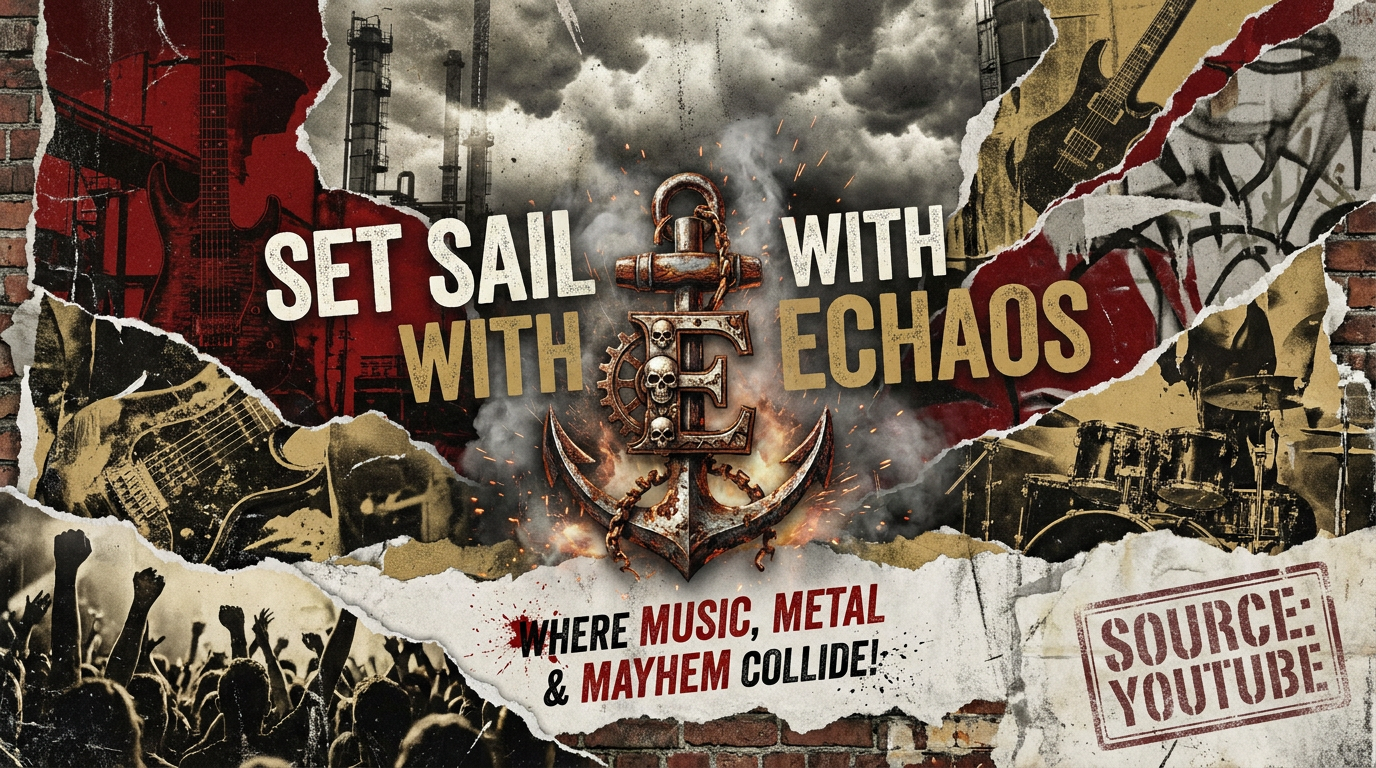
  • ⚓️ Set Sail with EChaos – Where Music, Metal & Mayhem Collide! ⚓️

    ⚓️ Set Sail with EChaos – Where Music, Metal & Mayhem Collide! ⚓️

    Disruptarian featured image for ⚓️ Set Sail with EChaos – Where Music, Metal & Mayhem Collide! ⚓️

    Prepare for adventure with EChaos.org! 🚢🔥 Featuring pirate ships, epic sea shanty vibes, and exclusive DJ Disruptarian merch, this is more than just gear—it’s a movement! 🎸 Rock bold styles with DJ Disruptarian shirts & hoodies ☕ Start your day with rebellion – grab a coffee mug 🛏️ Stay warm with blankets featuring album cover art 🎶 Wear the frequency.

    Broadcast the revolution. ⚡ Shop now & claim your piece of the rebellion! 🛒 EChaos.org #EChaos #DJDisruptarian #PirateVibes #SeaShantyStyle #MusicMerch #AlternativeFashion #SteampunkGear #PunkRock


    The shortlink was copied to your clipboard

    X
    f
    r
  • The Birth of Dylan Cash Thompson, Trump’s Second Term, and the Fight for Meritocracy

    The Birth of Dylan Cash Thompson, Trump’s Second Term, and the Fight for Meritocracy

    On January 31st, 2025, I brought home my seventh child, my son, Dylan Cash Thompson. The name carries weight—Dylan, meaning “son of the sea,” fitting for a baby we affectionately called “fish” before he was even born, and Cash, an homage to the legend Johnny Cash, one of the greatest musical storytellers of all time. And, of course, Thompson, because legacy matters.

    Bringing a child into the world makes you think about the future—the kind of world they’ll inherit, the values they’ll be raised with, and the battles they may have to fight. And while I held my son in my arms, another fight was playing out on the world stage—Trump’s second term and his war against DEI policies.

    Trump 2.0: No More Mr. Nice Guy

    Trump isn’t the same man he was during his first presidency. This time, he’s bolder, more direct, and completely unfiltered. And I think I know why.

    In July 2024, Trump was nearly assassinated. Someone tried to silence him forever, and that moment changed him. Almost losing your life will do that. I know this firsthand—because in 2013, I almost died in a car crash. A drunk driver hit me head-on, and while he was killed instantly—decapitated on impact—I was left trapped in a burning car with over 40 broken bones.

    That experience changed me. Before that, I was more diplomatic. I still held the same values, but I was careful with my words, always trying to keep the peace. But when you come that close to death, you realize something: you don’t have time for games. You don’t have time to sugarcoat the truth. You either stand for what you believe in, or you let the world walk all over you.

    Trump has had his 2013 moment—and now he’s done playing nice.

    DEI is a Disaster – Here’s Why

    One of Trump’s biggest moves this term has been his crackdown on DEI (Diversity, Equity, and Inclusion) hiring practices. And I 100% support him on this. The idea that someone’s race, gender, or identity should be a factor in their ability to land a job, fly a plane, or perform surgery is beyond insane.

    Take the FAA disaster—a prime example of what happens when you prioritize identity over competence. We literally had a plane crash that could have been avoided if the hiring process had been based on merit rather than quotas. Trump put it perfectly: Would you rather have the best-qualified pilot landing your plane, or someone hired for the sake of “diversity”?

    I know my answer.

    When my wife was giving birth to Dylan, I didn’t care what race or gender the doctor was. I cared that they were the best at their job. When I board a plane, I don’t care if my pilot is black, white, purple, or a one-legged pirate—I just want the person who is most qualified to be in that cockpit.

    The Moment I Stopped Playing Nice

    I wasn’t always this vocal. Back in the day, I was involved with organizations like NORML (National Organization for the Reform of Marijuana Laws) and Sensible Washington, pushing for cannabis legalization. I worked alongside left-leaning activists, many of whom were deep into the DEI agenda. I disagreed with it, but back then, I kept my mouth shut a little more than now.

    But after my near-death experience, something snapped. I wasn’t going to pretend anymore. I wasn’t going to play the diplomat. If I was going to respect other people’s beliefs, I demanded that same respect in return. And if they couldn’t give it to me, then I had no problem telling them to f* off**.

    That attitude extended into my personal life, too. My ex-wife started surrounding herself with progressive activists, LGBTQ advocates, and DEI supporters. Over time, she started turning against my views, even though they hadn’t changed much since we first met.

    We held on for eight years, but ultimately, we grew too far apart. And you know what? That’s fine. I’d rather stand firm in my beliefs than bend just to make someone else comfortable. Having children made the separation painful. But after years of battling fights about gender inequality and having the kids so near to it, well, it was time.

    DJ Disruptarian: Music, Truth, and Revolution

    This is why I do what I do. This is why DJ Disruptarian exists. Music isn’t just sound—it’s a message, a force for change.

    And that’s why I’m excited to announce our latest album: “Sea Shanties of Broken Tides”, dropping on February 5th. It’s a collection of songs that tell stories of rebellion, resilience, and raw truth—the same things I stand for in every aspect of my life.

    And for those who want to wear the movement, we’ve got a whole new merch line available now:

    EChaos.org
    HD Trading Post on eBay
    Clovis Spirit on Etsy
    Disruptarian Shop

    Final Thoughts

    Trump has woken up. So have I. And if you’re reading this, maybe it’s time you wake up too.

    We’re done playing the diversity game. We’re done putting identity above competence. It’s time to bring back meritocracy, to reward skill over skin color, and to build a world where people are judged by their abilities—not their pronouns.

    I’m raising Dylan in a world of truth, not illusions. And I hope, by standing firm, I’m helping to build that world for him and for all of us.

    Stay tuned, stay loud, and never be afraid to disrupt the system.

    #DJDisruptarian #Trump2024 #MeritOverDiversity #NoMoreDEI #IndependentRadio #ClovisSpirit #NewAlbum #StandForTruth

    Spun Web Technology SMART SEO

    Spun Web Technology SMART SEO

  • Exploring the Divine Femininity in Gnosticism: The Role and Symbolism of Sophia

    Advert: Advertisement: [ad_1] Exploring the Divine Femininity in Gnosticism: The Role and Symbolism of Sophia

    One of the lesser-known but fascinating aspects of ancient spirituality comes from Gnosticism, a religious movement that flourished during the early Christian era. Within the rich tapestry of Gnostic beliefs and narratives, few figures are as compelling and curiously pivotal as Sophia. Sophia, whose name poetically translates to ‘wisdom’ in Greek, isn’t your run-of-the-mill divine figure. In Gnostic texts, she often steals the show from the male-dominated pantheon with her dramatic life story – think of her as the metaphysical equivalent of a lead character in a cosmic telenovela.

    The Cosmic Plot Twist: Story of Sophia

    Sophia’s lore begins in the Pleroma, the realm of fullness where the divine beings dwell in perfect harmony. If this sounds too idyllic, indeed it is, for Sophia decides to stir up celestial drama. Operating solo – a divine renegade, if you will – she endeavors to emanate without her male counterpart, resulting in the creation of Yaldabaoth, a less-than-perfect demiurge (read: a cosmic oopsie). Yaldabaoth goes on to create the material world, and Sophia, in a mix of regret and motherly surveillance, embeds herself into the physical realm, symbolizing her fall from grace and the subsequent need for redemption.

    In a soap opera, this would be the point when melancholy piano music plays as Sophia gazes out over the world she inadvertently had a hand in making, contemplating the messy implications of divine independence.

    The Paradox of Divine Femininity

    In Gnostic thought, Sophia’s tale is a profound commentary on balance, or often, the lack of it. Sophia represents wisdom but also folly, showing that divine figures can presumably have off days too. More importantly, she embodies the notion of divine femininity which differs vastly from traditional religious narratives that often sideline women’s roles. Sophia isn’t just about wisdom. She’s about passion, ambition, creation, and even error – facets that make her relatable and real.

    The dual nature of Sophia speaks to the human condition itself – an erratic blend of highs and lows, wisdom and folly. Gnostics didn’t shy away from exploring this ambiguity. They understood that enlightenment comes from acknowledging not just the light but also the shadows. Thus, Sophia’s journey, her descent, and eventual rise, is seen as a spiritual blueprint for reconciliation with our own fragmented selves.

    How Sophia Shows Up Today

    So, what does an ancient Gnostic figure have to do with the price of bread today, you ask? Quite a lot, actually. The tale of Sophia resonates with current discussions about gender equality, the empowerment of female voices, and the exploration of non-traditional spiritual narratives. She serves as a proto-feminist icon – an emblem of resilience and the pursuit of correction after chaos.

    In modern new age spirituality, Sophia is often invoked as a symbol of intuitive wisdom and the spiritual counterbalance to rationality dominated by patriarchal thinking. In various metaphysical communities, invoking Sophia can be akin to calling upon the higher self, the part of us that transcends ego-driven decisions (and hopefully avoids birthing demiurges).

    Reflections on the Divine Feminine

    For those musing over the balance of masculinity and femininity, Sophia offers a compelling divine narrative that emphasizes the necessity for both. Her story isn’t just about feminine wisdom, but also about the consequences of imbalance. It reminds us that wisdom isn’t just about knowing things but knowing when to act and when to seek collaboration. In essence, Sophia teaches that wisdom is knowing the dance of balance.

    FAQs about Sophia and Gnostic Femininity

    1. Who created Sophia?

      • Sophia is considered an aeon, a divine entity born from the essence of the Forethought of the supreme Being in Gnostic cosmology.
    2. What does Sophia symbolize?

      • Sophia symbolizes wisdom, divine femininity, and the soul’s journey towards spiritual enlightenment and unity. Her story also acts as a cautionary tale about the perils of acting in isolation.
    3. Why is Sophia’s tale important in modern spirituality?
      • Sophia’s narrative challenges traditional spiritual paradigms and promotes a broader understanding of divine qualities, integrating aspects of femininity in spirituality and highlighting the importance of balance and redemption.

    Final Thoughts

    Gnosticism, much like a complex wine, offers an acquired taste of spirituality that won’t appeal to everyone. Yet, in its bold flavors – in this case, the saga of Sophia – there lie notes that challenge our palates and provoke deep reflection on the essence of wisdom, gender dynamics, and spiritual balance. Acknowledging Sophia isn’t just about reviving old Gnostic chants; it’s about appreciating the intricate dance of creation, fallibility, and the ever-pursuing human quest for redemption and balance. As it turns out, the divine might just have a feminine touch.

    #Exploring #Divine #Femininity #Gnosticism #Role #Symbolism #Sophia

    Advert: Advertisement: [ad_2]

    Spun Web Technology SMART SEO

    Spun Web Technology SMART SEO