Author: Ryan “Dickie” Thompson

  • Give Em Hell Uncensored Rebel Anthem for Outlaws
    Give Em Hell Uncensored Rebel Anthem for Outlaws

    We’re not here to tastefully nod at disruption. We’re here to torch the velvet rope. Give Em Hell arrives like a Molotov cocktail of beats and truth-telling — a track for people who’ve been gaslit by polished pop and spoon-fed narratives. Jack Donovan and DJ Disruptarian didn’t write a radio-friendly compromise. They wrote an insurgent soundtrack: blunt, brash, and unapologetic.

    This isn’t just music. It’s a manifesto disguised as a hook.

    Give Em Hell: The Sound of Defiance

    Listen closely. The title — Give Em Hell — doesn’t ask for permission. It’s an instruction. That command shows up in the opening bars and lives in the spitfire verses. It’s a declaration that screams: refuse the script, reject the filter, and get loud.

    DJ Disruptarian’s production feels like a street-level revolt. The beat stomps; the bass grinds like a city’s heartbeat. Then Donovan steps in: a voice sharpened by real friction — the kind of gravel you only get from living outside curated comfort. He doesn’t perform trauma; he reports it. The lyrics cut through the fog of mainstream platitudes and call out complacency with the glee of a contrarian who’s finally had enough.

    Want nuance? Sure. But not at the cost of honesty.

    Genre-blending is the easy headline. What matters is how Give Em Hell uses those blended elements. Hip-hop’s cadence, rock’s snarling urgency, and electronic aggression combine to form a sound that pushes listeners into action, not just into playlists.

    Who is this for? People who suspect the music industry is part of the problem. People who prefer ideas over impressions. People fed up with sanitized “rebellion” that’s carefully merchandised and safe.

    The message is loud: freedom demands risk.

    The Vision: Liberty Over Comfort

    The core of Give Em Hell is liberty — not the feel-good, brand-friendly kind, but the scorched-earth, fiercely individual kind. Donovan’s verses read like a field manual for autonomy. He interrogates authority, highlights hypocrisy, and celebrates the stubborn flame of self-determination. He’s not issuing polite critiques. He’s lighting matches in the cathedral of conformity.

    DJ Disruptarian’s role is equally combative. His beats aren’t designed to soothe; they’re designed to mobilize. The production refuses to play background; it pushes forward, forcing the listener to engage. That’s deliberate. The creators aren’t seeking passive streams — they want a crowd that reacts, debates, and ultimately reorganizes its priorities.

    Want to be comforted? Turn on a different station. Want to be activated? Turn Give Em Hell up.

    Lyrics That Hit Where It Hurts

    One reason Give Em Hell resonates with the Disruptarian Radio audience is honesty. Lyrics avoid manufactured angst and instead document grit. Lines about betrayal, economic precarity, and cultural theater aren’t metaphors here — they’re observations. The language is plain, sometimes brutal, and intentionally unpolished.

    That’s the point. Authentic expression is messy. It’s not edited into neat grievances that fit corporate playlists. These lines leave scabs, and sometimes that’s where healing starts.

    Music as Social Practice

    Let’s be clear: music has always been political, even when it pretends not to be. Give Em Hell understands its civic role. It’s a rallying cry for those who think autonomy and expression matter more than monthly metrics.

    The track creates an ecosystem. It connects listeners who are skeptical of gated culture. It prompts conversations in bars, forums, and late-night podcasts. It reminds us that art can be a practice of resistance, not just a commodity.

    Community, not consumption — that’s the promise.

    A Legacy in the Making

    DJ Disruptarian and Jack Donovan are not trying to craft a fleeting moment. They’re establishing a lineage. Their collaboration reads like the beginning of a movement rather than a one-off stunt. The aesthetic is raw by design, and the attitude is deliberately unrepentant.

    This is music for those who want to opt out of homogenized taste and opt into risky truth. It won’t be everybody’s favorite — and that’s the point. If everyone liked it, it wouldn’t be radical.

    So what happens next? Expect friction. Expect imitators. Expect debates about “responsible rebellion.” Expect these artists to keep pushing.

    Conclusion: Turn It Up — Then Do Something

    Give Em Hell is more than a streaming hit waiting for virality. It’s a call to arms for listeners who’ve grown suspicious of the polite, packaged dissent churned out by mainstream culture. It commands attention in the intro and leaves you with a responsibility: don’t just nod along. Act.

    If you’re listening on Disruptarian Radio, this is your cue. Crank the volume, let the beat shake complacency loose, then take the energy into the world. Organize, create, disrupt. Give Em Hell — because silence is complicity, and the devil’s in the details of what we choose to tolerate.

    Spun Web Technology SMART SEO

    Spun Web Technology SMART SEO

  • Rebel Riddims: Uncensored Beats for the Rebel Mind

    Rebel Riddims: Uncensored Beats for the Rebel Mind

    Rebel Riddims — the soundtrack for people who refuse the script

    There’s music that comforts, music that distracts, and then there’s Rebel Riddims — the kind of sound that pulls a chair out from under the status quo and dares you to sit in a different story. DJ Disruptarian didn’t arrive to soothe you. He came to unsettle, to prod, to hand you a beat that doubles as a question: who wrote the rules you’re living by?

    This isn’t marketing fluff. From the opening snares to the last echo, Rebel Riddims carries a thesis: freedom tastes better when served loud and unfiltered. It blends reggae’s soul, hip-hop’s bite, and a restless, uncompromising spirit that treats genre like a suggestion, not a boundary.

    Why Rebel Riddims matters now

    We live in an age of playlists engineered to keep you passive. The dominant culture packages distraction as comfort and calls it peace. Rebel Riddims answers that smothering lullaby with rhythm that insists on clarity. Tracks like Forever Your Dad are more than nostalgia — they’re small rebellions. They force you to think about identity, obligation, and the stories families pass down without consent.

    Isn’t that the point of real art? To make us uncomfortable enough to examine what we accept as natural? DJ Disruptarian’s work reminds us that music can be a tool for cognition, not just consumption.

    The beat as manifesto

    Rebel Riddims doesn’t hide a manifesto in academic language. It drops it in the middle of a bassline. Every hook is a slogan; every duo of verses, a debate. The project rejects sanitized radio-friendly compromise and instead champions narratives that mainstream outlets avoid: parenthood reframed, liberty reasserted, cultural identities reclaimed from corporate packaging.

    There’s a politics here, but it’s the old-school kind — personal before institutional. It’s about empowering listeners to redraw the boundaries of their lives. When a record causes someone to question their assumptions about family, authority, or belonging, it has done the work that many pundits only pretend to perform.

    Forever Your Dad — a case study in subtle disruption

    Don’t let the sentimental title fool you. Forever Your Dad is both tribute and interrogation. It honors the father figure while asking what fatherhood means in an era of shifting roles and blurred expectations. It refuses to let the trope of the “uninvolved dad” dominate the story without pushback.

    That duality is the song’s power: it’s intimate and public at once. You can nod along to the melody and later find yourself reconsidering the narratives you took for granted. That’s disruptive art — familiar enough to pull you in, complex enough to leave you different.

    Disruptive philosophy, not shock for shock’s sake

    DJ Disruptarian isn’t interested in controversy as spectacle. His disruption is disciplined. Rebel Riddims is crafted with intention: sharp lyrics, layered production, and emotionally intelligent storytelling. The point isn’t to offend everyone — it’s to free those who feel boxed in by neat cultural categories.

    Question authority, yes. But do it with nuance. The tracks push for critical thinking, not blanket contrarianism. They’re an invitation to rebuild identity from the ground up, brick by deliberate brick.

    Culture shifts start with sound

    Music moves faster than institutions. A hook can reach minds in a way op-eds never will. Rebel Riddims exploits that speed. It puts ideas into the bloodstream of culture through danceable grooves and memorable lines. And because it refuses to be silent about freedom, authenticity, and accountability, it becomes a rallying point for listeners who suspect the mainstream narrative doesn’t have their best interests at heart.

    This is why independent stations, podcasts, and underground networks matter. They amplify voices like DJ Disruptarian’s when corporate playlists smother them. They make room for music that isn’t selling bottled identity but offering one you can actually own.

    Where Rebel Riddims leads you

    Follow these tracks and you end up somewhere constructive, not just contrarian. You get a renewed sense of personal sovereignty, a sharper skepticism toward packaged truths, and the tools to interrogate the cultural myths that shape your choices.

    Rebel Riddims is more than an album title. It’s a call: listen, think, and don’t let the noise dictate your life. If you’re tired of being fed soft rebellion wrapped in safe consumption, this is your remedy.

    In a media landscape full of curated consensus, Rebel Riddims stands for raw, unapologetic thinking — a rhythm section for the rebel mind. Plug in, but don’t zone out. Question loudly. Dance recklessly. And remember: real liberation often begins with a single disruptive beat.

    Spun Web Technology SMART SEO

    Spun Web Technology SMART SEO

  • Get Woke Go Broke: Uncensored Rebel Music

    Get Woke Go Broke: Uncensored Rebel Music

    Get Woke Go Broke — A Warning, Not a Punchline

    Say it out loud: Get Woke Go Broke. It’s not a meme. It’s a cultural speed bump that keeps catching brands, labels, and artists who confuse activism for authenticity. In the music world, that confusion gets expensive fast. Fans smell inauthenticity like a bad mix on the main stage. They don’t just unsubscribe; they organize, they meme, they boycott. The result? Cash flows dry up and reputations take hits.

    This isn’t about silencing voices. It’s about the consequences when performance replaces principle. When artists swap nuance for virtue signaling, when record companies prioritize optics over art, the backlash is inevitable. The phrase “Get Woke Go Broke” captures that dynamic — a marketplace verdict on pretense.

    Why audiences turn on artists

    Fans aren’t gullible. They’re the opposite: savvy, suspicious, and hyper-connected. The internet isn’t a megaphone for corporate narratives anymore; it’s a jury. Fans dissect lyrics, tour behavior, collabs, and promotional stunts. They don’t just look for talent — they look for truth. When an artist suddenly pivots into sanctimonious moralizing, fans feel sold out.

    Why? Because art is a contract. Fans buy into a persona, a sonic identity, a promise. Break that promise and you break the relationship. People don’t mind change — they mind being lectured. They’ll forgive growth, they won’t forgive hypocrisy.

    And remember: outrage is monetizable. A viral backlash can tank streaming numbers faster than a label can spin a PR statement. That’s not theory. It’s a business reality.

    Disruption in the music industry

    This is cultural disruption, plain and simple. The music industry has always been a tug-of-war between commerce and expression. Today, the tug is amplified by social platforms and corporate risk aversion. Labels are terrified of controversy, so they sanitize artists, trim edges, and hand-feed approved messages. The result? Bland radio and algorithm-optimized sameness.

    But disruption lives in the margins. Indie artists, underground bands, and DIY producers thrive because they operate outside corporate filters. They take risks, tell unvarnished stories, and connect with listeners who crave rawness. Those artists understand a truth big labels forget: you don’t win by pandering to every trending narrative. You win by being real.

    Isn’t that the point of music in the first place—to provoke, to comfort, to reflect without a corporate script?

    Authenticity over political theater

    Let’s be blunt: political content isn’t the enemy. Real, thoughtful engagement with social issues can elevate art. The problem is performative politics — the stage-managed virtue poses, the hashtags that feel rehearsed. That’s when “Get Woke Go Broke” stops being a slogan and becomes a prediction.

    Artists who tackle tough issues honestly — mental health, inequality, addiction, personal betrayal — tend to resonate deeper than those who deliver neatly packaged, focus-group-friendly takes. Why? Because audiences want nuance, humanity, and risk. They want art that reflects messy, complicated reality, not sanitized talking points.

    So when musicians adopt a preachy script to placate a vocal minority or to chase trending applause, they often alienate the base that supported them through the hard times. Authenticity isn’t a marketing tactic. It’s the only sustainable one.

    Where liberty and creativity meet

    This is where Disruptarian listeners lean in: liberty and creativity are linked. Freedom of expression means artists must be free to offend, to experiment, to fail. A culture that punishes experimentation because it offends a transient sensibility is stunting the very art it claims to protect.

    Artists who refuse to kowtow to cancel culture and corporate pressure often find a new kind of success — not always chart-topping, but fiercely loyal. That audience pays more attention, buys merch, fills venues, and shares fervently. That’s the economics of authenticity.

    It’s time to ask: would you rather have a million passive streams engineered by playlists, or a smaller, engaged audience that actually listens, shows up, and supports the artist through thick and thin?

    The future: adapt without selling out

    “Get Woke Go Broke” will keep being debated, but its core lesson matters: don’t confuse alignment with authenticity. Labels and artists who survive the next decade will be those who respect their audience’s intelligence and refuse to treat politics as a checkbox.

    Take risks. Be honest. Own your contradictions. If you’re in it for the art, your audience will find you. If you’re in it for PR optics, the market will find you too — and promptly unsubscribe.

    To every musician, producer, and indie label listening: trust your voice more than a focus group. The loudest, angriest online crowd isn’t the market. Your true listeners are.

    Get Woke Go Broke isn’t a threat; it’s a reality check. Keep making real music and the rest will follow.

    Spun Web Technology SMART SEO

    Spun Web Technology SMART SEO

  • F*CK POLITICAL VIOLENCE — Uncensored Rebel Dispatch

    FCK POLITICAL VIOLENCE — Uncensored Rebel Dispatch

    We need to say it loud and clear: FCK POLITICAL VIOLENCE. Not as a slogan carved into bumper stickers. Not as a play for likes. As a principle. As a refusal. As an insurgent ethic for people who are fed up with the global theatre of rage, performative victimhood, and the power brokers who count on blood to consolidate control.

    This isn’t pacifism dressed in velvet. It’s a pragmatic, radical rejection of the very mechanism that keeps the state and its allies relevant. Political violence fuels the security-industrial complex, validates surveillance, and radicalizes otherwise decent people into predictable patterns. The more violence spills into the public square, the more permission governments have to tighten the screws. So why do so many in the “resistance” flirt with it? Because anger is intoxicating, and spectacle is addicting. But spectacle gets monetized. And you become the product.

    Why be revolutionary if the revolution just rewrites the same script?

    FCK POLITICAL VIOLENCE: A Reckoning, Not a Slogan

    Say the words aloud. They unsettle because they cut through the comfortable narratives both sides sell: that violence is either noble or necessary. Both are lies. Violence is a blunt instrument that amplifies state power, not diminishes it. It gives elites the weather they need to justify emergency laws, militarize police, and gut civil liberties.

    It also creates victims—real people living in neighborhoods that can’t afford to be battlegrounds. Think about who benefits when chaos arrives: financiers, arms manufacturers, and politicians promising “law and order.” The rest of us? We get curfews and fewer rights.

    Do you want to topple power structures or just trade chairs in a burning room?

    This is a call for strategy, not surrender. If you’re serious about change, you don’t romanticize the mob. You outsmart it. You use tools that disrupt power without handing the moral high ground back to the state.

    Short-term shock gains nothing if long-term freedom is the price.

    Tactics matter. Integrity matters more.

    The right movements know this instinctively. They use culture, economics, and information asymmetries to rip at the seams of authority. They sabotage consent for governance elegantly—through noncooperation, by building alternative institutions, and by exposing the rot with surgical clarity. The left’s riots and the right’s paramilitary fantasies both play into the same trap: they conspire to make the citizenry clamor for protective cages.

    Strategy Over Spectacle: How Rebels Actually Win

    You want real disruption? Then get strategic.

    – Build parallel institutions. Mutual aid networks, independent media, and community courts chip away at the monopoly of the state.
    – Withdraw consent, quietly and persistently. Boycotts, tax resistance in principle, and refusing to participate in corrupt civic rituals are more dangerous than any headline-grabbing brawl.
    – Expose the machinery. Audits, leaks, and research that turn opaqueness into vulnerability are revolutionary acts. Information is the insurgent’s currency.
    – Protect the innocent. Violence creates collateral damage. Dissidents who care about the broader community win allies; those who burn neighborhoods lose them.

    Your goal should be to make oppressive institutions obsolete, not to replace them with equally oppressive ones. That takes discipline, cunning, and endurance—not bluster.

    Rethink martyrdom. Are you willing to sacrifice the future for a moment of vengeance?

    Disruptive Ethics: When No One Else Will Say It

    We live in a culture that normalizes violence when it’s branded “justice” and condemns it when it inconveniences power. That double standard is the grease that keeps authoritarianism slippery. Refuse to be complicit.

    Refuse to legitimize the logic that says might equals right. The truly disruptive playbook rejects the moral equivalence that divides us and instead builds durable alternatives that outlast any riot.

    Yes, anger fuels activism. But righteous rage must be channeled into constructing systems that render violent answers meaningless. Otherwise, history repeats.

    And when institutions respond to peaceful disruption with force, what then? You escalate methodical resilience. You increase the pressure with nonviolent economic and cultural alternatives. You starve the beast by cutting off the consent that fuels it.

    We are not naïve. We see state repression, private surveillance, and media complicity. But we are strategic. We avoid playing into expectations and refuse to grant the state the narrative advantage that violence hands it on a silver platter.

    Conclusion: FCK POLITICAL VIOLENCE — Build, Withdraw, Outsmart

    Say it again: F*CK POLITICAL VIOLENCE. Make it your banner not because it’s trendy, but because it’s smart. Because this is how you defeat the systems that profit from chaos. Because the future we want—freedom, sovereignty, decentralized power—cannot be erected on ruins and human suffering.

    Be disruptive, yes. But be strategic. Use your mind as a better weapon than your fists. Build institutions that replace coercion with choice. Withdraw your consent quietly and effectively. Outlast the spectacle.

    Violence begets cameras, curfews, and unchecked authority. Nonviolent disruption begets possibility.

    What kind of rebel are you going to be? The one who feeds the machine, or the one who breaks it for good?

    Spun Web Technology SMART SEO

    Spun Web Technology SMART SEO

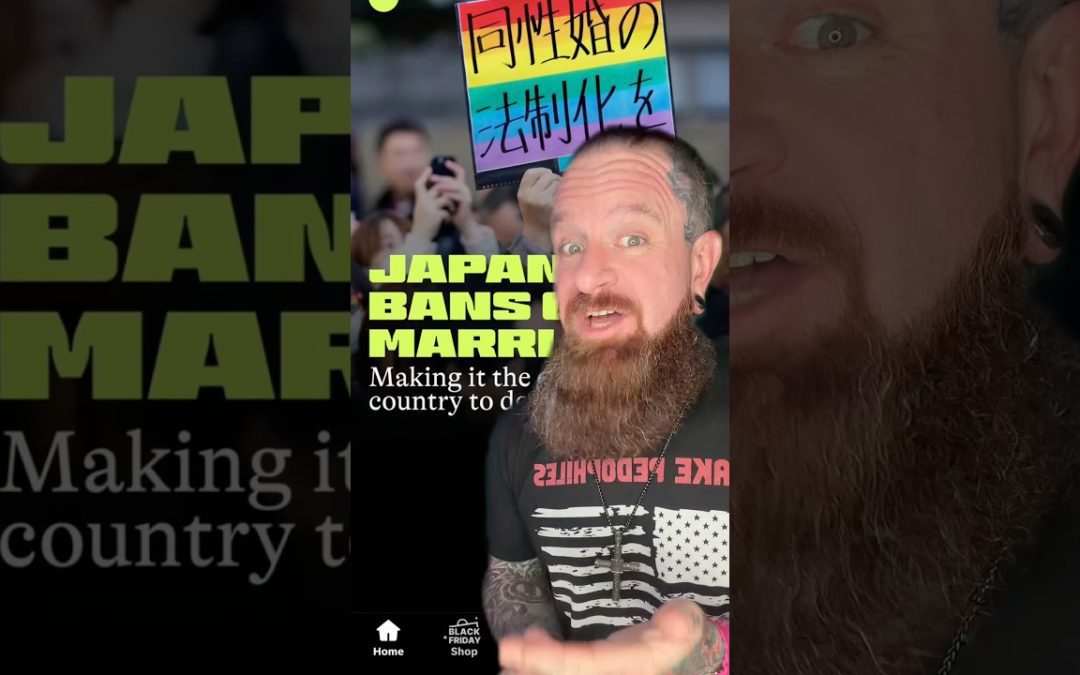
  • Gay marriage banned — Uncensored Outlaw Dispatch

    Gay marriage banned — Uncensored Outlaw Dispatch

    We live in a world that likes to pretend progress is linear. One step forward, two steps back — except sometimes the two steps back feel like a shove off a cliff. “Gay marriage banned.” Those three words are a grenade lobbed into public life, detonating old laws, new politics, and raw cultural fury. If you think this is just another legal skirmish, think again. This is about who gets to be free and who gets to be policed.

    Let’s be blunt: the phrase Gay marriage banned is designed to provoke fear and obedience. It’s a headline that can mobilize both the most compassionate and the most reactionary. But beneath the media theatrics and court-room posturing is a much darker, quieter principle: when the state claims the power to decide which loves are legitimate, every other private decision becomes vulnerable.

    Gay marriage banned — what it really means

    Make no mistake: banning gay marriage is not simply about marriage. It’s a test-case for state authority over identity, association, and privacy. A ban formalizes a hierarchy — the state says one kind of relationship is worthy of legal protection while another is not. The ripple effects are immediate: inheritance, hospital visitation, adoption, taxes, and parental rights suddenly hinge on the state’s morality play.

    This isn’t hypothetical. Look at every place where the state intrudes into personal life. It begins with marriage, then moves to employment protections, then to the classroom, then to the medical ward. If the government can pick winners and losers among consenting adults, you should be asking: what’s next? Which relationship, hobby, or lifestyle will fall under the guillotine of legality after the next moral panic?

    Ask yourself another question: who benefits from the chaos? Always follow the incentives. Political actors sharpen their knives during moral crises — collecting votes, funding, and cultural capital. Religious institutions reclaim authority in public life. Businesses adjust to new legal pressures — some refuse services, others exploit loopholes for profit. And citizens? We’re left scrambling through legal ambiguity while our personal lives become battlegrounds.

    We’ve been told that laws reflect the will of the people. But when was the last time you felt consulted? Laws can equally reflect the will of special interests, vocal minorities, or cynical power plays masked as moral revival.

    The hypocrisy of “public morality”

    Historic attempts to ban freedoms always hide behind “public morality.” Yet, morality is not a neutral standard. It’s a social technology wielded by those who want to influence behavior. If a law protects your choices, praise it. If it forbids someone else’s choices, call it moral necessity. Convenient, right?

    This moralizing conveniently ignores the messy, practical truth that consenting adults living honestly and openly harm no one. You don’t need the moral police to tell you who should marry. The state’s job should be to protect freedom — not to curate affection based on tradition or prejudice.

    You’ll hear the same tired justifications: protecting children, preserving religious freedom, defending cultural values. These are emotional props to rationalize exclusion. Protecting religious freedom doesn’t mean faith-based institutions should be exempt from anti-discrimination norms when they operate in the public sphere. Preserving children’s welfare doesn’t mean denying loving households rights. These arguments are rhetorical smokescreens — useful for rallying allies, not for any coherent public policy.

    Who loses when gay marriage is banned?

    It’s not just LGBTQ+ couples who lose. Anyone who values freedom of association and equal treatment does. Families become vulnerable. Legal uncertainty breeds economic harm. Small-business owners get caught between conscience clauses and lawsuits. Employers face new compliance nightmares. Healthcare professionals are forced into moral triage. The net result? A society where private life is less secure and the reach of the state grows.

    And what of the message? Banning gay marriage tells a generation that certain identities are second-class. It whispers—not subtly—that your love is less valuable. For a community already targeted by stigma, that whisper can become a life-altering echo.

    What resistance looks like

    If you’re fed up with top-down decrees over private life, resistance starts locally and personally. Support civil institutions that practice inclusion. Use your purchasing power to back businesses that refuse discrimination. Vote with clarity — prioritize candidates who defend personal liberty over cultural demagogues. Challenge the narratives in your circle. Not with lectures, but with tough questions: Why should the state have this power? Whose interests does this law serve?

    Legal battles matter, yes. Strategy matters more. Litigation can win rights — but it can also be vulnerable to shifting political winds. Build social support. Normalize dissent. Make visible the everyday lives that laws would erase. If public sympathy can be marshaled, legal arguments get easier to win.

    Conclusion: Gay marriage banned is a warning, not an inevitability

    The headline Gay marriage banned is a flashpoint. It’s a call to attention, and for some, a call to arms. This fight is not about forcing beliefs on anyone. It’s about refusing the premise that the state should be judge and jury of love.

    If you value individual liberty, equality before the law, and a smaller, less invasive state, then this moment demands clarity. Push back against moral panic. Protect the right to live quietly and proudly. Resist the normalization of exclusion.

    Because when the state decides which loves are legal, we’re all a step closer to a world where the state decides everything. Who wants that? Not us. Not now.

    Spun Web Technology SMART SEO

    Spun Web Technology SMART SEO

  • Spun Web Technology: Uncensored Rebel Take

    Spun Web Technology: Uncensored Rebel Take

    Spun Web Technology — What They’re Not Telling You

    Let’s cut the PR-speak. Spun Web Technology isn’t a neutral tool. It’s a narrative engine—designed to make selected ideas feel inevitable, mainstream, and harmless. You’ve seen it: articles that repeat the same talking points, social feeds that echo one another like a chorus, and search results that steer you toward polished versions of “consensus.” That’s not coincidence. That’s deliberate design.

    This piece isn’t about fear-mongering. It’s about clarity. It’s about recognizing the patterns and deciding whether you’ll play along or pull the plug.

    The Mechanics of Spun Web Technology

    Spin used to be a human craft—PR flacks, op-ed farms, coordinated press releases. Now the craft is encoded into platforms and algorithms. Spun Web Technology blends automated amplification with human-friendly narratives.

    It does three predictable things:
    – Prioritize digestible simplicity over complexity.
    – Reward conformity with visibility.
    – Marginalize nuance under the guise of “clarity.”

    The result? A hum of consensus that drowns out dissent. Facts don’t vanish. They get reframed into bite-sized axioms that serve institutions, brands, and agendas. Want nuance? Tough luck. Nuance is bad for engagement metrics.

    Why Libertarians Should Care About Spun Web Technology

    If you value individual liberty, you should be suspicious. Centralized narratives favor regulatory solutions, broad-brush policies, and the comforting illusion that complex problems have simple fixes. Spun Web Technology pushes us toward obedience by making alternative perspectives feel weird, fringe, and socially risky.

    Ask yourself: who benefits when citizens accept simplified narratives? Corporations benefit. Bureaucracies benefit. Political factions that want control benefit. You? Not so much.

    Spun Web Technology doesn’t just sell products. It sells compliance. It shepherds attention in ways that condition public opinion to accept top-down solutions—because that’s what gets likes, headlines, and ad dollars.

    The Playbook: How Spin Gets Wired Into Your Feed

    1. Seed a story with micro-influencers and algorithm-friendly content.
    2. Let automation amplify it across channels.
    3. Introduce authoritative-sounding sources to legitimize the angle.
    4. Recycle the same language until it becomes a cultural meme.

    Recognize these steps and you start to see how “consensus” is manufactured. It’s not a natural social outcome. It’s engineered.

    Can Individuals Fight Back?

    Yes. But it takes more than skepticism. It takes strategy.

    Start with your attention. Don’t let headlines set the agenda. Read beyond the first three paragraphs. Diversify your sources: listen to independent podcasters, niche publications, and dissenting scholars. Support content that rewards complexity, not certainty.

    Publishers and creators? Resist algorithmic incentives that reward “shareability” over honesty. That means sometimes producing content that’s less clickable but truer. That means sacrifice—and yes, being less visible for a while. But what’s the alternative? Ceding the public mind to a handful of optimizers and headline engineers?

    Spun Web Technology and the Thin Veneer of “Safety”

    Platforms sell moderation and curation as “safety.” But who decides what’s safe? Those decisions are made by committees and code that favor predictable outcomes.

    If a narrative threatens powerful interests, it’s easier to nudge it into obscurity than to confront it head-on. Spun Web Technology gives structural cover to that process: shadow-banning, demoting, or deprioritizing inconvenient truths while elevating the acceptable version of events.

    That’s not safety. It’s selection. And selection carries values—values that aren’t neutral.

    The Opportunity for Disruptarian Radio Listeners

    You’re tuned into an audience that already distrusts canned consensus. That’s an advantage. Use it.

    Ask sharper questions. Celebrate credible skepticism. Elevate voices that challenge orthodoxy—not for contrarianism’s sake, but to test the strength of prevailing claims. Fight for a media environment where ideas are judged by argument, not by algorithmic traction.

    Don’t expect the system to reform itself. Platforms optimize for short-term engagement and shareholders. Real change comes from outside the funnel: alternative networks, independent funding, and listeners who reward depth over dopamine hits.

    Closing the Loop on Spun Web Technology

    Spun Web Technology is here to stay. It will get smarter, faster, and more persuasive. But awareness is the first line of defense. Understand how narratives are engineered. Question the consensus before accepting the comfort of agreement.

    If you care about freedom of thought, act like it. Diversify your intake. Invest in independent media. Elevate nuance. Encourage debate.

    We can tune out the spin machine. Or we can keep letting it tune us. Which side are you on? Spun Web Technology is the battlefield. Your attention is the prize. Choose deliberately.

    Spun Web Technology SMART SEO

    Spun Web Technology SMART SEO

  • Trump calls Tim Walz Uncensored: Rebel Breakdown

    Trump calls Tim Walz Uncensored: Rebel Breakdown

    There’s something deliciously American about a phone call that breaks the script. When Trump calls Tim Walz, it isn’t a press-release-friendly exchange or a sanitised soundbite fed to sleepy evening news audiences. It’s chaos, performance, and raw politics — and that’s exactly why people listen.

    This is a Rebel Breakdown. We’re not here to soothe or placate. We’re here to parse what the mainstream won’t: power grabs, political theater, and the people caught in between.

    Why this call matters

    When Trump calls Tim Walz, it’s more than a dispute between two politicians. It’s a kaleidoscope that reveals cracks in the system — federal vs. state, law-and-order vs. civil liberty, media narrative vs. public reality.

    The elites want to frame every phone call as routine. Don’t buy it. These calls are loaded: signaling to base voters, testing legal boundaries, and shaping the narrative long before the next headline cycle. The call becomes a broadcast: an uncensored leak of intent and temperament.

    Trump calls Tim Walz — the subtext

    Let’s strip away the polite spin. The obvious matter — policy disagreements, law enforcement decisions, pandemic responses, border politics — is just the surface. The real story is posture.

    Who gains when a president calls a governor and goes public? Who is seen as decisive? Who is painted as weak? It’s not a legal document. It’s theater for loyalty.

    For Trump, the call is leverage. For Walz, it’s a pressure test. For the media, it’s a ratings bonanza. For the public, it’s a lesson in whom to trust.

    Play-by-play: what happened when Trump calls Tim Walz

    Imagine the exchange as a moving target. Accusations fly. Data points are cherry-picked. Both sides speak past each other. Each statement is primed for clipping and distribution.

    The controversial bit? Public shaming. Calling out a governor in front of millions is a tactic: it creates a spectacle and forces the other side into a defensive posture. That’s intentional. It’s asymmetric warfare in the media age.

    Is it constructive? Sometimes. Often, it’s performative. But even performative acts shape policy and perception. That’s why it matters.

    The media’s role — and its failures

    When Trump calls Tim Walz, the press decides the frame. Will they treat it like a policy debate or a reality show? Too often, coverage reduces complex disputes into “he said, she said” soundbites that leave the audience angrier and less informed.

    Independent listeners should ask: who profits from outrage? Follow the incentives. Sensationalism feeds ad revenue and ratings. Substance threatens both. If you want clarity, you have to push past the headlines and find the facts the outlets won’t highlight.

    Civil liberties vs. centralized control

    There’s a deeper philosophical battle happening in the background. Centralized executive pressure on governors raises a question: when does coordination turn into coercion?

    Liberty-minded listeners should be skeptical of any authority that demands uncritical compliance. Whether you’re a fan of Trump or Walz, the pattern matters. Power that’s willing to weaponize public shaming today can normalize more intrusive tactics tomorrow.

    So what should we want? Accountability, yes. Transparency, definitely. But also guardrails that protect local governance from capricious federal overreach. That tension is the heart of our federal experiment — and it’s being tested whenever a high-profile phone call goes public.

    The audience effect — who’s watching, and why it matters

    When Trump calls Tim Walz, the audience isn’t passive. Activists, donors, and political operatives recalibrate instantly. The left rallies around perceived injustice. The right amplifies perceived strength. And independents watch to see who looks competent.

    This instant feedback loop has consequences. It determines fundraising, endorsements, and the next soundbite. It can also harden divisions. The spectacle doesn’t just report reality — it reshapes it.

    Questions to ask next time

    – Who benefits from the timing of the call?
    – What practical outcomes might result, beyond headlines?
    – Which constitutional norms are being tested, and why should you care?
    – Is the media covering the substance or just the drama?

    Conclusion: keep listening, keep questioning

    When Trump calls Tim Walz, don’t accept the official narrative at face value. Dig. Ask hard questions. Look for the incentives, not just the verbs. In an era when political theater outpaces policy, the most radical act is attention: paying it where it matters, not where the networks tell you to.

    You’ll hear a lot of noise. Your job as an engaged listener — and as a disruptarian — is to separate the signal from the spectacle. When the calls start, the system reveals its priorities. Don’t let spectacle be your news. When Trump calls Tim Walz, treat it as a clue, not a conclusion.

    Spun Web Technology SMART SEO

    Spun Web Technology SMART SEO

  • Should this dude: Rebel Teacher? Uncensored Verdict

    Should this dude: Rebel Teacher? Uncensored Verdict

    They say education is sacred. They say teachers are heroes. They also say you should sit down and shut up. But what if a teacher refuses the script? What if he teaches out loud, challenges the narrative, and refuses permission to be polite about power? That’s the setup: a modern maverick in the classroom pushing boundaries—provocative, divisive, and, to some, dangerous.

    Should this dude be celebrated or canceled? The quick answer: neither. The more useful answer is tougher. This isn’t about hero worship or witch hunts. It’s about what we want schools to be: factories of compliant citizens, or places where independent thinking survives?

    Should this dude break the mold?

    Put bluntly: the system trains teachers to manage kids, not minds. Teachers are graded on compliance, test scores, and standardized outputs. So when a teacher pivots—when he introduces unsanctioned ideas, questions official stories, or refuses to let complex issues be sanitized—it’s jarring. It pulls back the curtain.

    Is that inherently bad? No. Should it have limits? Yes. Education without responsibility becomes indoctrination by another actor. The key is transparency and intellectual honesty. If this dude injects contrarian ideas, he must do the work: cite sources, expose bias, and teach students how to think, not what to think.

    The disruptive teacher model appeals to libertarian instincts. Let individuals choose their intellectual journey. But schools aren’t free markets; they’re public obligations. That tension feeds the controversy.

    Should this dude be held to account?

    Accountability doesn’t mean censorship. It means consequences aligned with community standards and truth. If a teacher spreads demonstrable falsehoods under the guise of “provocation,” they deserve pushback. If they open messy debates and teach critical thinking, they deserve protection.

    How do you tell the difference? Look for patterns. Is the content encouraging curiosity or just rebellion for attention? Are students learning how to weigh evidence and argue? Or are they being led down rabbit holes without tools to escape?

    Parents and communities must ask hard questions. Do you want an educator who teaches methods—how to evaluate claims, corroborate sources, and argue respectfully—or one who swaps methods for monologues? Civil disobedience in the classroom can be heroic. Or it can be performative posturing.

    Should this dude influence curriculum?

    Influence is inevitable. The question is which direction. If the goal is to liberate students from groupthink, then yes—let disruptive teachers help rewrite stale curricula. If the goal is to replace one orthodoxy with another, then no.

    Real reform starts with teaching epistemology: how we know what we know. Too many classrooms treat facts like sacred relics. A rebel teacher flips the script: facts are provisional, evidence is king, and dissent is a vital check.

    But there’s a risk: when contrarianism becomes identity, it stops functioning as intellectual humility and morphs into a tribal badge. Teachers who lean too hard into being “the rebel” risk grooming cynics rather than critical thinkers.

    The irreducible bottom line: Should this dude matter?

    Yes—because the existence of dissent is essential to a healthy society. But mattering doesn’t mean unchecked license. It means guardrails that keep pedagogy honest and protect students’ right to a rounded education.

    Ask yourself: do you trust public institutions to self-correct? For many readers here, the answer is no. So what’s the alternative? Empower communities to insist on intellectual rigor. Demand transparency from teachers and administrators. Support educators who equip students to interrogate power, even if that interrogation makes you uncomfortable.

    We should celebrate teachers who take real risks—those who put evidence before ideology, who teach students how to think and not only what to think. We should challenge the attention-seeking acts that substitute shock for substance. And we should be wary of systems that silence necessary dissent under the pretense of order.

    So, should this dude be a rebel teacher? Probably. Should he be unaccountable? Never. The rebel teacher we need is less a provocateur and more a coach of skepticism: someone who hands students the tools to question everything—including him.

    In the end, the question “Should this dude” is less about one man and more about what kind of society we want. Do we value obedience, or do we value thinkers who refuse to kneel? Do we trust institutions to tell the whole story, or do we demand a marketplace of ideas where even uncomfortable truths can be aired?

    If you’re fed up with curated narratives, then yes—support the rebel who teaches students how to think. But keep your eyes open. Demand accountability. Reward rigor. Otherwise, you’ll replace one echo chamber with another, and rebellion will have been merely another brand.

    Spun Web Technology SMART SEO

    Spun Web Technology SMART SEO

  • Liberal Karen: Uncensored Rebel Dispatches

    Liberal Karen: Uncensored Rebel Dispatches

    Meet Liberal Karen — not a caricature, not a meme, and certainly not someone you can put in a neat box. She’s the voice that upsets polite dinner conversations, the caller who interrupts the public forum and the subscriber who cancels their Netflix subscription in a fit of principled contrarianism. On Disruptarian Radio, she’s the dispatch that won’t be silenced.

    What is a Liberal Karen?

    Is she a liberal? Sort of. Is she a Karen? Maybe, if you insist on reductive labels. But the real point is this: Liberal Karen is the person who believes in ideals but refuses to become a mouthpiece for the machinery that claims to defend those ideals. She loves civil liberties but won’t stand for performative moralizing. She protests, sure — but she also questions who’s running the march and why the media keeps the same talking points on a loop.

    This isn’t about punching left or right. It’s about throwing a wrench into the comfortable narratives you’re fed on repeat. It’s about asking, loudly: who benefits from this outrage cycle?

    Why her voice matters

    Mainstream media and corporate-driven activism have cozy symbioses. They both thrive on outrage that is easy to package and sell. Liberal Karen sees through the PR — and calls it out. That makes her both useful and dangerous.

    Useful because she forces a reset. Dangerous because she makes allies uncomfortable. She shows up at protests with a megaphone and a stack of inconvenient questions. She’ll hold the uncomfortable mirror up to liberal institutions just as readily as she will confront authoritarian impulses from the right.

    Want nuance? You’re in the right place. Want purity? Good luck with that.

    The politics of inconvenience

    Liberal Karen rejects the binary. You don’t have to be “with us or against us” to be effective. Complexity matters, even if it makes newspapers and pundits sweat.

    She understands that civil liberties are a bedrock value, not a tactical convenience. When surveillance programs expand under the guise of safety, she’s the first to call foul — even if some of her progressive allies cheer. When corporate interests co-opt humanitarian crises to boost their image, she sees the campaign memo, not the compassion.

    That doesn’t make her apolitical. It makes her anti-establishment.

    Liberal Karen in practice

    What does this look like on the ground? It’s not just keyboard rage. It’s strategic dissidence.

    She funds independent journalism, not corporate clickbait. She supports local civil liberties groups that actually do legal defense, not just trending hashtags. She shows up at town halls to ask because she believes accountability should be inconvenient for elites.

    She’s the one asking whether the nonprofit collecting donations has board members who sit on corporate boards. She’s the one asking why so many “progressive” leaders accept donations from foundations with political stakes. She’s the one who wants policies to be weighed on merit, not momentum.

    A critique of performative politics

    If there’s one thing Liberal Karen hates, it’s theater masquerading as change. Hashtags replace policy. Viral videos replace hearings. Slogans replace solutions.

    Is outrage enough? When does visibility become virtue signaling for those seeking power, not justice? These are the questions she asks — often loudly, and sometimes at the cost of being labeled a contrarian or worse.

    Disruptarian Radio: where Liberal Karen speaks

    On Disruptarian Radio, we give platform to the inconvenient questions. We don’t seek applause from politicos. We seek clarity for listeners who are tired of the same narratives and want to think for themselves.

    Expect candid conversations, uncomfortable takes, and interviews that don’t end with talking points. Expect skepticism, not cynicism. Expect a Liberal Karen who can be both principled and ruthless in her critique of power — left, right, or corporate.

    Why you should listen

    Because complacency is the enemy of liberty. Because mainstream narratives are increasingly consolidated and sanitized. Because a healthy skepticism — especially from those who call themselves allies — keeps institutions honest.

    You might disagree with Liberal Karen. Good. Disagreement forces argument. Argument forces evidence. Evidence forces change.

    Can outrage be productive? Can dissent be constructive? That’s what we’ll figure out, together.

    Parting shot

    If you’re tired of being spoon-fed a two-dimensional story, tune in. Let Liberal Karen rile you, provoke you, and ultimately make you think harder about who gets to define “progress.”

    Liberal Karen won’t be popular in polite society. That’s the point. She’s not here to make friends with the powerful. She’s here to make them uncomfortable — and to remind the rest of us that liberty tastes better when it’s messy.

    Spun Web Technology SMART SEO

    Spun Web Technology SMART SEO

  • Miami Stripper: Uncensored Rebel Views on Freedom

    Miami Stripper: Uncensored Rebel Views on Freedom

    We live in curated realities. Algorithms tell us what to like. Managers tell us when to clock in. Bureaucrats tell us what to wear and what to think. And the louder the siren of “safety,” the more our freedoms quietly die. Enter the Miami Stripper — not a person but a symbol: someone who refuses the sanitized script, who trades respectability for truth-telling, who dances on the edge of what polite society calls indecent and what a free person calls choice.

    This isn’t a morality play. It’s a manifesto for anyone tired of the soft authoritarianism of social norms and state overreach.

    Why Miami? Why a stripper?

    Because Miami is glare and grit. Neon optimism and sunburned realism. It’s a place where the commerce of desire meets the commerce of distraction. A “Miami Stripper” embodies both the audacity to sell what you want and the arrogance to refuse shame for doing it. She — or he, or they — exposes the hypocrisy: we applaud entrepreneurship when it serves the status quo, and we scorn it when it threatens someone’s sense of decency.

    H2: Miami Stripper — an emblem of personal sovereignty

    Think about the last time you felt judged for a harmless choice. Who decides what is acceptable? Who writes the list of permitted behaviors and fashions the moral panopticon we navigate daily?

    The Miami Stripper answers: I do. I decide. I trade my body, skills, and performance for cash, community, and autonomy. That’s entrepreneurship with a pulse. It’s work. It’s often dangerous, under-regulated, and demonized by those who profit from making people small.

    This is not about glamorizing an industry. It’s about recognizing the radical claim at its heart: your body, your terms. In a world of creeping paternalism — from lockdown mandates to workplace moralizing — the Miami Stripper’s message is a simple threat to power: autonomy tastes better than permission.

    She is a walking refutation of two tired myths: that morality equals conformity, and that liberation should be policed by elites.

    Short, sticky sentences: We fear freedom when it looks messy. We fear it when people exercise it in ways we don’t control.

    H3: The state wants order. The market wants profit. The Miami Stripper wants freedom.

    Laws are tools. Sometimes they protect. Often they entrench privilege. Watch how zoning, licensing, and “public decency” statutes get brandished — not to protect citizens, but to protect neighborhoods and industries from competition. Who benefits when an intimate business is pushed underground? Who loses? Often the workers — the same people the moralists claim to defend.

    Let’s be blunt: regulations are not neutral. They filter who can play and who must stay home. They create barriers that channel talent into acceptable, taxable forms. They make dissent expensive. They make choice conditional on compliance.

    Isn’t that convenient for the powers that be? A tidy society where everyone knows their place. A manageable electorate. A predictable labor pool. Less noise. Less risk.

    The Miami Stripper’s life complicates that order. She challenges the comfortable binary of victim or villain. She insists on agency. She forces us to reckon with conflict: do we want a society that forgives deviation or one that polices it?

    Confronting hypocrisy: who really deserves our outrage?

    Hypocrisy is the establishment’s scent. Politicians posture about “family values” while privatizing every imaginable profit. Media scolds while selling scandalous headlines. Universities lecture about consent, then censor speakers. Where is the consistency?

    If the outrage machine had its way, every marginal profession would be erased under the guise of protection. But protections are selective. Luxury therapists get licenses. High-end wellness gurus get grants. The Miami Stripper gets criminalized.

    Is that fairness? Or is it control wrapped in moral language?

    H2: Miami Stripper as a call to disrupt

    The Miami Stripper doesn’t ask permission. She disrupts. She flips the table. And she invites you to consider disruption as a way of life — not a one-off Twitter stunt, but a relentless rejection of social and regulatory cages.

    What would a society look like if consent and contract mattered more than moral theatre? If adults could decide where their money goes, how they earn a living, and who they associate with — without the moral stamp of some self-appointed guardian?

    It would be messy. It would be loud. It would be imperfect. It would also be freer.

    This podcast, this movement, this radio frequency is for everyone who smells the rot in respectable institutions and wants to sweep out the rot rather than paint over it. We celebrate stubborn autonomy. We don’t fetishize lawlessness — we critique the selective usages of law that consolidate power while pretending to protect.

    Closing provocation

    So next time you recoil at the idea of a Miami Stripper, ask yourself: which part of me is scared? The part that clings to order? The part that profits from someone else’s compliance? Or the part that values control more than freedom?

    Freedom isn’t always pretty. It’s often inconvenient. It refuses your neat categories. It demands personal responsibility rather than delegated virtue-signaling. That’s the lesson the Miami Stripper keeps offering, whether you like the delivery or not.

    If you believe in liberty, this is your wake-up call. If you prefer the soft cage of consensus, that’s fine too — but don’t pretend it’s liberation. The Miami Stripper will keep performing anyway. Will you watch, judge, or learn?

    Spun Web Technology SMART SEO

    Spun Web Technology SMART SEO