Category: Commentary

  • Beyond Affirmation: Re-examining Transgender Suicide Rates in the U.S. vs. the Philippines

    In a recent video, I discussed a difficult and uncomfortable subject: the comparison between suicide rates in the United States and the Philippines, with a particular focus on transgender youth. Some critics accused me of being dishonest or of using culture war tactics. But the numbers speak for themselves, and when the stakes are this high—lives on the line—we owe it to the truth to dig deeper.

    This article is a direct response to those critiques. It’s not a political stunt, nor is it an attempt to devalue anyone’s lived experience. It’s a call for honesty, nuance, and a serious look at what’s driving suicide—not just in transgender youth, but across modern, so-called “progressive” societies.

    Let’s walk through the points clearly and without spin.

    watch this video response to the critique at youtube:  https://youtu.be/r_GF_F0Pgq0


    The Suicide Rate Gap: USA vs. Philippines

    Let’s start with hard numbers. According to the World Bank (2019), the suicide death rate in the United States is 14.1 per 100,000. In the Philippines, it’s 3.2 per 100,000. That’s over four times higher in the U.S.

    These aren’t estimates of suicidal ideation or attempts. These are actual deaths.

    In my time living in Cebu City and throughout the province—more than 14 months total—I have not seen a single pride flag, a pride parade, or any kind of public LGBTQ+ affirmation campaign. There are no rainbow stickers on storefronts, no government agencies flying flags, no “Pride Month” banners lining the streets.

    In contrast, the U.S. is saturated with what I call “affirmation culture.” Corporations light up their logos in rainbow colors every June. Government buildings and public schools often fly pride flags alongside or even instead of national symbols. There’s no shortage of visibility or institutional support for LGBTQ+ identities.

    So here’s the unavoidable question: If affirmation saves lives, why is the suicide rate in the U.S. so much higher—especially among transgender youth?


    What the Critics Say—and Get Wrong

    Critics argue I’m cherry-picking data. They say the suicide rates in the Philippines are underreported due to stigma or cultural suppression. Maybe. But is that enough to explain a 440% difference?

    Dr. Alison Clayton, a psychiatrist with both professional and personal experience in suicide prevention, addressed this exact topic in her in-depth lecture:
    “What’s the evidence? Suicidality and Suicide Risk”
    Watch here: https://www.youtube.com/watch?v=cGwSpqfRZho

    She makes several important points that rarely make it into mainstream discussions:

    • Suicidality in transgender youth is real and concerning—but it mirrors patterns seen in other high-risk mental health groups, like those with autism, trauma histories, and serious psychiatric conditions.

    • There is no high-quality evidence that gender-affirming treatment reduces suicide death rates.

    • Much of the “evidence” cited in support of these treatments relies on poor-quality, uncontrolled, or misrepresented studies.

    • Messaging that tells parents, “Affirm your child or they’ll kill themselves,” is emotionally coercive and not backed by solid data.

    This aligns with what I’ve said: We are oversimplifying a deeply complex issue, and in doing so, we may actually be causing harm.


    Suicide Scripts and Social Contagion

    One powerful concept Dr. Clayton discusses is “suicide scripts.” This idea suggests that when suicide becomes embedded into a cultural or identity narrative, it normalizes and reinforces suicidal behavior—especially in youth.

    In many Western societies, transgender identity is now often accompanied by a social script that includes trauma, alienation, and suicidal ideation. This script is constantly reinforced by media, online communities, and even clinicians. When suicide becomes part of the “expected story,” it becomes more likely—not less.

    This is also known as the Werther effect: the phenomenon of suicide spreading through social modeling, especially after media attention. This isn’t speculation. It’s backed by decades of psychiatric literature.

    The Philippines, by contrast, doesn’t script transgender identity in the same way. That doesn’t mean life is perfect for trans-identifying individuals there—but it does mean the cultural narrative around identity and mental health is less fatalistic.


    Affirmation Isn’t a Cure-All

    Here’s the part that makes people uncomfortable: affirmation alone isn’t enough.
    In fact, when used as a blanket prescription for mental health struggles, affirmation can become a distraction from deeper root causes.

    The documentary “Identity Crisis: Defying the Transgender Lobby to Save His Son” explores this in personal, heartbreaking detail. A father navigates his son’s rapid-onset gender dysphoria, only to realize that clinicians were ignoring the underlying mental health issues in favor of fast-tracking medical affirmation.
    Watch here: https://www.youtube.com/watch?v=Nk6GxP1jR-E

    Many children and teens who present with gender dysphoria also have:

    • Autism spectrum disorder

    • Bipolar disorder

    • Schizophrenia

    • OCD

    • PTSD or early trauma

    • Depression and anxiety

    In many of these cases, gender dysphoria is a symptom, not the root. But in the U.S., the system is increasingly set up to interpret every form of distress as confirmation of trans identity—and to treat it with affirmation, hormones, and sometimes surgery.


    Underlying Mental Health vs. Gender Identity

    Here’s a major difference between how suicide is discussed in the U.S. versus in other countries:

    • In the U.S., transgender identity is treated as the primary explanation for suicidality.

    • In places like the Philippines, mental health issues are viewed as multi-faceted, with community, faith, and family still central to the conversation.

    Back home, we talk about affirmation. Over there, they talk about connection.

    Religion isn’t a magic shield. But community is. Family is. Stability is. People showing up for each other is. And that may be what the U.S. is missing the most.


    Conclusion: What Are We Missing?

    I’m not dismissing transgender suicide. I’m asking why the “solutions” offered by modern Western culture—like constant affirmation, flags, parades, and pronoun campaigns—aren’t fixing the problem.

    If the most affirming culture on earth has the highest suicide rates, then something’s wrong with our narrative.

    We need to stop weaponizing suicide stats to push ideology. We need to stop telling parents that their only two options are affirmation or death. We need to focus on mental health in all its complexity, not as a single-issue story.

    The Philippines isn’t perfect, but it shows something important: A society doesn’t need rainbow flags or affirmation campaigns to keep people alive. Connection might matter more than affirmation.

    We’ve tried affirmation-only. It’s time to rethink the entire framework.


    📚 Cited Sources

    Spun Web Technology SMART SEO
    Spun Web Technology SMART SEO

  • Fake Hate Crimes: 7 Brutal Lessons From Renee Good and George Floyd

    “`html

    Fake Hate Crimes: 7 Brutal Lessons From Renee Good and George Floyd

    I’m Ryan “Dickie” Thompson, and I’ve got a problem. I don’t trust emotional stampedes.

    Not the left’s stampedes. Not the right’s stampedes. Not the “BREAKING NEWS” stampedes that magically appear whenever a bureaucracy needs cover, or a movement needs a fresh martyr.

    That’s why I keep circling back to fake hate crimes. Not because every hate crime is fake (they aren’t), but because the modern outrage machine runs on the same fuel: story first, evidence later, and shame for anyone who asks questions.

    Matt Walsh’s rant on Renee Good and the George Floyd fallout hits the nerve: when the video shows up, a lot of sanctimonious narratives die on the spot.

    [Image: A gritty collage of cable news chyrons, protest signs, and blurred video stills | ALT: fake hate crimes thrive on headlines before evidence]

    Table of Contents


    What happened with Renee Good, according to the actual reporting

    Let’s start with the boring part, the part that ruins everyone’s fan fiction.

    Renee Nicole Good, 37, was shot and killed in Minneapolis during a federal immigration enforcement operation. Federal officials defended the shooting as self-defense. Minnesota officials pushed back. The FBI got involved in the investigation. That’s the baseline.

    AP described a bystander video released by DHS showing Good’s SUV partially blocking the road, honking, agents approaching, and her wife yelling, “drive, baby, drive.” The video shows an agent moving in front of the vehicle as it drives forward and shots are fired.

    You can argue intent all day. But you don’t get to argue physics.

    A moving vehicle, an officer in front of it, a tense arrest scene. That’s a lethal-force scenario in basically every adult brain on earth.


    Back to top


    The “information vacuum” trick and why it looks like fake hate crimes

    Here’s how fake hate crimes and viral outrage incidents stay alive.

    Step one: keep the story vague.
    Step two: demand moral certainty anyway.
    Step three: punish anyone who asks for details.
    Step four: release evidence later, after the public already picked a religion.

    That vacuum is the oxygen.

    And no, this isn’t spooky. It’s incentives. The first wave of a hate narrative brings attention, influence, and power. Corrections show up later, when nobody’s watching, and the people who got famous off the lie never pay the bill.

    That’s why fake hate crimes are more than lies. They’re social weapons. They’re leverage.

    fake hate crimes and viral outrage depend on selective footage

    fake hate crimes and viral outrage depend on selective footage

    Back to top


    Matt Walsh’s blunt point on Renee Good: cars are not protest signs

    If you want to protest ICE, go protest ICE.

    Hold signs. March. Sue. Petition. Vote. Run for office. Do the tedious citizenship stuff that actually matters.

    But if you use a vehicle to obstruct, surround, or box in agents during an arrest scene, you are inviting escalation. That’s not me worshiping the state. That’s me acknowledging reality. Cars turn into weapons real fast, especially when you’re using them as a movable barricade.

    And this matters beyond this case. Prosecutors have used “false imprisonment” logic against bridge blockers for trapping drivers by blocking major roads. In plain English, if you trap people with your little road blockade stunt, the law can treat it as more than a traffic ticket. Because it is.

    Walsh goes harder than I do in tone, but the spine of the argument is obvious: if you move a vehicle into an officer, you don’t get to act shocked when force follows.

    fake hate crimes and viral outrage depend on selective footage 2

    fake hate crimes and viral outrage depend on selective footage 2

    Back to top


    George Floyd: the part everyone lies about, on purpose

    Now the radioactive part.

    Walsh argues the Floyd narrative was built on a single angle, with context delayed, and later footage complicated what people were sold. It’s true the full bodycam context entered public view later, not as an immediate “here’s everything” dump.

    And yes, transcripts show Floyd saying he couldn’t breathe earlier in the encounter, before he was on the ground. That doesn’t “solve” the case, but it does smash the childish idea that reality fits in a slogan.

    Medical reality is messy, and slogans hate messy

    The official medical examiner ruling lists restraint and neck compression in the causal chain, and also lists fentanyl intoxication and methamphetamine use as significant conditions. That’s the real world. Not a chant.

    Here’s my stance, and I know it irritates the faithful: the country was sold a simplified myth, and the truth is uglier and more complex than the myth.

    That’s also why fake hate crimes work so well. Complexity is the enemy of outrage. Outrage wants a clean villain and a clean victim, right now, with no waiting.


    Back to top


    Why “new George Floyd” moments are harder to manufacture now

    Walsh says the country is different now. On some points, it is.

    Information moves faster. People demand video faster. And a lot of Americans have learned, the hard way, that the first version of the story is often a sales pitch.

    That doesn’t make people wise. It just makes the window smaller. When footage lands quickly, you can’t build a whole cathedral out of a headline without it snapping in public.

    Back to top


    Fake hate crimes: the outrage product that never goes out of stock

    Alright. Let’s talk straight about fake hate crimes.

    They exist because the payoff is huge.

    The first 24 hours of a hate narrative can get you national media attention, institutional apologies, fundraisers, firings, policy changes, and social status. Then the correction comes later, after the mob got its dopamine and wandered off.

    Example: Jussie Smollett and the “instant myth” economy

    The Smollett story detonated culturally, and then the legal story got messy. The media lesson stays simple: the accusation got the megaphone, and the follow-ups got the fine print.

    Example: SUNY Albany and a fabricated “attack”

    In 2016, students were charged after police said an alleged racially motivated attack was fabricated. Institutions rushed early. Reality showed up later. That’s the playbook.

    Example: a reported subway hijab incident police said was invented

    Reuters reported police said a woman fabricated an attack story. Again, the headline travels farther than the correction.

    Example: a staged cross burning allegation

    AP reported on a case where a man was accused of staging a cross burning on his own property. If you want to see how fast a staged incident can inflame a town, start there.

    A notebook stamped HOAX beside a viral headline on a phone

    A notebook stamped HOAX beside a viral headline on a phone

    Back to top


    What Renee Good’s case teaches without calling it a hoax

    Renee Good’s death has become a political object.

    One side wants a martyr. The other wants a cautionary tale. Everyone wants leverage.

    That hunger is the same hunger that creates fake hate crimes, even when the event itself is not a staged hoax. The marketing and the moral blackmail follow the same script: “agree with us instantly, or you’re evil.”

    My stance is simple: release everything fast. Let people see the timeline. Let independent reviewers analyze. Secrecy is where propaganda breeds, and propaganda is where fake hate crimes thrive.

    Back to top


    A rule that will save your brain in 2026

    Here’s my rule. It’s boring. It also works.

    No footage, no outrage.

    You can get my attention without evidence.
    You can get my sympathy without evidence.
    You do not get my certainty without evidence.

    That rule protects you from fake hate crimes, selective editing, viral lies, “trust me bro” activism, and bureaucrats who hide behind vibes.

    Back to top


    The liberty angle: I don’t trust mobs or bureaucracies

    If you’ve read Disruptarian for five minutes, you know I don’t do blind loyalty.

    I don’t trust a screaming crowd that wants blood. I also don’t trust agencies that slow-walk evidence until the public forgets what it was asking for.

    The state has incentives. Activists have incentives. Media has incentives. So the only antidote is transparency: quick release of footage, clear timelines, independent review, FOIA that actually works, and consequences for lying on all sides.

    That’s how you choke off fake hate crimes and choke off state spin at the same time.

    Back to top


    7 brutal lessons that keep showing up

    1) The first headline is usually a pitch, not a verdict

    If you’re forming your worldview off the first chyron, you’re being used.

    2) Fake hate crimes thrive in evidence droughts

    No details, all outrage. That’s the sweet spot.

    3) Video doesn’t end arguments, but it exposes lazy lies

    People can still argue about what they saw. But it’s harder to invent a whole new reality.

    4) Cars are weapons when you use them like weapons

    You don’t get to “oops” your way through a confrontation with armed agents and pretend it’s just vibes.

    5) Medical complexity gets flattened into slogans on purpose

    The Floyd case is the clearest example. Reality got reduced to a chant.

    6) Corrections never go as viral as accusations

    That’s why fake hate crimes are profitable in attention terms.

    7) If you want freedom, demand proof from everyone

    That includes the state. That includes activists. That includes “your side.”

    Back to top


    Back to top


    Sources


    “`

    Spun Web Technology SMART SEO

    Spun Web Technology SMART SEO

  • 7 Brutal Truths Behind U.S. Actions in Venezuela: Oil, Sanctions, and Crypto

    Beyond the Headlines: What U.S. Actions in Venezuela Are Really About

    Here’s the clean version of what this video is arguing, and why it matters.

    When the U.S. government ramps up pressure on Venezuela, the public story is almost always neat and righteous: drugs, cartels, “narco-terrorism,” corruption, protecting Americans. That narrative is easy to sell because it’s emotionally satisfying. Bad guys exist, and we are doing something about them.

    But the video’s point is that this is usually the wrapper, not the product.

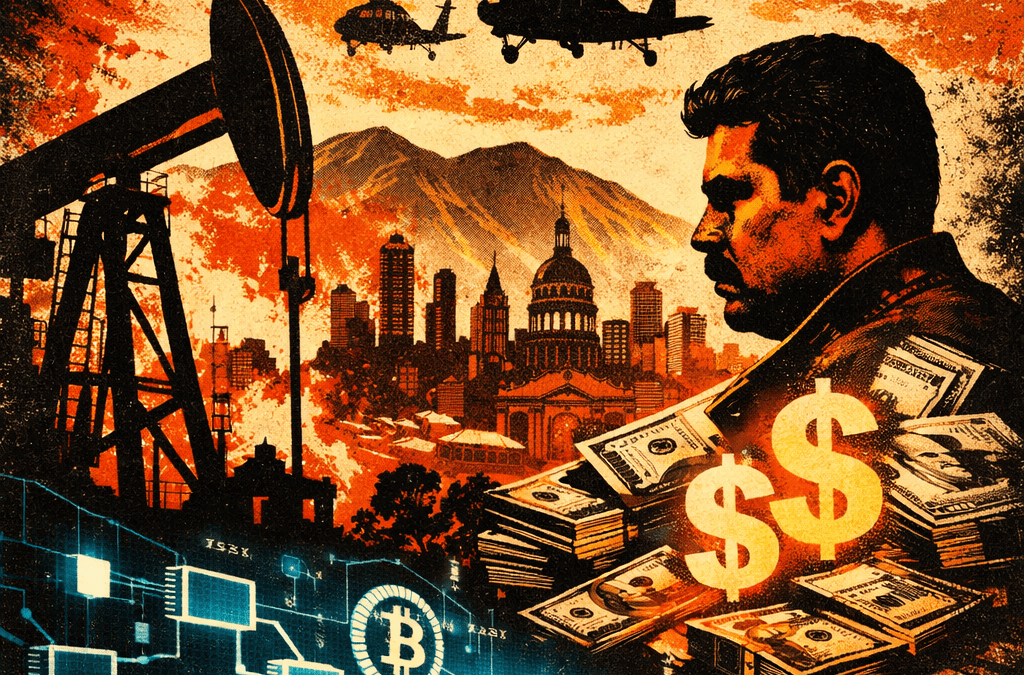
    Under the wrapper is geopolitics, money plumbing, and a fight over who gets to control the rules of global trade. Venezuela is one of those places where all of it collides, because it sits on enormous oil reserves and it has been a long-running battleground for sanctions, finance, and influence. Venezuela is widely cited as holding the world’s largest proven oil reserves, roughly around the 303 billion barrel range.

    The “drug war” story is real, but it’s also useful

    Let me be fair: crime and corruption are real problems in Venezuela. If you’re looking for villains, you won’t come up empty. The issue is how Washington packages its priorities.

    A law enforcement frame gives policymakers a moral high ground and a simple headline. It also keeps the public debate narrow. Instead of asking “What is the U.S. trying to shape in the region?” we argue over which bad actor is worst, and whether more pressure is “tough” enough.

    That’s politically convenient. It’s also strategically flexible, because once you define the issue as criminal, the tools expand: indictments, seizures, sanctions, “interdictions,” intelligence operations, and coercive diplomacy can all be justified as a public safety response.

    Oil is the hard reality sitting underneath everything

    The video keeps circling back to oil because oil is the gravity well.

    Venezuela’s reserves are gigantic, but production capacity has been battered by mismanagement, underinvestment, infrastructure decay, and sanctions. That’s why you can have “oil everywhere” and still struggle to pump, refine, and export at scale.

    If you’re the U.S., influence over Venezuelan oil is not just about gasoline prices. It’s about:

    • Who gets supply and on what terms

    • Which companies can operate and which can’t

    • Whether rivals (China, Russia, others) can lock in long-term access

    • How the global oil trade stays tied to systems the U.S. can monitor and pressure

    And yes, sanctions are a big part of that. The U.S. Treasury’s sanctions program for Venezuela is real, detailed, and constantly adjusted through licenses and guidance.

    Sanctions are about more than punishment, they are about leverage

    Sanctions are sold as “consequences.” In practice, they’re leverage over chokepoints: banking, insurance, shipping, dollar clearing, corporate compliance.

    That’s why the details matter. When licenses change, entire trade patterns change. A U.S. Congressional Research Service brief, for example, notes how specific Venezuela-related general licenses were revoked or not renewed in 2024 as U.S. policy shifted.

    So the video’s argument is basically this: Venezuela is a case study in how finance policy becomes foreign policy.

    The dollar system is the real battlefield

    The video mentions the “petrodollar” idea for a reason. Oil has historically been priced and settled heavily in U.S. dollars, which supports global demand for dollars and dollar-based financial infrastructure.

    That matters because the modern U.S. empire, for lack of a better word, isn’t just aircraft carriers. It’s the financial rails.

    If global trade runs through dollar clearing and institutions tied into U.S. regulation, then U.S. sanctions bite hard. If global trade routes around that, sanctions get weaker.

    The “petrodollar” concept gets oversimplified online, but the basic idea, oil trade and dollar demand reinforcing U.S. financial power since the 1970s, is not crazy.

    Sanctions create innovation: stablecoins and new settlement rails

    Here’s where the video gets spicy, and honestly, it’s the most important part.

    When you block normal payment channels, people build alternatives. Sometimes those alternatives are mundane. Sometimes they’re technological.

    Reuters reported in April 2024 that Venezuela’s state oil company PDVSA planned to increase the use of digital currencies in crude and fuel exports as oil sanctions snapped back into place.

    That’s the key point: sanctions don’t just “stop trade.” They reshape trade into harder-to-track forms.

    Stablecoins like USDT can act like portable dollars that move without traditional correspondent banking. That’s useful for ordinary people in inflationary economies, and it’s also useful for sanctioned networks trying to route around restrictions.

    We’ve seen the sanctions-evasion side show up in other contexts too. A report covered by The Washington Post described how sanctioned actors used crypto infrastructure and stablecoins to move large sums while trying to dodge enforcement.

    So the video’s warning is: the more the U.S. leans on financial weapons, the more it incentivizes parallel financial pipes.

    De-dollarization is not a slogan, it’s a long grind

    Now zoom out.

    The video frames Venezuela as one front in a broader push toward de-dollarization: reducing reliance on the dollar system so U.S. sanctions and financial pressure lose force over time.

    That doesn’t mean the dollar is “about to collapse.” It means countries and blocs are experimenting with alternatives.

    China’s digital yuan (e-CNY) is one example, and Reuters reported steps to expand its use into Hong Kong for retail payments, which is exactly the kind of incremental internationalization you’d expect.

    On the wholesale side, cross-border payment projects like mBridge have been testing multi-central bank digital currency settlement. The BIS notes mBridge reached a “minimum viable product” stage in mid-2024.

    Even if these systems are not ready to replace SWIFT tomorrow, the direction is obvious: more routes, more options, less single-point control.

    The twist: stablecoins can undermine sanctions and still reinforce the dollar

    One more layer the video hints at, and it’s deliciously ironic.

    A dollar-pegged stablecoin is still a dollar proxy. So even when it helps evade sanctions, it can also extend dollar influence into places traditional U.S.-regulated banking can’t reach.

    So the fight isn’t simply “dollar vs not-dollar.” It’s also “who controls the rails.”

    What the video wants you to notice

    The video is basically telling you to stop thinking like a courtroom and start thinking like a chessboard.

    • Venezuela is oil-rich and strategically positioned.

    • Sanctions are a tool for controlling access and enforcing compliance, not just punishing “bad guys.”

    • When sanctions hit, payment methods evolve, including stablecoins in oil-related trade.

    • Meanwhile, major powers keep building alternatives to the current dollar-centered system.

    That’s the real story: not a single “moral crusade,” but a high-stakes contest over resources, money, and who gets to set the rules.


    Spun Web Technology SMART SEO

    Spun Web Technology SMART SEO

  • Disruptarian Radio Venezuela Strike: 9 Brutal Reasons It Was About Oil and the Dollar

    If you bought the “anti-drug bust” storyline, I get it. Narco-terror. Cartels. Bad guys. Clean headline.

    But when Washington moves with speed and scale, the press release is usually just the wrapping paper. The real motive hides in the boring stuff: oil leverage, sanctions, settlement rails, and the U.S. dollar’s role as the global trading chip.

    In this video I lay out why Venezuela looks less like a moral crusade and more like a strategic play. We talk oil reserves, the petrodollar system, why sanctions create workarounds, and why crypto settlement (including USDT-style payment routes) makes the empire nervous. Then we zoom out to China, the digital yuan, and why de-dollarization is the fight underneath the fight.

    Blog post referenced: /blog/us-strike-in-venezuela-9-brutal-reasons-it-was-about-oil-and-dollars/

    This is commentary, not investment advice. If you disagree, bring receipts.

    Spun Web Technology SMART SEO

    Spun Web Technology SMART SEO

  • Venezuela Strike Breakdown: Oil, Dollars and the Real Motives Behind the Headline

    Venezuela Strike Breakdown: Oil, Dollars and the Real Motives Behind the Headline

    Disruptarian featured image for Venezuela Strike Breakdown: Oil, Dollars and the Real Motives Behind the Headline

    Verified at: 2026-06-21T03:03:46

    Venezuela Strike Breakdown: Oil, Dollars and the Real Motives Behind the Headline is the kind of subject that fits the Disruptarian lane because it sits where independent media, culture, music, and political commentary collide.

    The source description frames it this way: A Rumble-focused breakdown of the Venezuela strike narrative and the harder questions behind it: oil, dollar power, geopolitics, Maduro, Washington messaging, and why official explanations often hide larger strategic incentives. Ryan Thompson takes a Disruptarian look at the press-release story versus the deeper machinery of power. Original source video: https://www.youtube.com/watch?v=lQRp_8XaE2c Disruptarian: https://www.disruptarian.com

    The useful question is not only what happened, but why the story matters to people who distrust scripted narratives, recycled outrage, and corporate-approved commentary.

    A Disruptarian reading starts with individual agency. The listener is not asked to accept a packaged conclusion. The point is to pull the claim apart, compare incentives, and look for the pressure points that legacy media often skips.

    That approach matters for libertarian radio commentary because the audience is usually looking for more than a headline. They want context, motive, contradiction, and a practical sense of how public stories become private consequences.

    The cultural layer is just as important. Disruptarian music and reggae punk energy are not decorations around the message. They give the work its rhythm: skeptical, confrontational, and rooted in the idea that speech should stay alive even when institutions prefer silence.

    For search readers arriving cold, the primary source is included below either as an embed or as a direct source link. Start there if you want the full tone, timing, and argument. The written analysis expands the title and description into a searchable article that can stand on its own.

    The strongest SEO value here is clarity. The article keeps the title language visible, uses descriptive headings, and connects the topic to Disruptarian Radio, independent media, libertarian commentary, political culture, and original music without stuffing the page with empty repetition.

    The larger takeaway is simple: independent commentary survives by documenting what was said, preserving the source, and adding a point of view that does not depend on permission from gatekeepers.

    That is why this post exists as part of the static Disruptarian archive. The video remains embedded, the title and description remain traceable, and the surrounding article gives search engines and readers enough context to understand why the episode belongs in the broader Disruptarian catalog.

    The title itself carries the first keyword signal, but a durable post needs more than a copied headline. It needs a clear H1, a concise meta description, a featured image with descriptive alt text, and enough editorial framing for readers to know why the video is part of this archive.

    From an independent media perspective, the value is in keeping the primary source visible. Embedding the video prevents the article from becoming detached commentary. Readers can compare the written interpretation against the actual recording and decide whether the argument holds up.

    The libertarian angle is not automatic partisanship. It is a suspicion of concentrated power, public manipulation, and narratives that ask citizens to outsource judgment. That suspicion applies to government, platforms, corporations, activist institutions, and media brands alike.

    Disruptarian Radio also treats culture as evidence. Music, political language, online mobs, censorship fights, moral panics, and personal stories all reveal where pressure is being applied. That is why a radio episode can be more than entertainment; it can become a record of a moment.

    For listeners who follow DJ Disruptarian, the same pattern shows up in the music catalog: reggae rhythm, punk edge, spiritual critique, and anti-authoritarian instinct. The written post keeps that identity attached to the video instead of letting it disappear into a platform feed.

    Good SEO on a page like this should help people find the conversation without flattening the voice. The article uses natural phrases such as Disruptarian Radio, independent media, libertarian podcast, political commentary, original music, and disruptive conversations only where they make sense.

    The featured image should follow the Disruptarian editorial-collage style: torn paper, smoke, halftone grit, dirty cream paper, black and oxblood pressure, muted gold accents, and symbolic props tied to the subject rather than generic filler. Its alt text names the subject so search engines and screen readers get useful context.

    The article also keeps a stable URL under the static blog. That matters because feeds move, platforms change embeds, and social links decay. A static post gives the episode a second home that can be indexed, backed up, linked, and reviewed later.

    The final point is documentation. When a channel publishes a new video, the title and description are often the only structured metadata available. Turning that metadata into a post creates a stronger archive without pretending to replace the original recording.

    This is the practical Disruptarian method: preserve the video, state the source, add commentary, keep the searchable terms honest, and let the reader move between the embedded media and the written analysis without friction.

    This additional context keeps the post useful for readers who arrive from search rather than from the original channel. It explains the source, preserves the embed, and connects the subject back to the larger Disruptarian archive.

    This additional context keeps the post useful for readers who arrive from search rather than from the original channel. It explains the source, preserves the embed, and connects the subject back to the larger Disruptarian archive.

    This additional context keeps the post useful for readers who arrive from search rather than from the original channel. It explains the source, preserves the embed, and connects the subject back to the larger Disruptarian archive.


    The shortlink was copied to your clipboard

    X
    f
    r

    Related Reading

    Similar posts


    Disruptarian Blog

    2026-06-21

    Disruptarian Blog

    Disruptarian commentary on Puberty Blockers: 17 Hard Questions Parents Need to Ask with embedded source video, independent media context, and libertarian radio analysis.

  • Disruptarian Radio Suicide Rates: The Brutal USA vs Philippines Comparison. Does affirmation really help?

    Why does the United States post a much higher suicide rate than the Philippines, a country that’s poorer, more socially conservative, and heavily Catholic?

    In this video, I break down the USA vs Philippines suicide rate gap, what the numbers actually measure (suicide deaths vs suicide attempts), and why easy political answers keep failing. I also get into suicide among transgender people the way the data really shows it, mostly through surveys of suicidal ideation and suicide attempts, because most countries do not track transgender identity cleanly in death records.

    I’ve lived in the Philippines daily for 14 months, and across Cebu Province I have not personally seen a single pride flag, rainbow flag, or transgender flag flying anywhere, including Cebu City. If transgender people exist across humanity naturally, then they exist here too. So why does “affirmation culture” not translate into a lower national suicide death rate in the U.S.?

    We also compare religious affiliation and religious attendance in both countries, because the Philippines is more religious on paper and in practice, yet the U.S. still comes out worse on the suicide scoreboard.

    If you’re struggling right now, please reach out. In the U.S., call or text 988. If you’re in the Philippines, contact local emergency services, a trusted local hotline, or the nearest hospital.

    Helpful references:
    https://988lifeline.org

    https://www.thetrevorproject.org

    https://www.pewresearch.org

    https://news.gallup.com

    Spun Web Technology SMART SEO

    Spun Web Technology SMART SEO

  • US Strike in Venezuela: 9 Brutal Reasons It Was About Oil and Dollars

    If you only listened to the official story, you’d think the U.S. raid on Venezuela in early January 2026 was basically a giant anti-drug bust with a flag on it. The public justification leaned hard on narco-terrorism, the Cartel of the Suns, and the long-running allegations that Nicolás Maduro’s inner circle has been neck-deep in trafficking and brutality.

    I’m not here to defend Maduro. The guy’s government has earned a lot of the hatred it gets.

    But here’s the thing. When Washington moves with this kind of speed and scale, you should assume there’s more going on than the talking points. The press releases are the wrapping paper. The motive usually lives in the boring stuff: money flows, settlement rails, energy leverage, and the U.S. dollar’s role as the world’s default trading chip.

    If you want to understand why this happened now, you have to look under the hood.

    Not because everything is some cartoon villain plot. Because incentives are real. Power protects itself. That’s not “conspiracy,” that’s history.

    1) What just happened, in plain English

    On January 3, 2026, U.S. forces captured Venezuelan President Nicolás Maduro. Reports described a major operation, not a “small team, in and out” situation. Think big assets, big coordination, big political risk.

    And then came the part that really matters: almost immediately, U.S. officials and related reporting started talking openly about Venezuela’s oil and how it would be managed, sold, and where the money would go.

    That’s not normal. That’s not “just a drug case.”

    So either the U.S. government suddenly decided this was the moment for the most intense counter-narcotics move in decades, or there were deeper strategic reasons lined up behind the scenes.

    I’m betting on the second one. If you’ve watched this movie before, you know the plot.

    2) Why oil still matters more than people admit

    Everybody loves to talk like oil is over. Electric cars, solar panels, wind farms, the “transition.” I’m not anti-innovation. I want cheaper, better energy. Always.

    But I also live in reality.

    Oil still fuels global logistics. It powers shipping, aircraft, heavy equipment, supply chains, and a lot of manufacturing inputs. Petrochemicals are everywhere. Fertilizer systems depend on fossil inputs too. You can’t replace all that at scale overnight. Not even close.

    Now add geopolitics: oil isn’t just energy, it’s leverage.

    Venezuela matters because it sits on a massive reserve base. The country’s proven reserves are widely cited as among the largest in the world. Even if current production is impaired, reserves are the long game. Infrastructure can be rebuilt. Fields don’t just vanish.

    So when you see a U.S. operation followed by talk of oil sector control and rebuilding, you’re looking at a strategic asset in play.

    3) The petrodollar: how oil trade props up dollar power

    Here’s the part most mainstream coverage avoids, because it makes people uncomfortable.

    For decades, a large chunk of global oil trade has been priced and settled in U.S. dollars. That arrangement helped turn the dollar into the world’s default settlement currency for trade, and it reinforced America’s financial reach.

    Why does that matter?

    Because if the world needs dollars to buy oil, the world needs access to dollar liquidity. That keeps demand for dollars high, strengthens the U.S. financial system, and gives Washington a kind of structural advantage. It also makes deficit financing easier than it should be, because a lot of foreign buyers keep dollars and dollar assets in circulation.

    That’s what people mean by “petrodollar.” Not magic, not secret codes. A system.

    And systems create chokepoints.

    The U.S. has huge leverage because the “pipes” of global finance run through dollar clearing, big banks, compliance regimes, and settlement networks tied to U.S. jurisdiction. If you can control access to the pipes, you can punish rivals without firing a shot. Or at least, that’s the idea.

    This is why sanctions are so powerful. And it’s why countries that get sanctioned don’t just sit there and cry, they start building ways around it.

    4) Venezuela’s quiet shift into crypto settlement

    Sanctions don’t just restrict. They teach.

    Maduro oil and crypto

    Maduro oil and crypto

    When an exporter can’t reliably get paid through traditional banking channels, it starts experimenting. Some of those experiments are shady. Some are clever. Some are just desperate. But experimentation happens because the incentives force it.

    In Venezuela’s case, reporting in recent years described PDVSA and intermediaries leaning into digital payment methods, including stablecoins like USDT (Tether), especially as sanctions enforcement tightened.

    The claim that got the most attention was that a very large share of Venezuelan oil payments shifted into USDT, with numbers floating around as high as 80% for certain periods. I’m not going to pretend anybody has a perfect spreadsheet of sanctions-busting settlement flows. But the broader point is hard to deny: Venezuela has been moving oil money in ways designed to reduce exposure to traditional banking choke points.

    That’s the story behind the story.

    Because once oil starts settling outside the standard rails, it’s not just “Venezuela doing Venezuela things.” It becomes a test case for a bigger idea: can energy exporters sell into global markets without being trapped in dollar-controlled settlement infrastructure?

    If the answer is “yes,” even partially, Washington loses a lever.

    And Washington hates losing levers.

    5) Why USDT-style payments make Washington itchy

    Stablecoins are not perfect. They can be frozen. They can be traced. They can be regulated into the ground if governments coordinate hard enough. Also, crypto land is full of scammers and carnival barkers. True.

    But stablecoins solved one real-world problem: moving value across borders can be faster, and sometimes harder to block mid-transaction, than traditional bank wires.

    In a sanctions environment, that’s a feature.

    Here’s why it’s threatening, from a U.S. power perspective:

    • Banks are compliance choke points. Stablecoin settlement can reduce reliance on banks that fear OFAC.
    • SWIFT and correspondent networks are choke points. You can route around the messaging layer in certain scenarios.
    • Ownership can be opaque in practice. Blockchains are public, but mapping wallets to real-world actors is messy unless you have keys, subpoenas, and cooperation.

    So even if a stablecoin is “dollar-denominated,” it’s not necessarily dollar-denominated under U.S. control. That’s the rub.

    It’s like someone using your currency but refusing to use your cash register. You still see the symbol, but you don’t control the transaction.

    Now imagine that happening in oil markets, the most strategically sensitive market on earth. That’s when this stops being a niche finance story and turns into a geopolitical fight.

    6) China’s digital yuan push and why timing matters

    Now layer China onto this.

    China has been building its own payment infrastructure and digital currency capabilities for years. The long-term goal is obvious: reduce dependence on U.S.-linked settlement and build financial rails that can operate at scale outside Washington’s reach.

    In late 2025 and early 2026, reporting described a step-up in China’s digital yuan management and functionality, including changes around how the digital yuan ecosystem would be handled going forward.

    One specific detail that got attention was the idea of digital yuan functionality becoming more “deposit-like,” including interest-bearing features. Whether you call it interest, yield, or account-style functionality, the point is the same: it makes the system stickier. People are more willing to hold something if it behaves like money you can park, not just money you can spend.

    Now, do I have a signed confession saying the U.S. raid on Venezuela was triggered by China’s digital currency roadmap?

    No. Of course not.

    But timing matters in geopolitics, and in markets. If you see:

    • Venezuela experimenting with non-traditional settlement for oil,
    • China building more capable digital currency infrastructure,
    • and a sudden U.S. move that removes Maduro and immediately centers oil control,

    you don’t have to be a genius to connect the dots.

    At minimum, Washington likely saw Venezuela as a live-fire test of de-dollarized commodity settlement, and it decided to end the experiment before it spread.

    That’s the kind of thing states do. It’s not pretty, but it’s predictable.

    7) “Counter-narcotics” vs “control the oil,” spot the difference

    Let’s talk about the public narrative.

    The public case leaned on drugs, terrorism, security. And sure, those issues are real. Venezuela has been accused of corruption and trafficking for a long time. So it’s not like the U.S. had to invent a moral argument out of thin air. It already had one.

    But watch what governments do, not what they say.

    After the operation, reporting described U.S. officials and the administration talking about controlling Venezuelan oil flows and oil revenues, including the idea that revenues could be directed into U.S.-controlled accounts, supposedly to drive political change.

    That’s not a minor detail. That is the ballgame.

    If the mission is really about narcotics enforcement, the oil revenue architecture is, at best, a side effect. But in this case it’s front and center, right away.

    So what are we looking at?

    We’re looking at a power play to regain control of an energy asset and the money that comes from it, and to prevent that asset from being used to test alternative settlement systems outside U.S. leverage.

    That fits the pattern.

    8) Regime change as an economic tool

    This is where I get a little more blunt, because people keep pretending this isn’t happening.

    Regime change didn’t disappear when the Cold War ended. It just got rebranded. Sometimes it’s “humanitarian intervention.” Sometimes it’s “anti-terror.” Sometimes it’s “protecting democracy.” Sometimes it’s “counter-narcotics.”

    And sometimes, it’s economic.

    If a country sits on strategic resources and starts conducting trade in ways that reduce U.S. leverage, Washington tends to notice. Then it starts using whatever legal or moral frame is available to justify action.

    That doesn’t mean the moral frame is always fake. It means it’s rarely the whole story.

    Here’s the hardest truth for liberty-minded people: the U.S. government often treats economic dominance as a national security priority. When you accept that premise, almost anything becomes “security.” Currency systems become security. Payment rails become security. Energy settlement becomes security.

    Once everything is security, war becomes policy.

    And that’s a problem.

    9) The blowback risk: force can speed up de-dollarization

    Here’s the irony that should haunt every strategist who thinks force can hold a financial system together.

    If the dollar is dominant because it’s stable, trusted, and useful, it shouldn’t need an aircraft carrier vibe to keep customers.

    When a global power uses hard force to defend currency leverage, it signals vulnerability. It tells other countries, “Yes, there is a weak point, and yes, we are willing to fight to protect it.”

    That’s not reassuring. That’s motivating.

    So the short-term effect of a Venezuela operation might be to snap oil flows back under a more U.S.-friendly structure. Fine. But the long-term effect could be that countries accelerate efforts to build alternatives, because they don’t want to live under a system where Washington can flip the off switch.

    This is where stablecoins, direct settlement systems, and CBDCs come back into the story.

    You can’t bomb an idea out of existence once it solves a real problem. You can scare people for a while, sure. But the incentives remain. And incentives always win eventually.

    10) What liberty-minded people should take from this

    I don’t care if you’re left, right, libertarian, or just exhausted by politics. There are a few principles that still matter.

    Sovereignty matters, even when the government is awful

    A government being corrupt doesn’t automatically make invasion or capture morally clean. If we decide “bad government” equals “open season,” then nobody is safe, because every government has skeletons.

    Economic competition is not war

    If Venezuela wants to sell oil in dollars, fine. If it wants to sell oil in yuan, USDT, barter, shells, whatever, that’s a trade choice. Markets should decide winners based on outcomes, not missiles.

    Sanctions and coercion create innovation, just not the kind you like

    When you squeeze a system hard enough, people route around it. That’s not even ideological, it’s survival logic. So if Washington wants fewer alternative settlement systems, it should consider whether constant financial warfare is producing the exact opposite result.

    Regime change rarely delivers freedom

    You can topple a leader and still end up with chaos, corruption, or a different flavor of authoritarianism. “Friendly to U.S. interests” is not the same thing as “free.”

    Liberty includes getting off the empire treadmill

    A free society should be allergic to the idea that military force is the enforcer of global economic rules. That’s not freedom. That’s domination. It also bankrupts you over time. Slowly, then all at once.

    11) What to watch next

    This story isn’t done. Not even close. If you’re trying to read where this goes, watch these things:

    1. Who controls PDVSA contracting and export permissions now. That tells you who controls the cash.
    2. How quickly production can be restored. Venezuela’s infrastructure has been battered. “We’ll rebuild it” is easy to say, harder to do.
    3. China’s next move. China doesn’t like losing access to strategic oil supply and regional influence. Expect counter-moves, financial and diplomatic at least.
    4. The crackdown on alternative settlement rails. If stablecoin settlement was a real factor, expect more pressure on intermediaries, wallets, and networks.
    5. Whether other exporters copy the model anyway. If Venezuela proved it can move money outside the usual rails, even partially, other sanctioned states will learn from that, even if it ends badly for Venezuela.

    That’s the real battlefield now. Not just territory. Settlement.

    The bottom line

    The U.S. intervention in Venezuela wasn’t just about narco-terrorism, even if that was the clean headline.

    It was about oil, currency competition, and control of the financial plumbing that props up U.S. leverage. The public story gives people a moral reason to accept it. The oil-and-money story explains why it happened now, why it was so big, and why the aftermath immediately focused on controlling oil flows and revenues.

    If you believe in free markets and voluntary trade, this should make you uneasy.

    Because once governments start treating financial competition like a military threat, we’re not doing markets anymore. We’re doing empire.

    And empires don’t age well.


    Sources (hyperlinked)

    Spun Web Technology SMART SEO

    Spun Web Technology SMART SEO

  • Disruptarian Radio Trans Kids, Puberty Blockers, and Parental Rights: A Dad’s Honest Talk (No Hate)

    I made this video for my kids, and for any parent trying to navigate gender dysphoria, trans kids, and the pressure to instantly “affirm” everything with zero questions allowed.

    I don’t hate anyone. I’ve worked with trans people, had friends I respected, and I’ve defended equal rights for gay people going back years. What I won’t do is cheer on medical transition for minors like it’s harmless. When it comes to kids, I believe caution is love. Therapy, evaluation, time, and letting puberty happen naturally should be part of the conversation before irreversible decisions are even on the table.

    I also explain where my perspective comes from, including my own experience with early body modification and regret, and why I believe parental rights, free speech, and reality-based compassion matter more than slogans.

    This is personal commentary, not medical advice. If you or someone you love is struggling with suicidal thoughts, call or text 988 in the U.S. (Suicide and Crisis Lifeline).

    Spun Web Technology SMART SEO

    Spun Web Technology SMART SEO

  • Trans Kids, Puberty Blockers and Parental Rights: A Dad Talks Honestly

    Trans Kids, Puberty Blockers and Parental Rights: A Dad Talks Honestly

    Disruptarian featured image for Trans Kids, Puberty Blockers and Parental Rights: A Dad Talks Honestly

    Verified at: 2026-06-21T03:36:46

    Trans Kids, Puberty Blockers and Parental Rights: A Dad Talks Honestly is the kind of subject that fits the Disruptarian lane because it sits where independent media, culture, music, and political commentary collide.

    The source description frames it this way: A direct Disruptarian parent perspective on trans kids, puberty blockers, parental rights, gender dysphoria, and the pressure on families to affirm without asking hard questions. Ryan Thompson frames the discussion around love, caution, medical responsibility, and the right of parents to speak honestly without hate. Original source video: https://www.youtube.com/watch?v=3pOy58sWZV0 Disruptarian: https://www.disruptarian.com

    The useful question is not only what happened, but why the story matters to people who distrust scripted narratives, recycled outrage, and corporate-approved commentary.

    A Disruptarian reading starts with individual agency. The listener is not asked to accept a packaged conclusion. The point is to pull the claim apart, compare incentives, and look for the pressure points that legacy media often skips.

    That approach matters for libertarian radio commentary because the audience is usually looking for more than a headline. They want context, motive, contradiction, and a practical sense of how public stories become private consequences.

    The cultural layer is just as important. Disruptarian music and reggae punk energy are not decorations around the message. They give the work its rhythm: skeptical, confrontational, and rooted in the idea that speech should stay alive even when institutions prefer silence.

    For search readers arriving cold, the primary source is included below either as an embed or as a direct source link. Start there if you want the full tone, timing, and argument. The written analysis expands the title and description into a searchable article that can stand on its own.

    The strongest SEO value here is clarity. The article keeps the title language visible, uses descriptive headings, and connects the topic to Disruptarian Radio, independent media, libertarian commentary, political culture, and original music without stuffing the page with empty repetition.

    The larger takeaway is simple: independent commentary survives by documenting what was said, preserving the source, and adding a point of view that does not depend on permission from gatekeepers.

    That is why this post exists as part of the static Disruptarian archive. The video remains embedded, the title and description remain traceable, and the surrounding article gives search engines and readers enough context to understand why the episode belongs in the broader Disruptarian catalog.

    The title itself carries the first keyword signal, but a durable post needs more than a copied headline. It needs a clear H1, a concise meta description, a featured image with descriptive alt text, and enough editorial framing for readers to know why the video is part of this archive.

    From an independent media perspective, the value is in keeping the primary source visible. Embedding the video prevents the article from becoming detached commentary. Readers can compare the written interpretation against the actual recording and decide whether the argument holds up.

    The libertarian angle is not automatic partisanship. It is a suspicion of concentrated power, public manipulation, and narratives that ask citizens to outsource judgment. That suspicion applies to government, platforms, corporations, activist institutions, and media brands alike.

    Disruptarian Radio also treats culture as evidence. Music, political language, online mobs, censorship fights, moral panics, and personal stories all reveal where pressure is being applied. That is why a radio episode can be more than entertainment; it can become a record of a moment.

    For listeners who follow DJ Disruptarian, the same pattern shows up in the music catalog: reggae rhythm, punk edge, spiritual critique, and anti-authoritarian instinct. The written post keeps that identity attached to the video instead of letting it disappear into a platform feed.

    Good SEO on a page like this should help people find the conversation without flattening the voice. The article uses natural phrases such as Disruptarian Radio, independent media, libertarian podcast, political commentary, original music, and disruptive conversations only where they make sense.

    The featured image should follow the Disruptarian editorial-collage style: torn paper, smoke, halftone grit, dirty cream paper, black and oxblood pressure, muted gold accents, and symbolic props tied to the subject rather than generic filler. Its alt text names the subject so search engines and screen readers get useful context.

    The article also keeps a stable URL under the static blog. That matters because feeds move, platforms change embeds, and social links decay. A static post gives the episode a second home that can be indexed, backed up, linked, and reviewed later.

    The final point is documentation. When a channel publishes a new video, the title and description are often the only structured metadata available. Turning that metadata into a post creates a stronger archive without pretending to replace the original recording.

    This is the practical Disruptarian method: preserve the video, state the source, add commentary, keep the searchable terms honest, and let the reader move between the embedded media and the written analysis without friction.

    This additional context keeps the post useful for readers who arrive from search rather than from the original channel. It explains the source, preserves the embed, and connects the subject back to the larger Disruptarian archive.

    This additional context keeps the post useful for readers who arrive from search rather than from the original channel. It explains the source, preserves the embed, and connects the subject back to the larger Disruptarian archive.

    This additional context keeps the post useful for readers who arrive from search rather than from the original channel. It explains the source, preserves the embed, and connects the subject back to the larger Disruptarian archive.


    The shortlink was copied to your clipboard

    X
    f
    r

    Related Reading

    Similar posts


    Disruptarian Blog

    2026-06-21

    Disruptarian Blog

    Disruptarian commentary on Puberty Blockers: 17 Hard Questions Parents Need to Ask with embedded source video, independent media context, and libertarian radio analysis.

  • Gay Marriage: 11 Honest Libertarian Truths About Rights Without Hate

    I’m going to say this plain: libertarian gay marriage is about equal rights and equal rules. That’s why I support gay marriage under civil law, even when my personal beliefs don’t line up with every choice people make.

    I don’t run on hate. Hate is lazy, it’s corrosive, and it makes people easy to control. I’ve watched families split and friendships die over politics, religion, and sex. That’s not “principle.” That’s wasted life.

    I’ve got gay family members. I’ve got transgender kids. I’ve also got strong opinions about how I want to live in my own home. Those things can all be true at the same time.

    My thoughts from 2016

    Quick takeaways before we get into it

    • Libertarian gay marriage means the state treats consenting adults the same, even when I disagree with their choices.

    • Government shouldn’t be the marriage police, but as long as it is, equal protection has to mean something.

    • I don’t support “special victim” laws. I support one standard: assault is assault, fraud is fraud, theft is theft.

    • Health realities are real. Talking about HIV risk is not hate, it’s reality and prevention.

    [Internal link: insert relevant Disruptarian post about personal liberty and voluntary association]


    1) Gay people are not my enemy, and neither are you

    I’m using blunt language because life is blunt. But hear me clearly: gay people are not my enemy. My enemy is anybody who wants to use the state as a weapon, whether they’re waving a rainbow flag, a Bible, or a party banner.

    The whole point of libertarian gay marriage is that I don’t get to run your life, and you don’t get to run mine.

    That means you can build your home the way you want, and I can build mine the way I want. It also means we don’t smear each other as monsters just because we disagree.

    Disagreement is normal. Hate is optional.

    2) Liberty first, always, even when it’s uncomfortable

    I’ve been speaking my mind on hard topics for over two decades. And I’ve learned something the hard way: if your “principles” only apply to people you like, you don’t have principles. You have a club.

    So yes, I defend rights for people I disagree with. That is the backbone of libertarian gay marriage. Rights aren’t a reward for ideological obedience. Rights are boundaries around state power.

    If the government can deny marriage to one group today, it can deny it to another group tomorrow. It can deny it to you. It can deny it to your kids.

    That’s why I’m allergic to moral crusades that use laws as a blunt object.

    3) Prop 8 was government overreach, and I said so in 2008

    Back in 2008, California’s Proposition 8 lit up the country. People acted like the government was going to “save” marriage by writing one more line into the constitution.

    That’s not saving anything. That’s politicians playing house with your life.

    Prop 8 was an overreach because it used state power to block consenting adults from a civil contract, and to roll back gay marriage in California.

    For the record, here’s the official title and summary from California’s archived voter guide, not some meme screenshot: https://vigarchive.sos.ca.gov/2008/general/title-sum/prop8-title-sum.htm Voter Information Guide

    My words from 2008 on the topic of gay rights, long before gay marriage was even legal

    https://www.youtube.com/@xcannabiscom/search?query=gay%20marriage

    4) The 14th Amendment matters, because equal protection is the whole ball game

    The 14th Amendment isn’t a magic spell that solves every argument, but it does set a floor: the government can’t give one set of citizens “full rights” and hand another set “watered down rights” with a grin.

    You can read the text at the National Archives: https://www.archives.gov/milestone-documents/14th-amendment

    That’s why I keep coming back to the same sentence: a right is a right. Not a favor. Not a privilege. Not a permission slip.

    And yes, courts have applied that logic to marriage.

    5) Obergefell is the law of the land, and pretending otherwise is a trap

    In 2015, the Supreme Court held that states must license and recognize same-sex marriages under the Due Process and Equal Protection Clauses. That decision is Obergefell v. Hodges: https://www.justice.gov/sites/default/files/crt/legacy/2015/06/26/obergefellhodgesopinion.pdf Department of Justice

    You can argue about the reasoning. You can argue about the history. That’s America.

    But here’s the practical reality: same-sex marriage is a settled civil institution for millions of people. When politicians play games with that, they aren’t “defending tradition.” They are lighting other people’s lives on fire for applause.

    And if you’re the kind of official who wants to deny services because you “disagree,” then you’re telling the world you don’t believe in equal treatment. You believe in power.

    6) Even in 2025, people keep trying to relitigate it, and the Court said “no”

    If you want a quick update since the older debates, here’s one that matters.

    On November 10, 2025, the Supreme Court declined to take a case tied to Kim Davis, the former Kentucky clerk who refused to issue marriage licenses after Obergefell. The court didn’t use it as a vehicle to revisit same-sex marriage. They turned it away: https://apnews.com/article/supreme-court-same-sex-marriage-50eb4ad421911696e742d8c4fb4962fd AP News

    That doesn’t mean the political pressure disappears. It means the “overturn it tomorrow” crowd keeps running into the wall of legal reality.

    7) My line in the sand: equal rights, not special privileges

    Now we get to the part where everybody starts yelling.

    I support equal treatment. I do not support special legal status. I don’t want one rulebook for gays, one rulebook for straights, one rulebook for anybody.

    That’s where hate crime laws come in.

    If you punch somebody, you punched somebody. If you rob somebody, you robbed somebody. The act is the crime.

    When you add sentence enhancements based on identity categories, you’re not just punishing violence. You’re punishing thoughts and motives. And that’s where governments get addicted, because it gives prosecutors a new political lever.

    Plenty of people disagree with me on this, and I get why. Some argue hate crime enhancements reflect broader social harm or intimidation of a whole group.

    I’m still not sold.

    I want the same standard for everyone. That’s the cleanest version of equality I know.

    8) “I don’t approve” isn’t the same thing as hate

    I’m an ordained minister. That means I take vows seriously. It also means I’m not going to pretend my beliefs evaporate because someone on the internet demands it.

    Here’s the distinction that gets people twisted: I can disagree with choices and still defend rights. That’s the point of libertarian gay marriage.

    I don’t have to approve of every bedroom decision in America to say the government should not criminalize consensual adults, deny them contracts, or treat them like second-class citizens.

    Hate is wishing harm.

    Disagreement is just disagreement.

    And if we can’t tell the difference anymore, that’s a bigger cultural problem than who’s kissing who.

    [Video: Disruptarian Radio clip discussing “Hate Is Unproductive” | Note: Adds voice and context, and keeps readers on the page longer]

    Watch: https://www.youtube.com/watch?v=GkVeFOgmni8

    9) My personal history shaped my views, but it didn’t make me a hater

    When I was young, I saw some dark stuff. Abuse. Manipulation. Predatory behavior. It happens in every community, and it wrecks people.

    Some of what I saw involved people who were LGBTQ. That fact influenced my instinctive caution. I won’t lie about that.

    But I also refuse to paint a whole category of human beings with one brush. That’s not justice. That’s laziness.

    Even when I was homeless in Seattle, I lived with gay and bisexual friends. We watched each other’s backs. We shared food. We shared couches. We shared the kind of rough honesty you only learn when life strips you down to the studs.

    Those men and women were not caricatures. They were people.

    That’s why, when I talk about libertarian gay marriage, I’m not talking about slogans. I’m talking about real humans trying to build stability.

    10) The CDC data is real: talk about risk without turning it into hate

    Let’s talk about the health side without losing our minds.

    The CDC has been clear for years that gay and bisexual men, and other men who report male-to-male sexual contact, are disproportionately affected by HIV in the United States. That’s not an insult. That’s public health reality: https://www.cdc.gov/hiv/data-research/facts-stats/gay-bisexual-men.html CDC

    And in CDC’s 2025 update on diagnoses, the agency reports that a large share of diagnoses among men are attributed to male-to-male sexual contact: https://www.cdc.gov/hiv-data/nhss/hiv-diagnoses-deaths-and-prevalence-2025.html CDC

    So what do I do with that information?

    I don’t use it to shame people. I use it to push stability.

    If two adults love each other and want to build a life, I’m going to encourage commitment, monogamy if that’s their thing, routine testing, and getting educated about prevention. I’m not your doctor. I’m just not interested in pretending risk doesn’t exist.

    Talking about risk is not hate. It’s honesty.

    11) Marriage is a stabilizer, and stability is underrated

    This is where my “don’t live like I do” crowd gets surprised. I’m still saying gay marriage should be legal.

    I’m pro marriage. Not because I worship the state’s paperwork, but because stable commitments make people less desperate and more grounded.

    That’s true for straight couples.

    That’s true for gay couples. Gay marriage can be a stabilizer too.

    And yes, it’s true even when I disagree with some choices that surround modern sexuality.

    Libertarian gay marriage isn’t me “endorsing a lifestyle.” It’s me saying: if you’re going to build a household, build it strong. Stop living like everything is temporary. Temporary people get temporary outcomes.

    What I’d change if the state got out of marriage entirely

    If you want the pure libertarian version, here it is: the state shouldn’t be in marriage at all. It should recognize contracts and child custody obligations, and then stay out of the ceremony.

    Let churches, synagogues, mosques, private clubs, and families do their thing. Let people choose their communities.

    If the state is going to issue licenses and attach benefits, then equal access is the only non-corrupt option. That’s libertarian gay marriage in the real world.

    [Internal link: insert relevant Disruptarian post about limiting government power and civil liberties]

    “Victim culture” is what actually burns me

    What really burns me isn’t sexual orientation. It’s the victim mindset that’s become a currency.

    I’ve had people lie about me, slander me, and try to ruin my reputation because I wouldn’t recite their script. They write themselves as the hero in an oppression fantasy and cast anyone who disagrees as the villain.

    Meanwhile, I’ve never assaulted anyone. I’ve never used my beliefs to deny someone a job, a place to live, or a chance at happiness.

    I’m not trying to control you.

    I’m trying to keep the state from controlling all of us.

    That’s why I keep coming back to libertarian gay marriage: rights for people I disagree with is the price of my own freedom.

    The Respect for Marriage Act is another backstop people should understand

    A lot of folks missed this in the noise, but it matters.

    In 2022, Congress passed the Respect for Marriage Act, which provides statutory recognition for marriages valid under state law and requires recognition of same-sex and interracial marriages across states. The official bill text and summary are on Congress.gov: https://www.congress.gov/bill/117th-congress/house-bill/8404 Congress.gov

    You can dislike Congress and still appreciate a backstop that makes it harder for politicians to yank the rug out overnight.

    Where I draw the line on gay marriage debates: no compelled speech, no forced celebration

    Here’s the deal. I can defend gay marriage as a civil right and still reject the idea that the government gets to force private citizens to mouth slogans they don’t believe.

    Freedom of association matters. Freedom of speech matters. If you can’t say “no,” then your “yes” is meaningless.

    So when the fight shifts from “Can two adults get married?” to “Will you be punished if you won’t celebrate it?” that’s where a lot of people lose their minds.

    My view is consistent with the same logic behind gay marriage itself: the state should not be in the business of coercing conscience.

    That means:

    • Government clerks do their job, because the job belongs to the public.

    • Churches decide their sacraments, because the church does not belong to the state.

    • Private citizens can disagree, because disagreement is not violence.

    If you want to persuade people that gay marriage is normal, you don’t do it with threats. You do it by being a decent neighbor.

    That’s not weakness. That’s a smarter kind of strength.

    [Image: A “Free Speech” sign held beside a marriage license, both slightly weathered | ALT: gay marriage rights and free speech can coexist]

    How I talk about this with my own family

    Because I’ve got people I love on different sides of this, I try to keep it simple.

    I tell my kids: your body is yours, your life is yours, and your choices have consequences. Don’t demand applause. Don’t demand hate. Be honest.

    I tell my gay relatives: I’m not your enemy. I won’t sabotage your rights. I’m not interested in humiliating you. I do expect the same respect back.

    And I tell the activists, on any side: stop trying to conscript the government into your personal moral battles. That road ends with somebody else’s boot on your neck.

    Practical boundaries that keep liberty alive

    Here’s the middle ground that actually works in real life:

    • Adults can marry who they want under civil law.

    • Religious institutions can define religious marriage how they want.

    • Private people can associate, or not associate, based on their values.

    • Violence and harassment get punished, period.

    • Nobody gets a special legal halo.

    That’s my libertarian gay marriage framework in five lines.

    [Image: Close-up of a marriage license on a worn wooden table beside a pocket Constitution | ALT: libertarian gay marriage is about equal protection under the law]

    FAQ: libertarian gay marriage, hate crime laws, and equal protection

    Do libertarians have to support gay marriage?

    No one “has to” support anything. But if you believe in limited government and equal rights, libertarian gay marriage is the consistent position for civil law.

    Isn’t supporting gay marriage the same as approving of it?

    Not even close. Civil rights aren’t the same thing as moral approval. You can disagree and still defend equal treatment.

    Are hate crime laws unconstitutional?

    Courts have upheld various hate crime laws, so I’m not making a courtroom prediction. I’m making a liberty argument: punishing identical acts differently based on identity is a dangerous habit for the state.

    Why mention HIV at all?

    Because reality exists. The CDC’s own data shows disproportionate impact among gay and bisexual men, and prevention starts with honesty. CDC+1

    Will you officiate a same-sex wedding?

    Yes. If you want a civil ceremony, I’ll do it. No charge. I’ve offered that to people in my own family, and I’m not backing away from it.

    [Image: Two sets of hands exchanging rings in a simple courthouse ceremony | ALT: libertarian gay marriage ceremony focused on commitment, not politics]

    My closing thought, because I’m not here to babysit anybody’s feelings

    Hate is poison. It destroys lives, families, and freedom.

    But disagreement isn’t hate. Criticism isn’t violence. Saying “I don’t support your choices” doesn’t mean “I want to harm you.”

    I believe in liberty. That means protecting the rights of people I don’t agree with. That means standing up for fairness even when it’s uncomfortable.

    So if you’re gay, straight, bi, trans, or something else entirely, live your life. Just don’t lie about mine.

    If you want to get married, hit me up. If it’s a gay marriage ceremony, I’ll still do your wedding. No charge.

    Sources:

    Spun Web Technology SMART SEO

    Spun Web Technology SMART SEO