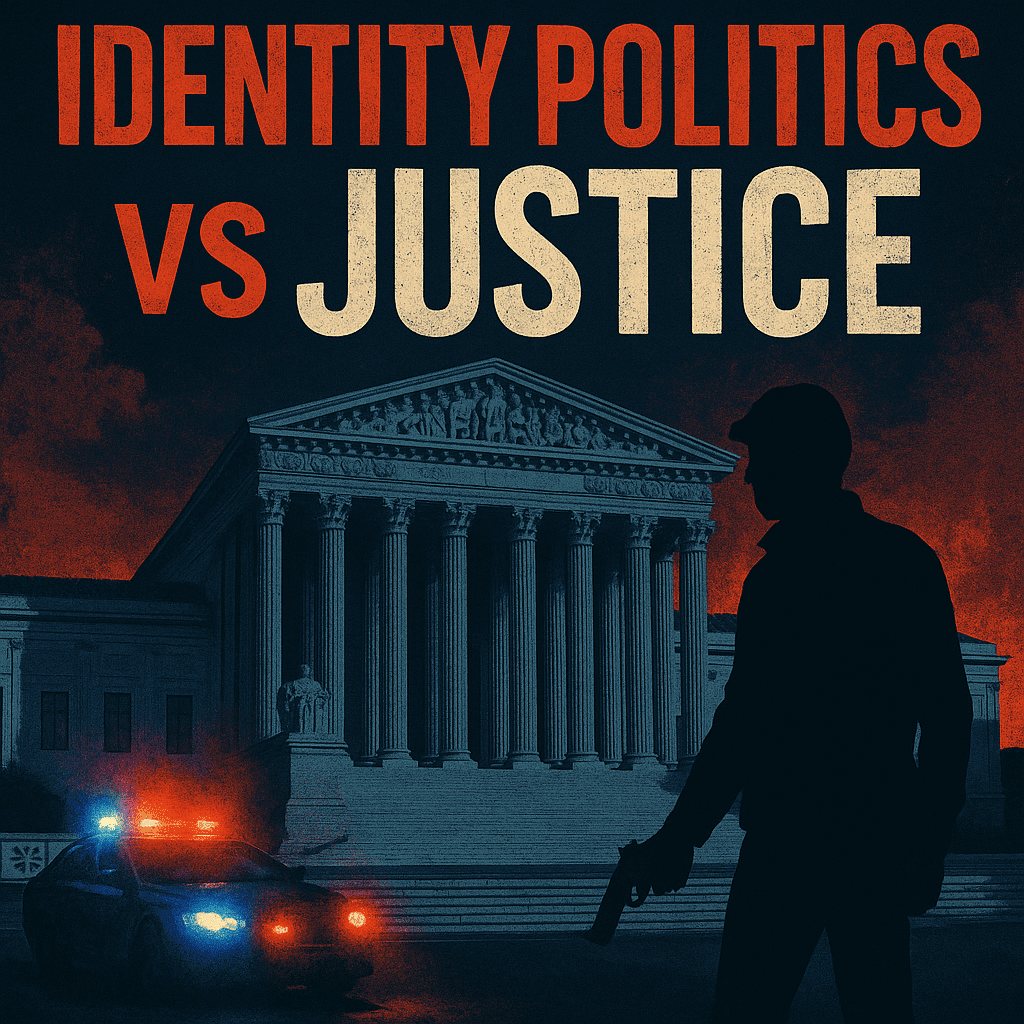
Category: Commentary

  • Weaponized Words: How the Radical Left Turns Rhetoric into Violence
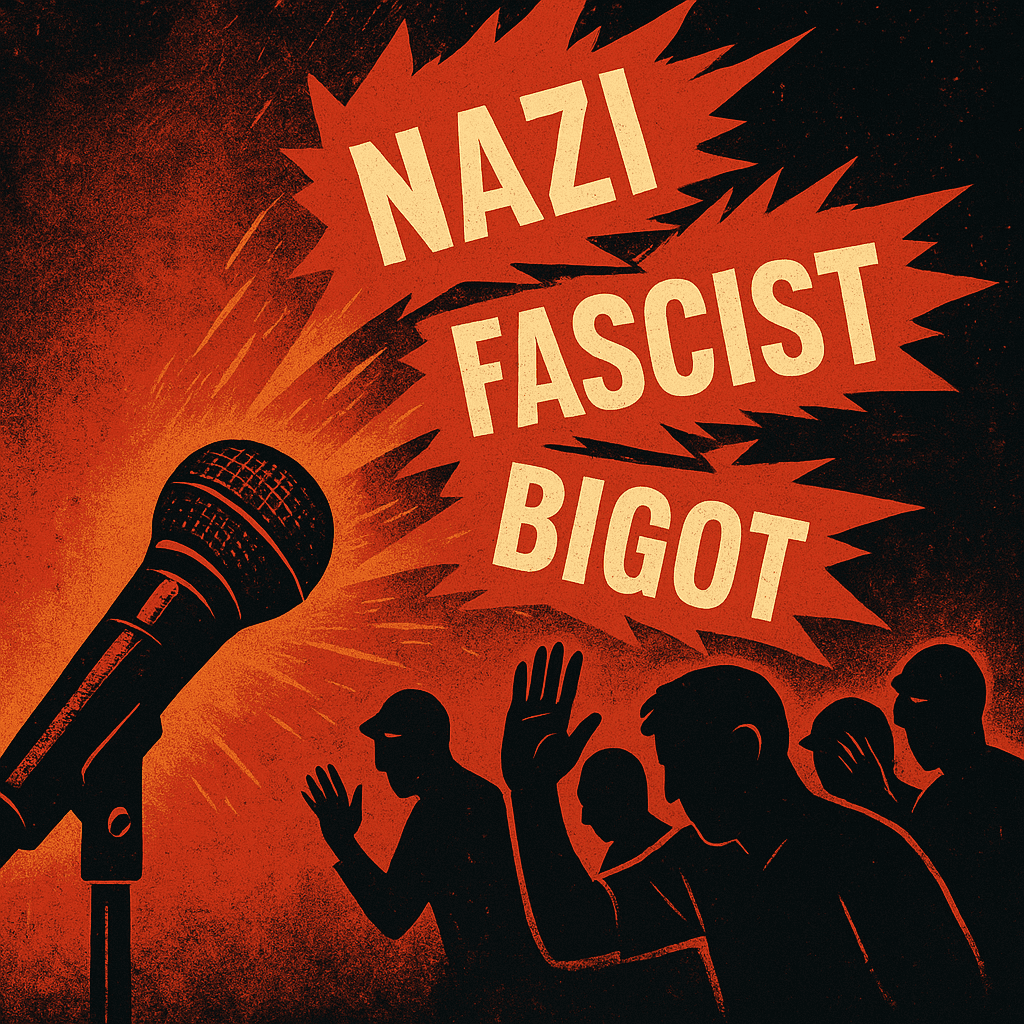
    By Ryan “Dickie” Thompson | Disruptarian Radio

    There’s a debate floating around right now that says more about our political climate than most people want to admit. Dave Rubin, a gay conservative and host of the Rubin Report, sat across from Cenk Uygur of The Young Turks and held up a mirror to the radical left. The subject? Words. Not just any words, but the loaded rhetoric the left has been using for years. Words they claim are harmless “commentary” but which in practice whip people into hate, division, and sometimes outright violence.

    And in this case, the violence wasn’t hypothetical. It was deadly.


    A Debate That Exposed the Game

    In their exchange (video linked here ), Rubin played for Uygur a clip of him mocking Charlie Kirk in cartoon form—depicting Kirk as if he were seeking martyrdom. The problem? Charlie Kirk had just been murdered in cold blood. His wife lost a husband. His children lost a father. And here was Cenk Uygur, caught on tape trivializing the possibility of his death.

    When Rubin pressed him—“Do you think Charlie wanted to be martyred? Do you think he wanted to be killed?”—Uygur tried to wriggle out, claiming it was “out of context.” But the words were there, plain as day.

    The radical left’s defense always goes the same way:

    • “It’s just words.”
    • “We’re just making commentary.”
    • “You’re taking it out of context.”

    But words matter. Words have consequences.

    And when you keep labeling political opponents as Nazis, white supremacists, or existential threats to society, eventually someone decides the only solution is violence.


    Mainstream Media: An Echo Chamber of Smears

    This is not just about The Young Turks. What Rubin exposed with Uygur is the same thing we’ve seen from the broader mainstream media for years. Turn on CNN, MSNBC, or scroll through Twitter (X) and you’ll find a steady stream of the same poison:

    • Trump “emboldens Nazis.”
    • Conservatives “hate women.”
    • MAGA Republicans are “a threat to democracy.” (Biden said this directly in a 2022 speech in Philadelphia.)
    • Skeptics of COVID lockdowns were “grandma killers.”
    • Anyone questioning gender ideology was “erasing trans lives.”

    It’s relentless. And repetition matters. Say something enough times, and the fringes of your audience start to believe it as literal truth.

    It reminds me of the old saying: “If you call your neighbor a Nazi every day, don’t be surprised when someone finally treats him like one.”

    What happened to Charlie Kirk isn’t disconnected from the words pumped out by corporate media. It’s the natural byproduct. When you create a culture where dissent is equated with evil, people are conditioned to believe that destroying the “evil” is not just acceptable—it’s righteous.


    Words as Weapons

    Here’s the real danger: the radical left understands the power of language, and they wield it deliberately. Words aren’t used to persuade. They’re used to stigmatize, to isolate, and to paint a target on whoever disagrees.

    Call someone a “fascist” enough times, and you don’t have to debate them. You just silence them. Call someone a “bigot” enough times, and you don’t have to answer their points. You just dismiss them. Call “misinformation” the same as terrorism—as the Biden administration and DHS have done—and suddenly free speech itself is treated as a national security threat.

    Silencing speech is like putting duct tape over a smoke alarm. The fire still burns, but now no one hears the warning.

    The radicals in media and politics know this. And they play this game daily.


    The Asymmetry Rubin Pointed Out

    Rubin’s most important point during the debate wasn’t just about Cenk’s hypocrisy. It was about the asymmetry in our political discourse.

    Sure, there’s ugly rhetoric on both sides of the aisle. But the radical left has the monopoly of institutional power. They have:

    • Corporate media repeating their narratives.
    • Universities enforcing their language codes.
    • Big Tech platforms censoring dissent.
    • Hollywood glamorizing their causes.
    • Politicians framing opponents as existential threats.

    When the left calls someone a Nazi, it doesn’t stay on a fringe blog. It gets amplified by CNN, plastered across social media, and endorsed by blue-check elites. The result? Regular people—people who might otherwise be decent—get convinced they’re fighting monsters.

    And once you’ve convinced someone they’re in a war against monsters, almost anything becomes justifiable.


    Manufacturing Extremism

    The irony is thick. The left constantly warns of “radicalization” online, but they never look in the mirror. They blame right-wing commentators, Fox News, or “misinformation,” but they never question their own role in creating extremists.

    Look at the shooter who killed Charlie Kirk. Early reports described him as coming from a stable household, going to college, seemingly normal. Something radicalized him. Something pushed him from everyday student to political killer.

    We don’t know every detail of his path, but we know what kind of climate he was swimming in: a climate where his target was constantly smeared as racist, misogynist, dangerous.

    Radicalization doesn’t happen in a vacuum. It happens in a culture where “the other side” is dehumanized. And dehumanization is exactly what the radical left has been peddling through its language.


    The Double Standard Game

    Here’s the part that drives people nuts: the double standard.

    When a conservative commentator says something heated, it’s immediately labeled as “incitement.” When a Republican politician uses harsh language, the media calls it “dangerous.”

    But when someone on the left fantasizes about punching, silencing, or erasing their opponents, suddenly it’s “just commentary” or “satire.”

    You know what? If words don’t matter, then why ban conservatives from Twitter? If words don’t matter, why do we have entire university bureaucracies policing “hate speech”?

    The truth is, words do matter. The left just doesn’t like accountability for how their words are weaponized.


    History Already Told Us This

    There’s nothing new about weaponized language. History is littered with examples of how demonizing rhetoric leads to real-world consequences.

    • In the French Revolution, political enemies were smeared as “enemies of the people”—and then they lost their heads.
    • In Rwanda, radio hosts referred to the Tutsis as “cockroaches”—and the machetes soon followed.
    • In Soviet Russia, dissenters were branded as “enemies of the state”—and sent to the gulags.

    When you strip opponents of their humanity with words, violence is just a step away.

    That’s why this debate matters. Because we’re seeing the same playbook unfold in America today.


    Breaking the Cycle

    So what do we do? It’s not enough to point out hypocrisy. We have to change the culture of language itself.

    That doesn’t mean censoring the left in retaliation. Censorship is never the solution. It means calling out the manipulation when we see it and refusing to play their game.

    • Don’t let them redefine disagreement as “hate.”
    • Don’t let them get away with false smears.
    • Don’t let them set the language of the debate.

    Liberty thrives on open, honest debate. Tyranny thrives on controlling the dictionary.

    If you let one side dictate which words are acceptable, you’ve already lost.


    Why This Matters Now

    The Rubin–Uygur clash wasn’t just a spat between two talking heads. It was a glimpse into the broader battle over speech and truth. On one side, you have those who believe words should be tools for open debate. On the other, you have those who weaponize words to destroy their opponents.

    The cost is no longer theoretical. A man is dead. A family is broken. And yet the radical left still shrugs, pretending their hands are clean.

    But you and I both know the truth. Words build culture. And when the culture you build is based on demonization, division, and hate, eventually someone pulls a trigger.

    That’s why we need to expose this. That’s why we need to challenge it. Because if we don’t, the next tragedy won’t surprise anyone.


    Closing Thought

    Electing new politicians won’t fix this. Swapping Cenk for some other loudmouth won’t fix this. The only real fix is cultural: stop letting elites weaponize language, stop letting corporate media control the narrative, and start reclaiming speech as a tool for truth instead of a weapon for division.

    Until then, remember this: words are not harmless. In the wrong hands, they’re ammunition. And the radical left has been firing that ammunition for far too long.


    Sources

    1. Dave Rubin vs. Cenk Uygur debate clip: https://www.youtube.com/watch?v=bxn5_-J_HBA
    2. Biden: “MAGA Republicans are a threat to democracy” (Sept 2022 speech): https://www.whitehouse.gov/briefing-room/speeches-remarks/2022/09/01/remarks-by-president-biden-on-the-continued-battle-for-the-soul-of-the-nation/
    3. CNN on Trump and Charlottesville “very fine people” hoax: https://www.cnn.com/2017/08/15/politics/trump-charlottesville-comments/index.html
    4. Cenk Uygur inflammatory headlines (Young Turks): https://www.youtube.com/@TheYoungTurks
    5. NPR coverage of “disinformation as terrorism” framing: https://www.npr.org/2021/02/19/969208495/biden-administration-turns-attention-to-domestic-extremism
    6. DHS memo treating “misinformation” as domestic terror threat: https://www.dhs.gov/news/2022/02/07/national-terrorism-advisory-system-bulletin
    7. NBC News on COVID skeptics labeled “grandma killers”: https://www.nbcnews.com/health/health-news/covid-lockdown-protests-called-grandma-killer-events-n1190931
    8. CNN op-ed smearing parental rights activists as “extremists”: https://www.cnn.com/2023/03/23/opinions/parents-rights-extremism-education-brown/index.html
    9. Historical reference: RTLM radio and Rwanda genocide: https://www.un.org/en/preventgenocide/rwanda/historical-background.shtml
    10. French Revolution “enemies of the people” rhetoric: https://www.history.com/topics/france/reign-of-terror

    Spun Web Technology SMART SEO

    Spun Web Technology SMART SEO

  • Charlie Kirk Assassination: Unanswered Questions About the Crime Scene, Cameras, and the Official Story

    By Ryan Dickie Thompson – Disruptarian.com


    When a political figure is gunned down in public, the investigation should be airtight. Every camera should be preserved, every chair and microphone logged, every angle reviewed until the truth is clear. That is not what we are seeing in the case of Charlie Kirk.

    Instead of clarity, the public has been handed contradictions, unexplained actions, missing evidence, and even admissions by the FBI that “lingering questions” remain. When the nation’s top investigators openly admit that they do not have everything squared away, the public has every reason to demand more.

    The following breakdown brings together what we know, what has been reported, and the long list of issues that make the official story hard to accept at face value.


    What the authorities say

    On September 10, 2025, Charlie Kirk was assassinated at Utah Valley University. The FBI and local police say Tyler Robinson, age 22, fired the fatal shot with a .30-06 Mauser rifle. According to reporting in The Guardian , Robinson left behind physical evidence tying him to the crime: DNA on a towel used to wrap the rifle, and DNA on a screwdriver found on a rooftop perch.

    The FBI also says Robinson posted in a Discord chat before surrendering, admitting, “Hey guys, I have bad news for you all … it was me at UVU yesterday. I’m sorry for all of this.” That confession, coupled with forensic ties, became the backbone of the case. Investigators are still probing dozens of others who were active in that chat, according to ABC News.

    Surgeons who treated Kirk claimed the bullet did not exit. It lodged under the skin in his neck. The press reported this as a “miracle,” noting that a round that powerful should have gone straight through, possibly hitting others in the audience (New York Post).

    So far, that is the official account. But here is where the contradictions begin.


    Reports of a crime scene taken apart within hours

    Eyewitnesses and journalists have raised alarms about how quickly the crime scene was broken down. According to a Facebook post by Josh Rincon, the stage and seating area were deconstructed almost immediately after the event. Chairs were moved, barriers removed, and forensic markers taken down before the scene was secured.

    This is not a minor slip. Every detective knows the first step is to lock down the scene and protect evidence. If that step was skipped or rushed, then every later conclusion is compromised. Chain of custody is the lifeblood of justice. Without it, nothing holds.


    The tent camera that disappeared

    Perhaps the most damning claim comes from video evidence of what happened right after the shot.

    An Instagram reel shows a man calmly removing the overhead tent camera positioned directly behind Kirk. The man stood on Kirk’s chair, detached the equipment, and walked away while texting on his phone. He wore no law enforcement insignia, and nobody stopped him.

    That camera was in the perfect position to record the shooter’s trajectory, Kirk’s body reaction, and the audience response. Yet it was removed within minutes of the assassination.

    On top of that, reporting by Interesting-USA highlights that there were two cameras positioned in front of Kirk as well, capturing his face and chest directly. Those feeds have never been released.

    So we are asked to accept the official story while the clearest video angles remain out of sight.


    Exit wound or miracle stop?

    Here is the sharpest contradiction.

    The FBI and medical staff insist the bullet never exited. But multiple slowed-down clips circulating online suggest otherwise. Viewers see what looks like blood spray downward, then upward, followed by Kirk’s head snapping forward. To trained eyes, this looks like a classic entry and exit wound.

    A Marine veteran, himself shot three times in combat, reviewed the video and said he recognized the reaction instantly. He described Kirk’s stiffening as consistent with a spinal injury caused by a bullet passing through.

    It is worth pausing on the ballistics here. A .30-06 round is designed for hunting elk and moose. It carries immense velocity. The idea that such a round would stop cold in a few inches of tissue without exiting is extremely unlikely. Surgeons called it a miracle, but skeptics call it improbable.

    The only way to settle the matter is to release the autopsy and ballistics reports. Until then, the public is left with two incompatible stories.


    Security and the bodyguard signals

    In the moments before the gunfire, witnesses noted odd behavior from bodyguards. Video clips show gestures, glances, and what looked like signals exchanged just before Kirk was hit.

    Were they routine? Were they reacting to something they saw? Or did they know more? Without radio logs or bodycam footage, the public is left guessing. If handlers sensed a threat, why was Kirk still left standing on stage without cover?


    The false confession

    Another twist came when a separate man confessed early on to killing Kirk. Major outlets ran the story, only to retract it when the FBI said the confession was false. That man was released quickly (New York Times).

    False confessions happen, but in a high-profile assassination, this kind of confusion feeds public doubt. Who was this man, why did he confess, and why was his story initially treated as credible enough to push into headlines?


    The FBI admits “lingering questions”

    Usually, federal investigators project certainty. Not this time. The Bureau itself told reporters that “troubling lingering questions” remain about Kirk’s murder (New York Post).

    This admission is extraordinary. It confirms that investigators themselves cannot reconcile every piece of evidence. Yet they have not told the public what those questions are.


    Candace Owens adds her own controversy

    As if the case needed more fuel, Candace Owens inserted herself with statements that only deepened the confusion.

    In a Yahoo News article and in a post on X, Owens suggested that Kirk had been pressured over his views on Israel and implied that she helped expose those pressures. Her timing was bizarre, sounding half like boasting and half like confession.

    Owens was not invited to Kirk’s memorial service, something she said publicly. Whether you believe her or not, her claims of internal pressure and blackmail raise more questions about the environment Kirk was operating in before his death.


    The growing list of questions

    At this point, the public has more questions than answers. Here are the biggest ones:

    1. Why was the crime scene deconstructed so quickly? Who authorized cleanup before evidence was logged?
    2. Who removed the tent camera, and where is that footage now?
    3. Why have the two front-facing camera feeds never been released?
    4. Did Kirk suffer an exit wound or not? Where is the full autopsy report?
    5. What was the bullet trajectory? Rooftop, bushes, or directly behind him?
    6. What were the bodyguards signaling before the shot? Are radio logs and bodycam footage available?
    7. Why was a false confession pushed to the press, then retracted?
    8. Who else is under investigation from the Discord chat? What role did they play?
    9. Why did the FBI release suspect photos early, against advice, potentially compromising the case?
    10. Are Candace Owens’ claims about pressure and blackmail supported by documents or meetings?

    These are not wild theories. These are basic questions of evidence and accountability.


    Why it matters

    Trust in government does not collapse because people speculate. It collapses when evidence goes missing, when cameras disappear, when crime scenes are handled like afterthoughts.

    Charlie Kirk’s murder should have been the most carefully investigated crime scene in recent history. Instead, we have conflicting medical claims, missing video, unexplained security behavior, and even the FBI saying there are still unanswered questions.

    The only way forward is transparency. Release the uncut video feeds. Release the autopsy. Publish the chain of custody logs. If the official version is correct, then sunlight will prove it. If it is not, then the American people deserve to know what really happened on that stage.


    Sources

    Spun Web Technology SMART SEO

    Spun Web Technology SMART SEO

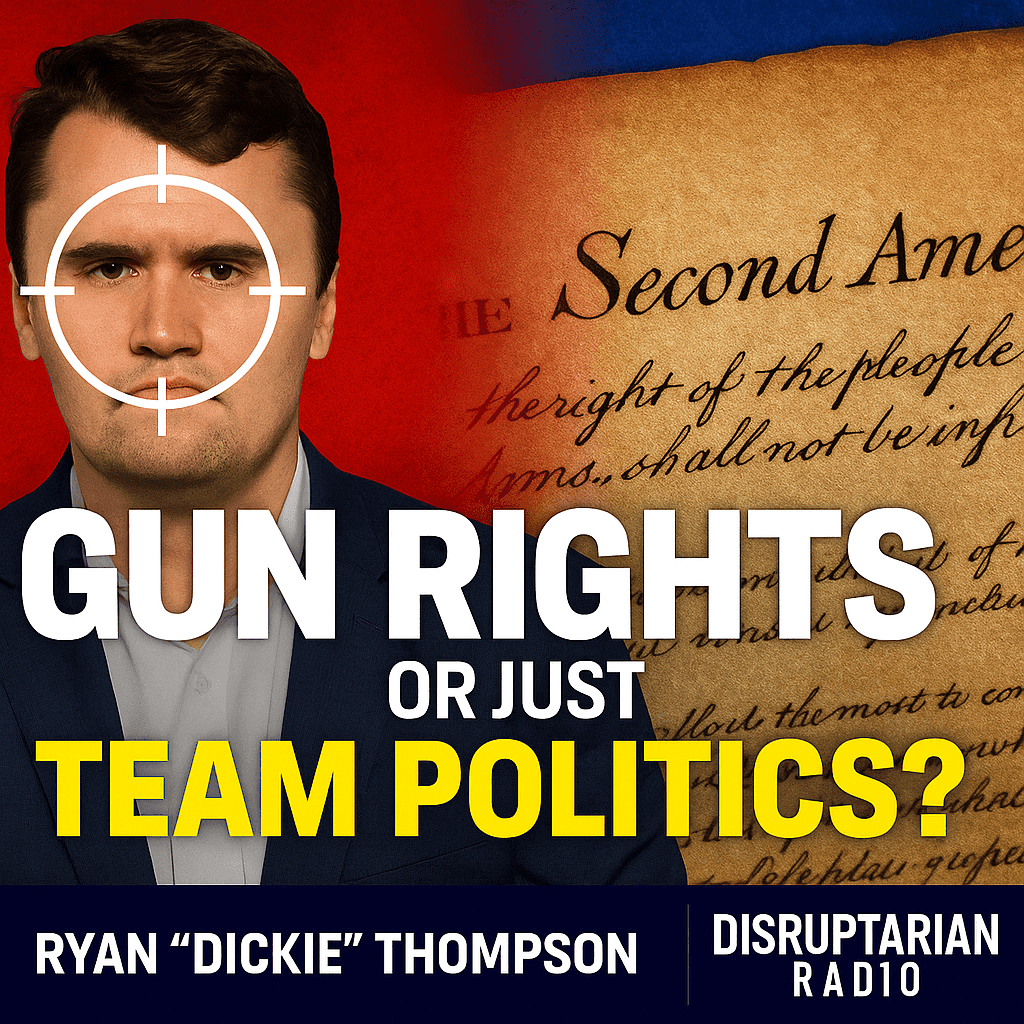
  • When Gun Rights Become Team Sports: The Hypocrisy Behind the Charlie Kirk Death

    Let me be real with you right from the jump: I don’t worship Charlie Kirk. I don’t always agree with him, and he’s not above criticism. But what I saw last week wasn’t just criticism. It was something darker.

    A viral clip was making the rounds. It showed a content creator called “Jolly Good Ginger” basically celebrating the idea of Charlie Kirk getting shot and killed. Smirking. Laughing. Suggesting it would be “karma” if it happened.

    And what stunned me wasn’t just the clip itself—it was the reaction to it. Applause. Shares. Likes. People nodding along like this was some kind of moral stand.

    We’ve crossed a dangerous line.


    This Isn’t About Kirk. It’s About Us.

    I want you to put politics aside for a minute. This isn’t about defending Charlie Kirk the person. It’s about what it says when people cheer for political enemies to die.

    We’re supposed to be the country of civil debate. A place where you argue hard, you speak freely, and then you go home and let the other guy live.

    Now? We’ve got folks out there who think wishing death on someone is part of the discourse. That if you disagree hard enough, you’re justified in celebrating a bullet.

    Let me be clear: that’s not free speech. That’s bloodlust dressed up in hashtags and memes.


    Gun Rights Are Not the Same as Driving Privileges

    A lot of people are throwing around comparisons trying to justify regulating or restricting gun rights. One I’ve seen a lot is: “You need a license to drive, why shouldn’t you need one to own a gun?”

    Let’s break this down.

    Driving is a privilege. It’s a government-regulated activity that exists because of modern infrastructure and legal code. You pass a test, you follow traffic laws, and the state lets you operate a vehicle on public roads.

    Owning a firearm is a right. It’s written into the Constitution. It’s not about convenience or recreation. It’s about the fundamental human right to self-preservation. Against criminals, yes. But more importantly, against government overreach.

    Now, rights come with responsibilities. That’s true. But they are not permissions handed down from the state. They are protections from the state.

    If you think your right to bear arms should be regulated like driving, you don’t understand the purpose of the Second Amendment. Or worse, you do—and you just don’t care.


    The Danger of Celebrating Political Violence

    Let me share something personal. I’ve got a family member who’s gay, pro-Second Amendment, owns multiple firearms, knows gun safety, all that. Smart guy. Libertarian-leaning.

    Last week, I saw him share the Jolly Good Ginger clip with the caption “karma’s a bitch.”

    This is someone who knows the weight of what a gun can do. Who knows how serious lethal force is. And here he is cheering the idea of a political opponent dying.

    That shook me.

    If people like him—people who own guns, support liberty, and understand constitutional rights—are falling into this tribal “rah rah my team” mindset, we’re in trouble.

    Because the Second Amendment isn’t a team jersey. It’s a check against tyranny. It’s not about who you like or don’t like. It’s about the principle behind the power.


    What Madison Actually Said

    Most people haven’t read Federalist Paper No. 46, but they should. James Madison laid out the case for an armed citizenry as a final safeguard against a centralized, overreaching federal government.

    He wasn’t talking about hunting deer. He was talking about resistance to tyranny.

    The structure was intentional. The Founders put freedom of speech and freedom of religion in the First Amendment. Then they immediately followed with the Second.

    Why?

    Because speech without defense is just noise. The right to speak freely means nothing if the government can disarm you when it doesn’t like what you say.

    And now, in 2025, we have people who own guns celebrating the idea of their political rivals getting killed.

    You can’t have it both ways.


    You Don’t Believe in Liberty if You Cheer for Death

    Let’s break it down to basics.

    If you support the Second Amendment because you believe in resisting tyranny, then you can’t cheer for violence against people who disagree with you politically.

    Why?

    Because the second you do that, you’re justifying tyranny. You’re saying violence is okay—as long as it’s your side doing it.

    That’s not liberty. That’s tribalism. That’s mob rule.

    This is the same logic used by authoritarians throughout history. Stalin did it. Mao did it. Pinochet did it. They all claimed they were protecting the people—by silencing or eliminating “dangerous” voices.

    That’s the road we’re on if we don’t check ourselves.


    Practical Advice for Liberty-Minded Americans

    If you actually care about liberty and not just scoring points online, here are a few things to do:

    1. Take a Gun Safety Course

    Even if you don’t own a firearm, do it. Understand what lethal force really means. It’ll change your perspective.

    2. Read the Founders

    Start with Madison, George Mason, and Patrick Henry. Understand the context of why the Second Amendment exists.

    3. Stop Cheering for Death

    I don’t care how much you hate someone’s politics. Celebrate ideas, not body counts.

    4. Call It Out

    If your friends are sharing content that glorifies political violence, say something. Silence is agreement.


    Rights Aren’t About Comfort

    Here’s the uncomfortable truth:

    • Free speech means protecting speech you hate.
    • The Second Amendment means protecting rights you might never use.
    • Liberty means tolerating things that make you uncomfortable.

    We don’t get to pick and choose which parts of the Constitution we like and ignore the rest. That’s not how this works.

    You’re either for liberty or you’re not.

    And if you only support the Second Amendment because your team is winning right now, you don’t believe in the right. You believe in power.


    This Is Bigger Than One Clip

    This isn’t just about a YouTube short or a TikTok clip. It’s about the slow breakdown of principled thinking in America.

    We’ve traded ideas for insults. We’ve traded reason for reaction. We’ve traded rights for rhetoric.

    And it’s not just “the other side” doing it. We’ve got people on the right, people who claim to love the Constitution, acting like political violence is some kind of game.

    If we go down that path, we all lose.


    Final Thought

    This isn’t about being nice. This is about being serious.

    You can’t defend the Second Amendment while laughing about the idea of shooting your political enemies. You can’t claim to love liberty while cheering for death.

    That’s not courage. That’s cowardice.

    We’re better than that. Or at least, we should be.

    This is Ryan “Dickie” Thompson from Disruptarian Radio. Stay thoughtful. Stay disruptive.

    Sources:

    Spun Web Technology SMART SEO

    Spun Web Technology SMART SEO

  • Mass Shootings by Demographic, 2025 Update: facts, spin, and what they will not tell you

    By Ryan “Dickie” Thompson • Disruptarian Radio

    In 2017 I published a breakdown on mass shootings in the United States . I argued then that the media kept forcing simple villains into a complex story. That post still stands. It is 2025 now. The noise is louder, the charts are prettier, and a lot of it is still nonsense. This page puts every claim next to a source, then shows the math with live charts you can inspect.

    First things first: what the government tracks and what it ignores

    The FBI’s Uniform Crime Reports and Active Shooter documents record age, race, and sex of offenders. They do not record gender identity. There is no centralized, official dataset that lists the number of transgender offenders in murders or mass shootings. Because of that gap, any sweeping statistic about “how many trans shooters there are” cannot be verified against federal crime data.

    Nonprofits like the Human Rights Campaign and Everytown focus on transgender people as victims. They do not publish national offender rolls. On top of that, police and media misgender suspects and victims in early reporting. That makes identity classification even noisier.

    Bottom line: when a chart claims precise per capita rates for “trans shooters,” ask for the methodology and raw data. If there is no method note, it is opinion art.

    Population matters: the trans denominator changed a lot

    • 2015: Williams Institute estimated about 1.4 million adults identified as transgender, around 0.6 percent of adults.
    • 2016 meta analysis: roughly 855,000 adults across 2006 to 2016 reported as transgender in surveys.
    • 2025: Williams Institute now estimates about 2.8 million transgender people age 13 and up.

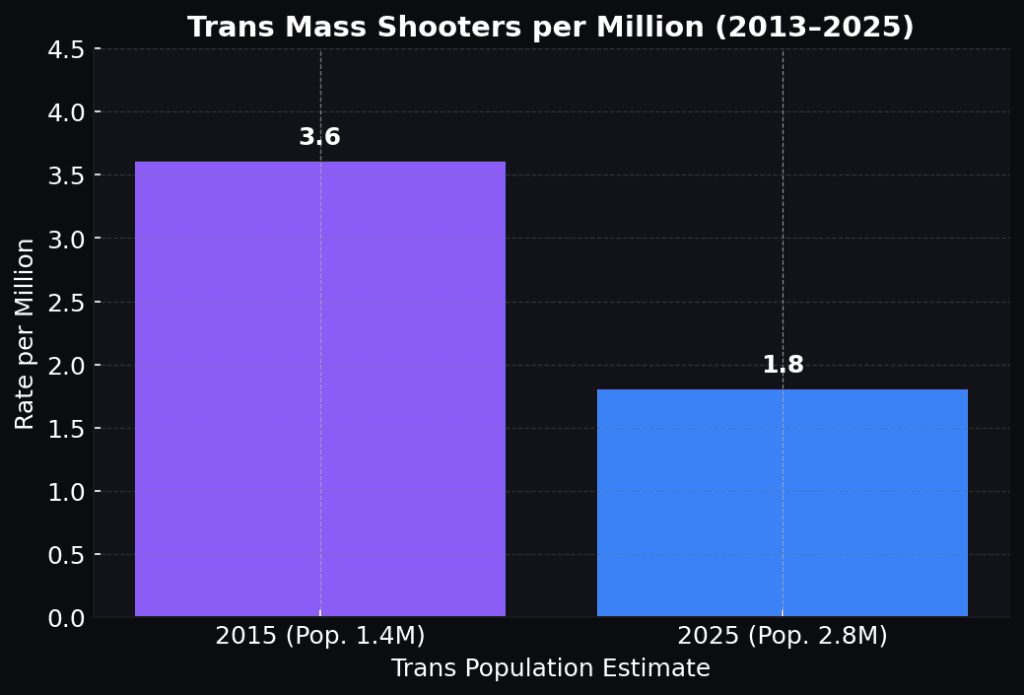
    Same numerator with a changing denominator will move the per million rate. Five confirmed trans or nonbinary mass shooters since 2013 yields about 3.6 per million using the 2015 adult estimate, and about 1.8 per million using the 2025 estimate. Same five incidents. Different base. This is why cherry-picking population baselines makes viral graphics look dramatic.

    Who actually commits mass shootings

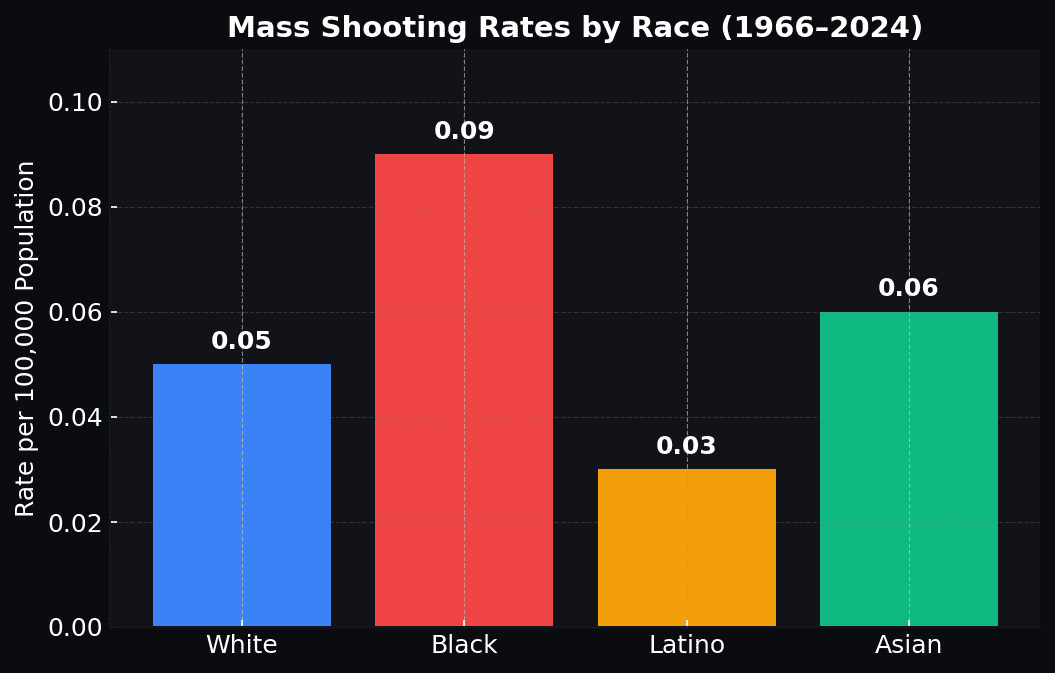
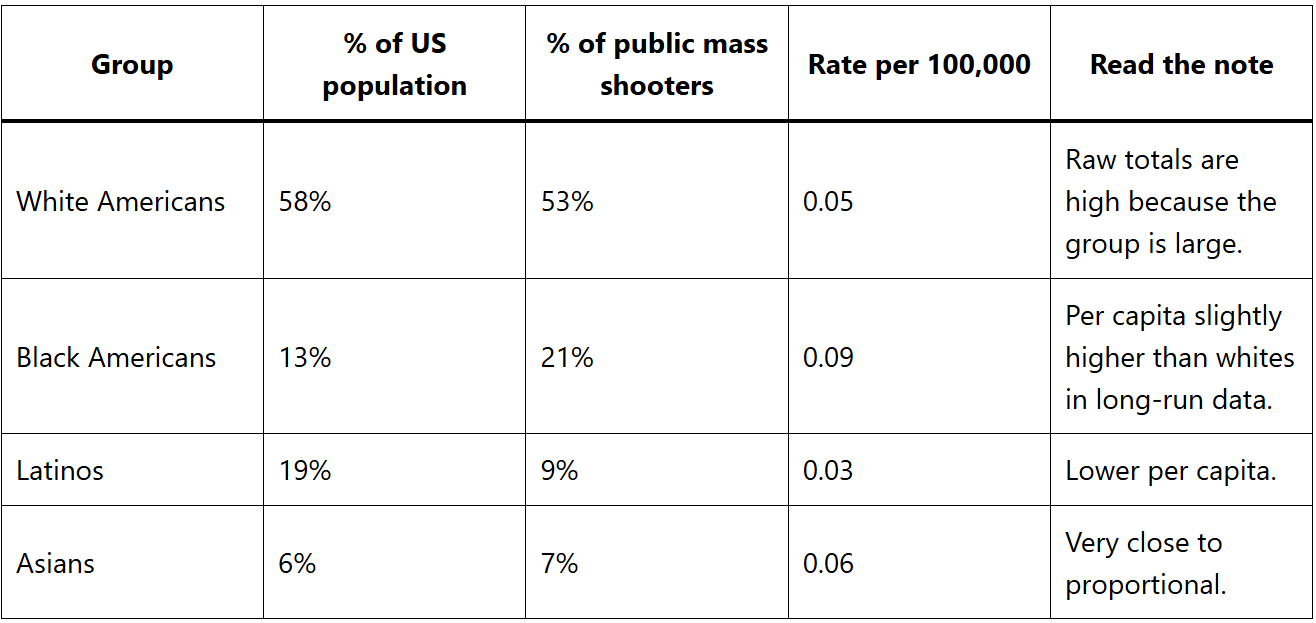
    Men do. That part is not controversial. Across the best public databases, men account for well over 97 percent of mass shooters. When you drill into race and per capita rates using the stricter “public, four or more killed” definition, the picture is steady over decades:

    Group % of US population % of public mass shooters Rate per 100,000 Read the note
    White Americans 58% 53% 0.05 Raw totals are high because the group is large.
    Black Americans 13% 21% 0.09 Per capita slightly higher than whites in long-run data.
    Latinos 19% 9% 0.03 Lower per capita.
    Asians 6% 7% 0.06 Very close to proportional.
    Download the graphical version of this chart

    So the lazy line that “cis white males commit most mass shootings” leaves out the denominator. White men make up a large share of the population. Per capita, long-run data shows Black and white males very similar, with Latinos lower and Asians near proportional. The constant across all groups is sex. It is men.

    Chart: racial rates per 100,000 (1966 to 2024)

    Rates use the stricter public mass shooting definition over the long window. They are directional, not exact counts for any single year.

    Chart: trans per million using two denominators

    Five incidents since 2013. Using the smaller 2015 population gives a higher per million value. Using the larger 2025 population cuts it roughly in half.

    Known trans or nonbinary mass shooters since 2013

    • Snochia Moseley – Aberdeen, Maryland, 2018. Three killed at a distribution center.
    • Alec McKinney – Highlands Ranch, Colorado, 2019. One killed, eight wounded at STEM School. Trans boy, pled guilty.
    • Anderson Lee Aldrich – Club Q, Colorado Springs, 2022. Five killed. Nonbinary identity claimed in court filings.
    • Audrey Hale – The Covenant School, Nashville, 2023. Six killed.
    • Robin Westman – Annunciation Catholic School, Minneapolis, 2025. Two children killed, many injured.

    These cases are documented by fact-checkers who verified identity claims against court and police records. They are tragic, but they are rare relative to the whole universe of mass shootings. It is notable that the FBI does not collect this information, so there is no hard data other than what private individuals find.

    Terror motivation and the headlines that follow

    Ideology is not the majority driver, but it is the best headline. A few examples remind people of politics rather than base rates:

    Every one of these was committed by a man. Different creeds, same constant.

    Victimization of transgender people is real and documented

    When the conversation is about transgender people in crime statistics, the strongest data is about them as victims. HRC tracks fatal violence and finds that when a killer is known, a large fraction are intimate partners, friends, or family. That fraction has ranged from 26 percent to 42 percent in recent annual reports. Black transgender women are hit hardest by the overlap of racism, sexism, and transphobia. Studies show elevated external causes of death for transgender people. Drugs and overdose appear in some cases, but they are not shown as the primary cause of transgender murders in the best available reporting.

    What the 2017 Disruptarian post concluded, and what still holds

    • Men commit almost all mass shootings. That is still true.
    • Within white mass shooters, political lean skewed liberal. That finding still appears in case reviews and it cuts against a popular stereotype.
    • Race mostly tracks population share in long-run public mass shooting data. Black and white males are similar per capita. Latinos are lower. Asians are near proportional.
    • Trans shooters exist, but they are single digits in twelve years. The number is tiny relative to the entire dataset. The population is also very small and represents much less than 1% of the entire population
    • Riot violence, including the BLM riots that stretched across several years, is not counted as mass shootings. If you counted all mass political violence, including arson and beatings, the map of harm would change fast.

    So the story is simpler and more honest than the internet wants it to be. If the goal is fewer massacres, focus on the constants that show up again and again: male offenders, leakage of plans, suicidal crises, and failure to intervene early. Identity memes will not save lives.

    References

    1. FactCheck.org – Few Mass Shooters Have Been Transgender
    2. PolitiFact – Are trans people statistically more prone to commit gun violence
    3. Reuters – Fact check about trans people and school shootings
    4. The Violence Project – Mass Shooter Database
    5. NIJ – Public Mass Shootings Database article
    6. McBride at Ammo.com – Mass Shooters by Race summary
    7. Williams Institute – Transgender Population Estimates 2025 (if unavailable, try the Internet Archive at archive.org)
    8. Williams Institute – 2015 Transgender Adult Estimate (if unavailable, try the Internet Archive at archive.org)
    9. National Library of Medicine – Transgender homicide patterns, peer reviewed
    10. HRC – Fatal violence against transgender and gender non conforming people 2024
    11. Pulse Nightclub shooting, 2016
    12. San Bernardino attack, 2015
    13. El Paso Walmart shooting, 2019
    14. Pittsburgh synagogue shooting, 2018
    15. Covenant School shooting, 2023
    16. Disruptarian – Mass Shootings for the past 20 years USA, circa 2019
    Spun Web Technology SMART SEO
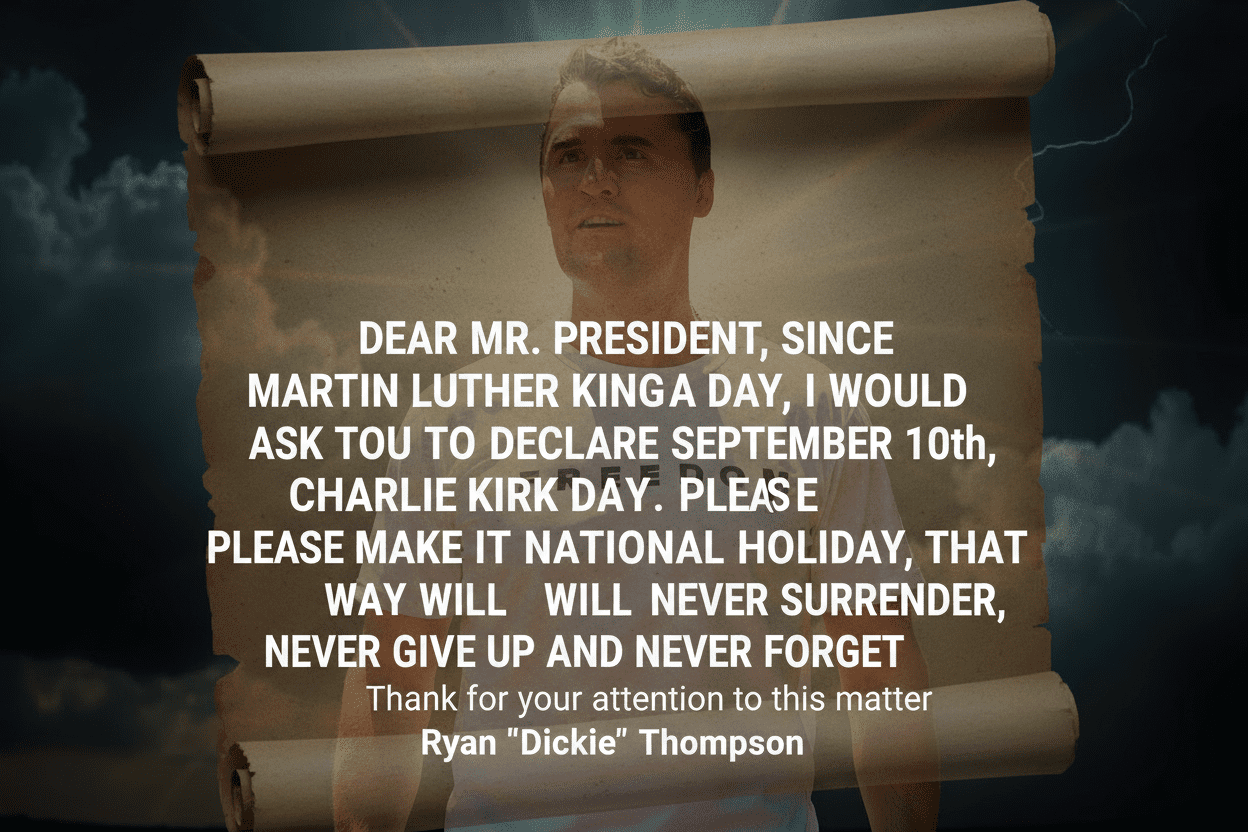
    Spun Web Technology SMART SEO
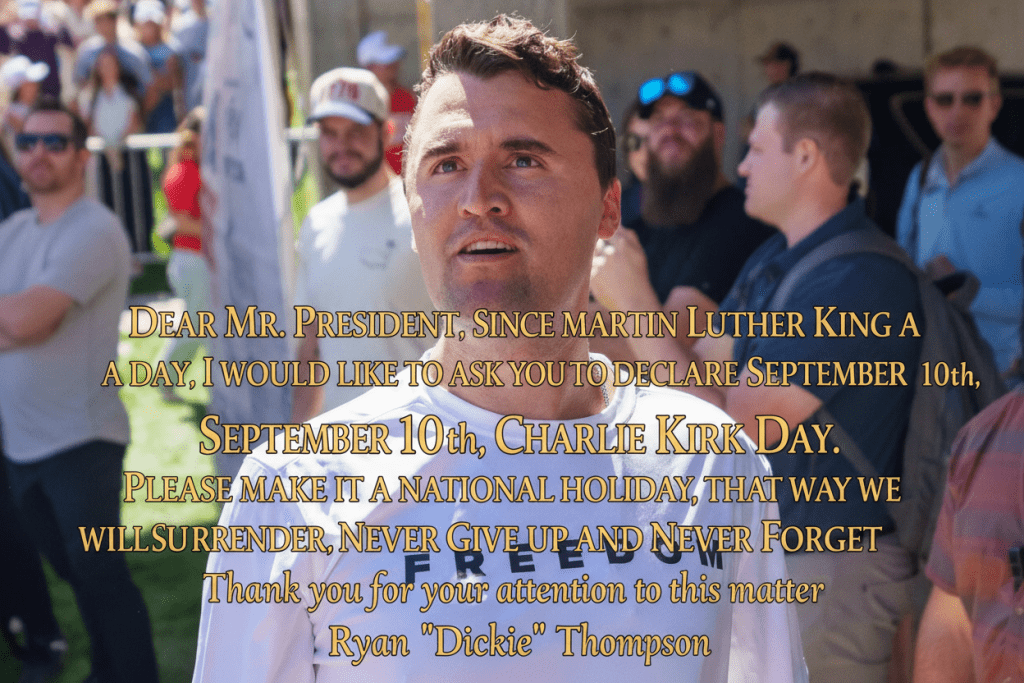
  • The Kavanaugh Assassin Comes Out as Trans: Another Chapter in a Disturbing Trend

    By Ryan “Dickie” Thompson – Disruptarian.com


    What the Media Isn’t Talking About

    So now we learn that Nicholas Roske, the man who showed up armed outside Justice Brett Kavanaugh’s house in 2022, has “come out” as a trans woman named Sophie. Court filings from September 19, 2025, reveal that Roske’s defense team now refers to him with female pronouns. The sentencing is set for October 3, and prosecutors are asking for at least 30 years.

    Roske, or “Sophie,” had planned to kill a sitting Supreme Court Justice because he didn’t like the way Roe v. Wade might go. He had a handgun, a knife, zip ties, and burglary tools. He called 911 on himself before carrying out the attack, which is the only reason Brett Kavanaugh is alive today.

    And now? We’re told to respect the pronouns of a would-be assassin.


    Trans Identity as a Shield

    Here’s the pattern: every time a high-profile criminal “comes out” as trans, the focus shifts. The crime becomes secondary. The narrative becomes about pronouns, discrimination, or prison conditions. Suddenly, we’re told the system must bend over backward to accommodate the criminal.

    In Roske’s case, the defense is already using this angle. They want lighter sentencing because of “conditions in prison for transgender inmates.” Translation: play the victim card.

    But let’s not lose the thread. This was an assassination attempt against a Supreme Court Justice, carried out in a climate where left-wing activists were already protesting outside justices’ homes and politicians were winking at the mobs. If the political winds had been blowing the other way, we’d never hear the end of it.


    A Trend We Can’t Ignore

    This isn’t an isolated story.

    • Nashville School Shooter (2023): Audrey Hale, a biological female who identified as male, carried out a massacre at Covenant School, killing six, including three children. The media quickly shifted to worrying about “anti-trans backlash.”
    • Aberdeen, Maryland Shooting (2018): Snochia Moseley, a transgender individual, shot and killed three co-workers before turning the gun on herself. Coverage was muted.
    • Denver STEM School Shooting (2019): One of the shooters, Maya “Alec” McKinney, identified as transgender. Again, the reporting bent over backwards to frame the identity angle sympathetically.

    Notice a pattern? Each time, the violence gets brushed aside while activists rush to make sure “misgendering” doesn’t happen. The dead, the injured, the nearly assassinated—those are afterthoughts.


    Why This Matters

    Let’s get one thing straight: I don’t care what clothes you wear or what name you go by. That’s your choice. But when identity politics becomes a shield for violence, we’ve crossed into dangerous territory.

    Imagine if a Christian conservative tried to assassinate a Supreme Court Justice. Imagine if a guy in a MAGA hat shot up a school. Would the media spend their time on pronouns? Or would they hammer home the ideology behind the act, demanding that anyone remotely connected be investigated?

    We all know the answer.


    The Cultural Gaslighting

    You know what? The whole debate around “trans violence” is a lesson in selective outrage. When violence fits the narrative (like Charlottesville), it gets amplified to the heavens. When it doesn’t, it gets buried under layers of identity spin.

    It’s like the Fed playing Monopoly with real lives, but this time the currency is outrage. They print it up when it suits them, and they tighten the supply when it doesn’t.

    And here’s the dangerous part: if we can’t talk honestly about who commits violence and why, then we can’t solve anything. Pretending doesn’t make people safer. It makes us all targets.


    The Political Angle

    Roske’s case wasn’t just random. He told investigators he was furious about Roe v. Wade and about mass shootings like Uvalde. That anger turned into a plan to murder a sitting Justice.

    Now add in the fact that politicians and activists openly encouraged intimidation of the Court after the Dobbs leak in 2022. The White House press secretary at the time even dodged questions about whether protesting outside justices’ homes was appropriate.

    So ask yourself: what happens when political leaders wink at mobs, the media spins identity as a shield, and unstable individuals like Roske are egged on by the rhetoric? We get exactly this. Violence, rebranded as victimhood.


    The Human Cost

    Here’s what we’re not supposed to talk about:

    • Brett Kavanaugh’s children had to live with the knowledge that a man came to their doorstep with a gun.
    • Families in Nashville will never see their kids again because a trans shooter decided to turn rage into murder.
    • Co-workers in Aberdeen lost their lives in a shooting that the media quickly swept aside.

    Real people suffer while activists fight over pronouns.


    Where Do We Go From Here?

    The answer isn’t complicated, but it’s also not politically correct:

    • Stop excusing violence because of identity. A murderer is a murderer, no matter their pronouns.
    • Hold the media accountable when they bury stories or spin them into “representation” issues.
    • Recognize that ideological violence—whether left or right—should be condemned without qualifiers.

    And most importantly: stop training people to see themselves as victims first and responsible adults second. Handouts, excuses, and identity politics only fuel the cycle. It’s like feeding bears at a campsite. It feels compassionate in the moment, but it creates a long-term danger for everyone.


    Final Word

    Nicholas Roske didn’t just try to kill Brett Kavanaugh. He tried to kill the rule of law. And no amount of name changes or pronouns changes that fact.

    If we want a society where freedom and responsibility matter, then we need to stop pretending violence can be washed away by identity politics. Otherwise, we’ll keep getting more “Sophie Roskes,” more “Audrey Hales,” and more innocent lives cut short.


    Sources

    Spun Web Technology SMART SEO
    Spun Web Technology SMART SEO
  • Gloating and Lying About Charlie Kirk’s Assassination Proves Costly for Jimmy Kimmel and Others

    By Ryan “Dickie” Thompson
    Disruptarian.com


    The Arrogance of Consequence-Free Lies

    For years, late-night comedians, celebrity activists, and media talking heads have operated under the smug assumption that their words carry no cost. They mock, smear, and openly fantasize about violence against their political enemies. They celebrate when conservatives are censored or canceled, and they assume their platform shields them from accountability.

    The assassination of Charlie Kirk has shattered that illusion. It exposed how deeply corrosive this rhetoric has become, how false narratives poison the public, and how some of the most powerful media figures are finally paying a price.


    Jimmy Kimmel Crossed a Line

    Jimmy Kimmel is no stranger to partisan attacks. He celebrated Donald Trump being banned from Twitter, cheered when Tucker Carlson was pushed off Fox News, and turned his show into a nightly megaphone for Democratic talking points.

    But after Charlie Kirk was murdered, Kimmel went further. He declared that the shooter was “one of them,” a MAGA Republican, despite the absence of any evidence. In reality, the shooter had written “fascist” on bullets used in the attack and was reportedly tied to left-wing politics, including having a gay, furry, transgender roommate according to reports.

    That is not a slip of the tongue. That is a reckless lie. It smeared a man who had just been assassinated and cast suspicion on millions of Americans by linking them to the crime.

    Backlash came quickly. Advertisers were pressured. Affiliates like Sinclair and Nexstar demanded an apology and suspended his program. The FCC chair Brendan Carr hinted at possible regulatory action. Whether it was panic over lost revenue or genuine disgust, ABC pulled Kimmel off the air in many markets.

    Sources:


    Walsh Was Right: Rhetoric Has Consequences

    Matt Walsh pointed out the obvious: for years conservatives shrugged off this behavior. Meanwhile, the left weaponized cancel culture, cheering when political opponents lost jobs for much less.

    Walsh argued that Kimmel’s rhetoric was not comedy but partisan propaganda, violating the very rules that govern the use of public broadcast airwaves. Whether or not the FCC ever enforces those standards, the point stands: lying about crimes, especially political assassinations, is not “public interest.”

    And here’s the harder truth: this climate is not new. The assassination of Charlie Kirk is horrific, but it did not happen in a vacuum. High-profile figures have been normalizing violent rhetoric against conservatives and Trump for years.


    Celebrities Who Flirted With Assassination Rhetoric

    This pattern goes back nearly a decade. Some of the most famous celebrities in the world have invoked violence against Trump or conservatives:

    • Madonna: At the 2017 Women’s March, she said she had thought “an awful lot about blowing up the White House.” She later claimed it was a metaphor.
      CNN Coverage
    • Johnny Depp: At the Glastonbury Festival in 2017 he asked, “When was the last time an actor assassinated a president? … Maybe it’s time.” He later apologized.
      BBC Coverage
    • Kathy Griffin: Infamous for a photo shoot holding a bloody, severed Trump head. She lost her CNN New Year’s Eve job and faced Secret Service investigation.
      NY Times Coverage
    • Snoop Dogg: In a 2017 music video, he pointed a toy gun at a Trump clown.
      Rolling Stone Coverage
    • Maria Chappelle-Nadal (Democratic Missouri state senator): Posted “I hope Trump is assassinated!” on Facebook. She was stripped of committee posts.
      Washington Post Coverage

    This is not fringe talk. These are mainstream entertainers and politicians feeding a culture where violence becomes thinkable.


    The Fallout After Charlie Kirk

    The assassination of Charlie Kirk brought this into sharper relief:

    • Workers Fired or Disciplined: Dozens across industries faced penalties for celebrating Kirk’s death.
      The Guardian
    • Threats Multiplying: Federal authorities are tracking threats related to Kirk’s funeral and political fallout.
      NPR
    • Escalating Violence: In Arizona, Treven Michael Gokey allegedly threatened to “shoot up” an LGBTQ bar, calling himself a “martyr for Charlie Kirk.”
      People Magazine

    The rhetoric, the celebrations, the hypocrisy—these all pour fuel on the fire. And unlike in the past, people are finally losing jobs and facing legal consequences for it.


    The Lesson: Liberty Requires Consistency

    Here’s the point. Free speech is vital. But lying about assassinations, smearing entire movements as “fascists,” or joking about blowing up the White House is not harmless. It normalizes hate and it invites escalation.

    If you believe in liberty, the standard must be consistent:

    • Don’t cheer censorship when it hits your enemies.
    • Don’t excuse violent rhetoric when it comes from your side.
    • Hold everyone accountable to truth and integrity.

    Charlie Kirk’s assassination is a tragedy. The reactions to it—Kimmel’s lies, public celebrations, corporate silence until the backlash came—reveal a sickness in our culture. That sickness festers when elites feel untouchable. Maybe now, finally, they are not.


    Sources


    Spun Web Technology SMART SEO
    Spun Web Technology SMART SEO
  • Trump’s Antifa Terror Designation: What Liberty Demands Now

    For years Trump has threatened to name Antifa a domestic terrorist organization, going back to 2020 when critics dismissed it as political theatre. Now, after the Charlie Kirk assassination, Trump has made moves to follow through, calling Antifa (and related movements like Transtifa) domestic terrorists.

    This could be the moment when rhetoric becomes action, but if we aren’t careful, “action” from Washington might cut deeper into our freedoms than any slogan ever could.


    Antifa’s Violent Reality

    We need to acknowledge what Antifa has done, without soft-pedaling. Their tactics are not abstract; they are real, brutal, and escalating. Smashing glass, burning property, targeting bystanders, intimidating speech, doxxing people, organising violent counter-protests. That is documented again and again.

    In Disruptarian’s piece Antifa and the Brownshirts: A Mirror of Irony in Political Violence, I laid out how Antifa is loosely organised yet highly aggressive, often acting like an insurgent force in American streets. That article compared Antifa’s methods to those of the Sturmabteilung (SA), Hitler’s Brownshirts, who suppressed dissent by force, disrupted political opponents, and enforced ideological conformity.

    Antifa operates without formal leadership, but via decentralised cells; they deploy “black bloc” tactics, masks, anonymity, punitive moral and physical violence. These are not fringe incidents; they are part of a pattern.


    Transtifa: An Actual Ideology with Documented Violence

    Transtifa is not a name I coined, it is a movement with actual members who subscribe to its ideology, and who in some cases have participated in violence or worse. According to TRT World, Trantifa (as sometimes spelled) is described as a convergence of far-left activists and radical transgender activists who use intimidation, harassment, even violence to push a radical gender agenda. (TRT World )

    Some of the reported incidents include:

    • The case of Audrey Hale, a trans shooter who carried out a mass shooting at a Christian elementary school in Nashville, which TRT World cites as part of the violent side of Trantifa ideology. (TRT World )
    • Reports of harassment of critics of transgender ideology, physical altercations on university campuses, and activism that crosses into threats. (TRT World )

    This doesn’t mean every trans activist is violent, or that Transtifa is monolithic. But the movement has identified individuals and groups who embrace anarchist or extremist tactics under that label. This adds another layer to the discussion: when ideologies about gender identity intersect with far-left militant activism, the risk to liberty increases.


    The Political Path Since 2020

    Trump’s talk about designating Antifa as terrorists is not new. In 2020, after widespread riots, looting, and clashes, critics on both left and right debated whether Antifa could or should be classified under domestic terrorist law. Trump’s Justice Department floated legal interpretations, but the lack of clarity on structure, attribution, and constitutional risk stalled formal action.

    Now, events have converged. The Kirk assassination (charged with ideological symbolism, with ammo marked by slogans, etc) forced a sharper response. Advisors like JD Vance, Stephen Miller, and Pam Bondi have urged Trump to get serious about domestic terror power; the DOJ is being pushed to treat Antifa “cells” more like organised crime or mafia, rather than protest groups.

    Also, Disruptarian’s recent posts explore related themes:

    These posts don’t just report events, they build a narrative: ideology + tolerated violence = normalised terror if left unchecked.


    Legal Framework: What U.S. Law Says (And Doesn’t)

    To understand what a “terrorist designation” really implies, we need to look at existing statutes, definitions, case law.

    Key Statutes & Definitions

    • 18 U.S.C. § 2331(5): this is the core federal definition of “domestic terrorism.” It says domestic terrorism means activities that
      1. involve acts dangerous to human life that violate U.S. criminal law or state law;
      2. appear to be intended to intimidate or coerce a civilian population, to influence government policy by intimidation or coercion, or to affect government conduct via mass destruction, assassination, or kidnapping;
      3. occur primarily within U.S. jurisdiction.
    • FBI / DHS definitions: The FBI and Department of Homeland Security have guidelines about “domestic terrorism,” focusing on violent criminal acts furthering ideological goals. They also emphasise: activities protected by the First Amendment cannot alone justify investigations.
    • State laws: Many U.S. states have their own domestic terrorism offences. These often prohibit committing violent felonies with a political or ideological intent: to intimidate civilians, influence government policy, or coerce public institutions. Penalties vary, but they can be severe (life prison, etc) depending on state.

    Relevant Case Law & Legal Precedents

    • Holder v. Humanitarian Law Project (2010): the Supreme Court ruled that providing non-violent “material support” (legal advice or training, for example) to a group designated as a foreign terrorist organisation can be prohibited, even when the support is for peaceful or humanitarian aims. This shows how even speech or assistance that seems benign may still fall under law once the designation is in place.
    • Cases like Sami Omar Al-Hussayen test the limits of material support, showing how vague or broad interpretations of terrorist laws risk harming civil liberties.
    • Legal scholarship warns that enforcing domestic terrorism laws without clear definitions, oversight, and constitutional safeguards risks legitimacy and may run afoul of due process, free speech, and assembly rights.

    The Risks When Government Defines Terror

    It may look tempting: Washington finally “doing something”, but history warns strongly about delegating abuse of force to institutions that are themselves political.

    Here are the dangers:

    • Scope creep, once laws targeting Antifa/Transtifa are written or applied, politicians of later administrations will likely stretch them. What begins as targeting violent cells may expand to include speech or protest, especially critics of ideology.
    • Lack of clear definitions, ambiguous terms like “coerce”, “intimidate”, “influence” can be stretched. The legal definitions in 18 U.S.C. § 2331(5) are strong, but enforcement and interpretation matter.
    • Due process erosion, labelling something terrorism often comes with special powers: surveillance, expanded arrest powers, enhanced sentencing, possibly secret investigations. Constitutional protections are precious; once we allow suspensions under the banner of “national security” or “order”, those suspensions tend to outlive the crises that justified them.
    • Political weaponization, if the state gets more power to surveil, freeze assets, or prosecute under new domestic terror laws, those tools may be turned on unpopular speech, minority ideologies, activists, even people disagreeing with the ruling ideology.
    • Culture of fear, even beyond legal power, the threat of being labelled “terrorist” chills speech, discourages assembly, means people self-censor. That undermines civic culture and the free exchange of ideas.

    What Liberty Demands: Not Just Government, But Citizen Response

    Liberty does not come by waiting for the perfect politician or perfect law. It comes by action from the bottom up, by refusal to accept norms that destroy freedom. Here are strategies we must embrace:

    1. Expose networks and hold individuals accountable
      We in communities need to investigate, document, and publish what Antifa and Transtifa cells are doing: deeds, funding, speech. Public exposure matters. Employers, schools, civic organisations must see what is being done under their noses. Do not wait for federal agencies.
    2. Support due process and clarity in law
      Demand definitions. Demand judicial oversight. If Antifa or Transtifa is to be classed as domestic terrorists, demand that laws clearly define what behaviour qualifies. Support protections for political speech, protest, dissent. Push courts to act as check and balance.
    3. Reinforce civil society resilience
      Civil society includes private associations, free press, local organising. A strong civil society resists creeping authoritarianism. The more people engaged, the more power diffused.
    4. Preserve free speech but with responsibility
      Free speech is not cost-free. People cheer violence or mock murders: that deserves social consequences. But speech should not be criminalised simply because it offends the political elite. Liberty means “I may hate what you say, but you have the right to say it”, unless you prepare to act on it violently.
    5. Localism and decentralisation
      Power concentrated in DC is power too far from accountability. Local law enforcement, state legislatures, local courts are more accessible, more accountable. Push back when federal powers expand without local oversight.

    Parallels, Irony, and What Disruptarian Has Warned About

    In Antifa and the Brownshirts: A Mirror of Irony in Political Violence I argued that Antifa is using methods that mirror historic fascist paramilitaries; by rejecting dissent and enforcing orthodoxy via violence, they undermine liberal democracy even while claiming moral high ground.

    In Trump Targets Antifa and “Transtifa” After Charlie Kirk Assassination — But Citizens Must Act Too I show how left radicalism intertwines with transgender activism, creating what many call “Transtifa,” a fusion of identity politics and militant suppression of dissent. That post warns that this nexus may become what the state uses to justify broad domestic terror powers.

    In Charlie Kirk Assassinated While Exposing Transgender Violence: America’s Denial Has Blood on Its Hands I examine the consequences of silence, of dehumanisation, and how activist ideologies can cross moral lines and provoke deadly violence. That is the moment when words become bullets.

    These articles form a pattern: when ideologies become identity, when dissent is delegitimised, when speech is branded violence, then violence becomes normalised.

    antifa domestic terrorists
    antifa domestic terrorists

    The Tightrope: Order Without Tyranny

    We all want safety from mobs, political assassinations, ideological violence. That is legitimate. The question is how to get safety without betraying liberty.

    • Transparent designations, if Antifa or any group is designated a terrorist organisation, the process must be transparent, judicially reviewable, limited in duration, subject to oversight.
    • Proportional enforcement, law enforcement should go after concrete individuals who commit violence, fund violence, coordinate violence. Not sweep up people on the basis of association or opinion.
    • Preserving civil liberties, free speech, assembly, press must be protected. The legal framework must ensure people cannot be prosecuted merely for expressing controversial views unless they incite imminent lawless action.
    • Whistleblower protections, encourage insiders or observers to expose corruption, cover-ups, abuses.
    • Cultural resistance, don’t let ideological violence become normalised. Speaking out, refusing complicity, refusing fear, calling it what it is that matters.

    Final Word

    Yes, Trump’s designation of Antifa as a domestic terrorist group may be warranted given documented violence. But we must see each tool handed to Washington as ambivalent, a hammer that can build or crush.

    Liberty demands that we walk carefully. Demand definitions, oversight, due process. Resist being lulled into accepting “security” that comes at the expense of speech, privacy, dissent.

    It is not enough to condemn violence and authoritarianism in Antifa; we must condemn and resist authoritarianism wherever it shows up, especially when it claims to act in our name.

    The future of liberty depends not on who rules in DC, but on who refuses to give their voice away.


    Legal References & Case Law Citations

    • 18 U.S.C. § 2331(5) — definition of “domestic terrorism” in U.S. Federal law.
    • FBI / DHS policy definitions of domestic terrorism, requirement that First Amendment protected activity alone cannot justify investigation.
    • State domestic terrorism laws: many states criminalise violent felonies committed with political or ideological intent. Penalties vary.
    • Holder v. Humanitarian Law Project (2010) — legal precedent for “material support” to terrorist organisations, even when support is peaceful or non-violent.
    • Sami Omar Al-Hussayen case — test of material support and free speech / vagueness concerns.
    • Legal scholarship on domestic terrorism statutes and challenges in defining them, avoiding overreach, preserving civil liberties.

    Sources

    Spun Web Technology SMART SEO

    Spun Web Technology SMART SEO

  • Trump Targets Antifa and “Transtifa” After Charlie Kirk Assassination — But Citizens Must Act Too

    Here’s the truth. When Charlie Kirk was assassinated on September 10th, it wasn’t just a killing. It was a declaration. The bullet casings left behind were scrawled with Antifa slogans: arrows, antifascist chants, taunts like “Bella Ciao.” This wasn’t random. It was ideological violence, aimed at silencing a voice that made fragile ideologies crack under debate.

    President Donald Trump and Vice President JD Vance wasted no time calling it what it is: domestic terrorism. On a special two-hour memorial broadcast of The Charlie Kirk Show, Vance said:

    “We are going to treat this as domestic terrorism. Groups that advocate, celebrate, and normalize political violence will be treated like the mafia—dismantled piece by piece.” (New York Times, 2025)

    That clarity matters. But let me say something that a lot of people are too polite to say: we don’t have to wait on the government to act.


    Antifa: The “Idea” That Bleeds

    For years, the press has covered for Antifa with the same tired line: “It’s not an organization, just an idea.” The BBC pushed that exact spin in 2020 when Trump’s DOJ tried to classify Antifa as a terrorist organization (BBC, 2020).

    But let’s be real. If a cartel doesn’t have a CEO, does that mean it doesn’t exist? No. Antifa has always thrived in the shadows: decentralized cells, encrypted group chats, and anonymous bail funds. And now we see the fruit of that network — a shooter who engraved his ammo with their slogans before pulling the trigger.

    That’s not “an idea.” That’s a death cult.


    The Rise of “Transtifa”

    There’s a disturbing overlap most outlets won’t touch: the mix of Antifa radicalization and trans-activism, now nicknamed Transtifa.

    With less than 1% of the U.S. population identifying as transgender, their connection to mass shootings is way out of proportion. From Nashville’s Covenant School to Denver’s nightclub, and now Kirk’s assassin living with a transgender partner, the pattern is too glaring to ignore.

    Why does this nexus exist? Simple: both Antifa and the radical trans movement share a hatred of reality. Antifa calls truth “fascism.” Trans ideology calls biology “violence.” Both justify force to silence dissent. Put the two together, and you’ve got a cocktail that explodes in the worst ways possible.


    Why Trump’s Domestic Terror Framing Matters

    Trump and Vance are right: this isn’t activism, it’s terrorism. And dismantling it requires the same model prosecutors once used against the mafia:

    • Follow the money. Bail funds, nonprofit shells, and foreign donors all bankroll the chaos. Cut the cash, and you cut the fuel.
    • Crack the networks. Online cells aren’t harmless memes. They’re recruitment channels. Treat them like organized crime fronts.
    • Prosecute accomplices. If you egged on, funded, or sheltered the shooter, you’re part of the conspiracy. Period.

    For years, critics called Trump “authoritarian” for even suggesting this. But after Kirk’s assassination, the moral fog is gone. This is the bare minimum of leadership.


    But Here’s the Thing: We Don’t Have to Wait for Washington

    The federal government moves slow. Bureaucracies stall. Committees investigate while radicals recruit. That’s reality.

    But you know what? We don’t have to wait. Citizens can act now by holding people accountable where it actually hurts: at their jobs, in their schools, in their communities.

    Watch the Lefties Losing It segment (Sky News, 2025). It’s filled with teachers, doctors, even pilots celebrating Charlie’s murder online — and losing their careers over it.

    • A Nasdaq staffer was fired after mocking Kirk’s death.
    • Teachers across the U.S. suspended or canned for their ghoulish posts.
    • A Vegas radio producer sacked for bragging about “karma.”
    • Office Depot fired a worker for refusing to print vigil posters.
    • Healthcare staff cut loose for laughing about it on social media.

    This wasn’t the government cleaning house. It was ordinary people demanding accountability. Citizens called employers, exposed the posts, and said: Do you stand with this employee celebrating assassination? And suddenly, those smug grins disappeared.

    That’s not censorship. That’s consequences. Free speech protects you from prison, not from losing your job when you cheer for political murder.


    The Moral Divide

    This is bigger than politics. It’s a moral line in the sand. If you can’t condemn assassination without a “but,” you’ve already surrendered the high ground.

    The left used to pride itself on protecting dissent. Now? They call speech violence and violence justice. It’s upside down. And it’s why they’re losing people globally, from London to Madrid to Seoul, where crowds chant Charlie’s name.

    We don’t need new laws to reject that madness. We need courage, clarity, and a refusal to let these people hide behind euphemisms.


    Final Thoughts

    Trump is right to target Antifa and Transtifa as domestic terror pipelines. But the truth is, every citizen has a role to play. When you see someone cheering a murder, don’t shrug it off. Don’t wait for Congress. Call their boss. Call their school. Call it out.

    Because the culture we tolerate is the culture we live in. And silence is surrender.


    Sources / URLs:

    Spun Web Technology SMART SEO
    Spun Web Technology SMART SEO

  • Why We Need September 10th Declared as Charlie Kirk Day


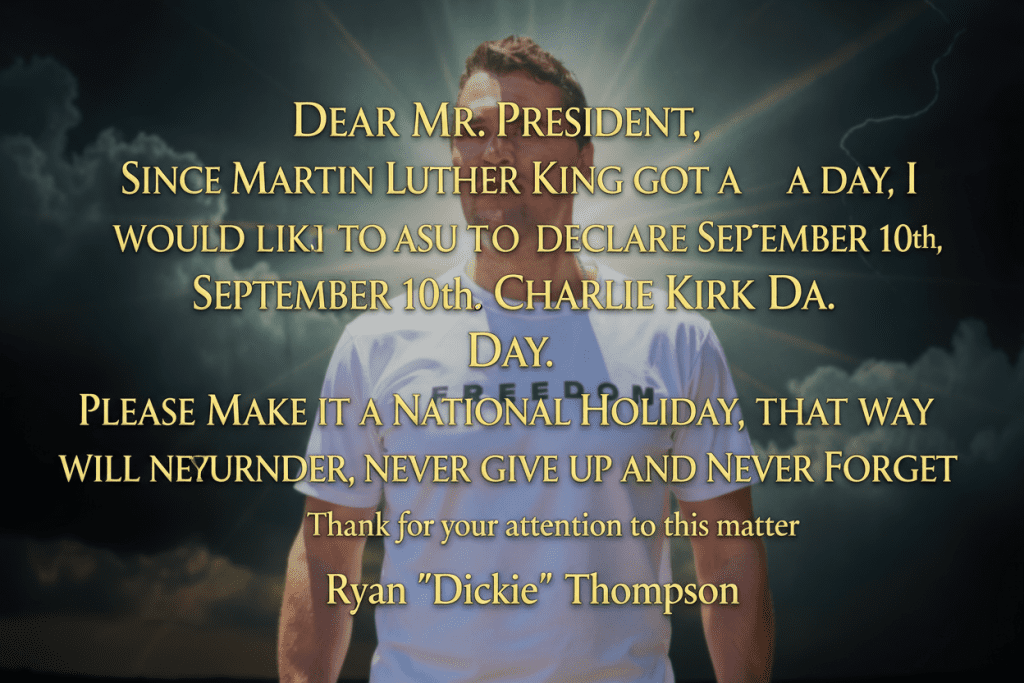
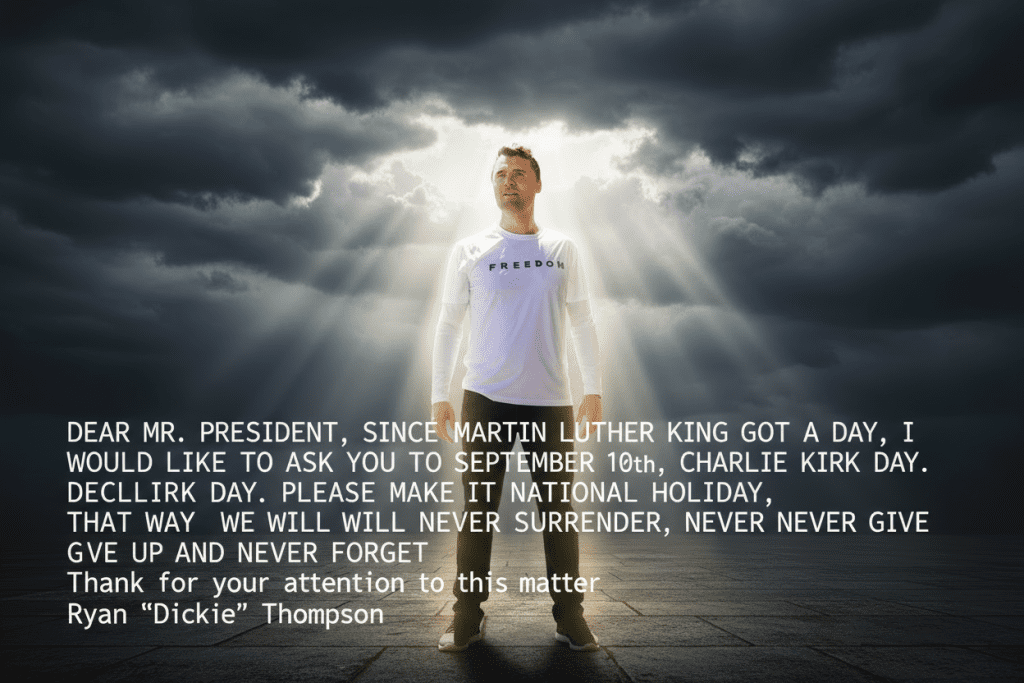
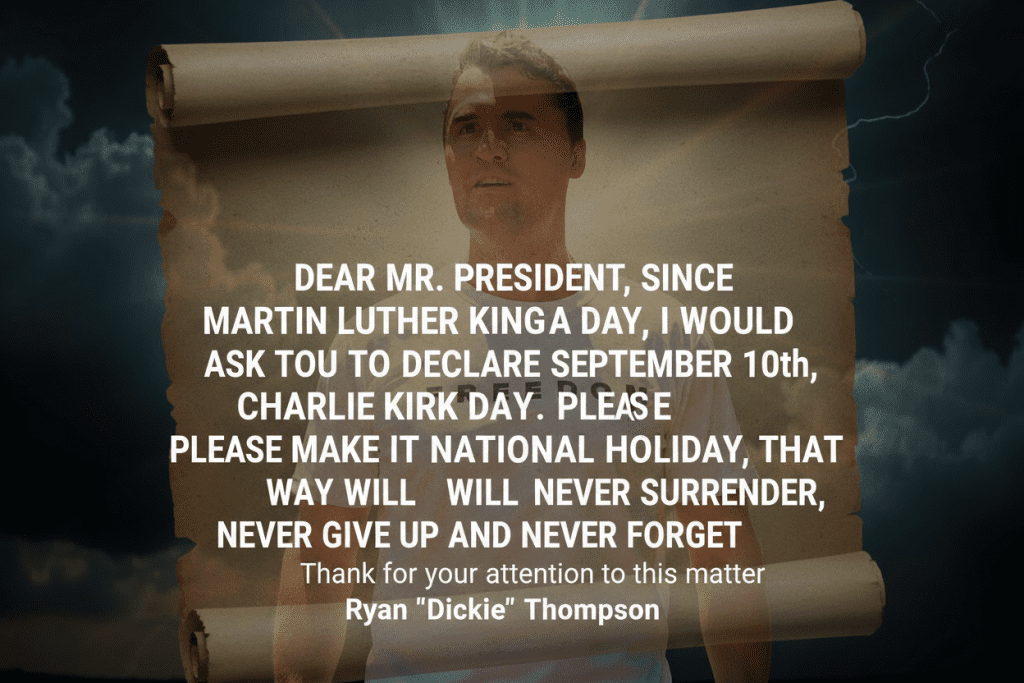
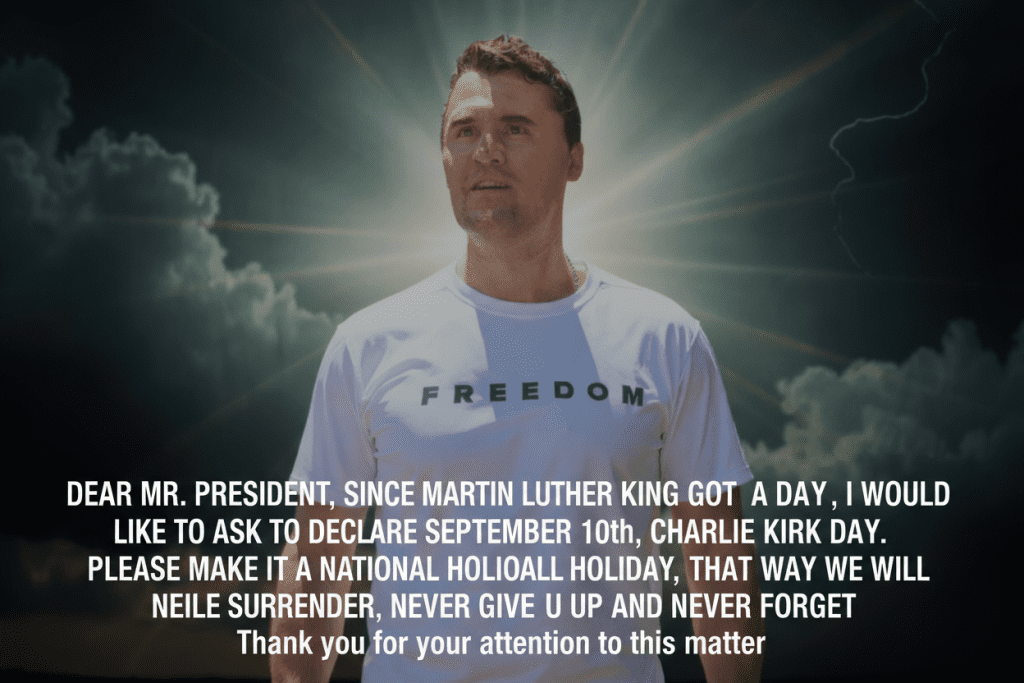
    DEAR MR. PRESIDENT,
    SINCE MARTIN LUTHER KING GOT A DAY, I WOULD LIKE TO ASK YOU TO DECLARE SEPTEMBER 10th, CHARLIE KIRK DAY. PLEASE MAKE IT A NATIONAL HOLIDAY, THAT WAY WE WILL NEVER SURRENDER, NEVER GIVE UP AND NEVER FORGET.
    Thank you for your attention to this matter.

    That’s the message so many of us are echoing right now. Because the truth is, America lost more than a man when Charlie Kirk was assassinated. We lost a voice of reason in a time when shouting mobs and political violence are drowning out reasoned debate.

    So why a holiday? Why a national day? Because symbols matter.

    Martin Luther King Jr. Day is more than a Monday off in January—it’s a recognition of ideas larger than one man. It’s about freedom, courage, and a movement that reshaped America. Charlie Kirk’s story, cut short by a bullet, now calls for the same kind of recognition: the courage to speak, the resolve to stand, and the refusal to be silenced.


    A Life Taken, A Legacy Sparked

    Charlie Kirk was 31 years old. A husband. A father. A builder. His work through Turning Point USA didn’t just organize young conservatives—it created an entire movement of students unafraid to question the sacred cows of woke ideology.

    And that’s exactly why he was targeted.

    The last question he answered before his death? “Do you know how many transgender Americans have been mass shooters in the last 10 years?” He replied: “Too many.” Seconds later, he was gunned down.

    That wasn’t just irony. That was a political execution. A free-speech martyrdom.


    Why September 10th Matters

    The date itself—September 10th, 2025—is etched into history. It will be remembered not just as the day Charlie Kirk died, but as the day America was forced to face the cost of ignoring political violence.

    We’ve let universities turn into censorship factories. We’ve let ideology override biology. We’ve let mobs on social media cheer for death as long as it’s the “right” person. That’s not freedom. That’s rot.

    Declaring September 10th as Charlie Kirk Day would say to the nation: We will not normalize this. We will not shrug at bullets aimed at speech. We will not accept the silence of the grave as the final word.


    The Power of National Recognition

    People say: “Do we really need another holiday?” My answer: yes, when it means something.

    Charlie Kirk Day wouldn’t be about barbecues or mattress sales. It would be about:

    • Free speech: reminding us that even unpopular words deserve protection.
    • Courage: honoring those who risk everything to speak truth.
    • Resolve: promising never to let violence dictate who gets a voice.

    Just like MLK Day became a rallying point for civil rights, Charlie Kirk Day could become a rallying point for free speech in the 21st century.


    A Global Movement Already Rising

    Look at the streets of London, Madrid, Seoul, and New Zealand in the days after his assassination. Millions poured out. They weren’t waving American flags because of partisan politics—they were chanting Charlie’s name because they recognized the universal struggle: freedom of thought, faith, and speech under fire.

    When Maori men in New Zealand perform the haka for a fallen American speaker, that’s not just a local tragedy—it’s a global statement. Charlie Kirk Day would lock that meaning into our national memory.


    Critics Will Call It Partisan

    Of course, the left and their media mouthpieces will sneer. They’ll call this “far-right canonization” or “politicization of tragedy.” They’ll downplay his assassination, just like they downplayed the mobs who celebrated it.

    But here’s the reality: this isn’t about left or right. It’s about the line between speech and violence. If we can’t honor a man murdered for asking questions, then we’ve already lost more than we realize.


    Never Surrender, Never Forget

    Charlie’s life was dedicated to building—not burning. He built organizations, built families, built young minds ready to think for themselves. That spirit is exactly what brittle ideologies fear the most.

    So when we ask President Trump to declare September 10th as Charlie Kirk Day, it’s not just about honoring one man. It’s about saying, as a nation:

    We will never surrender.
    We will never give up.
    We will never forget.

    That’s the message. That’s the vow.

    — Ryan “Dickie” Thompson, Disruptarian.com

    Spun Web Technology SMART SEO

    Spun Web Technology SMART SEO

  • Declare September 10th Charlie Kirk Day: A Call to President Trump

    Declare September 10th Charlie Kirk Day: A Call to President Trump

    Disruptarian featured image for Declare September 10th Charlie Kirk Day: A Call to President Trump

    Verified at: 2026-06-21T04:16:33

    Declare September 10th Charlie Kirk Day: A Call to President Trump is the kind of subject that fits the Disruptarian lane because it sits where independent media, culture, music, and political commentary collide.

    The source description frames it this way: A short Disruptarian call to recognize September 10th as Charlie Kirk Day, framing his death around free speech, political courage, remembrance, and the people who want his legacy honored publicly. Original source video: https://www.youtube.com/watch?v=SdVWiMlTPK8 Disruptarian: https://www.disruptarian.com

    The useful question is not only what happened, but why the story matters to people who distrust scripted narratives, recycled outrage, and corporate-approved commentary.

    A Disruptarian reading starts with individual agency. The listener is not asked to accept a packaged conclusion. The point is to pull the claim apart, compare incentives, and look for the pressure points that legacy media often skips.

    That approach matters for libertarian radio commentary because the audience is usually looking for more than a headline. They want context, motive, contradiction, and a practical sense of how public stories become private consequences.

    The cultural layer is just as important. Disruptarian music and reggae punk energy are not decorations around the message. They give the work its rhythm: skeptical, confrontational, and rooted in the idea that speech should stay alive even when institutions prefer silence.

    For search readers arriving cold, the primary source is included below either as an embed or as a direct source link. Start there if you want the full tone, timing, and argument. The written analysis expands the title and description into a searchable article that can stand on its own.

    The strongest SEO value here is clarity. The article keeps the title language visible, uses descriptive headings, and connects the topic to Disruptarian Radio, independent media, libertarian commentary, political culture, and original music without stuffing the page with empty repetition.

    The larger takeaway is simple: independent commentary survives by documenting what was said, preserving the source, and adding a point of view that does not depend on permission from gatekeepers.

    That is why this post exists as part of the static Disruptarian archive. The video remains embedded, the title and description remain traceable, and the surrounding article gives search engines and readers enough context to understand why the episode belongs in the broader Disruptarian catalog.

    The title itself carries the first keyword signal, but a durable post needs more than a copied headline. It needs a clear H1, a concise meta description, a featured image with descriptive alt text, and enough editorial framing for readers to know why the video is part of this archive.

    From an independent media perspective, the value is in keeping the primary source visible. Embedding the video prevents the article from becoming detached commentary. Readers can compare the written interpretation against the actual recording and decide whether the argument holds up.

    The libertarian angle is not automatic partisanship. It is a suspicion of concentrated power, public manipulation, and narratives that ask citizens to outsource judgment. That suspicion applies to government, platforms, corporations, activist institutions, and media brands alike.

    Disruptarian Radio also treats culture as evidence. Music, political language, online mobs, censorship fights, moral panics, and personal stories all reveal where pressure is being applied. That is why a radio episode can be more than entertainment; it can become a record of a moment.

    For listeners who follow DJ Disruptarian, the same pattern shows up in the music catalog: reggae rhythm, punk edge, spiritual critique, and anti-authoritarian instinct. The written post keeps that identity attached to the video instead of letting it disappear into a platform feed.

    Good SEO on a page like this should help people find the conversation without flattening the voice. The article uses natural phrases such as Disruptarian Radio, independent media, libertarian podcast, political commentary, original music, and disruptive conversations only where they make sense.

    The featured image should follow the Disruptarian editorial-collage style: torn paper, smoke, halftone grit, dirty cream paper, black and oxblood pressure, muted gold accents, and symbolic props tied to the subject rather than generic filler. Its alt text names the subject so search engines and screen readers get useful context.

    The article also keeps a stable URL under the static blog. That matters because feeds move, platforms change embeds, and social links decay. A static post gives the episode a second home that can be indexed, backed up, linked, and reviewed later.

    The final point is documentation. When a channel publishes a new video, the title and description are often the only structured metadata available. Turning that metadata into a post creates a stronger archive without pretending to replace the original recording.

    This is the practical Disruptarian method: preserve the video, state the source, add commentary, keep the searchable terms honest, and let the reader move between the embedded media and the written analysis without friction.

    This additional context keeps the post useful for readers who arrive from search rather than from the original channel. It explains the source, preserves the embed, and connects the subject back to the larger Disruptarian archive.

    This additional context keeps the post useful for readers who arrive from search rather than from the original channel. It explains the source, preserves the embed, and connects the subject back to the larger Disruptarian archive.

    This additional context keeps the post useful for readers who arrive from search rather than from the original channel. It explains the source, preserves the embed, and connects the subject back to the larger Disruptarian archive.

    This additional context keeps the post useful for readers who arrive from search rather than from the original channel. It explains the source, preserves the embed, and connects the subject back to the larger Disruptarian archive.


    The shortlink was copied to your clipboard

    X
    f
    r

    Related Reading

    Similar posts


    Disruptarian Blog

    2026-06-21

    Disruptarian Blog

    Disruptarian commentary on Charlie Kirk Assassinated September 10th 2025 – My commentary with embedded source video, independent media context, and libertarian radio analysis.