Category: Radio Shows

  • Retired, Unfiltered, and Speaking the Truth from the Philippines
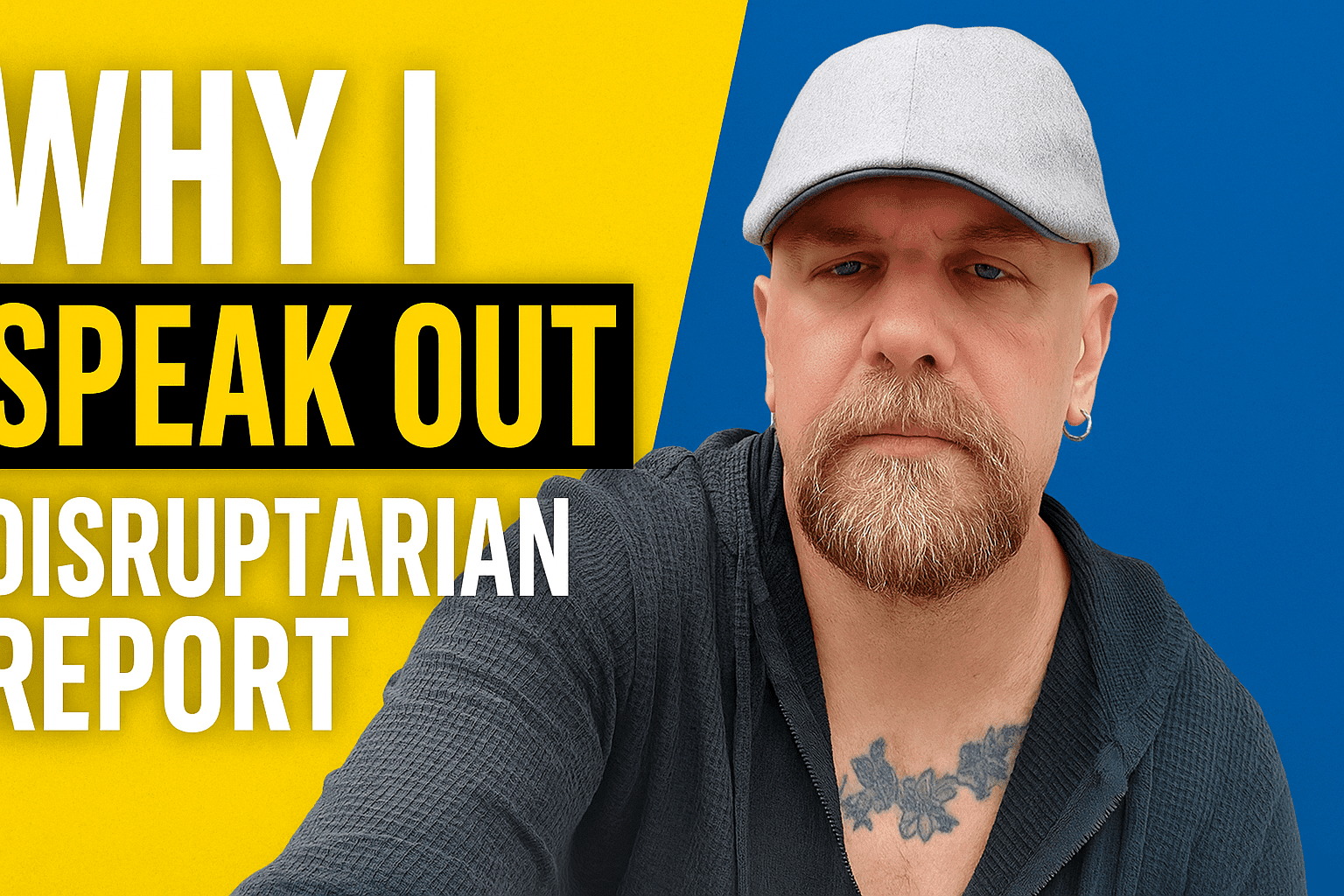
    By Ryan “Dickie” Thompson – The Punk Rock Libertarian | Disruptarian.com


    They say retirement is when you hang it up and fade into the background. Not for me.

    I’ve been retired for 11 years now, and instead of fading out, I’ve been dialing in. Dialing in my message, my mission, and my commitment to challenging the cultural and political dogmas that are tearing this world apart from the inside out.

    Right now, I’m in Lapu-Lapu, Cebu City, Philippines—thousands of miles from the chaos in the States—but trust me, I’m more plugged in than ever. And I’ve got something to say.


    Why I Can Speak Freely Now

    Back in the day, like a lot of you, I had to play it safe. I had bosses. I had clients. I had to toe the line—not because I didn’t have opinions, but because I didn’t want to bring unnecessary heat down on my workplace.

    Even then, I wasn’t silent. I was outspoken—sometimes too much for some people. My old site, xcannabis.com, was one of the most aggressive pro-cannabis platforms on the web during a time when recreational legalization wasn’t even a whisper. We’re talking over a decade ago, when only 12 states had medical cannabis and the DEA still thought Jack Herer was a domestic terrorist.

    I built a YouTube channel around that fight. I clocked millions of views. People were paying attention. And so was my employer—dropping drug awareness pamphlets on my desk like I didn’t already know the game.

    I wasn’t covert. I’ve never been covert. But I was careful. Now I don’t have to be.


    The Taboo Is Now the Necessary

    These days, the taboo topics aren’t about cannabis or liberty. Those are almost mainstream now. The new taboos are harder to touch because they’re wrapped in emotional landmines and social cancelation. But that just makes them more important.

    And that’s why I’ve ramped up my commentary—especially after the chaos that began with BLM, Antifa, and now this new wave of radicalized trans activism that I call Transtifa. You know the ones. The masked-up mobs smashing windows in the name of “justice.” The ones who demand total ideological submission and call it “tolerance.”

    They burned down cities. They bullied people out of jobs. They tried to cancel anyone who didn’t repeat their slogans on cue. That’s not activism. That’s authoritarianism with a rainbow flag and a Molotov cocktail.

    And I’m not having it.


    Oregon: Where the State Thinks 14-Year-Olds Can Consent to Sterilization

    Let’s talk about something real for a second: Oregon. The same state where a teenager can’t legally get a tattoo, buy a six-pack, rent a car, or even get a damn suntan at a tanning salon without parental consent—can now permanently alter their body with puberty blockers, hormone injections, and surgical sterilization. All without needing mom or dad to sign off.

    Let that sink in.

    You need ID to buy a vape. You need consent to get your ears pierced. But a child can walk into a clinic and get a mastectomy? Or have their genitals removed in the name of “gender affirmation”?

    If this were happening in some dystopian sci-fi novel, people would say it’s too far-fetched. But it’s happening now—in blue states, in public clinics, with your tax dollars. And if you say something, they’ll try to label you a bigot or a transphobe. But I don’t care what they label me.

    Silence is compliance.


    This Isn’t About Hate—It’s About Truth

    Let me be clear. I don’t hate anyone for how they choose to live. You want to transition as an adult? Fine. Do your thing. But when the state starts stepping between parents and children—when irreversible decisions are being made by kids who haven’t even started driving—that’s when we’ve crossed a line.

    And let’s not pretend this isn’t a cultural movement wrapped in a political power play. The same people who claim to be anti-establishment have built a new establishment where speech is policed, science is censored, and dissent is met with digital exile.

    That’s why I speak up. That’s why I broadcast. That’s why I created Disruptarian.com.

    Because there needs to be a counterbalance.


    The Need for a Counterargument

    Turn on any corporate media channel and you’ll hear the same narrative: Progress equals obedience. Justice equals silence. Biology equals hate.

    That’s not journalism. That’s programming.

    We are flooded with one-sided coverage. Every outlet from CNN to NPR repeats the same lines. And even so-called “conservative” outlets often pull their punches.

    But I’m not trying to win followers. I’m not trying to get a book deal. I’m just trying to make sure that our side of the story exists. That the libertarian voice is heard, loud and clear, above the noise.

    I don’t care if it’s perfect. I don’t care if I say it just right. What matters is that someone says it.


    From Cannabis to Cultural Chaos

    It’s funny. I got my start advocating for the right to put a plant in the ground and light it on fire. I fought for medical freedom, personal autonomy, and decentralization. I still believe in all those things.

    But now the fight has moved beyond weed. It’s a fight for truth. A fight for biological reality. A fight for free speech. A fight for the future of childhood itself.

    If that’s not worth speaking up about, what is?


    Why the Philippines?

    You might be wondering—why am I reporting from Cebu? What’s an American libertarian doing in the Philippines?

    Simple. Freedom.

    Sometimes the only way to see your country clearly is to step outside of it. Living abroad has shown me just how far off the rails the U.S. culture war has gone. People here aren’t obsessed with pronouns and microaggressions. They’re worried about feeding their families and protecting their kids.

    It’s given me clarity. And a better signal to beam my message back to the West.


    Final Thoughts: Say What Needs to Be Said

    Look, I’m not perfect. I’m not polished. But I’m principled. And that’s more than you can say for most of the people running things.

    Whether my voice is rough around the edges or not, I believe it matters. I believe your voice matters too. And I believe now more than ever, we need a rebellion of the rational. Not violence. Not chaos. But clarity. Conviction. Courage.

    If you’re reading this, you’re part of that rebellion.

    Stay loud. Stay informed. And for the love of liberty—stay Disruptarian.


    Check out more uncensored commentary and reports at Disruptarian.com

    Spun Web Technology SMART SEO

    Spun Web Technology SMART SEO

  • The War on the Nuclear Family: From Marx to Modern Movements

    What’s up, rebels? Ryan Thompson here, the punk rock libertarian behind Disruptarian.com—and today, I’m diving deep into a topic that hits every single one of us where it counts: the nuclear family. That old-school, traditional, two-parent household model that built Western civilization—yeah, that one. If you think it’s under fire, you’re not imagining things. From Marx to modern Marxists, there’s been a long, steady ideological assault on the family. Let’s break it down.

    Joining me on Disruptarian Radio was the brilliant Anna McMullen—a writer, researcher, and cultural watchdog who’s been tracking these anti-family ideologies for years. Together, we peeled back the layers of what might just be the most coordinated cultural takedown in history. And guess what? It’s not just about families. It’s about control.

    Marx and Engels: Abolish the Family

    Let’s rewind to 1848. Karl Marx and Friedrich Engels didn’t mince words. In the Communist Manifesto, they literally called for the abolition of the family. This wasn’t some fringe footnote—it was central to their ideology. According to Marx and Engels, the family among the bourgeoisie was just a “money relation,” a tool of oppression. Among the working class? They claimed it already didn’t exist.

    Their goal? Create the “New Man.” A state-raised, ideology-loyal citizen. The family, where values are passed down, love is shared, and independence is nurtured—was the enemy. Marx even wrote that education should be wrestled away from parents and given to the state. You see where this is going, right?

    Soviet Union: Theory Becomes Tyranny

    Fast-forward to 1917. The Bolsheviks come to power and start putting Marxist family-busting theories into practice. Alexandra Kollontai, the USSR’s first People’s Commissar for Welfare, straight-up trashed the nuclear family, calling it “narrow and petty.” She and her comrades envisioned communal dining, state-run child-rearing, and effortless divorce (yes, at one point you could divorce via postcard). The goal was clear: weaken the family, strengthen the state.

    Soviet kids were even encouraged to snitch on their parents. The most infamous case? Pavlik Morozov, a child who ratted out his dad and was glorified as a hero. Loyalty to family was out. Loyalty to the regime was in.

    Hungary’s Lukacs and the Frankfurt School

    Just when you thought it couldn’t get weirder, enter George Lukacs in Hungary, 1919. This guy was the commissar of culture and education for a short-lived communist regime, and he pushed radical sex-ed and anti-family propaganda on schoolchildren. He wanted kids to ditch religion, reject monogamy, and question their parents’ values. Sound familiar?

    After Hungary’s red experiment failed, Lukacs fled and later helped inspire the Frankfurt School in Germany. These neo-Marxists (think Adorno, Horkheimer, Marcuse) developed Critical Theory, blaming the “patriarchal family” for producing “authoritarian personalities.” In other words: Dad = Dictator. If you wanted to prevent fascism, they claimed, you had to destroy the traditional family.

    Marcuse and the Sexual Revolution

    Herbert Marcuse brought these ideas to America and wrote Eros and Civilization, the playbook for the 1960s Sexual Revolution. He openly admitted that sexual liberation was a way to destroy the nuclear family. Marriage, monogamy, family loyalty? All obstacles to the new revolutionary order. According to Marcuse, even the body itself should be politicized for pleasure to disintegrate traditional family bonds.

    You think today’s chaos is random? Nope. It’s a long play.

    Black Lives Matter: The Same Ideology Rebranded

    And here’s where it gets modern. The Black Lives Matter Global Network Foundation had a guiding principle on their site for years that said they aim to “disrupt the Western-prescribed nuclear family structure.” Their co-founder, Patrisse Cullors, proudly identified as a “trained Marxist.” Where did she train? Under communist organizer Eric Mann, who was explicit in saying the goal was to overthrow the U.S. government. BLM’s official curriculum even made its way into public schools, peddling these same anti-family ideas.

    Let me be clear: BLM the slogan is not BLM the organization. One’s about basic dignity. The other’s about dismantling Western society brick by brick. Know the difference.

    Feminism and the Family Breakdown

    Then there’s feminism. The early waves had legit grievances—voting rights, workplace equality. Totally fair. But then it went off the rails. Second-wave feminists like Kate Millett openly discussed using sexuality, prostitution, and promiscuity to destroy the family unit. Her sister Mallory Millet even testified to those early meetings where dismantling monogamy was the stated goal.

    Feminism evolved from empowerment to demonizing motherhood and homemaking. By the ‘80s and ‘90s, the idea that marriage was slavery and children were burdens became disturbingly mainstream in academic and pop culture circles.

    MeToo and the Pendulum Swing

    Even movements like MeToo, which began with noble intentions, took a dark turn. Yes, we should hold abusers accountable. But it morphed into a no-due-process witch hunt. Men feared mentoring women. Workplaces became warzones. Dating turned into a legal risk.

    And here’s the thing: when you frame every male-female relationship as a power imbalance, you torpedo the possibility of love, trust, and—yes—family formation. That’s not equality. That’s sabotage.

    The Real Impact on Children and Society

    All of this ideology comes with real consequences. Decades of research show that kids raised in stable, two-parent homes have better outcomes across the board—education, mental health, career prospects. When we replace parental care with state indoctrination or unstable family arrangements, kids lose.

    Sociologists from both the left and right, from Charles Murray to William Julius Wilson, have confirmed the same thing: the breakdown of the family leads to higher crime, poverty, and community collapse. And yet, these ideologues push the same tired blueprint.

    Final Thoughts: Fight for the Family

    So, what’s the play here, fellow disruptarians? Do we just roll over and let this ideological wrecking ball crush the family? Hell no. We expose it, challenge it, and rebuild stronger.

    This isn’t about nostalgia or clinging to the past. It’s about recognizing that the nuclear family isn’t oppressive—it’s resilient. It’s the bedrock of civilization. The first school, the first church, the first government. And if we lose it, we lose the future.

    So wake up. Speak up. Be the resistance.

    Until next time—stay fierce, stay free, and always question everything.

    —Ryan Thompson, The Punk Rock Libertarian | Disruptarian.com

    Spun Web Technology SMART SEO
    Spun Web Technology SMART SEO

  • Trump vs China Tariff War: Hollywood Wokeness and Michelle Obama’s Podcast Flop Exposed

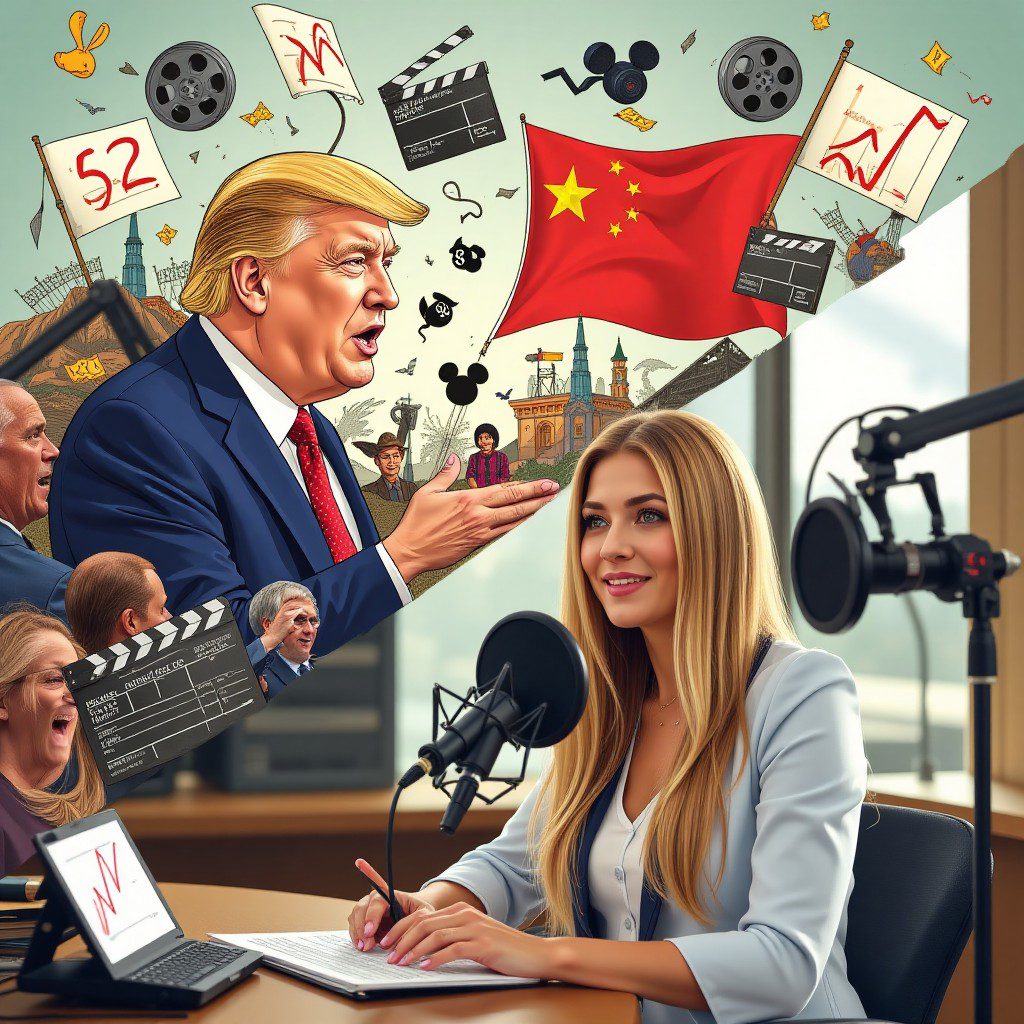
    What’s up, disruptors and liberty-loving rebels? It’s your favorite punk-rock libertarian, Ryan Thompson, coming at you once again to shake up the narrative and cut straight through the establishment nonsense. Today, we’ve got a hell of a juicy topic—Hollywood crying foul as President Trump plays chicken with China. Buckle up, because this is going to be a ride wilder than the box office disaster that was Disney’s Snow White remake.

    Let’s set the stage here: China’s decided to hit back in this epic tariff war by limiting American movies. And honestly, when asked about it, Trump’s response was classic, pure gold: “I think I’ve heard of worse things.” Now, folks, tell me that isn’t peak Trump—dismissive, sarcastic, and completely unfazed. And the internet’s loving it, with users dropping truth bombs like, “This trade war is more entertaining than Hollywood has been for the last 10 years anyway.” Harsh? Maybe. Accurate? Hell yeah.

    Look, Hollywood’s been pumping out woke virtue-signaling garbage for years now, lecturing us from ivory towers about climate change while zipping around in private jets and producing carbon emissions that would embarrass a small country. Take Disney’s remake of Snow White, for example. What a catastrophe! It didn’t just bomb financially; it actually managed to anger both sides. The woke left hated it for creating more carbon emissions than even a Fast & Furious flick (I kid you not, even Vin Diesel’s racing obsession couldn’t outpollute Snow White), and the right loathed it for wrecking yet another classic fairy tale with bland political correctness.

    Brianna Lyman nailed it on Power Hour, pointing out the insufferable hypocrisy. Hollywood elites preach endlessly about carbon footprints while producing movies that blow pollution stats out of the water. Seriously, Disney, how do you lecture ordinary Americans about driving gas-powered trucks when your virtue-signal projects emit more toxins than an industrial plant? This is textbook “rules for thee, not for me.”

    And let’s pivot a bit here—another spectacular flop hitting the news is Michelle Obama’s podcast. Now, I don’t usually take pleasure in watching something crash and burn, but man, this one’s just too good. Michelle’s podcast “IMO” launched with fanfare, only to tank faster than a snowflake in July, dropping to 34th place on Spotify within weeks. Democrats hoped she’d become the Joe Rogan of the left, but reality slapped them hard. Turns out, Americans aren’t interested in lectures from the Obamas anymore. Their cultural clout, once a force, has evaporated quicker than their empty promises of “hope and change.”

    Why did Trump and his Republican allies dominate the podcast game? Simple: they captured the cultural zeitgeist by addressing real issues, confronting establishment narratives, and unapologetically embracing America-first ideals. Michelle Obama missed that memo big time. Her brand of elite moralizing doesn’t resonate with folks who’ve shifted right, folks fed up with being told how to think, what to watch, and how to live their lives.

    Meanwhile, Trump’s tariff showdown with China escalates, now at a staggering 145% on Chinese goods. While globalists panic and “experts” clutch their pearls, Trump’s playing 4D chess, isolating China and forcing the world to negotiate fair trade deals. Hillary Ford had it right—this isn’t chaos; it’s calculated brinkmanship. It’s about leveling the playing field. Why should America continue being the global piggy bank? The UK’s media cries foul when slapped with reciprocal tariffs, conveniently forgetting they tax U.S. goods equally. India, too, learned a lesson as Trump slashed their outrageous tariffs.

    Even the EU’s Ursula von der Leyen, typically tone-deaf to tax concerns, suddenly found religion on fair trade, backing down from tariff threats. Trump’s approach—though messy—is delivering results. The global elite and media throw tantrums because their cozy, unfair systems are crumbling.

    Of course, Trump’s strategy isn’t without risks. Short-term market volatility and disruptions are inevitable. But remember this golden nugget: the only folks who get hurt on a roller coaster are those who jump off. Hold tight and trust the ride. Americans have faced worse storms, and historically, resilience is our hallmark.

    Now, some pundits fret Americans won’t endure the short-term pain of economic battles. Let’s get real—Trump supporters get it. They understand that genuine change demands sacrifice. Democrats might still sit down grumbling whenever Trump proposes anything sensible, like lowering taxes, but perhaps they should voluntarily keep paying higher rates if they’re so opposed.

    What this entire scenario underscores is a stark ideological divide. Republicans, conservatives, and libertarians recognize that shaking the tree is sometimes necessary to knock down rotten fruit. Hollywood, legacy media, and leftist cultural figures fail to grasp this, continuing their endless sermons from atop collapsing pedestals.

    Bottom line? Hollywood’s woes and Michelle Obama’s podcast flop symbolize a broader rejection of elitist arrogance. Trump’s tariffs against China represent an overdue correction, ending decades of lopsided trade abuse. Sure, it’s a wild ride—but disruption is exactly what’s needed.

    So, my fellow disruptarians, don’t fear the chaos. Embrace it, celebrate it. Because in the end, liberty thrives in the chaos that disrupts the oppressive comfort of the status quo.

    Stay rebellious, stay free, and keep questioning everything.

    Until next time, rock on.

    – Ryan Thompson, The Punk Rock Libertarian

    Spun Web Technology SMART SEO

    Spun Web Technology SMART SEO

  • Truth, Integrity, and Living Legacy: Disruptarian Podcast 4725

    Truth, Integrity, and Living Legacy: Disruptarian Podcast 4725

    Disruptarian featured image for Truth, Integrity, and Living Legacy: Disruptarian Podcast 4725

    Verified at: 2026-06-22 7:49:28

    Truth, Integrity, and Living Legacy: Disruptarian Podcast 4725 is the kind of subject that fits the Disruptarian lane because it sits where independent media, culture, music, and political commentary collide.

    The source description frames it this way: Ryan Thompson records a long-form Disruptarian Podcast episode on truth, integrity, legacy, and the responsibility to build something that outlives the moment. This Rumble version frames the discussion around character, memory, family, independent media, and the kind of record a person leaves behind. Original YouTube title: Disruptarian Podcast 4725 Truth Integrity and Living Legacy Source: https://www.youtube.com/watch?v=TwD3mqbOe3k Disruptarian: https://www.disruptarian.com

    The useful question is not only what happened, but why the story matters to people who distrust scripted narratives, recycled outrage, and corporate-approved commentary.

    A Disruptarian reading starts with individual agency. The listener is not asked to accept a packaged conclusion. The point is to pull the claim apart, compare incentives, and look for the pressure points that legacy media often skips.

    That approach matters for libertarian radio commentary because the audience is usually looking for more than a headline. They want context, motive, contradiction, and a practical sense of how public stories become private consequences.

    The cultural layer is just as important. Disruptarian music and reggae punk energy are not decorations around the message. They give the work its rhythm: skeptical, confrontational, and rooted in the idea that speech should stay alive even when institutions prefer silence.

    For search readers arriving cold, the primary source is included below either as an embed or as a direct source link. Start there if you want the full tone, timing, and argument. The written analysis expands the title and description into a searchable article that can stand on its own.

    The strongest SEO value here is clarity. The article keeps the title language visible, uses descriptive headings, and connects the topic to Disruptarian Radio, independent media, libertarian commentary, political culture, and original music without stuffing the page with empty repetition.

    The larger takeaway is simple: independent commentary survives by documenting what was said, preserving the source, and adding a point of view that does not depend on permission from gatekeepers.

    That is why this post exists as part of the static Disruptarian archive. The video remains embedded, the title and description remain traceable, and the surrounding article gives search engines and readers enough context to understand why the episode belongs in the broader Disruptarian catalog.

    The title itself carries the first keyword signal, but a durable post needs more than a copied headline. It needs a clear H1, a concise meta description, a featured image with descriptive alt text, and enough editorial framing for readers to know why the video is part of this archive.

    From an independent media perspective, the value is in keeping the primary source visible. Embedding the video prevents the article from becoming detached commentary. Readers can compare the written interpretation against the actual recording and decide whether the argument holds up.

    The libertarian angle is not automatic partisanship. It is a suspicion of concentrated power, public manipulation, and narratives that ask citizens to outsource judgment. That suspicion applies to government, platforms, corporations, activist institutions, and media brands alike.

    Disruptarian Radio also treats culture as evidence. Music, political language, online mobs, censorship fights, moral panics, and personal stories all reveal where pressure is being applied. That is why a radio episode can be more than entertainment; it can become a record of a moment.

    For listeners who follow DJ Disruptarian, the same pattern shows up in the music catalog: reggae rhythm, punk edge, spiritual critique, and anti-authoritarian instinct. The written post keeps that identity attached to the video instead of letting it disappear into a platform feed.

    Good SEO on a page like this should help people find the conversation without flattening the voice. The article uses natural phrases such as Disruptarian Radio, independent media, libertarian podcast, political commentary, original music, and disruptive conversations only where they make sense.

    The featured image should follow the Disruptarian editorial-collage style: torn paper, smoke, halftone grit, dirty cream paper, black and oxblood pressure, muted gold accents, and symbolic props tied to the subject rather than generic filler. Its alt text names the subject so search engines and screen readers get useful context.

    The article also keeps a stable URL under the static blog. That matters because feeds move, platforms change embeds, and social links decay. A static post gives the episode a second home that can be indexed, backed up, linked, and reviewed later.

    The final point is documentation. When a channel publishes a new video, the title and description are often the only structured metadata available. Turning that metadata into a post creates a stronger archive without pretending to replace the original recording.

    This is the practical Disruptarian method: preserve the video, state the source, add commentary, keep the searchable terms honest, and let the reader move between the embedded media and the written analysis without friction.

    This additional context keeps the post useful for readers who arrive from search rather than from the original channel. It explains the source, preserves the embed, and connects the subject back to the larger Disruptarian archive.

    This additional context keeps the post useful for readers who arrive from search rather than from the original channel. It explains the source, preserves the embed, and connects the subject back to the larger Disruptarian archive.

    This additional context keeps the post useful for readers who arrive from search rather than from the original channel. It explains the source, preserves the embed, and connects the subject back to the larger Disruptarian archive.


    The shortlink was copied to your clipboard

    X
    f
    r

    Related Reading

    Similar posts


    Disruptarian Blog

    2026-06-21

    Disruptarian Blog

    Disruptarian commentary on A Tribute and an Apology: A Father’s Final Words, A Son’s Last Stand with embedded source video, independent media context, and libertarian radio analysis.

  • Trump & Musk: Disrupting the State—A Libertarian Video Commentary

    Trump & Musk: Disrupting the State—A Libertarian Video Commentary

    Disruptarian editorial collage: torn paper, protest silhouettes, split Trump and Musk over broken Capitol, megaphones, chains, and anti-corporate symbols.

    Source: Disruptarian Radio: Trump & Musk’s First 100 Days – A Libertarian Analysis | Published: April 6, 2025


    “If you want to understand the future of liberty, don’t look to the establishment—look at who’s breaking the rules and burning the paperwork.”

    The latest episode of Disruptarian Radio is a wakeup call for anyone still hypnotized by the left-right puppet show. Hosted by Ryan and with sharp insights from Alexandra (Seattle-based political correspondent), this video podcast goes deep on the first 100 days of the Trump/Musk administration—an unholy alliance or a shot of adrenaline for liberty? That’s the question.

    This isn’t cheerleading. It’s Disruptarian: raw, source-driven, and unafraid of contradiction. Let’s break down what this podcast actually covers, what’s defensible from the record, and where we see the real sparks for freedom—plus where the libertarian purists may be missing the plot.

    The Ground Rules: Non-Aggression As the North Star

    The conversation opens with a clear anchor: the Non-Aggression Principle (NAP). Libertarians, anarchists, and anti-authoritarians recognize this as the foundational ethic: no person or group—government, corporation, or mob—has the right to initiate force, fraud, or coercion against another or their property. Everything else is commentary. Alexandra and Ryan use this as their measuring stick for Trump and Musk’s early moves.

    Trump’s Foreign Policy: Peace Through Strength or Imperial Maintenance?

    Libertarians have always been skeptical—hell, openly hostile—toward U.S. empire and interventionist foreign policy. Trump’s “America First” rhetoric and stated desire for “peace through strength” gets some scrutiny here:

    • Fact: Trump’s administration (in both terms pre-2025 and this new hybrid era) has made moves to draw down U.S. troop levels abroad, but not to zero. Military-industrial interests still loom large.
    • Analysis: Alexandra notes that while Trump’s approach is less reckless than the neocon playbook, it’s “directionally libertarian” but not pure non-intervention. Real libertarians (think Ron Paul, not Rand) want the troops home, the bases closed, and the CIA budget shredded.
    • Disruptarian Take: Any reduction in global militarism is a win, but peace through strength is still a statist compromise. The podcast doesn’t let this slide but recognizes it as progress over endless war.

    Deregulation & Tax: Smashing Bureaucracy or Shuffling the Deck?

    One of Trump’s recurring claims is that he’s the “deregulator-in-chief.” This time, with Elon Musk in the mix (appointed head of the new Department of Government Efficiency), there’s real disruption afoot. The podcast spotlights:

    • Fact: Executive orders have slashed red tape, particularly in energy, manufacturing, and small business sectors.
    • Fact: Proposals for flatter, simpler tax codes and the elimination of certain payroll taxes have made their way to Congress.
    • Alexandra’s View: These are steps toward freeing markets and reducing government burden, both core libertarian goals—but the podcast notes the devil is in the details. Deregulation that simply swaps one corporate cartel for another isn’t true liberation.
    • Disruptarian Angle: What matters is who benefits: If big players get a freer hand while the state keeps crushing the little guy, it’s just oligarchy in a new suit. The podcast calls out “deregulation theater” versus real decentralization of power.

    Musk: Disruptor in the Bureaucracy

    Elon Musk’s presence in government is the most punk-rock, unpredictable, and controversial element here. The podcast spends time unpacking:

    • Fact: Musk has initiated internal audits, transparency pushes, and open challenges to entire federal agencies (especially those that slow down innovation).
    • Analysis: Alexandra draws a line between Musk’s anti-bureaucratic instincts and classic libertarian skepticism of centralized power. But Musk is no Rothbardian—his style is technocratic, not strictly anti-state.
    • Disruptarian Voice: Is Musk the fox in the henhouse, or just another billionaire making the rules? The podcast doesn’t resolve this but insists: attacking bureaucracy from within beats another round of status quo.

    Immigration, Borders & The Welfare State: Libertarian Contradictions

    No issue exposes libertarian fault lines like borders and migration. Ryan and Alexandra don’t dodge it:

    • Fact: Trump’s administration has maintained a “border security first” approach, but with new pilot programs for streamlined legal immigration for skilled workers and refugees.
    • Libertarian Dilemma: Alexandra nails it: “Open borders are only coherent if you abolish the welfare state.” Otherwise, you create a magnet for dependency and resentment. The podcast points to this as a real-world conflict for liberty-minded policymakers.
    • Disruptarian Critique: There’s no silver bullet, and anyone pretending otherwise is selling utopia. The podcast values incremental moves—less bureaucracy, more legal pathways—but warns against both fortress mentality and reckless globalism.

    Taxation: Still Theft

    One of the sharpest segments hits on the moral and economic core of libertarianism: taxation as coercion.

    • Fact: Payroll tax reductions and simplified income tax brackets are on the table.
    • Libertarian Principle: Any tax on labor is immoral, full stop. The podcast quotes Rothbard and Ron Paul on this point, reminding listeners that even ‘better’ taxes are still an affront to self-ownership.
    • Analysis: Ryan and Alexandra argue for directional progress—reduce the tax burden, starve the beast, but never pretend that the state’s hand in your pocket is justified.

    Comparisons: Trump/Musk vs. Ron Paul & Barry Goldwater

    The podcast brings in historical context. Neither Trump nor Musk are “perfect libertarians”—and the hosts are clear-eyed about this. But compared to the average warmonger or technocrat, they at least tip the scales toward decentralization and individual autonomy.

    • Fact: Ron Paul and Barry Goldwater were true radicals for liberty in their time—often marginalized for their stances against war, the Fed, and state overreach.
    • Analysis: Trump and Musk are not as ideologically pure, but they represent a break from business as usual. Alexandra argues that seeking “directional” progress—more freedom, less state—is more important than policing purity.

    Takeaways: Direction Over Perfection

    This is where the podcast’s Disruptarian ethos shines. The hosts call on liberty-minded listeners to:

    • Value progress toward liberation over impossible purity tests.
    • Attack bureaucracy, centralization, and forced wealth transfer wherever they hide.
    • Stay vigilant—never trust power, even when it speaks your language.
    • Stay educated: The podcast ends with a reading list—Thomas Sowell, Ron Paul, and Peter McWilliams are recommended for deeper understanding.

    Disruptarian Final Word

    Disruptarian Radio isn’t here to sanctify Trump or Musk, nor to excuse their missteps. The point is to document the cracks in the system, the power struggles, the messy reality of pushing liberty in a hostile world. Libertarian principles remain the bar—but the path to get there isn’t straight, and it sure as hell isn’t clean.

    As always: question everything, document the facts, and never let the bastards tell you incremental freedom isn’t worth fighting for.

    Watch the full podcast: Trump And Musk Libertarian Principles Disruptarian Radio Podcast


    The shortlink was copied to your clipboard

    X
    f
    r

    Related Reading

    Similar posts

  • Trump And Musk Libertarian Principles Disruptarian Radio Podcast

    Trump And Musk Libertarian Principles Disruptarian Radio Podcast

    Disruptarian featured image for Trump And Musk Libertarian Principles Disruptarian Radio Podcast

    # Disruptarian Radio: Trump & Musk's First 100 Days – A Libertarian Analysis In this episode of Disruptarian Radio, host Ryan and political correspondent Alexandra from Seattle dive into a libertarian analysis of President Trump and Elon Musk's first 100 days in office. They begin by establishing the Non-Aggression Principle (NAP) as the foundation of libertarian philosophy—the idea that no person or group has the right to initiate force, fraud, or coercion against another person or their property. The discussion explores: – Trump's "peace through strength" foreign policy approach and how it aligns with libertarian principles of non-intervention – Trump's ongoing deregulation efforts and tax policies that aim to free markets and reduce government burden – Musk's unique role in the Department of Government Efficiency and his efforts to dismantle bureaucracy from within – The libertarian perspective on immigration challenges within a welfare state system – How taxation on labor is viewed as fundamentally immoral from a libertarian standpoint – Comparisons between Trump/Musk and historical libertarian figures like Ron Paul and Barry Goldwater Alexandra emphasizes that while neither Trump nor Musk are "perfect libertarians," they represent a significant shift toward smaller government and greater individual freedom compared to most mainstream politicians.

    The episode concludes with thoughts about prioritizing directional progress over ideological purity when it comes to advancing liberty in practical politics. The show wraps with recommendations for libertarian-minded listeners to research authors like Thomas Sowell, Ron Paul, and Peter McWilliams.


    The shortlink was copied to your clipboard

    X
    f
    r
  • Trump’s First 100 Days a review at Disruptarian Radio podcast

    Trump's First 100 Days a review at Disruptarian Radio podcast

    Disruptarian featured image for Trump's First 100 Days a review at Disruptarian Radio podcast

    "Trump's First 100 Days & The DOGE Project" – Disruptarian Radio Episode Join hosts DJ Disruptarion (Ryan Thompson) and Eugene correspondent Adrian Gonzalez as they discuss President Trump's return to office and the controversial Department of Government Efficiency (DOGE) project led by Elon Musk. In this episode, the hosts analyze: The Trump administration's approach to auditing government spending Alleged fraud discovered in Social Security and the Small Business Administration Changes to international funding programs Public reactions to the administration's policies The role of social media platform X (formerly Twitter) in current political discourse This podcast presents a libertarian perspective on current political events, claiming to reveal government waste and corruption while discussing public response to these revelations. Note: This podcast represents the opinions of the hosts and has not been independently fact-checked.


    The shortlink was copied to your clipboard

    X
    f
    r
  • The Best Celtic Music Podcasts to Listen to on Your Next Road Trip

    [ad_1]

    As you hit the open road for your next adventure, there’s no better way to spice up the journey than with some exciting Celtic music to keep you company. But, let’s face it, the same old playlists can get tired after a while. That’s why we’ve curated a list of the best Celtic music podcasts to shake things up and give you a fresh new perspective on the genre. And, as a bonus, we’ve thrown in some podcasting tips and inspiration for those looking to disrupt the traditional music industry and create something new.

    First up, let’s talk about the curious case of Celtic music. As a genre, it’s often seen as the epitome of traditional, heritage music, steeped in history and culture. But, what if we told you that, beneath the surface, there’s a vibrant, innovative scene that’s pushing the boundaries of what’s possible? That’s exactly what you’ll find with the following Celtic music podcasts:

    1. The Harp and Sword Podcast
    Hosted by Turlough O’Carolan, a renowned harper and singer-songwriter, this podcast delves into the world of traditional Celtic music, exploring its history, myths, and legends. With a focus on education and storytelling, Harp and Sword is the perfect companion for those new to the genre.
    2. The Celtic Music Series
    Presented by the fabulous Fiona Puddle of Folk! Music, this podcast features a mix of traditional and contemporary Celtic music, showcasing some of the best up-and-coming artists in the scene. With a healthy dose of humor and wit, Fiona’s infectious enthusiasm will leave you hooked.
    3. The Celtic Roots and Airs Show
    Hosted by acclaimed fiddler and singer, Lauren Tierney, this podcast takes you on a sonic journey through the world of Celtic music, exploring its roots, stories, and the people behind the music. With a focus on the artistic process and the making of great music, this podcast is a must-listen for any music enthusiast.

    Now, let’s talk podcasting. As a disruptor, you’re likely interested in shaking things up and creating something new. Here are some tips to help you get started:

    1. Identify your niche: Find a specific area of focus, be it a genre, theme, or even a specific artist. This will give you direction and help you stand out in the crowd.
    2. Storytelling is key: Nobody wants to listen to a dry, factual podcast. Find ways to weave stories, anecdotes, and personal experiences into your content.
    3. Be authentic: Authenticity is what sets great podcasts apart. Be yourself, be honest, and be transparent.
    4. Community building: Build a community around your podcast by engaging with listeners, responding to comments, and encouraging feedback.

    In conclusion, the world of Celtic music is rich, vibrant, and full of opportunities. Whether you’re a seasoned fan or a newcomer, these podcasts offer a glimpse into the world of this incredible genre. As a podcasting enthusiast, we’re excited to see how you’ll take inspiration from these recommendations to create something groundbreaking of your own. Who knows? Maybe you’ll be the next big thing in podcasting!

    Frequently Asked Questions:

    Q: What is Celtic music?
    A: Celtic music is a genre originating from the Celtic nations, including Ireland, Scotland, Wales, and Cornwall. It’s characterized by its use of traditional instruments like the fiddle, pipes, and harp, and is often associated with folk music.

    Q: What is a podcasting niche?
    A: A podcasting niche is a specific area of focus for a podcast, often defined by a genre, theme, or specific artist. Niche podcasts tend to attract a dedicated audience and can be more successful than general-interest podcasts.

    Q: How do I start a podcast?
    A: Starting a podcast involves choosing a topic, researching your target audience, creating a content calendar, and recording and editing your episodes. You can start small, invest in equipment, and grow from there.

    Disruptarian URLs:

    * Apple Music – DJ Disruptarian
    * Apple Podcasts – Disruptarian
    * Spotify – Disputarian Show
    * YouTube Playlist – Disruptarian Radio Podcasts
    * Amazon Music – Ryan Richard Thompson
    * LANDR Network – Disruptarian
    * EChaos.org

    #Celtic #Music #Podcasts #Listen #Road #Trip

    [ad_2]

    Spun Web Technology SMART SEO

    Spun Web Technology SMART SEO

  • Navigating the Storm: How Disruptive Innovation is Redefining Industries

    [ad_1]

    In the world of business, innovation is the lifeblood of success. Companies that fail to adapt to changing market conditions and technological advancements often find themselves left behind, struggling to stay afloat in a sea of competition. One of the most significant disruptors in recent years has been the rise of digital radio, and more specifically, podcasting. This medium has experienced exponential growth, with millions of shows and millions of listeners worldwide.

    In the midst of this disruption, some businesses have chosen to adapt, while others have been slow to respond. In this article, we’ll explore the implications of this disruption, the challenges and opportunities it presents, and what it means for the future of content creation and distribution.

    At its core, disruptor companies are those that challenge the status quo, often by bringing new and innovative solutions to market. They encourage competition, drive down costs, and force traditional companies to rethink their business models. In the case of podcasting, companies like Spotify, Apple, and Google have disrupted the traditional radio industry, offering users a wider range of choices and increased accessibility.

    For content creators, this means a new landscape of opportunities. With the ability to produce and distribute shows independently, podcasters are free to explore niche topics, experiment with new formats, and connect directly with their audience. This democratization of content creation has given birth to a vast array of shows on a wide range of topics, from news and politics to entertainment and self-improvement.

    However, this disruption has not gone unnoticed by the traditional radio industry. Many stations have been slow to adapt, clinging to a business model that relies heavily on advertising revenue and parachuted audiences. This resistance to change has led to a decline in traditional radio listenership, as many have abandoned the medium for the flexibility and diversity offered by podcasting.

    But what does the future hold for these disrupted industries? As we move forward, we can expect to see a continued shift towards a more decentralized, more agile, and more nimble media landscape. Traditional companies will need to adapt, embracing innovation and adjusting their business models to compete in this new landscape.

    As a result, we’ll see a surge in the development of new platforms and services that cater specifically to creators. Tools like Anchor, Buzzsprout, and Libsyn are already providing the infrastructure and support necessary for podcasters to produce high-quality content. These platforms will continue to evolve, incorporating features like automated distribution, monetization options, and analytics to help creators maximize their reach and engagement.

    For listeners, the future holds a vast array of new and exciting options. With the ability to access a vast library of content on-demand, users will be able to cherry-pick the shows that resonate with them, creating a personalized listening experience unlike anything the industry has seen before.

    But what about the business of podcasting itself? As the industry continues to grow and mature, we can expect to see a shift towards more sophisticated monetization strategies. Sponsorships, product placements, and dynamic ad insertion will become the norm, allowing creators to generate revenue from their shows without sacrificing creative control.

    In the world of Disruptarian Radio, the opportunities are endless, and the future is bright. With a focus on innovation, collaboration, and creativity, we can build a medium that is better, more accessible, and more engaging than ever before.

    Conclusion:

    As we navigate the storm of disruption in the world of podcasting, it’s clear that the future belongs to those who adapt, innovate, and evolve. For content creators and listeners alike, the opportunities are vast, and the possibilities are endless. By embracing this new landscape, we can build a brighter, more personalized, and more engaging future for all.

    FAQs:

    * Q: What is podcasting, and how does it work?
    A: Podcasting is a form of digital audio content that is available for download or stream, often as a series of episodes, and can be listened to on a variety of devices.

    * Q: What are some popular podcast platforms?
    A: Some popular platforms for podcasting include Apple Podcasts, Spotify, Google Podcasts, and Anchor, among others.

    * Q: Is podcasting free?
    A: Yes, many podcasts are free to listen to, with some creators offering premium or additional content for a fee.

    * Q: How do businesses make money from podcasting?
    A: Businesses can make money from podcasting through advertising, sponsorships, and product placement.

    * Q: What is Disruptarian Radio, and how does it relate to podcasting?
    A: Disruptarian Radio is a concept that refers to the disruption of traditional radio broadcasting by digital platforms like podcasting, allowing for greater creativity, accessibility, and monetization options.

    Urls:

    •
    •
    •
    •
    •
    •
    •
    •
    •
    •

    #Navigating #Storm #Disruptive #Innovation #Redefining #Industries
    [ad_2]

    Spun Web Technology SMART SEO

    Spun Web Technology SMART SEO

  • Did the unitary executive theory pave the way for President Trump’s second term? : NPR

    Advertisement: [ad_1]

    Remaking the Government in Trump’s Image: The Rise of the Unitary Executive Theory

    As soon as President Trump returned to office, it was clear that he was going to leave his mark on the federal government. And boy, did he ever. The man was a whirlwind, unleashing a flurry of executive orders, directives, and firings that sent shockwaves throughout the bureaucracy. It was as if he had a personal vendetta against the federal workforce, which he labelled “inefficient, ineffective, and corrupt.”

    But beneath the chaos, a more sinister trend was emerging. A trend that threatened to upend the fundamental balance of power in our democracy. A trend that would give the president unprecedented authority to act unilaterally, without consequence, and without regard for the other branches of government. This, my friends, is the rise of the unitary executive theory.

    Now, I know what you’re thinking. What’s the unitary executive theory? Well, it’s a concept that’s been around for a while, but Trump has taken it to new, alarming heights. The idea is that the president, being the head of the executive branch, has absolute authority to act without input from Congress or the Supreme Court. It’s like the ultimate get-out-of-jail-free card for the White House.

    And Trump has been using it to remake the government in his image. He’s been firing thousands of federal employees, many without even bothering to give them a reason. He’s been consolidating power, bit by bit, using his executive orders to sidestep Congress and the courts. And he’s been combining different agencies, consolidating functions, and eliminating programs he finds unnecessary.

    But what’s the big deal? Well, for one, this approach is a shortcut to tyranny. It’s a way for the president to rule by decree, without accountability to the other branches of government. And two, it’s a blow to the system of checks and balances that has kept our democracy from devolving into authoritarianism.

    Now, I know some of you are thinking, “But what about the budget? What about efficiency? What about accountability?” And I get it. Government can be wasteful, inefficient, and ineffective. But that’s no excuse to give one person, one branch, and one party, absolute power.

    And let’s not forget, this isn’t just about President Trump. This is about the Constitution, the Bill of Rights, and the rule of law. This is about the system of government that our founding fathers designed, a system that’s supposed to be agile, resilient, and fair.

    So, what’s the solution? Well, for one, we need to get back to the drawing board, and rethink how we organize our government. We need to strengthen Congress, not weaken it. We need to give the courts a stronger role in holding the executive accountable. And we need to strengthen the system of checks and balances that’s supposed to protect us from tyranny.

    And, of course, we need to hold our leaders accountable. We need to make sure that they’re working for the people, not just their own interests. We need to reward courage, integrity, and leadership, and we need to punish cowardice, corruption, and abuse of power.

    So, let’s get to it. Let’s remold our government in the image of our constitution, not in the image of a single individual. Let’s make America great, not just for one person, but for all Americans.

    #unitary #executive #theory #pave #President #Trumps #term #NPR

    Advertisement: [ad_2]

    Source link

    Spun Web Technology SMART SEO

    Spun Web Technology SMART SEO