Author: Ryan “Dickie” Thompson

  • SPLC Indictment: Did the Anti-Hate Industry Help Keep Hate Alive?
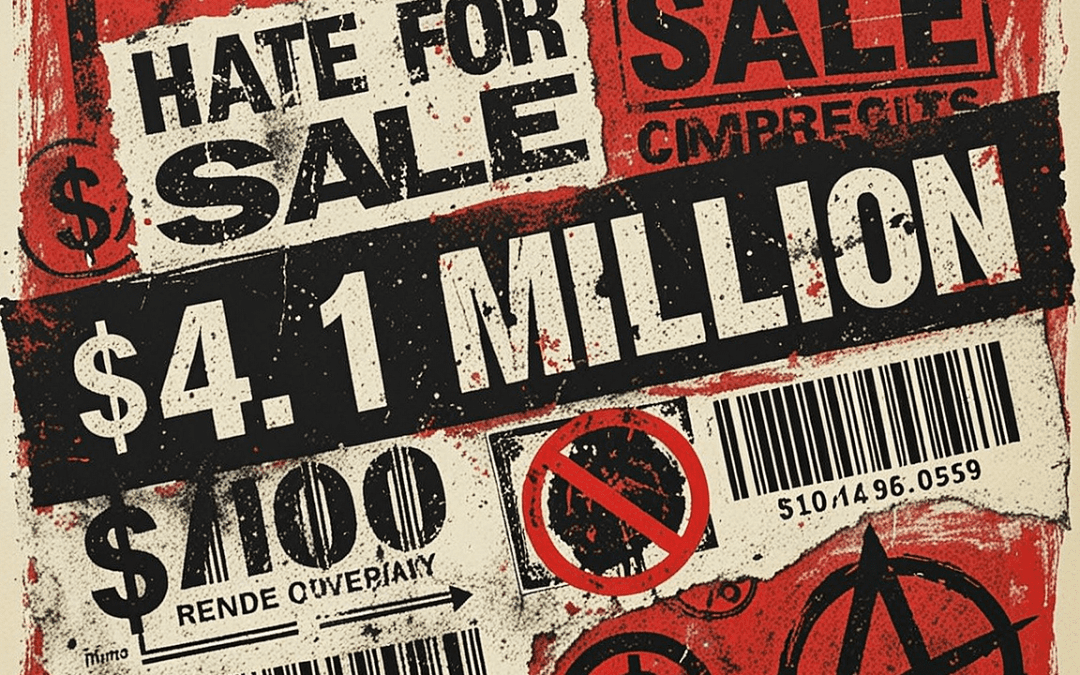
    SPLC Indictment: Did the Anti-Hate Industry Help Keep Hate Alive?

    Commentary by Ryan Thompson

    There is a strange thing about the hate business.

    If hate goes away, the business has a problem.

    That is the ugly question sitting behind the SPLC indictment. For years, Americans were told that organized white hate was always about to take over the country again. The Klan was coming back. Nazis were rising. White nationalist groups were hiding behind every corner.

    But the real story was never that simple.

    Racism still exists. Extremist violence still exists. Sick ideas still exist. Nobody serious should deny that. But organized white hate, as a mass public movement, has been weak for decades.

    The old Klan groups were not rising. They were fading. The Anti-Defamation League said in 2016 that organized Klan groups were in a long-term decline. It said the Klan was mostly made up of small, unstable groups with just over thirty active groups nationwide, and about 3,000 members. That is not a national army. That is a broken fringe.

    So why did the anti-hate industry keep getting richer?

    https://youtu.be/0ydU620ZVJg

    That is where the Southern Poverty Law Center comes in.

    The SPLC built its brand on fighting hate. It raised money from donors who thought they were helping stop racism, extremism, and political violence. But the Justice Department now alleges the SPLC secretly funneled more than $3 million in donor money to people tied to extremist groups, including the Ku Klux Klan, Aryan Nations, National Socialist Movement, National Socialist Party of America, American Front, and others. The DOJ says the SPLC was charged with wire fraud, false statements to a bank, and conspiracy to commit concealment money laundering. The indictment is still only an allegation. The SPLC is presumed innocent unless proven guilty in court.

    The hearing transcript and draft commentary behind this article put the issue in sharper language. They cite a superseding indictment and claim the number reached about $4.1 million in tax-exempt donor funds sent through hidden accounts to extremist-linked people and groups. They also frame the issue as a business model: fund the visibility of hate, point to the visibility of hate, then raise more money to fight hate.

    That is the scandal.

    Not that hateful people exist. Of course they do.

    The scandal is that a group claiming to fight hate may have had a financial incentive to keep hate visible.

    The Market Had Already Rejected These Groups

    The free market and normal social pressure had already done a lot of work.

    Most Americans do not want Klan robes. They do not want Nazi flags. They do not want racial separatist street theater. Businesses do not want it. Churches do not want it. Families do not want it. Most conservatives do not want it. Libertarians sure do not want it.

    Bad ideas can lose without being banned.

    That is what happened to the old white power brand. It became toxic. It became socially costly. It became pathetic. The Klan went from a historic force in American politics to a few unstable groups fighting over scraps of attention.

    That matters.

    Because when a movement is already weak, the people who claim to fight it need to be watched even more closely. A watchdog that depends on fear has a reason to exaggerate. A nonprofit that raises money off panic has a reason to keep the panic alive.

    This is not a left or right problem only.

    This is an incentive problem.

    If your mission is to fight a threat, but your budget grows when the threat looks bigger, then you have a conflict. The honest goal should be to solve the problem. But the institutional goal can become keeping the problem alive just enough to keep money flowing.

    That is how activism turns into an industry.

    The SPLC Became An Empire

    The SPLC is not some tiny civil rights group passing a hat in a church basement.

    Its own 2024 audited financial statements show total assets of about $829.18 million. The same financial statements show endowment funds of about $738.36 million.

    ProPublica’s Nonprofit Explorer lists SPLC revenue for fiscal year 2024 at about $129.06 million, with contributions making up about $106.48 million.

    That is not charity on a shoestring.

    That is an institution.

    And institutions protect themselves.

    When the threat shrinks, the fundraising pitch gets weaker. When the fundraising pitch gets weaker, the money slows down. When the money slows down, staff, salaries, consultants, campaigns, conferences, legal teams, media access, and donor lists become harder to defend.

    That creates a dangerous temptation.

    Do not let the monster die.

    Keep it on camera.

    Keep it in the reports.

    Keep it in the headlines.

    Keep the donor afraid.

    The DOJ Allegations Hit The Core Problem

    The DOJ is not just saying the SPLC used informants.

    Informants are not the whole issue. Law enforcement uses informants. Journalists use sources. Researchers sometimes talk to people inside ugly movements to understand what is happening.

    The issue is disclosure, control, and donor trust.

    The DOJ alleges donor money was secretly used to pay people tied to extremist organizations. It also alleges the SPLC opened bank accounts connected to fictitious entities to hide the nature and control of the money.

    That is the core question.

    Were donors told the truth?

    Did donors know their money might reach people tied to the very groups they were trying to stop?

    Did banks know what the accounts were really for?

    Was the money only used for intelligence gathering, or did it help extremist-linked people stay active, recruit, travel, buy materials, and organize?

    Those questions matter.

    The SPLC denies wrongdoing. Its lawyer told CBS News that the group did not lie to donors or mislead banks, and that its informant program prevented violence and saved lives. CBS also reported that the SPLC pleaded not guilty and asked the court to dismiss the case, calling it vindictive prosecution.

    Fine. Let the court decide guilt.

    But donors do not need to wait for a jury to demand answers.

    If you donated money to fight hate, would you be okay with that money going to people inside hate groups?

    Most normal people would say no.

    Charlottesville Became The Perfect Fundraising Symbol

    The 2017 Unite the Right rally in Charlottesville became a national trauma. It was ugly. It was real. It ended with Heather Heyer dead and dozens injured after James Alex Fields Jr. drove into a crowd of counter-protesters. Fields later pleaded guilty to federal hate crime charges and was sentenced to life in prison.

    That event became a symbol.

    For the media, it became proof that extremism was rising.

    For activists, it became a rallying cry.

    For donors, it became a reason to give.

    And the money moved.

    ProPublica data shows SPLC contributions were about $50.3 million in fiscal year 2016. In fiscal year 2017, contributions jumped to about $132.0 million. That is not a clean “300% increase,” as some commentary says. The accurate way to say it is this: contributions reached about 263% of the prior year level. They more than doubled.

    That is still massive.

    Fear paid.

    The point is not that every donor was wrong to be upset by Charlottesville. They had every right to be upset. The point is that fear became revenue.

    And once fear becomes revenue, people should ask hard questions.

    Who benefits from the panic?

    Who controls the labels?

    Who gets paid when the enemy looks bigger?

    The Labeling Machine Is The Real Power

    The SPLC’s real power was never only money.

    It was the ability to label.

    A group gets placed on a “hate map,” and the label follows it everywhere. Media outlets cite it. Corporate platforms notice it. Payment processors get nervous. Schools, churches, employers, and donors back away.

    That is a lot of power for a private nonprofit.

    The SPLC has free speech. It can publish reports. It can make claims. It can criticize anyone.

    But the rest of us also have the right to ask if its labels are fair, factual, and free from political bias.

    This matters because the SPLC has not only focused on violent extremists. It has also targeted mainstream right-leaning groups in ways many conservatives and libertarians see as political smearing. The House Judiciary Committee hearing page said the June 2026 hearing was about whether the SPLC has distorted civil rights policy in recent years.

    That is the danger.

    When the same institution that labels people as dangerous is also accused of secretly funding people tied to real extremist groups, the whole system loses trust.

    You cannot be the referee, the prosecutor, the fundraiser, and the hidden financier of the spectacle.

    Not in a free country.

    The Old Hate Was Dying, But The Industry Needed It Alive

    Organized white hate did not disappear. Do not twist the argument.

    There are still dangerous people. There are still violent extremists. There are still racist criminals. They should be exposed and prosecuted when they break the law.

    But as a public mass movement, the old white power machine was weak.

    The Klan was not the future. It was a corpse with a mailing list.

    The Nazi cosplay groups were not a rising army. They were small clusters of losers with flags, websites, and grudges.

    That should have been good news.

    A serious civil rights group would have said: “Good, this old movement is dying. Let’s stay alert, but let’s not sell panic.”

    Instead, the anti-hate industry kept selling the fear.

    The SPLC’s own 2025 report says it documented 1,263 hate and anti-government groups. The SPLC frames the threat as moving from fringe to establishment.

    That claim should be debated. But it should not be treated as holy text.

    Especially not while the group making the claim is under federal indictment over allegations that donor funds were secretly routed to people tied to extremist groups.

    Again, the SPLC deserves due process.

    But so do the American people.

    Donor Fraud Is A Liberty Issue

    This is where libertarians need to be clear.

    Voluntary exchange only works when people know what they are buying.

    A donor gives money based on trust. The nonprofit makes a promise. The donor believes the promise. The money changes hands.

    If the promise is false, the exchange is corrupted.

    That is why donor transparency matters. It does not matter whether the nonprofit is left-wing, right-wing, religious, secular, progressive, conservative, or libertarian. If you raise money for one purpose and secretly use it for the opposite, that is a betrayal.

    The SPLC told donors it was fighting hate.

    The DOJ alleges some of that donor money went to people tied to the hate groups the SPLC publicly denounced.

    That is not a small bookkeeping issue.

    That is the whole moral claim of the organization.

    The Incentive Must Be Broken

    The answer is not censorship. The answer is not government control over speech. The answer is not banning ugly ideas.

    The answer is sunlight.

    Make nonprofits disclose more. Make donor promises enforceable. Make “hate tracking” groups show methods, criteria, corrections, and conflicts. Make media outlets stop treating private political nonprofits as neutral courts of truth.

    And yes, prosecute real fraud if fraud is proven.

    A free society can reject hate without building a fear industry.

    It can punish violence without smearing lawful dissent.

    It can expose extremists without funding them.

    It can protect civil rights without turning civil rights into a donor machine.

    That is the line.

    And the SPLC indictment forces the country to look at that line.

    If the allegations are false, the SPLC should clear its name.

    If the allegations are true, then this is one of the dirtiest nonprofit scandals in modern politics.

    Because it would mean the anti-hate industry did not just warn America about the monster.

    It fed the monster.

    Then it mailed the invoice to donors.

    Sources and URLs


    Ryan “Dickie” Thompson is the host of the Disruptarian podcast and editor of Disruptarian.com. He believes in following the money, even when it leads to uncomfortable places.

    Spun Web Technology SMART SEO

    Spun Web Technology SMART SEO

  • Disruptarian Radio SPLC Indictment: Did the Anti-Hate Industry Fund the Hate It Claims to Fight?

    The SPLC built a massive brand around “fighting hate.” But what happens when the anti-hate industry is accused of funding people tied to the same extremist groups it warned America about?

    In this commentary, Ryan Thompson breaks down the disturbing claims around the Southern Poverty Law Center, donor money, extremist informants, and the political business model built on fear.

    This is not a defense of the KKK, Nazis, Aryan groups, or any form of racial hate. Those movements are toxic, weak, and rejected by normal Americans. The question here is different: did the people claiming to fight hate have a financial incentive to keep hate visible?

    We look at the DOJ allegations, the congressional hearing, the SPLC’s huge donor machine, Charlottesville, and how fear can become a revenue stream when nonprofit activism turns into an industry.

    Commentary by Ryan Thompson.
    Based on the article and hearing transcript discussed here.

    Watch, think, and follow the money.

    Sources mentioned:

    Department of Justice: Federal Grand Jury Charges Southern Poverty Law Center|https://www.justice.gov/opa/pr/federal-grand-jury-charges-southern-poverty-law-center-wire-fraud-false-statements-and

    House Judiciary Committee: The Southern Poverty Law Center, Manufacturing Hate, Part II|https://judiciary.house.gov/committee-activity/hearings/southern-poverty-law-center-manufacturing-hate-part-ii

    ProPublica: Southern Poverty Law Center Nonprofit Explorer|https://projects.propublica.org/nonprofits/organizations/630598743

    SPLC 2024 Audited Financial Statements|https://www.splcenter.org/wp-content/uploads/2025/05/2024-splc-audited-financial-statements.pdf

    ADL: Tattered Robes, The State of the Ku Klux Klan in the United States|https://www.adl.org/resources/report/tattered-robes-state-ku-klux-klan-united-states

    Spun Web Technology SMART SEO

    Spun Web Technology SMART SEO

  • SPLC Indictment Breakdown: Did the Anti-Hate Industry Finance the Extremism It Condemns?

    SPLC Indictment Breakdown: Did the Anti-Hate Industry Finance the Extremism It Condemns?

    Disruptarian featured image for SPLC Indictment Breakdown: Did the Anti-Hate Industry Finance the Extremism It Condemns?

    Verified at: 2026-06-20 13:33:34

    SPLC Indictment Breakdown: Did the Anti-Hate Industry Finance the Extremism It Condemns? is the kind of subject that fits the Disruptarian lane because it sits where independent media, culture, music, and political commentary collide.

    The source description frames it this way: A Rumble-focused breakdown of the SPLC indictment story and the larger question behind it: did parts of the anti-hate industry help fund, enable, or benefit from the extremism they publicly claim to fight? This version reframes the issue around accountability, donor incentives, nonprofit influence, political labeling, and the financial machinery behind modern activist narratives.

    The useful question is not only what happened, but why the story matters to people who distrust scripted narratives, recycled outrage, and corporate-approved commentary.

    A Disruptarian reading starts with individual agency. The listener is not asked to accept a packaged conclusion. The point is to pull the claim apart, compare incentives, and look for the pressure points that legacy media often skips.

    That approach matters for libertarian radio commentary because the audience is usually looking for more than a headline. They want context, motive, contradiction, and a practical sense of how public stories become private consequences.

    The cultural layer is just as important. Disruptarian music and reggae punk energy are not decorations around the message. They give the work its rhythm: skeptical, confrontational, and rooted in the idea that speech should stay alive even when institutions prefer silence.

    For search readers arriving cold, the primary source is included below either as an embed or as a direct source link. Start there if you want the full tone, timing, and argument. The written analysis expands the title and description into a searchable article that can stand on its own.

    The strongest SEO value here is clarity. The article keeps the title language visible, uses descriptive headings, and connects the topic to Disruptarian Radio, independent media, libertarian commentary, political culture, and original music without stuffing the page with empty repetition.

    The larger takeaway is simple: independent commentary survives by documenting what was said, preserving the source, and adding a point of view that does not depend on permission from gatekeepers.

    That is why this post exists as part of the static Disruptarian archive. The video remains embedded, the title and description remain traceable, and the surrounding article gives search engines and readers enough context to understand why the episode belongs in the broader Disruptarian catalog.

    The title itself carries the first keyword signal, but a durable post needs more than a copied headline. It needs a clear H1, a concise meta description, a featured image with descriptive alt text, and enough editorial framing for readers to know why the video is part of this archive.

    From an independent media perspective, the value is in keeping the primary source visible. Embedding the video prevents the article from becoming detached commentary. Readers can compare the written interpretation against the actual recording and decide whether the argument holds up.

    The libertarian angle is not automatic partisanship. It is a suspicion of concentrated power, public manipulation, and narratives that ask citizens to outsource judgment. That suspicion applies to government, platforms, corporations, activist institutions, and media brands alike.

    Disruptarian Radio also treats culture as evidence. Music, political language, online mobs, censorship fights, moral panics, and personal stories all reveal where pressure is being applied. That is why a radio episode can be more than entertainment; it can become a record of a moment.

    For listeners who follow DJ Disruptarian, the same pattern shows up in the music catalog: reggae rhythm, punk edge, spiritual critique, and anti-authoritarian instinct. The written post keeps that identity attached to the video instead of letting it disappear into a platform feed.

    Good SEO on a page like this should help people find the conversation without flattening the voice. The article uses natural phrases such as Disruptarian Radio, independent media, libertarian podcast, political commentary, original music, and disruptive conversations only where they make sense.

    The featured image should follow the Disruptarian editorial-collage style: torn paper, smoke, halftone grit, dirty cream paper, black and oxblood pressure, muted gold accents, and symbolic props tied to the subject rather than generic filler. Its alt text names the subject so search engines and screen readers get useful context.

    The article also keeps a stable URL under the static blog. That matters because feeds move, platforms change embeds, and social links decay. A static post gives the episode a second home that can be indexed, backed up, linked, and reviewed later.

    The final point is documentation. When a channel publishes a new video, the title and description are often the only structured metadata available. Turning that metadata into a post creates a stronger archive without pretending to replace the original recording.

    This is the practical Disruptarian method: preserve the video, state the source, add commentary, keep the searchable terms honest, and let the reader move between the embedded media and the written analysis without friction.

    This additional context keeps the post useful for readers who arrive from search rather than from the original channel. It explains the source, preserves the embed, and connects the subject back to the larger Disruptarian archive.

    This additional context keeps the post useful for readers who arrive from search rather than from the original channel. It explains the source, preserves the embed, and connects the subject back to the larger Disruptarian archive.

    This additional context keeps the post useful for readers who arrive from search rather than from the original channel. It explains the source, preserves the embed, and connects the subject back to the larger Disruptarian archive.


    The shortlink was copied to your clipboard

    X
    f
    r

    Related Reading

    Similar posts


    Disruptarian Blog

    2026-06-20

    Disruptarian Blog

    Disruptarian commentary on SPLC Donor Money Scandal: Did Anti-Hate Funding Fuel the Extremism It Condemned? with embedded source video, independent media context, and libertarian radio analysis.

  • The Death of Fair Use? Why H.R. 6028 is a Political Land Grab for Copyright Power

    The Death of Fair Use? Why H.R. 6028 is a Political Land Grab for Copyright Power

    An editorial collage poster depicting the consolidation of power and the silencing of digital rights through chains and corporate silhouettes.

    In the quiet, unglamorous corridors of the House of Representatives, a legislative hand grenade was just tossed. They called it the “Legislative Branch Agencies Clarification Act” (H.R. 6028). They framed it as a boring, technical reorganization—the kind of dry, administrative housekeeping that most people sleep through. But don’t let the nomenclature fool you. This isn’t a reorganization; it’s a decapitation of public interest oversight.

    In a recent voice vote, the House rushed H.R. 6028 through without a single meaningful hearing, without public scrutiny, and without the debate that a change of this magnitude demands. The target? The U.S. Copyright Office. The goal? To strip away the last remaining checks and balances that keep this massive, industry-aligned beast from running amok on the digital commons.

    The Source: This analysis is based on reporting and documentation from the Electronic Frontier Foundation (EFF) regarding the passage of H.R. 6028.

    The Mechanics of the Power Grab

    To understand why this is a disaster, you have to understand how the Copyright Office currently functions. It isn’t just a filing cabinet for songs and scripts. It is an administrative powerhouse that shapes the rules of the digital age. It manages the DMCA Section 1201 rulemaking process—the very process that determines if you can repair your own tractor, conduct security research, or preserve digital history without being sued into oblivion.

    H.R. 6028 proposes three fundamental shifts that should make every person who values free expression tremble:

    1. Severing the Library Connection: Currently, the Copyright Office sits under the supervisory umbrella of the Library of Congress. While the Library is no utopia, its core mission is the preservation of knowledge and public access. This relationship acts as a vital counterweight. H.R. 6028 severs this tie, transferring supervisory powers directly to the Register of Copyrights.
    2. Politicizing the Register: The bill makes the Register of Copyrights a presidential appointee, subject to Senate confirmation. This moves the office from a realm of administrative expertise into the direct line of fire of partisan politics.
    3. Consolidating Rulemaking Power: The authority over the critical Section 1201 rulemaking will move from the Librarian of Congress to the Register. This concentrates immense power in a single, politically appointed individual.

    A History of Playing for the Wrong Team

    The skeptics aren’t just being alarmist; they are looking at a track record. The Copyright Office has not historically been a neutral arbiter of the public interest. It has a history of leaning heavily toward the side of massive entertainment conglomerates and legacy media giants.

    The EFF notes that the Office’s recent stance on Artificial Intelligence has been a masterclass in prioritizing private licensing markets over the fundamental principle of fair use. Instead of protecting the rights of creators and users to interact with technology, the Office has pushed for models that favor the gatekeepers.

    If you need more proof of their bias, look no further than the Stop Online Piracy Act (SOPA). During the era when the internet was fighting for its life against blatant censorship, the Copyright Office was one of the most vocal supporters of that disastrous proposal. They have consistently aligned themselves with the heavy hitters of the industry, often at the expense of educators, libraries, and the average internet user.

    [Opinion: This isn’t just a pattern of error; it’s a pattern of alignment. When the rules are written by those who benefit most from the restriction of information, ‘fairness’ becomes a secondary concern to ‘licensing revenue.’]

    The Lobbyist’s Dream

    By making the Register of Copyrights a political appointee, Congress is essentially opening the door for high-stakes lobbying. Under the current structure, the Register is an administrative official. Under H.R. 6028, the Register becomes a political prize.

    Imagine the pressure. Every administration will want a Register who aligns with their specific economic and cultural agenda. The massive, well-funded copyright-owning industries—the ones with the deepest pockets and the longest reach in D.C.—will invest even more heavily in ensuring their preferred candidates are installed. We are moving toward a future where copyright policy isn’t decided by experts in law and preservation, but by political operatives vetted by industry lobbyists.

    The Cost to the Commons

    What does this actually mean for you? It means the “progress of science and useful arts”—the very constitutional mandate of copyright law—is being traded for control.

    When the Copyright Office loses its connection to the Library of Congress, we lose the voice of the scholar and the archivist. When the rulemaking process becomes a political tool, we lose the ability to fight for exemptions that allow for repair, accessibility, and research. We are witnessing the construction of a digital fortress, where the walls are built by those who own the content, and the gates are guarded by those appointed to protect the profits.

    The Senate must act. H.R. 6028 was rushed through the House with zero transparency. It deserves the light of day, the heat of debate, and ultimately, a rejection. The Copyright Office should serve the public—not the presidents, and certainly not the lobbyists.


    Stay vigilant. The fight for the digital commons is being fought in the fine print.


    The shortlink was copied to your clipboard

    X
    f
    r

    Related Reading

    Similar posts

  • The 702 Ultimatum: Warrant or Bust – No More Warrantless Spying

    The 702 Ultimatum: Warrant or Bust – No More Warrantless Spying

    A defiant collage of protest, surveillance, and decay symbolizing the 702 surveillance crisis

    For over two decades, Section 702 of the Foreign Intelligence Surveillance Act (FISA) has been a tool of unchecked mass surveillance, enabling the FBI and NSA to snoop on Americans without warrants. Now, with its expiration deadline looming in March 2027, Congress faces a critical choice: reform the law by mandating warrants for all domestic communications collected under 702, or let it expire. The Electronic Frontier Foundation (EFF) has issued a clear ultimatum—surveillance maximalists can keep 702 only if they accept a warrant requirement. Otherwise, the program dies. This isn’t just a bureaucratic debate; it’s a battle over privacy, liberty, and the integrity of America’s intelligence apparatus.

    The Warrantless Abuse of Section 702

    Section 702 allows the NSA to collect communications involving foreigners, even when Americans are involved. The FBI then accesses this data without warrants, using a ‘finders keepers’ approach. This means the FBI can read emails, intercept calls, or sift through social media messages of U.S. citizens without judicial oversight. The EFF argues this violates the Fourth Amendment, which requires warrants based on probable cause for searches. The program’s lack of individualized suspicion makes it inherently unconstitutional. As the EFF states, ‘Mass surveillance is just that—mass. It’s lacking any of the individualized suspicion that our legal system is based on.’

    Consider this: The NSA collects full conversations between overseas targets and Americans. If a U.S. citizen is discussing a personal matter with a foreign contact, the NSA can harvest that data. The FBI then reviews it without a warrant. Victims rarely know they’ve been surveilled. This system is a digital Panopticon, where the government watches citizens without accountability.

    Bill Pulte: The New Threat to Privacy?

    The appointment of Bill Pulte as Director of National Intelligence adds urgency to this fight. Pulte’s history with private data is alarming. As Director of the Federal Housing Finance Agency (FHFA), he allegedly used government-held data to accuse political opponents of mortgage fraud. This includes New York Attorney General Letitia James and Senator Adam Schiff. His role in intelligence raises red flags: Could he abuse access to 702 data to target critics? Democrats are leveraging his appointment to demand 702 reforms, but this should be a broader demand. The integrity of those in power must never be the sole barrier to justice.

    The Consequences of Expiration

    If 702 expires, the government may pivot to older authorities like Executive Order 12333, a 1980s-era tool granting near-unlimited surveillance power over foreigners. While this might seem like a trade-off, it’s a dangerous one. The EFF warns that 12333 lacks the same oversight as 702. Moreover, expired programs aren’t automatically illegal. The post-9/11 Presidential Surveillance Program was only retroactively legalized by Congress. Allowing 702 to die could expose other unconstitutional practices. It also sends a message: The government can spy without checks if it finds a loophole.

    Why a Warrant Requirement Matters

    A warrant requirement would restore constitutional safeguards. Under current law, the FBI can sift through 702-collected data without proving probable cause. A warrant would force agents to justify each search to a judge. This doesn’t eliminate surveillance but ensures it’s targeted and lawful. It’s a minimal concession that could prevent massive privacy violations. The EFF’s stance is clear: No reform means no reform. ‘We say to the Intelligence Community crowd: Section 702 should require a warrant before the FBI can look at digital communications collected from Americans. If not, we should let the whole thing expire.’

    The Disruptarian Stand: Liberty First, No Compromise

    This isn’t just a legal issue—it’s a moral one. Mass surveillance erodes trust, chills free speech, and enables authoritarianism. The Disruptarian voice rejects incrementalism. We don’t want a ‘better’ mass surveillance tool; we want accountability. The libertarian edge here is clear: The government shouldn’t have unchecked power over citizens’ private lives. The punk edge rejects complacency. The reggae edge calls for resistance with rhythm and defiance. This fight demands bold action, not quiet negotiations.

    How to Fight Back

    1. **Demand a Warrant Requirement**: Contact Congress and demand that any 702 reauthorization include a warrant mandate. 2. **Let It Expire**: If reform is impossible, support letting 702 die. 3. **Expose Abuse**: Highlight cases where 702 data was misused, like Pulte’s FHFA actions. 4. **Build Coalitions**: Partner with EFF, ACLU, and grassroots groups. 5. **Stay Vigilant**: Monitor how the intelligence community adapts if 702 dies.

    As the source URL notes, ‘Tell your elected official: Put a warrant requirement in Section 702 or let it expire. Take action.’ This isn’t about partisan politics; it’s about defending the right to privacy in the digital age. The 702 ultimatum forces a choice: Liberty or surveillance. The Disruptarian answer is unambiguous—warrant or bust.

    Sources:
    The shortlink was copied to your clipboard

    X
    f
    r

    Related Reading

    Similar posts

  • Enshittification Merch: The Pin That Turns Protest Into Swag

    Enshittification Merch: The Pin That Turns Protest Into Swag

    A torn, distressed poster collage featuring a stylized poo emoji, megaphone, fist, surveillance eye, broken chain, and city skyline, all rendered in oxblood red, charcoal black, and muted gold accents.

    When the Electronic Frontier Foundation (EFF) drops a sticker or pin, it’s not just another piece of merch—it’s a frontline weapon in the ongoing war against what critics call enshittification. The term, coined by tech activists to describe the gradual degradation of online platforms into surveillant, opaque, monopolistic behemoths, has become shorthand for the structural incentives that turn tech companies from user‑centric services into user‑oppressive utilities.

    Enshittification: The Anatomy of Digital Decay

    Enshittification is more than a profanity‑laden buzzword. It’s a framework that explains why platforms, once built to serve users, increasingly act as enemies of their own users. The core drivers include:

    • Surveillance business model – Platforms monetize user data, eroding privacy and autonomy.
    • Erosion of privacy – Data collection becomes opaque, making users complicit in their own surveillance.
    • Monopoly power – Dominant players crush competition, leaving users with no viable alternatives.
    • Regulatory capture – Established players influence policy to maintain the status quo.

    These dynamics create a self‑reinforcing loop: the more users rely on a platform, the more data it gathers, the more power it wields, and the harder it becomes to leave.

    Why the EFF Needs a Visual Language

    Activism thrives on symbols that translate abstract policy into visceral, shareable moments. While the EFF has long used.directory-advocacy, litigation, and code to fight for digital rights, the 2026 book Enshittification introduced a new ally: a stylized “pile of poo” emoji. The المنافسة designer, Devin Washburn of No Ideas Studio, crafted an icon with angry eyebrows and a grawlix‑scrawled censor bar, turning the symbol into a rallying cry.

    By purchasing a $5 sticker or a $10 pin, supporters don’t just buy merch—they claim a visual badge of resistance. Wearing it signals to strangers that the wearer understands the ongoing fight against the erosion of digital freedoms.

    From Design to Commons: The CC‑Licensed Icon

    In a move that mirrors the EFF’s open‑source ethos, the author bought out Devin’s rights and released the icon under a Creative Commons Attribution 4.0 license. The high‑resolution files are hosted on Wikimedia Commons, Flickr, and the Internet Archive (including a PSD with an ink‑density adjustment layer). This means:

    • Anyone can remix the image for commercial or non‑commercial use.
    • The design can be re‑used by activists globally without licensing hurdles.
    • Because attribution is required, the symbol’s lineage remains traceable to the EFF and the original designer.

    In effect, the symbol becomes a free, shareable asset that fuels grassroots organizing.

    The EFF Shop: Turning Swag into Funding

    The EFF’s limited‑edition merch is more than a marketing strategy; it’s a fundraising mechanism. All proceeds go directly to the EFF 玛工作, funding lawsuits, policy advocacy, and code development that defend digital rights. The shop offers two items:

    • Sticker – $5, printed on durable vinyl.
    • Pin – $10, enamel‑finished, rust‑resistant.

    These items奇米 are sold at a fraction of the cost of mass‑produced corporate merch, ensuring that the price point is accessible while still generating meaningful revenue for the EFF’s mission.

    How Merch Fuels the Movement

    Merch works on multiple fronts:

    1. Visibility – Every verzameling of a sticker or pin becomes a public statement, sparking conversations and drawing attention to the underlying issue.
    2. Community – Shared symbols create a sense of belonging among activists, reinforcing solidarity.
    3. Fundraising – Direct sales provide a steady income stream that supports EFF’s legal and technical work.
    4. Education – The icon serves as a quick reference to the concept Zutens, making it easier to explain enshittification in one glance.

    Why You Should Get One

    Here’s how you can align your everyday style with a cause that matters:

    • Support a proven organization – EFF has a 35‑year track record of winning cases that protect privacy and free speech.
    • Join a global movement – When you wear the sticker or pin, you’re part of a worldwide community fighting the same battles.
    • Make a statement – In an era where platforms dictate the terms of our digital lives, a single emblem can cut through the noise.
    • Customize it if you want – Since the icon is CC‑licensed, you can create your own merch, lawn flags, or even a custom flag for your garden.

    Conclusion: Swag as a Weapon

    The EFF’s Enshittification merch demonstrates that protest can be both powerful and playful. By turning a simple pin or sticker into a fundraising tool and an educational symbol, the EFF has turned everyday objects into frontline weapons. When you buy a $5 sticker or a $10 pin, you’re not just buying merch; you’re buying into a tradition of resistance, a tangible asset that fuels legal battles, and a visual shorthand for a movement that refuses to be silenced.

    In a world where tech giants grow ever more opaque, one can’t afford to be silent. Wear the symbol, spread the word, and help keep the digital commons alive.

    Source: EFF: Enshittification Merch That Actually Fights Enshittification


    The shortlink was copied to your clipboard

    X
    f
    r

    Related Reading

    Similar posts


    Four Years After Dobbs: The Rising Threat to Online Speech

    Thu, 25 Ju · Digital Rights

    Four Years After Dobbs: The Rising Threat to Online Speech

    Four years after the Supreme Court’s Dobbs decision, anti‑abortion lawmakers have intensified a campaign to silence online reproductive‑health information. From cease‑and‑desist letters to state‑level censorship bills, t

  • ALPR: The Silent Orchestra of Surveillance – Why License Plate Readers Are Playing a Creepy Tune

    ALPR: The Silent Orchestra of Surveillance – Why License Plate Readers Are Playing a Creepy Tune

    Collage of torn paper strips, charcoal ink blocks, and surveillance imagery with megaphone and chain, illustrating the fight against ALPR mass surveillance

    When you think of surveillance, your mind probably jumps to cameras at bank entrances or the omnipresent CCTV grid in urban streets. The new, silent conductor of our modern, monitored society is the automated license plate reader (ALPR). These high‑definition cameras, camouflaged as traffic enforcement tools, have quietly woven themselves into a sprawling web that reaches far beyond the realms of speed monitoring. The Electronic Frontier Foundation (EFF) laid the track in its recent newsletter, “Mass Surveillance for… Loud Music?”, exposing how these devices have become universal people‑trackers, conveniently repurposed for noise complaints and low‑level investigations. This article is a deep dive into that network, the corporate narratives that disguise its purpose, and the legal and social implications that follow.

    What are ALPRs and Who Owns Them?

    Automated license plate readers are cameras equipped with optical character recognition (OCR) technology that can read vehicle license plates in real time. The data they capture—plate number, timestamp, location, and sometimes vehicle make and model—are often sent to a database or a cloud service for storage and analysis. In the U.S., vendors such as Plate Smart, Motorola Solutions,րեց, and New Vision Technologies supply these systems to state and local law enforcement agencies, schools, private security firms, and even private property owners. The sheer scale is staggering: “tens of thousands” of cameras across the country, with a growing trend of municipal governments integrating them into public safety dashboards.

    The corporate narrative is simple: ALPRs improve public safety by deterring crime, speeding up investigations, and ensuring compliance with traffic laws. The pitch is that by knowing who’s on the road and when, police can respond faster and prevent dangerous situations. The truth, however, is that these devices are being used for far more mundane—and less heroic—tasks: monitoring noise complaints, tracking the movements of individuals deemed a nuisance, and even flagging vehicles for minor infractions that do not warrant a police response. The result is a low‑level, pervasive surveillance system that quietly erodes privacy.

    From Traffic Cameras to People‑Trackers

    The EFF’s investigation reveals that many jurisdictions have repurposed existing traffic cameras, which were originally installed for speed enforcement, to capture license plates of vehicles that allegedly produce excessive noise or violate local ordinances. Instead of a single traffic violation, the camera now logs every instance of a vehicle’s presence,ซื้อบ, and adds it to a database that can be searched by officers and even private plaintiffs.

    In a recent case in Midwest City, a neighborhood association used an ALPR system to compile a “noisy vehicle registry.” The system flagged over 300 cars for allegedly exceeding sound limits, and the owners received summonses—even though the noise complaints were often unverified or based on subjective hearing. The database, accessible to law enforcement and the public association, became a tool for harassment, targeting families who lived near busy roads, the elderly, and anyone who owned a vehicle that happened to be on a list.

    These low‑stakes uses are just the tip of the iceberg. The data collected by ALPRs can be combined with other surveillance technologies—such as facial recognition, pattern‑matching, and predictive policing algorithms—to create a “personality profile” of residents. The EFF’s testimony to Congress highlighted the potential for these systems to trigger a cascade of automated investigations, eventually leading to invasive forensic searches. In the words of the EFF Associate Director of State Affairs, Rindala Alajaji, “You start with a plate, and you end up with a trail that can be followed, flagged, and acted upon with little oversight.”

    The Corporate Spin: Safety Versus Surveillance

    Corporations selling ALPRs market them as “smart city” solutions that give law enforcement a technological edge. The narrative is one of safety, efficiency, and public trust. However, the marketing collateral often omits the fact that a single camera can record a vehicle’s license plate 24/7, creating an immediate digital trail that can be stored, analyzed, and shared across jurisdictions.

    Vendors often present a “data minimization” clause, claiming that the system only stores plates for a limited time. In practice, many public agencies keep data indefinitely, or share it with state databases that can be accessed by private entities. The EFF’s research shows that in California, the state’s License Plate Tracking System holds data for up to 90 days, but there is no legal requirement to delete that data after the period has elapsed. The longer the data is stored, the higher the risk of misuse.

    Legal Gaps and Oversight Failures

    Unlike other surveillance technologies—such as CCTV or facial recognition—ALPRs currently operate under a patchwork of state laws that provide little consistency in data retention, access, or accountability. In many states, there is no requirement for a warrant to access ALPR records. The EFF’s research points out that in Texas, a city can request plates from the database without a subpoena or judicial review, effectively eliminating any judicial oversight.

    Moreover, the lack of transparency in how the data is used means that citizens often do not know if a police officer used an ALPR record to justify an arrest, or whether a private security firm is using the data to target tenants in a playground area. The result is a “black box” of surveillance that erodes public trust.

    Why the EFF is Fighting Back

    In its recent newsletter, the EFF celebrated a victory for facial privacy—an important step, but not the end of the story. The organization has been lobbying for ALPR reform, calling for:

    • Clear data retention limits (e.g., no more than 30 days of storage without a warrant).
    • Mandatory judicial review for accessing ALPR records beyond traffic enforcement.
    • Public disclosure of ALPR deployment and data usage.
    • Independent oversight bodies to audit the use of ALPR data.
    • Restrictions on combining ALPR data with other surveillance technologies.

    The EFF’s testimony to Congress, featuring Rindala Alajaji, has already sparked a debate in the House Committee on Transportation and Infrastructure. While lawmakers are still grappling with the language, the EFF’s push for a federal standard has gained traction among privacy advocates and civil rights groups.

    What This Means for You

    For the average citizen, the proliferation of ALPRs means that a single trip to the grocery store can leave a digital footprint that lasts for months, potentially linking you to a location or a time of day. If you’re a member of a low‑income community or a historically marginalized group, the risk is higher because these demographics often face more intense scrutiny.

    Activists can take action by:

    1. Attending city council meetings to demand transparency about ALPR deployment.
    2. Requesting FOIA (Freedom of Information Act) records about how data is stored and shared.
    3. Supporting local policy initiatives that limit data retention and require judicial oversight.
    4. Joining coalitions like kow, Privacy First to lobby for stronger federal regulations.

    Conclusion: The Silent Music of Surveillance Is Getting Louder

    ALPRs might look like a mundane traffic enforcement tool, but the reality is that they are the backbone of a sprawling, low‑budget surveillance network that quietly tracks us all. The EFF’s expose shines a spotlight on the industry’s false narrative of safety and highlights the urgent need for policy reform. Without change, the omnipresent hum of these cameras will only grow louder, turning our streets into a concert hall of surveillance where everyone’s movements are recorded, catalogued, and potentially weaponized.

    To stay in the fight for /=your privacy and free speech, subscribe to the EFF’s EFFector newsletter for the latest updates and ways to take action. And if you’re craving a deeper understanding, listen to the full podcast episode where Rindala Alajaji discusses how ALPRs are being used beyond traffic enforcement: .

    Source: https://www.eff.org/deeplinks/2026/06/mass-surveillance-loud-music-effector-3811


    The shortlink was copied to your clipboard

    X
    f
    r

    Related Reading

    Similar posts

  • NO FAKES: A Threat to Free Speech, Privacy, and Artist Autonomy

    NO FAKES: A Threat to Free Speech, Privacy, and Artist Autonomy

    NO FAKES bill as a fascist censorship tool, visualized through a gritty, anti-corporate collage with protest symbols and digital decay

    NO FAKES: A Bill That Censors Speech, Exploits Artists, and Kills Innovation

    Welcome to the Disruptarian blog, where we don’t shy away from the messy, uncomfortable truths of power. Today, we’re dissecting the Nurture Originals, Foster Art, and Keep Entertainment Safe Act (NO FAKES)—a piece of legislation so fundamentally flawed that it’s less about protecting creators and more about consolidating corporate control over digital expression. Sponsored by the Senate Judiciary Committee and backed by major studios and record labels, NO FAKES is being framed as a solution to AI-generated replicas. But as the Electronic Frontier Foundation (EFF) and other digital rights advocates have shown, this bill is a stealthy grab for power that threatens free speech, privacy, and the very spirit of creativity. Let’s break it down.

    The Illusion of Protection: Property Rights Over Privacy

    At its core, NO FAKES attempts to address the rise of AI-generated replicas—deepfakes, voice clones, and synthetic media that mimic real people. The bill proposes granting individuals a property right over their look, voice, and general style. Sounds noble, right? Except it’s a masterstroke of legal sleight of hand. Instead of tackling the real issue—privacy violations—NO FAKES turns artists and individuals into property to be owned. This is a fundamental shift from privacy rights to property rights, a move that benefits corporations more than creators.

    Consider this: Under NO FAKES, a major studio could legally demand that an artist sign over their entire style to prevent AI from mimicking it. This isn’t about stopping fraudulent content; it’s about creating a new revenue stream for studios. As the EFF notes, ‘The bill doesn’t create a privacy right, but rather a property right that can easily be signed away’. This means artists could be forced into contracts that strip them of control over their own image, all in the name of ‘protection.’ It’s a chilling precedent for anyone who values autonomy.

    Censorship in Disguise: The Takedown Trap

    NO FAKES doesn’t just target AI replicas; it targets speech, tools, and innovation. The bill would require platforms to implement filters that go beyond exact matches of copyrighted material. Instead, they’d have to detect anything that might be a digital replica. This is a disaster for free expression. Parody, news reporting, and critical commentary—all protected under the First Amendment—could be swept up in the net.

    Imagine a journalist using a deepfake to expose corporate corruption. Or an artist creating a satirical piece that critiques a public figure. Under NO FAKES, these could be deemed ‘misleading replicas’ and removed without due process. The EFF warns that this is a ‘supercharged version of the already flawed copyright takedown regime.’ Platforms would become arbiters of truth, with no clear accountability for overreach. This isn’t about safety; it’s about control.

    The Artist’s Dilemma: Exploitation in Disguise

    Here’s where NO FAKES truly fails. The bill claims to protect artists from misleading replicas, but it does the opposite. By granting property rights over style and voice, it empowers corporations to exploit artists. Major studios and labels are likely to require artists to sign away these rights in contracts, effectively monetizing their image. This isn’t protection—it’s a new form of exploitation.

    Consider a musician whose voice is cloned by an AI. Under NO FAKES, the studio could sue the AI developer, but the musician might be left with no recourse. The bill doesn’t address the actual harm—privacy invasion or misinformation—but instead creates a legal framework that benefits those with deep pockets. As the EFF points out, ‘NO FAKES actually creates a new avenue for the exploitation of artists by companies instead of protection from misleading replicas’.

    The Road to Censorship: How NO FAKES Got Worse

    NO FAKES wasn’t a fresh idea. It was introduced as a ‘solution’ to AI-generated content, but its flaws were evident from the start. However, the bill was amended last year to make it even more dangerous. These amendments didn’t address the core issues; they added layers of complexity that make enforcement harder and censorship more likely. The EFF’s analysis shows that the latest version includes ‘redress for bad faith takedowns,’ but these provisions are toothless. There’s no real mechanism to hold platforms or corporations accountable for overblocking.

    This isn’t a minor tweak—it’s a deliberate shift toward more authoritarian control. The bill’s sponsors, including major entertainment companies, have a vested interest in maintaining the status quo. They don’t want to address the real problems of AI; they want to silence critics and protect their profits. NO FAKES is their tool.

    What Can Be Done? Tell Congress to Say No

    The time to act is now. The Senate Judiciary Committee is set to vote on NO FAKES, but the debate isn’t just about AI—it’s about the future of free speech and artist rights. Disruptarians urge you to take action. Contact your representatives and demand they reject this bill. The EFF provides resources to help you tell Congress to say no.

    This isn’t just about technology; it’s about power. NO FAKES represents a corporate grab for control over digital spaces, under the guise of protection. But true protection requires respecting privacy, free expression, and the rights of individuals. By supporting NO FAKES, Congress would be handing over more power to those who already have too much. That’s not innovation—it’s oppression.

    As the Disruptarian blog has always stood for, we don’t advocate for incremental changes or corporate-friendly solutions. We fight for radical freedom. NO FAKES is a clear example of why we need to reject systems that prioritize profit over people. Let’s make sure Congress hears our voices—loud, clear, and unapologetically disruptive.

    Sources and Further Reading

    This article is based on the EFF’s deep dive on NO FAKES. For more information, visit the EFF’s website or join the fight against this dangerous legislation. The Disruptarian blog is an independent media outlet, and this piece is written with the intent to inform and mobilize, not to spread fear or bias.


    The shortlink was copied to your clipboard

    X
    f
    r

    Related Reading

    Similar posts

  • Chris Anthony Takes the Helm: What Independent Media’s New North American President Means for the Future of Journalism

    Chris Anthony Takes the Helm: What Independent Media’s New North American President Means for the Future of Journalism

    Chris Anthony, new president of Independent Media North America, in a rebellious cityscape with punk and reggae motifs.

    Source: Editor and Publisher (Published: June 9, 2026)

    In a move that’s raised eyebrows across the spectrum of alternative press and establishment newsrooms alike, Independent Media has appointed Chris Anthony as its new President for North America. The news, first reported by Editor and Publisher, comes at a time when the stakes for independent journalism have never been higher (source).

    The Hard Truth: Media Consolidation vs. Independent Journalism

    Before diving into what Chris Anthony means for the future, it’s worth reminding readers where we stand. The American media landscape is a dystopian funhouse mirror: six conglomerates own nearly all of mainstream news outlets (Business Insider, 2012; Statista, 2023). The result? A homogenized news cycle that serves advertisers, shareholders, and political gatekeepers more than it serves the public.

    Independent Media—distinct from both legacy print and digital-first upstarts—has become a lifeline for those craving dissent, diversity of thought, and reporting untainted by corporate mandates. The appointment of a new president isn’t just a change in leadership; it’s a potential pivot point in a tug-of-war between the remaining pockets of free press and the encroaching shadow of Big Media.

    Who Is Chris Anthony?

    While mainstream coverage of Anthony’s career is, predictably, thin, those in the know recognize the name from a string of disruptive projects. Anthony’s background is less about climbing the corporate ladder and more about busting it up: think grassroots newsrooms, open-source publishing platforms, and a penchant for transparency over PR fluff. He’s known for championing decentralized media models and challenging the algorithmic stranglehold of social platforms—an approach that’s earned him both accolades and enemies.

    Anthony’s appointment signals that Independent Media isn’t content to be just another alternative outlet. Instead, it’s aiming to set the agenda for what independent journalism can be, especially as digital censorship and platform demonetization become standard tools for silencing dissenting voices (Columbia Journalism Review, 2021).

    What’s at Stake?

    • Press Freedom: The U.S. press freedom ranking has plummeted in recent years, according to Reporters Without Borders. Independent outlets are increasingly squeezed by both government action and private censorship.
    • Audience Trust: Gallup and Knight Foundation data show trust in media is at historic lows (2022 report). Independent Media has an opportunity—and a responsibility—to rebuild that trust, but only if it resists the lure of clickbait, polarization, and advertiser appeasement.
    • Access and Distribution: With algorithms and search engines throttling reach for non-corporate sources, will Anthony double down on direct distribution, open syndication, and reader-powered funding?

    Disruptarian Take: A Punk Reggae Resistance in Suits?

    Here’s where the commentary kicks in. For too long, so-called “independent” outlets have been co-opted by venture capital, or worse, by ideologically aligned billionaires masquerading as champions of free speech. The danger is that every new leader, no matter how radical their resume, becomes another suit in the boardroom after the first round of funding. Will Anthony break the mold, or will he be forced to play by the same rules as everyone else?

    Let’s be real: the only way for independent media to thrive is to refuse to play the game—to reject the carrot of mainstream legitimacy and the stick of algorithmic compliance. The punk and reggae ethos—DIY, anti-authoritarian, fiercely local—offers a blueprint. Real independence means:

    • Open-source newsroom tools and editorial policies
    • Radical transparency about funding, sources, and editorial decisions
    • Prioritizing community over audience metrics
    • Calling out power, left or right, without fear or favor

    Anthony’s track record suggests he understands this. But the pressure to scale up, monetize, and “play nice” with distribution platforms is relentless. The next year will reveal whether Independent Media becomes the vanguard of a new press—or just another logo in the media menagerie.

    Documented Facts vs. Disruptarian Opinion

    • Fact: Chris Anthony has been appointed President, North America, for Independent Media (Editor and Publisher).
    • Fact: U.S. press freedom and trust in media institutions are in crisis (RSF; Knight Foundation).
    • Fact: Media consolidation continues to threaten diversity of voices (Business Insider).
    • Opinion: Anthony’s leadership could swing Independent Media toward a more radical, transparent, and community-driven model, but only if it resists the co-optation that has sunk so many before.

    What Does Success Look Like?

    For those who believe in a truly independent press, success isn’t measured in quarterly growth or social media reach. It’s measured in:

    • Uncovering stories the mainstream won’t touch
    • Protecting whistleblowers and sources
    • Empowering local communities to tell their own stories
    • Staying independent—financially and editorially—from both state and corporate overlords

    Whether Chris Anthony and Independent Media can deliver on this promise remains to be seen. But in a world where the chorus of manufactured consent keeps getting louder, any crack in the wall of corporate news is worth watching—and defending.

    Conclusion: Eyes Open, Ears to the Underground

    The Disruptarian stance is clear: we’ll applaud any move toward real independence, but we won’t hesitate to call out co-optation or compromise. Chris Anthony, the ball’s in your court. Will you dance to the tune of the old media order, or will you drop the needle on a new track for North American journalism?

    Stay tuned. And stay defiant.


    The shortlink was copied to your clipboard

    X
    f
    r

    Related Reading

    Similar posts


    Why Independent Media Is the Only Media Worth a Damn Anymore

    Tue, 25 Au · Radio Shows

    Why Independent Media Is the Only Media Worth a Damn Anymore

    Amy Goodman built Democracy Now from a basement into a global broadcast while the corporate press counted column inches. Here's why that matters more than ever, and why you should be funding your local independent outlet

  • VICTORY: Meta Strips Facial Recognition Code From Smart Glasses App After Public Outcry

    VICTORY: Meta Strips Facial Recognition Code From Smart Glasses App After Public Outcry

    Surveillance Collage: Megaphone, Surveillance Eye, and Protest Chains in Disruptarian Poster Style

    Just days after a damning WIRED report exposed Meta’s secretive embedding of facial recognition technology (FRT) into millions of phones, the tech giant has quietly acquiesced to demands to reverse course. The story isn’t about a triumph of privacy over profit—it’s about a corporate mirage. Meta’s removal of FRT code from its smart glasses app is a tactical retreat, not a permanent shift. This article dissects the events, the implications, and why we must remain vigilant against the surveillance machinery of Big Tech.

    The WIRED Revelation and Public Outcry

    On May 31, 2026, WIRED published a bombshell investigation revealing that Meta had discreetly integrated facial recognition code into its smart glasses app, Meta AI. The code, verified by the Electronic Frontier Foundation’s (EFF) Threat Lab through static analysis, allowed the app to convert images of faces into unique biometric signatures. This meant users could potentially identify strangers in public spaces without their consent—a digital stalker’s dream. The report sparked immediate backlash, with privacy advocates, tech ethicists, and everyday users demanding accountability. EFF’s Threat Lab confirmed the findings, urging consumers to reconsider purchasing or using Meta’s surveillance-enabled glasses. The outcry was not just vocal; it was a digital firestorm. Hashtags like #NoMoreSurveillance and #MetaBackDown trended globally.

    Meta’s Quiet Removal: A Tactical Ploy or a Genuine Change?

    Just 48 hours after the WIRED exposé, Meta rolled out an app update on June 5 that purportedly removed all facial recognition features. The update scrubbed the FRT code, the “Person recognized” alerts, and the machine learning models designed to digitize and store biometric data. It was a masterclass in corporate optics. Meta’s executives went on the defensive, issuing vague statements about “user privacy” and “responsible innovation.” Yet their actions spoke louder than their words. The removal was swift, silent, and devoid of any public apology or commitment to transparency. No one asked what data Meta had already collected during internal testing. No one asked if they’d keep the NameTag system—Meta’s original facial recognition project—on the back burner.

    Meta’s History With Facial Recognition: A Pattern of Deception

    This isn’t the first time Meta has flirted with facial recognition. The company’s EFF has long criticized its use of biometric data, including the controversial NameTag project, which aimed to create a social network based on facial recognition. When faced with legal and financial backlash, Meta paused the project. But history suggests this pause was temporary. The company’s pattern is clear: deploy invasive tech, face public outrage, then quietly reverse course. The removal of FRT code from smart glasses follows this exact script. It’s a calculated move to buy time, not a principled stand.

    The EFF’s Role: A Beacon in the Surveillance Fog

    The EFF’s verification of the FRT code’s removal is critical. Their static analysis confirmed that Meta’s app no longer contains the malicious code. However, the EFF’s report also highlights the limitations of such corporate self-regulation. While the code is gone, the data may not be. Meta’s refusal to answer questions about future plans or existing data collection raises red flags. As EFF director of staff attorney Jack Johnson stated, “This isn’t a victory for privacy—it’s a victory for public pressure. But we can’t rely on companies to protect our rights. We need laws.”

    Why This Removal Doesn’t Equal a Permanent Shift

    Meta’s history suggests this removal is a tactical pause, not a reversal. The company has shown a pattern of adopting invasive technologies, then scrapping them only when forced. The smart glasses app’s FRT code was likely a testbed for future surveillance tools. Meta’s silence on whether it plans to reintroduce facial recognition—whether in smart glasses, phones, or other devices—is telling. The company has not committed to abandoning the technology. In fact, its refusal to answer questions implies it may be planning a comeback. This is why the EFF’s call for enforceable consumer privacy laws is urgent. Without legal safeguards, Big Tech will continue to exploit gray areas, knowing that public outrage is their best deterrent.

    The Need for Enforceable Privacy Laws

    Meta’s actions underscore a fundamental flaw in the current regulatory landscape. Companies like Meta operate under a framework that prioritizes profit over people. A private right of action—where individuals can sue companies for biometric privacy violations—is essential. This would hold corporations accountable, not just in the heat of public scrutiny but through legal consequences. Without such laws, Meta’s removal of FRT code is a hollow gesture. It’s a PR stunt, not a policy change. The real victory lies in preventing future abuses, not in celebrating a temporary setback.

    What This Means for Consumers

    For users of Meta’s smart glasses, the removal of FRT code is a relief—but not a guarantee. The app may still collect other forms of data, and Meta could reintroduce facial recognition in a different form. Consumers must remain proactive. This includes:

    • Reading privacy policies critically.
    • Questioning whether they need to use surveillance-enabled devices.
    • Supporting legislation that mandates transparency and accountability.

    As the EFF’s report warns, “The battle for privacy is not won in a single day. It requires constant vigilance.”

    Conclusion: A Defiant Call to Action

    Meta’s removal of facial recognition code is a story of corporate capitulation, not a victory for privacy. It’s a reminder that Big Tech will only change when forced to. The public outcry that pressured Meta was a powerful demonstration of collective power. But this moment must be a catalyst, not a conclusion. We need stronger laws, more transparency, and a culture that views surveillance as a threat, not a convenience. As the EFF’s Threat Lab emphasized, the fight against facial recognition is far from over. Meta may have deleted the code, but the ideology of surveillance remains. Until we build a world where privacy is a right, not a privilege, companies like Meta will continue to play both sides of the coin. This isn’t just about Meta. It’s about all of us.

    Source: EFF Report


    The shortlink was copied to your clipboard

    X
    f
    r

    Related Reading

    Similar posts