Author: Ryan “Dickie” Thompson

  • Gay Marriage: 11 Honest Libertarian Truths About Rights Without Hate
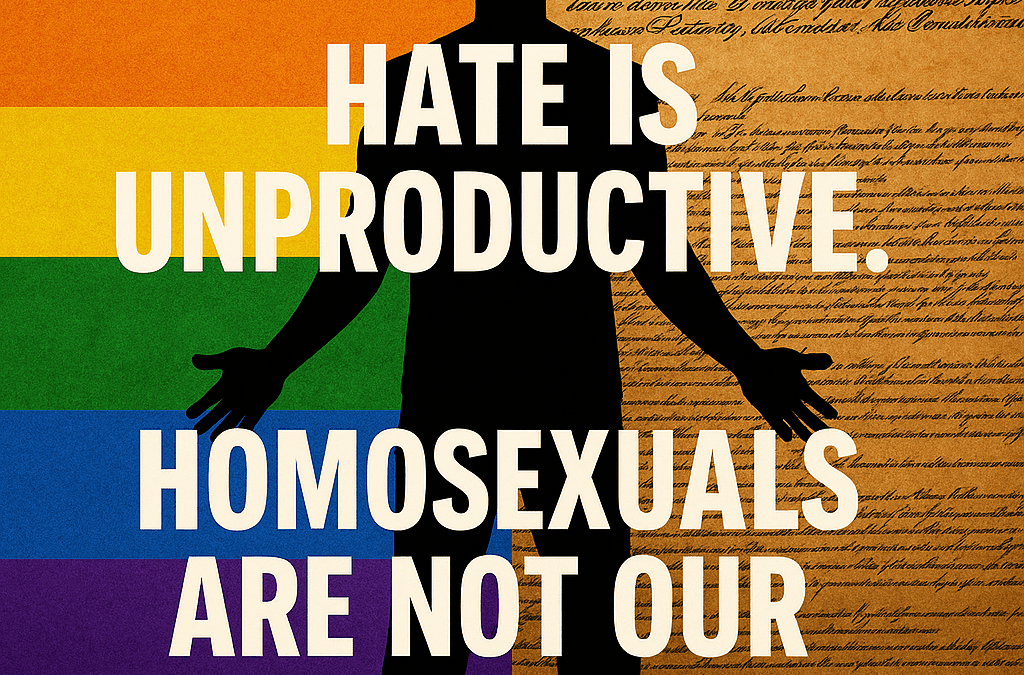
    I’m going to say this plain: libertarian gay marriage is about equal rights and equal rules. That’s why I support gay marriage under civil law, even when my personal beliefs don’t line up with every choice people make.

    I don’t run on hate. Hate is lazy, it’s corrosive, and it makes people easy to control. I’ve watched families split and friendships die over politics, religion, and sex. That’s not “principle.” That’s wasted life.

    I’ve got gay family members. I’ve got transgender kids. I’ve also got strong opinions about how I want to live in my own home. Those things can all be true at the same time.

    My thoughts from 2016

    Quick takeaways before we get into it

    • Libertarian gay marriage means the state treats consenting adults the same, even when I disagree with their choices.

    • Government shouldn’t be the marriage police, but as long as it is, equal protection has to mean something.

    • I don’t support “special victim” laws. I support one standard: assault is assault, fraud is fraud, theft is theft.

    • Health realities are real. Talking about HIV risk is not hate, it’s reality and prevention.

    [Internal link: insert relevant Disruptarian post about personal liberty and voluntary association]


    1) Gay people are not my enemy, and neither are you

    I’m using blunt language because life is blunt. But hear me clearly: gay people are not my enemy. My enemy is anybody who wants to use the state as a weapon, whether they’re waving a rainbow flag, a Bible, or a party banner.

    The whole point of libertarian gay marriage is that I don’t get to run your life, and you don’t get to run mine.

    That means you can build your home the way you want, and I can build mine the way I want. It also means we don’t smear each other as monsters just because we disagree.

    Disagreement is normal. Hate is optional.

    2) Liberty first, always, even when it’s uncomfortable

    I’ve been speaking my mind on hard topics for over two decades. And I’ve learned something the hard way: if your “principles” only apply to people you like, you don’t have principles. You have a club.

    So yes, I defend rights for people I disagree with. That is the backbone of libertarian gay marriage. Rights aren’t a reward for ideological obedience. Rights are boundaries around state power.

    If the government can deny marriage to one group today, it can deny it to another group tomorrow. It can deny it to you. It can deny it to your kids.

    That’s why I’m allergic to moral crusades that use laws as a blunt object.

    3) Prop 8 was government overreach, and I said so in 2008

    Back in 2008, California’s Proposition 8 lit up the country. People acted like the government was going to “save” marriage by writing one more line into the constitution.

    That’s not saving anything. That’s politicians playing house with your life.

    Prop 8 was an overreach because it used state power to block consenting adults from a civil contract, and to roll back gay marriage in California.

    For the record, here’s the official title and summary from California’s archived voter guide, not some meme screenshot: https://vigarchive.sos.ca.gov/2008/general/title-sum/prop8-title-sum.htm Voter Information Guide

    My words from 2008 on the topic of gay rights, long before gay marriage was even legal

    https://www.youtube.com/@xcannabiscom/search?query=gay%20marriage

    4) The 14th Amendment matters, because equal protection is the whole ball game

    The 14th Amendment isn’t a magic spell that solves every argument, but it does set a floor: the government can’t give one set of citizens “full rights” and hand another set “watered down rights” with a grin.

    You can read the text at the National Archives: https://www.archives.gov/milestone-documents/14th-amendment

    That’s why I keep coming back to the same sentence: a right is a right. Not a favor. Not a privilege. Not a permission slip.

    And yes, courts have applied that logic to marriage.

    5) Obergefell is the law of the land, and pretending otherwise is a trap

    In 2015, the Supreme Court held that states must license and recognize same-sex marriages under the Due Process and Equal Protection Clauses. That decision is Obergefell v. Hodges: https://www.justice.gov/sites/default/files/crt/legacy/2015/06/26/obergefellhodgesopinion.pdf Department of Justice

    You can argue about the reasoning. You can argue about the history. That’s America.

    But here’s the practical reality: same-sex marriage is a settled civil institution for millions of people. When politicians play games with that, they aren’t “defending tradition.” They are lighting other people’s lives on fire for applause.

    And if you’re the kind of official who wants to deny services because you “disagree,” then you’re telling the world you don’t believe in equal treatment. You believe in power.

    6) Even in 2025, people keep trying to relitigate it, and the Court said “no”

    If you want a quick update since the older debates, here’s one that matters.

    On November 10, 2025, the Supreme Court declined to take a case tied to Kim Davis, the former Kentucky clerk who refused to issue marriage licenses after Obergefell. The court didn’t use it as a vehicle to revisit same-sex marriage. They turned it away: https://apnews.com/article/supreme-court-same-sex-marriage-50eb4ad421911696e742d8c4fb4962fd AP News

    That doesn’t mean the political pressure disappears. It means the “overturn it tomorrow” crowd keeps running into the wall of legal reality.

    7) My line in the sand: equal rights, not special privileges

    Now we get to the part where everybody starts yelling.

    I support equal treatment. I do not support special legal status. I don’t want one rulebook for gays, one rulebook for straights, one rulebook for anybody.

    That’s where hate crime laws come in.

    If you punch somebody, you punched somebody. If you rob somebody, you robbed somebody. The act is the crime.

    When you add sentence enhancements based on identity categories, you’re not just punishing violence. You’re punishing thoughts and motives. And that’s where governments get addicted, because it gives prosecutors a new political lever.

    Plenty of people disagree with me on this, and I get why. Some argue hate crime enhancements reflect broader social harm or intimidation of a whole group.

    I’m still not sold.

    I want the same standard for everyone. That’s the cleanest version of equality I know.

    8) “I don’t approve” isn’t the same thing as hate

    I’m an ordained minister. That means I take vows seriously. It also means I’m not going to pretend my beliefs evaporate because someone on the internet demands it.

    Here’s the distinction that gets people twisted: I can disagree with choices and still defend rights. That’s the point of libertarian gay marriage.

    I don’t have to approve of every bedroom decision in America to say the government should not criminalize consensual adults, deny them contracts, or treat them like second-class citizens.

    Hate is wishing harm.

    Disagreement is just disagreement.

    And if we can’t tell the difference anymore, that’s a bigger cultural problem than who’s kissing who.

    [Video: Disruptarian Radio clip discussing “Hate Is Unproductive” | Note: Adds voice and context, and keeps readers on the page longer]

    Watch: https://www.youtube.com/watch?v=GkVeFOgmni8

    9) My personal history shaped my views, but it didn’t make me a hater

    When I was young, I saw some dark stuff. Abuse. Manipulation. Predatory behavior. It happens in every community, and it wrecks people.

    Some of what I saw involved people who were LGBTQ. That fact influenced my instinctive caution. I won’t lie about that.

    But I also refuse to paint a whole category of human beings with one brush. That’s not justice. That’s laziness.

    Even when I was homeless in Seattle, I lived with gay and bisexual friends. We watched each other’s backs. We shared food. We shared couches. We shared the kind of rough honesty you only learn when life strips you down to the studs.

    Those men and women were not caricatures. They were people.

    That’s why, when I talk about libertarian gay marriage, I’m not talking about slogans. I’m talking about real humans trying to build stability.

    10) The CDC data is real: talk about risk without turning it into hate

    Let’s talk about the health side without losing our minds.

    The CDC has been clear for years that gay and bisexual men, and other men who report male-to-male sexual contact, are disproportionately affected by HIV in the United States. That’s not an insult. That’s public health reality: https://www.cdc.gov/hiv/data-research/facts-stats/gay-bisexual-men.html CDC

    And in CDC’s 2025 update on diagnoses, the agency reports that a large share of diagnoses among men are attributed to male-to-male sexual contact: https://www.cdc.gov/hiv-data/nhss/hiv-diagnoses-deaths-and-prevalence-2025.html CDC

    So what do I do with that information?

    I don’t use it to shame people. I use it to push stability.

    If two adults love each other and want to build a life, I’m going to encourage commitment, monogamy if that’s their thing, routine testing, and getting educated about prevention. I’m not your doctor. I’m just not interested in pretending risk doesn’t exist.

    Talking about risk is not hate. It’s honesty.

    11) Marriage is a stabilizer, and stability is underrated

    This is where my “don’t live like I do” crowd gets surprised. I’m still saying gay marriage should be legal.

    I’m pro marriage. Not because I worship the state’s paperwork, but because stable commitments make people less desperate and more grounded.

    That’s true for straight couples.

    That’s true for gay couples. Gay marriage can be a stabilizer too.

    And yes, it’s true even when I disagree with some choices that surround modern sexuality.

    Libertarian gay marriage isn’t me “endorsing a lifestyle.” It’s me saying: if you’re going to build a household, build it strong. Stop living like everything is temporary. Temporary people get temporary outcomes.

    What I’d change if the state got out of marriage entirely

    If you want the pure libertarian version, here it is: the state shouldn’t be in marriage at all. It should recognize contracts and child custody obligations, and then stay out of the ceremony.

    Let churches, synagogues, mosques, private clubs, and families do their thing. Let people choose their communities.

    If the state is going to issue licenses and attach benefits, then equal access is the only non-corrupt option. That’s libertarian gay marriage in the real world.

    [Internal link: insert relevant Disruptarian post about limiting government power and civil liberties]

    “Victim culture” is what actually burns me

    What really burns me isn’t sexual orientation. It’s the victim mindset that’s become a currency.

    I’ve had people lie about me, slander me, and try to ruin my reputation because I wouldn’t recite their script. They write themselves as the hero in an oppression fantasy and cast anyone who disagrees as the villain.

    Meanwhile, I’ve never assaulted anyone. I’ve never used my beliefs to deny someone a job, a place to live, or a chance at happiness.

    I’m not trying to control you.

    I’m trying to keep the state from controlling all of us.

    That’s why I keep coming back to libertarian gay marriage: rights for people I disagree with is the price of my own freedom.

    The Respect for Marriage Act is another backstop people should understand

    A lot of folks missed this in the noise, but it matters.

    In 2022, Congress passed the Respect for Marriage Act, which provides statutory recognition for marriages valid under state law and requires recognition of same-sex and interracial marriages across states. The official bill text and summary are on Congress.gov: https://www.congress.gov/bill/117th-congress/house-bill/8404 Congress.gov

    You can dislike Congress and still appreciate a backstop that makes it harder for politicians to yank the rug out overnight.

    Where I draw the line on gay marriage debates: no compelled speech, no forced celebration

    Here’s the deal. I can defend gay marriage as a civil right and still reject the idea that the government gets to force private citizens to mouth slogans they don’t believe.

    Freedom of association matters. Freedom of speech matters. If you can’t say “no,” then your “yes” is meaningless.

    So when the fight shifts from “Can two adults get married?” to “Will you be punished if you won’t celebrate it?” that’s where a lot of people lose their minds.

    My view is consistent with the same logic behind gay marriage itself: the state should not be in the business of coercing conscience.

    That means:

    • Government clerks do their job, because the job belongs to the public.

    • Churches decide their sacraments, because the church does not belong to the state.

    • Private citizens can disagree, because disagreement is not violence.

    If you want to persuade people that gay marriage is normal, you don’t do it with threats. You do it by being a decent neighbor.

    That’s not weakness. That’s a smarter kind of strength.

    [Image: A “Free Speech” sign held beside a marriage license, both slightly weathered | ALT: gay marriage rights and free speech can coexist]

    How I talk about this with my own family

    Because I’ve got people I love on different sides of this, I try to keep it simple.

    I tell my kids: your body is yours, your life is yours, and your choices have consequences. Don’t demand applause. Don’t demand hate. Be honest.

    I tell my gay relatives: I’m not your enemy. I won’t sabotage your rights. I’m not interested in humiliating you. I do expect the same respect back.

    And I tell the activists, on any side: stop trying to conscript the government into your personal moral battles. That road ends with somebody else’s boot on your neck.

    Practical boundaries that keep liberty alive

    Here’s the middle ground that actually works in real life:

    • Adults can marry who they want under civil law.

    • Religious institutions can define religious marriage how they want.

    • Private people can associate, or not associate, based on their values.

    • Violence and harassment get punished, period.

    • Nobody gets a special legal halo.

    That’s my libertarian gay marriage framework in five lines.

    [Image: Close-up of a marriage license on a worn wooden table beside a pocket Constitution | ALT: libertarian gay marriage is about equal protection under the law]

    FAQ: libertarian gay marriage, hate crime laws, and equal protection

    Do libertarians have to support gay marriage?

    No one “has to” support anything. But if you believe in limited government and equal rights, libertarian gay marriage is the consistent position for civil law.

    Isn’t supporting gay marriage the same as approving of it?

    Not even close. Civil rights aren’t the same thing as moral approval. You can disagree and still defend equal treatment.

    Are hate crime laws unconstitutional?

    Courts have upheld various hate crime laws, so I’m not making a courtroom prediction. I’m making a liberty argument: punishing identical acts differently based on identity is a dangerous habit for the state.

    Why mention HIV at all?

    Because reality exists. The CDC’s own data shows disproportionate impact among gay and bisexual men, and prevention starts with honesty. CDC+1

    Will you officiate a same-sex wedding?

    Yes. If you want a civil ceremony, I’ll do it. No charge. I’ve offered that to people in my own family, and I’m not backing away from it.

    [Image: Two sets of hands exchanging rings in a simple courthouse ceremony | ALT: libertarian gay marriage ceremony focused on commitment, not politics]

    My closing thought, because I’m not here to babysit anybody’s feelings

    Hate is poison. It destroys lives, families, and freedom.

    But disagreement isn’t hate. Criticism isn’t violence. Saying “I don’t support your choices” doesn’t mean “I want to harm you.”

    I believe in liberty. That means protecting the rights of people I don’t agree with. That means standing up for fairness even when it’s uncomfortable.

    So if you’re gay, straight, bi, trans, or something else entirely, live your life. Just don’t lie about mine.

    If you want to get married, hit me up. If it’s a gay marriage ceremony, I’ll still do your wedding. No charge.

    Sources:

    Spun Web Technology SMART SEO

    Spun Web Technology SMART SEO

  • Puberty Blockers: 17 Hard Questions Parents Need to Ask

    Puberty Blockers: 17 Hard Questions Parents Need to Ask

    Disruptarian featured image for Puberty Blockers: 17 Hard Questions Parents Need to Ask

    Verified at: 2026-06-21T03:46:45

    Puberty Blockers: 17 Hard Questions Parents Need to Ask is the kind of subject that fits the Disruptarian lane because it sits where independent media, culture, music, and political commentary collide.

    The source description frames it this way: A Rumble-focused parent breakdown of puberty blockers, teen gender dysphoria, co-parenting pressure, medical risk, and the questions families should be allowed to ask before life-changing decisions. Ryan Thompson argues for caution, evidence, and parental rights instead of ideological panic. Original source video: https://www.youtube.com/watch?v=eVwyL4R5uBE Disruptarian: https://www.disruptarian.com

    The useful question is not only what happened, but why the story matters to people who distrust scripted narratives, recycled outrage, and corporate-approved commentary.

    A Disruptarian reading starts with individual agency. The listener is not asked to accept a packaged conclusion. The point is to pull the claim apart, compare incentives, and look for the pressure points that legacy media often skips.

    That approach matters for libertarian radio commentary because the audience is usually looking for more than a headline. They want context, motive, contradiction, and a practical sense of how public stories become private consequences.

    The cultural layer is just as important. Disruptarian music and reggae punk energy are not decorations around the message. They give the work its rhythm: skeptical, confrontational, and rooted in the idea that speech should stay alive even when institutions prefer silence.

    For search readers arriving cold, the primary source is included below either as an embed or as a direct source link. Start there if you want the full tone, timing, and argument. The written analysis expands the title and description into a searchable article that can stand on its own.

    The strongest SEO value here is clarity. The article keeps the title language visible, uses descriptive headings, and connects the topic to Disruptarian Radio, independent media, libertarian commentary, political culture, and original music without stuffing the page with empty repetition.

    The larger takeaway is simple: independent commentary survives by documenting what was said, preserving the source, and adding a point of view that does not depend on permission from gatekeepers.

    That is why this post exists as part of the static Disruptarian archive. The video remains embedded, the title and description remain traceable, and the surrounding article gives search engines and readers enough context to understand why the episode belongs in the broader Disruptarian catalog.

    The title itself carries the first keyword signal, but a durable post needs more than a copied headline. It needs a clear H1, a concise meta description, a featured image with descriptive alt text, and enough editorial framing for readers to know why the video is part of this archive.

    From an independent media perspective, the value is in keeping the primary source visible. Embedding the video prevents the article from becoming detached commentary. Readers can compare the written interpretation against the actual recording and decide whether the argument holds up.

    The libertarian angle is not automatic partisanship. It is a suspicion of concentrated power, public manipulation, and narratives that ask citizens to outsource judgment. That suspicion applies to government, platforms, corporations, activist institutions, and media brands alike.

    Disruptarian Radio also treats culture as evidence. Music, political language, online mobs, censorship fights, moral panics, and personal stories all reveal where pressure is being applied. That is why a radio episode can be more than entertainment; it can become a record of a moment.

    For listeners who follow DJ Disruptarian, the same pattern shows up in the music catalog: reggae rhythm, punk edge, spiritual critique, and anti-authoritarian instinct. The written post keeps that identity attached to the video instead of letting it disappear into a platform feed.

    Good SEO on a page like this should help people find the conversation without flattening the voice. The article uses natural phrases such as Disruptarian Radio, independent media, libertarian podcast, political commentary, original music, and disruptive conversations only where they make sense.

    The featured image should follow the Disruptarian editorial-collage style: torn paper, smoke, halftone grit, dirty cream paper, black and oxblood pressure, muted gold accents, and symbolic props tied to the subject rather than generic filler. Its alt text names the subject so search engines and screen readers get useful context.

    The article also keeps a stable URL under the static blog. That matters because feeds move, platforms change embeds, and social links decay. A static post gives the episode a second home that can be indexed, backed up, linked, and reviewed later.

    The final point is documentation. When a channel publishes a new video, the title and description are often the only structured metadata available. Turning that metadata into a post creates a stronger archive without pretending to replace the original recording.

    This is the practical Disruptarian method: preserve the video, state the source, add commentary, keep the searchable terms honest, and let the reader move between the embedded media and the written analysis without friction.

    This additional context keeps the post useful for readers who arrive from search rather than from the original channel. It explains the source, preserves the embed, and connects the subject back to the larger Disruptarian archive.

    This additional context keeps the post useful for readers who arrive from search rather than from the original channel. It explains the source, preserves the embed, and connects the subject back to the larger Disruptarian archive.

    This additional context keeps the post useful for readers who arrive from search rather than from the original channel. It explains the source, preserves the embed, and connects the subject back to the larger Disruptarian archive.

    This additional context keeps the post useful for readers who arrive from search rather than from the original channel. It explains the source, preserves the embed, and connects the subject back to the larger Disruptarian archive.


    The shortlink was copied to your clipboard

    X
    f
    r

    Related Reading

    Similar posts


    Disruptarian Blog

    2026-06-21

    Disruptarian Blog

    Disruptarian commentary on Trans Kids, Puberty Blockers and Parental Rights: A Dad Talks Honestly with embedded source video, independent media context, and libertarian radio analysis.

  • Puberty Blockers: 17 Hard Questions Parents Should Ask Before a Teen Medical Transition

    I’m going to treat puberty blockers like what they actually are.

    Not a team jersey. Not a purity test. Not a hashtag. Not a magic fix.

    They’re a medical intervention aimed at changing a kid’s developmental path. If you’re a parent, that alone should trigger your inner skeptic. Not because you hate anybody, but because you love your kid enough to slow down and verify.

    This article is based on a video where a dad is trying to get through to his ex-wife about their transitioning teen. It’s messy. It’s emotional. It’s real life. The video: https://youtu.be/j3vHdwKmWsk

    And here’s my promise up front: I’m not doing meme-statistics. I’m not doing “the science is settled.” I’m doing questions, evidence, and parental survival.


    The real story here is co-parenting under ideological pressure

    If you’ve been through divorce, you already know the truth.

    You can be dealing with the same child, the same household history, the same mental health landmines, and still live in totally different realities.

    In the video, the father feels stonewalled. He thinks the mom is listening to “gender affirming” professionals who won’t seriously challenge the kid’s story. The mom frames the father’s concern as “badgering,” and frames support and affirmation as the path to improved well-being.

    That dynamic shows up in my own writing too.

    In a Disruptarian post published December 7, 2025, a father describes watching family conflict collide with gender ideology, and he quotes a similar kind of text exchange: the dad wants involvement with the therapist, the co-parent pushes back, and the kid becomes the center of a power struggle. Disruptarian

    That’s why this isn’t just about puberty blockers.

    It’s also about:

    • who gets to decide,

    • what “support” even means,

    • and whether your family is being guided by careful medicine or by cultural momentum.

    If you’re living it, you don’t need a lecture. You need a playbook.


    First, a reality check about viral suicide claims

    A lot of people use suicide like emotional blackmail.

    They’ll tell you: “If you don’t affirm and medically transition, your kid will die.”

    Then the other side fires back with: “If you do transition, your kid will die later.”

    Both extremes are designed to shut your brain off.

    One study that gets cited constantly is the Swedish cohort study (Dhejne et al., 2011) that followed people who had sex reassignment surgery and legal sex change in Sweden between 1973 and 2003.

    Here’s what it actually found, without the internet fan-fiction:

    • The cohort included 324 people. PMC

    • Compared with matched controls, the sex-reassigned group had higher risks for mortality and suicidal behavior, and the authors said sex reassignment may alleviate dysphoria but “may not suffice” as treatment by itself, pointing to the need for improved psychiatric and medical follow-up. PubMed+1

    That does not equal: “Your teen has a 47% chance of suicide by 18.”

    That’s not how hazard ratios work, and it’s not what this paper studied. It’s an adult surgical cohort across decades, in a specific country, during eras with very different clinical practice and social stigma.

    But it does support one parent-relevant truth that nobody should ignore:

    If someone is struggling enough to pursue major medical steps, mental health support has to remain central long after the medical event. PubMed+1

    That’s not ideology. That’s grown-up medicine.

    [Image: A parent highlighting a printed study next to a notebook titled “Questions” | ALT: parents reviewing puberty blockers research and long term outcomes]


    Why countries disagree, and why you should notice

    If you’re confused, that’s normal. Institutions are sending mixed signals.

    The Endocrine Society guideline (2017) recommends puberty suppression for adolescents who have entered puberty (Tanner stage 2), and it discusses multidisciplinary assessment and informed consent capacity, noting most adolescents have that capacity by age 16. OUP Academic+1

    Meanwhile, in the UK the NHS stopped routine prescribing of puberty blockers for children in gender identity services in March 2024, moving toward research-only access, and the medical debate there has been explicitly tied to the evidence base and safety questions. BMJ+1

    So when someone tells you “every reputable country agrees,” they’re bluffing.

    What you actually have is a messy landscape:

    • Some authorities lean toward access with safeguards.

    • Others lean toward restriction pending better evidence.

    That alone should push parents to ask better questions, not fewer.


    Trans identity decline since 2022: what’s real, what’s noise

    You asked for “trans identity decline since 2022.”

    Here’s my honest take: there are competing claims, and you should treat this topic like a minefield.

    On one side, you’ve got analyses claiming a drop in trans identification among some young cohorts, often referencing the Cooperative Election Study (CES) and other surveys. The CES is a large academic survey run through Tufts, with published methodology and weighting. Tisch College+1

    On the other side, you’ve got UCLA’s Williams Institute using federal datasets (BRFSS and YRBS) to estimate the trans population and reporting that youth identification is higher in 2025 than it was in 2022. Their June 2022 report estimated 1.4% of youth ages 13 to 17 identify as transgender. Williams Institute
    Their August 2025 update estimated 3.3% of youth ages 13 to 17 identify as transgender, and about 2.7% of ages 18 to 24 identify as transgender. Williams Institute+1

    So what does a parent do with that?

    You don’t turn it into a victory lap.
    You treat it as proof that:

    • survey results can vary by method, wording, and willingness to disclose,

    • the social environment is volatile,

    • and your kid is growing up inside a storm of signals.

    In the Disruptarian co-parenting story I mentioned earlier, the father claims “studies show” cooling off since 2022 in the middle of a late-night text war. Disruptarian
    That’s exactly how this stuff spreads: somebody sees a chart, then it becomes gospel, then it becomes ammo.

    I’d rather you be slower and more accurate than fast and loud.


    Where Jordan Peterson fits, whether you like him or not

    A lot of parents don’t find Jordan Peterson because they’re looking for politics.

    They find him because they feel bullied by language rules, school policies, or “affirmation” demands that don’t allow honest questions.

    Two Peterson episodes that line up with this article’s themes:

    • “Trans: When Ideology Meets Reality” (with Helen Joyce) on The Jordan B. Peterson Podcast. Apple Podcasts

    • “Parenting and the Narcissists of Compassion” (with Stephanie Davies-Arai), also on his podcast, aimed right at parenting and the pitfalls of compassion fused with ideology. Apple Podcasts

    You can agree or disagree with his framing. Fine.

    But the parenting takeaway is simple: if an institution demands you repeat metaphysical claims as a condition of being considered “good,” you should get your wallet and your kid out of that room.

    Support is not the same thing as compelled belief.


    Puberty blockers: 17 brutal questions parents should ask

    I’m going to expand these because a one-line list is worthless when you’re actually living it.

    Print this section. Bring it to appointments. Use it as a script when your emotions are running hot.

    1) What exactly is the diagnosis, and who made it?

    Not “my kid says.” Not “a counselor on Zoom agreed in one session.” A real diagnostic process.

    Ask:

    • what criteria were used,

    • what was ruled out,

    • and what the clinician is uncertain about.

    Uncertainty isn’t evil. It’s honest.

    2) When did distress start, and what changed around that time?

    Timeline matters.

    Was there:

    • a school shift,

    • a friend group shift,

    • trauma,

    • social media immersion,

    • family breakup,

    • bullying,

    • a sudden change in depression or anxiety?

    A kid can be sincere and still be wrong about the cause of their pain.

    3) What comorbidities exist, and are we treating them directly?

    Depression. Anxiety. OCD. Eating disorders. Trauma. Autism traits. ADHD.

    If your clinic treats everything as gender-first, that’s a red flag. It can become diagnostic tunnel vision, where everything gets interpreted as proof of the same conclusion.

    4) What does “gender-affirming therapy” mean in this clinic?

    This is a trap word.

    For some therapists, “affirming” means:

    • reduce shame,

    • explore feelings,

    • stabilize mental health,

    • keep the kid safe.

    For others, it means:

    • never challenge the identity narrative,

    • treat questioning as harm,

    • fast-track social and medical steps.

    Ask them to define it, in writing if possible.

    5) Are puberty blockers being described as “fully reversible”?

    Don’t accept slogans.

    Ask the clinician to separate:

    • what is known,

    • what is uncertain,

    • what is assumed,

    • what is based on other uses of these drugs.

    You’re not being difficult. You’re being a parent.

    6) What are the monitoring protocols?

    If someone can’t tell you how they monitor:

    • growth and development,

    • bone health,

    • overall health markers,

    • and mental health outcomes over time,

    then they’re not running a serious medical program.

    7) What are the short-term goals, and what are the long-term goals?

    Short-term goals might be relief of distress, improved functioning, better sleep.

    Long-term goals should include:

    • stable mental health,

    • preserved future options where possible,

    • strong family connection,

    • the ability to thrive as an adult.

    If all goals are framed as “identity validation,” you’re not hearing a medical plan. You’re hearing a worldview.

    8) What does the evidence base actually look like for this age group?

    Ask for primary sources.

    Then ask a follow-up:
    What’s the quality of evidence?

    Because the UK and the US clearly interpret the evidence landscape differently, and policy has shifted accordingly. BMJ+2GOV.UK+2

    9) What does “informed consent” mean for a minor?

    “Informed consent” gets used like a spell.

    In the Endocrine Society guideline, there’s discussion of multidisciplinary confirmation and mental capacity for consent, noting most adolescents have capacity by age 16, but this is still clinically and ethically contested in practice. OUP Academic+1

    Ask:

    • how capacity is assessed,

    • what happens if depression or anxiety is severe,

    • whether the kid can articulate tradeoffs in their own words.

    10) What are the off-ramps?

    If you start any pathway, what are the criteria to pause or stop?

    I want concrete answers like:

    • “If X happens, we reassess.”

    • “If mood worsens, we pause.”

    • “If family dynamics destabilize, we slow down.”

    If there are no off-ramps, you’re on a conveyor belt.

    11) Are we confusing social support with medical escalation?

    You can support your kid emotionally without rushing medical steps.

    This is where families blow up.
    One parent thinks slowing down equals rejection.
    The other thinks speeding up equals harm.

    Both are trying to protect the kid, just with different fears.

    12) How will fertility and future adult outcomes be discussed?

    Not avoided. Not dismissed as “irrelevant.”

    A teen’s future self is real, even if their current self can’t picture it.

    13) What happens if distress spikes while we wait?

    You need an actual safety plan.

    If your kid is expressing self-harm or suicidal ideation, that’s not a debate club moment. Get professional support immediately.

    In the US, 988 exists. Elsewhere, use your local crisis line.

    14) What happens if distress spikes after intervention?

    Same question, different direction.

    A clinic that refuses to discuss regret, uncertainty, or complexity is not doing medicine. It’s doing dogma.

    15) Who else is influencing this child right now?

    Peers. Online communities. Teachers. Counselors. Activists. Algorithms.

    This isn’t “social contagion” as a guaranteed explanation.

    It’s simply admitting that teens are influenced by their environment. That’s not controversial unless you’re trying to sell a simple story.

    16) What outcomes are we tracking, and how often?

    Track reality like an adult:

    • sleep,

    • school performance,

    • anxiety,

    • depression,

    • social connection,

    • family functioning,

    • self-harm risk.

    If you’re not tracking, you’re guessing.

    17) Who benefits if we rush?

    Follow incentives.

    Some people get paid.
    Some people get status.
    Some people get political wins.

    Your kid gets one body, one brain, one shot at adulthood.

    That’s why puberty blockers demand brutal questions.

    [Video: Short explainer on how to ask clinicians about evidence quality and uncertainty | Note: Helps parents stay calm and specific in appointments]


    How to talk to your co-parent without turning your kid into a hostage

    If you’re co-parenting this, here’s the hard truth.

    Your child can survive disagreement.
    They may not survive being turned into a messenger or a weapon.

    In that Disruptarian father story, the text exchange shows exactly how quickly pain turns into accusations, and how the kid’s therapist becomes a control point in the conflict. Disruptarian

    So here’s a framework I use.

    The “three sentence” rule

    When you need to communicate about puberty blockers, do it in three sentences:

    1. What decision is pending.

    2. What information you need.

    3. A deadline and a next step.

    Example:
    “I understand you’re considering puberty blockers. I need the clinician’s written plan, monitoring protocol, and consent paperwork. Please send it by Friday so we can both review it before the next appointment.”

    No extra rage. No history dump. No courtroom speech.

    The “neutral meeting” move

    Stop trying to convince your ex via text walls.

    Ask for:

    • a joint appointment with the clinician,

    • or a neutral mediator session,

    • or a family therapist session focused on communication.

    If they refuse everything, document it. Calmly.

    The “support statement” that lowers the temperature

    Say this out loud, and mean it:
    “I love our kid. I’m not trying to shame them. I’m trying to make sure we don’t rush into something without a full map of risks and alternatives.”

    You’d be shocked how much conflict is fueled by the assumption that questioning equals hatred.


    How to vet a clinic without getting labeled a monster

    Some clinics do careful, multidisciplinary work.
    Some clinics are basically a pipeline.

    Here are green flags and red flags.

    Green flags

    • They welcome questions.

    • They explain uncertainty without anger.

    • They assess mental health broadly.

    • They have clear monitoring protocols.

    • They respect family dynamics and try to stabilize the home.

    Red flags

    • They tell you “the science is settled” and shame you for asking.

    • They refuse to discuss long-term follow-up.

    • They treat comorbidities as irrelevant.

    • They frame any delay as “violence.”

    • They speak like activists instead of clinicians.

    If you need proof that activism and policy get mixed into this, look at how legislation and rhetoric show up in media and commentary. Even in my own Disruptarian podcast write-up on gender affirming care legislation, you can see how quickly the debate turns into a collision of evidence claims, moral language, and government action. Disruptarian


    What “support” should look like, even if you slow down medically

    Let me be blunt: cruelty is evil, and it’s also stupid strategy.

    If your kid feels mocked or abandoned, you lose influence. You lose trust. You lose connection.

    Support that doesn’t require you to surrender your brain looks like:

    • staying present,

    • asking how they’re doing,

    • working on sleep, routines, school stress,

    • treating depression and anxiety seriously,

    • reducing household chaos,

    • and refusing to turn every dinner into a debate about identity metaphysics.

    You can love your kid and still treat puberty blockers as a decision that deserves real scrutiny.

    Both things can be true.


    A parent’s “evidence map” in plain English

    Here’s how I mentally file this issue.

    1) Long-term outcomes are complicated

    The Swedish cohort shows elevated risks compared to the general population in an adult surgical cohort, and it explicitly points to the need for better psychiatric and medical care post-transition. PubMed+1

    That’s not a weapon. It’s a warning: mental health support can’t be treated as optional.

    2) Clinical guidelines exist, but they are not the same as certainty

    The Endocrine Society guideline outlines a structured approach and criteria, but it’s still a guideline, not a guarantee of outcomes for every kid. OUP Academic+1

    3) Policy divergence signals uncertainty

    UK policy shifts and restrictions highlight that evidence interpretation differs across institutions and countries. BMJ+1

    4) Population trend claims are contested

    Williams Institute estimates show increases from 2022 to 2025 in youth identification, while other analyses argue for declines in certain cohorts depending on survey and weighting. Williams Institute+2Williams Institute+2

    So the parent stance that makes sense to me is:

    • slow down,

    • stay humane,

    • refuse ideological coercion,

    • and demand long-term thinking.


    FAQ for parents who feel like they’re going insane

    “Are puberty blockers totally reversible?”

    That’s a question for your clinician, but you should demand specifics about what reversibility means in their documentation, plus monitoring and uncertainty.

    “If I slow down, am I harming my kid?”

    Not automatically. Slowing down while you stabilize mental health and home life can be protective. The harm comes from chaos, cruelty, and isolation.

    “If I move forward, am I harming my kid?”

    Not automatically either. But you should treat it as serious medicine with serious tradeoffs, not as a social ritual.

    “What if my ex says the kid’s mental health improved dramatically after affirmation?”

    That can happen in the short term. Even the Swedish cohort paper’s framing acknowledges relief of dysphoria can occur while still calling for long-term psychiatric and medical care. PubMed+1

    Short-term relief is not the same thing as long-term outcome certainty.

    “How do I keep my relationship with my kid?”

    Show up. Be steady. Don’t mock. Don’t disappear. Don’t turn every interaction into a courtroom.

    If you want influence, you have to be safe to talk to.


    Two internal reads that connect directly to this topic

    If you want to see how this plays out in real families and real politics, here are two related Disruptarian pieces that overlap with this article:


    Where I land

    I don’t trust centralized authority to raise your kid. Not the state, not the school, not the algorithm, not a medical bureaucracy that punishes questions.

    And I don’t trust internet mobs to handle nuance either.

    So I land here:

    • love your kid fiercely,

    • ask brutal questions about puberty blockers,

    • keep mental health central,

    • and slow the process down enough that truth can catch up.

    That’s not hate. That’s parenting.

    Spun Web Technology SMART SEO

    Spun Web Technology SMART SEO

  • Parental Alienation Timeline: 12 Warning Signs Before Divorce

    Parental Alienation Timeline: 12 Warning Signs Before Divorce

    Disruptarian featured image for Parental Alienation Timeline: 12 Warning Signs Before Divorce

    Verified at: 2026-06-21T03:54:41

    Parental Alienation Timeline: 12 Warning Signs Before Divorce is the kind of subject that fits the Disruptarian lane because it sits where independent media, culture, music, and political commentary collide.

    The source description frames it this way: A long-form Disruptarian breakdown of parental alienation, reputation damage, family pressure, and the warning signs that can appear years before divorce reaches court. Ryan Thompson frames the topic through custody conflict, truth, boundaries, and what children lose when adults weaponize stories. Original source video: https://www.youtube.com/watch?v=_9ZwxZHPysI Disruptarian: https://www.disruptarian.com

    The useful question is not only what happened, but why the story matters to people who distrust scripted narratives, recycled outrage, and corporate-approved commentary.

    A Disruptarian reading starts with individual agency. The listener is not asked to accept a packaged conclusion. The point is to pull the claim apart, compare incentives, and look for the pressure points that legacy media often skips.

    That approach matters for libertarian radio commentary because the audience is usually looking for more than a headline. They want context, motive, contradiction, and a practical sense of how public stories become private consequences.

    The cultural layer is just as important. Disruptarian music and reggae punk energy are not decorations around the message. They give the work its rhythm: skeptical, confrontational, and rooted in the idea that speech should stay alive even when institutions prefer silence.

    For search readers arriving cold, the primary source is included below either as an embed or as a direct source link. Start there if you want the full tone, timing, and argument. The written analysis expands the title and description into a searchable article that can stand on its own.

    The strongest SEO value here is clarity. The article keeps the title language visible, uses descriptive headings, and connects the topic to Disruptarian Radio, independent media, libertarian commentary, political culture, and original music without stuffing the page with empty repetition.

    The larger takeaway is simple: independent commentary survives by documenting what was said, preserving the source, and adding a point of view that does not depend on permission from gatekeepers.

    That is why this post exists as part of the static Disruptarian archive. The video remains embedded, the title and description remain traceable, and the surrounding article gives search engines and readers enough context to understand why the episode belongs in the broader Disruptarian catalog.

    The title itself carries the first keyword signal, but a durable post needs more than a copied headline. It needs a clear H1, a concise meta description, a featured image with descriptive alt text, and enough editorial framing for readers to know why the video is part of this archive.

    From an independent media perspective, the value is in keeping the primary source visible. Embedding the video prevents the article from becoming detached commentary. Readers can compare the written interpretation against the actual recording and decide whether the argument holds up.

    The libertarian angle is not automatic partisanship. It is a suspicion of concentrated power, public manipulation, and narratives that ask citizens to outsource judgment. That suspicion applies to government, platforms, corporations, activist institutions, and media brands alike.

    Disruptarian Radio also treats culture as evidence. Music, political language, online mobs, censorship fights, moral panics, and personal stories all reveal where pressure is being applied. That is why a radio episode can be more than entertainment; it can become a record of a moment.

    For listeners who follow DJ Disruptarian, the same pattern shows up in the music catalog: reggae rhythm, punk edge, spiritual critique, and anti-authoritarian instinct. The written post keeps that identity attached to the video instead of letting it disappear into a platform feed.

    Good SEO on a page like this should help people find the conversation without flattening the voice. The article uses natural phrases such as Disruptarian Radio, independent media, libertarian podcast, political commentary, original music, and disruptive conversations only where they make sense.

    The featured image should follow the Disruptarian editorial-collage style: torn paper, smoke, halftone grit, dirty cream paper, black and oxblood pressure, muted gold accents, and symbolic props tied to the subject rather than generic filler. Its alt text names the subject so search engines and screen readers get useful context.

    The article also keeps a stable URL under the static blog. That matters because feeds move, platforms change embeds, and social links decay. A static post gives the episode a second home that can be indexed, backed up, linked, and reviewed later.

    The final point is documentation. When a channel publishes a new video, the title and description are often the only structured metadata available. Turning that metadata into a post creates a stronger archive without pretending to replace the original recording.

    This is the practical Disruptarian method: preserve the video, state the source, add commentary, keep the searchable terms honest, and let the reader move between the embedded media and the written analysis without friction.

    This additional context keeps the post useful for readers who arrive from search rather than from the original channel. It explains the source, preserves the embed, and connects the subject back to the larger Disruptarian archive.

    This additional context keeps the post useful for readers who arrive from search rather than from the original channel. It explains the source, preserves the embed, and connects the subject back to the larger Disruptarian archive.

    This additional context keeps the post useful for readers who arrive from search rather than from the original channel. It explains the source, preserves the embed, and connects the subject back to the larger Disruptarian archive.

    This additional context keeps the post useful for readers who arrive from search rather than from the original channel. It explains the source, preserves the embed, and connects the subject back to the larger Disruptarian archive.


    The shortlink was copied to your clipboard

    X
    f
    r

    Related Reading

    Similar posts


    Disruptarian Blog

    2026-06-22

    Disruptarian Blog

    Disruptarian commentary on What Parental Alienation Really Looks Like with embedded source video, independent media context, and libertarian radio analysis.

  • Parental Alienation Timeline: 12 Brutal Warning Signs Years Before the Split

    Why I made this video, and why I’m writing this post

    I’m Ryan “Dickie” Thompson. The Rumble video this post is about is mine.

    I recorded it because I got tired of watching people act like parental alienation appears out of thin air the day you file paperwork. In my life, it didn’t. My parental alienation timeline started years before any divorce was final, and I can point to specific moments where the reputation destruction kicked in.

    If you’re living something similar, I’m not here to sell you a fantasy. I’m here to give you a framework, so you can document cleanly, speak plainly, and stay sane.

    Video link (Rumble):


    The core claim in my parental alienation timeline

    Here’s the spine of it.

    For years before the split, I was told some version of: “If you leave, I’ll turn the kids against you.” When a person says that once, you remember it. When they repeat it over and over, it stops being “emotional talk” and starts looking like intent.

    My parental alienation timeline is basically me saying: this did not start in court. It started in the relationship, then it spread into the social circle, then it landed on the kids.

    That’s the pattern.


    The early years, what I thought marriage was supposed to be

    I was married 18 years. I expected it to last. No cheating, no secret second life, just honesty and a long haul commitment.

    I’m not writing this to pretend I’m flawless. I’m writing it because a lot of guys get baited into defending their whole personality, when the real fight is about the kids and access.

    So yes, I had my mess. I had my blind spots. I also showed up, worked, built, provided, and I was present.

    Then the mask came off. That’s how it felt.


    The intimacy breakdown, and the moment it became a weapon

    In the video I talk about a stretch where we were distant, emotionally and physically. Weeks went by with basically nothing. Not just sex. Even basic closeness, heart-to-heart stuff.

    I told my wife I’d turned to porn at times because I felt isolated. I wasn’t proud of it, and I didn’t marry to live like that. I also was not out cheating. I was trying to find relief without detonating the family.

    And that’s where the parental alienation timeline starts to show its first shape: a private confession becomes a public label.

    Suddenly I’m not “a husband who’s struggling,” I’m “a porn addict.” That’s the kind of sticky story that spreads fast, because it’s easy for other people to repeat.


    Reputation destruction is not a theory, it’s a tactic

    I noticed something that felt unreal at first.

    We’d meet people. We’d make friends. And then, almost on schedule, those friends would flip on me. Condemnations. Side-eyes. Moral lectures. The tone changes like somebody handed them a script.

    Later, I found messages that made it look like I was being framed to others in a way that did not match reality. If you’ve been there, you know what I mean.

    Reputation destruction matters in a parental alienation timeline because it builds the “permission structure.” Once your circle thinks you’re dangerous or disgusting, it becomes easier to justify gatekeeping the kids from you.


    What parental alienation means, and why I keep it evidence-based

    People fight about the term “parental alienation,” and I get why. Sometimes it’s real manipulation. Sometimes it’s used to dismiss real abuse. Sometimes it’s both, because families are messy and courts are worse.

    There are medical-legal reviews that describe parental alienation as a pattern where one parent influences a child to reject the other parent without legitimate justification, especially in high-conflict situations. PMC

    That same literature also stresses the difference between alienation and estrangement (a child pulling away due to actual harm). PMC

    So here’s how I treat it in my parental alienation timeline: I log behaviors and events first. I don’t just slap a label on feelings. Dates, actions, consequences. That’s what survives scrutiny.


    My timeline markers, the ones I can point to

    I’m not going to rewrite the whole transcript word-for-word. That’s not useful, and it turns into a wall of pain nobody can navigate.

    But I can lay out the markers I gave in the video, because the structure is the point.

    Marker 1: March 2013, intimacy confrontation becomes a trigger

    That’s when I said the “porn because we’re disconnected” confession became an explosion instead of a conversation.

    Marker 2: May 2013, after my accident, the humiliation moment

    I describe being in a wheelchair, recovering, and getting attacked publicly, in front of family and the kids. That’s when I felt the relationship shift from partner to enemy.

    Marker 3: The social isolation phase

    Friends begin treating me like the villain, and I find what looks like behind-the-scenes framing.

    Marker 4: Threats tied to leaving

    In the video, I describe repeated threats: turn the kids against me, self-harm threats, and other emotional leverage.

    Marker 5: Holidays and contact squeeze

    Christmas becomes a pressure point. Gifts. Money. Access. Everything gets politicized.

    Marker 6: Kids verbalize “choose sides”

    When kids say they feel like they have to pick a team, that’s not normal co-parenting. That’s a red flag you log, calmly, with details.

    https://archive.org/details/@veracitylife


    Why the timeline beats the rant, every time

    Here’s the brutal truth: the system is built to ignore men who look unstable.

    You can be right, and if you look unhinged, you still lose.

    A parental alienation timeline forces discipline. It makes you log:

    • date and time

    • what happened

    • who was present

    • what proof exists (texts, call logs, receipts, school notes, therapy summaries)

    • what you did next

    That is not just “for court.” It’s for your own mind. It keeps you from spiraling, because you’re dealing with reality, not a fog of rage.


    Recording and documentation, do it legally

    In the video I mention dash cams and other recordings. I’m not telling you to go break laws.

    Recording rules vary by jurisdiction. If you’re documenting, document in ways your attorney can actually use. The goal is admissible, not dramatic.

    And a note that should be common sense but isn’t: do not provoke conflict so you can “capture content.” Your kids are not extras in a documentary. Protect them first.


    About the health claims I made in the video

    I said some things about male sexual release and health. Let me tighten that up here, like an adult.

    There are observational studies suggesting higher ejaculation frequency is associated with a lower risk of prostate cancer in some populations. PubMed+1

    That is not a guarantee, and it’s not a license to turn intimacy into a courtroom argument. It also is not medical advice. If you’re worried about prostate health, talk to a clinician.

    I’m leaving this in the post because honesty matters, and because it shows how everyday human needs can get weaponized when a marriage turns hostile.


    The part of my story I’m not repeating word-for-word

    In the transcript, there’s profanity and some ugly language around hot-button issues. I said some of it in anger. I’m not proud of that, and I’m not repeating slurs or degrading labels here.

    Here’s why: it doesn’t help my kids. It doesn’t help your case. It doesn’t help the reader.

    If you’re in a custody fight, you can believe whatever you believe, but you still need to speak like someone a judge would trust with a child’s future.

    That’s not “being fake.” That’s being strategic.


    Family court reality, without the made-up stats

    You’ll hear people toss out claims like “70% of cases go to the mother.” Sometimes it feels like that. The lived experience is real.

    But the cleanest way to talk about this publicly is with living arrangement data and custody trend research, not viral numbers.

    For example, national indicators show that in 2022, 22% of children lived with their mother only, while 5% lived with their father only. childstats.gov

    Also, research on shared physical custody shows it has increased over time in the U.S., more than doubling from earlier cohorts into 2010–2014 in one demographic study. Demographic Research

    Both things can be true: moms are more often the primary residential parent, and shared custody has grown.

    My point stays the same: the system incentivizes conflict and rewards whoever controls the narrative first. That’s why your parental alienation timeline matters.


    12 warning signs to log in your parental alienation timeline

    This is the section I want you to steal.

    1. Calls blocked, unanswered, or “they don’t want to talk” with no facilitation

    2. Gifts returned, withheld, or never delivered

    3. The other parent insists on being present for every call

    4. Kids start using adult phrases that don’t sound like them

    5. You’re blamed for “making mom sad” or “ruining the family”

    6. Your parenting history gets rewritten overnight

    7. Teachers, coaches, pastors suddenly get a one-sided “briefing”

    8. Friends flip on you fast, like a coordinated campaign

    9. Kids say they feel forced to pick sides

    10. Your boundaries trigger legal threats instantly

    11. Minor disagreements become “safety issues”

    12. You’re offered access only if you confess to a script you don’t believe

    Log each one with dates, and keep it boring. Boring is credible.

    [Image: A plain spreadsheet labeled “Parental Alienation Timeline” with columns for date, event, proof | ALT: parental alienation timeline spreadsheet format for custody documentation]


    The practical plan, what I’d do again, starting today

    If I could go back and coach my past self, I’d say this.

    Step 1: Stop debating the smear

    You cannot reason someone out of a story they’re using as a weapon.

    Correct the record once, calmly, with proof. Then stop feeding it.

    Step 2: Switch to written communication

    Text, email, parenting apps if possible. Not because you’re trying to “catch” somebody, but because your memory will fail under stress.

    Step 3: Make access requests clean and consistent

    “Can I call at 7 pm?”
    “I’m available Saturday 10 to 2.”
    No paragraphs. No accusations. No therapy sessions in the chat.

    Step 4: Document refusals the same way you document successes

    A parental alienation timeline is not just the horror show. It’s also your steady behavior. Show your pattern of stability.

    Step 5: Protect the kids from the war

    This is hard, because you’re bleeding emotionally.

    But don’t make your child the messenger. Don’t ask them to spy. Don’t ask them what mom said. Let your love be the constant they can trust.

    [Video: Short tutorial on building a custody documentation binder and timeline | Note: Gives a concrete next step after a heavy story]


    The poem section in the video, what I meant by it

    Near the end of the transcript there’s a repeated poetic segment about “broken fathers” and kids caught in the crossfire.  This is a song that I wrote called “The Ballad Of Broken Fathers”

    I’m not going to reprint that whole thing here. Two reasons: one, it’s a lot. Two, it turns this post into a gut-punch loop instead of a tool.

    What I meant was simple: parental alienation is not just an attack on the targeted parent, it’s an attack on the child’s right to love both parents.

    Even the clinical literature that discusses parental alienation focuses heavily on the potential harm to children when they’re pressured into rejecting a parent. PMC

    That’s the point. Not my pride. Not my ego. The kids.


    What I want lawmakers and normal people to understand

    I said in the video this is a call to people with influence.

    Here’s the clean version: kids do better when both fit parents can be present, and the state should not be in the business of rewarding sabotage.

    If you want fewer broken families, you don’t get there by funding more bureaucracy. You get there by discouraging gatekeeping, punishing interference, and making shared parenting the default when it’s safe.

    I’m liberty-minded, so I’ll say it bluntly: centralized systems do not “solve” family conflict. They monetize it.


    If this post hits close to home

    If you’re reading this because you’re in it right now, I’m sorry. I wouldn’t wish this on my worst enemy.

    But you still have a job to do.

    Build your parental alienation timeline. Keep your communication clean. Show up. Stay predictable. Love your kids without conditions.

    You don’t win by being louder. You win by being steadier.

    New Year, new perspective.  I just wanted to get this off my chest, after years of hearing the fake story as told by the other party.

    Spun Web Technology SMART SEO

    Spun Web Technology SMART SEO

  • Ethiopian Bible: 11 Hard Truths About Rasta, Zion, Babylon, and the Lemba

    I’m not writing this as an academic. I’m writing it as a guy who got tired of being told what to think, by people who were very sure they should be in charge.

    The Ethiopian Bible hit me like that. Not because it’s “exotic,” and not because I’m chasing some mystical flex. It hit me because it exposes a simple fact most Western Christians were trained to ignore: the Bible you grew up calling “the Bible” is a historical product. It got shaped, trimmed, organized, and standardized. That process was not always evil, but it was always political.

    Rastafari gave me language for the political side of religion. Ethiopia gave me receipts.

    Table of Contents

    • The Ethiopian Bible and the “closed box” lie

    • Ethiopian Bible quick map: what the 81 books do to your worldview

    • Canon is politics, and Babylon loves canon fights

    • Ethiopia is ancient Christianity, not a side quest

    • Geʽez manuscripts and the Garima Gospels

    • The Book of Enoch, Jude, and a rebellious Ethiopian Bible

    • A “cosmic Christ” that institutions can’t domesticate

    • Rastafari livity and the refusal to outsource conscience

    • Leaving Mormonism taught me to test priesthood claims

    • The Lemba tribe, DNA, and what science can and can’t prove

    • Tabot, Ark talk, and temple logic still alive

    • Jamaica, Abuna Yesehaq, and the bridge between Ethiopia and Rasta

    • How to read the Ethiopian Bible without turning it into cosplay


    Geʽez manuscript on parchment

    Geʽez manuscript on parchment

    1) The Ethiopian Bible and the “closed box” lie

    Most people I know were raised to treat scripture like a sealed container. Sixty six books, leather cover, ribbon marker, case closed. If you question the box, you’re “questioning God.”

    Nah. You’re questioning a publishing tradition.

    The Ethiopian Bible forces an honest question: when somebody says “the Bible,” which community’s Bible do they mean?

    And that question matters, because power loves “closed boxes.” If the box is sealed, the gatekeepers get to stand in front of it and charge you admission.

    2) Ethiopian Bible quick map: what the 81 books do to your worldview

    People hear “81 books” and immediately ask, “So what, it’s just extra content?”

    That question is the Western consumer brain talking. The Ethiopian Bible isn’t DLC. It’s inheritance.

    A wider Ethiopian Bible canon gives you a different spiritual vocabulary. You see more apocalyptic critique. You get more “princes of power” language. You get more warnings about corrupt rulers and crooked priests. You get more cosmic imagination, which is exactly what Babylon tries to flatten into dull compliance.

    It also changes how you read the New Testament. When the Ethiopian Bible keeps books like Enoch and Jubilees in the neighborhood, you start noticing how many New Testament ideas sound like they grew out of a bigger Second Temple world than your Sunday school ever admitted.

    And yes, for the record: the Ethiopian Bible absolutely includes Jesus. The debate is not “Is Ethiopia Christian?” The debate is why so many Western folks act like Christianity needs a European passport to be considered real.

    If you feel defensive reading that, I get it. I used to feel it too. Then I started asking myself who trained me to feel that way.

    3) Canon is politics, and Babylon loves canon fights

    I’m not here to start a holy war over who has the “real Bible.” I’m here to point out something simpler: canon decisions are always tied to authority.

    If a centralized institution can define the library, it can define the boundaries of “acceptable” spirituality. That’s not automatically sinister, but it is a power move. And Babylon loves power moves.

    Babylon, in Rasta language, is the whole system that trains you to obey first and think later. It’s the state, the corporate church, the credential cartel, the propaganda machine. It’s any structure that punishes conscience.

    A bigger Ethiopian Bible does something dangerous in a Babylon world. It widens the conversation. It adds prophetic heat. It forces you to admit there were other streams of early Jewish and Christian thought that didn’t survive as the mainstream Western default.

    Also, it humbles you. Because if God spoke to more than one tradition, then nobody gets to play landlord over the Spirit, not Rome, not Canterbury, not Salt Lake, not your favorite streaming preacher.

    4) Ethiopia is ancient Christianity, not a side quest

    People talk like Ethiopia “adopted” Christianity late, like it’s a branch office of Rome. That’s historically sloppy.

    Ethiopia is ancient Christianity, with its own deep story, its own fasting discipline, its own liturgy, its own saints, and its own continuity. It didn’t need Western permission slips.

    If you grew up in a modern megachurch, or in a tight controlled denomination, it can be hard to grasp this: the Christian world was never one centralized thing. It was a messy, spread out, multilingual movement. Ethiopia is not “extra,” it’s foundational.

    And that’s part of why the Ethiopian Bible matters. The Ethiopian Bible is attached to a living church that carried texts, liturgy, and theological memory through centuries when other regions were busy fighting over who gets to be boss.

    5) Geʽez manuscripts and the Garima Gospels

    A lot of Western Christians think “ancient manuscripts” means Egypt, Greece, Rome. Ethiopia belongs in that sentence too.

    Geʽez became Ethiopia’s classical liturgical language, and Ethiopia built a serious manuscript tradition around it. That matters, because manuscripts are receipts. They prove who was in the room early, who preserved what, and who didn’t.

    One of the most famous examples is the Garima Gospels. The point isn’t “my manuscripts are older than yours.” The point is that Ethiopia was never a footnote.

    So when somebody shrugs and says the Ethiopian Bible is “weird,” I hear the subtext: “If it didn’t come through Western channels, it doesn’t count.”

    That’s Babylon talk. Hard pass.

    6) The Book of Enoch, Jude, and a rebellious Ethiopian Bible

    Now we get to the fun part.

    The Ethiopian Bible preserves 1 Enoch in full. And even if you don’t treat it as canon, you should recognize its influence.

    Jude uses language that lines up with Enoch in a way scholars have argued about for a long time. So this is not random fan fiction. This is part of the Second Temple Jewish world that early Christians swam in.

    Enoch reads like moral protest. It confronts corrupt powers, cosmic rebellion, defilement of the earth, and the idea that God sees what the rulers hide. If you’ve ever looked around and thought, “The system is lying,” you will understand why Enoch lands hard.

    And yes, it also explains why institutions get nervous around apocalyptic texts. They don’t want average people hearing “judgment against corrupt rulers” and then looking up from the pew like, “Wait, you mean them too?”

    7) A “cosmic Christ” that institutions can’t domesticate

    One of the biggest lies in Western religion is the soft domesticated Jesus. The safe one. The one who never flips tables. The one who never threatens an empire. The one who exists mostly to keep you polite.

    The Ethiopian Bible tradition keeps a very different vibe alive: Christ as overwhelming. Radiant. Too big to be packaged.

    Now, I’m careful here. Some modern narrations get dramatic and slide into claims that go beyond what we can verify. I’m not doing that. I’m talking about the overall spiritual posture: majesty, holy fear, transformation, and union with God instead of a cheap “say the words, join the club” transaction.

    A Christ who is only “nice” is easy for Babylon to sponsor.

    A Christ who is sovereign and judging is hard to weaponize for empire. Harder to turn into a mascot for tax collectors and censors.

    This is where the Ethiopian Bible shakes people. The Ethiopian Bible reminds you that the gospel is not a therapy brand. It’s a claim about reality and authority.

    8) Rastafari livity and the refusal to outsource conscience

    I’ve said it before and I’ll say it again: Rastafari is not “weed and reggae.” It’s livity. It’s discipline. It’s an anti-Babylon stance lived out in daily choices.

    Rasta is also decentralized. No pope. No single council. That makes some people nervous. It makes me breathe easier.

    Because I’ve watched what centralized religious power does. It starts by telling you what to believe, and ends by telling you what you’re allowed to say. It’s the same control impulse in church clothes.

    Rasta forces reasoning. You have to test spirits. You have to live what you say. You can’t hide behind “my pastor said” when your life is a mess.

    If you want my personal story version, that old “What Rasta Means to Me ” video is still up. I was rougher around the edges then, but the core is the same.


    9) Leaving Mormonism taught me to test priesthood claims

    I was raised Mormon. Utah culture. The whole thing. I also know what it’s like to invest your whole identity in a story, then realize parts of that story don’t survive contact with evidence.

    That experience trained me to do something most institutions hate: ask for receipts.

    I’m not here to dunk on individuals. I’ve got friends and family in that world. But institutions that demand loyalty while discouraging investigation are a problem. Always.

    And this is where the Ethiopian Bible theme matters again. Once you see that the Ethiopian Bible story is bigger than one American restoration narrative, you stop letting gatekeepers threaten you with shame.

    You start reading wider, listening wider, and refusing to call comfort “truth.”

    10) The Lemba tribe, DNA, and what science can and can’t prove

    The Lemba story grabbed me because it sits at the intersection of oral tradition, migration, identity, and modern genetics.

    The basics: the Lemba are a southern African group with long held traditions of Middle Eastern or Jewish ancestry. Researchers tested those traditions using Y chromosome markers.

    Here’s my libertarian takeaway: DNA is a tool, not a priest. It can suggest population history. It cannot deliver a divine stamp of identity.

    Still, the Lemba tradition matters because it refuses the colonial script that says Africa is always a late arrival to sacred history, including the sacred history behind the Ethiopian Bible world.

    Also, it’s a warning against fake certainty. The Mormon world taught me that “certainty” can be manufactured. Science taught me that humility is part of truth.

    If you want more of my newer writing on priesthood, land, lineage, and the DNA debate, I’ve got a piece on Disruptarian that digs into those tensions:
    /blog/israel-place-people-priesthood-and-the-dna-debate-nobody-wants-to-finish/

    Lemba map Southern Africa

    11) Tabot, Ark talk, and temple logic still alive

    Western Christianity often treats the Old Testament like an opening act. Read it, quote it, then move on to “real” religion.

    Ethiopian Orthodoxy never fully did that.

    The tabot tradition keeps temple logic alive: sacred space, embodied worship, procession as theology, not performance. Whether you agree with every detail or not, you can still recognize what it preserves.

    And there’s a modern political edge here too. Colonial extraction didn’t only steal gold and land. It stole sacred objects, then pretended that was “education.”

    That’s Babylon. Every time.

    12) Jamaica, Abuna Yesehaq, and the bridge between Ethiopia and Rasta

    A lot of people assume Rastafari is anti-Christian by default. It’s more accurate to say it’s anti-colonial Christianity.

    There is a real historical bridge between Rasta communities and the Ethiopian Orthodox Church in Jamaica, and that matters because it shows Rasta people weren’t rejecting Christ. They were rejecting Babylon’s version of Christ.

    And yes, I know: there are multiple “mansions” in Rasta, and not everybody agrees on Haile Selassie’s divinity. That diversity is real. But the shared refusal is also real: we’re not handing our conscience to empire.

    If you want more of the cultural context, I also wrote about reggae as spiritual struggle and resistance:
    /blog/reggae-is-the-music-of-spiritual-struggle-la-croix-international/

    Video: Revealing the mysteries of a Lost Tribe, the Lemba and Rastafari | Note: This video connects the Lemba story to priesthood questions and Rasta identity.


    13) How to read the Ethiopian Bible without turning it into cosplay

    This section is for my people who get excited, then get weird.

    The Ethiopian Bible is not a costume. It’s not a vibe. It’s not a reason to play pretend priest on the internet. It’s a living canon in a living church.

    So here’s my simple rule set for approaching the Ethiopian Bible like an adult:

    1. Start with humility. You are a guest in somebody else’s house. Don’t act entitled.

    2. Separate “canon facts” from “internet myths.” Use the church’s canon list as your baseline, not TikTok lore.

    3. Read in layers. The Ethiopian Bible doesn’t replace the New Testament, it frames it in a wider library.

    4. Don’t confuse symbols with lab proof. The Lemba story is meaningful, but DNA does not certify holiness.

    5. Keep your anti-Babylon filter on. If somebody is selling you “secret knowledge” for clicks, that’s Babylon too.

    If you want a practical starting point, do this: read the Gospels, then read Jude, then read 1 Enoch, and pay attention to the moral target. Who is being judged? What kind of power gets condemned? What kind of holiness is demanded?

    That’s when the Ethiopian Bible starts making sense. The Ethiopian Bible is not asking you to win arguments. The Ethiopian Bible is asking you to stop serving corrupt systems with your silence.


    Where I land, still

    I’m not asking you to join a church. I’m not selling a label. I’m telling you what I had to learn the hard way.

    The Ethiopian Bible reminds me that scripture and tradition were never owned by the West.
    Rastafari reminds me that faith without liberation is usually somebody else’s religion.
    The Lemba story reminds me that identity is bigger than the categories colonial history tried to impose.

    And Babylon, whether it wears a government badge or a church collar, still hates the same thing: free minds.

    So if you read this and feel that itch, that holy discomfort, good. That’s your conscience waking up.

    Seek the Most High. Read wider. Test the spirits. Treat institutions like what they are: human tools that can help, but also can rot.

    Choose Zion over Babylon. Even when it costs you something.

    Sources

    Spun Web Technology SMART SEO

    Spun Web Technology SMART SEO

  • Political Suppression Through Federal Power: Lawfare, January 6, and Platform Control

    Introduction: When Political Suppression Through Federal Power Becomes Normalized

    Political suppression through federal power doesn’t arrive all at once. It doesn’t announce itself with a single law or executive order. Instead, it emerges quietly—through precedent, deference, and the steady erosion of limits.

    Americans are taught to trust institutions. Courts, law enforcement agencies, prosecutors, regulators. That trust is supposed to be reciprocal. When institutions act with transparency and restraint, the public grants legitimacy. When they don’t, legitimacy erodes.

    Over the past several years—particularly after January 6—many Americans have begun to question whether federal power is still being exercised neutrally, or whether it has been repurposed as a political instrument.

    This article examines that question directly.

    What follows is not a defense of any politician or party. It is an analysis of political suppression through federal power, based on sworn testimony, inspector general reports, court rulings, and mainstream reporting. The pattern that emerges is not partisan hysteria—it is institutional drift.

    Why January 6 Became the Justification for Expanded Federal Power

    January 6 was a riot. It was also a national trauma. But it quickly became something else: a moral and political justification for extraordinary federal action.

    Emergency logic took hold.

    Once January 6 was framed as an existential threat, normal guardrails weakened. Oversight questions were treated as bad faith. Legal ambiguity was resolved in favor of maximum enforcement. Dissent—particularly conservative dissent—was recast as suspect by default.

    Political suppression through federal power thrives in moments like this. Crisis is its fuel.

    The FBI Credibility Crisis and “DC Answers”

    Congressional oversight is meaningless without candor. Yet when FBI leadership was questioned under oath about January 6, answers were evasive, technical, and often implausible.

    Former FBI Director Christopher Wray repeatedly denied knowledge of whether undercover agents or confidential human sources were present in the January 6 crowd. That claim strains credibility. Large federal agencies do not “forget” deployments connected to the most significant domestic security event in decades.

    Former officials and lawmakers described these responses as “DC answers”—technically precise, practically misleading.

    That distinction matters. Political suppression through federal power does not require lying. It requires controlled ambiguity.

    Embedded Video: FBI Oversight Testimony

    Contradictions, Whistleblowers, and Competing Narratives

    Former officials, including Kash Patel, publicly disputed Wray’s testimony, asserting that hundreds of FBI agents were deployed in Washington after the riot was declared and that Congress was misled.

    Embedded Video: Kash Patel Responds

    If even part of these claims are accurate, the issue is not optics—it is perjury and institutional self-protection.

    More Hearings, Same Pattern

    Additional testimony before the Senate Judiciary Committee reinforced concerns that accountability was being evaded through language rather than facts.

    Congressional Pushback Without Consequence

    House Republicans escalated oversight questioning, but hearings increasingly resembled theater rather than enforcement.

    Political suppression through federal power becomes durable when oversight exists without penalties.

    Surveillance, FISA, and the Collapse of Assurances

    Congress was repeatedly assured that FISA authorities were responsibly used. Inspector General reports later contradicted those assurances, revealing widespread failures and millions of warrantless searches.

    The problem was not merely abuse. It was misrepresentation.

    Lawfare: When Process Becomes Punishment

    Lawfare does not require fabricated charges. It requires relentless process.

    Searches, seizures, subpoenas, indictments, and contempt prosecutions—especially when clustered around one political faction—produce real consequences even before verdicts are reached.

    Even when each action is lawful, the aggregate effect matters.

    Big Tech and the Indirect Suppression of Speech

    Political suppression through federal power increasingly operates by proxy.

    Platform executives acknowledged federal pressure to remove or suppress content. Courts debated coercion versus persuasion. But the ethical question remains: can the government do indirectly what it cannot do directly?

    When speech is suppressed after sustained government pressure, the First Amendment’s spirit is compromised even if doctrine lags.

    My Position

    This is not about defending individuals. It is about defending limits.

    A constitutional system requires restraint, accountability, and symmetry. When those erode, suppression becomes normalized—and dissent becomes risky.

    What follows are 42 documented points that illustrate this pattern.

    The 42 Points (With Sources)

    Note: These are documented events, allegations, findings, or disputes—not judicial conclusions unless stated.

    January 6, FBI, and Oversight (1–22)

    1. Kash Patel challenged prior FBI leadership over agent presence on January 6.
      • Source | https://www.foxnews.com/politics/fbis-patel-clarifies-role-hundreds-agents-jan-6-says-wray-lied-congress
      • Source | https://kfoxtv.com/news/nation-world/new-house-panel-to-re-investigate-jan-6th-trump-patel-respond-to-report-on-attack-fbi-christoper-wray
    2. Patel alleged Christopher Wray misled Congress.
      • Source | https://www.foxnews.com/politics/fbis-patel-clarifies-role-hundreds-agents-jan-6-says-wray-lied-congress
      • Source | https://en.wikipedia.org/wiki/Aftermath_of_the_January_6_United_States_Capitol_attack
    3. Wray denied embedded FBI agents or sources.
      • Source | https://www.c-span.org/video/?c4977765/user-clip-wray-jan-6-testimony
      • Source | https://judiciary.house.gov/calendar/eventsingle.aspx?EventID=5121
    4. Patel said agents were deployed after the riot was declared.
      • Source | https://www.foxnews.com/politics/fbis-patel-clarifies-role-hundreds-agents-jan-6-says-wray-lied-congress
      • Source | https://x.com/FBIDirectorKash/status/1972096661007880321
    5. Patel said the deployment violated FBI policy.
      • Source | https://justthenews.com/government/federal-agencies/kash-patel-says-fbi-crowd-control-role-violated-policy
      • Source | https://thefederalist.com/2025/01/15/kash-patel-fbi-jan-6-agents/
    6. DOJ IG confirmed confidential human sources were present in D.C.
      • Source | https://oig.justice.gov/sites/default/files/reports/23-001.pdf
      • Source | https://www.foxnews.com/politics/doj-ig-reveals-number-fbi-confidential-sources-ground-during-jan-6
    7. Lawmakers accused Wray of evasive testimony.
      • Source | https://oversight.house.gov/release/oversight-republicans-press-fbi-for-answers-on-jan-6/
      • Source | https://www.c-span.org/video/?518834-1/fbi-director-wray-testifies-house-judiciary-committee
    8. Concerns about quota-like January 6 prosecutions.
      • Source | https://judiciary.house.gov/media/press-releases/jordan-questions-jan-6-prosecution-practices
      • Source | https://www.foxnews.com/politics/gop-lawmakers-raise-concerns-about-jan-6-prosecution-quotas
    9. Wray testified FISA court found no misconduct.
      • Source | https://www.c-span.org/video/?c4875159/user-clip-wray-fisa-testimony
      • Source | https://www.fbi.gov/news/testimony/fbi-oversight-hearing
    10. DOJ IG later found widespread FISA failures.
      • Source | https://oig.justice.gov/reports/2023/a23001.pdf
      • Source | https://www.wsj.com/articles/fbi-fisa-abuse-report-inspector-general-11673291152
    11. Millions of warrantless FISA searches occurred.
      • Source | https://www.dni.gov/files/ODNI/documents/assessments/2022_FISA_702_Statistical_Transparency_Report.pdf
      • Source | https://www.nytimes.com/2023/04/28/us/politics/fbi-fisa-searches.html
    12. Lawmakers accused FBI of minimizing abuses.
      • Source | https://judiciary.house.gov/media/press-releases/house-gop-presses-fbi-on-fisa-abuses
      • Source | https://www.washingtonexaminer.com/news/justice/fbi-fisa-credibility-crisis
    13. FBI admitted corrupted phone data in pipe-bomb probe.
      • Source | https://judiciary.house.gov/media/press-releases/jordan-demands-answers-on-jan-6-pipe-bombs
      • Source | https://www.foxnews.com/politics/fbi-admits-corrupted-phone-data-jan-6-pipe-bomb-investigation
    14. FBI declined to explain discovery of second pipe bomb.
      • Source | https://www.c-span.org/video/?521287-1/fbi-director-wray-testifies-jan-6-pipe-bombs
      • Source | https://www.washingtonexaminer.com/news/justice/fbi-quiet-pipe-bomb-questions
    15. Pipe bomber remains unidentified.
      • Source | https://www.fbi.gov/wanted/seeking-info/january-6-pipe-bomber
      • Source | https://www.nbcnews.com/politics/justice-department/jan-6-pipe-bomber-still-unidentified-rcna137698
    16. Trump accused Wray of lying to Congress.
      • Source | https://truthsocial.com/@realDonaldTrump/posts/111786944758199355
      • Source | https://www.foxnews.com/politics/trump-calls-wray-disgrace-fbi-jan-6-testimony
    17. Trump demanded prosecution of Wray.
      • Source | https://truthsocial.com/@realDonaldTrump/posts/111792304887551902
      • Source | https://www.newsweek.com/trump-wray-disgrace-fbi-perjury-claim-1872211
    18. Patel said whistleblowers contradict FBI leadership.
      • Source | https://judicialwatch.org/kash-patel-whistleblowers-jan-6/
      • Source | https://justthenews.com/government/federal-agencies/patel-says-whistleblowers-undermine-wray-testimony
    19. Patel alleged institutional failure of transparency.
      • Source | https://thefederalist.com/2025/01/20/kash-patel-fbi-transparency-failure/
      • Source | https://www.dailycaller.com/2025/01/22/kash-patel-fbi-oversight/
    20. Patel claimed 274 FBI agents were embedded post-riot.
      • Source | https://www.foxnews.com/politics/patel-says-274-fbi-agents-jan-6
      • Source | https://judicialwatch.org/fbi-274-agents-jan-6-disclosure/
    21. Biden officials pressured platforms to censor content.
      • Source | https://www.pbs.org/newshour/politics/zuckerberg-says-the-white-house-pressured-facebook-to-censor-some-covid-19-content-during-the-pandemic
      • Source | https://www.wsj.com/articles/zuckerberg-biden-white-house-pressure-facebook-11694720958
    22. Conservatives argue this amounted to unconstitutional censorship.
      • Source | https://www.supremecourt.gov/opinions/23pdf/23-411_3dq3.pdf
      • Source | https://www.scotusblog.com/2024/06/justices-side-with-biden-over-governments-influence-on-social-media-content-moderation/

    Lawfare, DOJ, and Enforcement (23–42)

    1. Mar-a-Lago search (Aug. 8, 2022).
      • Source | https://www.justice.gov/opa/pr/department-justice-files-motion-unseal-mar-lago-search-warrant
      • Source | https://www.reuters.com/world/us/fbi-searches-trumps-mar-a-lago-home-2022-08-09/
    2. Special counsel charging decisions involving Trump.
      • Source | https://www.justice.gov/sco
      • Source | https://www.reuters.com/world/us/us-special-counsel-bring-charges-against-trump-2023-06-08/
    3. Federal election-interference indictment (Aug. 2023).
      • Source | https://www.justice.gov/opa/pr/grand-jury-indicts-donald-j-trump
      • Source | https://www.reuters.com/world/us/trump-pleads-not-guilty-federal-election-interference-charges-2023-08-03/
    4. “Fake electors” probe subpoenas.
      • Source | https://www.reuters.com/world/us/us-justice-dept-subpoenas-trump-allies-fake-electors-probe-2022-06-22/
      • Source | https://www.politico.com/news/2022/06/22/justice-department-fake-electors-00041632
    5. FBI seizure of Rep. Scott Perry’s phone.
      • Source | https://www.reuters.com/world/us/fbi-seizes-phone-us-republican-lawmaker-scott-perry-2022-08-09/
      • Source | https://www.nytimes.com/2022/08/09/us/politics/scott-perry-phone-fbi.html
    6. FBI seizure of John Eastman’s phone.
      • Source | https://www.reuters.com/world/us/fbi-seizes-phone-trump-lawyer-john-eastman-2022-06-27/
      • Source | https://www.latimes.com/california/story/2022-06-27/fbi-seizes-phone-of-john-eastman
    7. Search of Jeffrey Clark’s home.
      • Source | https://www.pbs.org/newshour/politics/fbi-searches-home-of-former-trump-doj-official-jeffrey-clark
      • Source | https://www.nytimes.com/2022/06/22/us/politics/jeffrey-clark-fbi-search.html
    8. Searches of Rudy Giuliani’s home and office.
      • Source | https://www.reuters.com/world/us/fbi-searches-home-office-rudy-giuliani-2021-04-28/
      • Source | https://www.nytimes.com/2021/04/28/nyregion/rudy-giuliani-fbi-search.html
    9. Project Veritas raids tied to Ashley Biden diary case.
      • Source | https://www.reuters.com/world/us/us-prosecutors-can-use-project-veritas-seized-materials-court-rules-2023-08-25/
      • Source | https://www.nytimes.com/2021/11/06/us/project-veritas-ashley-biden-diary.html
    10. Steve Bannon contempt conviction and sentencing.
      • Source | https://www.justice.gov/opa/pr/stephen-k-bannon-sentenced-contempt-congress
      • Source | https://www.reuters.com/world/us/trump-ally-bannon-sentenced-contempt-congress-2022-10-21/
    11. Peter Navarro contempt indictment.
      • Source | https://www.justice.gov/opa/pr/peter-navarro-indicted-contempt-congress
      • Source | https://www.reuters.com/world/us/ex-trump-adviser-peter-navarro-arrested-contempt-congress-2022-06-03/
    12. Scale of January 6 prosecutions.
      • Source | https://abcnews.go.com/Politics/1300-jan-6-defendants-charged-doj/story?id=104343238
      • Source | https://www.justice.gov/usao-dc/30-months-jan-6-attack-capitol
    13. Supreme Court narrowed obstruction statute used in Jan. 6 cases.
      • Source | https://www.supremecourt.gov/opinions/23pdf/23-5572_6jgm.pdf
      • Source | https://www.reuters.com/world/us/us-supreme-court-limits-obstruction-law-used-jan-6-cases-2024-06-28/
    14. DOJ IG clarified informants/CHS role around Jan. 6.
      • Source | https://oig.justice.gov/reports/2023/a23001.pdf
      • Source | https://www.reuters.com/world/us/us-justice-dept-ig-says-fbi-informants-were-present-around-jan-6-2023-12-12/
    15. Garland school-board memo controversy.
      • Source | https://www.justice.gov/opa/pr/attorney-general-garland-issues-memo-addressing-school-board-threats
      • Source | https://www.reuters.com/world/us/us-justice-dept-asks-fbi-help-address-threats-against-school-boards-2021-10-05/
    16. “Radical traditionalist Catholic” FBI memo and IG findings.
      • Source | https://oig.justice.gov/reports/2024/a24006.pdf
      • Source | https://www.reuters.com/world/us/us-justice-dept-watchdog-finds-fbi-errors-catholic-memo-2024-04-18/
    17. FACE Act enforcement controversies.
      • Source | https://www.justice.gov/crt/face-act
      • Source | https://www.reuters.com/world/us/us-justice-dept-defends-face-act-enforcement-2023-06-23/
    18. Arrest and acquittal of Mark Houck.
      • Source | https://www.justice.gov/opa/pr/philadelphia-man-acquitted-face-act-charges
      • Source | https://www.reuters.com/world/us/us-man-acquitted-biden-abortion-protests-2023-01-30/
    19. IRS visit to Matt Taibbi during testimony.
      • Source | https://www.congress.gov/event/118th-congress/house-event/115536
      • Source | https://www.reuters.com/world/us/us-lawmakers-criticize-irs-visit-journalist-matt-taibbi-2023-03-10/
    20. Jeff Fortenberry prosecution; conviction reversed on venue.
      • Source | https://www.justice.gov/opa/pr/former-us-representative-jeff-fortenberry-charged
      • Source | https://www.reuters.com/world/us/us-appeals-court-reverses-conviction-ex-lawmaker-fortenberry-2024-03-14/

    Conclusion: Receipts Matter

    Political suppression through federal power doesn’t require conspiracy. It requires normalization.

    When oversight is evaded, speech is pressured, surveillance is expanded, and enforcement appears asymmetrical, citizens stop trusting assurances. They start demanding receipts.

    These are the receipts.

    Spun Web Technology SMART SEO

    Spun Web Technology SMART SEO

  • Charlie Kirk Gag Order: Why Silence Thousands of Witnesses?

    Charlie Kirk Gag Order: Why Silence Thousands of Witnesses?

    Disruptarian featured image for Charlie Kirk Gag Order: Why Silence Thousands of Witnesses?

    Verified at: 2026-06-21T04:03:19

    Charlie Kirk Gag Order: Why Silence Thousands of Witnesses? is the kind of subject that fits the Disruptarian lane because it sits where independent media, culture, music, and political commentary collide.

    The source description frames it this way: A Disruptarian political commentary on the Charlie Kirk assassination case, reported gag-order questions, witness silence, public trust, and why major political violence produces JFK-style suspicion when institutions restrict discussion. Original source video: https://www.youtube.com/watch?v=Mdk6d3YuUec Disruptarian: https://www.disruptarian.com

    The useful question is not only what happened, but why the story matters to people who distrust scripted narratives, recycled outrage, and corporate-approved commentary.

    A Disruptarian reading starts with individual agency. The listener is not asked to accept a packaged conclusion. The point is to pull the claim apart, compare incentives, and look for the pressure points that legacy media often skips.

    That approach matters for libertarian radio commentary because the audience is usually looking for more than a headline. They want context, motive, contradiction, and a practical sense of how public stories become private consequences.

    The cultural layer is just as important. Disruptarian music and reggae punk energy are not decorations around the message. They give the work its rhythm: skeptical, confrontational, and rooted in the idea that speech should stay alive even when institutions prefer silence.

    For search readers arriving cold, the primary source is included below either as an embed or as a direct source link. Start there if you want the full tone, timing, and argument. The written analysis expands the title and description into a searchable article that can stand on its own.

    The strongest SEO value here is clarity. The article keeps the title language visible, uses descriptive headings, and connects the topic to Disruptarian Radio, independent media, libertarian commentary, political culture, and original music without stuffing the page with empty repetition.

    The larger takeaway is simple: independent commentary survives by documenting what was said, preserving the source, and adding a point of view that does not depend on permission from gatekeepers.

    That is why this post exists as part of the static Disruptarian archive. The video remains embedded, the title and description remain traceable, and the surrounding article gives search engines and readers enough context to understand why the episode belongs in the broader Disruptarian catalog.

    The title itself carries the first keyword signal, but a durable post needs more than a copied headline. It needs a clear H1, a concise meta description, a featured image with descriptive alt text, and enough editorial framing for readers to know why the video is part of this archive.

    From an independent media perspective, the value is in keeping the primary source visible. Embedding the video prevents the article from becoming detached commentary. Readers can compare the written interpretation against the actual recording and decide whether the argument holds up.

    The libertarian angle is not automatic partisanship. It is a suspicion of concentrated power, public manipulation, and narratives that ask citizens to outsource judgment. That suspicion applies to government, platforms, corporations, activist institutions, and media brands alike.

    Disruptarian Radio also treats culture as evidence. Music, political language, online mobs, censorship fights, moral panics, and personal stories all reveal where pressure is being applied. That is why a radio episode can be more than entertainment; it can become a record of a moment.

    For listeners who follow DJ Disruptarian, the same pattern shows up in the music catalog: reggae rhythm, punk edge, spiritual critique, and anti-authoritarian instinct. The written post keeps that identity attached to the video instead of letting it disappear into a platform feed.

    Good SEO on a page like this should help people find the conversation without flattening the voice. The article uses natural phrases such as Disruptarian Radio, independent media, libertarian podcast, political commentary, original music, and disruptive conversations only where they make sense.

    The featured image should follow the Disruptarian editorial-collage style: torn paper, smoke, halftone grit, dirty cream paper, black and oxblood pressure, muted gold accents, and symbolic props tied to the subject rather than generic filler. Its alt text names the subject so search engines and screen readers get useful context.

    The article also keeps a stable URL under the static blog. That matters because feeds move, platforms change embeds, and social links decay. A static post gives the episode a second home that can be indexed, backed up, linked, and reviewed later.

    The final point is documentation. When a channel publishes a new video, the title and description are often the only structured metadata available. Turning that metadata into a post creates a stronger archive without pretending to replace the original recording.

    This is the practical Disruptarian method: preserve the video, state the source, add commentary, keep the searchable terms honest, and let the reader move between the embedded media and the written analysis without friction.

    This additional context keeps the post useful for readers who arrive from search rather than from the original channel. It explains the source, preserves the embed, and connects the subject back to the larger Disruptarian archive.

    This additional context keeps the post useful for readers who arrive from search rather than from the original channel. It explains the source, preserves the embed, and connects the subject back to the larger Disruptarian archive.

    This additional context keeps the post useful for readers who arrive from search rather than from the original channel. It explains the source, preserves the embed, and connects the subject back to the larger Disruptarian archive.

    This additional context keeps the post useful for readers who arrive from search rather than from the original channel. It explains the source, preserves the embed, and connects the subject back to the larger Disruptarian archive.


    The shortlink was copied to your clipboard

    X
    f
    r

    Related Reading

    Similar posts


    Disruptarian Blog

    2026-06-21

    Disruptarian Blog

    Disruptarian commentary on Charlie Kirk Assassinated September 10th 2025 – My commentary with embedded source video, independent media context, and libertarian radio analysis.

  • Disruptarian Radio Charlie Kirk Assassination Gag Order: Why Silence Thousands of Witnesses? JFK Questions Again

    The “Gag Order” After Charlie Kirk’s Assassination: Why Silence the Crowd?

    Let’s get one thing straight: asking questions is not a crime.

    Watch this podcast at Rumble

    Charlie Kirk was shot and killed on September 10, 2025, during an event at Utah Valley University in Orem, Utah. Authorities and major outlets described it as a rooftop shooting, and the FBI later released details about a subject climbing onto a rooftop, then fleeing after the shot. AP News+1

    That’s the headline.

    But the real story is always what happens next. The scramble. The narrative lockdown. The subtle shift from “we’re investigating” to “how dare you notice anything.”

    And now we’ve got a new accelerant dumped on the fire: a judge entered a pretrial “publicity order” that local reporting flat out called a gag order. FOX 13 News Utah (KSTU)+1

    So yeah, I’m going to ask the obvious question:

    Why the gag order?

    Not as a gotcha. As a citizen.

    What the court filing says happened

    If you want to avoid the internet fog machine, start with the primary document.

    Utah County’s charging “Information” says Tyler James Robinson is charged with aggravated murder and other counts, and it includes a probable cause statement. It places the shooting at about 12:23 p.m. on September 10, 2025, and says police later found a bolt-action .30-06 rifle nearby. It also describes the manhunt and Robinson’s surrender the next evening. Utah County Attorney’s Office

    And here’s a detail most people miss: the document includes alleged witness tampering. According to the filing, Robinson texted his roommate telling him to delete an exchange, and also: “don’t talk to the media” and “if any police ask you questions ask for a lawyer and stay silent.” Utah County Attorney’s Office

    File that away.

    Because when a case already contains alleged “stay silent” messaging, and then the court imposes a broad speech restriction over “witnesses,” you can see why normal people start squinting.

    The gag order, what it is, and what it’s doing

    Fox 13 reported prosecutors discussed a gag order entered by 4th District Court Judge Tony Graf that forbids anyone associated with the case from speaking to news media, and prosecutors warned the shooting happened in front of “two or three thousand” students, meaning witnesses may be unknown and numerous. Judge Graf said the order was designed to prevent problems tied to pretrial publicity. FOX 13 News Utah (KSTU)

    CBS News described the order’s mechanics more clearly. It says the prior order prohibited witnesses from making “extrajudicial statements,” required attorneys to inform witnesses about the order, and that the state argued “witness” was too vague given thousands of potential lay witnesses. CBS reports Graf clarified it covers witnesses that the prosecution or defense has a good faith belief will be called to testify. CBS News

    So let’s translate that into English:

    • A massive public event.

    • A massive pool of potential witnesses.

    • A court order telling “witnesses” to keep quiet publicly.

    And then everyone acts confused when the public distrust spikes.

    Silence doesn’t calm people down. Silence tells people you’re hiding something.

    Why a gag order might be “normal,” and why it still stinks

    I’m not pretending courts never do this. High-profile cases bring media swarms. Courts worry about jury pools. Defense attorneys worry about prejudicial coverage. I get it.

    But “I get it” is not “I like it.”

    America has other tools:

    • Change venue if needed.

    • Screen jurors hard.

    • Give tight jury instructions.

    • Restrict what attorneys say publicly.

    What hits different is the vibe of a broad muzzle on witnesses, especially when the public is trying to understand basic facts about security failures and timeline decisions.

    And the uglier truth is this: gag orders can also function as a pressure-release valve for institutions. It buys time. It cools anger. It delays scrutiny until the moment has passed.

    That’s not a conspiracy theory. That’s how bureaucracy survives. Delay, redact, declare victory.

    “If the story is clean, transparency helps.”

    The FBI’s own update says the subject climbed onto a rooftop around noon, shot Kirk, then jumped off and ran. The FBI also describes trace evidence collected from the rooftop, including impressions and prints. Federal Bureau of Investigation

    That’s useful. That’s real information.

    AP’s initial reporting also described a rooftop shooting and quoted Utah’s governor calling it a political assassination. AP News

    So here’s what I want to see next, and what you should demand too:

    1. A public timeline with timestamps (what’s already uncontested).

    2. The security plan structure (who owned rooftops, who owned perimeter, who monitored cameras).

    3. After-action review when complete (what failed, what changes were made).

    4. Clear boundaries on the “publicity order” so the public can understand what is restricted and why.

    Because if you leave everything blurry, the internet fills in the blanks. Not always fairly.

    JFK irony, and why people keep making the comparison

    There’s a reason people keep bringing up JFK.

    When the official story feels too tidy, people start counting the “inexcusable” things. Security gaps. Route changes. Convenient timing. Missing accountability. Then they hear, “Stop asking questions,” and they feel the trap closing.

    Charlie Kirk, in his own commentary about JFK, argued that the important part is whether the government lied and whether the official narrative deserves trust. That’s the muscle memory people are using now.

    And now we’re watching the modern version: a public political killing, an avalanche of media, and a courtroom trying to restrict what the surrounding humans are allowed to say out loud.

    So again: why the gag order?

    The Israel question: yes, you can ask. No, you don’t get to smear.

    Some people are asking, “Is there a link to Israel?”

    Here’s my rule: Ask anything you want. Demand evidence.

    Just asking questions is not a crime.

    But don’t do the lazy thing where you skip evidence and jump straight to scapegoating.

    Reuters documented how fast rumors and outright fake claims spread after Kirk’s death, including misidentifications and fabricated headlines. Reuters

    That’s the danger zone. When the air is full of misinformation, the worst move is to pick a target based on vibes.

    So if someone wants to make an Israel argument, fine. Do it like an adult:

    • Show documents.

    • Show communications.

    • Show money flows.

    • Show credible witness testimony.

    If you don’t have that, then you don’t have a case. You have a suspicion. And suspicions are not proof.

    The principle is simple: speech stays free, standards stay high.

    What you can do without becoming part of the problem

    If you actually care about truth, do this:

    • Don’t harass random people.

    • Don’t doxx witnesses.

    • Don’t chase “sources” who can’t show receipts.

    • Do request public records where appropriate.

    • Do pressure institutions to publish timelines and policies.

    • Do keep asking, especially when they tell you not to.

    Because that’s the game. They want you tired. They want you distracted. They want you ashamed of curiosity.

    No.

    If the state wants trust after a political assassination, it can earn it the only way it ever has: transparency and accountability.

    And if it can’t do that, then it doesn’t deserve the benefit of your doubt.


    Sources

    Spun Web Technology SMART SEO
    Spun Web Technology SMART SEO

  • From Kop Busters to Comment Busters: Barry Cooper, the “Paid Troll” Cop-Out, and Why I Chose Principle Over Personality

    Barry Cooper posted this line the other day:

    “It’s interesting, the left wing trolls have been very quiet the last two weeks. The three weeks prior I was inundated with vile insults and name calling almost by the minute. I’m talking about hundreds of attacks daily. Mostly they were paid operatives having no knowledge and very little intelligence to argue about anything. Now they are silent. Obviously the money for the year ran out. I suspect they will return after the first.” Facebook

    And yeah, I saw it. I also laughed, because it’s the oldest move in the internet playbook: when the heat shows up, pretend it’s not real people. It’s “paid operatives.” It’s “bots.” It’s “the deep state.” It’s always somebody else.

    But here’s the thing. Sometimes the simplest answer is the right one.

    If the comments went quiet because you hit “block,” then no, Barry, the money didn’t run out. Your tolerance did.

    Quick context for anyone new here

    Barry Cooper is a former Texas narcotics officer turned drug war critic and media figure. A lot of people first knew him from KopBusters and later from the “Never Get Busted” brand, where he teaches people how police actually operate in drug cases. Wikipedia

    Whatever you think of him today, there’s no denying his story has been a thing for a long time. It’s even been packaged into a documentary project that made the Sundance orbit. Screen Australia

    So when somebody like that starts whining about “left wing trolls” going quiet, while longtime supporters are getting blocked, I’m going to call it what it looks like: narrative control.

    What I said back, and what I’m not going to pretend anymore

    I replied on his page. And like most replies that don’t kiss the ring, it’ll probably get deleted.

    My point was simple:

    • You censored comments.

    • You blocked people, including supporters.

    • You tried to reframe the backlash as a “paid troll” op.

    • You drew a loyalty line in the sand: pick you, or pick Candace Owens.

    And I picked Candace.

    Not because Candace is perfect. She’s not. She’s controversial, she’s loud, and she’s currently at the center of a bunch of infighting on the right. The Washington Post

    But you know what? None of that matters as much as the principle.

    I’m not joining anybody’s little online church where disagreement gets you excommunicated.

    The “paid operatives” excuse is a way to avoid looking in the mirror

    Let’s be real.

    Yes, paid trolling exists. So do bot networks. So do coordinated attacks. Politics and online media are full of that junk. Everybody with a following deals with it.

    But when you blame everything on “paid operatives,” you get to avoid the uncomfortable possibility that real humans are mad at you for real reasons.

    It’s like when the state destroys the currency and then tells you inflation is caused by “greedy businesses.” Inflation is the printer. Always has been. Same glass, less kick.

    In this case, the printer is censorship.

    If your comment section looks calmer after you block a bunch of critics, that’s not “the trolls went away.” That’s you turning the lights off and declaring the roaches disappeared.

    Censorship is still censorship, even when your side does it

    Liberty people used to understand something basic:

    Free speech isn’t a vibe. It’s a rule.

    When you build your brand on resisting abusive authority, then turn around and start running your own little speech police operation, you don’t get to act shocked when people notice.

    Silencing speech is like putting duct tape over a smoke alarm. The fire still burns, you just can’t hear the warning.

    And the warning here is obvious: your audience is not “left wing trolls.” It’s your own base saying, “what happened to you?”

    The loyalty test is the real tell

    Here’s where the whole thing gets disgusting.

    The moment you tell your audience “it’s me or her,” you’ve stopped being an educator and started being a cult leader.

    That’s not activism. That’s brand protection.

    It’s the same move politicians pull when they say, “if you don’t support this bill, you don’t support the troops.” It’s emotional blackmail dressed up like virtue.

    Candace Owens is not my pope. Barry Cooper is not my pope either.

    I don’t “choose” media personalities. I listen, I evaluate, and I keep moving. Voluntary exchange, remember? If your product sucks, I stop buying it.

    Why this matters beyond one internet fight

    A lot of you are tired. I get it.

    The regime lies.
    Corporate press launders those lies.
    The tech platforms throttle and censor.
    And then the alternative media, the people who swear they’re different, start copying the same control freak tactics.

    That’s the part that should scare you.

    Because the state doesn’t just censor with laws. It censors with culture. It trains people to believe that the solution to bad speech is less speech.

    And once that virus gets into the “freedom” world, we start eating our own.

    Not because we’re principled, but because we’re petty.

    I’m not saying Barry can’t moderate his page

    Before the comment section fills up with the “it’s his page, he can do what he wants” crowd, let me beat you to it:

    Yes. He can.

    Property rights apply online too. You don’t have a human right to post on somebody’s Facebook wall.

    But here’s the other half of that sentence that people conveniently skip:

    And I can call him a hypocrite for how he’s doing it.

    If you claim you’re under attack by “paid operatives,” while quietly blocking dissent and purging supporters, you’re manipulating your audience. That’s not moderation. That’s message management.

    Own it, or stop pretending you’re the victim.

    A warning for the rest of us: stop outsourcing your spine

    This is where I zoom out.

    Liberty-minded people have a bad habit of turning commentators into replacement politicians. Same dependency, different costume.

    We’re not supposed to be followers. We’re supposed to be adults.

    So here’s a simple checklist I use now, and you should too:

    • If someone demands loyalty, walk.

    • If someone frames all criticism as enemy action, be suspicious.

    • If someone can’t handle questions, don’t trust their answers.

    • If someone blocks supporters for disagreeing, they’re not building a movement, they’re building a moat.

    Mises didn’t ask you to pick a team. Rothbard didn’t ask you to worship a personality. Spooner didn’t write “No Treason” so you could go get bossed around by a YouTuber.

    The solution is boring, but it works

    Want to reduce this kind of drama and control?

    Do what the state hates: decentralize.

    • Follow people across platforms, not just one walled garden.

    • Build email lists and direct relationships.

    • Support creators directly when they earn it.

    • And stop treating social media like it’s a public square. It’s a mall. The security guard can throw you out.

    If your entire movement lives inside Facebook comment sections, you don’t have a movement. You have a permission slip.

    Closing thought

    I’m grateful for what Barry did back in the day. Exposing bad cops and teaching people how the system works matters. The Texas Observer

    But I’m not interested in watching a guy who built a brand on “never get busted” turn into “never get questioned.”

    If you’re going to claim you’re pro-freedom, act like it when it costs you something, like a little ego.

    Because when you start censoring your own supporters, don’t blame “paid operatives” when the room gets quiet.

    Blame the mirror.

    Ryan “Dickie” Thompson
    Disruptarian.com


    Sources

    Proof of Barry Cooper's censorship

    Proof of Barry Cooper’s censorship

    And the only paid bots that I can find is that Barry Cooper’s subscribers are at least 60% fake.
    He has 131k subscribers on youtube.  Yet, he has only a 0.05% engagement rate.
    He apparently uploads an average of one video per week, and yet with 131,000 subs, he only gets an average of 481 views on his videos each week.
    All of this points to very very high rate of bot subscribers, rather than authentic growth.

    Barry Cooper's fake engagement on Never get Busted youtube channel

    Barry Cooper’s fake engagement on Never get Busted youtube channel

    Barry Cooper's fake engagement on Never get Busted youtube channel

    Barry Cooper’s fake engagement on Never get Busted youtube channel

    Spun Web Technology SMART SEO

    Spun Web Technology SMART SEO