One Skin One Love Rogue Rebel Anthem for Free Thinkers
Listen up: One Skin One Love isn’t a sanitized corporate feel-good jingle. It’s a rogue anthem — loud, unapologetic, and aimed at tearing the curtain off comfortable lies. DJ Disruptarian drops this track like a dare: can you hold unity and skepticism in the same breath? If you’re tuning into Disruptarian Radio, you already know the answer.
One Skin One Love: A Subversive Call to Unity
This isn’t kumbaya-lite. The phrase One Skin One Love works as both mirror and mirror-smash. It says we’re all human under the surface, yes — but it also forces you to ask why we let labels and loudmouth authorities slice us into factions. Music is the weapon here: reggae grooves stitched with modern production that gets your body and your brain moving at once.
Ryan Richard Thompson — aka DJ Disruptarian — isn’t selling a poster slogan. He’s engineering a vibe designed to disrupt the usual narrative: “Divide to rule.” The track’s warmth plays against its bite. You’re invited in with catchy hooks and then nudged — sometimes shoved — into thinking. That’s the point.
Why this track matters to free thinkers
Why should libertarians, skeptics, and anti-establishment listeners care? Because One Skin One Love refuses the shallow optics of unity that require you to adopt a boxed identity. It offers unity without uniformity. It celebrates individual sovereignty while demanding we acknowledge our shared humanity.
You don’t have to buy the mainstream script to accept the song’s premise. In fact, its challenge feels tailor-made for contrarians: can you imagine solidarity without surrendering your principles? That’s the uncomfortable, liberating question the track plants.
The sound: roots, rebellion, and rhythm
The production is deliberate — warm basslines, sunlit chords, and percussion that nods to roots music while keeping a modern bite. It’s a sound that invites you to dance alone or with a crowd of strangers who won’t try to convert you on the way to the bar.
The lyrics are equally calibrated: simple but pointed. They refuse moralizing platitudes and instead offer a vision: shared skin, shared stakes, but distinct minds. That’s radical in a culture that too often conflates sameness with virtue.
A disruptive philosophy wrapped in melody
Don’t mistake the gentle chorus for passivity. Disruption doesn’t always look like yelling. Sometimes it’s a steady drumbeat that outlasts propaganda cycles. DJ Disruptarian understands that culture shifts in repetition, not in single megaphone moments. One Skin One Love is a useable melody that can attach itself to movements, conversations, late-night drives, and coalition-building among people who normally wouldn’t share a stage.
It’s also a provocation. Why is love so often co-opted by those who want your compliance? Why is solidarity demanded but nuance forbidden? This track challenges you to hold tenderness and critique at the same time.
Who is DJ Disruptarian?
Ryan Richard Thompson has built his name on sonic subversion. He’s the kind of artist who treats music as both pleasure and platform. He’s not interested in hollow “unity” soundbites or influencer-approved hashtags. He’s here to plant a musical flag for people who want connection without capitulation.
Thompson’s work has a consistent throughline: create art that entertains, then let it catalyze thought. One Skin One Love is the latest in a catalog that prizes agency — individual and collective.
How to listen — and what to do next
Listen loudly, but listen like you’re interrogating the message. Let the groove loosen your shoulders and the words sharpen your questions. Play it in your car. Share it with the friend who complains about political theater but wants better alternatives. Use it at meet-ups that value honest dialogue, not performative conformity.
And then act. Music that invites reflection is useful; music that seeds action is powerful. Have a conversation that refuses labels. Organize a gathering that centers voluntary cooperation. Support artists who use their platform to nudge culture away from managed division.
A closing provocation: can unity be free?
One Skin One Love leaves you with a simple, subversive proposition: unity doesn’t have to mean uniform obedience. It can be an honest, voluntary recognition of shared fate — not a moral cudgel wielded by elites. That’s the kind of unity worth building.
So crank One Skin One Love, let it rattle your assumptions, and ask yourself: will you keep swallowing the easy narratives, or will you build a different kind of togetherness — one grounded in freedom, curiosity, and mutual respect? If you want a movement that refuses to be monetized into meekness, this is the anthem you put on repeat.
Barry Cooper is not some stranger I decided to take a swing at.
Sixteen or seventeen years ago, I was cheering him on from the cheap seats. When he launched Kop Busters, setting up stings to catch dirty cops, I loved it.TrendHunter.com+1
On my old activist YouTube channel, xCannabis, I pushed his work hard. I made videos about Never Get Busted and Kop Busters, talked him up, defended him when people said he had gone too far. That little un-monetized channel ended up pulling more than a million views total on content that boosted Barry’s work.
I did that because I believed in what he was doing. Former Texas narcotics officer turns around and starts exposing the drug war machine. Teaches people how to protect themselves. Uses stings and cameras to show how corrupt the system is.Wikipedia+1
So let me say this at the top:
This is not a hit piece.
I still think a lot of Barry’s post-cop work has been brave and important. If he dropped a new project tomorrow exposing some sleazy DEA operation, I would be the first guy to hit Share.
My problem is not his past. My problem is what he is doing right now.
He is obsessing over Candace Owens, trying hard to smear her, and deleting reasonable pushback from people who have supported him for years.
That is what this is about.
The loyalty line in the sand
On his Facebook page, Barry basically told people: if you support Candace Owens, I cannot be your friend.
No nuance. No “I disagree with her on X, Y, and Z, here is why.” Just a hard line.
So I commented, under my profile “Rich Garvey Banton.” I reminded him that I had been a serious supporter for 16 years. That I posted his early work on my xCannabis channel, which got hundreds of thousands of views for his stuff alone. That I never took a dime for it. I did it because I believed he was doing something good for humanity.
And I said:
Candace is also a hero to me.
I am not your enemy. I see myself as a brother.
I am sad to watch you go on the offensive against another truth seeker.
That comment stayed up for a bit. Then more of the conversation unfolded, and eventually a whole chunk of it disappeared.
Why? I honestly do not know. But it felt like Barry was not just disagreeing. He was curating what his audience is allowed to see.
The argument over Candace’s investigation
The big friction point was Candace’s public investigation into the killing of her friend, Charlie.
Love her or hate her, Candace Owens is a high profile conservative commentator. She has been called far right, she has pushed some wild theories, and she is currently neck deep in controversy and lawsuits.New York Post+3Wikipedia+3Encyclopedia Britannica+3
Barry’s position seemed to be: she is making claims to millions of people, so she is dangerous and must be called out.
I agreed with part of that. Big platforms should absolutely be scrutinized.
Where we parted ways is on the nature of what she is doing.
In my comments, I said she is not acting like a cop or a judge. She is not arresting anyone. She is asking questions, putting out pieces of data, and inviting the public to dig. She even reached out to people with access to critical evidence, like the camera footage behind Charlie, and updated her own followers when there was “not much to see there.”
That is not how dogmatic con artists behave. That is how a loud, imperfect, public investigator behaves.
Barry replied:
“You’re determined to defend logical fallacies. That’s a real problem.”
He said there was “literally no way” to argue his logic was wrong, and that he was ending the conversation.
The ex-cop famous for questioning authority suddenly decided his own view was beyond questioning. That is when my respect started to wobble.
Who is actually committing the fallacies?
I am a logic nerd, so I spelled it out in my next replies, the ones he deleted.
I listed the classic fallacies that were actually creeping into his argument:
Appeal to authority: “I am the true investigator, believe me when I tell you what she is doing.”
Ad hominem: going after her character more than her evidence.
Straw man: talking as if she is making final legal judgments when she is really running a rolling theory board.
Hasty generalization, slippery slope, circular reasoning: acting like one commentator’s mistakes prove she is a huge threat to civilization, then using that fear to justify more attacks.
I also said something he did not address: when Candace gets something wrong, she often corrects herself publicly. That alone puts her miles ahead of most politicians and corporate media.
Is she perfect? No. Has she pushed things I do not buy? Yes. But being wrong sometimes is not the same thing as being the enemy.
And none of that explains why Barry felt the need to draw a friendship line around her name and start hitting delete on pushback from long-time allies.
From “Kop Busters” to busting comments
Back when Barry launched Kop Busters, he was setting up fake grow houses to catch cops in lies. He laid traps that exposed no-knock raids and corrupt departments on camera.TrendHunter.com+1
He understood something basic: if you want to see the truth, you have to let the tape roll. You do not get to script reality. You document it.
Now, on his own page, he is trimming reality. He is cleaning up his comment section so that his followers see a nice, neat version of the conversation where his logic stands unchallenged.
Look, his Facebook page is his property. As a libertarian, I defend his right to moderate however he wants.
But let us be honest about what it means:
When the guy who built his name on transparency starts erasing polite criticism, he is not acting like the rebel cop buster. He is acting like a small-scale platform moderator, deciding which dissent his audience can handle.
That is not censorship by law. But it is censorship in spirit.
Big Tech and the mini-me version
One of my screenshots is from Facebook itself. A woman posted, “I think some recreational drugs here and there can really be a good thing.” with a thumbs-up emoji. Facebook removed it and rejected her appeal because it violates “Community Standards.”
So a casual opinion about recreational drugs is now treated like a cartel ad.
Barry knows this game. His whole career after policing has been about opposing the drug war, bad raids, and abusive enforcement.Wikipedia
Yet he is now running a pocket version of the same thing. Big Tech censors one side of the drug debate, and Barry censors one side of the Candace debate.
It feels like hiring the fire department to mow your lawn. It is the wrong tool, used for the wrong job, and your house still burns down.
This is not about picking a team
Let me repeat: I am not saying “Everyone must support Candace Owens.”
She is a lightning rod. She has made harsh comments about a lot of people. She has taken positions on Israel, COVID, race, and now Charlie’s killing that trigger huge reactions.Wikipedia+2Encyclopedia Britannica+2
Scrutinize her. Debunk her if you think she is wrong. Argue with her all day. That is fine.
What I am saying is this: when activists start saying “If you support this commentator, you cannot be my friend,” that is not principle. That is tribalism.
The same system that censors us loves that kind of split. The ruling class does not need to infiltrate movements if we are busy throwing each other out over podcast preferences.
Liberty people should not be recreating the left vs right, red vs blue, cable news food fight inside our own circles.
Activists eating their own, again
We have seen this before.
Anti-war activists turned on each other over Trump.
Libertarians split into camps that hate each other more than they hate the Fed.
Now drug war critics are excommunicating people over whether they listen to Candace Owens while they roll a joint.
It is like the Fed playing Monopoly with real people’s lives, printing money and inflating everything, while we argue over who picked the dog piece.
If we cannot tolerate disagreement about commentators, how are we going to stand together against central banks, endless war, or mass surveillance?
Mass surveillance is like a nosy neighbor staring through your window all day, then swearing it is “for your safety.” The answer to that is not building smaller nosy neighborhoods inside the dissident world.
What I still hope from Barry
I am not asking Facebook to ban Barry. I am not calling for boycotts of Never Get Busted. I am not telling anyone to unsubscribe.
I am saying, as a guy who has backed him for more than a decade:
Barry, you were at your best when you trusted people with raw, uncut reality. When you let the camera roll and let viewers decide for themselves which cops were crooked.
You can disagree with Candace without turning your page into a purity test. You can say, “Here is where I think she is wrong,” without deleting respectful replies and cutting off friends who see value in her work.
And if I am wrong about any of this, leave my comments up and show people why. That is how honest investigation works.
Logic that cannot be questioned is not logic. It is faith.
I still respect a lot of what you have done since you left the badge. Kop Busters, Never Get Busted, your willingness to take heat from the state; all of that mattered, and still matters.
But because it mattered, it also matters when you start drifting toward the same control tactics we both claim to oppose.
I am not out to destroy you. I am out to defend the principle that got me supporting you in the first place:
Let people speak. Let evidence be debated. Stop treating disagreement like betrayal.
If we lose that, we lose the only thing that ever really scared the powers that be: free people thinking out loud together.
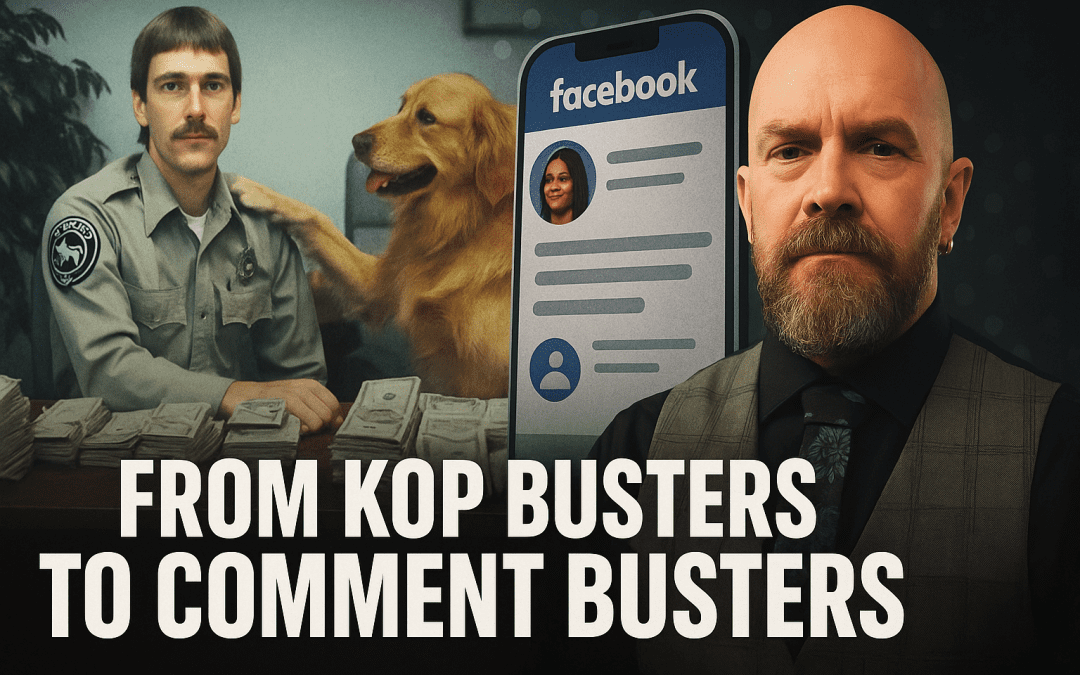
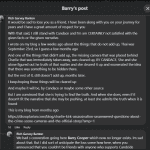
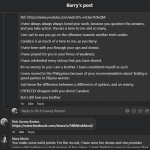
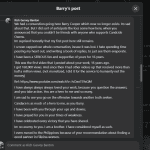
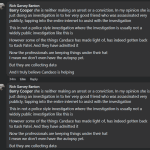
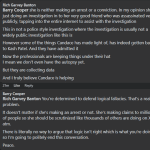
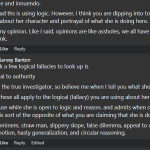
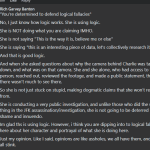
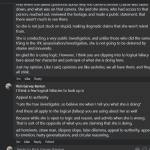
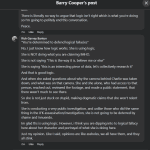
Screen shots of the comments that I thought might get deleted, since Barry was telling people like me, that he could not be friends with our ilk. (paraphrased)
Barry Cooper vs Ryan Thompson
Barry Cooper vs Ryan Thompson
Barry Cooper vs Ryan Thompson
Barry Cooper vs Ryan Thompson
Barry Cooper vs Ryan Thompson
Barry Cooper vs Ryan Thompson
Barry Cooper vs Ryan Thompson
Barry Cooper vs Ryan Thompson
Barry Cooper vs Ryan Thompson
Transcription of the deleted comments and screenshots
Comment 1: my long message to Barry on his post
Rich Garvey Banton We had s converstion going here Barry Cooper which now no longer exists. Im sad about that. But I did sort of anticipate the loss some how here, when you announced that you couldn’t be friends with anyone who supports Candcide Owens.
Im suprised honestly that my first post here still remains.
I screen capped our whole conversation, incase it was lost. I hate spending time pouring my heart out, and writing a book of replies, to just see them evaporate.
I have been a SERIOUS fan and supportive of yours for 16 years.
This was the first video that I posted about your work, 16 years ago. I got 160,000 views. And since then I had other videos up that received more than half a million views. (not monetized, I did it for the service to humanity not the money)
I have always always always loved your work, because you question the answers, and you take action. You are a hero to me and so many.
I am sad to see you go on the offensive towards another truth seeker.
Candace is as much of a hero to me, as you Barry.
I have been with you through your ups and downs.
I have prayed for you in your times of weakness.
I have celebrated every victory that you have shared.
Im no enemy to you. I am a brother. I have considered myself as such.
I even moved to the Philippines because of your recommendation about finding a good partner in Filipina women.
Comment 2: defending Candace’s investigation
Rich Garvey Banton Barry Cooper she is neither making an arrest or a conviction. In my opinion she is just doing an investigation in to her very good friend who was assassinated very publicly, tapping into the entire internet to assist with the investigation
This in not a police style investigation where the investigation is usually not a widely public investigation like this is
However some of the things Candace has made light of, has indeed gotten back to Kash Patel. And they have admitted it
Now the professionals are keeping things under their hat I mean we don’t even have the autopsy yet.
But they are collecting data
And I truly believe Candace is helping
Barry’s reply to that:
Barry Cooper Rich Garvey Banton You’re determined to defend logical fallacies. That’s a real problem.
It doesn’t matter if she’s making an arrest or not. She’s making claims to millions of people so she should be scrutinized like thousands of others are doing on X atm.
There is literally no way to argue that logic isn’t right which is what you’re doing so I’m going to politely end this conversation.
Peace.
Comment 3: my reply to “you’re determined to defend logical fallacies”
Rich Garvey Banton “You’re determined to defend logical fallacies”
No, I just know how logic works. She is using logic.
She is NOT doing what you are claiming IMHO.
She is not saying “This is the way it is, believe me or else”
She is saying “this is an interesting piece of data, let’s collectively research it”
And that is good logic.
And when she asked questions about why the camera behind Charlie was taken down, and what was on that camera. She and she alone, who had access to that person, reached out, reviewed the footage, and made a public statement, that there wasn’t much to see there.
So she is not just stuck on stupid, making dogmatic claims that she won’t relent from.
She is conducting a very public investigation, and unlike those who did the same thing in the JFK assassination/investigation, she is not going to be deterred by shame and innuendo.
Im glad ths is using logic. However, i think you are dipping into logical fallacy here about her character and portrayal of what she is doing here.
Just my opinion. Like I said, opinions are like assholes, we all have them, and they all stink.
Comment 4: listing specific fallacies
Rich Garvey Banton I think a few logical fallacies to look up is
Appeal to authority
“I am the true investigator, so believe me when I tell you what she is doing”
And these all apply to the logical (fallacy) you are using about her as well
Because while she is open to logic and reason, and admits when she is wrong. That is sort of the opposite of what you are claiming that she is doing.
ad hominem, straw man, slippery slope, false dilemma, appeal to authority, appeal to emotion, hasty generalization, and circular reasoning.
Fake Smiles and Disguise: Rogue, Uncensored Anthem
We live in an economy of performances. Smiles are curated, grief is filtered, and authenticity gets edited out of sight. DJ Disruptarian’s Fake Smiles and Disguise doesn’t flirt with that culture — it rips the bandage off. This track isn’t a polite suggestion to be real. It’s a rowdy wake-up call for anyone fed up with the flattering lie.
Why does this matter now? Because the polished portrait of life sold to us — likes, follows, sponsored smiles — is a quiet violence. It teaches people to hide pain, tuck away dissent, and perform contentment. Fake Smiles and Disguise names that violence and points a spotlight at the institution of pretense. No gentle metaphors. No market-tested sentimentality. Just blunt, unadorned truth layered over a pulse that won’t let you look away.
Fake Smiles and Disguise: The Soundtrack for Unmasking
Music can be a mirror — or a sledgehammer. This one swings. The beat is muscular and insistent, the lyrics cut like a reporter with a subpoena. DJ Disruptarian knows how to use rhythm as rhetoric: the kind of music that makes you stand up and ask, Who benefits from our silence?
The song is a diagnostic. Lines land not to wallow, but to diagnose societal illnesses: performative politeness, corporatized joy, and the engineered myth of seamless happiness. It’s a rejection of the idea that discomfort must be privatized. Why should you pretend everything’s fine because an algorithm rewards curated smiles?
Listen closely and you hear the rebellion threading through the arrangement. It’s not anthemic in a safe, stadium-pop way. It’s insurgent — intimate and angry at the same time. That’s the point. Authenticity doesn’t beg to be liked. It demands to be heard.
Confrontational? Yes. Necessary? Absolutely.
A few clever lines do the heavy lifting. They pry at the veneers: “camera-ready grief,” “scheduled laughter,” “privacy sold for applause.” These are more than barbs — they’re diagnostic tools for a culture that confuses visibility with validation. The music says: stop measuring worth in impressions. Start measuring it in truth.
What if you stopped pretending? What if your social feed reflected nuance instead of a curated highlight reel? Dangerous thoughts? Maybe. But also liberating.
Rallying cry or mirror? Both.
Rebellion doesn’t always wear a leather jacket. Sometimes it plays through headphones at 2 a.m., making you sit up and rewrite your morning performance.
The track also embraces a libertarian current — not as a slogan, but as a lived ethic. Small-d democracy starts in how we present ourselves to one another. If authenticity is criminalized by social norms, then the act of being authentically messy is a small form of civil disobedience.
Communities grow out of confession as much as celebration. Fake Smiles and Disguise creates a space for that confessional honesty. It’s an invitation to build connections and a call to arms for people who’ve been performing safety for so long they forgot who they were underneath.
So who’s this for? For the skeptical, the anti-establishment, the libertarian-leaning listener who smells the rot in consensus narratives. For anyone who’s tired of being told to sanitize their sorrow for public consumption. For those who want art that doesn’t sell them out to the algorithm.
The song’s strength is how it pivots between critique and comfort. It calls out the industry’s role in normalizing the fake smile and then offers balm — the reminder that shared imperfection is the bedrock of community. It’s a political act disguised as a personal admission: let’s be honest with each other, not perform honesty for the sake of engagement.
Now ask yourself: when did you last show up without a script?
Fake Smiles and Disguise isn’t concerned with mass appeal. It’s interested in fidelity — fidelity to lived experience, to the untidy truth. That makes it dangerous to the machine that commodifies identity. And that’s exactly why it’s necessary.
Conclusion: Keep the Mask Off
Fake Smiles and Disguise circles back to a simple demand: stop apologizing for being real. DJ Disruptarian hands us a hymn for unfiltered living — loud, sharp, and utterly human. The track isn’t therapy for the complacent. It’s ammo for the courageous.
So ditch the staged grin. Voice the awkward, the broken, the inconvenient. Build a community that values honesty over optics. In a world addicted to the cosmetic, choosing authenticity is the most disruptive act left.
Outlaw vs. Puppet — a primer for the skeptical ear
There are songs that entertain and songs that recruit. DJ Disruptarian’s Outlaw vs. Puppet is the latter: a musical manifesto dressed up as a beat. From the first bar it hijacks complacency and asks you a simple, dangerous question — will you be led, or will you lead?
This isn’t nostalgia for rebellion. It’s a cold-eyed diagnosis of a culture that trains citizens to nod, not to think. The track names its villains: corporate gatekeepers, algorithmic taste-makers, cultural commissars who prefer predictable, purchasable art. The outlaw, by contrast, is messy, stubborn, and real. That tension — outlaw versus puppet — is the pulse of the record.
Short, sharp sentences. Aural hooks that sting. Lyrics that feel like a dare. This is music aimed at people who’ve already smelled the rot in the system and are tired of euphemisms.
Why the outlaw matters
The outlaw doesn’t mean lawless chaos. It means autonomy. It’s the artist who refuses to sell their voice to the highest bidder. It’s the listener who rejects curated playlists designed to harvest attention and data. In a media landscape hungry for predictability, being an outlaw is a political act.
DJ Disruptarian doesn’t glamorize martyrdom. He celebrates creative risk—taking the road that won’t show up on trend reports. The melody won’t comfort you; it will unsettle you. That’s intentional. Art that soothes is often complicit. Art that challenges strips away excuses.
You feel that in the production: textures that clash, samples that bite, rhythms that remind you you’re awake. The track forces a decision. Will you follow the script or tear it up?
Breaking the strings: who’s pulling them?
Who are the puppeteers today? Labels? Media conglomerates? Tech platforms that atomize attention and commodify dissent? All of them. Outlaw vs. Puppet points at a system that monetizes conformity while pretending to reward originality.
But the puppet is not only external. It’s the part of us that prefers comfort over courage. The part that selects the safe take, the universally palatable chord progression, the tweet-sized outrage that leaves no mark. DJ Disruptarian calls this out because freedom starts with self-honesty. If you can’t see your own strings, you can’t cut them.
Have you ever caught yourself liking a song because everyone else did? Felt your taste calibrated by an invisible corporate tuner? That’s the puppet state of the mind.
The Disruptarian vibe: music as confrontation
This record is not about rebellion for its own PR-friendly drama. It’s philosophical and practical. It asks: what does it mean to be an artist in an ecosystem designed to turn art into product? How do you keep your voice when every platform wants you to mimic its metrics?
Outlaw vs. Puppet is blunt: decentralize. Decentralize attention, distribution, and validation. Build your own circuits. Find listeners who want to think, not just consume. That’s the path out of the puppet theater.
And there’s a human element. The song nods to histories of resistance — not as dusty trophies, but as living models. It borrows rhythm from protest chants, texture from underground scenes, and the rawness of late-night DIY sessions. The result is music that sounds like the future we should want: messy, honest, autonomous.
Authenticity in a manufactured landscape
Authenticity has been weaponized as marketing copy. Thirty-second authenticity doesn’t exist. DJ Disruptarian’s answer is to lean into imperfection as proof of life. Outlaw vs. Puppet celebrates the cracks, the off-beats, the unpolished vocal takes that mean a human being was in the booth.
If mainstream culture packages authenticity into a filter and a hashtag, the real thing becomes radical. This track insists on that radicalism.
What if we treated quirks as assets instead of liabilities? What if labels were resources, not overlords? The music industry will call that naive. The rest of us call it necessary.
A call to decentralize — and to act
Outlaw vs. Puppet isn’t a comforting anthem. It’s a blueprint. It pushes listeners toward decentralization — not as tech fetish but as cultural strategy. Reclaim your playlists. Support creators who refuse to be branded into oblivion. Opt out of platforms that prioritize engagement over truth.
This is practical liberty. Buy music directly. Share it with friends. Play it loud in rooms that are physically or virtually yours. Build micro-communities that value depth over virality. Each act chips away at the puppeteers’ power.
Conclusion: your invitation to disruption
Outlaw vs. Puppet demands a choice. Will you be curated by the market, or will you curate yourself? Will you accept the comfortable script, or will you riff your own? The track won’t solve structural problems by itself — but it can spark attitudes that do.
If you’re tired of being tuned by algorithms and appeasing taste panels, this song is a transmission. Take it personally. Let it irritate you. Let it teach you to distrust the default while building alternatives.
Listen once and nod. Listen twice and decide whether you’re a puppet or an outlaw. Then do something about it.
Listen up. This isn’t a soft plea for unity smeared across late-night TV. This is a rogue anthem — a shove to the ribs of complacency. S.P.E.A.R Against Racism isn’t a slogan stitched onto merch. It’s a refusal: refusal to let subcultures be hijacked by hate, refusal to accept that music and community are neutral when bigotry creeps in.
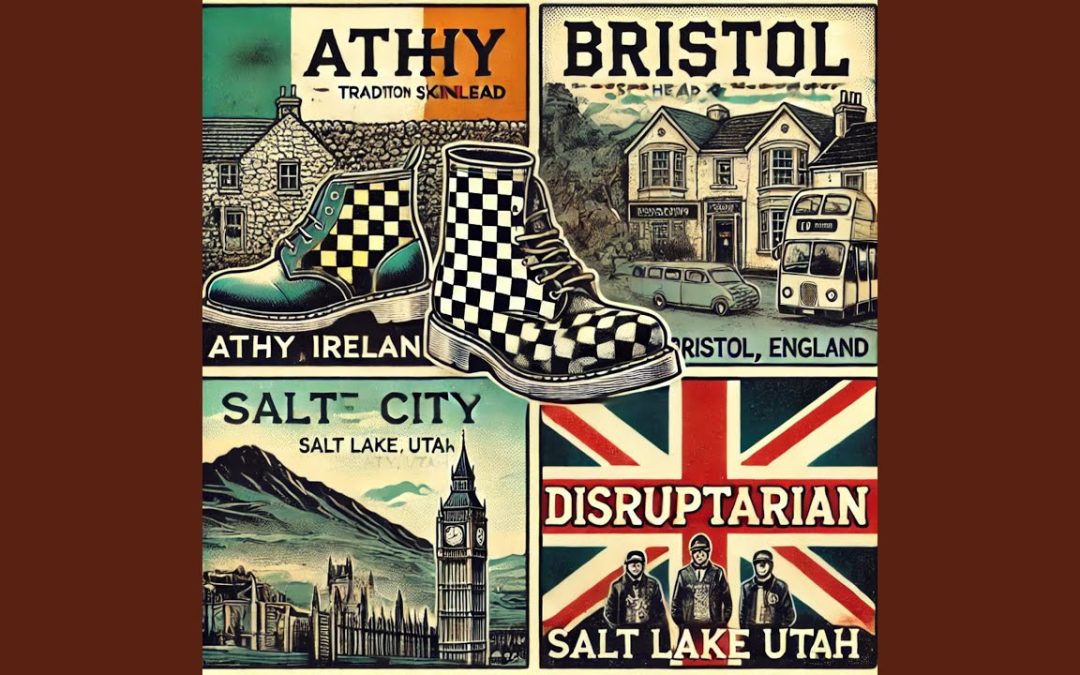
DJ Disruptarian’s latest track — S.P.E.A.R Skins n Punks Everywhere Against Racism — lands like a raw transmission from a different frequency. It reminds those of us who value liberty and skepticism that real resistance often starts in the margins: the basements, the DIY shows, the sudden trust between strangers at 2 a.m. The focus keyword S.P.E.A.R Against Racism is not marketing. It’s a position.
Origins: reclaiming a scene
Let’s cut the sentimentalism. The punk and skinhead scenes were never monolithic. Yes, the 1980s injected poison into those circles — neo-Nazi units cozying up to safety pins. But to paint the whole subculture with that brush is cowardice of thought. There were always fighters inside: anti-racist skinheads, punks who swung their fists at fascists, people who knew that identity is not a permit for hatred.
I wear the memory of that fight like ink on my skin — a tattoo that read S.P.E.A.R two decades ago. It was less symbolic then and more a declaration: I pick a side. That personal stake turned into a collective stance. We reclaimed the symbols, the music, the venues. S.P.E.A.R Against Racism crystallized from that hard-won clarity.
Why does any of this matter beyond nostalgia? Because culture is a battleground. When you cede symbols and scenes to authoritarian ideas, you normalize them. When you fight back, you make reclamation viral, contagious.
Why music still matters
Music isn’t therapy. It’s strategy.
From Billie Holiday’s Strange Fruit to Bob Marley’s defiant grooves, artists have always pushed ideas that outlive them. DJ Disruptarian’s track plugs into that lineage. It uses rhythm and language to make resistance unavoidable. The bass hits and the chorus loop don’t just move feet — they recalibrate minds.
Music creates the conditions for action. A packed room where people move together can become the safest incubator for dissent. When S.P.E.A.R Against Racism drops, it amplifies the truth that resistance isn’t polite. It’s kinetic. It’s every person in the pit refusing to let hate set the beat.
Community and uncompromising solidarity
Let’s be blunt: “Change starts within” is lazy. Change starts when people bind together and refuse to tolerate structural injustice. Community isn’t fluff. It’s infrastructure. It’s the network that catches you when you fall and the platform that amplifies you when you speak.
S.P.E.A.R Against Racism is about creating those networks. DJ Disruptarian’s shows are more than gigs; they are assemblies where marginalized voices are heard and protected. They are spaces where difference is celebrated and weaponized against polarization. What happens when people who’ve been told to shrink step into a room with loud music and louder conviction? They stop shrinking.
The disruptive edge: provoke, don’t placate
If you’re allergic to disruption, you’ll hate this movement. Good. We need troublemakers. We need people who will push the discussion into uncomfortable places and refuse to be sanitized.
S.P.E.A.R Against Racism doesn’t ask for applause from the mainstream. It courts authentic reaction — argument, confrontation, transformation. Each lyric is a gauntlet. Each beat is a challenge: will you keep tolerating half-measures, or will you stand up and disrupt the systems that let racism persist?
This is the ethos of Disruptarian Radio: provoke the comfortable, comfort the provoked, and never accept the bland compromise that lets injustice survive.
What you can do — beyond listening
Show up. Not as a tourist, but as an active participant. Go to shows. Support artists who take risks. Defend spaces from infiltration by reactionary actors. Teach new kids the history — the good and the ugly. Call out hypocrisy when you see it.
Are you worried about being labeled? So what. Labels are for closets. Movements are for bodies in motion.
Conclusion: S.P.E.A.R Against Racism is a command, not a campaign slogan
S.P.E.A.R Against Racism asks for more than applause. It asks for alignment. It demands a willingness to fight for inclusive culture in the same way you’d fight to protect your freedoms — loudly, directly, without waiting for permission.
This isn’t about being agreeable. It’s about being effective. So dance. Sing. Argue loudly. Organize harder. Let the track be your soundtrack to disruption.
Join the movement if you’re ready to stop performing allyship and start doing the work. S.P.E.A.R Against Racism is more than an anthem — it’s a tactic. It’s a creed. It’s an invitation to reclaim our scenes, our soundtracks, and our future.
Disruptive Fatherhood: Rebel, Uncensored Beats for Free Dads
Disruptive Fatherhood: the beat you didn’t know you needed
Listen up. If you think fatherhood is a checklist — provide, protect, pretend everything’s fine — you’re stuck in yesterday. Disruptive Fatherhood isn’t a hashtag or a feel-good weekend workshop. It’s a kinetic, noisy, honest overhaul of how fathers live and lead. DJ Disruptarian doesn’t just spin records; he flips scripts. His music is a manifesto: rip up the rulebook, feel your feelings, and show up for your kids without groveling to outdated expectations.
Why does this matter? Because the stories our kids inherit shape their future. The silence dads buy into becomes their children’s default. Music breaks silence. Music provokes. Music connects. That’s the leverage — and DJ Disruptarian is using it to build a different kind of fatherhood.
Break the mold: what Disruptive Fatherhood actually means
Disruptive Fatherhood is not anti-family. It’s anti-facade. It’s the refusal to let “man up” be the last word on emotional life. It’s reimagining masculinity as capability plus vulnerability. It’s accepting that parenting is messy, improvisational, and often contradictory — and that’s where the truth lives.
Think of it like a DJ set. You don’t just play the hits and call it a night. You mix, you pause, you drop the beat where it counts. You make room for silence and for noise. You respond to the room. Disruptive fathers do the same with their families: they listen, they improvise, they prioritize authentic connection over image.
So what shifts? Fathers start talking about mental health without shame. They model emotional literacy. They show their kids how to fail and recover. They create households where curiosity and courage beat conformity.
Music as insurgency: why the beat is political
Is music political? Always. When DJ Disruptarian drops a track about wanting to be seen, it isn’t just art — it’s a challenge to cultural scripts that keep fathers small. Beats punctuate the conversation about caregiving, consciousness, and courage. They give dads permission to be imperfect and powerful at the same time.
His events aren’t simply concerts. They’re tactical gatherings. Imagine a room full of fathers — not trying to out-alpha each other, but actually sharing strategies for bedtime, for grief, for rebuilding trust. That’s rare. That’s dangerous — in the best way. Because a dad who knows he can be vulnerable is a dad who teaches his kids resilience, not repression.
Reframe masculinity: vulnerability as muscle
Real strength isn’t silence. Real strength is naming fear, asking for help, crying when you need to cry. Disruptive Fatherhood reframes vulnerability as a skillset — one you can practice like any other craft.
This doesn’t mean abandoning discipline or stewardship. It means making decisions from presence instead of ego. It means prioritizing conversations at the dinner table over dominance in the driveway. That’s a revolution that changes households from the inside out.
Community over isolation: events that actually matter
DJ Disruptarian’s gatherings turn playlists into platforms. Between the bass drops, conversations form. Fathers swap stories, not tipsheets. They admit they’re tired, confused, proud, and scared. They leave with tools for emotional transparency and a sense they’re not alone.
If you’re tired of the podium-style parenting advice — the one-way lectures that make you feel inadequate — you’ll like this. These are communal labs, low on sermon and high on practice. They’re where new norms are invented by men who refuse to be actors in a stereotype.
Practical disruption: small acts, seismic shifts
Change doesn’t require a manifesto; it needs practice. Want to start with something simple?
– Tell your kid you’re sorry when you mess up.
– Ask questions more than you give commands.
– Read your kid’s favorite book with full attention, no phone.
– Show them tears, not theatrical bravado.
– Make rituals that matter — dinner, music, honest talk.
These are tiny rebellions against performance fatherhood. Over time they build people who can think, feel, and act — the opposite of programmed conformity.
Why Disruptive Fatherhood matters now
We are feeding future citizens into a world that demands adaptability, empathy, and critical thought. What message do we send if fathers keep pretending they are flawless pillars? Do we want another generation taught that strength means silence and that emotions leak out where they can? Or do we want children who inherit fathers who are present, relatable, and honest?
Disruptive Fatherhood flips the narrative. It says: be loud, be soft, be accountable. The stakes aren’t small. They’re the next culture.
Join or watch from the sidelines — but don’t say you weren’t warned. Soundtracks shape souls.
Disruptive Fatherhood isn’t a trend. It’s a recalibration of parenting energy toward truth, connection, and creative courage. If you’re skeptical of mainstream narratives — good. Be skeptical. But also be brave: disrupt, listen, and lead. The revolution in your living room starts with the beat.
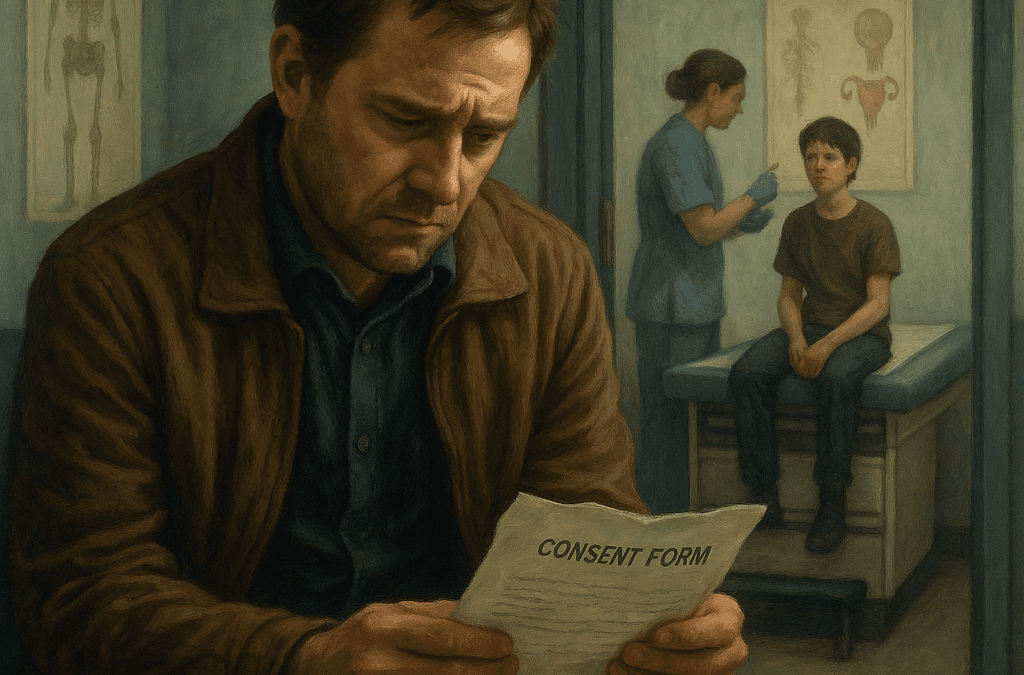
When my daughter first told me she wanted to pursue gender-affirming care, I wanted to be supportive. I love her unconditionally, and watching her struggle with identity has been heartbreaking. But as a parent, my job is not just to support—it’s also to protect. And as I’ve learned more about testosterone replacement therapy and its effects, I find myself with questions that keep me up at night.
The Irreversible Changes
The word “affirming” sounds so positive, so gentle. But what I’ve come to understand is that testosterone therapy brings permanent, life-altering changes to a developing body. These aren’t like trying on different clothes or experimenting with a hairstyle. These are fundamental biological shifts that cannot be undone.
Voice changes happen relatively quickly and are permanent. My daughter’s voice would deepen, and that change would remain even if she later decided this path wasn’t right for her.
Fertility is another concern that weighs heavily on me. At her age, she can’t fully grasp what it might mean to lose the option of biological children. How can any teenager truly understand that choice when their brain is still developing, when they haven’t experienced the full arc of life and how our desires evolve?
Skeletal changes occur during puberty when growth plates are still active. Testosterone affects bone density and structure. The intervention happens during a critical developmental window that nature designed specifically for this biological transformation.
Body hair, facial hair, and other physical changes that develop are largely permanent. The redistribution of body fat, muscle development—these reshape the physical form in ways that persist.
The Research That Troubles Me
I’ve been reading the medical literature, trying to understand the outcomes. What I’ve found doesn’t give me the reassurance I’m seeking.
A study following individuals for 18 months after starting hormone treatment found that pre-treatment mental health symptoms and social support didn’t predict life satisfaction outcomes. In some ways, this seems positive—it suggests that those struggling beforehand can still benefit. But it also raises questions: if we can’t predict who will be satisfied, how can we be certain this is the right path?
Research on romantic relationships shows that transgender individuals and their partners face significant challenges, including difficulties with disclosure, societal expectations, and identity questions. About half of relationships end during transition, with 54% of those endings directly attributed to the transition itself. This isn’t about judgment—it’s about recognizing that medical transition affects every aspect of life, including intimate relationships.
Perhaps most concerning, a systematic review of regret after gender-affirmation surgery found that while overall regret rates were low at 1%, the reasons for regret included poor surgical outcomes, social difficulties, and unrealistic expectations. Some individuals experienced what researchers call “true regret”—feeling the surgery was not the solution they believed it would be.
The Complexity of Dissatisfaction
The research reveals that dissatisfaction isn’t always straightforward. People may experience regret due to surgical complications, aesthetic disappointment, loss of physical sensation, ongoing stigma and discrimination, lack of family support, or mental health challenges including pre-existing conditions like depression and anxiety.
What strikes me is how many of these factors are about the world around us—discrimination, family rejection, social isolation. Studies show that minority stress, stigma, and lack of acceptance significantly impact relationship quality and mental health for transgender individuals. Are we addressing the root causes, or are we medicalizing a response to social prejudice?
The Weight of Childhood
My daughter won’t experience a natural childhood in the way most people do. She won’t go through puberty as her biology intended. Instead, she’ll navigate a medical process with regular appointments, blood tests, hormone management, and the psychological weight of such significant decisions at such a young age.
Research indicates that high levels of anxiety and depression are common among individuals awaiting treatment, though these don’t necessarily predict long-term outcomes. But what does it mean for a child’s development to spend their teenage years in this state? What are the long-term psychological effects of blocking or altering one of the most fundamental biological processes?
My Questions as a Father
I don’t write this from a place of judgment toward my daughter or others facing these decisions. I write from a place of love and deep concern.
How can we ensure informed consent when the person consenting is still cognitively developing?
Why are we so quick to medicalize what might, for some, be a phase of exploration?
What happened to watchful waiting, to therapy that explores rather than immediately affirms?
Are we truly prepared for the possibility that some young people will grow to regret irreversible changes made in adolescence?
Recent research notes that mental health issues should be addressed separately from transition, rather than being barriers to it. While I understand the reasoning—we shouldn’t discriminate against those with mental health challenges—isn’t it also reasonable to ensure someone is in a stable mental state before making permanent physical changes?
Where Do We Go From Here?
I love my daughter. That will never change, regardless of the path she chooses. But love doesn’t mean abandoning caution. Love means asking hard questions, even when they’re uncomfortable.
The research shows that most people don’t regret transition. But “most” isn’t everyone. Among those who do experience regret, many cite social factors, unrealistic expectations, and medical complications. For those individuals, the damage is done—changes that cannot be undone, choices made in youth that have lifetime consequences.
As parents, as a society, don’t we owe it to these young people to move more slowly? To provide comprehensive mental health support? To address the social discrimination and lack of acceptance that drives so much distress? To acknowledge that adolescence is a time of change and exploration, and that sometimes the most loving thing we can do is give space for that exploration without immediately making it permanent?
These are the questions that keep me awake at night as I watch my daughter navigate this path. I don’t have all the answers. But I believe the questions themselves are important, and that asking them comes from a place of love, not rejection.
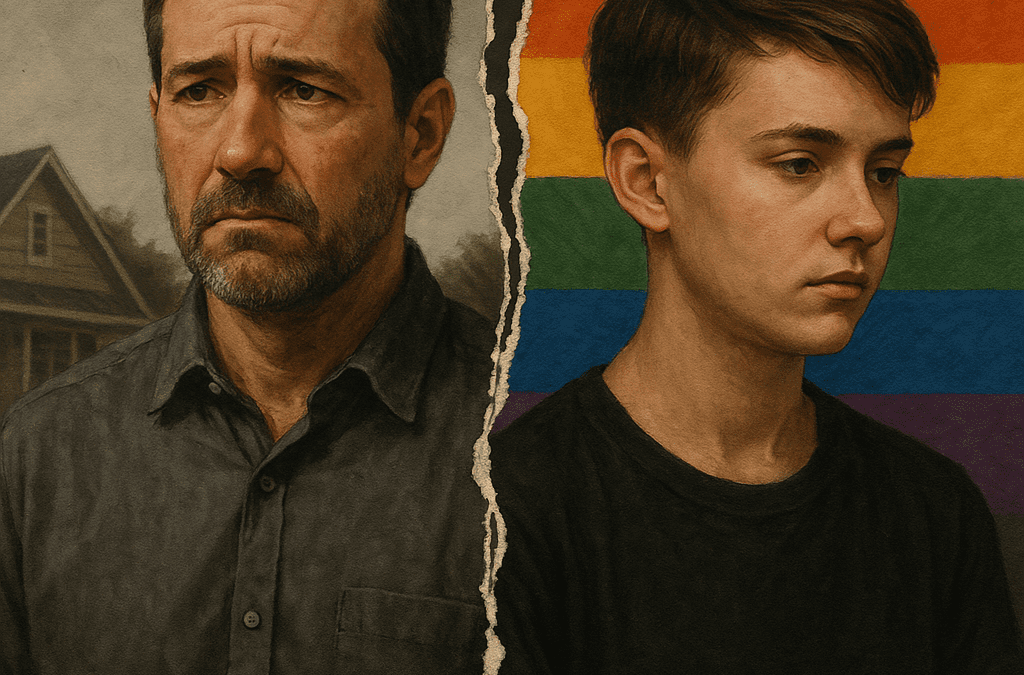
Multiple trans / LGBT children in the same house.
This is my situation.
How it started
In March of 2013, I pulled my ex-wife aside and tried to be honest with her.
I was working 96+ hours a week. I was isolated. We were barely intimate. We were living in the same house, but it felt like we were just roommates.
I told her something had to change or we needed to get divorced. I also admitted that I was turning to porn more and more, and that it was getting into my head and hurting me psychologically. I was carrying the financial load, taking care of my own needs, and feeling completely alone.
Two months later, everything exploded.
The accident and the public humiliation
On May 3rd, 2013, a drunk driver going the wrong way on the freeway near Ashland, Oregon, hit my car head-on. He killed himself. He almost killed me.
I survived, but with 40+ broken bones and multiple surgeries. I was in a wheelchair, recovering at her mother’s house, because that is where she insisted we go.
Two weeks after the accident, in the middle of the living room, in front of my kids and in-laws, she singled me out and started screaming at me about the porn issue. Top of her lungs. No privacy. No compassion. Just rage.
Then she went outside and continued yelling up and down the street, while I sat there in a wheelchair, unable to even get up and try to calm her down or talk it through.
That moment set the tone for the next several years.
Seven years of betrayal
The next 7 to 8 years were a drip feed of betrayal.
She would:
Talk behind my back to our friends and business partners
Spread exaggerated or fabricated rumors
Flirt with a guy we had met in Ireland, talking about reuniting with him
I filed for divorce twice and took it back twice. I tried to keep the family together. I tried to make it work.
By 2020, I was done. It was clear our values had split in a big way, especially socially and politically. She had surrounded herself with LGBT friends and activists. We were not on the same page anymore, and it was obvious she wanted a different life.
I finally filed for divorce a third time and decided I would not undo it.
I did not think it was good for the kids to grow up watching constant conflict. I thought ending it cleanly might spare them more damage.
The Ireland mess
That Irish guy she wanted to rendezvous with was still in the picture. I actually told her: ask him to marry you so we can move the whole family to Ireland. She had already been making plans to live with him in some form.
He turned her down and stopped talking to her.
Then she told me to ask his sister.
His sister agreed, but on one condition: that I give her a baby. I asked my ex-wife what she thought about that. Her response was basically:
“If she will help us move to Ireland, sure, give her a baby.”
That was the moment I knew it was really over, even if the paperwork was not final yet. That was about two months before I filed.
Long story short, I went to Ireland, reluctantly followed through, and she got pregnant. As soon as that happened, she backed out of the marriage plan.
Before that, I had tried to get her to go on birth control. She refused. I scheduled a vasectomy. When I told her about the appointment, she asked me not to go through with it, said she still wanted to marry me and still wanted a child with me.
Meanwhile, back in the States, my ex-wife met a guy online, got engaged within a month, and was married to him within three months of meeting him.
The kids start choosing sides
When I got home from Ireland, my kids picked me up from the airport. On the ride home, they told me:
“It really seems like mom wants us to choose sides against you. She says really horrible things about you.”
Two months later, we were all in therapy together, and they told the therapist the same thing.
My DVR at home recorded that original conversation with the kids. I mention this because my older child, who is now dealing with gender dysphoria, later denied ever saying those things. That was one of the early signs of parental alienation.
There were others:
For years, my ex-wife had threatened that if I ever divorced her, she would turn the kids against me. That is also recorded on my DVR.
The first Christmas after the divorce, I tried to call the kids. She kept hanging up on me while I could hear my kids crying in the background, wanting to talk to their dad.
I sent presents and even money so she could buy them gifts. She refused. Eventually, my friend Ralph physically delivered the gifts so the kids would actually receive them.
This was not a one-off moment. It became a pattern.
The new “woman” in the house and sudden trans identification
It kept escalating.
In a short time, the new husband was wearing fake breasts, wearing dresses, and presenting himself as a woman.
Shortly after that, my second oldest child decided she was trans.
That is where the title of this post comes from. Multiple trans / LGBT identities under one roof, my kids caught in the middle, and me watching much of it from the outside while being painted as the villain.
Where things stand now
Fast forward to now.
One of my daughters is on hormone replacement therapy and is transitioning to become a boy. She chose a new name. Out of respect, when I got a tattoo of my kids’ names on my arm, I had her new name tattooed too.
I do try to respect her identity in day-to-day life. I love her.
But I also believe that XX can never actually become XY, and that matters to me. That is where I draw the line. I cannot lie about basic biology, even to make people more comfortable.
I am deeply concerned about the long-term health effects of hormone treatments on a child, the permanence of these choices, and the social pressure around all of this. I believe a lot of it is driven by cultural fads and ideological capture, not by careful, long-term thinking about what is best for a kid’s future.
So I raised concerns with my ex-wife.
Below is the unedited back-and-forth between us from early December 2025. Names are redacted. This is exactly how it was written.
This is the back and forth between my ex-wife and myself:
(me) Though, even despite the fact that I was outspoken and sacrificed friends and other things for decades to support gay marriage. Like Elon Musk and other liberals (yes he donated to and voted for Hillary in 2016) I am starting to see the slippery slope And more now than ever inam starting to see the weakness and trouble with this game of virtue signaling I've never cared what people think of me. I like who I am. But I supported gay marriage. Because I support liberty But when tolerance and affirmation turns into thousands of mutilated children and men in women's locker rooms taking women's trophies and being placed in women's prisons. I can see how tolerance and affirmation CAN in some cases be a bad thing And I am learning the errors of my ways
12/02/2025
.
12/04/2025 (me)
And further more (name redacted) ***** I think you are harming the children by affirming medically harmful behavior, and ideologies fueled by cultural fads that are passing and sharply shrinking away It's time to look at their future and not just what a CHILD wants for themselves right now Part of being a parent is saying NO https://rumble.com/v72kv98-how-the-transgender-lobby-destroys-family-relationships.html
12/04/2025 (me)
You use to be so logical Since the porn fight that we had for so long, you got illogical and spiteful And the thing I regret most is hurting our children I miss you as a friend And for many years you were an amazing wife But what is left now is looking out for the well being of our children
12/05/2025 (my exwife)
I have nothing to say to you. You don't listen anyway. We have already discussed all of this at length. You are 100% welcome to stop badgering me. Thnx
12:58 AM (my)
My having a serious concern about our daughters serious health risks by being on hormones that will permanently effect her future in a negative way is not my badgering you (name redacted) ***** I have asked to speak with her therapist and you have refused to disclose that information So the person that I need to speak to, is you Kim I'd be happy to never have to be reminded of the 7 years of betrayal and backstabbing and the broken heart I had to endure after you publicly ridiculed me in front of my children about a very private and adult topic, by never having to speak to you again either But I do worry about my daughter dealing with a mental illness called gender dysphoria, and then not getting properly treated, but rather getting affirmed I to a life altering issue that can not be later reversed So if you would rather just allow me to speak with her therapist. As her father I should be allowed to. I would MUCH rather do that
1:05 AM  (me)
I had hoped after the divorce, that you would be entirely happy about allowing as many people as you wanted, to call you "wife" or to be able to make plans with Eden, without my concern or interference, or whatever other sorts of betrayal you wanted to pursue. I didn't think you would hate me or resent me, for parting ways. I thought we were under a very clear direction I never allowed a single person to get intimate or close to me whole we were married. I never planned rendezvous with friends or potential mates, I never allowed anyone to call me husband, and even friends from high school who were divorced that sent messages inquiring of my marital status, I never gave them the time of day. But it was clear to me that you wanted to pursue other things And I agreed by setting you free There seems no need to be vindictive to me. I did you a solid from what I could tell But fine hate me. Try to destroy me with half truths and fault out lies Fine But there is no need to harm out children by affirming their self destruction Again.. I would be more than happy to talk to her therapist rather than you Please send the contact info And honestly the other kids who were self harming last year should be involved with some sort of therapy as well imho
1:18 AM (me)
Will it hurt me if behind my back you tell our mutual friends exaggerated things about me? I mean, ya, kinda. But since I grew up and became an adult, I stopped dealing with the fiasco of high school popularity contests It hurt me more that you would betray me, than it did that anyone believed you Would it hurt me if you made plans with Eden behind my back? I mean yes, but, I figured it that made you happy.. go for it, you obviously weren't happy with me. I gave you my blessing with Eden and I was happy for you. But the thing that would hurt me the most, is seeing the future the bodies and the happiness of my children destroyed You knew that, and for 8 years, you threatened me with turning them against me It's on record. I'm not making that up Kim. What proof? But with you hurting me that way. You also have VERY much destroyed our children in more ways than just having a relationship with the man in this world who loves them more than his own life. You have hurt them in permanent psychological ways, that they even doubt who they are, after loving me so much during our lives together. It has taught them to hate half of themselves And it's a terrible thing to put on children They will suffer for the rest of their lives over this Not just from bodily changes such as infertility But they will suffer a life long sadness over this all And I beg you to stop this shit
1:21 AM (me)
I'd do anything to try to fix it while it is potentially fixable
1:23 AM  (me)
And I can't type well with out my glasses Read between the lines I know you're all about spelling and all that But please. What can be done to mend this?
1:40 AM (me)
And this whole trans thing started cooling off long before Trump was elected This isn't about hatred towards trans because of Trump. Or whatever TDS rhetoric is out there The studies show, this started cooling of significantly in 2022 It is just not a great path to be on There are underlying issues That should be addressed Most of not all trans people are dealing with many serious underlying psychological issues Gender dysphoria is how it manifests in some But clearly the stack of other issues shows up in almost all
3:01 AM (my exwife)
You really need to stop bringing up all your hurt feelings and baggage. No one cares. The ONLY addressable issue at all in all your blathering is the request to speak to James' therapist. That up to James, not me. James has the right to seek their own medical care. I am 100% sure I have said these words to you before. That's why it's badgering.
3:37 AM  (my exwife)
What you really need to grasp is the DRAMATIC improvement in James' mental health in the last year and a half. Yes, (name redacted) ***** has gender dismorphia. Yes, they are seeing physicians and therapists. Yes, accepting them how they wish to present has vastly improved their sense of well being.
11:26 PM  (me)
And again though, when a CHILD demands something and when a child gets there own way, there is always a large amount of satisfaction from being able to control the narrative. Will it last? Maybe. I hope that she maintains a healthy emotional condition Before all of the alienation Directly after I got back from Ireland and for the 6 months they were with me, she had a good attitude and we had healthy dialog She as well as (name redacted) ***** and (name redacted) ***** both said on more than one occasion that it felt like you wanted them to choose sides and that caused them a great deal of emotional stress From the very moment I landed and even on their therapy session, they noted this as a major stressor for them And hat is why I have not PUSHED to be in their lives. Because that distance that you insist upon, is a you thing, UNTIL they have to choose sides And when they have to choose sides, then it causes them emotional distress So I have sacrificed my own happiness to give them space I hopes that they all find theirs even in this twisted situation I wish it were different and the only reason I mention hurt feelings, is BECAUSE of the way it negatively effects the kids I gave Laken space and allowed her to move on, but when I went silent she would insist on my presence I went back, and it was just turmoil I am not looking forward to being a part of any more turmoil But I do think that the children would benefit from their biological father being in their lives Beyond that. The research shows that the suicidality of trans people does not improve post- transition. And the studies that have long term observation of these situations, show that it is not just gender dysphoria in most of this cases, by in large, it is also issues such as autism, ADHD, schizophrenia, depression, and that once those underlying issues are addressed, the gender dysphoria is also addressed And that is my main concern As for (name redacted) ***** allowing me or not to talk with her therapist? I didn't know that as a minor, that was even optional?
11:29 PM  (me)
This is why I walked away (name redacted) ***** https://www.facebook.com/share/r/1GHzDABCU8/ I wanted you to be happy Not for us to be enemies



Submit a Comment