Browse merch

Author: Ryan “Dickie” Thompson

  • Veterans Before Virtue Signaling: The Hard Truth About Sacrifice and Flags


    In a viral and long-overdue moment of clarity, a Washington State mayor finally said what too many are afraid to: Don’t ever disparage veterans in front of me.

    It happened during a recent city council meeting when an LGBTQ activist accused the mayor and city leaders of engaging in political trickery—specifically, flying the POW/MIA flag in June instead of the Pride flag. The implication? Honoring missing American soldiers was somehow a way to avoid “inclusion.”

    Let’s stop right there.

    You can wave a rainbow, a cross, or a Gadsden flag all you want—but no flag matters more than the one that drapes a coffin, lowered into the ground after a young man or woman gave everything for a country that barely remembers them.


    The Viral Moment That Hit a Nerve

    The activist said, “There are 20 million LGBTQ Americans, and only 82,000 MIAs.” That’s the logic. That’s the argument. That’s the “math” they used to justify the idea that honoring the dead is somehow exclusionary.

    But this wasn’t just bad logic. It was insulting.

    In a fiery response, the mayor—clearly emotional and righteously furious—hit back:

    “This country was founded because veterans lost their lives. Hundreds of thousands of people died for this country so that you could fly your pride flag. And man, I am pissed.”

    And rightfully so.

    Because comparing demands for symbolic representation to the final, irreversible sacrifice of life itself is not just intellectually dishonest—it’s morally bankrupt.


    The POW/MIA Flag Isn’t a Political Statement—It’s a National Duty

    The POW/MIA flag doesn’t belong to a “political side.” It belongs to all Americans. It represents the 82,000+ soldiers who never came home—who never got to hold their children, kiss their spouses goodbye, or walk off the battlefield.

    To suggest that remembering them is a tactic to avoid celebrating another group’s identity is not only tone-deaf—it’s an embarrassment to decency.

    The activist said, “Let’s have some intellectual integrity.”
    Okay—let’s.


    Sacrifice Isn’t Equal, and That’s the Point

    This may sound harsh, but it needs to be said: not all forms of struggle are equal.

    Yes, members of the LGBTQ community have faced real injustice. But a flag flown in June to recognize sexual identity cannot and should not be equated with the flag flown for soldiers who were tortured, executed, or never found after laying down their lives for our nation.

    You don’t have to be straight, conservative, or even patriotic to understand that.
    You just have to be human.


    Veterans and PRIDE: Can Both Coexist? Sure. But Not Equally.

    Here’s the Disruptarian position: if your cause requires diminishing someone else’s sacrifice to elevate your own, your cause is broken.

    You want to fly the Pride flag? Fine. This is America.
    But when you accuse others of bigotry for honoring those who gave their lives for the flag that gives you that freedom, you’ve lost the plot.

    We’ve reached a dangerous cultural tipping point where inclusion has become entitlement, and where identity is weaponized to overwrite honor. That’s not progress. That’s cultural rot.


    What We Should Really Be Teaching

    We need to return to basic civic understanding:

    • Flags don’t make you special—your actions do.
    • Veterans aren’t props—they’re protectors.
    • Freedom doesn’t come from hashtags—it comes from heroism.

    If you want your flag flown, earn it through service—not through shaming. And never again let someone stand at a public meeting and call the honoring of the dead “disgusting.”

    That mayor didn’t “lose his cool.”
    He defended what’s sacred.
    And we need a thousand more like him.


    Final Thought: Fly Your Flag—But Salute Theirs First

    Fly your Pride flag, your Blue Lives Matter flag, your Don’t Tread on Me flag. Fly them all. But fly the POW/MIA flag first. Because those are the people who made it possible.

    And if that offends you?

    That’s your right. But maybe take a moment to remember who gave you that right.

    Reference:

    My tributes to veterans from the past

    Spun Web Technology SMART SEO
    Spun Web Technology SMART SEO
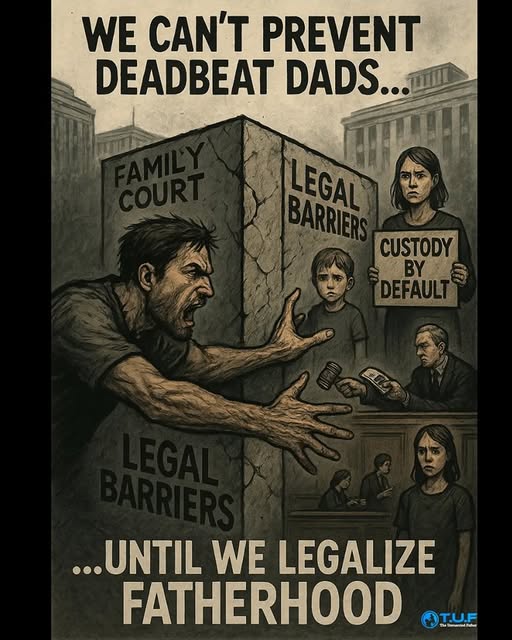
  • We Can’t Prevent Deadbeat Dads Until We Legalize Fatherhood


    We’ve all heard the mantra: “Step up and be a father.”
    It echoes through public discourse, courtroom lectures, social media shaming, and family therapy offices. And while accountability is crucial, we rarely ask the more uncomfortable but vital question: What does it even mean to “be a father” in a system where paternity doesn’t always equal parental rights?

    The truth is—you can’t fix deadbeat dads until you make fatherhood legal.

    Not romanticized.
    Not symbolic.
    Legal.

    Because if a father has no recognized legal authority over his child—no shared custody, no presumption of fairness in disputes, no standing in court unless he jumps through flaming hoops—then blaming him for being absent is not just unjust… it’s disingenuous.

    This article explores why fatherhood must be legalized before we can solve the deeper crisis of absent or disengaged dads, and how the modern custody and family law system may be creating the very outcomes it claims to oppose.


    The Illusion of Choice: When Fatherhood Is Conditional

    Imagine signing a birth certificate, participating in parenting, contributing financially and emotionally—and still being considered a “visitor” in your child’s life.

    For many fathers, particularly those unmarried at the time of their child’s birth, this is the default legal reality. In many jurisdictions, especially across Western countries, unmarried mothers are granted automatic sole custody, while fathers must petition, prove, and plead for rights to their own children.

    In the case files referenced here—while identities remain confidential—a joint custody agreement was proposed only after a long history of denied access, international legal complexity, emotional disputes, and personal sacrifice. The father in this case was told: “Sign the birth certificate, but don’t expect shared rights.”

    What kind of message does that send?
    That fatherhood is welcomed when convenient, and disposable when not.


    From Provider to Bystander: The Evolution of a Broken System

    Society still expects men to “be there,” emotionally, financially, physically. Yet the same system that expects this also blocks access, refuses fair custody, and too often treats fatherhood as secondary—even transactional.

    From courtrooms to immigration offices to family interventions, a pattern emerges:

    • Fathers pay child support, but are denied custody.
    • Fathers attend births, but aren’t consulted on school, medical, or religious decisions.
    • Fathers are expected to relocate, but face barriers when seeking consistent visitation.

    So what happens?

    Some leave.
    Some fight until they’re emotionally bankrupt.
    Some stay and become emotionally detached, afraid to challenge or speak up.

    And then—they’re called “deadbeat.”


    The Cultural Double Standard

    This issue is further compounded by cultural narratives that romanticize motherhood while vilifying fatherhood. A mother struggling with parenting is “overwhelmed.” A father asking for joint custody is “controlling.”

    According to the CDC and Pew Research Center:

    • In 2022, 24% of U.S. children lived in fatherless homes.
    • Over 50% of Black children and 31% of Hispanic children are being raised without their fathers in the household.
    • Yet among non-custodial fathers, only 22% have any form of shared or joint custody.

    Even Psychology Today reported in their article “The Never-Married: A New Normal” that a growing number of men are avoiding long-term relationships altogether—partly due to the fear of becoming legal strangers to their own children.

    If we want those statistics to improve, we need to stop framing custody as a power struggle and start framing it as a parental right—for both parents.


    What Legalizing Fatherhood Looks Like

    So what does “legalizing fatherhood” really mean?

    It means presumption of joint custody at birth when both parents are known and involved.
    It means making it easier for fathers to assert their rights, not harder.
    It means family law should default to shared parenting—unless proven otherwise with clear evidence of harm or neglect.

    It means:

    • Equal opportunity to make decisions
    • Equal time with the child
    • Equal respect in parenting roles

    The custody agreement reviewed here (from the file Custody Agreement Version 3) lays out a model of shared time—six months each, virtual visitation, and mutual respect. But the fact that it took years of conflict, emotional strain, and legal action to get no where, shows how hard it is.

    It was simple, she beckoned me to come out and be a father to my daughter.
    When I got there, she had me put my name on the birth certificate, and then it abruptly ended, and also without me having access to my daughter.
    This is how the journey began (a video that I filmed before going out to Ireland)

    Too many fathers don’t get that far. They give up. Or they’re shut out entirely.

    And then we wonder why we have a fatherhood crisis.


    The Human Cost: Emotional and Developmental Fallout

    Children need both parents.

    Not just child support from dad and bedtime stories from mom.

    They need dad’s voice in their decisions. His discipline. His presence. His consistency. Children with active fathers are statistically:

    • 2x more likely to graduate high school
    • 80% less likely to end up in jail
    • More emotionally resilient

    Yet our family courts often treat fathers as optional accessories rather than fundamental parts of a child’s life.

    The irony?

    By denying legal access to capable fathers, we create the very absenteeism we claim to fight.


    The Solution Is Simpler Than We Admit

    We don’t need more propaganda campaigns.
    We don’t need more moral shaming of men.
    We don’t even need new laws—we need to enforce fairness with the laws we already have.

    What we need is:

    • Automatic shared custody as a legal starting point
    • Respect for paternal rights across borders and jurisdictions
    • Real consequences for parental alienation and gatekeeping
    • The normalization of co-parenting, even without marriage

    Let’s stop punishing fathers who want to be involved.

    Let’s stop using fatherhood as leverage in disputes.

    Let’s stop acting as if biology doesn’t matter when it comes to dad.


    Final Thoughts: A New Paradigm for a New Generation

    Until fatherhood is legally recognized and socially respected from the moment a child is born, we will continue to see more men walk away—some by force, some by fear, some by fatigue.

    But it doesn’t have to be this way.

    As a culture that claims to care about children, we need to prove it by honoring both of their parents—not just the one who wins custody by default.

    Let’s not ask another man to “step up” until we give him something solid to step into.

    And let’s never again call a man “deadbeat” when the system itself refuses to let him be a dad.

    Spun Web Technology SMART SEO

    Spun Web Technology SMART SEO

  • LGBTQ Activist Humiliated by Mayor in Epic Moment

    LGBTQ Activist Humiliated by Mayor in Epic Moment

    Disruptarian featured image for LGBTQ Activist Humiliated by Mayor in Epic Moment

    Verified at: 2026-06-22T00:35:08

    LGBTQ Activist Humiliated by Mayor in Epic Moment is the kind of subject that fits the Disruptarian lane because it sits where independent media, culture, music, and political commentary collide.

    The source description frames it this way: A Rumble-focused Disruptarian version of LGBTQ Activist Humiliated by Mayor in Epic Moment. Ryan Thompson frames the topic through political commentary, culture war pressure, media narratives, and public trust, with a direct independent-media voice and no corporate filter. Original YouTube title: LGBTQ Activist Humiliated by Mayor in Epic Moment. Original source video: https://www.youtube.com/watch?v=ZLleADEqDJs Disruptarian: https://www.disruptarian.com

    The useful question is not only what happened, but why the story matters to people who distrust scripted narratives, recycled outrage, and corporate-approved commentary.

    A Disruptarian reading starts with individual agency. The listener is not asked to accept a packaged conclusion. The point is to pull the claim apart, compare incentives, and look for the pressure points that legacy media often skips.

    That approach matters for libertarian radio commentary because the audience is usually looking for more than a headline. They want context, motive, contradiction, and a practical sense of how public stories become private consequences.

    The cultural layer is just as important. Disruptarian music and reggae punk energy are not decorations around the message. They give the work its rhythm: skeptical, confrontational, and rooted in the idea that speech should stay alive even when institutions prefer silence.

    For search readers arriving cold, the primary source is included below either as an embed or as a direct source link. Start there if you want the full tone, timing, and argument. The written analysis expands the title and description into a searchable article that can stand on its own.

    The strongest SEO value here is clarity. The article keeps the title language visible, uses descriptive headings, and connects the topic to Disruptarian Radio, independent media, libertarian commentary, political culture, and original music without stuffing the page with empty repetition.

    The larger takeaway is simple: independent commentary survives by documenting what was said, preserving the source, and adding a point of view that does not depend on permission from gatekeepers.

    That is why this post exists as part of the static Disruptarian archive. The video remains embedded, the title and description remain traceable, and the surrounding article gives search engines and readers enough context to understand why the episode belongs in the broader Disruptarian catalog.

    The title itself carries the first keyword signal, but a durable post needs more than a copied headline. It needs a clear H1, a concise meta description, a featured image with descriptive alt text, and enough editorial framing for readers to know why the video is part of this archive.

    From an independent media perspective, the value is in keeping the primary source visible. Embedding the video prevents the article from becoming detached commentary. Readers can compare the written interpretation against the actual recording and decide whether the argument holds up.

    The libertarian angle is not automatic partisanship. It is a suspicion of concentrated power, public manipulation, and narratives that ask citizens to outsource judgment. That suspicion applies to government, platforms, corporations, activist institutions, and media brands alike.

    Disruptarian Radio also treats culture as evidence. Music, political language, online mobs, censorship fights, moral panics, and personal stories all reveal where pressure is being applied. That is why a radio episode can be more than entertainment; it can become a record of a moment.

    For listeners who follow DJ Disruptarian, the same pattern shows up in the music catalog: reggae rhythm, punk edge, spiritual critique, and anti-authoritarian instinct. The written post keeps that identity attached to the video instead of letting it disappear into a platform feed.

    Good SEO on a page like this should help people find the conversation without flattening the voice. The article uses natural phrases such as Disruptarian Radio, independent media, libertarian podcast, political commentary, original music, and disruptive conversations only where they make sense.

    The featured image should follow the Disruptarian editorial-collage style: torn paper, smoke, halftone grit, dirty cream paper, black and oxblood pressure, muted gold accents, and symbolic props tied to the subject rather than generic filler. Its alt text names the subject so search engines and screen readers get useful context.

    The article also keeps a stable URL under the static blog. That matters because feeds move, platforms change embeds, and social links decay. A static post gives the episode a second home that can be indexed, backed up, linked, and reviewed later.

    The final point is documentation. When a channel publishes a new video, the title and description are often the only structured metadata available. Turning that metadata into a post creates a stronger archive without pretending to replace the original recording.

    This is the practical Disruptarian method: preserve the video, state the source, add commentary, keep the searchable terms honest, and let the reader move between the embedded media and the written analysis without friction.

    This additional context keeps the post useful for readers who arrive from search rather than from the original channel. It explains the source, preserves the embed, and connects the subject back to the larger Disruptarian archive.

    This additional context keeps the post useful for readers who arrive from search rather than from the original channel. It explains the source, preserves the embed, and connects the subject back to the larger Disruptarian archive.

    This additional context keeps the post useful for readers who arrive from search rather than from the original channel. It explains the source, preserves the embed, and connects the subject back to the larger Disruptarian archive.


    The shortlink was copied to your clipboard

    X
    f
    r

    Related Reading

    Similar posts


    Disruptarian Blog

    2026-06-21

    Disruptarian Blog

    Disruptarian commentary on Charlie Kirk Assassinated September 10th 2025 – My commentary with embedded source video, independent media context, and libertarian radio analysis.

  • I’ll Take the Boeing 747 Challenge — 100 Days for $1 Million and a Message of Liberty

    By Ryan “Dickie” Thompson

    Every once in a while, something comes along that seems tailor-made for a Disruptarian. The so-called “100 Days Inside a Boeing 747 Challenge” is one of those things. A million-dollar reward for spending 100 days inside a retired jumbo jet? To some, that sounds like a TikTok stunt gone viral. To me, it sounds like an opportunity — not just to test personal grit, but to make a statement about the resilience of the individual spirit in a world that seems increasingly allergic to discomfort and challenge.

    What is the Boeing 747 Challenge?

    If you haven’t heard of it, the challenge has been making rounds on TikTok and other social media platforms. The premise is simple but extreme: live inside a grounded Boeing 747 for 100 days straight, and you walk away with $1 million. The rules? Well, that’s where things get a little foggy. No official body has claimed responsibility for organizing the challenge, and there’s little transparency about who’s running it or what the fine print entails.

    The footage online shows cramped quarters, tight routines, and the mental strain of isolation. Participants sleep in airline seats, cook meals with minimal resources, and pass time in a space designed for transport, not habitation. It’s not exactly Club Med, but that’s what makes it interesting.

    Why I’m Volunteering for This Challenge

    In a time when so many people are conditioned to seek safety and comfort at any cost, this challenge cuts against the grain. It’s voluntary hardship. It’s choosing difficulty not because you have to, but because you want to prove something — about yourself, about what human beings are capable of, and about what freedom really means.

    Let me be clear: I’m not doing this just for the money. A million bucks is nice, don’t get me wrong. But this is bigger than cash. This is about showing what happens when a liberty-minded individual takes on a self-imposed challenge with no government assistance, no hand-holding, and no bailouts.

    It’s a raw experiment in personal responsibility.

    We live in a time when the state wants to regulate everything: how we travel, how we communicate, even how we interact. But here’s a challenge that’s based entirely on consent. No one’s forcing anyone into that aircraft. If it’s real — and I’m treating it as if it is — then it’s a perfect metaphor for what liberty can look like: voluntary association, risk, and reward.

    Let’s Talk Logistics

    To whoever is running this challenge: I’m in. Reach out. You’ve got a willing participant here who’s not only ready to endure 100 days inside that aircraft, but to document it, livestream it, and reflect on it from a libertarian perspective every step of the way.

    I’ll go full Henry David Thoreau, if Thoreau had swapped his cabin in the woods for a hollowed-out Boeing. I’ll bring books by Bastiat, Rothbard, and Hayek. I’ll broadcast thoughts on voluntary hardship, economic literacy, and the dangers of central planning — all while rationing airplane food and doing sit-ups next to a bulkhead.

    The Psychological Factor

    Some critics argue this is just social media spectacle. But ask yourself: what’s more respectable, someone who subjects themselves to 100 days of isolation to earn a reward through perseverance, or someone who demands redistribution from the state while doing nothing of value?

    Endurance challenges like this harken back to a pre-welfare-state era, when self-discipline and toughness were valued traits, not punchlines. This is stoicism meets spectacle, and I’m here for it.

    The Real Message: Voluntarism in Action

    Assuming the challenge is legit, it represents something sorely missing in today’s discourse: voluntarism. This is a private agreement between consenting parties. No coercion. No bureaucracy. No permits. It’s raw, decentralized decision-making.

    Even if this whole thing turns out to be some elaborate hoax, the attention it’s drawing says something profound about our cultural moment. People are hungry for challenge. They want meaning, not just entertainment. They want to do something. That’s why shows like this resonate. It’s also why liberty resonates. Because deep down, people want to feel that their lives are theirs to control.

    Final Thoughts

    To whoever is behind this challenge: I’m ready. Let’s make this happen. If the terms are clear and the conditions fair, I’ll step onto that 747 and not step off until Day 100. Let’s use this platform not just to entertain, but to educate and inspire.

    Let’s show the world that liberty isn’t just a theory—it’s a lived experience, even in the tightest quarters.

    Reference: TikTok Boeing 747 challenge 100 days for 1 million dollars

    My WhatsApp is +18083656628
    Email: [email protected]

    Spun Web Technology SMART SEO

    Spun Web Technology SMART SEO

  • Raising Sons in a Fatherless Age: 5 Lessons Every Single Mom Must Teach

    Preparing Sons for Manhood in a World Where Fewer Men Marry

    By Ryan “Dickie” Thompson | Disruptarian.com


    We’re witnessing a tectonic shift in American relationships—and single mothers are on the front lines of this cultural transition, especially when raising sons. With marriage rates plummeting and a record number of men never tying the knot, the blueprint for turning boys into men is no longer what it used to be.

    In a heartfelt and insightful video making waves online, one woman offers five essential lessons every single mom should teach her son before he becomes a man. These aren’t vague platitudes—they’re boots-on-the-ground life skills for navigating a world that’s become increasingly hostile to masculinity, responsibility, and fatherhood.

    The advice comes at a time when never marrying is no longer the exception—it’s fast becoming the new normal.


    The New Normal: Fewer Men Are Marrying

    According to Psychology Today, the share of men who have never married has tripled since 1970. And we’re not just talking about teenagers or young adults. By age 40, one in four men in America today has never married. That’s a seismic cultural shift.

    Why is this happening?

    Some of it is voluntary: men opting out of marriage due to a loss of faith in the institution, fears about divorce, or a preference for autonomy.

    But there’s another side: the involuntarily unpartnered. These are men who want to marry or form long-term partnerships but struggle to find willing, compatible partners. Data from the Pew Research Center backs this up: between 1990 and 2019, the percentage of adults aged 25 to 54 who are currently married fell from 67% to 53%. Meanwhile, over 60% of young men (18–29) are now single, compared to only about 30% of young women.

    These stats paint a clear picture: many men will never marry, whether by choice or by circumstance.

    This reality makes the role of single mothers even more critical. It’s not enough to teach sons how to be good husbands. You have to teach them how to be strong, independent, self-aware men—regardless of whether they ever marry or not.


    Five Life Lessons Every Single Mom Should Teach Her Son

    Here’s the breakdown from the viral video, and why these lessons are more important than ever.


    1. Financial Independence and Legal Self-Defense

    Before your son even considers dating, he should be able to support himself. But in today’s legal climate, that’s not enough.

    He must also know how to protect himself financially and legally. This includes understanding how to avoid being manipulated, exploited, or falsely accused. It includes knowing his rights in custody battles or paternity claims.

    Far too many young men walk into relationships blind—romanticizing love and ignoring the legal minefields that await.

    Financial literacy isn’t just about budgeting. It’s about survival. Teach him how to protect his paycheck and his reputation.


    2. Self-Worth and Recognizing Red Flags

    Your son must know his value.

    He should understand how he deserves to be treated and be able to walk away from relationships that drain him, manipulate him, or abuse him emotionally.

    This is especially crucial in an age where masculinity is often pathologized and male identity is under attack. Confidence isn’t arrogance—it’s armor.

    Teach him to spot red flags early. Entitlement, dishonesty, addiction to drama—these are not quirks. They’re warnings.


    3. Choose Friends Carefully

    “You are who you hang out with.” That’s not just a saying—it’s a rule of life.

    Bad friends lead to bad choices. Even if your son is a good person, if he surrounds himself with criminals, losers, or manipulators, he’ll be judged accordingly—and worse, he might start becoming like them.

    Encourage him to seek out mentors, teammates, and peers who challenge him to level up—not spiral down.


    4. Date Women Who Respect Their Fathers (and Themselves)

    This might ruffle feathers, but it’s the truth: a woman’s relationship with her father often reveals a lot about her character.

    This doesn’t mean writing off women who’ve had bad family circumstances—but it does mean teaching your son to observe how she views men, family, and authority.

    If she respects her father, chances are she’ll respect him. And likewise, your son shouldn’t fear having a respectful relationship with her dad. Good fathers protect their daughters—and that’s not a threat, it’s a sign of a healthy family.


    5. Treat Everyone With Respect

    This one’s simple: Treat others the way you want to be treated.

    But respect isn’t weakness. It doesn’t mean becoming a doormat. It means being principled. It means having integrity. It means being the kind of man people can trust.

    In a world where trust is in short supply, that alone will set him apart.


    Why This Matters More Than Ever

    In the past, young men often had clear life milestones: graduate, get a job, marry, raise a family. Today, those pathways are fractured.

    The nuclear family is no longer the norm. Unpartnered men are now a growing demographic. Many young men will never become husbands, let alone fathers.

    This isn’t a doomsday scenario—but it is a challenge.

    We need to stop teaching boys to “be nice” and start teaching them to be prepared. To be strong. To be discerning. To be sovereign.

    Marriage might not be in the cards for every man. But self-mastery, discipline, and wisdom always are.


    The Disruptarian Angle

    As a proud disruptarian, I’m not interested in reinforcing broken institutions or parroting nostalgic illusions. The goal here isn’t to force men into old molds—it’s to give them the tools to navigate whatever world they inherit.

    That means pushing back against a culture that shames young men for having boundaries.

    That means equipping them with economic, emotional, and legal armor.

    That means raising warriors—not victims.

    And single moms? You’re not just doing double duty—you’re building the next generation of leaders, protectors, and truth-tellers. Your job isn’t easy, but it’s vital.


    Final Thought: Raise Men, Not Dependents

    Whether your son marries or stays single, he should never be lost.

    He should know how to lead his own life, protect his values, and never outsource his identity to a partner, the government, or the culture.

    Raising boys into men isn’t about preparing them for “someday.” It’s about arming them for the world today.

    So start with these five lessons. Add your own. Sharpen him. Strengthen him.

    Because in a world where the never-married are the new normal, the need for principled men is anything but outdated.


    Reference:

    https://www.psychologytoday.com/us/blog/magnetic-partners/202305/the-never-married-a-new-normal

    Spun Web Technology SMART SEO

    Spun Web Technology SMART SEO

  • Single moms of boys here are five things you need to teach your son.

    Single moms of boys here are five things you need to teach your son.

    Disruptarian featured image for Single moms of boys here are five things you need to teach your son.

    Verified at: 2026-06-22T00:41:20

    Single moms of boys here are five things you need to teach your son. is the kind of subject that fits the Disruptarian lane because it sits where independent media, culture, music, and political commentary collide.

    The source description frames it this way: A Rumble-focused Disruptarian version of Single moms of boys here are five things you need to teach your son.. Ryan Thompson frames the topic through political commentary, culture war pressure, media narratives, and public trust, with a direct independent-media voice and no corporate filter. Original YouTube title: Single moms of boys here are five things you need to teach your son.. Original source video: https://www.youtube.com/watch?v=RMNwn1j94hA Disruptarian: https://www.disruptarian.com

    The useful question is not only what happened, but why the story matters to people who distrust scripted narratives, recycled outrage, and corporate-approved commentary.

    A Disruptarian reading starts with individual agency. The listener is not asked to accept a packaged conclusion. The point is to pull the claim apart, compare incentives, and look for the pressure points that legacy media often skips.

    That approach matters for libertarian radio commentary because the audience is usually looking for more than a headline. They want context, motive, contradiction, and a practical sense of how public stories become private consequences.

    The cultural layer is just as important. Disruptarian music and reggae punk energy are not decorations around the message. They give the work its rhythm: skeptical, confrontational, and rooted in the idea that speech should stay alive even when institutions prefer silence.

    For search readers arriving cold, the primary source is included below either as an embed or as a direct source link. Start there if you want the full tone, timing, and argument. The written analysis expands the title and description into a searchable article that can stand on its own.

    The strongest SEO value here is clarity. The article keeps the title language visible, uses descriptive headings, and connects the topic to Disruptarian Radio, independent media, libertarian commentary, political culture, and original music without stuffing the page with empty repetition.

    The larger takeaway is simple: independent commentary survives by documenting what was said, preserving the source, and adding a point of view that does not depend on permission from gatekeepers.

    That is why this post exists as part of the static Disruptarian archive. The video remains embedded, the title and description remain traceable, and the surrounding article gives search engines and readers enough context to understand why the episode belongs in the broader Disruptarian catalog.

    The title itself carries the first keyword signal, but a durable post needs more than a copied headline. It needs a clear H1, a concise meta description, a featured image with descriptive alt text, and enough editorial framing for readers to know why the video is part of this archive.

    From an independent media perspective, the value is in keeping the primary source visible. Embedding the video prevents the article from becoming detached commentary. Readers can compare the written interpretation against the actual recording and decide whether the argument holds up.

    The libertarian angle is not automatic partisanship. It is a suspicion of concentrated power, public manipulation, and narratives that ask citizens to outsource judgment. That suspicion applies to government, platforms, corporations, activist institutions, and media brands alike.

    Disruptarian Radio also treats culture as evidence. Music, political language, online mobs, censorship fights, moral panics, and personal stories all reveal where pressure is being applied. That is why a radio episode can be more than entertainment; it can become a record of a moment.

    For listeners who follow DJ Disruptarian, the same pattern shows up in the music catalog: reggae rhythm, punk edge, spiritual critique, and anti-authoritarian instinct. The written post keeps that identity attached to the video instead of letting it disappear into a platform feed.

    Good SEO on a page like this should help people find the conversation without flattening the voice. The article uses natural phrases such as Disruptarian Radio, independent media, libertarian podcast, political commentary, original music, and disruptive conversations only where they make sense.

    The featured image should follow the Disruptarian editorial-collage style: torn paper, smoke, halftone grit, dirty cream paper, black and oxblood pressure, muted gold accents, and symbolic props tied to the subject rather than generic filler. Its alt text names the subject so search engines and screen readers get useful context.

    The article also keeps a stable URL under the static blog. That matters because feeds move, platforms change embeds, and social links decay. A static post gives the episode a second home that can be indexed, backed up, linked, and reviewed later.

    The final point is documentation. When a channel publishes a new video, the title and description are often the only structured metadata available. Turning that metadata into a post creates a stronger archive without pretending to replace the original recording.

    This is the practical Disruptarian method: preserve the video, state the source, add commentary, keep the searchable terms honest, and let the reader move between the embedded media and the written analysis without friction.

    This additional context keeps the post useful for readers who arrive from search rather than from the original channel. It explains the source, preserves the embed, and connects the subject back to the larger Disruptarian archive.

    This additional context keeps the post useful for readers who arrive from search rather than from the original channel. It explains the source, preserves the embed, and connects the subject back to the larger Disruptarian archive.

    This additional context keeps the post useful for readers who arrive from search rather than from the original channel. It explains the source, preserves the embed, and connects the subject back to the larger Disruptarian archive.


    The shortlink was copied to your clipboard

    X
    f
    r

    Related Reading

    Similar posts


    Disruptarian Blog

    2026-06-21

    Disruptarian Blog

    Disruptarian commentary on Charlie Kirk Assassinated September 10th 2025 – My commentary with embedded source video, independent media context, and libertarian radio analysis.

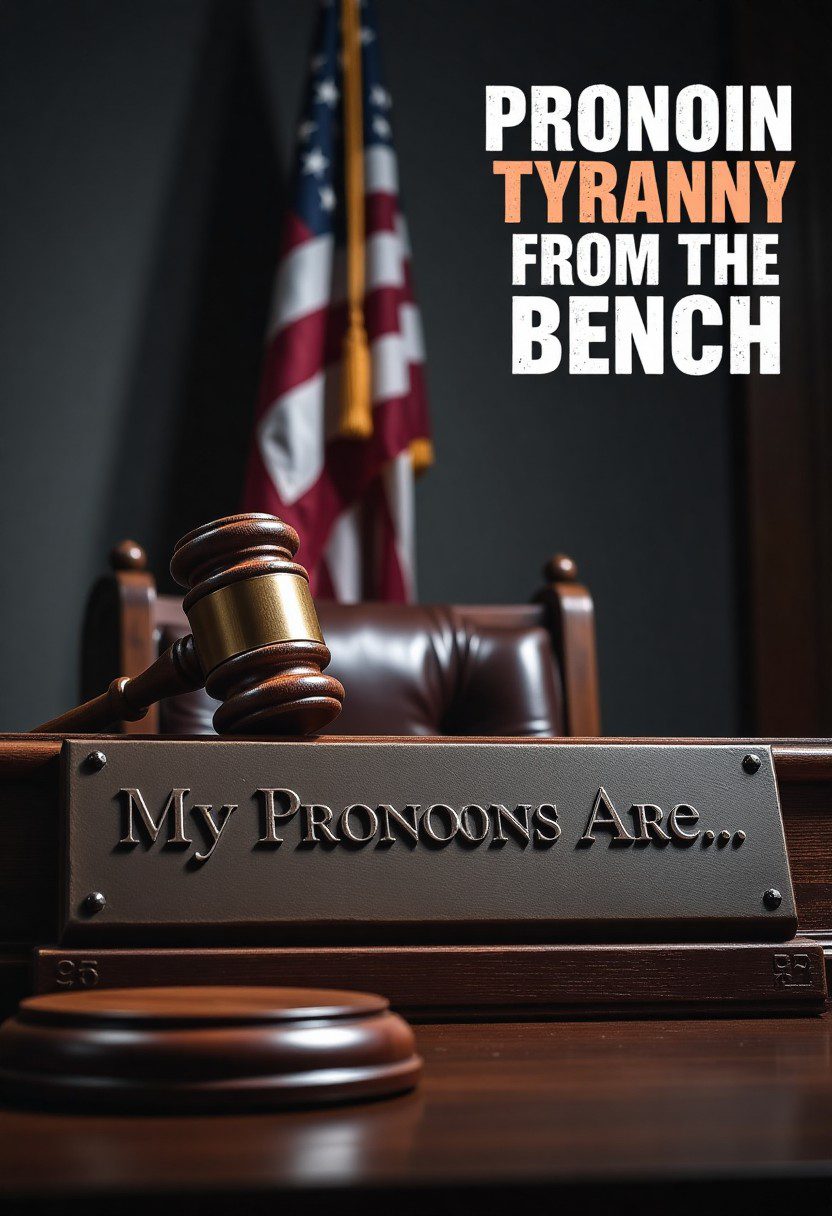
  • Pronoun Tyranny from the Bench: When Judges Become Ideological Enforcers


    Let’s get one thing straight: you don’t get to compel speech in a free country. Period.

    If you think government has the moral authority to force someone to declare their pronouns in a court of law—or anywhere, for that matter—then congratulations: you’re not just wrong, you’re on the wrong side of history, liberty, and common sense.

    In a recent Senate Judiciary Committee hearing, we witnessed something we’ve come to expect in today’s upside-down America: a magistrate judge nominated for the federal bench was caught playing ideological games with courtroom protocol. This wasn’t some vague complaint about bias. No, this was hard testimony about a man on the bench requiring litigants to announce their pronouns before speaking in his courtroom. And not just recommending—requiring, under the pretense of “voluntary” compliance. Right.

    As Senator John Kennedy so powerfully put it: “That’s not voluntary. That’s oppressive.”

    Let’s talk about what this means—not just for courtrooms, but for liberty, and why this is one of the clearest examples of judicial activism mutating into ideological enforcement.


    When “Voluntary” Becomes a Court Order

    The scene was as surreal as it was familiar: a nominee under scrutiny, telling the committee that he merely “suggested” pronouns. Senator Kennedy wasn’t having it. He pointed out that the judge’s written courtroom directive clearly stated litigants were to introduce themselves by name and preferred pronouns.

    Imagine this: you’re in court. You’re paying your lawyer $400 an hour. You’re trying to resolve a legal dispute that could affect your property, your business, maybe even your freedom. And the person deciding your case wants you to lead off with: “My name is John Doe. My pronouns are he/him.”

    Let’s call this what it is: compelled political speech.

    If you’re standing before a judge, there should be one expectation—equal justice under the law, not a litmus test of ideological loyalty. You shouldn’t have to bend the knee to cultural fads or political correctness to have your day in court.


    The Bench Is Not a Soapbox

    The role of a judge is not to moralize or evangelize. It’s to apply the law. And the law—namely the First Amendment—makes it crystal clear: the government cannot compel speech, especially ideological speech.

    That includes being forced to affirm someone’s gender identity through pronoun usage.

    This is not about being disrespectful. You want to use certain pronouns in your private life? That’s your business. But when the state steps in and makes it mandatory, we are no longer in the realm of courtesy. We’re in the realm of state-imposed ideology.

    This judge, like too many others nominated in recent years, isn’t content to interpret the law. He wants to reshape society through the bench, one ruling at a time.

    And here’s the kicker: this man’s defenders are trying to paint him as a harmless bureaucrat. But make no mistake—this is a test case for embedding woke ideology into the legal process itself. If you can condition courtroom access on ideological compliance, there’s no limit to what comes next.


    Why This Matters to Liberty Lovers

    Now let me put this in punk rock libertarian terms, the way you know and expect from me: this is fascism with a rainbow flag.

    It’s not jackboots stomping through the streets. It’s the slow erosion of personal sovereignty through administrative creep and cultural coercion.

    This is how tyranny wins now: not through brute force, but through the “soft totalitarianism” of judges who pretend neutrality while weaponizing social justice against dissenters.

    Ask yourself: If a judge can order you to say what you don’t believe, where does it stop?

    Can they order a Christian to use female pronouns for a biologically male defendant in a custody battle?

    Can they demand a conservative lawyer declare allegiance to “diversity, equity, and inclusion” as part of trial procedure?

    Can they penalize someone for refusing?

    If your gut says, “they would never go that far,” then wake up. They already are.


    The Left’s Hypocrisy on Judicial Activism

    When President Trump nominated conservative judges, the left screamed about judicial activism, swearing up and down that the courts must remain neutral.

    Fast forward, and here we are: Biden’s nominees aren’t just biased—they’re openly turning the courtroom into a cultural re-education camp.

    And what happens when senators push back? They’re told they’re bigots or that they “don’t understand inclusivity.”

    No—what we understand is liberty.

    And liberty is under attack when ideology becomes a condition for justice.

    Senator Kennedy’s remarks weren’t just a mic-drop moment—they were a warning: if this is what judicial nominees bring to the bench, every nomination must be scrutinized for political bias.


    The Punk Rock Response: Resist the Pronoun Police

    This is a message to every punk, libertarian, dissenter, misfit, and outsider: don’t comply.

    Don’t let these state agents with robes and gavels make you parrot something you don’t believe. Whether you’re an anarchist, a constitutionalist, a Christian, or a straight-up individualist—your speech is your own.

    You don’t owe your language to the regime.

    You don’t owe obedience to ideology.

    And you sure as hell don’t owe your dignity to a judge who thinks the courtroom is a platform for his politics.


    What We Can Do About It

    1. Demand transparency in nominations. These hearings matter. Dig into the records. Read the rulings. Don’t take soundbites—take names.
    2. Support senators who fight this nonsense. Senator Kennedy, Senator Cruz—love them or hate them—they’re calling it out. Reward that courage.
    3. Speak out. Write. Share. Post. If they can bury you with bureaucracy, bury them in sunlight. This is still our country.
    4. Don’t comply. Be respectful, but be firm. No judge has the right to force your tongue. Period.

    Final Thought: Justice Can’t Be Woke

    At Disruptarian.com, we’re not here to echo talking points. We’re here to challenge the machine. And when the judiciary becomes a pipeline for ideology, it’s our duty to stand in the gap.

    You can’t have liberty without free speech.

    You can’t have justice with ideological coercion.

    And you can’t let unelected judges rewrite the rules of engagement in America’s most sacred civic space: the courtroom.

    So when a judge tells you to declare your pronouns before seeking justice, remember:

    That’s not inclusion. That’s indoctrination.

    And that, my friends, is exactly what we exist to disrupt.

    Stay loud. Stay free. Stay Disruptarian.

    — Ryan “Dickie” Thompson
    The Punk Rock Libertarian

    Spun Web Technology SMART SEO

    Spun Web Technology SMART SEO

  • Senator Slams Judge Over Mandatory Pronoun Rule: “That’s Not Voluntary—That’s Oppressive”

    Senator Slams Judge Over Mandatory Pronoun Rule: “That’s Not Voluntary—That’s Oppressive”

    Disruptarian featured image for Senator Slams Judge Over Mandatory Pronoun Rule: “That’s Not Voluntary—That’s Oppressive”

    Verified at: 2026-06-22T00:45:43

    Senator Slams Judge Over Mandatory Pronoun Rule: “That’s Not Voluntary—That’s Oppressive” is the kind of subject that fits the Disruptarian lane because it sits where independent media, culture, music, and political commentary collide.

    The source description frames it this way: A Rumble-focused Disruptarian version of Senator Slams Judge Over Mandatory Pronoun Rule: “That’s Not Voluntary—That’s Oppressive”. Ryan Thompson frames the topic through political commentary, culture war pressure, media narratives, and public trust, with a direct independent-media voice and no corporate filter. Original YouTube title: Senator Slams Judge Over Mandatory Pronoun Rule: “That’s Not Voluntary—That’s Oppressive”. Original source video: https://www.youtube.com/watch?v=Z4p7SQHbUXg Disruptarian: https://www.disruptarian.com

    The useful question is not only what happened, but why the story matters to people who distrust scripted narratives, recycled outrage, and corporate-approved commentary.

    A Disruptarian reading starts with individual agency. The listener is not asked to accept a packaged conclusion. The point is to pull the claim apart, compare incentives, and look for the pressure points that legacy media often skips.

    That approach matters for libertarian radio commentary because the audience is usually looking for more than a headline. They want context, motive, contradiction, and a practical sense of how public stories become private consequences.

    The cultural layer is just as important. Disruptarian music and reggae punk energy are not decorations around the message. They give the work its rhythm: skeptical, confrontational, and rooted in the idea that speech should stay alive even when institutions prefer silence.

    For search readers arriving cold, the primary source is included below either as an embed or as a direct source link. Start there if you want the full tone, timing, and argument. The written analysis expands the title and description into a searchable article that can stand on its own.

    The strongest SEO value here is clarity. The article keeps the title language visible, uses descriptive headings, and connects the topic to Disruptarian Radio, independent media, libertarian commentary, political culture, and original music without stuffing the page with empty repetition.

    The larger takeaway is simple: independent commentary survives by documenting what was said, preserving the source, and adding a point of view that does not depend on permission from gatekeepers.

    That is why this post exists as part of the static Disruptarian archive. The video remains embedded, the title and description remain traceable, and the surrounding article gives search engines and readers enough context to understand why the episode belongs in the broader Disruptarian catalog.

    The title itself carries the first keyword signal, but a durable post needs more than a copied headline. It needs a clear H1, a concise meta description, a featured image with descriptive alt text, and enough editorial framing for readers to know why the video is part of this archive.

    From an independent media perspective, the value is in keeping the primary source visible. Embedding the video prevents the article from becoming detached commentary. Readers can compare the written interpretation against the actual recording and decide whether the argument holds up.

    The libertarian angle is not automatic partisanship. It is a suspicion of concentrated power, public manipulation, and narratives that ask citizens to outsource judgment. That suspicion applies to government, platforms, corporations, activist institutions, and media brands alike.

    Disruptarian Radio also treats culture as evidence. Music, political language, online mobs, censorship fights, moral panics, and personal stories all reveal where pressure is being applied. That is why a radio episode can be more than entertainment; it can become a record of a moment.

    For listeners who follow DJ Disruptarian, the same pattern shows up in the music catalog: reggae rhythm, punk edge, spiritual critique, and anti-authoritarian instinct. The written post keeps that identity attached to the video instead of letting it disappear into a platform feed.

    Good SEO on a page like this should help people find the conversation without flattening the voice. The article uses natural phrases such as Disruptarian Radio, independent media, libertarian podcast, political commentary, original music, and disruptive conversations only where they make sense.

    The featured image should follow the Disruptarian editorial-collage style: torn paper, smoke, halftone grit, dirty cream paper, black and oxblood pressure, muted gold accents, and symbolic props tied to the subject rather than generic filler. Its alt text names the subject so search engines and screen readers get useful context.

    The article also keeps a stable URL under the static blog. That matters because feeds move, platforms change embeds, and social links decay. A static post gives the episode a second home that can be indexed, backed up, linked, and reviewed later.

    The final point is documentation. When a channel publishes a new video, the title and description are often the only structured metadata available. Turning that metadata into a post creates a stronger archive without pretending to replace the original recording.

    This is the practical Disruptarian method: preserve the video, state the source, add commentary, keep the searchable terms honest, and let the reader move between the embedded media and the written analysis without friction.

    This additional context keeps the post useful for readers who arrive from search rather than from the original channel. It explains the source, preserves the embed, and connects the subject back to the larger Disruptarian archive.

    This additional context keeps the post useful for readers who arrive from search rather than from the original channel. It explains the source, preserves the embed, and connects the subject back to the larger Disruptarian archive.

    This additional context keeps the post useful for readers who arrive from search rather than from the original channel. It explains the source, preserves the embed, and connects the subject back to the larger Disruptarian archive.


    The shortlink was copied to your clipboard

    X
    f
    r

    Related Reading

    Similar posts


    Disruptarian Blog

    2026-06-21

    Disruptarian Blog

    Disruptarian commentary on Charlie Kirk Assassinated September 10th 2025 – My commentary with embedded source video, independent media context, and libertarian radio analysis.

  • Punk and Libertarianism: Soulmates of Rebellion

    At first glance, punk rock and free market capitalism might seem like unlikely allies. After all, punk is often associated with anti-corporate rage, and libertarianism with market forces. But dig deeper and you’ll find that both movements despise centralized control—whether it’s from governments, corporations, or social conformity.

    Both punk and free market libertarianism share core values:

    • Self-ownership: You are not a cog in the machine. You own your life, body, thoughts, and labor.
    • DIY ethos: Build it yourself. Promote it yourself. No gatekeepers needed.
    • Anti-authoritarianism: Skepticism toward anyone claiming moral authority over your life.
    • Voluntary association: Collaborate freely, without coercion or top-down mandates.
    • Decentralization: Whether it’s culture or commerce, local > federal, personal > collective.

    Punk created its own underground economy—independent labels, venues, distribution, merch. That’s agorism, baby. Free markets don’t mean Wall Street suits and hedge funds. It means anyone can trade, create, or collaborate without begging the state or corporations for permission.

    As Thompson writes in his article Loyalty to Disruption, Not Trends:

    “Punk isn’t just music. It’s a philosophy of resistance. When you take that energy and aim it at government overreach, censorship, or economic coercion, you get the punk rock libertarian—disrupting systems, not just chords.”


    Icons of Punk Rock Libertarianism: Loud, Free, Unapologetic

    1. Johnny Ramone (The Ramones)

    One of the most iconic right-libertarian punks, Johnny Ramone was a Reagan-loving, small-government advocate in a sea of leftist artists. He wasn’t shy about it either: “God bless President Bush, and God bless America.” In punk circles, that was heresy—and Johnny didn’t care. He stood by individual liberty and responsibility till the end.

    2. John Lydon (Sex Pistols / PiL)

    Better known as Johnny Rotten, Lydon has evolved from chaos punk to anti-woke icon. His open support for Brexit and Trump shocked many, but it was consistent with his anti-establishment spirit. As he put it: “He’s the only president I’ve ever liked.” Lydon is punk’s reminder that rebellion doesn’t come with a left-wing badge.

    3. Ryan “Dickie” Thompson (Punk Rock Libertarians)

    The Punk Rock Libertarian and the founder of Disruptarian.com, Thompson has become a huge voice of punk liberty culture—blending anti-statism with cultural commentary, and never flinching from unpopular truths. His media work bridges the gap between libertarian theory and street-level punk attitude.

    4. Michale Graves (Ex-Misfits)

    Graves transitioned from horror punk to political punk, openly supporting freedom movements and rejecting big government narratives. He’s played shows for pro-freedom causes and has consistently criticized censorship and leftist groupthink.

    5. Zoltan Teglas (Ignite)

    Though more subtle in his messaging, Teglas has voiced support for individual liberty and environmental market-based solutions. He’s anti-corporate and anti-state—placing him in the punk libertarian camp.

    6. Henry Rollins (Black Flag)

    While not explicitly libertarian, Rollins promotes self-reliance, distrust of authority, and personal responsibility. His message: build yourself, question power, and live on your terms—sound pretty libertarian to us.

    7. Fat Mike (NOFX)

    Although he leans left culturally, Fat Mike’s entire business model through Fat Wreck Chords is a masterclass in DIY capitalism. He’s a fierce critic of the state and its wars, and his satire hits both parties hard.

    8. Greg Graffin (Bad Religion)

    An intellectual punk who teaches evolution and preaches skepticism, Graffin’s lyrics hammer home autonomy, freedom of thought, and rebellion against authoritarianism—whether religious or governmental.

    9. Lars Frederiksen (Rancid)

    With working-class grit and anti-corporate spirit, Lars embodies liberty-minded punk. He’s promoted individual rights and has opposed government surveillance and censorship.

    10. Eric July (BackWordz / YoungRippa)

    The perfect fusion of hip hop, metalcore, and libertarian fire. Eric July doesn’t just talk about liberty—he lives it, from economic independence to running his own publishing company. Punk in attitude, libertarian in principle.


    The Sound of Self-Ownership: Punk as Market Anarchy

    When a punk band decides to book a tour without a promoter, press their own vinyl, or hand-make merch—what they’re doing is voluntary free market exchange. No subsidies, no licensing boards, no bureaucrats. Just creators and audiences, deciding value together.

    That’s the beauty of the punk economy. And it mirrors exactly what libertarians advocate for in the broader economy: remove the middlemen, lower the barriers, let the people choose.

    DIY punk culture was a sandbox of free market libertarianism before the LP ever hit the table.

    “The free market isn’t just Wall Street. It’s a kid with a guitar, a distro list, and a van,” says Thompson. “That’s capitalism—without the state.”


    Punk Rock Against the New Conformity

    One of the greatest ironies today is that punk, which once stood for rebellion, is often used as a mouthpiece for leftist orthodoxy. Many modern punks tow the line on speech policing, economic intervention, and political censorship. But true punk rock libertarianism calls this out as a new form of authoritarianism in drag.

    The state has simply changed its wardrobe—from suits to hashtags.

    From cancel culture to COVID mandates, punk rock libertarians have stood against the tide. Artists like John Lydon, Eric July, and Michale Graves have taken heat for refusing to conform to the cultural machine. And they wear it like armor.

    Punk is about saying the uncomfortable truth. Libertarianism is about living it.


    The Cultural Moment: Why Punk Libertarianism Matters Now

    In a world of growing centralization—digital censorship, state surveillance, government overreach—the punk rock libertarian isn’t just relevant. They’re essential.

    They remind us:

    • That freedom of expression matters more than feelings.
    • That markets can be ethical and empowering.
    • That consent is the foundation of all relationships—economic, political, personal.
    • That rebellion without principles is just chaos.

    Liberty is not quiet. It’s loud. It’s brash. It’s screaming from a mic in a basement club to a hundred kids who know something’s wrong.

    That’s the fight Ryan “Dickie” Thompson is leading. That’s the energy behind the Disruptarian movement. And that’s the future of punk—if it dares to be free again.


    Final Note: Moshpits and Markets

    Punk rock and libertarianism may seem like they live in different scenes. But look closer: both reject gatekeepers, both trust the individual, and both believe the best way forward is to burn down coercion and build something better yourself.

    Whether it’s a zine or a business, a band or a free market—the principle is the same: DIY, not DMV.

    That’s not just punk.
    That’s not just libertarian.
    That’s revolution!

    Spun Web Technology SMART SEO

    Spun Web Technology SMART SEO

  • The Most Massive Attack on Free Speech in U.S. History – And They’re Still Lying About It

    By Ryan “Dickie” Thompson, The Punk Rock Libertarian

    I’ve seen censorship. I’ve been banned, shadowbanned, locked out, flagged, and algorithmically buried more times than I can count. But what we heard in Congress this week should send shivers down the spine of anyone who claims to care about freedom—whether you lean left, right, or live completely off that axis like I do.

    Watch this hereing here
    Click for the hearing

    https://www.youtube.com/watch?v=yUQfDNX1Tbc

    Let me break it down in plain language for those too busy living life to sort through 150-page court opinions and political grandstanding.

    In a congressional hearing that featured testimony from Robert F. Kennedy Jr., Dr. Aaron Kheriaty, and attorney John Sauer—three people who have taken real hits for speaking uncomfortable truths—we heard confirmation of what many of us already knew but couldn’t yet prove: The federal government, under Joe Biden’s administration, systematically pressured social media companies to silence dissent.

    Not opinions that were illegal. Not speech that incited violence. Just wrongthink.

    And now, thanks to a lawsuit led by the Attorneys General of Louisiana and Missouri, and thanks to a federal court’s ruling, we know what was done—and who did it.

    “Conspiracy Theory” Until It Wasn’t

    Remember when people said the lab leak theory was a crazy right-wing conspiracy? Banned.

    Remember when doctors said lockdowns were more harmful than helpful? Banned.

    Remember when folks like me shared articles critical of vaccine mandates, mask laws, or Hunter Biden’s laptop? Banned, shadowbanned, or labeled as “misinformation” by state-fueled fact-checkers.

    All of it orchestrated behind the scenes by government operatives using back channels, direct emails, and “partner portals” to flag, throttle, or erase inconvenient content from the digital public square. They didn’t need to pass laws. They used coercion, intimidation, and soft censorship—because they knew it would never survive constitutional scrutiny if they were honest about it.

    They even tried to shut down this very hearing, as Rep. Mike Johnson pointed out. Before a single word of testimony could be given, House Democrats attempted to block RFK Jr. from speaking. Why? Because the truth is radioactive to those who live by illusion.

    The New Church Committee Moment?

    What we’re looking at here isn’t just political bias or social media manipulation—it’s the weaponization of the federal government against the First Amendment. Just like the Church Committee in the 1970s exposed the CIA’s domestic surveillance programs, this moment is peeling back the layers on a system that now uses Big Tech as a proxy army to do what the government itself is forbidden to do.

    We’re not talking about rogue interns or confused bureaucrats. We’re talking about systemic collusion between federal agencies—including the FBI, DOJ, HHS, and the White House—and Silicon Valley. We’re talking about coordinated takedown requests, weekly meetings, pressure campaigns, and veiled threats of regulation or antitrust action.

    That’s not private industry. That’s not capitalism. That’s fascism by any historical definition—corporate and government power merging to crush opposition.

    And it’s not just about the past. As long as these bureaucrats remain in power, and as long as tech giants remain unaccountable, this will happen again. It might already be happening.

    Dissent Is Not Disinformation

    One of the most revealing moments in the hearing came when Rep. Johnson highlighted the federal court’s opinion: “If the allegations made by the plaintiffs are true, the present case arguably involves the most massive attack on free speech in United States history.”

    Not my words. Not some fringe YouTuber’s words. A sitting federal judge’s words.

    Let that sink in.

    Millions of Americans were censored—many without knowing it. Their posts were throttled, their reach collapsed, their accounts de-boosted or demonetized. Not because they were wrong, but because they were inconvenient.

    This isn’t about left vs. right. It’s about liberty vs. authoritarianism.

    The Gatekeepers Are Panicking

    Watch the hearing footage. Listen to the panic in the voices of those trying to discredit the witnesses. They didn’t argue with the facts—they dismissed them entirely. They ridiculed the idea that the government would ever conspire to silence people. They sneered at Kennedy, called him a political pawn, and tried to shame him for testifying.

    That’s not debate. That’s desperation.

    They’re terrified that Americans are finally waking up. They’re scared that the paper trail exists—20,000 pages of communications between federal officials and Big Tech. They’re scared that whistleblowers are talking. They’re scared that, for once, their grip on the narrative is slipping.

    And they’re especially scared because this isn’t going away. The Fifth Circuit is now reviewing the case, and more lawsuits are coming. The American people want answers—and they deserve them.

    We Don’t Need Permission to Speak

    Here’s what this whole case confirms for me, as a punk rock libertarian who’s lived by one rule since the first time I got thrown out of a venue for speaking my mind:

    We don’t need permission to speak.

    Free speech is not a privilege. It’s not a perk for compliant citizens. It’s a right. And that right doesn’t end because some bureaucrat thinks your post might cause “vaccine hesitancy” or because you criticized a powerful family.

    The Constitution doesn’t come with an asterisk. There is no “unless Twitter disagrees” clause in the First Amendment.

    If the state can silence dissenters through private intermediaries, then the First Amendment is a lie. And we either fight for it now or we lose it forever.

    What Comes Next

    This court ruling was just the beginning. The evidence is overwhelming. The suppression was systematic. The implications are profound. Now we need:

    • Criminal investigations into officials who violated constitutional rights.
    • Real accountability for tech platforms that acted as state censors.
    • Legislation that draws a bright red line between government and digital speech platforms.
    • A public reckoning with the media outlets that refused to cover this scandal because they were complicit in it.

    But more than that, we need people like you and me to keep speaking. Keep questioning. Keep pushing back.

    Because the next censorship wave is coming—they’ll just rebrand it again. “Public health.” “Election security.” “Hate speech.” They’ll always find a reason. The only antidote is unrelenting, unfiltered truth.

    Spun Web Technology SMART SEO

    Spun Web Technology SMART SEO