Browse merch

Author: Ryan “Dickie” Thompson

  • Jefferson County: The Day the State Tried to Steal a Father

    By Ryan “Dickie” Thompson | The Punk Rock Libertarian


    Last night in Jefferson County, Colorado, the war for our children spilled into full view at a school board meeting. It wasn’t a debate. It wasn’t a dialogue. It was a gut punch. A middle finger to every parent who thinks they still have a say in how their child is raised. And right there in the middle of it all was a dad. A quiet guy. Not a rabble-rouser. Not a culture warrior. Just a man who got cut out of his daughter’s life by a system that treats dissent like a disease.

    Let’s be clear: this wasn’t a case of abuse. This wasn’t a case of neglect. The man didn’t hit, hurt, or abandon his kid. His crime? Not jumping on board fast enough with his daughter’s gender transition. That’s it. He said, “I’m not ready to affirm this yet.” And for that, the school, the therapist they assigned, and the courts decided he didn’t deserve to be a father anymore.

    Sound familiar? Yeah. It should. I told you this was coming in my piece “When Fantasy Becomes Ideology: Why Are 5-Year-Olds Pansexual?” This is the logical end game of an ideology unchained from reason. An ideology that puts state-sanctioned fantasies above biology, above family, and above reality itself.

    This isn’t just about trans ideology. This is about power. Control. And erasure. It’s about the state handing out parental rights like they’re participation trophies at a drag queen story hour.

    Let me say it loud for the people in the back: You don’t get to take a man’s child from him because he asks questions.

    The father at this board meeting did what any liberty-loving, thinking human being would do. He said, “Wait. Slow down. Let’s talk.” But when it comes to gender ideology in public schools, there is no slowing down. There is only affirmation or erasure. You comply, or you disappear.

    And the kicker? The district handed his ex-wife the ideological toolkit to make it all happen. Therapists, policies, and court-approved language designed not to help children but to sideline any parent who doesn’t chant the mantras fast enough.

    This is why I said in my post “Trans Will Cool Off in 5 Years: A Cultural Correction in Progress” that the pendulum is swinging back. But right now, we’re still in the fever pitch of institutional capture. Schools have turned into indoctrination factories. Medical professionals are now ideological enforcers. And judges? They don’t ask, “What’s best for the child?” They ask, “Did the parent affirm?”

    And when he didn’t? Boom. Gone.

    Let’s talk brass tacks, folks. This is state-sponsored family destruction. And they’re selling it under the banner of compassion. Like it’s some noble cause to help a confused 14-year-old lock onto an identity without ever involving the people who love her most.

    Let’s be real: confusion is a normal part of adolescence. But what’s not normal is institutionalizing that confusion and weaponizing it against one half of the family.

    The school didn’t notify the dad. They didn’t ask for his thoughts. They didn’t include him in the mental health process. They decided, behind closed doors, that his daughter was now someone else entirely, and the man who helped bring her into the world no longer had a vote. That ain’t education. That’s ideological kidnapping.

    And then we heard from the other side of the aisle at the same meeting. A chorus of talking points. “Affirmation saves lives.” “Trans kids are valid.” “Supporting your child means giving up your role as a guide and just nodding along.”

    That’s not support. That’s surrender. And liberty doesn’t surrender to dogma.

    One woman said she was there to fight “hateful rhetoric.” You know what she called hateful? A father wanting to be involved in his daughter’s life. That’s where we are. Love is hate. Concern is bigotry. And questioning a child’s rush into a lifelong medical identity is now treated like a hate crime.

    Here’s what I know: the school board has become a battleground. Not just in Jefferson County, but everywhere. They’ve overstepped. They think your kids belong to them. They think your silence is consent. They’ve been emboldened by laws and lobbies that hate the family unit unless it falls in line.

    But the tide is turning. This dad might lose time with his daughter. But his voice is out there now. And it’s a siren call for the rest of us.

    Get your kids out of government schools. Yesterday.

    Get involved in your local board meetings. Today.

    And raise hell when the state tries to raise your kids for you.

    Because this? This was never about compassion. This was about control. And the only thing standing in its way is you.

    Stay loud. Stay free. Stay punk rock.

    —

    Related Posts from Disruptarian:

    Spun Web Technology SMART SEO

    Spun Web Technology SMART SEO

  • Colorado School Board Fight: Parents, Gender Policy, and Public Trust

    Colorado School Board Fight: Parents, Gender Policy, and Public Trust

    Disruptarian featured image for Colorado School Board Fight: Parents, Gender Policy, and Public Trust

    Verified at: 2026-06-22 6:21:33

    Colorado School Board Fight: Parents, Gender Policy, and Public Trust is the kind of subject that fits the Disruptarian lane because it sits where independent media, culture, music, and political commentary collide.

    The source description frames it this way: Ryan Thompson breaks down a Colorado school board controversy that turned into a national argument over parental rights, gender affirmation policies, schools, and public trust. This Rumble version frames the issue as a culture-war flashpoint where families, administrators, and political activists are fighting over who gets the final say. Original YouTube title: Colorado School Board Meeting Sparks National Debate on Parental Rights vs. Gender Affirmation Source: https://www.youtube.com/watch?v=CVhyMWdSqKk Disruptarian: https://www.disruptarian.com

    The useful question is not only what happened, but why the story matters to people who distrust scripted narratives, recycled outrage, and corporate-approved commentary.

    A Disruptarian reading starts with individual agency. The listener is not asked to accept a packaged conclusion. The point is to pull the claim apart, compare incentives, and look for the pressure points that legacy media often skips.

    That approach matters for libertarian radio commentary because the audience is usually looking for more than a headline. They want context, motive, contradiction, and a practical sense of how public stories become private consequences.

    The cultural layer is just as important. Disruptarian music and reggae punk energy are not decorations around the message. They give the work its rhythm: skeptical, confrontational, and rooted in the idea that speech should stay alive even when institutions prefer silence.

    For search readers arriving cold, the primary source is included below either as an embed or as a direct source link. Start there if you want the full tone, timing, and argument. The written analysis expands the title and description into a searchable article that can stand on its own.

    The strongest SEO value here is clarity. The article keeps the title language visible, uses descriptive headings, and connects the topic to Disruptarian Radio, independent media, libertarian commentary, political culture, and original music without stuffing the page with empty repetition.

    The larger takeaway is simple: independent commentary survives by documenting what was said, preserving the source, and adding a point of view that does not depend on permission from gatekeepers.

    That is why this post exists as part of the static Disruptarian archive. The video remains embedded, the title and description remain traceable, and the surrounding article gives search engines and readers enough context to understand why the episode belongs in the broader Disruptarian catalog.

    The title itself carries the first keyword signal, but a durable post needs more than a copied headline. It needs a clear H1, a concise meta description, a featured image with descriptive alt text, and enough editorial framing for readers to know why the video is part of this archive.

    From an independent media perspective, the value is in keeping the primary source visible. Embedding the video prevents the article from becoming detached commentary. Readers can compare the written interpretation against the actual recording and decide whether the argument holds up.

    The libertarian angle is not automatic partisanship. It is a suspicion of concentrated power, public manipulation, and narratives that ask citizens to outsource judgment. That suspicion applies to government, platforms, corporations, activist institutions, and media brands alike.

    Disruptarian Radio also treats culture as evidence. Music, political language, online mobs, censorship fights, moral panics, and personal stories all reveal where pressure is being applied. That is why a radio episode can be more than entertainment; it can become a record of a moment.

    For listeners who follow DJ Disruptarian, the same pattern shows up in the music catalog: reggae rhythm, punk edge, spiritual critique, and anti-authoritarian instinct. The written post keeps that identity attached to the video instead of letting it disappear into a platform feed.

    Good SEO on a page like this should help people find the conversation without flattening the voice. The article uses natural phrases such as Disruptarian Radio, independent media, libertarian podcast, political commentary, original music, and disruptive conversations only where they make sense.

    The featured image should follow the Disruptarian editorial-collage style: torn paper, smoke, halftone grit, dirty cream paper, black and oxblood pressure, muted gold accents, and symbolic props tied to the subject rather than generic filler. Its alt text names the subject so search engines and screen readers get useful context.

    The article also keeps a stable URL under the static blog. That matters because feeds move, platforms change embeds, and social links decay. A static post gives the episode a second home that can be indexed, backed up, linked, and reviewed later.

    The final point is documentation. When a channel publishes a new video, the title and description are often the only structured metadata available. Turning that metadata into a post creates a stronger archive without pretending to replace the original recording.

    This is the practical Disruptarian method: preserve the video, state the source, add commentary, keep the searchable terms honest, and let the reader move between the embedded media and the written analysis without friction.

    This additional context keeps the post useful for readers who arrive from search rather than from the original channel. It explains the source, preserves the embed, and connects the subject back to the larger Disruptarian archive.

    This additional context keeps the post useful for readers who arrive from search rather than from the original channel. It explains the source, preserves the embed, and connects the subject back to the larger Disruptarian archive.

    This additional context keeps the post useful for readers who arrive from search rather than from the original channel. It explains the source, preserves the embed, and connects the subject back to the larger Disruptarian archive.


    The shortlink was copied to your clipboard

    X
    f
    r

    Related Reading

    Similar posts


    Disruptarian Blog

    2026-06-22

    Disruptarian Blog

    Disruptarian commentary on Get Woke, Go Broke: Musk, DEI Spending, and Foreign Aid Politics with embedded source video, independent media context, and libertarian radio analysis.

  • The Death of Truth: Orwell’s Warning About the State’s Monopoly on History

    By Ryan “Dickie” Thompson – The Punk Rock Libertarian

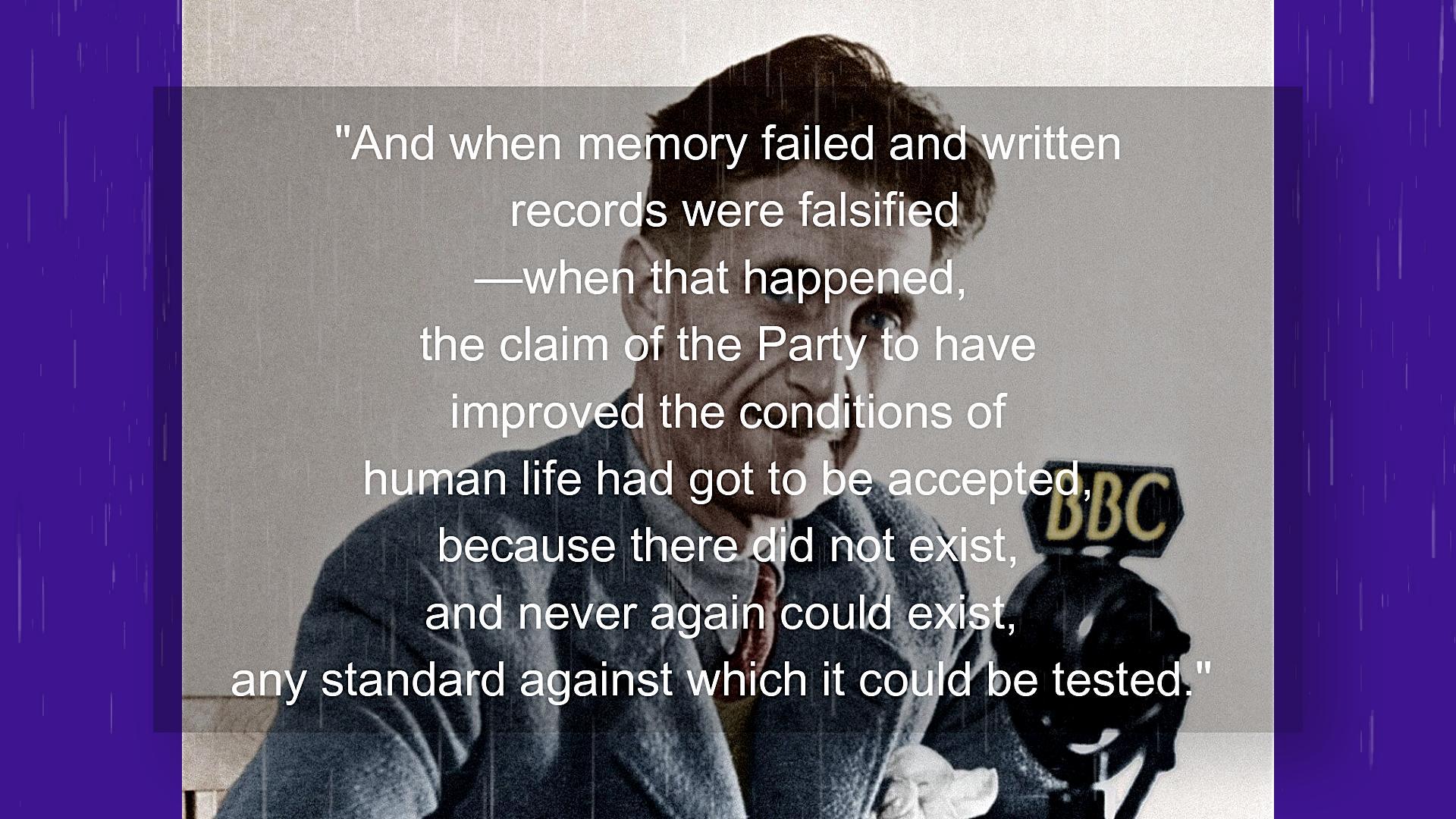
    “And when memory failed and written records were falsified—when that happened, the claim of the Party to have improved the conditions of human life had got to be accepted, because there did not exist, and never again could exist, any standard against which it could be tested.”
    – George Orwell, 1984

    Let’s talk about memory. Not your childhood memories or that summer road trip with the broken-down van. I’m talking about collective memory—what we remember as a culture, as a people, as a nation. And more importantly, who controls that memory.

    George Orwell didn’t write 1984 as fiction. Not really. It was a warning label—slapped right onto the dystopian machinery of state power. The quote above, one of the most chilling in the entire book, is a punch to the gut of anyone who values liberty, truth, and resistance.

    Let’s break this down and apply it to what’s going on right now—in your life, in your country, and in the ever-growing reach of state and corporate power.


    Truth, Memory, and the War on Reality

    Orwell understood something terrifying: if you control the past, you control the present. If you erase the evidence, if you falsify the records, and if you shame or silence the dissenters—you win. Not because you’re right. But because no one can prove you’re wrong.

    This isn’t theoretical. It’s not just literature. It’s happening today in real-time. Governments across the world, including our own, revise history, bury facts, and rewrite narratives that don’t serve their agenda.

    Look at how easily narratives are flipped. One day a foreign nation is our ally, the next it’s our existential threat. One administration builds a surveillance state; the next pretends it never existed. Today’s conspiracy theory is tomorrow’s historical record—once it’s been scrubbed, sanitized, and sold back to us in textbooks and press briefings.

    We’re not just dealing with lies—we’re dealing with the elimination of the very tools needed to detect lies.


    The Standard Has Been Deleted

    Orwell’s quote cuts deeper than just censorship. He’s describing a process where all standards—all comparisons to a past reality—are removed. When memory fails and the written record is falsified, there’s no longer a yardstick to measure truth. You’re trapped in a world where the only thing that’s “real” is what the Party says today… even if it contradicts what they said yesterday.

    This isn’t just dangerous—it’s totalitarianism at its finest. It’s not about convincing you. It’s about obliterating your ability to even question.

    The philosopher Karl Popper once said, “Those who promise us paradise on earth never produced anything but a hell.” The Party in 1984 promises progress, improvement, utopia. But if you can’t measure what life was like before, how do you know you’re better off?

    You don’t. And that’s the point.


    Big Brother and Big Tech: Modern-Day Memory Holes

    Let’s drag this out of the 20th century and into the digital age.

    Google, Facebook, X (formerly Twitter), and YouTube now serve as the de facto Ministry of Truth. Content gets pulled. Channels get banned. Search results are “curated” to match “community standards.” You post the wrong information, even if it’s factually accurate, and poof—you’re erased.

    The digital memory hole is a real thing. And it’s expanding.

    History is now mediated through biased algorithms. Truth is subject to “fact-checkers” funded by political operatives and corporate interests. And memory—our shared cultural history—is erased one click at a time.


    How Libertarians Fight Back

    This is why I, and many like me, beat the drum of liberty so hard. Because when you strip away the noise, the headlines, the talking points, what’s at stake is reality itself. The state wants a monopoly on reality—and it’s willing to destroy language, logic, and liberty to get it.

    As libertarians, we believe truth is discovered, not decreed. We don’t outsource memory to the state. We defend decentralization. We record our own history. We don’t burn books—we write them. We don’t delete posts—we back them up.

    Disruptarianism is about refusing to accept the manufactured consensus. It’s about questioning everything—even (especially) when it makes you unpopular. Because, as Orwell would tell you, being in the minority doesn’t mean you’re mad. Sometimes, it means you’re the only one who remembers what truth looks like.


    Don’t Let the Standard Die

    Let me leave you with this:

    The worst kind of tyranny doesn’t come with jackboots and surveillance drones. It comes wrapped in comfort. In convenience. In the polite lie that says, “The past doesn’t matter.” But it does. And the only way we lose the future is by surrendering the past.

    If there’s no standard—no record—no memory—then the truth becomes whatever the powerful say it is. And freedom? Freedom dies with it.

    So write things down. Save the screenshots. Record your conversations. Read banned books. Back up your blogs. Share the content they try to censor. Because if you don’t—if we don’t—then Orwell’s warning becomes prophecy.

    And this time, there won’t be anyone left to remember what we lost.


    Stay free. Stay vigilant. Stay Disruptarian.

    — Ryan “Dickie” Thompson
    The Punk Rock Libertarian

    Spun Web Technology SMART SEO

    Spun Web Technology SMART SEO

  • Orwell Predicted This: Why the Warning Still Matters

    Orwell Predicted This: Why the Warning Still Matters

    Disruptarian featured image for Orwell Predicted This: Why the Warning Still Matters

    Verified at: 2026-06-22 6:25:57

    Orwell Predicted This: Why the Warning Still Matters is the kind of subject that fits the Disruptarian lane because it sits where independent media, culture, music, and political commentary collide.

    The source description frames it this way: A fast Disruptarian warning shot on Orwell, modern speech control, and the way political language can be used to bend public reality. Ryan Thompson connects Orwell's warnings to today's fights over truth, censorship, propaganda, and cultural pressure. Original YouTube title: How Orwell Predicted the Future (and Why It Matters Now) Source: https://www.youtube.com/watch?v=ROY5sCRODnM Disruptarian: https://www.disruptarian.com

    The useful question is not only what happened, but why the story matters to people who distrust scripted narratives, recycled outrage, and corporate-approved commentary.

    A Disruptarian reading starts with individual agency. The listener is not asked to accept a packaged conclusion. The point is to pull the claim apart, compare incentives, and look for the pressure points that legacy media often skips.

    That approach matters for libertarian radio commentary because the audience is usually looking for more than a headline. They want context, motive, contradiction, and a practical sense of how public stories become private consequences.

    The cultural layer is just as important. Disruptarian music and reggae punk energy are not decorations around the message. They give the work its rhythm: skeptical, confrontational, and rooted in the idea that speech should stay alive even when institutions prefer silence.

    For search readers arriving cold, the primary source is included below either as an embed or as a direct source link. Start there if you want the full tone, timing, and argument. The written analysis expands the title and description into a searchable article that can stand on its own.

    The strongest SEO value here is clarity. The article keeps the title language visible, uses descriptive headings, and connects the topic to Disruptarian Radio, independent media, libertarian commentary, political culture, and original music without stuffing the page with empty repetition.

    The larger takeaway is simple: independent commentary survives by documenting what was said, preserving the source, and adding a point of view that does not depend on permission from gatekeepers.

    That is why this post exists as part of the static Disruptarian archive. The video remains embedded, the title and description remain traceable, and the surrounding article gives search engines and readers enough context to understand why the episode belongs in the broader Disruptarian catalog.

    The title itself carries the first keyword signal, but a durable post needs more than a copied headline. It needs a clear H1, a concise meta description, a featured image with descriptive alt text, and enough editorial framing for readers to know why the video is part of this archive.

    From an independent media perspective, the value is in keeping the primary source visible. Embedding the video prevents the article from becoming detached commentary. Readers can compare the written interpretation against the actual recording and decide whether the argument holds up.

    The libertarian angle is not automatic partisanship. It is a suspicion of concentrated power, public manipulation, and narratives that ask citizens to outsource judgment. That suspicion applies to government, platforms, corporations, activist institutions, and media brands alike.

    Disruptarian Radio also treats culture as evidence. Music, political language, online mobs, censorship fights, moral panics, and personal stories all reveal where pressure is being applied. That is why a radio episode can be more than entertainment; it can become a record of a moment.

    For listeners who follow DJ Disruptarian, the same pattern shows up in the music catalog: reggae rhythm, punk edge, spiritual critique, and anti-authoritarian instinct. The written post keeps that identity attached to the video instead of letting it disappear into a platform feed.

    Good SEO on a page like this should help people find the conversation without flattening the voice. The article uses natural phrases such as Disruptarian Radio, independent media, libertarian podcast, political commentary, original music, and disruptive conversations only where they make sense.

    The featured image should follow the Disruptarian editorial-collage style: torn paper, smoke, halftone grit, dirty cream paper, black and oxblood pressure, muted gold accents, and symbolic props tied to the subject rather than generic filler. Its alt text names the subject so search engines and screen readers get useful context.

    The article also keeps a stable URL under the static blog. That matters because feeds move, platforms change embeds, and social links decay. A static post gives the episode a second home that can be indexed, backed up, linked, and reviewed later.

    The final point is documentation. When a channel publishes a new video, the title and description are often the only structured metadata available. Turning that metadata into a post creates a stronger archive without pretending to replace the original recording.

    This is the practical Disruptarian method: preserve the video, state the source, add commentary, keep the searchable terms honest, and let the reader move between the embedded media and the written analysis without friction.

    This additional context keeps the post useful for readers who arrive from search rather than from the original channel. It explains the source, preserves the embed, and connects the subject back to the larger Disruptarian archive.

    This additional context keeps the post useful for readers who arrive from search rather than from the original channel. It explains the source, preserves the embed, and connects the subject back to the larger Disruptarian archive.

    This additional context keeps the post useful for readers who arrive from search rather than from the original channel. It explains the source, preserves the embed, and connects the subject back to the larger Disruptarian archive.


    The shortlink was copied to your clipboard

    X
    f
    r

    Related Reading

    Similar posts


    Disruptarian Blog

    2026-06-20

    Disruptarian Blog

    Disruptarian commentary on AI Could Save Humanity or Destroy It: The Truth About the Machine Future with embedded source video, independent media context, and libertarian radio analysis.

  • How to Become a Digital Nomad in the Philippines

    How to Become a Digital Nomad in the Philippines

    Disruptarian featured image for How to Become a Digital Nomad in the Philippines

    Verified at: 2026-06-22 6:33:18

    How to Become a Digital Nomad in the Philippines is the kind of subject that fits the Disruptarian lane because it sits where independent media, culture, music, and political commentary collide.

    The source description frames it this way: Ryan Thompson talks through the digital nomad path from a Disruptarian angle: working online, living abroad, adjusting to the Philippines, and building a life with more freedom and less dependence on the old system. A practical long-form episode for people thinking about remote work, expat life, and Southeast Asia. Original YouTube title: How to Become a Digital Nomad in the Philippines | Disruptarian Radio Source: https://www.youtube.com/watch?v=ymaly5H_Ozo Disruptarian: https://www.disruptarian.com

    The useful question is not only what happened, but why the story matters to people who distrust scripted narratives, recycled outrage, and corporate-approved commentary.

    A Disruptarian reading starts with individual agency. The listener is not asked to accept a packaged conclusion. The point is to pull the claim apart, compare incentives, and look for the pressure points that legacy media often skips.

    That approach matters for libertarian radio commentary because the audience is usually looking for more than a headline. They want context, motive, contradiction, and a practical sense of how public stories become private consequences.

    The cultural layer is just as important. Disruptarian music and reggae punk energy are not decorations around the message. They give the work its rhythm: skeptical, confrontational, and rooted in the idea that speech should stay alive even when institutions prefer silence.

    For search readers arriving cold, the primary source is included below either as an embed or as a direct source link. Start there if you want the full tone, timing, and argument. The written analysis expands the title and description into a searchable article that can stand on its own.

    The strongest SEO value here is clarity. The article keeps the title language visible, uses descriptive headings, and connects the topic to Disruptarian Radio, independent media, libertarian commentary, political culture, and original music without stuffing the page with empty repetition.

    The larger takeaway is simple: independent commentary survives by documenting what was said, preserving the source, and adding a point of view that does not depend on permission from gatekeepers.

    That is why this post exists as part of the static Disruptarian archive. The video remains embedded, the title and description remain traceable, and the surrounding article gives search engines and readers enough context to understand why the episode belongs in the broader Disruptarian catalog.

    The title itself carries the first keyword signal, but a durable post needs more than a copied headline. It needs a clear H1, a concise meta description, a featured image with descriptive alt text, and enough editorial framing for readers to know why the video is part of this archive.

    From an independent media perspective, the value is in keeping the primary source visible. Embedding the video prevents the article from becoming detached commentary. Readers can compare the written interpretation against the actual recording and decide whether the argument holds up.

    The libertarian angle is not automatic partisanship. It is a suspicion of concentrated power, public manipulation, and narratives that ask citizens to outsource judgment. That suspicion applies to government, platforms, corporations, activist institutions, and media brands alike.

    Disruptarian Radio also treats culture as evidence. Music, political language, online mobs, censorship fights, moral panics, and personal stories all reveal where pressure is being applied. That is why a radio episode can be more than entertainment; it can become a record of a moment.

    For listeners who follow DJ Disruptarian, the same pattern shows up in the music catalog: reggae rhythm, punk edge, spiritual critique, and anti-authoritarian instinct. The written post keeps that identity attached to the video instead of letting it disappear into a platform feed.

    Good SEO on a page like this should help people find the conversation without flattening the voice. The article uses natural phrases such as Disruptarian Radio, independent media, libertarian podcast, political commentary, original music, and disruptive conversations only where they make sense.

    The featured image should follow the Disruptarian editorial-collage style: torn paper, smoke, halftone grit, dirty cream paper, black and oxblood pressure, muted gold accents, and symbolic props tied to the subject rather than generic filler. Its alt text names the subject so search engines and screen readers get useful context.

    The article also keeps a stable URL under the static blog. That matters because feeds move, platforms change embeds, and social links decay. A static post gives the episode a second home that can be indexed, backed up, linked, and reviewed later.

    The final point is documentation. When a channel publishes a new video, the title and description are often the only structured metadata available. Turning that metadata into a post creates a stronger archive without pretending to replace the original recording.

    This is the practical Disruptarian method: preserve the video, state the source, add commentary, keep the searchable terms honest, and let the reader move between the embedded media and the written analysis without friction.

    This additional context keeps the post useful for readers who arrive from search rather than from the original channel. It explains the source, preserves the embed, and connects the subject back to the larger Disruptarian archive.

    This additional context keeps the post useful for readers who arrive from search rather than from the original channel. It explains the source, preserves the embed, and connects the subject back to the larger Disruptarian archive.

    This additional context keeps the post useful for readers who arrive from search rather than from the original channel. It explains the source, preserves the embed, and connects the subject back to the larger Disruptarian archive.


    The shortlink was copied to your clipboard

    X
    f
    r

    Related Reading

    Similar posts


    Disruptarian Blog

    2026-06-22

    Disruptarian Blog

    Disruptarian commentary on Is Social Security a Ponzi Scheme? Disruptarian Radio Breakdown with embedded source video, independent media context, and libertarian radio analysis.

  • How to Work Remotely from the Philippines and Get Paid in USD

    Ryan “Dickie” Thompson’s Freedom-Based Guide to Remote Work That Actually Pays

    I’ve been doing this remote work thing long before it was trendy. Back in 1999, I was already earning online while the rest of the world was still glued to office cubicles and dial-up modems. I’ve worked remotely for big players like Talyst Inc., and I’ve built my own companies from scratch — SLU2.com, SpunWebTechnology.com, and AssignMeYourTasks.com — all run from laptops across sixteen countries and a whole lot of beach towns.

    Download this podcast here

    So when I say you can make a living online from the Philippines, I’m not guessing. I’ve lived it. I’ve worked U.S. contracts from a rooftop in Cebu. I’ve built businesses while sipping buko juice in Batangas. I’ve watched people go from paycheck-to-paycheck to earning in USD and spending in pesos just by flipping the script and working remotely.

    This is your guide. If you’re tired of the grind, want more freedom, and are ready to take your skills global, then keep reading. I’ll show you how to find real jobs, build a professional resume, and even automate your job search with tools I personally use.


    Build a Resume That Speaks for You (Not Against You)

    Let’s be honest. Most resumes suck. They’re generic, outdated, and make people look like they haven’t touched a computer since Friendster.

    You want your resume to sell you. Clean layout. Sharp language. No fluff. Show people what you’ve done — and what you’re capable of doing for them.

    Start with:

    • A simple layout — No photos, no crazy fonts. Just clean and professional.
    • Tailored content — Match the job description. Use their language. Mirror their needs.
    • Achievements over tasks — Don’t say “Managed emails.” Say “Reduced client churn 18% by optimizing support workflows.”

    “I personally use ChatGPT to write and revise resumes. It gives me structure and then I customize it to make it real.” – Ryan “Dickie” Thompson

    Here are five AI tools that’ll help you get your resume and cover letter dialed in:

    1. Rezi – Great for beating ATS bots.
    2. Kickresume – Templates and real-world examples you can tweak.
    3. Zety – Instant writing tips and live editing.
    4. Teal – Manage multiple resume versions with job matching tools.
    5. Enhancv – Adds storytelling to your profile without losing professionalism.

    Use these with ChatGPT for a powerful combo. Build your draft, refine it, then start sending it out.


    Where to Find Real Remote Jobs That Pay in Dollars

    There are a lot of job boards out there, but many are just noise. I’ve personally worked through several of these platforms and know which ones get results.

    Here are ten sites I recommend if you’re in the Philippines and looking for remote work with U.S. companies:

    1. Upwork – I’ve used it myself for long-term contracts. Start small, build a rep, then scale up.
    2. OnlineJobs.ph – Built specifically for Filipino freelancers. U.S. clients love it.
    3. Fiverr – Create services and get direct clients. Great for creatives and coders.
    4. Toptal – For high-level talent. It’s competitive but the pay is worth it.
    5. LinkedIn – Underused for remote work. Connect with recruiters and apply directly.
    6. Freelancer.com – Like Upwork, but often more flexible with entry-level opportunities.
    7. We Work Remotely – Curated remote-only jobs with legit U.S. companies.
    8. Remote OK – Tech-focused and fast-growing.
    9. Hubstaff Talent – No fees. Straightforward platform used by startups and agencies.
    10. Outsourcely – Good for steady roles in marketing, development, admin, and support.

    Don’t Just Search. Automate.

    If you’re serious, you can’t treat this like a hobby. You need systems. That’s where SpunWebTechnology.com comes in — my own company that provides automation agents to help with your job search.

    Instead of spending hours scrolling through job boards, these bots can:

    • Auto-apply based on your skill set.
    • Filter real, high-quality listings.
    • Monitor platforms 24/7 so you don’t miss new gigs.

    If you want a competitive edge without wasting your day hunting for work, this is how you scale. I built this system for myself — now others can use it too.

    Also, make sure you’re using search tricks like this:

    “Remote jobs in the USA for Filipinos site:flexjobs.com”

    Set alerts. Use filters. And remember: the more organized your search, the faster you get hired.


    Huge Win: The Philippines Launches a Digital Nomad Visa

    In a rare stroke of policy genius, the Philippine government introduced the Digital Nomad Visa (DNV) in April 2025. For expats, freelancers, and remote workers, this is a major green light.

    Here’s what it does:

    • Lets you live in the Philippines legally while working online for foreign companies.
    • No need for a local sponsor or employer.
    • You keep your foreign income and stay compliant.
    • Designed for creatives, developers, consultants, and online professionals.

    This isn’t a dream anymore. It’s law. It’s leverage. And it opens the doors wide open for anyone ready to take control of their life.


    What Jobs Are Out There?

    There’s more than enough remote work to go around. Especially if you can communicate clearly, hit deadlines, and work without hand-holding.

    Here’s what U.S. companies are hiring for right now:

    • Virtual Assistant
    • Web Developer
    • Graphic Designer
    • SEO Specialist
    • Content Writer
    • Customer Support
    • Project Manager
    • Tech Support
    • Social Media Manager
    • Data Entry Specialist

    If you’ve got decent English, can stay focused, and know how to use tools like Google Docs, Slack, or Trello, you’re ready to go.


    Final Word from Dickie

    This isn’t a get-rich-quick scheme. It’s not passive income fluff. This is the real work of building a free life.

    You don’t need to be rich to get started. You just need direction, commitment, and the right tools.

    “I’ve been working remotely for over two decades. I’ve built businesses and worked contracts from all over the world. If I can do it with a laptop, some grit, and good English so can you.” – Ryan “Dickie” Thompson

    So get to it. Build your resume. Get on those platforms. Use the tools at SpunWebTechnology.com to work smarter. And if you’re an expat, pack your bags — the Philippines just gave you a legal path to remote freedom.

    Don’t wait for permission. Just start.

    Spun Web Technology SMART SEO

    Spun Web Technology SMART SEO

  • Preserving the Truth: Why the Internet Archive Matters Now More Than Ever

    Let’s talk about something that doesn’t make headlines, but absolutely should.

    In a world where digital memory is constantly being rewritten, deleted, or manipulated, there’s one corner of the internet that’s been quietly fighting for the most punk rock cause of all—preserving history exactly as it was.

    It’s called the Internet Archive. And if you’ve never heard of it, you’re about to understand why it’s one of the most important digital tools for truth, transparency, and cultural preservation on the planet.

    This isn’t just a tech project. It’s a rebellion against the erasure of reality. It’s the counterculture of data. It’s the library the establishment doesn’t want you to know about.

    Let me break it down.


    What Is the Internet Archive?

    At its core, the Internet Archive is a nonprofit digital library. It was launched back in 1996 by Brewster Kahle, a technologist with a radical idea—that everything on the internet should be saved, just like books in a library.

    Why? Because the web is fragile. Pages disappear. Articles get pulled. Governments and corporations rewrite or delete content when it becomes inconvenient. History gets “updated” to suit current narratives.

    The Internet Archive says no to all that. It captures websites, documents, images, audio, and video from all over the world and stores them in a massive, publicly accessible digital vault. Anyone can access it. No paywalls. No filters. No algorithm telling you what to see.

    Its most famous feature is called The Wayback Machine. Think of it like a time machine for the internet. You can type in almost any website and see what it looked like in the past. Whether it’s CNN in 2003, a deleted government report, or your old blog from college, it’s probably been saved there.

    The Archive hosts over 866 billion web pages, millions of books and texts, over 14 million audio recordings, and more than 4 million videos. It’s basically the Library of Alexandria for the internet age, but this time, we’re not letting it burn.


    Why It’s More Than Just a Geek’s Playground

    You might be thinking, “That sounds cool, but why should I care?”

    Because we live in an era of digital gaslighting. Stories get memory-holed. Politicians say one thing and pretend they didn’t. Tech companies rewrite their terms of service. Media outlets update headlines without transparency. Every day, we see facts get reshaped in real-time.

    If you’re someone who values truth, liberty, and accountability, then the Internet Archive is a lifeline. It gives you the receipts. It’s how you prove what was said, what was promised, and what was quietly deleted.

    In punk terms: it’s the bootleg tape that exposes the lies.


    The Soundtrack of Resistance: The Grateful Dead Archive

    Now here’s something even cooler.

    The Internet Archive isn’t just about websites and documents. It also hosts one of the most legendary collections of live music in existence—The Grateful Dead Archive.

    The Dead were pioneers in more ways than one. Long before Spotify and YouTube, they embraced taping culture. They let fans record and share their live shows freely, which built a loyal, decentralized fan base long before that was cool. They understood that music wasn’t just a product—it was a cultural artifact.

    Thanks to the Archive, you can now stream thousands of Grateful Dead concerts, dating back to the 1960s. High-quality, lossless audio recordings. Setlists. Fan reviews. All preserved and free.

    You want to hear Jerry Garcia jam for 18 minutes on “Eyes of the World” in 1974? It’s there. Want to listen to an audience-recorded set from Red Rocks in 1982? It’s there too.

    The Grateful Dead archive is more than a music collection. It’s a living example of cultural freedom. A direct connection to a time when the counterculture was about community, not corporate branding.

    And it’s a blueprint for how art should be preserved and shared.


    Our Story: Veracity Life on the Archive

    Here at Veracity Life and Disruptarian, we take transparency seriously. So we practice what we preach.

    Our own content—archived, timestamped, and fully public—lives right on the Internet Archive. You can check it out here:
    👉 https://archive.org/details/@veracitylife/web-archive

    Every article, podcast episode, blog post, and snapshot we upload becomes part of the permanent record. We don’t believe in hiding the past or quietly “updating” our stance to fit current trends. That’s what the media and political establishment do. We do the opposite.

    The goal is simple: veracity means truth. If we say something, we stand by it. If we get something wrong, we correct it publicly. The Archive holds us accountable—and we love that.

    By using the Internet Archive, we give our audience a transparent, auditable history of what we’ve said and published. You can track our evolution. You can dig into past reports. You can see how our content has stood the test of time.

    This isn’t just good for us—it’s good for you. It empowers readers, listeners, and viewers to think critically and make their own decisions without relying on corporate filters or social media algorithms.


    Censorship and the Fight to Preserve Memory

    Of course, not everyone loves the Internet Archive. In fact, it’s been under legal attack for years.

    Major publishers have sued the Archive for preserving digital books. Copyright trolls have come after it. Even government entities have tried to pressure the platform. Why? Because power hates accountability. The more access the public has to the truth, the harder it is to control the narrative.

    This is why the Archive matters so much right now. As censorship grows and digital freedom shrinks, the ability to access uncensored history becomes essential. It’s not just about nostalgia. It’s about defending the record.

    The Archive isn’t perfect, but it’s one of the last truly open corners of the internet. And if we let it fall, we lose one of the best tools for preserving free thought in the digital age.


    Final Thoughts

    If you’re someone who values liberty, truth, and open access to information, the Internet Archive is your ally. It’s not flashy. It doesn’t have influencers or viral trends. But it’s doing the kind of work that actually matters.

    It preserves culture without permission. It saves facts without filters. It gives power back to the people, not the platforms.

    So the next time you want to revisit a deleted article, research a historical moment, or stream a legendary live concert, remember there’s a place where that’s still possible.

    And if you’re a content creator, journalist, musician, or everyday truth-seeker—use it. Contribute. Archive your own work. Be part of the movement.

    Because in the battle for truth, memory is resistance.


    Ryan “Dickie” Thompson is the Punk Rock Libertarian behind Disruptarian.com and Veracity Life. He archives his work to preserve it from censorship and rewrites, and he believes the future belongs to those who remember the past honestly.

    Spun Web Technology SMART SEO

    Spun Web Technology SMART SEO

  • What Comes After Trump: A Punk Rock Libertarian’s Look at the Next US Presidential Race

    Donald Trump is back in the White House. Whether that excites you or sets your teeth on edge, it’s where we are. This is his final term, and it’s already clear that it’s going to shake the system again. Like him or not, Trump didn’t just win another election. He turned the political weather upside down.

    His second term isn’t just about finishing what he started. It’s about setting the tone for what comes after. His popularity has stayed strong both in the US and around the world, and this win wasn’t some fluke. It was a clear message from the people that they are done with the same old machine politics and weak leadership.

    Now the question is what kind of leader will follow him, because this movement isn’t slowing down. It’s just getting started.

    The Left Is Losing Steam

    Let’s talk honestly about the Democrats for a second. No one seems to know who they’ll run in the next election. The party doesn’t have a frontrunner that people are excited about. The names being floated like Kamala Harris, Gavin Newsom, and even Michelle Obama just don’t move the needle.

    The Democratic leadership is so tied up in ideological culture wars that they’ve lost the thread when it comes to what real Americans want. People are struggling with inflation, watching their communities fall apart, and trying to protect their kids from harmful agendas. And all they get from the left is lectures and slogans.

    According to Gallup, only 28 percent of Americans approve of Congress right now. Think about that. Seventy-two percent of the country thinks Congress is doing a terrible job. That’s not a dip in popularity. That’s a complete collapse in trust. Congress was designed to be the balance to executive power, but it’s become a circus that wastes money and avoids accountability.

    And while the US flails around with partisan nonsense, other countries are actually making moves. In the UK, for example, their government has started protecting children from radical gender medicine. They’ve officially defined a woman as a biological female. That’s not a small thing. That’s a cultural turning point, and it’s influencing global conversations. Trump already took some of these steps during his first term, and the next American president will need to follow through even harder.

    Principles Over Personalities

    Too much attention gets paid to who is running instead of what they stand for. Whoever steps into the spotlight after Trump needs to come with a clear set of values. Voters want someone who can take a stand and tell the truth. That’s what it’s going to take to lead in this next chapter.

    Here’s what I believe most Americans will be looking for when it comes to choosing the next president.

    1. Knows the Difference Between a Man and a Woman

    It’s crazy that this is even controversial. The next president must be grounded in biological reality. If they can’t answer a basic question like “What is a woman?” without stammering or deflecting, they are not ready to lead a nation.

    2. Tells the Truth About the State of the Nation

    People know when they’re being lied to. The economy is unstable. The border is a mess. Crime is rising. And yet, leaders keep pretending everything is normal. The next president must speak plainly and honestly about what is going on, even when it’s uncomfortable.

    3. Is Not Scared of Cancel Culture

    We need someone who will not cave when the mob comes after them. Someone who can take a stand, even when it’s unpopular. That doesn’t mean being reckless. It means having principles and sticking to them, even when the media tries to twist the narrative.

    4. Respects Taxpayer Money

    The government has been treating taxpayer dollars like play money. Pandemic bailouts, massive foreign aid, and bloated bureaucracies have drained trust in how money is handled. Even joke currencies like DOGE have become symbols of public frustration. The next president must take spending seriously and bring some financial discipline back to Washington.

    5. Has a Logical Immigration Plan

    America has always welcomed immigrants, but that doesn’t mean we have to accept lawlessness. We need secure borders and a clear, fair system. The next leader should welcome those who want to contribute while enforcing laws that protect the integrity of our system.

    6. Believes in Foundational American Principles

    The next president should actually live out the values that this country was built on. Things like personal responsibility, free speech, the right to self-defense, local control, and voluntary cooperation. These are not buzzwords. They are the backbone of a free and thriving nation.

    7. Plans for Future Generations

    A real leader doesn’t just think about the next four years. They think about the next forty. Social Security is running on fumes. Infrastructure is decaying. The federal budget is bloated with spending that doesn’t benefit the people. We need someone who will put long-term stability ahead of short-term politics and help build a future that our kids and grandkids can actually count on.

    So Who’s Stepping Up?

    That’s the big question. No one has emerged as the obvious successor to Trump’s movement. A few names are floating around, and some have real potential. But it might not be a career politician at all. It might be someone from outside the swamp. Someone with real-world experience and a spine.

    Whoever it is, they will need to be tough, smart, and unafraid. They will need to connect with people who feel like they’ve been pushed aside for years. They will need to face down the media, the lobbyists, and the entire corrupt system without backing off.

    Trump shook the system and exposed its flaws. The next president will have to fix what’s been broken and keep the pressure on. That means being real. Being bold. And refusing to play the old games that got us here in the first place.

    Voters are not falling for political theater anymore. They want someone who is grounded, clear, and focused on the people. If the next candidate can do that, they’ll have a serious shot at shaping the future.

    The movement is bigger than one person now. It’s a shift in the national mindset. The next leader who taps into that honestly and effectively is going to carry the torch forward.


    Ryan “Dickie” Thompson is the Punk Rock Libertarian behind Disruptarian.com. He writes for people who are tired of being lied to and ready to reclaim their future.


    References

    • Gallup Poll on Congressional Approval (2024):
      No Labels summary
    • UK Policy on Transgender Medical Practices:
      Government statements and NHS guidelines reported in BBC and The Telegraph, 2023–2024
    • Trump Administration’s gender policy adjustments:
      U.S. Department of Health and Human Services announcements (2017–2020), reported in Politico, Fox News, and NPR
    • DOGE and public awareness of government waste:
      Bloomberg, CNBC, and Wall Street Journal articles from 2021–2023 on meme economy commentary
    Spun Web Technology SMART SEO

    Spun Web Technology SMART SEO
  • A Return to Order: Pope Leo XIV and the Quiet Restoration of Catholic Integrity

    In a time when the world feels like it’s spinning sideways, it’s no small miracle that the Catholic Church might finally be coming back to center. On May 8, 2025, history was made: Robert Francis Prevost, an American from the rough-edged streets of Chicago, became Pope Leo XIV. The first U.S. native to don the white cassock, Leo XIV may very well be the man to restore integrity, tradition, and accountability to a Church long battered by progressive drift and institutional decay.

    This isn’t the story of another globalist in white robes. This is about a man – conservative, convicted, and, yes, Republican – who might just pull the Church back from the brink and re-anchor it in the moral clarity it abandoned under Pope Francis.


    The Pope with Scars: Who Is Leo XIV?

    Before being elevated to the Chair of Saint Peter, Robert Francis Prevost served as bishop of Chiclayo, Peru, and led the Augustinian order in Chicago. No stranger to controversy, his name has surfaced in discussions surrounding the handling of sexual abuse cases – a black mark on the entire Church, not just one man. But while critics latch onto these moments, they often ignore what he actually did: open investigations, meet with victims, and suspend accused clergy when necessary.

    Unlike the bureaucratic fog of past leaders, Leo XIV took action – even when the media twisted the narrative. He reopened closed cases under renewed scrutiny and faced the ugly mess others swept under the altar. This is a man who doesn’t shy away from darkness; he steps into it.

    Yes, scandals existed during his watch. But there’s a world of difference between covering up evil and confronting it in flawed systems that predate any one man.


    A Return to Moral Clarity

    Unlike his predecessor, Pope Francis, who was fond of vague platitudes, symbolic foot-washing ceremonies, and spiritual ambiguity, Pope Leo XIV is unapologetically grounded in traditional Catholic doctrine. And thank God for it.

    🌟 Abortion:

    While Francis often dodged firm condemnation of abortion, couching his statements in political neutrality, Leo XIV’s stance is clear and uncompromising. He shared an article in 2017 that rightly framed abortion as an act that undermines human rights – because it is. Life is sacred. Period. Leo understands that.

    🏞️ Immigration:

    Unlike Francis, who seemed more concerned with pleasing globalists and promoting open-border chaos, Leo XIV understands the moral tension between compassion and order. Yes, he reposted articles critical of harsh policies, but he never suggested erasing national boundaries or undermining state sovereignty. Instead, he advocates for ethical immigration rooted in both mercy and realism. That’s a needed balance, not blind activism.

    🌈 LGBTQ Ideology:

    Francis opened the floodgates to ambiguity, making headlines with “Who am I to judge?” – a phrase weaponized by activists to push ideologies completely at odds with Catholic teachings.

    Leo XIV, on the other hand, has been quietly consistent. Back in 2012, he warned bishops about how Western media was promoting sympathy for lifestyles fundamentally incompatible with the Gospel – including same-sex unions and gender ideology. He may not wave a banner, but he speaks truth in a world terrified of it.

    👩‍💼 Women in the Church:

    Let’s get one thing straight: the push to ordain women isn’t about equality; it’s about ideology. Pope Francis entertained the conversation to placate the progressive mob. Pope Leo XIV? He shut it down.

    He supports expanding women’s roles in church governance but draws a firm line against ordination. His position is rooted not in misogyny, but in thousands of years of theological consistency. This isn’t a democracy. It’s the Church. And Leo knows the difference.


    A Conservative with a Backbone

    Let’s not skip over a delightful twist in the narrative: Pope Leo XIV is a registered Republican. Finally, a Church leader who doesn’t hide behind the veil of nonpartisanship while endorsing every globalist initiative cloaked in compassion.

    Francis might have been the darling of the Davos crowd, but Leo brings Midwestern grit and moral clarity to a role that desperately needs it. He doesn’t perform for media accolades. He doesn’t pander to activists. He speaks softly, but carries the weight of tradition like a sledgehammer.


    Compared to Francis: Thank God for the Upgrade

    Pope Francis was all style, little substance. His papacy was an endless PR tour marked by ambiguity, progressive pandering, and theological soft-shoe. The faithful were confused. The hierarchy was fractured. And the world, sensing weakness, encroached on the Church’s foundations.

    Pope Leo XIV is the correction. He brings order where Francis brought chaos, doctrine where Francis brought dilution, and accountability where Francis offered apology tours.

    This isn’t to say Leo is perfect. He has inherited a fractured, bruised institution and a cynical flock. But at least we finally have a pope who speaks clearly, acts firmly, and doesn’t confuse humility with appeasement.


    Final Thoughts from the Punk Rock Disruptarian

    I never thought I’d say it, but the Vatican might actually be waking up.

    Pope Leo XIV may not be the loudest voice in Rome, but he might be the most grounded man to wear the Fisherman’s Ring in decades. He carries scars. He’s made enemies. But he’s unshaken. While Francis sought approval from the secular world, Leo seems determined to answer to God first and the press never.

    If the Catholic Church has a shot at renewal, it won’t come from dancing with progressives. It will come from men like Leo XIV who remember what the Church was built for in the first place: truth, tradition, and unflinching moral clarity.

    Welcome to the papacy, Pope Leo. Now get to work. The world is watching.

    —
    Ryan “Dickie” Thompson
    Disruptarian.com | The Punk Rock Libertarian | Keeper of the Holy Middle Finger

    Spun Web Technology SMART SEO

    Spun Web Technology SMART SEO

  • Podcast: Will the Trans Movement Cool Off? A Punk Rock Libertarian Looks at the Forecast

    There’s a growing whisper rippling across America’s red-blooded backchannel forums and punk-rock kitchen tables:
    “This trans trend will cool off in five years.”
    Not because people suddenly grew cruel or cold-hearted—but because the house of cards it was built on is finally catching a strong wind.

    And spoiler alert: it’s not hate to question a trend. Especially when that trend is being pumped into schools, armies, and algorithm-driven dopamine dens like TikTok faster than you can say “puberty blockers.”

    Let me be real clear. I’m not talking about the handful of people who genuinely suffer from gender dysphoria and find relief through transition. Those folks exist and deserve compassion—real compassion. But the wave we’re riding now? This isn’t about empathy or medicine. It’s about politics, profits, and power. It’s a wave generated not by nature but by the industrial-sized fans of media hype, government subsidies, and social engineering.

    So let’s break it down. Why do I, a crusty libertarian with a beard full of salt and an internet radio station, think this gender gold rush is heading for a correction?


    1. Government-Funded Identity Theater Is Losing Its Budget

    Under the previous administration (you know, the one where press secretaries couldn’t define “woman”), the feds were dishing out cash like it was a TikTok giveaway. DEI programs, LGBT influencer sponsorships, school curriculum grants—you name it. Washington was subsidizing the heck out of social identity activism. If you could add a new pronoun to your email signature, you had a shot at landing a six-figure consulting gig with the Pentagon or Spotify’s HR department.

    But under the returning Trump administration, that gravy train is being brought to a screeching halt. The federal funding faucet is being shut off.

    No more rainbow washing every federal form. No more influencer welfare programs. And once the money dries up, so does the illusion of mass participation. Watch what happens when TikTokers aren’t getting paid to push “gender journeys.” Suddenly, they discover the gym, or Bitcoin, or whatever the next grift is.

    This isn’t about banning people. It’s about stopping the artificial inflation of an ideology that never had roots deep enough to justify the societal overhaul we’ve been forced to swallow.


    2. Social Media Trends Die—This One Just Took Longer

    Let me remind you of a few social phenomena that once had the kids in a frenzy:

    • Tide Pod Challenge – Eat laundry detergent for likes.
    • Benadryl Challenge – Induce hallucinations and ER visits.
    • NyQuil Chicken – Marinate poultry in cold meds.
    • Choking Game – Oxygen deprivation for clout.

    Now I ask you—do those seem like well-reasoned decisions by people of sound mind? Of course not. They’re cautionary tales of what happens when the adolescent brain meets the virality algorithm.

    So what happens when gender identity becomes the next viral trend? When you have thousands—maybe millions—of confused teens, many of them on the autism spectrum or wrestling with trauma, being told that changing their pronouns and mutilating their bodies will bring peace?

    That’s not compassion. That’s cultural malpractice.

    And trends? Trends fade. This one might take five years, but mark my words: it’ll happen. The media will gaslight you, of course—they’ll pretend they were always “concerned” about the medicalization of kids. But just like bell bottoms and Beanie Babies, this too shall pass.


    3. The Backlash Is Building—From All Sides

    You know who’s waking up now?

    • Mothers of female athletes, whose daughters lost scholarships to biological males with beards and testosterone-fueled lung capacity.
    • Military vets, who’ve watched the Pentagon prioritize gender workshops over combat readiness.
    • Gay and lesbian communities, who’ve seen their spaces erased by a movement that can’t define what a woman is.
    • Parents of detransitioners, attending funerals and hospital visits for kids who were railroaded through hormone therapy with less oversight than a tattoo parlor.

    People are pushing back. It’s not coming from the “alt-right.” It’s coming from everyday Americans who are tired of the gaslighting. Tired of the forced speech. Tired of watching mental illness get celebrated while basic truth is criminalized.


    4. From 20% Identifying as LGBT to Reality’s Return

    Gallup data doesn’t lie: Gen Z reportedly clocks in at 20%+ identifying as LGBTQ. Now look me in the eye and tell me that’s all organic.

    Four years ago, the total LGBT population hovered around 4.5%. That’s not prejudice—that’s just a historical norm. So either we suddenly evolved into an entirely new species… or this is a social contagion, and we’re all just too polite to say it.

    If you’ve got a kid in public school, you’ve seen this happen. Suddenly half the classroom “comes out” within one semester. Peer pressure, online clout, and TikTok therapy sessions combine into an identity carousel that never stops spinning.

    Here’s what I predict: without paid influencers, without algorithmic hand-holding, and without state-backed propaganda, we will return to the baseline. Not out of hate. But because truth has gravity. And eventually, it pulls everything back to the ground.


    5. Free Speech Is Back—And That Changes Everything

    Elon Musk wasn’t kidding when he said “the bird is free.” Since taking over Twitter (now X), we’ve seen the first cracks in the censorship dam. No longer can activists silence dissent with a single report. No more “misgendering = violence” nonsense being enforced like digital blasphemy law.

    And that’s dangerous—to those who built their ideology on insulation. Open debate kills bad ideas faster than any legislation. When people start asking simple questions—”What is a woman?” or “Why is my 11-year-old talking about chest binders in class?”—the whole house of cards starts to tremble.

    And that’s what terrifies them. Because without silence, they can’t control the narrative.


    The Punk Rock Prognosis

    So here’s where I land, as a man who’s lived long enough to watch the pendulum swing both ways:

    This movement has peaked. It’s on the downhill slope, whether it knows it or not.

    And five years from now?

    • DEI departments will shrink or disappear.
    • Trans identification will level off to historical norms.
    • Schools will quietly pull the rainbow flags from classrooms.
    • Media outlets will issue non-apologies.
    • And society—if we’re lucky—will remember this era as a well-intended but reckless chapter fueled by tech, trauma, and tyrants.

    Final Thought

    You can’t buy truth with hashtags. You can’t mandate sanity through policy. And you can’t build a stable society on a foundation of confused kids and corporate virtue signaling.

    The wave is crashing. And I, for one, will be here to mop up the wreckage, tell the stories, and keep blasting punk rock truth into the void.

    The trans movement? It won’t vanish. But it will cool. It has to. Because reality is undefeated.

    And if I’m wrong?

    Well, at least I had the balls to say it before the rest of you did.

    —
    Ryan “Dickie” Thompson
    Disruptarian.com | The Punk Rock Libertarian | Cultural Heretic & Truth-Teller

    Spun Web Technology SMART SEO

    Spun Web Technology SMART SEO