Browse merch

Author: Ryan “Dickie” Thompson

  • Will the Trans Movement Cool Off by 2030? A Disruptarian Forecast

    Will the Trans Movement Cool Off by 2030? A Disruptarian Forecast

    Disruptarian featured image for Will the Trans Movement Cool Off by 2030? A Disruptarian Forecast

    Verified at: 2026-06-22 7:01:51

    Will the Trans Movement Cool Off by 2030? A Disruptarian Forecast is the kind of subject that fits the Disruptarian lane because it sits where independent media, culture, music, and political commentary collide.

    The source description frames it this way: Ryan Thompson looks at whether the trans movement, gender politics, and institutional pressure around identity issues are heading toward a cultural correction by 2030. This long-form Disruptarian Radio episode frames the debate through politics, social backlash, family concerns, and public fatigue with forced narratives. Original YouTube title: Will the Trans Movement Cool Off? Disruptarian Radio Predicts a Cultural Correction by 2030 Source: https://www.youtube.com/watch?v=K7q_M3TWD8Q Disruptarian: https://www.disruptarian.com

    The useful question is not only what happened, but why the story matters to people who distrust scripted narratives, recycled outrage, and corporate-approved commentary.

    A Disruptarian reading starts with individual agency. The listener is not asked to accept a packaged conclusion. The point is to pull the claim apart, compare incentives, and look for the pressure points that legacy media often skips.

    That approach matters for libertarian radio commentary because the audience is usually looking for more than a headline. They want context, motive, contradiction, and a practical sense of how public stories become private consequences.

    The cultural layer is just as important. Disruptarian music and reggae punk energy are not decorations around the message. They give the work its rhythm: skeptical, confrontational, and rooted in the idea that speech should stay alive even when institutions prefer silence.

    For search readers arriving cold, the primary source is included below either as an embed or as a direct source link. Start there if you want the full tone, timing, and argument. The written analysis expands the title and description into a searchable article that can stand on its own.

    The strongest SEO value here is clarity. The article keeps the title language visible, uses descriptive headings, and connects the topic to Disruptarian Radio, independent media, libertarian commentary, political culture, and original music without stuffing the page with empty repetition.

    The larger takeaway is simple: independent commentary survives by documenting what was said, preserving the source, and adding a point of view that does not depend on permission from gatekeepers.

    That is why this post exists as part of the static Disruptarian archive. The video remains embedded, the title and description remain traceable, and the surrounding article gives search engines and readers enough context to understand why the episode belongs in the broader Disruptarian catalog.

    The title itself carries the first keyword signal, but a durable post needs more than a copied headline. It needs a clear H1, a concise meta description, a featured image with descriptive alt text, and enough editorial framing for readers to know why the video is part of this archive.

    From an independent media perspective, the value is in keeping the primary source visible. Embedding the video prevents the article from becoming detached commentary. Readers can compare the written interpretation against the actual recording and decide whether the argument holds up.

    The libertarian angle is not automatic partisanship. It is a suspicion of concentrated power, public manipulation, and narratives that ask citizens to outsource judgment. That suspicion applies to government, platforms, corporations, activist institutions, and media brands alike.

    Disruptarian Radio also treats culture as evidence. Music, political language, online mobs, censorship fights, moral panics, and personal stories all reveal where pressure is being applied. That is why a radio episode can be more than entertainment; it can become a record of a moment.

    For listeners who follow DJ Disruptarian, the same pattern shows up in the music catalog: reggae rhythm, punk edge, spiritual critique, and anti-authoritarian instinct. The written post keeps that identity attached to the video instead of letting it disappear into a platform feed.

    Good SEO on a page like this should help people find the conversation without flattening the voice. The article uses natural phrases such as Disruptarian Radio, independent media, libertarian podcast, political commentary, original music, and disruptive conversations only where they make sense.

    The featured image should follow the Disruptarian editorial-collage style: torn paper, smoke, halftone grit, dirty cream paper, black and oxblood pressure, muted gold accents, and symbolic props tied to the subject rather than generic filler. Its alt text names the subject so search engines and screen readers get useful context.

    The article also keeps a stable URL under the static blog. That matters because feeds move, platforms change embeds, and social links decay. A static post gives the episode a second home that can be indexed, backed up, linked, and reviewed later.

    The final point is documentation. When a channel publishes a new video, the title and description are often the only structured metadata available. Turning that metadata into a post creates a stronger archive without pretending to replace the original recording.

    This is the practical Disruptarian method: preserve the video, state the source, add commentary, keep the searchable terms honest, and let the reader move between the embedded media and the written analysis without friction.

    This additional context keeps the post useful for readers who arrive from search rather than from the original channel. It explains the source, preserves the embed, and connects the subject back to the larger Disruptarian archive.

    This additional context keeps the post useful for readers who arrive from search rather than from the original channel. It explains the source, preserves the embed, and connects the subject back to the larger Disruptarian archive.

    This additional context keeps the post useful for readers who arrive from search rather than from the original channel. It explains the source, preserves the embed, and connects the subject back to the larger Disruptarian archive.


    The shortlink was copied to your clipboard

    X
    f
    r

    Related Reading

    Similar posts


    Disruptarian Blog

    2026-06-21

    Disruptarian Blog

    Disruptarian commentary on Everyone I Disagree With Is a Nazi: Racism, Religion and Reality with embedded source video, independent media context, and libertarian radio analysis.


  • “Trans Will Cool Off in 5 Years”: A Cultural Correction in Progress?

    There’s a phrase floating around the more grounded corners of public discourse lately: “Trans will cool off in 5 years.” Not out of malice. Not from hatred. But from a recognition of how trends—yes, even identity movements—rise, peak, and then lose steam. The prediction isn’t about erasing anyone’s humanity or dismissing the real struggles of a small percentage of people with gender dysphoria. It’s about cultural inflation finally getting a reality check.

    Let’s unpack this.

    Viral Identity: When Culture Becomes Contagion

    We live in an era where identity is currency—and TikTok, YouTube, and Instagram are the mint. For the past decade, especially post-2015, being transgender or aligning with one of the 72+ new gender labels has evolved from a rare and deeply personal journey to something you’re encouraged to try on like a pair of thrift shop Doc Martens.

    We’ve seen this before. Dangerous social media trends regularly grip the youth like a plague of bad ideas:

    • The Tide Pod Challenge (Darwin Award nomination)
    • The Benadryl Challenge (yes, overdose for internet points)
    • NyQuil Chicken aka Sleepy Chicken (FDA actually had to step in)
    • The Choking/Blackout Game (literal self-harm as a rite of passage)

    And while these trends are tragic, at least they die off fairly quickly when parents, schools, and news outlets start screaming about the dangers. But what happens when the trend is less obviously lethal and more ideologically armored?

    Government-Funded Virality: The Real Engine Behind the Trend

    Let’s get blunt: The explosion in transgender identification among Gen Z and Alpha isn’t simply organic. It’s fueled—financially and culturally—by institutions. The past decade has seen billions of taxpayer dollars funneled into DEI (Diversity, Equity, Inclusion), gender-identity programs, and LGBT marketing grants. Combine that with state-sponsored algorithmic preference on platforms like YouTube, Facebook, and TikTok, and what do you get? A manufactured sense of mass adoption and acceptance.

    When Mark Zuckerberg admitted in Congressional testimony that Meta censored posts under pressure from the U.S. government and its agencies (CDC, DOJ, etc.), the alarm bells should have deafened the nation. This wasn’t just about COVID or elections—it extended into gender identity and other hot-button topics.

    Now enter: President Donald Trump (the remastered version).
    With a vengeance and a red pen, his administration is poised to pull the plug on the federal funding lifeline propping up this hyper-accelerated gender movement. Gone are the days of DEI bureaucracies hiring TikTok influencers to lecture teens about pronouns and gender fluidity while cashing government checks. If the money dries up, so does the clout.

    Influence Has a Price—and a Shelf Life

    Here’s the reality: without paid influencers, state-sponsored promotion, and corporate DEI incentives, the buzz dies. Social media is powered by attention economics. If the trans narrative loses its algorithmic boost, you’ll start seeing fewer and fewer “coming out” videos in your feed. Not because anyone’s banned—but because the artificial signal-boosting stops.

    Already, we’re witnessing a backlash across major sectors:

    • Women’s sports: Even the most apolitical suburban moms are throwing down over biological men in girls’ locker rooms.
    • The military: Recruitment is plummeting, and pandering to pronouns isn’t helping.
    • The workplace: Employees are beginning to push back on endless HR re-education camps disguised as DEI training.

    Even Elon Musk’s Twitter (now X) isn’t playing ball anymore. With legacy censorship protocols stripped away, counter-narratives are finally seeing the light of day. And surprise: when people aren’t shadowbanned, the trans trend loses some of its luster in open debate.

    Regression to the Mean: From 20% to 4.5%

    Let’s talk numbers. Gallup data once pegged the LGB population at around 4.5%, with the “T” group barely scraping 0.6% a few years ago. Then suddenly—boom—Generation Z exploded with over 20% identifying as something under the rainbow umbrella.

    Now, either we just lived through the biggest collective coming-out event in human history…
    Or we’re watching the consequence of cultural indoctrination, peer pressure, and algorithmic manipulation.

    If we remove the institutional force-feeding and let things settle naturally, there’s every reason to believe we’ll regress to the mean. That’s not a hate crime. It’s sociology. Trends inflate—and then deflate. Remember emo culture? Crumping? Planking? Even CrossFit had its moment.

    A Cultural Detox is Coming

    To say “Trans will cool off in five years” isn’t about pushing people back into the closet. It’s about society regaining its sanity. The pendulum swung far. Too far. And now it’s swinging back—not with a sledgehammer, but with exhaustion.

    Parents are tired. Kids are confused. Doctors are getting sued. Lawsuits over rushed gender transitions are piling up. And once the financial incentives disappear, so too will many of the opportunistic grifters who jumped on the movement for clicks, fame, or woke clout.

    The conversation will shift from “affirm at all costs” to “wait, why didn’t anyone ask questions?” And when that happens, the public’s patience for the fringe elements of the trans movement will run out.

    Conclusion: Five Years from Now

    Call it a hunch. Call it punk rock prophecy. But I’m betting that in five years, the rainbow revolution will look more like a cautionary tale than a moral triumph. The truly transgender will remain—as they should, with dignity and autonomy—but the cultural hysteria will fade. The mass trend will cool. The influencer class will pivot. The hashtags will die.

    And what’s left? Hopefully, a more honest, less coerced society—one where identity isn’t dictated by trending sounds on TikTok or funded by federal tax dollars, but discovered through personal experience, family, and maybe a little bit of rebellion the old-fashioned way.

    I could be wrong. But I don’t think I am.


    Written by Ryan Thompson – The Punk Rock Libertarian at Disruptarian.com

    Spun Web Technology SMART SEO

    Spun Web Technology SMART SEO

  • The Deep State Isn’t a Conspiracy—It’s a System, and It’s Rigged

    For years, the term “Deep State” has been used as political shorthand. Sometimes it’s a joke. Sometimes it’s used as a catch-all to describe corruption in government. And sometimes, it’s written off entirely by smug talking heads who tell you “that’s just conspiracy theory stuff.”

    But let’s be clear—the Deep State is not a theory. It’s a structure. A machinery. And thanks to recent undercover reporting from O’Keefe Media Group, we’ve now got whistleblowers and White House insiders on video admitting what many of us have suspected for years: there is a class of unelected bureaucrats who actively subvert the will of elected officials, distort public perception, and control the narrative.


    Government by Ghosts: What the O’Keefe Video Reveals

    Meet Byron Cohen, a public health adviser at the White House who works in the Office of Pandemic Preparedness and Response. He’s not a political appointee—he’s what they call a “detailee.” Translation? He wasn’t elected, he wasn’t vetted by voters, and he wasn’t nominated by the President. He was placed into the White House by a fellowship program that plugs bureaucrats into powerful offices.

    Byron is the kind of guy who brags on dating apps about working “next to the President,” while simultaneously admitting that he and others in the bureaucracy have the tools to block policy decisions they don’t like. Don’t take my word for it—watch him say it on video.

    He openly admits:

    “People joke about the Deep State, but to some degree it’s real. They have ways they can slow things down or block you without you realizing it.”

    And how do they do that? It’s not about tanks in the streets or assassinations in the shadows. It’s about death by delay. Create a commission. Order a “study.” Launch a panel. Drag it out for years. All the while, nothing changes, and the elected official leaves office without getting anything done.


    Bureaucratic Sabotage in Action

    Byron lays it out clearly. Let’s say someone like RFK Jr. gets appointed to Health and Human Services (HHS)—a guy who questions the vaccine-industrial complex and wants to reform the system.

    The bureaucracy’s response?

    “You can make him think something is happening when it’s not… We’ll put together a commission to study vaccine safety. He’ll be like ‘Great!’ and then years will pass and nothing will happen.”

    That’s not a conspiracy. That’s an admission of deliberate sabotage—a government insider boasting about how the administrative state can override elected officials, silence dissenting policy, and keep their own power protected.

    Even worse? Cohen admits he would personally stay on longer if the incoming administration follows his ideology—but would quit if they don’t.

    In other words, it’s not about serving the American people. It’s about serving their own agenda.


    The Social Media Iron Curtain

    Let’s rewind a bit.

    Back in 2019 and 2020, Disruptarian.com was averaging over 30 million impressions per month across Facebook, Twitter (now X), and YouTube. Our libertarian commentary, edgy political takes, and challenges to the corporate-state narrative were gaining serious traction.

    Then came COVID. Then came the election.

    And bam—we were hit with content violations left and right. Posts questioning lockdown policies? Flagged. Articles linking to peer-reviewed studies on early treatments? Removed. Videos highlighting hypocrisy in COVID enforcement? Demonetized and buried. Even posts about social issues, questioning the narrative. Zapped!

    Our numbers plummeted from 30 million views a month to 30 thousand. Just like that.

    We weren’t spamming. We weren’t doxxing. We weren’t spreading violence. We were simply asking the wrong questions—and the algorithmic hammer came down.

    Fast forward, and now we know why.


    The DOJ, CDC, and Big Tech Collusion

    Thanks to whistleblower documents, FOIA requests, and direct admissions—including testimony from Mark Zuckerberg himself—we now know that government agencies directly coordinated with social media platforms to silence dissent.

    Zuckerberg admitted in an interview that Facebook suppressed stories because the FBI contacted them in the run-up to the 2020 election. The CDC had dedicated portals to flag content for removal on Twitter. The White House demanded deplatforming of individuals who questioned vaccine efficacy or lockdowns.

    This wasn’t “moderation.” It was state-sponsored censorship. And it was bipartisan.

    It happened under Trump’s final year. It continued under Biden. Because the Deep State doesn’t care who’s president. What it cares about is control—of the platform, the narrative, and ultimately, the people.


    “Subverting the Will of the People Is Justified”

    Let that phrase sink in.

    That’s what Byron Cohen says on tape—verbatim. When asked if subverting RFK Jr.’s policies would be a betrayal of democracy, he shrugs it off. His rationale? Most Americans don’t agree with RFK’s views on vaccines, so crushing his influence is “probably consistent with what the majority wants.”

    That’s not how democracy works.

    In a republic, we elect leaders to make decisions. We don’t let unelected bureaucrats override policy because they think they know better.

    But that’s exactly what we’ve built—a system where power has shifted from the visible to the invisible. From elected officials to unelected functionaries. From representative government to bureaucratic oligarchy.


    My Conclusion: Burn the Narrative Down

    Look—I’m not saying every government worker is part of some Illuminati cabal. I’m saying the system is rigged to preserve itself, regardless of who you vote for.

    When I got censored in 2020, I have poof, and with the O’Keefe video, the Twitter Files, and congressional hearings, we all do.

    The Deep State doesn’t need your consent. It just needs your compliance.

    And it’s time to stop complying.

    This is why Disruptarian exists. Not to feed you rage-bait. Not to repeat tribal talking points. But to expose the mechanics behind the illusion—and light a fire under every complacent citizen still waiting for a savior from either party.

    The savior is you. The revolution is information. The enemy is silence.


    Final Thought
    We live in an empire of soft tyranny—run by smug technocrats, fortified by corporate censors, and protected by bureaucrats who think they’re the guardians of truth. It’s not a conspiracy. It’s a structure.

    And the only way to tear it down is to name it. Loudly. Relentlessly. And without fear.

    Stay loud. Stay free. Stay Disruptarian.

    Spun Web Technology SMART SEO

    Spun Web Technology SMART SEO

  • Retired, Unfiltered, and Speaking the Truth from the Philippines

    By Ryan “Dickie” Thompson – The Punk Rock Libertarian | Disruptarian.com


    They say retirement is when you hang it up and fade into the background. Not for me.

    I’ve been retired for 11 years now, and instead of fading out, I’ve been dialing in. Dialing in my message, my mission, and my commitment to challenging the cultural and political dogmas that are tearing this world apart from the inside out.

    Right now, I’m in Lapu-Lapu, Cebu City, Philippines—thousands of miles from the chaos in the States—but trust me, I’m more plugged in than ever. And I’ve got something to say.


    Why I Can Speak Freely Now

    Back in the day, like a lot of you, I had to play it safe. I had bosses. I had clients. I had to toe the line—not because I didn’t have opinions, but because I didn’t want to bring unnecessary heat down on my workplace.

    Even then, I wasn’t silent. I was outspoken—sometimes too much for some people. My old site, xcannabis.com, was one of the most aggressive pro-cannabis platforms on the web during a time when recreational legalization wasn’t even a whisper. We’re talking over a decade ago, when only 12 states had medical cannabis and the DEA still thought Jack Herer was a domestic terrorist.

    I built a YouTube channel around that fight. I clocked millions of views. People were paying attention. And so was my employer—dropping drug awareness pamphlets on my desk like I didn’t already know the game.

    I wasn’t covert. I’ve never been covert. But I was careful. Now I don’t have to be.


    The Taboo Is Now the Necessary

    These days, the taboo topics aren’t about cannabis or liberty. Those are almost mainstream now. The new taboos are harder to touch because they’re wrapped in emotional landmines and social cancelation. But that just makes them more important.

    And that’s why I’ve ramped up my commentary—especially after the chaos that began with BLM, Antifa, and now this new wave of radicalized trans activism that I call Transtifa. You know the ones. The masked-up mobs smashing windows in the name of “justice.” The ones who demand total ideological submission and call it “tolerance.”

    They burned down cities. They bullied people out of jobs. They tried to cancel anyone who didn’t repeat their slogans on cue. That’s not activism. That’s authoritarianism with a rainbow flag and a Molotov cocktail.

    And I’m not having it.


    Oregon: Where the State Thinks 14-Year-Olds Can Consent to Sterilization

    Let’s talk about something real for a second: Oregon. The same state where a teenager can’t legally get a tattoo, buy a six-pack, rent a car, or even get a damn suntan at a tanning salon without parental consent—can now permanently alter their body with puberty blockers, hormone injections, and surgical sterilization. All without needing mom or dad to sign off.

    Let that sink in.

    You need ID to buy a vape. You need consent to get your ears pierced. But a child can walk into a clinic and get a mastectomy? Or have their genitals removed in the name of “gender affirmation”?

    If this were happening in some dystopian sci-fi novel, people would say it’s too far-fetched. But it’s happening now—in blue states, in public clinics, with your tax dollars. And if you say something, they’ll try to label you a bigot or a transphobe. But I don’t care what they label me.

    Silence is compliance.


    This Isn’t About Hate—It’s About Truth

    Let me be clear. I don’t hate anyone for how they choose to live. You want to transition as an adult? Fine. Do your thing. But when the state starts stepping between parents and children—when irreversible decisions are being made by kids who haven’t even started driving—that’s when we’ve crossed a line.

    And let’s not pretend this isn’t a cultural movement wrapped in a political power play. The same people who claim to be anti-establishment have built a new establishment where speech is policed, science is censored, and dissent is met with digital exile.

    That’s why I speak up. That’s why I broadcast. That’s why I created Disruptarian.com.

    Because there needs to be a counterbalance.


    The Need for a Counterargument

    Turn on any corporate media channel and you’ll hear the same narrative: Progress equals obedience. Justice equals silence. Biology equals hate.

    That’s not journalism. That’s programming.

    We are flooded with one-sided coverage. Every outlet from CNN to NPR repeats the same lines. And even so-called “conservative” outlets often pull their punches.

    But I’m not trying to win followers. I’m not trying to get a book deal. I’m just trying to make sure that our side of the story exists. That the libertarian voice is heard, loud and clear, above the noise.

    I don’t care if it’s perfect. I don’t care if I say it just right. What matters is that someone says it.


    From Cannabis to Cultural Chaos

    It’s funny. I got my start advocating for the right to put a plant in the ground and light it on fire. I fought for medical freedom, personal autonomy, and decentralization. I still believe in all those things.

    But now the fight has moved beyond weed. It’s a fight for truth. A fight for biological reality. A fight for free speech. A fight for the future of childhood itself.

    If that’s not worth speaking up about, what is?


    Why the Philippines?

    You might be wondering—why am I reporting from Cebu? What’s an American libertarian doing in the Philippines?

    Simple. Freedom.

    Sometimes the only way to see your country clearly is to step outside of it. Living abroad has shown me just how far off the rails the U.S. culture war has gone. People here aren’t obsessed with pronouns and microaggressions. They’re worried about feeding their families and protecting their kids.

    It’s given me clarity. And a better signal to beam my message back to the West.


    Final Thoughts: Say What Needs to Be Said

    Look, I’m not perfect. I’m not polished. But I’m principled. And that’s more than you can say for most of the people running things.

    Whether my voice is rough around the edges or not, I believe it matters. I believe your voice matters too. And I believe now more than ever, we need a rebellion of the rational. Not violence. Not chaos. But clarity. Conviction. Courage.

    If you’re reading this, you’re part of that rebellion.

    Stay loud. Stay informed. And for the love of liberty—stay Disruptarian.


    Check out more uncensored commentary and reports at Disruptarian.com

    Spun Web Technology SMART SEO

    Spun Web Technology SMART SEO

  • Why I Speak Out: Retired, Unfiltered, and Reporting from the Philippines

    Why I Speak Out: Retired, Unfiltered, and Reporting from the Philippines

    Disruptarian featured image for Why I Speak Out: Retired, Unfiltered, and Reporting from the Philippines

    Verified at: 2026-06-22 6:37:39

    Why I Speak Out: Retired, Unfiltered, and Reporting from the Philippines is the kind of subject that fits the Disruptarian lane because it sits where independent media, culture, music, and political commentary collide.

    The source description frames it this way: Ryan Thompson explains why he keeps speaking out from retirement in the Philippines, without the corporate filter or approved-media script. This Disruptarian Report frames independent commentary as a personal duty: say what you see, challenge official narratives, and keep telling the truth from outside the usual political machine. Original YouTube title: Why I Speak Out: Retired & Unfiltered from the Philippines – Disruptarian Report Source: https://www.youtube.com/watch?v=1r7YmFBmrpg Disruptarian: https://www.disruptarian.com

    The useful question is not only what happened, but why the story matters to people who distrust scripted narratives, recycled outrage, and corporate-approved commentary.

    A Disruptarian reading starts with individual agency. The listener is not asked to accept a packaged conclusion. The point is to pull the claim apart, compare incentives, and look for the pressure points that legacy media often skips.

    That approach matters for libertarian radio commentary because the audience is usually looking for more than a headline. They want context, motive, contradiction, and a practical sense of how public stories become private consequences.

    The cultural layer is just as important. Disruptarian music and reggae punk energy are not decorations around the message. They give the work its rhythm: skeptical, confrontational, and rooted in the idea that speech should stay alive even when institutions prefer silence.

    For search readers arriving cold, the primary source is included below either as an embed or as a direct source link. Start there if you want the full tone, timing, and argument. The written analysis expands the title and description into a searchable article that can stand on its own.

    The strongest SEO value here is clarity. The article keeps the title language visible, uses descriptive headings, and connects the topic to Disruptarian Radio, independent media, libertarian commentary, political culture, and original music without stuffing the page with empty repetition.

    The larger takeaway is simple: independent commentary survives by documenting what was said, preserving the source, and adding a point of view that does not depend on permission from gatekeepers.

    That is why this post exists as part of the static Disruptarian archive. The video remains embedded, the title and description remain traceable, and the surrounding article gives search engines and readers enough context to understand why the episode belongs in the broader Disruptarian catalog.

    The title itself carries the first keyword signal, but a durable post needs more than a copied headline. It needs a clear H1, a concise meta description, a featured image with descriptive alt text, and enough editorial framing for readers to know why the video is part of this archive.

    From an independent media perspective, the value is in keeping the primary source visible. Embedding the video prevents the article from becoming detached commentary. Readers can compare the written interpretation against the actual recording and decide whether the argument holds up.

    The libertarian angle is not automatic partisanship. It is a suspicion of concentrated power, public manipulation, and narratives that ask citizens to outsource judgment. That suspicion applies to government, platforms, corporations, activist institutions, and media brands alike.

    Disruptarian Radio also treats culture as evidence. Music, political language, online mobs, censorship fights, moral panics, and personal stories all reveal where pressure is being applied. That is why a radio episode can be more than entertainment; it can become a record of a moment.

    For listeners who follow DJ Disruptarian, the same pattern shows up in the music catalog: reggae rhythm, punk edge, spiritual critique, and anti-authoritarian instinct. The written post keeps that identity attached to the video instead of letting it disappear into a platform feed.

    Good SEO on a page like this should help people find the conversation without flattening the voice. The article uses natural phrases such as Disruptarian Radio, independent media, libertarian podcast, political commentary, original music, and disruptive conversations only where they make sense.

    The featured image should follow the Disruptarian editorial-collage style: torn paper, smoke, halftone grit, dirty cream paper, black and oxblood pressure, muted gold accents, and symbolic props tied to the subject rather than generic filler. Its alt text names the subject so search engines and screen readers get useful context.

    The article also keeps a stable URL under the static blog. That matters because feeds move, platforms change embeds, and social links decay. A static post gives the episode a second home that can be indexed, backed up, linked, and reviewed later.

    The final point is documentation. When a channel publishes a new video, the title and description are often the only structured metadata available. Turning that metadata into a post creates a stronger archive without pretending to replace the original recording.

    This is the practical Disruptarian method: preserve the video, state the source, add commentary, keep the searchable terms honest, and let the reader move between the embedded media and the written analysis without friction.

    This additional context keeps the post useful for readers who arrive from search rather than from the original channel. It explains the source, preserves the embed, and connects the subject back to the larger Disruptarian archive.

    This additional context keeps the post useful for readers who arrive from search rather than from the original channel. It explains the source, preserves the embed, and connects the subject back to the larger Disruptarian archive.

    This additional context keeps the post useful for readers who arrive from search rather than from the original channel. It explains the source, preserves the embed, and connects the subject back to the larger Disruptarian archive.


    The shortlink was copied to your clipboard

    X
    f
    r

    Related Reading

    Similar posts


    Disruptarian Blog

    2026-06-22

    Disruptarian Blog

    Disruptarian commentary on Orwell Was Right: Free Speech in a Dystopian Age with embedded source video, independent media context, and libertarian radio analysis.

  • Hawaiian Shirts, Order from Chaos, and the Counter-Narrative of the Boogaloo and Proud Boys

    Hawaiian Shirts, Order from Chaos, and the Counter-Narrative of the Boogaloo and Proud Boys

    America is in a culture war—and the uniforms have changed. Forget the starched military fatigues or red armbands of history. In the 2020s, rebellion wears Hawaiian shirts, flies Gadsden flags, and trolls the establishment with memes instead of manifestos.

    This is the strange, symbolic world of the Boogaloo Bois—a loosely affiliated, heavily armed, anti-authoritarian group that emerged from internet subcultures into the real world during the turbulent years of COVID lockdowns, civil unrest, and political polarization.

    To the untrained eye, they’re chaos incarnate. But look closer, and you’ll see something deeper: a modern warning shot against tyranny, not unlike what Thomas Jefferson envisioned when he wrote that “the tree of liberty must be refreshed from time to time with the blood of patriots and tyrants.”


    🌺 Why Hawaiian Shirts?

    The Boogaloo Bois didn’t choose Hawaiian shirts because they’re fun. They chose them because they’re absurd. In a world where the state is armored, surveilling, and militarized, the Hawaiian shirt is a paradoxical act of defiance.

    It’s the ultimate meme uniform—ironic, flamboyant, and ungovernable. The shirts started as an inside joke about the “Boogaloo”—internet slang for a second American civil war. But they became a cultural symbol for armed resistance to authoritarianism.

    Unlike leftist militants who drape themselves in black bloc, the Boogaloo aesthetic leans into satire. It disarms the media narrative by playing with absurdity while carrying a rifle.

    The absurdity is the point.


    🔫 Boogaloo Bois: The Libertarian Paradox

    Let me be clear: I’m not a member of the Boogaloo Bois or any other group I discuss here. I’m a chronicler of American rebellion, not a foot soldier. Like Andy Ngo reporting on Antifa from behind the camera lens, I watch from the side of liberty.

    But I can’t ignore what the Boogaloo Bois represented: armed resistance against state overreach and forced conformity.

    Many of them were libertarians or anarchists in the anti-war tradition. They weren’t MAGA loyalists. Some even showed up to oppose both Trump and Biden. Their focus? Police overreach, unconstitutional lockdowns, and state violence.

    They were painted as domestic terrorists by the media, but the reality was more complicated. Some protested with Black Lives Matter against police brutality. Others clashed with the far left when those protests turned into riots.

    They were, in essence, order out of chaos—ordo ab chao—a Latin phrase tied to secret societies and revolutions, meaning “order from chaos.” The Boogaloo Bois didn’t want to burn America down. They wanted to reset it back to individual sovereignty and constitutional limits.


    🛑 Proud Boys vs. the Riot Left

    Alongside the Boogaloo Bois came the Proud Boys—another controversial group that the media loves to hate. But if you were watching closely, they didn’t start the fight.

    They responded to the far-left aggression—when Antifa rioters trashed cities, torched courthouses, and brutalized anyone who questioned the liberal narrative.

    February 1st, 2017, Berkeley was burned and vandalized during a leftist riot over Milo Yiannopoulos’s scheduled speech. The so-called “anti-fascists” set fire to ATMs, launched fireworks at police, and assaulted bystanders. The authorities folded. Campus security stood down. The First Amendment was left gasping for breath.

    Where was the opposition? Nowhere.

    Until groups like the Proud Boys—and eventually the Boogaloo Bois—started showing up.

    Not to suppress free speech. To protect it.


    🧭 Between Tyranny and Anarchy

    The Proud Boys and Boogaloo Bois exist in a strange middle ground—rejected by both mainstream conservatives and the radical left. And that’s exactly why they matter.

    They emerged when institutions failed:

    • Police departments that wouldn’t defend communities.
    • Universities that surrendered to mobs.
    • Politicians who watched cities burn and called it “mostly peaceful.”

    They didn’t emerge to dominate. They emerged to counterbalance. Like Kyle Rittenhouse—another vilified symbol of individual defense—they stepped in when the state refused to protect.

    You may not like their tactics. You may not agree with all their ideas. But the principle they act upon—that free people must stand against violent coercion and mob tyranny—is undeniably American.


    💣 The Left’s Fascist Tendencies

    Here’s the irony: the left screams “fascism!” at anyone wearing tactical gear, but they’re blind to their own jackboots.

    • BLM “protests” led to over $2 billion in damage nationwide.
    • Antifa physically silenced opposing viewpoints at campuses and city halls.
    • “Transtifa” activists now openly threaten people who question gender ideology, often with armed intimidation.

    These are not “civil rights” movements. They are coercive movements. They punish dissent. They use fear. They demonize and dehumanize opponents.

    That’s not liberty. That’s authoritarianism in rainbow packaging.

    In that landscape, counterforces were inevitable.


    ⚖️ Not Just Violence—Symbolism

    Both the Proud Boys and Boogaloo Bois represent something larger than street skirmishes. They’re symbols—blunt, messy, and often misunderstood—of resistance against a collapsing narrative and a centralized control system.

    Their existence is a cultural flare: a signal that order is no longer coming from above, so it will be forged below.

    And no, this isn’t an endorsement. I don’t wear their colors or join their ranks. But I observe, and I recognize that history is always shaped by the disruptors—those who challenge the dominant power structures, even if imperfectly.


    🗽 Rebellion Is American

    Let’s remember: rebellion is not un-American. It is America. The Founders were radicals. Jefferson literally said rebellion “is as necessary in the political world as storms are in the physical.” They didn’t wait for permission—they created new systems when the old ones became tyrannical.

    Today’s dissidents—armed or not—are tapping into that same ethos. Whether with Hawaiian shirts or MAGA hats, body armor or livestreams, they are saying the same thing:

    “The system no longer represents us. So we represent ourselves.”


    🏁 Final Word: The Disruptarian View

    At Disruptarian, we don’t shy from controversy—we lean into the fire. We explore the uncomfortable truths that corporate media won’t touch and frame them through the lens of liberty.

    I don’t endorse everything these groups have done. I don’t vouch for every individual within them. But I refuse to let the narrative be dictated by those who burn down cities, suppress speech, and hide behind moral superiority while enforcing ideological conformity.

    The Proud Boys and Boogaloo Bois weren’t born out of hate. They were born out of absence—a vacuum left by cowardly leaders, politicized police, and corrupt institutions.

    And when the system collapses, the people rise. Some with flowers. Some with flags. Some with rifles and Hawaiian shirts.

    That, my friend, is America.


    About the Author
    Ryan “Dickie” Thompson is The Punk Rock Libertarian behind Disruptarian.com. An advocate of radical free speech, limited government, and DIY resistance to tyranny. He reports, he questions, and he disrupts—with words, not weapons.

    Spun Web Technology SMART SEO

    Spun Web Technology SMART SEO

  • From Tears to Truth: How Bari Weiss Overcame Trump Derangement Syndrome


    From Tears to Truth: Bari Weiss and the Cure for Trump Derangement Syndrome

    Back in 2016, the elite media class had a collective breakdown. The election of Donald Trump sent legacy journalists, academics, and Silicon Valley billionaires into a psychological spiral. The fearmongering was intense—predictions of fascism, civil war, and the literal end of democracy. But perhaps no story captures this hysteria—and the path out of it—better than the evolution of Bari Weiss.

    Yes, that Bari Weiss. The former New York Times editor and journalist who openly admitted to sobbing at her Wall Street Journal desk the day after Trump won.

    “I was a sufferer of what conservatives would have called TDS—Trump Derangement Syndrome,” she told Honestly, her podcast on Free Press.

    Let’s unpack that.


    What Is Trump Derangement Syndrome?

    Trump Derangement Syndrome (TDS) is what happens when rational thinking is replaced by emotional overdrive at the mere mention of Donald J. Trump. It’s not disagreement on policy—it’s a reflexive, almost religious-level opposition to anything associated with the man.

    It led supposed liberals to embrace censorship, surveillance, and media manipulation, all in the name of “protecting democracy.” It turned legacy journalists into activists and made critical thinking a threat to the narrative.


    Bari’s Red Pill Moment

    Bari Weiss’s case is important—not because she became a Trump fan (she didn’t), but because she broke free from the mental rigidity that TDS installs. In her own words, she began to notice two things:

    1. The authoritarianism of the so-called “Progressive” left. “The sort of overzealous, out-of-touch, hysterical reaction to him… is actually extraordinarily authoritarian and totalitarian in its impulses.”
    2. That Trump, despite his flaws, governed better than the media wanted to admit. “The economy was better… and Americans had lived through four years of him and things didn’t fall apart.”

    Bari did what too few in the corporate media ever do: she changed her mind based on reality. That takes guts—especially in an environment where ideological purity is demanded at the cost of truth.


    A Lesson in Intellectual Honesty

    Weiss’s transformation is less about Trump and more about the importance of thinking for yourself. She had the intellectual integrity to admit when she got it wrong. And in today’s cancel-happy climate, that’s radical.

    What she realized—and what many Americans have come to understand—is that the greater threat to democracy didn’t come from Trump’s tweets. It came from a class of elites willing to silence dissent, manipulate facts, and weaponize fear to maintain control.


    RFK Jr. on TDS: The Enemy of Nuance

    Bari isn’t alone. RFK Jr.—another ideological dissenter—has spoken about how TDS poisons political discourse. In a recent episode of Honestly, he emphasized that Trump Derangement Syndrome has made people blind to civil liberties violations if they think it “hurts Trump.”

    This phenomenon has allowed things like:

    • Collusion between Big Tech and government agencies
    • Censorship of alternative viewpoints (especially during COVID)
    • FBI pressure campaigns on journalists
    • The weaponization of “fact-checking” against dissent

    You don’t have to be pro-Trump to see how dangerous this is. You just have to be pro-freedom.


    The Libertarian Take

    At Disruptarian, we don’t worship politicians. We don’t follow parties. What we do care about is individual liberty, voluntary exchange, and the right to speak truth—even when it’s unpopular.

    Bari Weiss shows us that redemption from ideological capture is possible. It starts with humility, followed by curiosity, and ultimately, the courage to say: “Maybe I was wrong.”

    If more people on the left (and yes, the right too) had that kind of intellectual honesty, we’d be a freer society.


    Final Thoughts

    Trump Derangement Syndrome is real—but it’s curable. Bari Weiss is proof that you can break out of the matrix if you’re willing to confront uncomfortable truths. As RFK Jr. put it, when TDS takes hold, nuance dies. And when nuance dies, liberty soon follows.

    Let’s bring nuance back.


    Listen to Bari’s full story here:
    🎧 “RFK Jr. Is Striking a Nerve” – Honestly with Bari Weiss

    📺 Watch the TDS interview clip: YouTube Interview with Bari Weiss


    About the Author
    Ryan “Dickie” Thompson, The Punk Rock Libertarian, is the content anarchist at Disruptarian.com. He’s allergic to authoritarianism, addicted to free speech, and powered by coffee and dissent.

    Spun Web Technology SMART SEO

    Spun Web Technology SMART SEO

  • Commander in Chaos (Prez 47) | DJ Disruptarian

    Commander in Chaos (Prez 47) | DJ Disruptarian

    Disruptarian featured image for Commander in Chaos (Prez 47) | DJ Disruptarian

    Verified at: 2026-06-30T10:18:17

    Commander in Chaos (Prez 47) | DJ Disruptarian is the kind of subject that fits the Disruptarian lane because it sits where independent media, culture, music, and political commentary collide.

    The source description frames it this way: Commander in Chaos (Prez 47) | DJ Disruptarian is preserved here as part of the Disruptarian music archive on Rumble. This expanded Rumble edition frames the track through punk-rock defiance, anti-woke satire, working-class edge, and disruptive protest music, with a raw independent-media attitude instead of a polished corporate music wrapper. The goal is simple: keep the song accessible, searchable, and tied back to its original source while giving Rumble viewers more context about the track and the Disruptarian catalog. Source channel: Ryan Richard Thompson – Topic. Original YouTube title: Commander in Chaos (Prez 47) Original YouTube source: https://www.youtube.com/watch?v=dJabH3IhCS8 Disruptarian: https://www.disruptarian.com

    The useful question is not only what happened, but why the story matters to people who distrust scripted narratives, recycled outrage, and corporate-approved commentary.

    A Disruptarian reading starts with individual agency. The listener is not asked to accept a packaged conclusion. The point is to pull the claim apart, compare incentives, and look for the pressure points that legacy media often skips.

    That approach matters for libertarian radio commentary because the audience is usually looking for more than a headline. They want context, motive, contradiction, and a practical sense of how public stories become private consequences.

    The cultural layer is just as important. Disruptarian music and reggae punk energy are not decorations around the message. They give the work its rhythm: skeptical, confrontational, and rooted in the idea that speech should stay alive even when institutions prefer silence.

    For search readers arriving cold, the primary source is included below either as an embed or as a direct source link. Start there if you want the full tone, timing, and argument. The written analysis expands the title and description into a searchable article that can stand on its own.

    The strongest SEO value here is clarity. The article keeps the title language visible, uses descriptive headings, and connects the topic to Disruptarian Radio, independent media, libertarian commentary, political culture, and original music without stuffing the page with empty repetition.

    The larger takeaway is simple: independent commentary survives by documenting what was said, preserving the source, and adding a point of view that does not depend on permission from gatekeepers.

    That is why this post exists as part of the static Disruptarian archive. The video remains embedded, the title and description remain traceable, and the surrounding article gives search engines and readers enough context to understand why the episode belongs in the broader Disruptarian catalog.

    The title itself carries the first keyword signal, but a durable post needs more than a copied headline. It needs a clear H1, a concise meta description, a featured image with descriptive alt text, and enough editorial framing for readers to know why the video is part of this archive.

    From an independent media perspective, the value is in keeping the primary source visible. Embedding the video prevents the article from becoming detached commentary. Readers can compare the written interpretation against the actual recording and decide whether the argument holds up.

    The libertarian angle is not automatic partisanship. It is a suspicion of concentrated power, public manipulation, and narratives that ask citizens to outsource judgment. That suspicion applies to government, platforms, corporations, activist institutions, and media brands alike.

    Disruptarian Radio also treats culture as evidence. Music, political language, online mobs, censorship fights, moral panics, and personal stories all reveal where pressure is being applied. That is why a radio episode can be more than entertainment; it can become a record of a moment.

    For listeners who follow DJ Disruptarian, the same pattern shows up in the music catalog: reggae rhythm, punk edge, spiritual critique, and anti-authoritarian instinct. The written post keeps that identity attached to the video instead of letting it disappear into a platform feed.

    Good SEO on a page like this should help people find the conversation without flattening the voice. The article uses natural phrases such as Disruptarian Radio, independent media, libertarian podcast, political commentary, original music, and disruptive conversations only where they make sense.

    The featured image should follow the Disruptarian editorial-collage style: torn paper, smoke, halftone grit, dirty cream paper, black and oxblood pressure, muted gold accents, and symbolic props tied to the subject rather than generic filler. Its alt text names the subject so search engines and screen readers get useful context.

    The article also keeps a stable URL under the static blog. That matters because feeds move, platforms change embeds, and social links decay. A static post gives the episode a second home that can be indexed, backed up, linked, and reviewed later.

    The final point is documentation. When a channel publishes a new video, the title and description are often the only structured metadata available. Turning that metadata into a post creates a stronger archive without pretending to replace the original recording.

    This is the practical Disruptarian method: preserve the video, state the source, add commentary, keep the searchable terms honest, and let the reader move between the embedded media and the written analysis without friction.

    This additional context keeps the post useful for readers who arrive from search rather than from the original channel. It explains the source, preserves the embed, and connects the subject back to the larger Disruptarian archive.

    This additional context keeps the post useful for readers who arrive from search rather than from the original channel. It explains the source, preserves the embed, and connects the subject back to the larger Disruptarian archive.


    The shortlink was copied to your clipboard

    X
    f
    r

    Related Reading

    Similar posts


    Disruptarian Blog

    2026-06-30

    Disruptarian Blog

    Disruptarian commentary on Commander in Chaos (Prez 47) (Boogaloo) | DJ Disruptarian with embedded source video, independent media context, and libertarian radio analysis.
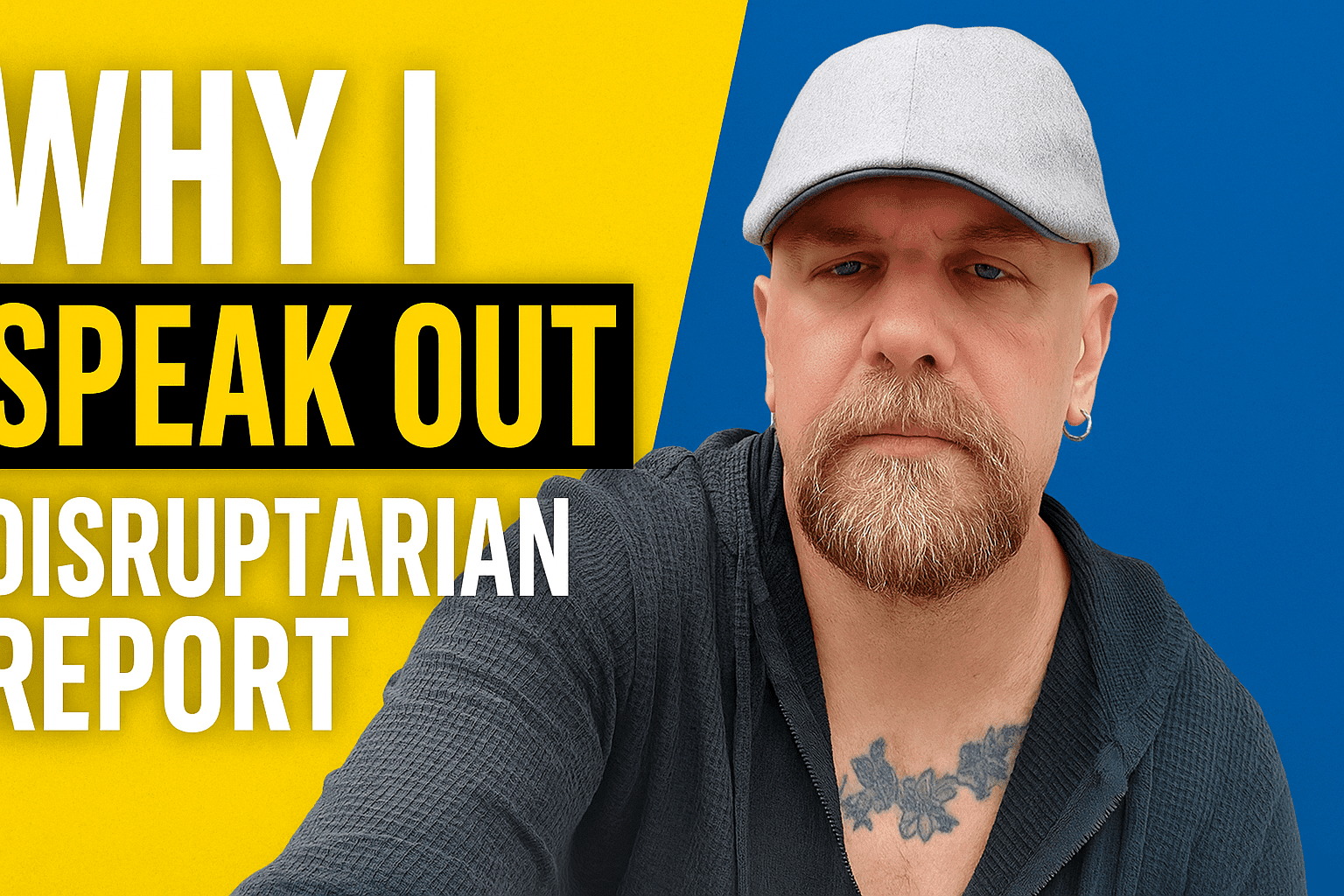
  • Commander in Chaos (Prez 47) (Boogaloo) | DJ Disruptarian

    Commander in Chaos (Prez 47) (Boogaloo) | DJ Disruptarian

    Disruptarian featured image for Commander in Chaos (Prez 47) (Boogaloo) | DJ Disruptarian

    Verified at: 2026-06-30T10:21:59

    Commander in Chaos (Prez 47) (Boogaloo) | DJ Disruptarian is the kind of subject that fits the Disruptarian lane because it sits where independent media, culture, music, and political commentary collide.

    The source description frames it this way: Commander in Chaos (Prez 47) (Boogaloo) | DJ Disruptarian is preserved here as part of the Disruptarian music archive on Rumble. This expanded Rumble edition frames the track through punk-rock defiance, anti-woke satire, working-class edge, and disruptive protest music, with a raw independent-media attitude instead of a polished corporate music wrapper. The goal is simple: keep the song accessible, searchable, and tied back to its original source while giving Rumble viewers more context about the track and the Disruptarian catalog. Source channel: Ryan Richard Thompson – Topic. Original YouTube title: Commander in Chaos (Prez 47) (Boogaloo) Original YouTube source: https://www.youtube.com/watch?v=ClHNgWfP5hk Disruptarian: https://www.disruptarian.com

    The useful question is not only what happened, but why the story matters to people who distrust scripted narratives, recycled outrage, and corporate-approved commentary.

    A Disruptarian reading starts with individual agency. The listener is not asked to accept a packaged conclusion. The point is to pull the claim apart, compare incentives, and look for the pressure points that legacy media often skips.

    That approach matters for libertarian radio commentary because the audience is usually looking for more than a headline. They want context, motive, contradiction, and a practical sense of how public stories become private consequences.

    The cultural layer is just as important. Disruptarian music and reggae punk energy are not decorations around the message. They give the work its rhythm: skeptical, confrontational, and rooted in the idea that speech should stay alive even when institutions prefer silence.

    For search readers arriving cold, the primary source is included below either as an embed or as a direct source link. Start there if you want the full tone, timing, and argument. The written analysis expands the title and description into a searchable article that can stand on its own.

    The strongest SEO value here is clarity. The article keeps the title language visible, uses descriptive headings, and connects the topic to Disruptarian Radio, independent media, libertarian commentary, political culture, and original music without stuffing the page with empty repetition.

    The larger takeaway is simple: independent commentary survives by documenting what was said, preserving the source, and adding a point of view that does not depend on permission from gatekeepers.

    That is why this post exists as part of the static Disruptarian archive. The video remains embedded, the title and description remain traceable, and the surrounding article gives search engines and readers enough context to understand why the episode belongs in the broader Disruptarian catalog.

    The title itself carries the first keyword signal, but a durable post needs more than a copied headline. It needs a clear H1, a concise meta description, a featured image with descriptive alt text, and enough editorial framing for readers to know why the video is part of this archive.

    From an independent media perspective, the value is in keeping the primary source visible. Embedding the video prevents the article from becoming detached commentary. Readers can compare the written interpretation against the actual recording and decide whether the argument holds up.

    The libertarian angle is not automatic partisanship. It is a suspicion of concentrated power, public manipulation, and narratives that ask citizens to outsource judgment. That suspicion applies to government, platforms, corporations, activist institutions, and media brands alike.

    Disruptarian Radio also treats culture as evidence. Music, political language, online mobs, censorship fights, moral panics, and personal stories all reveal where pressure is being applied. That is why a radio episode can be more than entertainment; it can become a record of a moment.

    For listeners who follow DJ Disruptarian, the same pattern shows up in the music catalog: reggae rhythm, punk edge, spiritual critique, and anti-authoritarian instinct. The written post keeps that identity attached to the video instead of letting it disappear into a platform feed.

    Good SEO on a page like this should help people find the conversation without flattening the voice. The article uses natural phrases such as Disruptarian Radio, independent media, libertarian podcast, political commentary, original music, and disruptive conversations only where they make sense.

    The featured image should follow the Disruptarian editorial-collage style: torn paper, smoke, halftone grit, dirty cream paper, black and oxblood pressure, muted gold accents, and symbolic props tied to the subject rather than generic filler. Its alt text names the subject so search engines and screen readers get useful context.

    The article also keeps a stable URL under the static blog. That matters because feeds move, platforms change embeds, and social links decay. A static post gives the episode a second home that can be indexed, backed up, linked, and reviewed later.

    The final point is documentation. When a channel publishes a new video, the title and description are often the only structured metadata available. Turning that metadata into a post creates a stronger archive without pretending to replace the original recording.

    This is the practical Disruptarian method: preserve the video, state the source, add commentary, keep the searchable terms honest, and let the reader move between the embedded media and the written analysis without friction.

    This additional context keeps the post useful for readers who arrive from search rather than from the original channel. It explains the source, preserves the embed, and connects the subject back to the larger Disruptarian archive.

    This additional context keeps the post useful for readers who arrive from search rather than from the original channel. It explains the source, preserves the embed, and connects the subject back to the larger Disruptarian archive.


    The shortlink was copied to your clipboard

    X
    f
    r

    Related Reading

    Similar posts


    Disruptarian Blog

    2026-06-30

    Disruptarian Blog

    Disruptarian commentary on Commander in Chaos (Prez 47) Boogaloo (Radio Edit) | DJ Disruptarian with embedded source video, independent media context, and libertarian radio analysis.

  • Commander in Chaos (Prez 47) Boogaloo (Radio Edit) | DJ Disruptarian

    Commander in Chaos (Prez 47) Boogaloo (Radio Edit) | DJ Disruptarian

    Disruptarian featured image for Commander in Chaos (Prez 47) Boogaloo (Radio Edit) | DJ Disruptarian

    Verified at: 2026-06-30T14:07:00

    Commander in Chaos (Prez 47) Boogaloo (Radio Edit) | DJ Disruptarian is the kind of subject that fits the Disruptarian lane because it sits where independent media, culture, music, and political commentary collide.

    The source description frames it this way: Commander in Chaos (Prez 47) Boogaloo (Radio Edit) | DJ Disruptarian is preserved here as part of the Disruptarian music archive on Rumble. This expanded Rumble edition frames the track through punk-rock defiance, anti-woke satire, working-class edge, and disruptive protest music, with a raw independent-media attitude instead of a polished corporate music wrapper. The goal is simple: keep the song accessible, searchable, and tied back to its original source while giving Rumble viewers more context about the track and the Disruptarian catalog. Source channel: Ryan Richard Thompson – Topic. Original YouTube title: Commander in Chaos (Prez 47) Boogaloo (Radio Edit) Original YouTube source: https://www.youtube.com/watch?v=_lrw_4ESL3A Disruptarian: https://www.disruptarian.com

    The useful question is not only what happened, but why the story matters to people who distrust scripted narratives, recycled outrage, and corporate-approved commentary.

    A Disruptarian reading starts with individual agency. The listener is not asked to accept a packaged conclusion. The point is to pull the claim apart, compare incentives, and look for the pressure points that legacy media often skips.

    That approach matters for libertarian radio commentary because the audience is usually looking for more than a headline. They want context, motive, contradiction, and a practical sense of how public stories become private consequences.

    The cultural layer is just as important. Disruptarian music and reggae punk energy are not decorations around the message. They give the work its rhythm: skeptical, confrontational, and rooted in the idea that speech should stay alive even when institutions prefer silence.

    For search readers arriving cold, the primary source is included below either as an embed or as a direct source link. Start there if you want the full tone, timing, and argument. The written analysis expands the title and description into a searchable article that can stand on its own.

    The strongest SEO value here is clarity. The article keeps the title language visible, uses descriptive headings, and connects the topic to Disruptarian Radio, independent media, libertarian commentary, political culture, and original music without stuffing the page with empty repetition.

    The larger takeaway is simple: independent commentary survives by documenting what was said, preserving the source, and adding a point of view that does not depend on permission from gatekeepers.

    That is why this post exists as part of the static Disruptarian archive. The video remains embedded, the title and description remain traceable, and the surrounding article gives search engines and readers enough context to understand why the episode belongs in the broader Disruptarian catalog.

    The title itself carries the first keyword signal, but a durable post needs more than a copied headline. It needs a clear H1, a concise meta description, a featured image with descriptive alt text, and enough editorial framing for readers to know why the video is part of this archive.

    From an independent media perspective, the value is in keeping the primary source visible. Embedding the video prevents the article from becoming detached commentary. Readers can compare the written interpretation against the actual recording and decide whether the argument holds up.

    The libertarian angle is not automatic partisanship. It is a suspicion of concentrated power, public manipulation, and narratives that ask citizens to outsource judgment. That suspicion applies to government, platforms, corporations, activist institutions, and media brands alike.

    Disruptarian Radio also treats culture as evidence. Music, political language, online mobs, censorship fights, moral panics, and personal stories all reveal where pressure is being applied. That is why a radio episode can be more than entertainment; it can become a record of a moment.

    For listeners who follow DJ Disruptarian, the same pattern shows up in the music catalog: reggae rhythm, punk edge, spiritual critique, and anti-authoritarian instinct. The written post keeps that identity attached to the video instead of letting it disappear into a platform feed.

    Good SEO on a page like this should help people find the conversation without flattening the voice. The article uses natural phrases such as Disruptarian Radio, independent media, libertarian podcast, political commentary, original music, and disruptive conversations only where they make sense.

    The featured image should follow the Disruptarian editorial-collage style: torn paper, smoke, halftone grit, dirty cream paper, black and oxblood pressure, muted gold accents, and symbolic props tied to the subject rather than generic filler. Its alt text names the subject so search engines and screen readers get useful context.

    The article also keeps a stable URL under the static blog. That matters because feeds move, platforms change embeds, and social links decay. A static post gives the episode a second home that can be indexed, backed up, linked, and reviewed later.

    The final point is documentation. When a channel publishes a new video, the title and description are often the only structured metadata available. Turning that metadata into a post creates a stronger archive without pretending to replace the original recording.

    This is the practical Disruptarian method: preserve the video, state the source, add commentary, keep the searchable terms honest, and let the reader move between the embedded media and the written analysis without friction.

    This additional context keeps the post useful for readers who arrive from search rather than from the original channel. It explains the source, preserves the embed, and connects the subject back to the larger Disruptarian archive.

    This additional context keeps the post useful for readers who arrive from search rather than from the original channel. It explains the source, preserves the embed, and connects the subject back to the larger Disruptarian archive.


    The shortlink was copied to your clipboard

    X
    f
    r

    Related Reading

    Similar posts


    Disruptarian Blog

    2026-06-30

    Disruptarian Blog

    Disruptarian commentary on Commander in Chaos (Prez 47) (Boogaloo) | DJ Disruptarian with embedded source video, independent media context, and libertarian radio analysis.