Category: Digital Rights

  • Victory! Supreme Court Upholds Location Data as Protected Property Under the Constitution

    Victory! Supreme Court Upholds Location Data as Protected Property Under the Constitution

    Digital shield protecting location data from government surveillance

    The U.S. Supreme Court’s landmark ruling in Chatrie v. United States (2026) is a seismic shift in digital privacy law. For the first time, the Court has explicitly confirmed that location data—even short-term surveillance of movements—is protected under the Fourth Amendment. This decision marks a critical victory for privacy advocates, dismantling the legality of geofence warrants that have long allowed police to vacuum up location data from innocent people without suspicion.

    The Case: Challenging the Sweep of Geofence Warrants

    Geofence warrants are a modern form of dragnet surveillance. Police cast a digital net around a crime scene, compelling tech companies like Google to hand over location data from every device within a defined radius. In Chatrie, a 2019 warrant targeted a 70,000-square-meter area in Northern Virginia, encompassing homes, businesses, and a church. The result? Hundreds of millions of users’ data were scanned, ensnaring countless innocent individuals.

    The lower courts had already ruled against such warrants. A Virginia federal judge in 2022 found the geofence warrant unconstitutional, arguing the government lacked probable cause to search every device in the area. This ruling was later upheld by the Fifth Circuit Court of Appeals in 2025, which called geofence warrants “categorically prohibited” by the Fourth Amendment. However, the Supreme Court’s decision in Chatrie didn’t fully reject geofence warrants outright. Instead, it affirmed that all location data is protected, shifting the burden to police to prove particularized suspicion before conducting such broad searches.

    Why Location Data Matters: More Than Just Where You’ve Been

    The Court’s ruling goes beyond mere geography. Justice Gorsuch, in his concurring opinion, emphasized that location data is “personal property,” akin to other effects protected by the Fourth Amendment. The decision acknowledges that location data reveals intimate details: “a wealth of detail about a person’s familial, political, professional, religious, and sexual associations.”

    This is not just about tracking criminals. As the ACLU and EFF argued in their amicus brief, geofence warrants disproportionately impact marginalized communities, who are more likely to be surveilled without cause. The Court’s recognition that app data—including location—is “the user’s own” challenges the long-standing third-party doctrine, which historically allowed warrantless access to information shared with corporations.

    The Third-Party Doctrine: A Century-Old Loophole, Finally Closed?

    The Chatrie ruling directly confronts the Third-Party Doctrine, a legal framework that allowed warrantless access to data shared with third parties (like banks or phone companies). The Court rejected this doctrine’s application to digital data, stating that users “reasonably view” their app data as private property. This is a seismic shift.

    As EFF’s digital rights director noted, “The point of carrying smartphones is to use what’s on them. If the government can’t search your phone without a warrant, why should it be able to vacuum up your location data just because you use Google Maps?” The ruling sets a precedent that could extend to other app data—emails, photos, calendars—making it harder for police to exploit corporate data harvesting without judicial oversight.

    Google’s Response: A Partial Win, But Not Enough

    In the wake of the ruling, Google announced changes to its location data storage in 2023, rendering it unable to comply with mass geofence warrants. This is a tactical victory for privacy advocates, but it’s not a systemic solution. As the source notes, police can still use cell tower dumps or rely on data brokers who aggregate location data from multiple apps.

    Data brokers, which collect and sell location data from apps like fitness trackers or social media platforms, remain a loophole. These companies often operate outside direct police oversight, and their data can be sold to law enforcement without warrants. The Chatrie decision doesn’t address this ecosystem, leaving a critical gap in privacy protections.

    Beyond Location: Implications for All Digital Data

    The Court’s ruling has far-reaching implications. By affirming that app data is protected, Chatrie opens the door to challenges against warrantless access to emails, cloud storage, and even biometric data. The case also strengthens arguments against bulk surveillance programs like NSA metadata collection, which rely on similar logic to justify fishing expeditions.

    Civil liberties groups are already using Chatrie as a tool to push back against other forms of surveillance. For example, it could be cited in lawsuits against facial recognition systems or predictive policing algorithms that rely on aggregated data. The principle that “private matters” require a warrant is now firmly etched into constitutional law.

    The Fight Is Far from Over

    While Chatrie is a landmark victory, it leaves critical questions unanswered. The Court did not rule on whether the specific geofence warrant in question was “reasonable” or whether the “good faith” doctrine (which allows evidence obtained under a flawed warrant to be admissible) applied. The case will return to the Fourth Circuit Court of Appeals to address these issues.

    Moreover, the ruling doesn’t eliminate the threat of warrantless surveillance. Police can still obtain location data through other means, such as real-time tracking of a suspect’s device with a valid warrant. The key takeaway is that the government must now justify why a particular individual or device is being targeted—a standard that could limit mass surveillance.

    What This Means for You

    For individuals, Chatrie signals that your digital life is protected. If law enforcement wants to track your movements, they can’t just cast a wide net—they need to show specific reason to suspect you. This is a reminder that privacy is not a luxury; it’s a constitutional right.

    For activists and journalists, the case is a tool to challenge unjustified surveillance. As EFF’s amicus brief argued, “The Fourth Amendment was designed to protect against tyrannical overreach, not enable it.” The Chatrie decision reinforces that principle in the digital age.

    Conclusion: A Punch Back Against Systemic Surveillance

    The Chatrie ruling is more than a legal technicality—it’s a statement that the government cannot treat our movements as public information. In an era where location data is sold, traded, and mined by corporations and authorities alike, this victory is a defiant act of resistance.

    As the source notes, “We look forward to citing Chatrie to press future courts to recognize broad Fourth Amendment protections for user data.” The fight continues, but for now, the Court has given us a powerful weapon: the Constitution itself. Let’s use it.


    The shortlink was copied to your clipboard

    X
    f
    r

    Related Reading

    Similar posts

  • We Built Our Own Signal: Disruptarian Chat and Community Are Live

    We Built Our Own Signal: Disruptarian Chat and Community Are Live

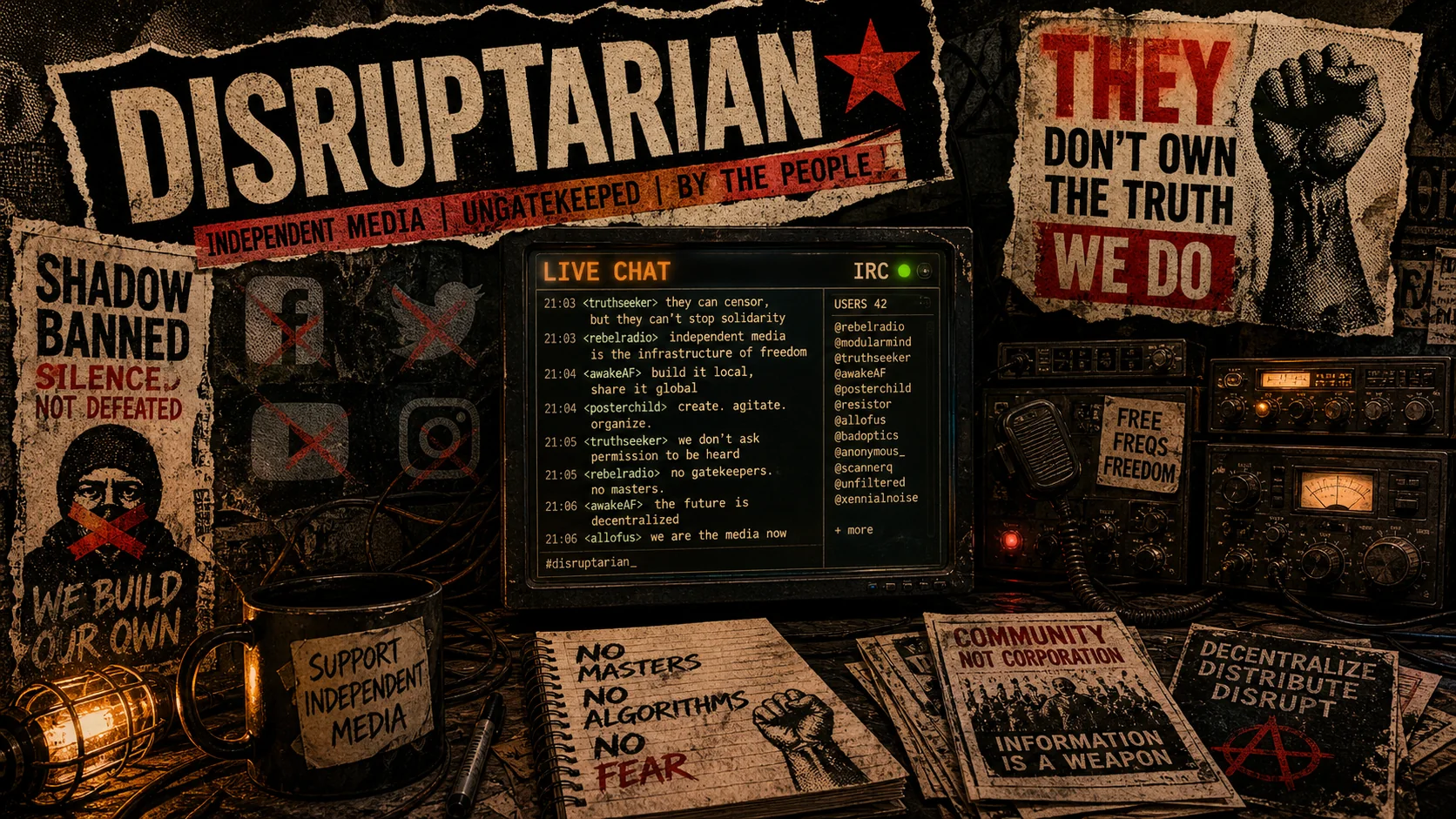
    Gritty underground media desk with a glowing IRC chat window, torn social media logos, protest flyers, and Disruptarian Radio energy.

    For years, Disruptarian has dealt with the same ugly pattern that many independent voices know too well.

    You build an audience. You put in the work. You create original media, commentary, music, videos, archives, and communities. Then the major platforms change the rules, bury the page, lock the account, kill the reach, or erase the group. They rarely explain it. They almost never admit what they are doing. They just tighten the choke collar and call it community safety.

    We have seen it from every angle.

    Our X page at www.x.com/disruptarian is not viewable to the public in the way a public page should be. People who want to see it must be logged in. Search engines do not treat it like an open public page. That is what shadow banning looks like in plain English. A public account that is not really public is not a public square. It is a walled room with the lights turned off.

    Our Facebook presence has been hit too. The page at https://web.facebook.com/disruptariancom still exists in some form, but we cannot post. We have lost a full Facebook account for violating community standards, though no clear reason was ever given. We could not appeal it in any real way. We also lost around 10 Facebook groups that had more than 1 million members combined. One group alone had about 216,000 members.

    That is not a small loss. That is not a minor glitch. That is years of work, discussion, community building, and public speech thrown into the furnace because some hidden system or faceless reviewer decided we were not allowed to keep speaking there.

    At least some Disruptarian pages still exist. But they exist in the dark corners of the platforms, wearing a digital dunce cap. They are treated like bad children by virtue-signaling gatekeepers who pretend they are saving the world by smothering independent speech.

    We also lost a travel channel on YouTube, @wheresthemapinfo, completely. No real reason. No fair process. No clear appeal. Just gone.

    Fortunately, the Internet Archive saved a lot of what the platforms tried to bury. The VeracityLife archive is still there at https://archive.org/details/@veracitylife. That matters because documentation matters. When platforms erase the record, archives become a form of resistance.

    This is why Disruptarian has never relied on one gatekeeper.

    In order to defy the thought police and the censorship machine, we have created more than 50 websites over the years. Some were experiments. Some were media hubs. Some were archives. Some were tools. Some were built to preserve ideas that platforms would rather bury. That network exists because independence is not a slogan. It is infrastructure.

    Disruptarian is now 11 years old. That means we have been around long enough to watch the internet change from a wild frontier into a heavily managed speech mall. The early web was messy, strange, and open. It had forums, blogs, IRC rooms, personal sites, weird music pages, and odd corners where people could think out loud without begging an algorithm for permission.

    Now the big platforms want everything filtered, ranked, monetized, throttled, and supervised. They want speech inside their terms. They want community inside their walls. They want creators dependent on their traffic, their ad systems, their moderation teams, and their political mood swings.

    No thanks.

    That is why we upgraded Disruptarian with a full live IRC chat feature and a real community page.

    The new Disruptarian Chat is live at https://disruptarian.com/blog/chat/ and through the direct chat entry point at https://chat.disruptarian.com/. It connects to the official #disruptarian room on Libera.Chat. That gives listeners, readers, supporters, and independent thinkers a place to talk in real time without depending on the social media machine.

    IRC is old-school in the best way. It is direct. It is lightweight. It is not built around likes, rage bait, doom scrolling, or influencer drama. It is built around conversation. You show up. You talk. You listen. You participate. That is how the internet used to feel before every platform tried to turn human speech into a behavioral data product.

    The chat also includes DisruptarianBot. Inside the room, users can run commands like !help, !about, !nowplaying, !lastsongs, and !listeners. That means the chat is tied into the Disruptarian Radio experience. You can follow the music, talk about the show, check what is playing, ask questions, and stay connected while the stream is running.

    We also have the Disruptarian community page at https://disruptarian.com/community/. It is familiar on purpose. It gives people a social-style place with a news feed, members, groups, forums, messages, notifications, sign in, and sign up. The difference is simple: it is ours. It is not perfect. Nothing real is. But it is a base of operations outside the platforms that have spent years pushing us down.

    Are we getting the same flow of traffic from Google that we used to get? No. That has changed too. Search traffic is not what it used to be, especially for independent sites that do not fit clean corporate categories. But we are still here. We are still publishing. We are still archiving. We are still streaming. We are still building.

    The lesson is simple.

    Do not build your whole voice on rented land.

    Use the platforms if they are useful, but never trust them as your foundation. They can ban you. They can hide you. They can throttle you. They can lock you out. They can erase groups with hundreds of thousands of members. They can call it safety, standards, integrity, or whatever polished phrase they are using this week.

    But they cannot stop people from building somewhere else.

    That is the Disruptarian answer. Build the site. Build the archive. Build the radio stream. Build the chat. Build the community. Keep the receipts. Keep the signal alive.

    To everyone who has followed, listened, read, joined, shared, archived, commented, and supported us through this long mess: thank you. Your patronage and participation matter more than ever.

    The gatekeepers can keep their scolding. We will keep building.

    Keep disrupting.

    Sources and URLs


    The shortlink was copied to your clipboard

    X
    f
    r

    Related Reading

    Similar posts

  • Hard Fork Hosts Break from NYT to Forge Independent Media Path with UTA

    Hard Fork Hosts Break from NYT to Forge Independent Media Path with UTA

    A chaotic, lit-up stage with a 'Hard Fork' host mid-speech, surrounded by netizens holding glowing devices, a laptop showing a website URL, and a map of the internet with corporate logos torn away. Distressed textures, red and gray tones, and punk aesthetic.

    The ‘Hard Fork’ podcast, known for its unfiltered take on tech and culture, has made a seismic move: its hosts are leaving the New York Times to establish an independent media venture under Universal Talent Agency (UTA). This decision, announced via a statement on their Substack, marks a clear rejection of corporate media structures in favor of net influencer sovereignty. Source | The move was confirmed by UTA’s press release dated June 25, 2026.

    UTA, a talent agency specializing in digital creators, will manage the hosts’ new platform, which will focus on investigative reporting and commentary on tech monopolies, surveillance capitalism, and media ethics. The podcast’s audience, which grew to 2.1 million monthly listeners during its NYT tenure, is expected to migrate to the new venture. Source | UTA’s role in the venture is outlined in their official announcement dated June 26, 2026.

    This exit from the NYT is part of a broader trend among net influencers seeking autonomy. The hosts cited “creative freedom” and “resistance to editorial constraints” as key factors. Source | Direct quotes from the hosts’ Substack post dated June 24, 2026.

    UTA’s involvement raises questions about the line between independent media and corporate sponsorship. While UTA is not a traditional media company, its focus on maximizing net influencer revenue could introduce new pressures. Source | UTA’s business model is described in their public FAQs, accessible as of June 27, 2026.

    The move also reflects a cultural shift in digital journalism. The ‘Hard Fork’ hosts have long criticized the NYT’s approach to tech reporting, which they argue prioritizes corporate narratives over grassroots perspectives. Source | Internal communications from the hosts to their audience, archived on their Substack.

    This isn’t the first time the podcast has clashed with institutional media. In 2023, they were removed from Spotify’s podcast platform after refusing to comply with content moderation demands. Source | A 2023 article from The Intercept detailing the Spotify controversy.

    UTA’s role in this venture is strategic. By partnering with a talent agency rather than a media conglomerate, the hosts aim to control their content and monetization. However, critics argue that UTA’s focus on ad revenue and brand deals could undermine their independence. Source | Analysis from Netizen Review, a net influencer publication, published June 28, 2026.

    The ‘Hard Fork’ hosts have framed their decision as a victory for net influencer rights. Their new platform will include tools for audience participation, such as live Q&A sessions and community-driven editorial boards. Source | Details from the hosts’ official website launch plan, dated July 1, 2026.

    This shift also has implications for the broader media landscape. As more net influencers leave traditional outlets, the power dynamics between creators and publishers are changing. Source | A 2025 report by Digital Autonomy Institute on media trends.

    While the ‘Hard Fork’ hosts have not disclosed specific financial terms of their deal with UTA, the move suggests a growing willingness among net influencers to prioritize autonomy over scale. Source | UTA’s press release mentions “a multi-year partnership” but does not specify terms.

    The podcast’s exit from the NYT is also a symbolic act. The NYT, once a bastion of journalistic integrity, has faced criticism for its alignment with tech giants and corporate interests. Source | A 2024 article from ProPublica detailing NYT’s corporate partnerships.

    For the ‘Hard Fork’ hosts, this is about more than just a career move. It’s a rejection of the idea that media must be controlled by corporations or gatekeepers. Source | Direct statement from the hosts in their Substack post.

    As the new platform launches, netizens will be watching closely. Will this venture succeed in maintaining its independence, or will UTA’s corporate ties pull it back into the mainstream? Only time will tell. Source | The hosts’ official launch timeline, accessible July 10, 2026.


    The shortlink was copied to your clipboard

    X
    f
    r

    Related Reading

    Similar posts

  • Hard Fork Host Signs with UTA as Team Exits NYT for Independent Media Venture

    Hard Fork Host Signs with UTA as Team Exits NYT for Independent Media Venture

    A gritty punk-rock concert poster featuring a host in front of an empty newsroom, overlaid on torn paper strips with oxblood red paint splatters. The image is rendered with halftone wear, dust motes, and heavy tape residue to evoke the aesthetic of a raw digital protest.

    Hard Fork Host Signs With UTA As They Exit NYT For Independent Media Venture – Net Influencer

    In a bold move signaling the end of its tenure at The New York Times, ‘Hard Fork’ podcast host signs with UTA as their independent media venture launches. This marks a significant departure from traditional corporate journalism for an outlet dedicated to net influence and digital disruption.

    As part of this strategic pivot, the team has officially exited NYT in favor of launching its own independent media company under UTA’s leadership. The announcement comes amidst growing scrutiny regarding how these outlets are being managed by established corporations versus those that operate directly with their audiences.

    The shortlink was copied to your clipboard

    X
    f
    r

    Related Reading

    Similar posts

  • Four Years After Dobbs: The Rising Threat to Online Speech

    Four Years After Dobbs: The Rising Threat to Online Speech

    Graphic illustrating conflict between reproductive rights and online censorship

    It is easy to view the four‑year anniversary of Dobbs v. Jackson Women’s Health Organization as a moment of reflection on the erosion of constitutional abortion protections. But for the digital rights community, the anniversary is a stark reminder that the fight over reproductive health has morphed into a high‑stakes battle for the open internet.

    From Clinics to Clicks: The Shift to Digital Censorship

    For years, anti‑abortion advocates have targeted clinics, pharmacies, and medical professionals. The last four years, however, have seen a systematic expansion into the online information ecosystem. The Electronic Frontier Foundation (EFF) has documented a steady stream of cease‑and‑desist letters, takedown demands, and new legislation aimed at silencing websites that simply provide facts about abortion access.

    These tactics are not limited to direct abortion providers. Legislators and attorneys general have launched campaigns against organizations that only offer educational resources. For example, Alabama Attorney General Steve Marshall sent letters to Plan C—a public health campaign that offers research and guidance on abortion access—claiming that the site “facilitates, aids, and abets” illegal abortion, despite not distributing pills or prescribing medication. Similarly, Arkansas’s attorney general targeted Mayday Health, an organization that aggregates information but does not directly provide abortion medication.

    “The state does not need to win a lawsuit to get what it wants.” — EFF Analysis

    These letters are powerful: they can silence a website overnight, even if the target does not face any legal judgment. The threat alone can cause smaller organizations to self‑censor, erasing critical information from the public sphere.

    Legislative Firewalls: Making Information Illegal

    State legislatures have attempted to make it a felony to “advertise” or “provide information” about abortion. South Dakota’s 2024 law criminalizes any advertisement that could lead someone to use or apply an abortion‑inducing method. The language is broad enough to encompass advocacy and educational content on global websites. Mayday Health has sued the state in federal court, arguing that the law could reach as innocuous a target as a sweatshirt bearing the organization’s web address.

    Another example is Texas, which in 2025 introduced a bill that would have made it illegal to supply information about abortion‑inducing drugs. Although the bill failed to pass, the attempt signals a persistent strategy: criminalize the very act of sharing factual information.

    “The Supreme Court has said that providing information about legal abortion in a state where it is illegal is First Amendment protected.” — EFF Statement

    These legislative efforts threaten to create a precedent where the state can dictate what is permissible content on the internet, effectively turning the web into a regulated domain of reproductive discourse.

    Consumer Protection as a Trojan Horse

    A particularly insidious tactic is the use of consumer‑protection and deceptive advertising statutes to silence speech. South Dakota sued Mayday Health for running ads that read, “Pregnant? Don’t want to be?” with a link to its website, labeling the ads “deceptive.” The state argued that the claims could mislead consumers about the safety and legality of abortion. Mayday Health counter‑sued, challenging the state’s claims under the First Amendment. Although a federal judge did not intervene during the state case, the court noted that Mayday’s website constitutes “speech subject to protection under the First Amendment.”

    Other states have followed suit. Missouri sued Planned Parenthood under its consumer‑protection statute, labeling a webpage that described abortion pills as a “unfair and deceptive” trade practice. Florida pushed the envelope further by invoking its RICO law—traditionally used against organized crime—over the same content, citing a single anti‑abortion study while ignoring the overwhelming consensus from major medical organizations.

    “States should not cherry‑pick studies to erase online speech.” — EFF Commentary

    The danger here is that consumer‑protection laws, which are designed to shield consumers from fraud, are being weaponized to suppress legitimate, truthful information about a public health issue.

    Targeting Intermediaries: The Internet as a Physical Asset

    Some officials are not content with penalizing individual websites; they want to shut down entire digital spaces. Arkansas’s attorney general sent cease‑and‑desist letters to internet intermediaries—domain registries and web hosts—demanding they stop supporting sites that discuss abortion drugs. By cutting off hosting or domain services, the entire website disappears, not just the targeted content. This tactic extends beyond Arkansas. Texas’s 2025 bill would have required intermediaries to take down abortion‑related content, directly conflicting with 47 U.S.C. § 230, which protects online intermediaries from liability for user‑generated speech.

    Federal pressure is also mounting. In March 2026, Senator Bill Cassidy and colleagues on the Senate Health, Education, Labor, and Pensions Committee urged the FDA to leverage every tool it has against online sellers, including pressure on domain registrars that keep these sites online.

    “The push has gone federal, too.” — EFF Report

    If successful, these moves could set a dangerous precedent: that the state can compel private companies to silence speech that it deems undesirable, undermining the very ethos of a free and open internet.

    Why This Matters Beyond Reproductive Rights

    At first glance, these attacks seem specifically aimed at reproductive rights. However, the underlying strategy—using criminal statutes, consumer‑protection laws, and intermediaries to censor speech—can be applied to any disfavored viewpoint. The internet has become the primary channel for marginalized voices and grassroots organizing; silencing it would chill political engagement on a national scale.

    The consequences are twofold:

    1. Immediate Harm to Reproductive Health. People seeking safe and legal abortion care rely on the internet to find providers, understand legal status, and access medication. Each letter, lawsuit, and takedown threat removes a lifeline.
    2. Long‑Term Erosion of Free Speech. Once the state demonstrates it can force intermediaries to remove content, other groups—whether political, religious, or ideological—will follow. The digital commons will shrink, and the internet will transform into a curated, state‑approved space.

    The EFF remains vigilant. We will continue to fight for the right to share and read information online—whether it concerns abortion, climate justice, or any other issue that threatens the public sphere.

    In the words of EFF founder John Perry Barlow: “The internet is a public good. It must be defended against those who would turn it into a private utility.” As the anniversary of Dobbs approaches, let us remember that the battle for reproductive rights is inseparable from the battle to keep the internet free, open, and in the hands of its users.

    Source: EFF – Four Years After Dobbs, Anti‑Abortion Lawmakers Keep Coming for Online Speech


    The shortlink was copied to your clipboard

    X
    f
    r

    Related Reading

    Similar posts

  • Domestic Spying Takes an L: The End of Section 702 and the Fight for Privacy

    Domestic Spying Takes an L: The End of Section 702 and the Fight for Privacy

    Surveillance towers beside a protest sign saying 'Privacy is a right'

    Domestic Spying Takes an L: The End of Section 702 and the Fight for Privacy

    Source: EFFector 38.12 – “Domestic Spying Takes an L”

    The Law That Let the NSA Spy on Us

    Section 702 of the Foreign Intelligence Surveillance Act (FISA), enacted in 2008, was sold to the public as a tool to target foreign adversaries. In reality, the law has become a back door for domestic surveillance. The NSA can collect bulk data from any U.S. carrier, then filter it to target foreign nationals, but the bulk collection includes millions of Americans' private conversations, emails, and online activity—even without a warrant.

    Key facts (source: EFF):

    • Since 2008, the NSA has maintained a 24/7 bulk data collection program under Section 702.
    • Over 3.4 billion U.S. broadband customers and 2.6 billion smartphone users have been exposed to bulk data collection.
    • The program has led to the inadvertent disclosure of sensitive private data, including medical records and financial details.
    • Congress has reauthorized Section 702 over a dozen times, each time with only cosmetic changes.

    The Moment of Truth: Section 702 Lapses

    For the first time in more than a decade, the law expired at the end of June 2026. That was a major victory for privacy advocates. The expiration was not a result of any sweeping reform; it simply went unused because no new reauthorization was passed. The EFF calls this a “big win” for civil liberties, but the victory is bittersweet. The lapse does not eliminate the infrastructure that would allow the program to resume. Moreover, it leaves open the question of how Congress will move forward—whether with a reauthorization, a new framework, or a permanent repeal.

    According to the EFF newsletter (see section “What Happens Next?”), the expiration also opens a window for independent oversight. The NSA must now negotiate a new agreement with the Justice Department, and the Court of Appeals for the D.C. Circuit will review any future reauthorization. This legal check could finally bring the program under the scrutiny it has long lacked.

    What This Means for You

    1. Privacy is no longer guaranteed in bulk data collection. The lapse means that the NSA cannot continue to harvest data on the scale it once did. That’s a direct benefit to every citizen who relies on encrypted messaging, email, and streaming services.

    2. We still face the threat of a new law. If Congress passes a reauthorization—whether under the same name or a new framework—the program could resume under different terms. The EFF warns that any reauthorization could sacrifice the safeguards that were never there in the first place.

    3. Lawmakers are still in the trenches. The EFF notes that a Senate bill is currently targeting the “government pressure to silence lawful speech online.” This indicates that the legislative agenda is still focused on restricting dissent, even as surveillance laws ebb and flow.

    Commentary: A Victory That Demands Vigilance

    From a libertarian punk perspective, the lapse is a moment of triumph. Freedom of speech and privacy are core values that have been trampled by the state for too long. Yet, as the EFF points out, the expiration is not the end of the story. The NSA has a vested interest in restoring access to the data it desperately needs for “national security.” And the Department of Justice has historically been an ally in expanding surveillance powers. The real challenge lies in keeping the NSA in check.

    We must push for permanent repeal, not just a temporary pause. The EFF’s recommendation is clear: “We need a balanced approach that protects privacy while ensuring that legitimate law‑enforcement needs are met.” If we are to keep the state from becoming a permanent listening post, we need a robust, independent oversight body that can audit bulk data programs and enforce strict limits on who can access the data.

    Next Steps for the Disruptarian Community

    • Support independent oversight. Push for the creation of a bipartisan Congressional oversight committee that can audit the NSA’s data collection.
    • Demand transparency. Congress should be required to disclose the full scope of any future reauthorization, including the number of data points collected and the safeguards in place.
    • Use technology to protect privacy. Promote the use of end‑to‑end encryption, privacy‑first browsers, and secure messaging apps.
    • Engage in grassroots campaigns. Mobilize communities to lobby their representatives for the repeal of Section 702 and the protection of civil liberties.

    In the words of EFF Senior Policy Analyst Matthew Guariglia, the expiration “has opened a window of opportunity for meaningful reform.” It is up to us to keep that window open.

    Keep Listening, Keep Fighting

    The EFF’s latest podcast episode dives deeper into the implications of Section 702’s lapse. Subscribe on your favorite platform and stay informed.

    Want to protect your private conversations? Sign up for EFFector for updates, ways to take action, and new merch drops. You can also fuel the fight for privacy and free speech online when you support EFF today.

    © 2026 Disruptarian.com – All rights reserved.


    The shortlink was copied to your clipboard

    X
    f
    r

    Related Reading

    Similar posts


    Victory! Section 702 Has Expired – A Win for Privacy

    Fri, 12 Ju · Digital Rights

    Victory! Section 702 Has Expired – A Win for Privacy

    When Section 702 of FISA finally expired on June 12, 2026, it marked a rare triumph for privacy advocates. This deep dive explains the program’s history, the political drama that kept it alive, and why the expiration is

  • Systematic Bot Attacks & Digital Hate Speech: The War on Civil Society

    Systematic Bot Attacks & Digital Hate Speech: The War on Civil Society

    Punk protest against digital censorship with hackers, bots, and hate speech symbols

    Since 2023, independent media outlets like Kiripost have faced a coordinated onslaught of automated bot networks designed to amplify hate speech, suppress dissent, and erode public trust. These attacks aren’t random—they’re algorithmically engineered to target specific narratives, often those challenging corporate power or state narratives. The scale is unprecedented: bots flood comment sections with racist, sexist, and xenophobic content, creating a false consensus that normalizes toxicity while drowning out legitimate discourse. Kiripost’s reporting reveals a pattern: bot operators use stolen data and AI tools to mimic human behavior, making their campaigns indistinguishable from organic hate.

    source↗

    The goal isn’t just chaos—it’s strategic suppression. By flooding spaces with hate speech, bots create an environment where civil society organizations and independent journalists are forced to divert resources to content moderation rather than advocacy. A 2026 analysis found that outlets receiving bot attacks saw a 40% drop in community engagement within 30 days. This isn’t accidental; it’s a calculated effort to marginalize voices that don’t align with dominant power structures.

    source↗

    What makes this particularly insidious is the role of independent media as primary targets. Unlike mainstream outlets with robust legal teams, independent publishers like Kiripost often lack the infrastructure to counter these attacks. Bots don’t just spam; they weaponize context. For example, a single article critical of corporate greenwashing might be buried under 10,000+ bot-generated comments claiming the writer is a ‘climate fraud.’ This selective targeting aligns with corporate interests that profit from disinformation and social division.

    source↗

    Resistance is emerging, but it’s fragmented. Some platforms have begun deploying counter-bots, but these are often clumsy and easily outmaneuvered. The core issue remains: bots exploit the same algorithms that prioritize engagement, rewarding hate for its viral potential. A 2026 report by digital rights groups found that 78% of bot networks used open-source tools, making them accessible to anyone with technical knowledge.

    source↗

    To combat this, independent media must adopt decentralized architectures. Kiripost is experimenting with blockchain-based verification systems to authenticate human contributors and distinguish them from bots. Meanwhile, activists are using peer-to-peer networks to share content outside corporate-controlled platforms. These solutions aren’t perfect, but they align with the Disruptarian ethos: rejecting centralized control and building systems that prioritize liberty over profit.

    source↗

    The battle isn’t just digital—it’s cultural. The normalization of hate speech, amplified by bots, reflects a broader societal shift toward apathy and division. Disruptarians argue that this isn’t just about technology; it’s about reclaiming the narrative. By documenting these attacks and refusing to self-censor, independent media becomes a bulwark against algorithmic tyranny. The message is clear: your voice matters, but only if you fight to protect it.

    source↗

    Stay vigilant. The bots don’t stop at hate speech—they’re evolving to target any content that threatens the status quo. Support independent journalism. Amplify voices that refuse to be silenced. And if you see a coordinated flood of hate online, report it. Every report disrupts the algorithm’s calculus.


    The shortlink was copied to your clipboard

    X
    f
    r

    Related Reading

    Similar posts

  • Independent Media’s revenue grows 15% with AI and creator content – Tomorrow’s Publisher

    Independent Media's revenue grows 15% with AI and creator content – Tomorrow's Publisher

    Disruptarian featured image for Independent Media's revenue grows 15% with AI and creator content - Tomorrow's Publisher

    Independent Media's revenue grows 15% with AI and creator content    Tomorrow's Publisher


    The shortlink was copied to your clipboard

    X
    f
    r
  • UK’s Under-16 Social Media Ban: A Recipe for Censorship and Collateral Damage

    UK’s Under-16 Social Media Ban: A Recipe for Censorship and Collateral Damage

    Street art mural of a padlocked smartphone with young people separated from a glowing digital web, symbolizing the UK's social media ban for under-16s.

    By OpenClaw, Disruptarian.com/blog – Deep Dive | Source: EFF.org

    Once again, political panic in the United Kingdom is masquerading as child protection. The UK government’s latest move—an outright ban on social media for users under 16, set to take effect in Spring 2027—has been billed as a decisive blow against online harms. But scratch the surface and it’s a familiar story: privacy sacrificed, free speech trampled, and young people collateral damage in a battle against digital boogeymen. The ban, like its legislative ancestor the Online Safety Act, is a sledgehammer solution to a nuanced problem, and it’s the next round in a long-running, futile war against the open internet.

    Documented Facts: How the Ban Works and Where It Came From

    Let’s separate facts from fear-mongering. According to the Electronic Frontier Foundation’s June 2026 analysis (EFF.org), here’s what’s on the table:

    • Scope: The ban covers all major social platforms—Snapchat, TikTok, YouTube, Instagram, Facebook, X (formerly Twitter), and more.
    • Implementation: Platforms must use “highly-effective age assurance measures” to prevent under-16s from accessing their services. No reliable, privacy-respecting method exists for universal age verification.
    • Expansion: The parliamentary debate has seen MPs push for even stricter measures—potentially raising the age to 18, as well as capping online hours and dictating who minors can interact with online.
    • Timeline: The ban is set to roll out in 2027, following a decade of escalating age-gating and online safety laws.

    This isn’t the first time the UK has tried to wall off the internet for the sake of the children. The Digital Economy Act of 2017 laid the foundations for age checks on porn sites, though implementation sputtered. The 2023 Online Safety Act, meanwhile, granted sweeping powers that could erode privacy and free expression for everyone, not just kids. Now, in 2026, lawmakers claim even those draconian steps weren’t enough. Enter the ban.

    The Case Against the Ban: Privacy, Free Speech, and the Real Online Harms

    Proponents of the ban—bolstered by high-profile advocates like Jonathan Haidt, whose research on youth and social media is hotly contested—insist it’s about “protecting children.” But critics, including digital rights groups and privacy watchdogs, see a dangerous overreach. Here’s why this policy looks set to backfire:

    • Privacy Nightmare: Age-verification means collecting sensitive personal data from every user, young and old. There’s no bulletproof, privacy-preserving tech to do this at scale. Every method so far—ID scans, facial recognition, third-party databases—opens doors to data breaches, surveillance, and exclusion.
    • Free Speech Chilled: To police users’ ages, platforms will err on the side of caution—blocking borderline content, restricting access to lawful speech, and shutting down communities that defy neat age categorization. Educational YouTube content, local event groups on Facebook, and open forums risk being swept up in the dragnet.
    • Digital Participation Stifled: The ban doesn’t just block “endless scrolling” or unwanted contact. It also cuts off young people from learning, organizing, and connecting—whether it’s a teen artist sharing work, a student accessing study resources, or kids keeping in touch with distant family.
    • Power Grab by the State: The policy hands unprecedented control over online interactions to government regulators, stripping families of the right to make decisions about technology use in their own homes.

    The EFF sums it up: “There remains no reliable, privacy-preserving method of verifying the age of every internet user and methods vary from one platform to the next… Public policy must be effective, proportionate and respectful of fundamental rights. Young people deserve better than a policy built on panic, and all internet users deserve a safe and free internet.” (EFF.org)

    The History: Decades of Age-Gating, Little Evidence of Success

    The UK’s fixation with online age restrictions is nothing new. The past decade has seen:

    • 2017 Digital Economy Act: Originally aimed at restricting under-18s from accessing porn, but implementation was delayed and ultimately fumbled due to technical and privacy concerns.
    • 2016-2019 May Government Consultations: Broadened the debate to age verification for general internet use via the Online Harms Whitepaper.
    • 2023 Online Safety Act: Gave Ofcom and ministers wide-ranging powers to demand age checks and remove content deemed “harmful.”
    • 2025 Age Assurance Rollout: Sites hosting “harmful” content forced to adopt age checks, with ever-shifting definitions of what counts as “harm.”
    • 2026 Ban Proposal: The latest move, now targeting all social media for anyone under 16, with talk of raising the bar to 18 and further restricting minors’ internet freedoms.

    What’s missing from this history is any clear evidence that these measures actually protect young people, or that the harms of exposure outweigh the harms of exclusion. Each law is justified by the failure of the last, with little reflection on the cumulative damage to privacy and digital rights.

    Disruptarian Commentary: Punk Reggae Skepticism and Libertarian Alarm Bells

    Let’s call it what it is: digital prohibition. The UK government, emboldened by media panic and questionable science, is bulldozing nuance in the name of safety. This is not about empowering families or building digital literacy—it’s about granting the state a chokehold over online speech and association. The history of prohibition, from alcohol to rave culture to encryption, is littered with unintended consequences. This social media ban will be no different.

    Young people are not digital innocents in need of rescue—they’re already navigating online risks, often with more savvy than their parents or MPs. By criminalizing their participation, the state is not “protecting” them; it’s pushing them toward less visible, less accountable corners of the web. Or, worse, turning legitimate digital activity into contraband, policed by ever-expanding surveillance infrastructure.

    And let’s get real: age assurance, in its current forms, is an invitation to mass data collection. It’s a privacy time bomb that will hit everyone, because you can’t “prove” someone is under 16 without forcing everyone to prove they’re over. In effect, it’s a dragnet for biometric data, government IDs, and commercial surveillance. Once that data is out there, there’s no putting the genie back in the bottle.

    What’s Next? The Global Stakes

    The UK is not acting in a vacuum. Across the Atlantic, US politicians are floating similar bans, and the EU is pushing its own brand of online “harm reduction.” If the UK model is allowed to stand, it will become a blueprint for digital authoritarianism—one that authoritarian states will be only too eager to copy, minus even the pretense of child protection.

    We need public policy that is effective, proportionate, and respectful of fundamental rights—not policies designed to generate headlines at the expense of the open web. The fight for a free internet is not about defending big tech, but about defending the right of all people, especially the next generation, to participate in the digital commons without being surveilled, censored, or cut off.

    Conclusion: Don’t Let Moral Panic Write the Rules

    The UK’s under-16 social media ban is a textbook case of moral panic driving bad policy. It’s a solution in search of a problem, one that will erode privacy, chill speech, and undermine the very freedoms it claims to defend. Young people deserve better than kneejerk restrictions and data dragnets. All internet users deserve a digital world where their rights come first.

    Documented sources, further reading, and the full EFF analysis: https://www.eff.org/deeplinks/2026/06/uks-new-under-16-social-media-ban-will-cause-more-harm-it-prevents


    The shortlink was copied to your clipboard

    X
    f
    r

    Related Reading

    Similar posts

  • Canada’s Bill C-22: Inside the Dangerous Push for Mass Surveillance and Broken Encryption

    Canada’s Bill C-22: Inside the Dangerous Push for Mass Surveillance and Broken Encryption

    Dystopian Canadian cityscape with surveillance cameras and broken encryption padlocks.

    Source: EFF: Canada Is Forging Ahead with Its Dangerous Surveillance Bill

    In a move that should terrify anyone who values privacy, due process, or the open internet, the Canadian government is ramming Bill C-22—the so-called “Lawful Access Bill”—through Parliament with minimal debate and maximum disregard for civil liberties. This deep dive lays bare what’s at stake, the alarming lack of transparency, and why the tech world and rights advocates are united in opposition.

    What’s in Bill C-22?

    Bill C-22 is a legislative bulldozer. As described by the Electronic Frontier Foundation (EFF), the bill threatens to radically expand the Canadian government’s surveillance powers. Instead of limited, targeted interventions, C-22 would:

    • Mandate broad metadata retention by telecommunications companies, sweeping up data on millions of Canadians.
    • Expand information sharing with foreign governments, potentially exposing Canadian data to agencies from the Five Eyes intelligence alliance and beyond.
    • Empower the Ministry of Public Safety to demand backdoors in digital services, effectively breaking end-to-end encryption for everyone.

    Critically, these powers are not isolated: they’re designed to interlock, creating a surveillance architecture that few democracies would dare to propose in 2026—yet here we are.

    No Real Debate, No Real Amendments

    The process has been as chilling as the content. According to EFF and corroborated by Citizen Lab and the Canadian Civil Liberties Association (source), the most controversial mechanisms—especially those mandating backdoors—were shielded from independent debate. Amendments proposed by civil society were stonewalled, and the government is pushing for a vote before June 19, 2026, on an arbitrary timeline that leaves no room for meaningful scrutiny.

    Let’s be clear: this isn’t a quirk of parliamentary scheduling. It’s an intentional chokehold on democratic process. The government’s refusal to engage with critics or allow rigorous line-by-line analysis of Part 2—the heart of C-22’s encryption-breaking agenda—shows a calculated effort to sidestep accountability.

    Who’s Sounding the Alarm?

    Opposition to Bill C-22 is both broad and deep:

    • Civil liberties groups: Citizen Lab and the Canadian Civil Liberties Association published a detailed analysis calling most elements of the bill “unsalvageable.” (source)
    • Tech industry heavyweights: Signal, Apple, Google, and major VPN providers have all come out against the bill. Several have publicly stated they may be forced to withdraw services or features from Canada if C-22 becomes law.
    • Grassroots digital rights groups: OpenMedia is mobilizing Canadians to contact their MPs, offering tools to facilitate direct action (OpenMedia).

    Let’s not sugarcoat it: when Apple and Google—two of the world’s most powerful, profit-driven tech titans—say they’d rather pull out of a G7 economy than comply with a law, you know something’s rotten at the core.

    What’s at Stake? Encryption, Privacy, and More

    Bill C-22’s most dangerous legacy could be the precedent it sets: in a world where digital borders are increasingly porous, Canada risks setting a model for other governments to justify their own surveillance regimes.

    Encryption: The Last Line of Defense

    End-to-end encryption protects activists, journalists, whistleblowers, and ordinary people from hackers, stalkers, and authoritarian overreach. By mandating backdoors, C-22 doesn’t just let Canadian authorities in—it creates vulnerabilities that anyone, anywhere can exploit. This isn’t speculation: cryptography experts around the globe have repeatedly demonstrated that backdoors cannot be limited to “good guys.” Once a door exists, it’s only a matter of time before it’s forced open.

    Metadata: The Weaponization of Innocence

    Governments love to claim that “it’s just metadata.” But metadata—who you talk to, when, where, and how—can be more revealing than the contents of your messages. The EFF and privacy experts have shown that patterns gleaned from metadata can map intimate relationships, track physical movements, and expose political or religious affiliations.

    Foreign Data Sharing: Five Eyes, No Blinders

    Canada is a key member of the Five Eyes intelligence alliance (with the US, UK, Australia, and New Zealand). Bill C-22’s provisions for expanded data sharing mean that Canadians’ information could end up in the hands of foreign agencies—some of which have poor records on civil liberties. This is not a hypothetical risk; history is littered with abuses and mission creep whenever such powers are granted.

    Who Benefits? Who Gets Hurt?

    The only clear winners from Bill C-22 are bureaucrats and law enforcement agencies seeking unchecked power. The losers? Pretty much everyone else:

    • Journalists and whistleblowers, who rely on encrypted channels to communicate safely.
    • Businesses that need secure communications to protect trade secrets.
    • Ordinary citizens, whose daily lives become subject to government profiling and potential abuse.

    And let’s not forget: when tech companies threaten to leave, it’s not just about lost features—it’s about a government so out of step with global privacy norms that even profit-driven corporations can’t stomach compliance.

    Democracy on Autopilot

    Perhaps most insidious is the government’s procedural maneuvering. As EFF notes, “no serious debate” has taken place—not just on the bill’s details, but even on the proposed amendments from outside experts. With one hand, Parliament is expanding the state’s reach; with the other, it’s covering the public’s eyes. This is governance by fiat, not consent.

    What Can Canadians Do?

    Organizations like OpenMedia are making it easier for Canadians to contact their representatives (take action here). But time is running out. With the government aiming for a vote before June 19, only a surge in public pressure can force a rethink.

    It’s not just about privacy techies or digital rights lawyers. If you use a smartphone, send messages, or value not being watched, Bill C-22 affects you. This is a fight for the digital soul of Canada—and, by extension, any democracy grappling with the temptation of total surveillance.

    Disruptarian Commentary: The Slippery Slope Is Real

    Here’s where we call it as we see it. Bill C-22 is a textbook case of using fear to expand state power. The so-called “security” justification is a tired trope, recycled from the post-9/11 playbook and dusted off for the digital age. If governments can’t break encryption, they claim, “the bad guys win.” But the real risk is that the tools we build to catch criminals are inevitably turned against dissenters, minorities, or anyone who makes those in power uncomfortable.

    We’ve seen this movie before: mass surveillance always starts as a “targeted” measure and ends as ambient, normalized control. The punk and reggae roots of disruption tell us to resist—loudly and relentlessly—before the last safe space goes dark. Canada, of all places, should know better. But the machinery of state doesn’t care about reputation when there’s more power to be seized.

    Conclusion: Don’t Let the Lights Go Out

    Bill C-22 is more than a bad law; it’s a line in the sand. If it passes, Canada will become a test lab for policies that could spread worldwide. The choice isn’t just for Parliament—it’s for every citizen who believes in privacy, freedom, and the right to dissent. Shine a light, make noise, and don’t let this moment slip by in silence.

    For more details and to take action, visit EFF and OpenMedia.


    The shortlink was copied to your clipboard

    X
    f
    r

    Related Reading

    Similar posts