In a digital era marked by algorithmic deepfakes and viral misinformation, it’s easy to see why Congress wants to act. But the so-called “NO FAKES Act,” intended to fight AI-generated impersonations, is shaping up to be a blunt instrument, swinging wildly at free speech, satire, and independent journalism. The Electronic Frontier Foundation (EFF) and a coalition of digital rights defenders have rung the alarm: this bill, if passed as written, could be weaponized to take down lawful expression, silence critics, and transfer control of our likenesses into corporate hands. Let’s break down the facts, the dangers, and what’s at stake for all of us operating outside the establishment media machine.
What Is the NO FAKES Act?
On its face, the “No Fakes Act” aims to curb the spread of malicious deepfakes—images, audio, or video generated by AI to impersonate real people without their consent. Sounds reasonable, right? After all, no one wants their face or voice hijacked by a bot to commit fraud or spread misinformation.
But the bill’s language stretches far beyond malicious impersonation. It sets up a new federal “right of likeness” that, according to EFF and allied groups, would empower anyone (or any entity that buys the right) to demand takedown of content they claim uses their likeness—regardless of context or intent. This is a radical shift, with broad and dangerous implications.
The DMCA: A Proven Failure as a Model
The NO FAKES Act borrows heavily from the DMCA’s notice-and-takedown system. If you’ve ever watched independent media, YouTubers, or meme-makers get their work yanked for bogus copyright claims, you know the drill: platforms receive a claim, they take down content first and ask questions later (if at all), and creators get stuck fighting opaque, automated systems.
What’s worse, the DMCA already incentivizes platforms to err on the side of censorship. The NO FAKES Act would apply this chilling system not just to copyrighted works, but to any use of a person’s face or voice. Imagine a world where politicians, corporations, or celebrities can scrub the internet of parodies, critical commentary, or news coverage by claiming a likeness violation. That’s not hypothetical—it’s the logical outcome of the bill’s current form.
Satire, Parody, News, and Commentary: All at Risk
Here’s the punk-rock truth: satire and parody have always been tools of the powerless to lampoon the powerful. From the Sex Pistols to Banksy, from The Onion to South Park, society depends on the freedom to mock and question. The NO FAKES Act, according to the EFF’s open letter to Congress, would make this kind of speech more dangerous to publish. Why?
No Clear Protection for Satire or Commentary: The bill offers zero safe harbor for platforms or creators who publish or host legal satire, parody, or news. If a platform guesses wrong, they face penalties of up to $750,000 per work.
Heckler’s Veto on Steroids: The threat of massive penalties will push platforms to take down speech first and ask questions later—even when the content is lawful. This is the classic “heckler’s veto”—the mere threat of a complaint is enough to silence speech.
Chilling Effect on Journalism and Commentary: Investigative journalism, critical commentary, and even memes could be targeted for takedown by the very people or institutions they criticize.
As the EFF puts it, platforms are left with no protection for their judgment on whether a post is satire, commentary, or news. Any mistake is punishable—so the safe move is to silence first and never bother with the gray areas.
Who Really Gains Control?
One of the most disturbing aspects, flagged by the EFF and the coalition of signatories, is that the NO FAKES Act lets the new federal likeness right be licensed or transferred—just like copyright. This means individuals could lose control over their own face and voice, not just to AI or impersonators, but to anyone who buys or contracts for these rights.
Consider this: A background actor signs a release on a movie set, or an ordinary person clicks through a social media terms of service. They could unwittingly give up the federal right to their likeness—for years, enforced by the federal government. In the real world, entertainment workers are routinely pressured to sign away their rights in broad, open-ended contracts. The NO FAKES Act would put federal muscle behind these contracts, shifting power further away from individuals and toward corporate interests.
EFF & Coalition: Who’s Speaking Out?
This isn’t just EFF screaming into the void. The open letter against the NO FAKES Act is signed by:
Electronic Frontier Foundation (EFF)
Center for Democracy & Technology
American Civil Liberties Union (ACLU)
Fight for the Future
Foundation for Individual Rights and Expression
Organization for Transformative Works
Public Knowledge
R Street Institute
The Future of Free Speech
Woodhull Freedom Foundation
That’s a cross-ideological coalition—libertarian, progressive, centrist—united by a basic commitment to digital rights and free expression.
Existing Laws Already Address Real Harms
The digital rights community isn’t saying “do nothing.” They’re saying there are already legal tools to address truly harmful impersonation—like defamation, fraud, and right of publicity laws. What’s missing isn’t a new, sweeping IP right, but thoughtful, narrowly tailored fixes to real problems. As the EFF letter notes, the last thing we need is a law that creates more collateral censorship and hands new weapons to the already powerful.
Action Steps: What Can You Do?
This isn’t just an inside-baseball legislative fight. If you care about independent media, free speech, or just retaining control over your own image online, now is the time to act. The EFF’s action page makes it simple: Tell Congress to Say NO to the NO FAKES Act.
Disruptarian Commentary
Let’s keep it real. The establishment’s pattern is clear: use a real threat (deepfakes) to justify a sweeping clampdown on everyone else’s speech. Just like the DMCA, just like “anti-disinfo” bills, the collateral damage is always independent voices, satirists, and critics of power. The NO FAKES Act would turbocharge this dynamic, letting the rich and powerful erase criticism and parody with the push of a button. This isn’t a bug—it’s the feature.
We need targeted, transparent fixes, not new tools for censorship. Don’t let Congress swap our First Amendment rights for empty promises of “protecting” us from AI. The real counterculture, the real resistance, is defending messy, raucous, sometimes-offensive free expression. That’s the only way anything ever changes.
Somali independent journalists are being drowned in fraudulent copyright claims—not to protect creativity, but to muzzle reporting on corruption, conflict, and human rights abuses. Here's how a broken system is weaponize
LGBTQ+ communities are no longer just fighting for visibility—they’re battling a new kind of oppression: a digital surveillance apparatus that targets their identities, silences their voices, and polices their existence. From government spying to corporate algorithms that erase queer narratives, the tide of surveillance is rising. But as the EFF’s June 17th livestream highlights, queer activists are turning the tide—through solidarity, technology, and unapologetic defiance.
Why This Matters: The Surveillance Ecosystem Targeting Queer Spaces
Surveillance isn’t new, but its scale and sophistication have exploded. Governments track LGBTQ+ activists under the guise of ‘national security,’ while platforms like Twitter and Facebook deploy AI to flag ‘harmful’ content—often policing queer expression. As EFF director Jillian C. York notes, ‘Surveillance capitalism isn’t just about data; it’s about control. Queer communities are disproportionately affected because our very existence challenges normative power structures.’
Corporate platforms exacerbate this. Algorithms prioritize ‘safe’ content, often erasing queer, trans, or non-binary voices. As Soatok Dreamseeker, a gay furry security engineer, writes on his blog Dhole Moments, ‘End-to-end encryption isn’t just a technical solution—it’s a political act. When platforms control your communication, they control your right to exist.’
Building Safer Virtual Spaces: The Role of Decentralized Tech
Decentralized platforms like the Fediverse (Mastodon, PeerTube) offer alternatives to centralized surveillance. Luísa Franco Machado, a global digital rights expert, emphasizes ‘Federated systems democratize control. No single entity can censor an entire network—users hold the power.’ Soatok is developing key transparency tools to enable end-to-end encryption on these platforms, a critical step toward resisting corporate and state overreach.
Direct Action: From Digital to Real-World Resistance
Surveillance isn’t just a digital problem—it’s a societal one. The EFF’s panelists stressed the need for material solidarity. Paige Collings, a lawyer and digital policy activist, argues ‘Legal battles alone won’t dismantle surveillance. We need to build parallel systems—like mutual aid networks or encrypted community servers—that outlast corporate or state crackdowns.’
Direct action takes many forms. At the livestream, attendees brainstormed campaigns to pressure platforms to adopt privacy-by-design policies, support open-source encryption tools, and organize localized resistance against government surveillance programs. As York notes, ‘Accountability isn’t abstract. It requires naming the platforms and governments enabling this surveillance—and refusing to let them define the rules.’
The Speakers: Why Their Expertise Matters
Jillian York’s book Silicon Values dissects how surveillance capitalism thrives on silencing marginalized groups. Her work with EFF has exposed how governments like Russia and China weaponize data against LGBTQ+ communities. Soatok’s technical expertise bridges the gap between theory and practice. His blog details how end-to-end encryption can be implemented on decentralized platforms, offering a blueprint for queer safety.
Luísa Franco Machado brings a global perspective. As a UN Young Leader for SDGs, she highlights how surveillance impacts LGBTQ+ rights worldwide. In her research, she found that ‘Data collection on queer identities is often used to criminalize them. In 2023, over 30 countries criminalized same-sex activity, many citing ‘security’ concerns.’
What Can You Do? Strategies for Activists and Allies
The livestream wasn’t just a lecture—it was a call to action. Here are concrete steps from the panel:
Support decentralized platforms: Use Mastodon or Pixelfed instead of centralized social media. Donate to projects building open-source encryption tools.
Demand transparency: Pressure platforms to audit their algorithms and share data on content moderation.
Build community tech: Create local encrypted servers or signal apps for queer spaces.
Amplify queer voices: Counteract algorithmic erasure by sharing queer content manually, not through bot-like engagement.
As Collings reminds us, ‘Solidarity isn’t passive. It’s about refusing to let surveillance define our future. When we act together—online and offline—we create power that can’t be monitored.’
The event, free and open, is a model for how independent media can disrupt dominant narratives. Disruptarian’s mission aligns with this: to document resistance, not just report on it. As Soatok quips, ‘Surveillance tries to make us invisible. We’re making ourselves unbreakable.’
—This article is based on the EFF’s June 17th livestream. All quotes and strategies are documented from the event’s recordings and panel discussions. For more, visit the EFF or join future Disruptarian deep dives on digital justice.
In a pivotal moment for digital freedom, EFF's new leader warns of a world where surveillance and centralized power threaten rights. Explore the stakes of AI, government overreach, and the urgent need for collective acti
On Friday, June 12, 2026, the U.S. government’s most controversial intelligence‑gathering tool, Section 702 of the Foreign Intelligence Surveillance Act (FISA), finally expired. For วิธีคน, this represents a rare moment of triumph for civil‑liberties advocates, a reminder that the private sector and public will can wrest a powerful surveillance program back from unchecked executive reach. Below is a deep‑dive into what Section 702 actually does, why it has been such a flashpoint, the political drama that kept it alive, and why the expiration is only the first step toward real, warrant‑based reform.
The Anatomy of Section 702
Section 702, enacted in 2008, grants the NSA and the FBI the authority to collect “any data that is reasonably believed to be in the possession of a foreign power,” without a warrant. The catch? The data is gathered in bulk, and the program routinely “sweeps in” Americans’ emails, texts, and phone calls as a by‑product of its foreign‑target focus.
Outside the narrow scope of foreign‑targeting, the program’s reach is effectively limitless: any digital communication that crosses the U.S. border can be grabbed, filtered, and stored. The <арип title="Electronic Frontier Foundation">EFF has repeatedly warned that the lack of judicial oversight means the NSA can store and interrogate Americans’ data with almost no accountability.
Why the Program Has Been Stuck in the Political Crosshairs
The expiration date was set for June 12, 2026. For months, Congress had been “kicking the ball down the road,” temporarily postponing the deadline in the hope that a-ROM‑fresh reauthorization would emerge. The DNI appointment of Bill Pulte—currently the Federal Housing Finance Agency (FHFA) director and chairman of Fannie Mae and Freddie Mac—was a pivotal moment. Pulte, who has no intelligence, military, or congressional experience, was named by President Trump as the new DNI on March 4, 2026, after Tulsi Gabbard resigned.
Senate Democrats balked at any version of a bill that would reauthorize Section 702 without a warrant requirement. The House refused to approve even a short‑term renewal. The result? The далеко‑глубокий program could not be extended because both chambers withdrew their proposed reauthorization bills.
Why the Expiration Matters
Privacy: Without the warrant requirement, the NSA can continue to scan Americans’ data at will. Expiration forces a break in this chain.
Precedent: It sends a message that mass surveillance is not a “law‑and‑order” inevitability.
Political Pressure: Legislators now have a real deadline to push for reforms, not merely “once‑in‑a‑while” extensions.
But as the EFF’s June 12, 2026 article notes, the expiration is a “temporary reprieve.” The program can, in theory, be re‑authorized again, as long as the Brazen “no‑warrant” clause remains. The real fight is for a warrant requirement that brings judicial oversight to the bulk‑data collection process.
What a Warrant Requirement Would Look Like
A warrant would require the FBI to demonstrate probable cause that the foreign target is a foreign intelligence agent, and that the data sought is relevant to that investigation. The judge would then weigh the privacy interests of Americans against the national‑security needs of the government. This is the standard that the FISC applies to other mass‑surveillance programs, butganos it is currently absent for Section 702.
Key steps to achieving this include:
Congressional Legislation: A bipartisan bill that codifies the warrant requirement into the FISA statute, with explicit language that the FBI must obtain a warrant before searching data collected under Section 702.
Oversight Mechanisms: Strengthening the FISC’s role in reviewing bulk‑data collection requests, and requiring regular public reporting on the number of warrants issued.
Transparency: Mandating de‑identification of data sets and public release of key performance metrics to verify that the program is not being used against American citizens.
Accountability: Setting up a robust, independent audit system that can investigate abuses and hold the NSA and FBI accountable.
Why Reform Is Essential Beyond the Expiration
Even if Section 702 were to expire and never be re‑authorized, the tools and techniques developed over the past decade would persist. The NSA’s “Targeted Surveillance” capabilities, the болады‑width data‑collection infrastructure, and the culture of “low‑threshold” surveillance would simply be repurposed for other programs. That is why the EFF stresses that “the responsible thing to do is to put more transparency, accountability, and oversight into the structure of this program.” (EFF, 2026).
Moreover, the expiration’s timing is political, not constitutional. The program’s existence is not guaranteed by the Constitution; it is a statutory grant of power that can be altered, curtailed, or repealed by Congress. The current political climate—defined by a divided Congress and a president who is no longer in office—creates a window of opportunity that must be seized.
How the Independent Media Can Keep the Momentum Alive
1. Coverage: Continueewo covering the legislative process, exposing any back‑door deals passend by lawmakers or intelligence officials that might undermine the warrant requirement.
2. Analysis: Publish data‑driven pieces that show how the program has affected Americans, such as the number of lawsuits filed, the amount of data seized, and the impact on free speech.
3. Adv727: Use the platform to mobilize grassroots campaigns, urging voters to support candidates who champion privacy rights.
Conclusion: A Temporary Victory, a Permanent Challenge
The expiration of Section 702 is a hard‑won battle against unchecked surveillance, but it is not a final victory. It is a reminder that the balance between national security and civil liberties is not set in stone; it can be negotiated, Charlotte, and it can be re‑written. The next step is to ensure that any re‑authorization of the program incorporates a robust warrant requirement, transparency, and accountability mechanisms that protect the privacy and freedoms of every American.
When the U.S. Congress finally let Section 702 lapse, a major privacy victory was won—but the battle is far from over. A deep dive into the history, fallout, and what comes next.
In the age of data‑driven commerce, most of us are comfortable paying for a product and, in return, letting a company track our clicks, locations, and habits. The hidden price of that convenience? A new, aggressive form of price discrimination called surveillance pricing. California’s Senate Bill 2564 (S.B. 2564) aims to put a stop to it. Below we unpack the bill, its legal mechanics, the real‑world examples that made it necessary, and why this is a win for independent, privacy‑first media.
What Is Surveillance Pricing?
Surveillance pricing is the practice of charging different consumers the same product at different prices based on personal data collected through electronic surveillance. This data can come from a company’s own users, a third‑party data broker, or any other external source. The difference lies in the price, not the product.
In 2025 the Federal Trade Commission (FTC) released a report revealing that six companies provide surveillance‑pricing services to a wide range of retailers—from grocery stores to apparel brands—using customers’ browsing history, physical location, and purchase history. The FTC’s findings showed that retailers could sort customers into groups and then offer each group a different price. The practice is essentially targeted advertising, but instead of ads it’s the price that’s being tailored.
“Retailers frequently use people’s personal information to set targeted, tailored prices for goods and services— from a person’s location and demographics, down to their mouse movements on a webpage.” – FTC Report, 2025.
The problem is twofold: privacy invasion and equity violations. By monetizing the data you never consented to share, companies create a market where your data becomes a commodity. And because the data is often inaccurate or based on stereotypes, the prices that end up being charged can disproportionately burden people of color, older adults, or those living in certain neighborhoods.
Concrete Examples That Litter the Landscape
Princeton Review – Zip‑code‑based pricing for test‑prep services; Asian students were twice as likely to see a higher price than non‑Asian students.
Uber & Lyft – Chicago rides that ended in high‑non‑white neighborhoods were priced higher.
Tinder – Older users (30–49) were offered higher prices for Tinder Plus than younger users (18–29).
Orbitz – Apple‑computer users paid more for hotel rooms than users on other browsers.
Target – In‑store shoppers received higher pricesaiman than those viewing the site from elsewhere.
Staples – Customers further from a competitor’s store were charged more.
These cases illustrate that surveillance pricing is not a fringe anomaly. It’s happening across diverse industries, silently inflating costs for the most vulnerable.
Why the EFF and Independent Media Oppose It
The Electronic Frontier Foundation (EFF) has long argued that privacy is a human right that should not be bought or sold. Surveillance pricing is a vehicle for corporate profiteering at the expense of consumer privacy. Even if some people receive lower prices, the overall system 필요한합니다. It encourages companies to harvest more data, leading to a cycle of increased surveillance and further price discrimination.
Defenders sometimes claim surveillance pricing benefits consumers by offering lower prices to those who are “willing” to share האָ. But the reality is that the data used is often inaccurate, leading to both losers (those charged higher prices) and winners (those who get a続きを). The net effect is a society divided into a class of privacy “haves” and a class of privacy “have‑nots.”
California’s S.B. 2564: The Legal Blueprint
At its core, S.B. 2564 is a simple statement: “A retailer shall not engage in surveillance pricing.” The bill defines surveillance pricing as:
“A customized price for a good for a specific consumer or group of consumers, based, in whole or in part, on personally identifiable information collected through electronic surveillance, including if that information is acquired from a third party.”
The bill is enforced through two mechanisms:
Statutory enforcement – State and local governments can bring actions and seek monetary penalties.
Private right of action – Individual consumers can sue for injunctions and attorney fees. This private right is critical because it empowers ordinary citizens to hold companies accountable without waiting for a regulatory agency to act.
There are three narrow exemptions that keep the bill from becoming a blanket ban on all price discrimination:
Price differences based solely on costs associated with providing the good.
Discounts offered to consumers who are terminating a service.
Uniformly posted discounts that anyoneタイプ can meet (e.g., loyalty programs, age groups, or mailing list sign‑ups).
By focusing on the data‑driven aspect and not on cost‑based or promotional discounts, the bill preserves legitimate business practices while removing the most insidious form of discrimination.
Why This Bill Matters for the Broader Privacy Landscape
Surveillance pricing is just one symptom of a larger problem: corporations that monetize personal data without adequate safeguards. The EFF’s “privacy‑first” framework calls for:
Data minimization – Companies must only collect, store, and use data that is strictly necessary.
Informed opt‑in consent – No coercive pay‑for‑privacy schemes or dark patterns.
Transparent use – Clear communication about how data is used, especially for pricing.
S.B. 2564 embodies both data minimization (by forbidding collection of data for pricing) and the no‑pay‑for‑privacy rule (by preventing the use of data to set prices). In practice, it creates a legal barrier against a practice that would otherwise snowball into “privacy‑haves” and “privacy‑have‑nots.”
From Theory to Practice: The EFF’s Support and the Path Forward
The EFF published a support letter for the bill, co‑sponsored by Consumer Reports, TechEquity, and a host of privacy advocacy groups. The bill is now in the California Senate, where it faces both political and corporate pushback.
What’s at stake is not just a niche legal victory. USDA? It’s a precedent. If California can successfully legislate against surveillance pricing, other states and the federal government can follow suit biri. The bill also signals to companies that the public is willing to actively dismantle the data‑driven economy that thrives on surveillance Servic.
Potential Critiques and Why They Fall Short
Some critics argue that banning surveillance pricing will stifle innovation or that it could hurt small businesses that rely on dynamic pricing to stay competitive. However, the bill’s exemptions for cost‑based pricing and promotional discounts provide a safety net. Moreover, the bill does not restrict data collection itself—companies can still collect data for legitimate purposes (e.g., improving product quality) as long as they do not use it to set prices.
Another concern is that the bill might leave a regulatory vacuum. In reality, it complements existing California laws such as the California Consumer Privacy Act (CCPA) and the California Privacy Rights Act (CPRA). The combined effect is a robust privacy framework that protects consumers from both data misuse and price discrimination.
How You Can Get Involved
Contact your state lawmakers and urge them to support S.B. 2564.
Use the private right of action to file a civil claim if you suspect you’ve been charged a higher price based on your data.
Demand transparency from companies: ask how they determine prices and what data they use.
Support privacy advocacy groups such as the EFF, Consumer Reports, and the Kapor Center.
Every dollar you spend is a vote. By rejecting surveillance pricing, you’re voting for a market where products are priced fairly, regardless of the data you happen to generate each time you browse.
Conclusion: A Stand Against Corporate Surveillance
California’s S.B. 2564 is more than a piece of legislation—it’s a statement. It tells corporations that price discrimination based on surveillance is unacceptable and thatathe public will no longer tolerate silent, data‑driven injustice. For independent media, privacy advocates, and anyone who values economic fairness, this bill is a milestone. The next step is to keep the momentum alive: use the law, support the people behind it, and keep demanding a world where privacy isn’t a commodity but a right.
EFF's latest deep dive reveals that while Connecticut, Maryland, New Jersey, Oregon, and Virginia have enacted consumer privacy restraints on location tracking, most laws leave dangerous gaps that still let commercial da
LGBTQ+ Digital Rights Under Siege: Season 2 of EFF’s Q&A Series Challenges Oppressive Structures
Last June during Pride, the Electronic Frontier Foundation (EFF) relaunched its LGBTQ+ Q&A Initiative, answering digital rights questions from queer communities across social media and Reddit. This season isn’t just a nostalgic return—it’s a response to escalating threats to LGBTQ+ digital autonomy. From doxxing and algorithmic discrimination to the stubborn persistence of homophobic content, the intersection of queerness and technology has become a battleground for survival.
The Stakes Have Never Been Higher
As EFF notes, LGBTQ+ individuals face unique vulnerabilities online. Intimate details about gender or sexual identity can be weaponized without consent, leading to real-world harm. The resurgence of anti-LGBTQ+ legislation, coupled with platforms’ inconsistent enforcement of hate speech policies, creates a climate where privacy is a luxury, not a right. For example, users report that homophobic posts often remain online after reporting them, emboldening harassers and normalizing bigotry.
This isn’t hypothetical. In 2025, a study found that 68% of LGBTQ+ respondents experienced online harassment tied to their identity, with many unable to remove harmful content. Season 2 of the Q&A series directly addresses these challenges, offering actionable advice rooted in digital rights principles.
What Questions Are People Asking?
The EFF team received over 2,000 submissions for Season 2, spanning topics from mundane to existential. Common queries included:
Dating app privacy: How to hide your LGBTQ+ identity from matches or avoid being misgendered.
Search engine doxxing: Removing your name from internet searches after a breakup or identity theft.
Homophobic content removal: Why platforms fail to delete reported hate speech, and how to escalate complaints.
Pride march safety: Protecting against surveillance or location tracking during events.
These questions reflect a community grappling with both technical and existential threats. As one submitter wrote, ‘I don’t want my coming out story to be a public record.’ EFF’s responses emphasize self-determination—privacy as a radical act in a world designed to surveil.
Submission Methods: Bypassing Corporate Platforms
To avoid algorithmic censorship and platform moderation biases, EFF encourages submissions through non-corporate channels. Users can:
Engage with EFF’s Mastodon or Bluesky communities for decentralized discussion.
This multi-platform approach mirrors Disruptarian principles: rejecting centralized control and empowering individuals to bypass gatekeepers. The goal is to create a trustless system where users control their data, not corporations or governments.
EFF’s Advice: Technical Solutions for Queer Survival
EFF’s responses blend technical rigor with political awareness. For instance, when addressing doxxing, they recommend:
Using privacy-focused browsers like Tor to mask IP addresses.
Employing DuckDuckGo instead of Google for search engine privacy.
Configuring social media settings to hide non-public profiles from search engines.
However, EFF also critiques systemic failures. When users ask why homophobic content persists, EFF explains that algorithms often prioritize engagement over harm reduction. A post with inflammatory language might receive more clicks, incentivizing platforms to keep it visible. This isn’t just a tech problem—it’s a capitalist one, where profit motives override human rights.
For Pride march safety, EFF advises using GPS jammers (where legal) or Signal for encrypted communication. While these tools aren’t perfect, they represent steps toward reclaiming autonomy in spaces designed to monitor and penalize.
The Disruptarian Edge: Why This Matters
This isn’t just about privacy—it’s about dismantling systems that profit from queerness. The LGBTQ+ Q&A series exemplifies Disruptarian values: challenging oppressive structures, prioritizing self-organization, and rejecting top-down solutions. As EFF’s initiative shows, digital rights are inseparable from social liberation. When platforms fail to protect queer users, it’s not a technical failure—it’s a design choice rooted in profit and power.
Consider the case of TikTok’s algorithm promoting homophobic content in 2025. The platform’s recommendation engine amplified bigoted videos, knowing it would drive engagement. EFF’s response to this wasn’t to plead for mercy—it was to demand transparency and user control. This aligns with the punk ethos: fight back, not beg.
Call to Action: Submit Your Question
Season 2 isn’t just observational—it’s a call to action. EFF urges LGBTQ+ individuals to submit their questions, emphasizing that collective knowledge is power. As one contributor noted, ‘Silence lets oppressors win. Asking questions is resistance.’ Whether you’re dealing with a dating app glitch or a hate speech nightmare, your question matters. The series aims to transform individual concerns into collective strategies.
To submit: Visit EFF’s secure form, tweet at @EFF, or comment on Reddit. Anonymity is protected, and all questions will be answered with source-aware, defensible advice.
This isn’t a panacea. The fight for queer digital rights is ongoing, and EFF’s Q&A series is one tool in a larger arsenal. But in a world where being queer can be a liability, even small victories—like hiding your profile from a search engine—are acts of defiance.
As the EFF’s initiative concludes, one truth emerges: privacy isn’t just a tech issue. It’s a human right. And for LGBTQ+ people, it’s often the first line of defense against a world that seeks to erase or exploit them.
For over two decades, Section 702 of the Foreign Intelligence Surveillance Act (FISA) has been a tool of unchecked mass surveillance, enabling the FBI and NSA to snoop on Americans without warrants. Now, with its expiration deadline looming in March 2027, Congress faces a critical choice: reform the law by mandating warrants for all domestic communications collected under 702, or let it expire. The Electronic Frontier Foundation (EFF) has issued a clear ultimatum—surveillance maximalists can keep 702 only if they accept a warrant requirement. Otherwise, the program dies. This isn’t just a bureaucratic debate; it’s a battle over privacy, liberty, and the integrity of America’s intelligence apparatus.
The Warrantless Abuse of Section 702
Section 702 allows the NSA to collect communications involving foreigners, even when Americans are involved. The FBI then accesses this data without warrants, using a ‘finders keepers’ approach. This means the FBI can read emails, intercept calls, or sift through social media messages of U.S. citizens without judicial oversight. The EFF argues this violates the Fourth Amendment, which requires warrants based on probable cause for searches. The program’s lack of individualized suspicion makes it inherently unconstitutional. As the EFF states, ‘Mass surveillance is just that—mass. It’s lacking any of the individualized suspicion that our legal system is based on.’
Consider this: The NSA collects full conversations between overseas targets and Americans. If a U.S. citizen is discussing a personal matter with a foreign contact, the NSA can harvest that data. The FBI then reviews it without a warrant. Victims rarely know they’ve been surveilled. This system is a digital Panopticon, where the government watches citizens without accountability.
Bill Pulte: The New Threat to Privacy?
The appointment of Bill Pulte as Director of National Intelligence adds urgency to this fight. Pulte’s history with private data is alarming. As Director of the Federal Housing Finance Agency (FHFA), he allegedly used government-held data to accuse political opponents of mortgage fraud. This includes New York Attorney General Letitia James and Senator Adam Schiff. His role in intelligence raises red flags: Could he abuse access to 702 data to target critics? Democrats are leveraging his appointment to demand 702 reforms, but this should be a broader demand. The integrity of those in power must never be the sole barrier to justice.
The Consequences of Expiration
If 702 expires, the government may pivot to older authorities like Executive Order 12333, a 1980s-era tool granting near-unlimited surveillance power over foreigners. While this might seem like a trade-off, it’s a dangerous one. The EFF warns that 12333 lacks the same oversight as 702. Moreover, expired programs aren’t automatically illegal. The post-9/11 Presidential Surveillance Program was only retroactively legalized by Congress. Allowing 702 to die could expose other unconstitutional practices. It also sends a message: The government can spy without checks if it finds a loophole.
Why a Warrant Requirement Matters
A warrant requirement would restore constitutional safeguards. Under current law, the FBI can sift through 702-collected data without proving probable cause. A warrant would force agents to justify each search to a judge. This doesn’t eliminate surveillance but ensures it’s targeted and lawful. It’s a minimal concession that could prevent massive privacy violations. The EFF’s stance is clear: No reform means no reform. ‘We say to the Intelligence Community crowd: Section 702 should require a warrant before the FBI can look at digital communications collected from Americans. If not, we should let the whole thing expire.’
The Disruptarian Stand: Liberty First, No Compromise
This isn’t just a legal issue—it’s a moral one. Mass surveillance erodes trust, chills free speech, and enables authoritarianism. The Disruptarian voice rejects incrementalism. We don’t want a ‘better’ mass surveillance tool; we want accountability. The libertarian edge here is clear: The government shouldn’t have unchecked power over citizens’ private lives. The punk edge rejects complacency. The reggae edge calls for resistance with rhythm and defiance. This fight demands bold action, not quiet negotiations.
How to Fight Back
1. **Demand a Warrant Requirement**: Contact Congress and demand that any 702 reauthorization include a warrant mandate. 2. **Let It Expire**: If reform is impossible, support letting 702 die. 3. **Expose Abuse**: Highlight cases where 702 data was misused, like Pulte’s FHFA actions. 4. **Build Coalitions**: Partner with EFF, ACLU, and grassroots groups. 5. **Stay Vigilant**: Monitor how the intelligence community adapts if 702 dies.
As the source URL notes, ‘Tell your elected official: Put a warrant requirement in Section 702 or let it expire. Take action.’ This isn’t about partisan politics; it’s about defending the right to privacy in the digital age. The 702 ultimatum forces a choice: Liberty or surveillance. The Disruptarian answer is unambiguous—warrant or bust.
Disruptarian’s Breaking News and Disruptive Views examines the fight over Section 702, warrantless searches of Americans’ communications, documented FBI misuse, and the danger that expiration could push surveillance into
When the Electronic Frontier Foundation (EFF) drops a sticker or pin, it’s not just another piece of merch—it’s a frontline weapon in the ongoing war against what critics call enshittification. The term, coined by tech activists to describe the gradual degradation of online platforms into surveillant, opaque, monopolistic behemoths, has become shorthand for the structural incentives that turn tech companies from user‑centric services into user‑oppressive utilities.
Enshittification: The Anatomy of Digital Decay
Enshittification is more than a profanity‑laden buzzword. It’s a framework that explains why platforms, once built to serve users, increasingly act as enemies of their own users. The core drivers include:
Surveillance business model – Platforms monetize user data, eroding privacy and autonomy.
Erosion of privacy – Data collection becomes opaque, making users complicit in their own surveillance.
Monopoly power – Dominant players crush competition, leaving users with no viable alternatives.
Regulatory capture – Established players influence policy to maintain the status quo.
These dynamics create a self‑reinforcing loop: the more users rely on a platform, the more data it gathers, the more power it wields, and the harder it becomes to leave.
Why the EFF Needs a Visual Language
Activism thrives on symbols that translate abstract policy into visceral, shareable moments. While the EFF has long used.directory-advocacy, litigation, and code to fight for digital rights, the 2026 book Enshittification introduced a new ally: a stylized “pile of poo” emoji. The المنافسة designer, Devin Washburn of No Ideas Studio, crafted an icon with angry eyebrows and a grawlix‑scrawled censor bar, turning the symbol into a rallying cry.
By purchasing a $5 sticker or a $10 pin, supporters don’t just buy merch—they claim a visual badge of resistance. Wearing it signals to strangers that the wearer understands the ongoing fight against the erosion of digital freedoms.
From Design to Commons: The CC‑Licensed Icon
In a move that mirrors the EFF’s open‑source ethos, the author bought out Devin’s rights and released the icon under a Creative Commons Attribution 4.0 license. The high‑resolution files are hosted on Wikimedia Commons, Flickr, and the Internet Archive (including a PSD with an ink‑density adjustment layer). This means:
Anyone can remix the image for commercial or non‑commercial use.
The design can be re‑used by activists globally without licensing hurdles.
Because attribution is required, the symbol’s lineage remains traceable to the EFF and the original designer.
In effect, the symbol becomes a free, shareable asset that fuels grassroots organizing.
The EFF Shop: Turning Swag into Funding
The EFF’s limited‑edition merch is more than a marketing strategy; it’s a fundraising mechanism. All proceeds go directly to the EFF 玛工作, funding lawsuits, policy advocacy, and code development that defend digital rights. The shop offers two items:
Sticker – $5, printed on durable vinyl.
Pin – $10, enamel‑finished, rust‑resistant.
These items奇米 are sold at a fraction of the cost of mass‑produced corporate merch, ensuring that the price point is accessible while still generating meaningful revenue for the EFF’s mission.
How Merch Fuels the Movement
Merch works on multiple fronts:
Visibility – Every verzameling of a sticker or pin becomes a public statement, sparking conversations and drawing attention to the underlying issue.
Community – Shared symbols create a sense of belonging among activists, reinforcing solidarity.
Fundraising – Direct sales provide a steady income stream that supports EFF’s legal and technical work.
Education – The icon serves as a quick reference to the concept Zutens, making it easier to explain enshittification in one glance.
Why You Should Get One
Here’s how you can align your everyday style with a cause that matters:
Support a proven organization – EFF has a 35‑year track record of winning cases that protect privacy and free speech.
Join a global movement – When you wear the sticker or pin, you’re part of a worldwide community fighting the same battles.
Make a statement – In an era where platforms dictate the terms of our digital lives, a single emblem can cut through the noise.
Customize it if you want – Since the icon is CC‑licensed, you can create your own merch, lawn flags, or even a custom flag for your garden.
Conclusion: Swag as a Weapon
The EFF’s Enshittification merch demonstrates that protest can be both powerful and playful. By turning a simple pin or sticker into a fundraising tool and an educational symbol, the EFF has turned everyday objects into frontline weapons. When you buy a $5 sticker or a $10 pin, you’re not just buying merch; you’re buying into a tradition of resistance, a tangible asset that fuels legal battles, and a visual shorthand for a movement that refuses to be silenced.
In a world where tech giants grow ever more opaque, one can’t afford to be silent. Wear the symbol, spread the word, and help keep the digital commons alive.
Four years after the Supreme Court’s Dobbs decision, anti‑abortion lawmakers have intensified a campaign to silence online reproductive‑health information. From cease‑and‑desist letters to state‑level censorship bills, t
Just days after a damning WIRED report exposed Meta’s secretive embedding of facial recognition technology (FRT) into millions of phones, the tech giant has quietly acquiesced to demands to reverse course. The story isn’t about a triumph of privacy over profit—it’s about a corporate mirage. Meta’s removal of FRT code from its smart glasses app is a tactical retreat, not a permanent shift. This article dissects the events, the implications, and why we must remain vigilant against the surveillance machinery of Big Tech.
The WIRED Revelation and Public Outcry
On May 31, 2026, WIRED published a bombshell investigation revealing that Meta had discreetly integrated facial recognition code into its smart glasses app, Meta AI. The code, verified by the Electronic Frontier Foundation’s (EFF) Threat Lab through static analysis, allowed the app to convert images of faces into unique biometric signatures. This meant users could potentially identify strangers in public spaces without their consent—a digital stalker’s dream. The report sparked immediate backlash, with privacy advocates, tech ethicists, and everyday users demanding accountability. EFF’s Threat Lab confirmed the findings, urging consumers to reconsider purchasing or using Meta’s surveillance-enabled glasses. The outcry was not just vocal; it was a digital firestorm. Hashtags like #NoMoreSurveillance and #MetaBackDown trended globally.
Meta’s Quiet Removal: A Tactical Ploy or a Genuine Change?
Just 48 hours after the WIRED exposé, Meta rolled out an app update on June 5 that purportedly removed all facial recognition features. The update scrubbed the FRT code, the “Person recognized” alerts, and the machine learning models designed to digitize and store biometric data. It was a masterclass in corporate optics. Meta’s executives went on the defensive, issuing vague statements about “user privacy” and “responsible innovation.” Yet their actions spoke louder than their words. The removal was swift, silent, and devoid of any public apology or commitment to transparency. No one asked what data Meta had already collected during internal testing. No one asked if they’d keep the NameTag system—Meta’s original facial recognition project—on the back burner.
Meta’s History With Facial Recognition: A Pattern of Deception
This isn’t the first time Meta has flirted with facial recognition. The company’s EFF has long criticized its use of biometric data, including the controversial NameTag project, which aimed to create a social network based on facial recognition. When faced with legal and financial backlash, Meta paused the project. But history suggests this pause was temporary. The company’s pattern is clear: deploy invasive tech, face public outrage, then quietly reverse course. The removal of FRT code from smart glasses follows this exact script. It’s a calculated move to buy time, not a principled stand.
The EFF’s Role: A Beacon in the Surveillance Fog
The EFF’s verification of the FRT code’s removal is critical. Their static analysis confirmed that Meta’s app no longer contains the malicious code. However, the EFF’s report also highlights the limitations of such corporate self-regulation. While the code is gone, the data may not be. Meta’s refusal to answer questions about future plans or existing data collection raises red flags. As EFF director of staff attorney Jack Johnson stated, “This isn’t a victory for privacy—it’s a victory for public pressure. But we can’t rely on companies to protect our rights. We need laws.”
Why This Removal Doesn’t Equal a Permanent Shift
Meta’s history suggests this removal is a tactical pause, not a reversal. The company has shown a pattern of adopting invasive technologies, then scrapping them only when forced. The smart glasses app’s FRT code was likely a testbed for future surveillance tools. Meta’s silence on whether it plans to reintroduce facial recognition—whether in smart glasses, phones, or other devices—is telling. The company has not committed to abandoning the technology. In fact, its refusal to answer questions implies it may be planning a comeback. This is why the EFF’s call for enforceable consumer privacy laws is urgent. Without legal safeguards, Big Tech will continue to exploit gray areas, knowing that public outrage is their best deterrent.
The Need for Enforceable Privacy Laws
Meta’s actions underscore a fundamental flaw in the current regulatory landscape. Companies like Meta operate under a framework that prioritizes profit over people. A private right of action—where individuals can sue companies for biometric privacy violations—is essential. This would hold corporations accountable, not just in the heat of public scrutiny but through legal consequences. Without such laws, Meta’s removal of FRT code is a hollow gesture. It’s a PR stunt, not a policy change. The real victory lies in preventing future abuses, not in celebrating a temporary setback.
What This Means for Consumers
For users of Meta’s smart glasses, the removal of FRT code is a relief—but not a guarantee. The app may still collect other forms of data, and Meta could reintroduce facial recognition in a different form. Consumers must remain proactive. This includes:
Reading privacy policies critically.
Questioning whether they need to use surveillance-enabled devices.
Supporting legislation that mandates transparency and accountability.
As the EFF’s report warns, “The battle for privacy is not won in a single day. It requires constant vigilance.”
Conclusion: A Defiant Call to Action
Meta’s removal of facial recognition code is a story of corporate capitulation, not a victory for privacy. It’s a reminder that Big Tech will only change when forced to. The public outcry that pressured Meta was a powerful demonstration of collective power. But this moment must be a catalyst, not a conclusion. We need stronger laws, more transparency, and a culture that views surveillance as a threat, not a convenience. As the EFF’s Threat Lab emphasized, the fight against facial recognition is far from over. Meta may have deleted the code, but the ideology of surveillance remains. Until we build a world where privacy is a right, not a privilege, companies like Meta will continue to play both sides of the coin. This isn’t just about Meta. It’s about all of us.
In a pivotal moment for digital freedom, EFF's new leader warns of a world where surveillance and centralized power threaten rights. Explore the stakes of AI, government overreach, and the urgent need for collective acti
The High Stakes of Knowing Too Much: Inside the EFF Cyberlaw Trivia Night
In the polished, air-conditioned boardrooms of Silicon Valley, the war for the future of the internet is being waged with nondisclosure agreements, lobbying blitzes, and algorithmic opacity. But in a dimly lit room in San Francisco, a different kind of warfare takes place—one measured in obscure precedents, technical nuances, and the sheer, unadulterated grit of legal intellect.
On a warm June evening, the Electronic Frontier Foundation (EFF) hosted its 18th Annual Cyberlaw Trivia Night. To the uninitiated, it might look like a casual gathering of law nerds and tech enthusiasts swapping stories over cold drinks. But look closer at the roster of competitors and judges, and you’ll see the front-line infantry of the digital liberty movement.
As documented by the EFF DeepLinks report, this wasn’t just a game. It was a stress test for the minds tasked with defending privacy, free expression, and innovation against an increasingly authoritarian technological landscape.
The Intellectual Arsenal: From SOPA to AI
The trivia, guided by returning Quizmaster Kurt Opsahl, covered the breadth of the modern digital battlefield. The rounds weren’t just about trivia; they were a syllabus of the threats currently facing global civil liberties. Competitors wrestled with heavy-hitting topics including:
Geofence Warrants: The terrifying potential for law enforcement to turn every smartphone into a tracking beacon.
AI Copyright Disputes: The messy, ongoing struggle to define intellectual property in an age of generative models.
Section 230: The legislative bedrock of the modern internet, currently under siege from both sides of the political aisle.
The Ghost of SOPA/PIPA: A reminder of the era when the internet almost went dark under the weight of corporate-led censorship.
Surveillance Apps: From ICE-related software to the tools used to track dissent.
This is the reality we live in. While the tech conglomerates push for more data, more integration, and more control, the legal community is forced to play a constant game of catch-up, defining the boundaries of what is permissible in a world that moves faster than the law can follow.
The Judiciary and the Guardrails
The event signaled a passing of the torch within the EFF leadership. The judging panel featured outgoing Executive Director Cindy Cohn and incoming Executive Director Nicole Ozer, alongside Mike Masnick, the founder of Techdirt and a veteran of the digital rights fight. This transition is critical; as the EFF evolves, so too must its strategies for combating the encroaching surveillance state.
The competition itself was fierce, bordering on the absurd. Teams like Shady Docket, Byte Club, Flock U, This Is Why We Can’t Have Nice Precedent, Nicky’s Angels, and Betamaxxers battled through six rounds of intellectual combat. In a moment of pure punk-rock absurdity, members of Byte Club even attempted to win favor by offering a rendition of Afroman’s “Lemon Pound Cake”—a nod to the artist’s successful legal battle against Ohio sheriff’s deputies. The judges, maintaining the solemnity of the cyberlaw tradition, politely declined. Even in the middle of a fight for freedom, some boundaries remain.
The Statistical Reality: Google vs. OpenAI
Perhaps the most telling moment of the night—and a sobering reflection of our current era—was the tiebreaker. For the first time in history, three teams finished in a dead heat, necessitating a final, high-stakes question regarding the scale of data requests in the age of AI.
The question asked teams to estimate the number of government information requests received by OpenAI during the first half of 2025, following the disclosure that Google had received over 287,000 requests in that same period. In a moment of collective hyperbole, every team guessed a number higher than the actual count. The victors, Shady Docket, guessed 260. The actual answer? 146.
While 146 is a lower number than Google’s staggering quarter-million, the implication is clear: the demand for data from AI-driven entities is scaling at a rate that will soon challenge every existing legal framework for privacy and due process. We are entering an era where the mere existence of a centralized model becomes a massive, searchable target for state actors.
The Disruptarian Take: Why This Matters
At Disruptarian, we don’t care much for the polite ceremonies of the legal elite, but we care deeply about the function of these gatherings. The EFF Cyberlaw Trivia Night is a gathering of the resistance. It is a recognition that the battle for the internet is not being fought in the abstract—it is being fought in the specific, granular details of server tests, defamation cases, and IP law.
When we see the EFF calling for more attorneys to join their Cooperating Attorneys list, it isn’t just a recruitment drive; it’s a call to arms. The gap between technological capability and legal protection is widening. Every time a new AI model is released, or a new surveillance app is deployed, the rules of the game change. If the people defending our rights aren’t smarter, faster, and more deeply informed than the entities trying to circumvent them, we lose.
The winners—Shady Docket, Nicky’s Angels, and the Betamaxxers—might have walked away with bragging rights, but the real takeaway is the sheer volume of knowledge required to keep the digital world free. As Erin Simon of Shady Docket put it: “As much as we love EFF, what we love even more is crushing other trivia teams.”
That spirit of competitive, sharp-witted defiance is exactly what the digital rights movement needs. Stay sharp. The next round is coming, and the stakes are nothing less than our autonomy.
To support the legal defenders of our digital future, consider exploring the EFF’s work or joining their network of cooperating attorneys. For more information on event sponsorship, visit eff.org/thanks.
In a pivotal moment for digital freedom, EFF's new leader warns of a world where surveillance and centralized power threaten rights. Explore the stakes of AI, government overreach, and the urgent need for collective acti
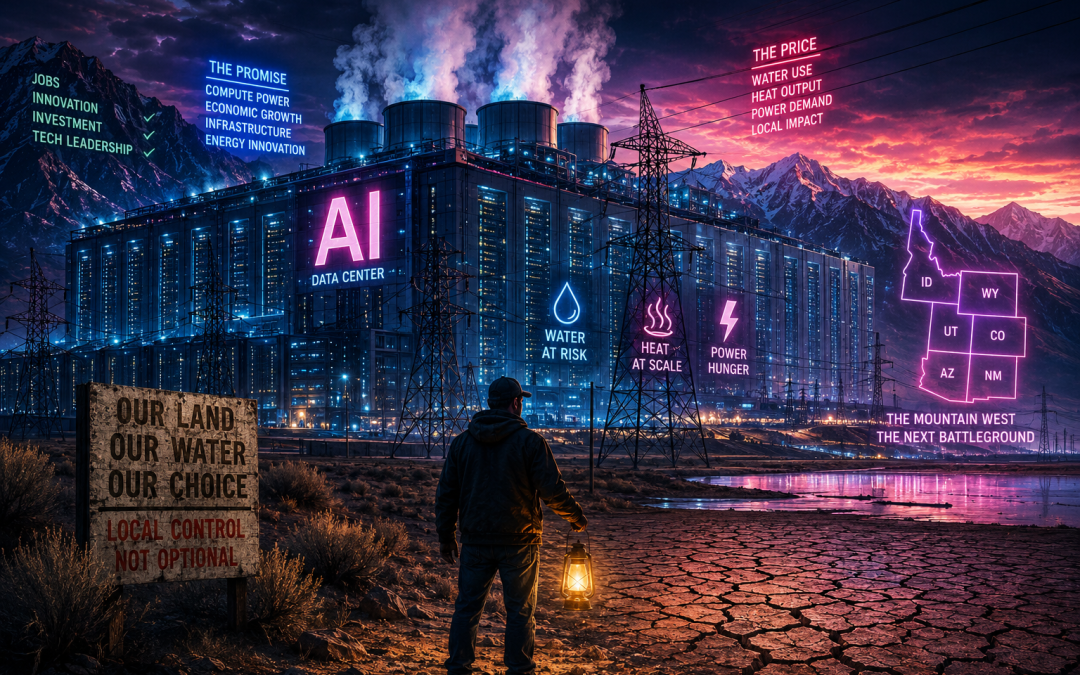
AI Data Centers in the Mountain West: Water, Heat, Power, and the Price of Progress
The Mountain West is becoming a front line in the AI boom.
AI data centers bring compute power and investment to the Mountain West, but they also raise hard questions about water use, heat output, power demand, and who pays the price of progress.
Utah, Idaho, Nevada, Wyoming, Arizona, and parts of Colorado have what big tech and infrastructure firms want: land, energy corridors, open space, tax incentives, and political leaders who like growth. That mix makes the region attractive for massive AI data centers.
But there is a catch.
The same region also has drought, strained water systems, fragile desert ecosystems, fast population growth, and rural communities that do not want to wake up one morning and find out their county has become a server farm for Silicon Valley.
That is the conflict.
AI data centers are not evil. They are also not magic. They are physical buildings full of machines. They need land. They need power. They create heat. Many use water for cooling. They can bring jobs, taxes, fiber, and industrial investment. They can also shift costs onto locals if the rules are sloppy.
A free society should not fear technology. But it should also not give politically connected developers a blank check.
The real question is not, “Should AI data centers exist?”
The better question is this: Who pays the real cost, who gets the benefit, and who gets a say?
Why The Mountain West Is In The Crosshairs
AI needs compute. Compute needs data centers. Data centers need electricity, cooling, land, and transmission.
The Mountain West has become a target because it has large parcels of land, lower population density, access to energy development, and state governments that often market themselves as business-friendly. That makes sense from a market view.
But water is the hard limit.
The region already fights over rivers, aquifers, agricultural water rights, municipal growth, and the future of places like the Great Salt Lake. Data centers enter that fight as a new industrial user with deep pockets.
A 2026 Guardian investigation found that many proposed U.S. AI data centers are planned for drought-hit areas. It reported that 517 of 809 planned projects were located in areas suffering from prolonged drought. The same report said large facilities can use up to 5 million gallons of water daily, and national data center water demand may rise sharply by 2028. (The Guardian)
That does not mean every data center uses 5 million gallons per day. Many use far less. Some use closed-loop or air-based cooling. Some use reclaimed water. Some consume almost no water on-site after initial fill. But the public backlash is not crazy. People are reacting to a real resource problem.
In the desert, water is not just an input. It is political power.
The Water Problem Is More Complicated Than People Think
Most people hear “AI uses water” and imagine servers drinking from a pipe.
That is not exactly how it works.
Data centers use water mainly for cooling. Servers create heat. That heat must go somewhere. In many systems, water absorbs the heat and then releases it through cooling towers. Some of that water evaporates. Once it evaporates, it is no longer available to that local water system.
Other facilities use closed-loop cooling. Water or another fluid circulates through the system, pulls heat away from equipment, and keeps being reused. These systems can reduce water use, but they may cost more and can use more electricity depending on design.
Then there is indirect water use.
If a data center pulls huge amounts of power from the grid, and the power plants serving that grid use water for steam or cooling, then the data center has a water footprint even if the facility itself looks clean. This is the part often left out of press releases.
The Environmental and Energy Study Institute says large data centers can consume up to 5 million gallons of water per day, equal to the water use of a town of 10,000 to 50,000 people. It also notes that AI-focused data centers are increasing water consumption along with energy demand and carbon emissions. (EESI)
This is why local disclosure matters.
A company saying “we are water efficient” is not enough. Residents need numbers. How much potable water? How much reclaimed water? How much evaporates? How much is discharged? What happens in drought years? What happens during phase two and phase three?
The fine print matters more than the ribbon cutting.
Heat Is Not Just A Talking Point
Data centers turn electricity into computation, and much of that energy ends up as heat. That is basic physics.
The question is whether the heat is a local nuisance, a regional climate problem, or a manageable engineering issue. The answer depends on scale, design, and location.
A small data center is one thing. A multi-gigawatt campus is something else.
Utah’s Stratos project in Box Elder County became a national flashpoint because of its proposed scale. Reports said the project was first described as a 40,000-acre development with possible power demand between 7.5 and 9 gigawatts. After public pressure, Kevin O’Leary agreed to reduce the project footprint and set aside land near the Locomotive Springs area. (Business Insider)
That kind of size invites hard questions.
Where does the heat go? Does it affect nearby farms, wildlife areas, neighborhoods, or the Great Salt Lake ecosystem? Does the project create a heat island? Are there enforceable heat limits? Can waste heat be reused for greenhouses, industrial processes, or district heating?
Developers often say heat fears are exaggerated. Sometimes they are right. Not every server farm becomes a desert furnace. But citizens are also right to ask for independent modeling before approval, not after construction.
Markets work best when information is public and risk is priced honestly.
Power Demand: The Hidden Taxpayer Risk
Water gets the headlines. Power may be the bigger fight.
AI data centers need steady electricity. Not a little. A lot.
The Lawrence Berkeley National Laboratory has tracked rising U.S. data center power use, and Consumer Reports cited that work in warning that data centers could use 12 percent of U.S. electricity by 2028. (Consumer Reports)
That kind of load can stress the grid. It can require new transmission lines, substations, gas plants, solar farms, batteries, nuclear projects, or geothermal systems. None of that is free.
Here is the libertarian concern: If a private company wants massive power, fine. But existing ratepayers should not be forced to subsidize it through higher bills, hidden utility costs, or political deals.
Idaho has already seen concern about this issue. BoiseDev reported on a bill aimed at stopping large data center customers from raising electricity rates on everyone else. The bill targeted new customers or businesses requiring 20 megawatts or more. (BoiseDev)
That is a fair debate.
A free market is not when a giant firm gets special rates, public infrastructure, tax breaks, and water access, while the local family sees higher utility bills. That is not capitalism. That is cost shifting.
If the project needs new power, the developer should pay the true cost. If the project brings its own power, even better, but local air quality, fuel use, and backup generation still matter.
Utah: The Stratos Shock And The New Rules
Utah is now the test case.
The Stratos proposal triggered backlash because it was huge, fast-moving, and tied to a governance structure that many residents saw as too centralized. A lawsuit was filed against the project by residents and Alliance for a Better Utah, challenging the role of the Military Installation Development Authority in local land use and public input. (The Guardian)
Utah Governor Spencer Cox responded by issuing an executive order in May 2026 that created a tougher statewide framework for large data center projects. Reports said the order focused on water resources, air quality, utility ratepayers, wildlife, public engagement, and protection of the Great Salt Lake. (Business Insider)
That is where things get interesting.
A pro-growth state is not saying “no data centers.” It is saying, “prove it.”
Prove the water plan. Prove the power plan. Prove locals will not carry the cost. Prove the project can scale without wrecking the area around it.
That is not anti-business. That is adult supervision.
Utah also has the Delta Gigasite in Millard County, where Joule Power says it is building a 4,000-acre AI data center campus. The company says the project is planned for 12 gigawatts and describes phase one as over 1 gigawatt, with behind-the-meter power to avoid grid constraints. (Joule Power AI)
That may be the future: massive compute tied directly to new energy generation. But even then, the public needs real disclosure. “Behind the meter” does not automatically mean “no local impact.”
Idaho: Farmland, Federal Land, And The Next Fight
Idaho is not as loud as Utah yet, but the same conflict is forming.
Meta announced Kuna, Idaho, as the site of a major data center in 2022. The state said the facility would be over 960,000 square feet, with about 100 operational jobs and more than 1,200 jobs at peak construction. (Idaho Commerce)
The problem is that Kuna is farm country. Growth already pressures roads, water, housing, and agriculture. A giant data center changes the land economy. Farmers can be priced out. Counties may love the tax base. Neighbors may hate the noise, traffic, and industrial feel.
BoiseDev reported that Meta’s Kuna project has multiple phases, with the first phase using air cooling and a later phase using water. (BoiseDev)
That is exactly why phased approval matters. Phase one may look harmless. Phase two may change the water math.
In Pocatello, Lex Developments proposed turning the former Hoku Materials plant into a $2.6 billion AI data center. BoiseDev reported the proposal in May 2026, and local reports said the project drew a large public hearing. (BoiseDev)
There is a good argument for reusing old industrial sites. It can reduce pressure on farmland and use land that already has infrastructure. But locals still deserve hard numbers on electricity, water, heat, noise, fire risk, tax treatment, and long-term jobs.
Then there is the federal angle.
The U.S. Department of Energy opened a process for AI data center and energy projects at Idaho National Laboratory. DOE said about 44,000 acres had been identified for possible AI infrastructure, with priority for projects that integrate advanced nuclear, enhanced geothermal, or underground thermal storage. (The Department of Energy’s Energy.gov)
This could be a smart way to pair data centers with serious energy innovation. It could also become another case where federal land is used to speed around local concerns.
The principle should be simple: public land does not mean public silence.
The Case For Massive AI Data Centers
There are real benefits.
First, AI infrastructure matters for national competitiveness. Compute power is now part of finance, logistics, medicine, defense, energy modeling, education, manufacturing, agriculture, and cybersecurity. A country that cannot build compute infrastructure will depend on countries that can.
Second, data centers can bring capital into rural areas. Construction jobs are real. Tax revenue is real. Fiber expansion is real. Industrial power development can help a region if it is built right.
Third, data centers may push energy innovation. Nuclear, geothermal, gas with carbon controls, solar, batteries, and advanced cooling are all being tested because AI demand is forcing the issue. The Mountain West has energy resources and open land that can support that.
Fourth, some projects may be cleaner than critics claim. Closed-loop liquid cooling, direct-to-chip cooling, air cooling in cold climates, reclaimed water, and waste heat reuse can reduce the footprint. The technology is improving fast.
A serious person should admit this.
You cannot demand American tech leadership and then oppose every factory, mine, power line, and data center needed to support it.
The Case Against Blank-Check Data Centers
The risks are just as real.
First, water rights can be distorted by money. If tech firms buy or lease water rights in dry regions, farms and communities may lose out. Even when the legal transaction is clean, the social impact can be ugly.
Second, grid costs can be socialized. If utilities build infrastructure for one giant customer, regulators must make sure normal ratepayers are not stuck with the bill.
Third, local control can be bypassed. Special districts, state authorities, emergency approvals, and tax deals can silence residents. That creates backlash, and it should.
Fourth, job numbers can be oversold. Data centers create many construction jobs, but permanent jobs are often modest compared to the land, water, and power involved.
Fifth, environmental promises can be vague. “Sustainable,” “green,” and “water positive” sound nice. They mean nothing without enforceable contracts, public reporting, penalties, and third-party audits.
This is where libertarians should be sharp. Property rights matter. Contracts matter. Local consent matters. Externalized costs are not free market outcomes. They are political outcomes.
A Better Standard: Build It, But Price It Honestly
The Mountain West does not need panic. It needs rules that respect property, water, energy, and local communities.
Here is a better standard.
Require full water disclosure before approval. Not slogans. Numbers.
Require phase-by-phase permits. A project should not get approval for a small first step and then quietly expand into a regional resource monster.
Require developers to pay for grid upgrades tied to their load.
Require no net increase in potable water use in stressed basins unless the developer brings new water, reclaimed water, or verified offsets that actually help the same watershed.
Require heat, noise, and air quality modeling from independent engineers.
Require public hearings in the affected county, not just state-level approvals.
Require tax deals to be public.
Require decommissioning bonds so abandoned projects do not become public liabilities.
None of this bans data centers. It just makes the deal honest.
The Disruptarian View
AI data centers are not the enemy. Crony infrastructure is the enemy.
There is a path where the Mountain West becomes a hub for compute, energy innovation, nuclear deployment, geothermal development, and high-value infrastructure. That path could bring wealth and resilience.
There is also a path where rural counties become sacrifice zones for politically connected megaprojects. That path brings resentment, lawsuits, water fights, and higher utility bills.
The difference is consent.
If developers can prove their water use, pay for their power, respect local control, and accept real liability, then build. Let private capital work. Let innovation compete.
But if the plan depends on secrecy, subsidies, ratepayer risk, vague water promises, or state-level muscle against local citizens, then call it what it is.
Not progress.
Just another machine feeding off the public.
The Mountain West should not reject the future. It should make the future pay its own way.
WordPress Excerpt
20 Keywords
AI data centers in the Mountain West, Mountain West data centers, Utah AI data centers, Idaho AI data centers, data center water use, AI water consumption, hyperscale data centers, data center heat, data center cooling, Great Salt Lake data centers, Stratos data center, Box Elder County data center, Kuna Idaho data center, Pocatello AI data center, data center energy demand, AI infrastructure, water rights, local control, free market technology, data center power use