Category: Music

  • Springsteen on Stage: When Rock Legends Preach Politics — A Disruptarian Deep Dive

    Springsteen on Stage: When Rock Legends Preach Politics — A Disruptarian Deep Dive

    Bruce Springsteen performs on stage with mixed crowd reactions to his political commentary.

    Source: Fox News: ‘Friday Follies’: Bruce Springsteen offers political commentary during concert

    Bruce Springsteen, the so-called “Boss” of blue-collar rock, has—once again—waded into the political fray during a recent concert, according to Fox News, May 29, 2026. The move has reignited a decades-old debate: Should artists use their platform for activism, or is it a betrayal of the stage’s sacred neutrality?

    What Actually Happened: Facts First

    According to the Fox News report, Springsteen took time during his set to share pointed views on current political issues, addressing government policies and referencing the upcoming election cycle. The report doesn’t specify his exact words or the complete context, but notes the commentary was strong enough to become a headline. It’s not the first time the Boss has used his spotlight to weigh in on America’s social and political landscape—his career is dotted with protest anthems and solidarity with labor movements.

    So what’s new? In 2026, the cultural climate is more fractured than ever, and even long-time fans are divided on whether their hero’s commentary is righteous or just more noise in an already cacophonous discourse.

    Artists, Activism, and the Stage: Where’s the Line?

    The collision between music and politics is nothing new. Woody Guthrie’s guitar was emblazoned with “This machine kills fascists.” Bob Dylan’s lyrics shaped the protest movement of the 1960s. Springsteen himself has played benefits for Vietnam vets, union workers, and presidential candidates. But the 21st century, with its hypermediated outrage cycles and tribal social media, raises the stakes—and the backlash.

    Here are the hard facts:

    • Springsteen has openly endorsed Democratic candidates for decades, including Barack Obama and Joe Biden (Rolling Stone, 2020).
    • He’s delivered political monologues at shows before, including fiery speeches against the Iraq War and calls for racial justice.
    • The latest Fox News headline is part of a larger media tradition: spotlighting celebrity commentary as a flashpoint for the culture war.

    But facts are only half the story. The real disruption comes when we ask: Who decides what belongs on stage? And who benefits from the controversy?

    Liberty, Censorship, and the Punk Reggae Ethos

    Let’s get real—rock and reggae have always been about disruption. From Marley’s rebel music to the Sex Pistols’ sneering anthems, the stage is a place to challenge power. Yet, as the political pendulum swings, calls for “just play music” and “keep politics out of it” have grown louder. Is this a demand for comfort, or a disguised form of censorship?

    Libertarians and free speech advocates see a dangerous trend: policing the content of art, especially when it runs counter to the prevailing winds. The market offers its own feedback—boos, cheers, ticket sales, and walkouts. But the attempt to enforce a political quarantine zone around live performance feels, to many, like a betrayal of rock’s core DNA.

    Here’s where the Disruptarian take gets sharp:

    • We defend the artist’s right to speak their mind—even when it’s uncomfortable or unpopular.
    • We oppose top-down efforts to sanitize public discourse, whether from government, corporate sponsors, or self-appointed gatekeepers in the audience.
    • We recognize that the most vital art often emerges from conflict—not consensus.

    Who’s Really Afraid of the Boss?

    Let’s not kid ourselves: The furor over Springsteen’s commentary isn’t just about music. It’s a proxy battle in the broader war over who gets to define American identity, values, and the limits of dissent.

    There’s a long tradition of attempting to muzzle artists when their message threatens the status quo. In the 1980s, Tipper Gore’s PMRC tried to slap warning labels on provocative albums. In the 2000s, the Dixie Chicks were blacklisted by country radio for opposing the Iraq War. Today, cancel culture and digital dogpiles do the dirty work once handled by censors and bureaucrats.

    The irony is thick: The same voices who cheer “freedom of speech” when it’s their tribe on the mic often call for silence when the message gets uncomfortable. If you want liberty, you get the whole package—messy, infuriating, and vital.

    Audience Backlash: Real or Manufactured?

    One key angle missing from sanitized corporate media is the reality of audience agency. When Springsteen speaks, the crowd responds—sometimes with ovations, sometimes with groans. Unlike the algorithmic echo chambers of social media, a live concert is a living, breathing referendum. You vote with your applause, your feet, or your wallet. The artist risks alienation as much as adulation.

    What’s lost in the media scrum is nuance. Not every fan who disagrees with Springsteen storms out; not every supporter sees him as a prophet. The true spirit of independent media is to document, not dictate, these complex reactions.

    The Media’s Role: Manufacturing Outrage or Reporting News?

    Let’s be blunt about the source: Fox News has a clear editorial stance. Their “Friday Follies” framing and spotlighting of Springsteen’s remarks is designed to catalyze outrage—and clicks. That’s not necessarily “fake news,” but it is a conscious filtering of reality. The line between documenting a cultural moment and weaponizing it for ratings is razor-thin.

    Independent media, like Disruptarian, has a responsibility to sift the facts from the framing. Here’s what we know:

    • Springsteen’s commentary happened. It was controversial for some, inspiring for others.
    • The media, left and right, will amplify or diminish the moment to fit their narrative needs.
    • The real action is with the audience—both in the arena and in the wider public square.

    Opinion: The Price of Authenticity

    Here’s where we stake our flag: The value of a Springsteen—or any artist—isn’t just in their riffs, but in their authenticity. To demand silence or safe subjects from artists is to neuter the very power that made them legends. If you want comfort, there’s plenty of manufactured pop for that.

    We say: Let the Boss speak. Let the crowd react. Let the chips fall where they may. The alternative is a sanitized, risk-free culture where nothing truly matters—and that’s more dangerous than any monologue from a Jersey stage.

    Conclusion: Who Owns the Stage?

    The battle over Bruce Springsteen’s latest political commentary isn’t just about one artist or one concert. It’s about the rights of creators, the responsibilities of audiences, and the power of media to shape public perception. The Disruptarian stance is clear: Defend the freedom to disrupt, even when the results are messy. Because that’s how you keep the culture—and the conversation—alive.

    Source documentation: Fox News: ‘Friday Follies’: Bruce Springsteen offers political commentary during concert (published May 29, 2026).

    For further research: Rolling Stone, “Bruce Springsteen Endorses Joe Biden” (2020), NPR: The Real Story of the Dixie Chicks Controversy (2015).


    The shortlink was copied to your clipboard

    X
    f
    r

    Related Reading

    Similar posts

  • Bill Maher, Ice Cube, and the Prison Industrial Complex: Who Really Controls the Music Industry Narrative?

    Bill Maher, Ice Cube, and the Prison Industrial Complex: Follow the Money

    By Ryan “Dickie” Thompson

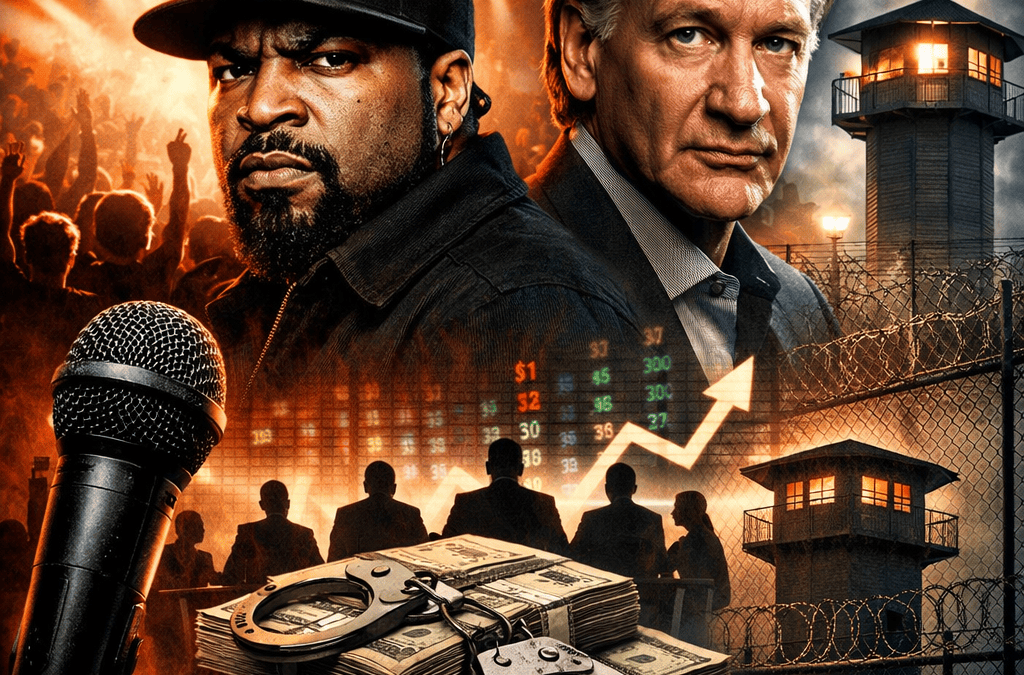
    When Ice Cube sat down with Bill Maher and said, “follow the money,” he wasn’t joking. He was pointing to something deeper than rap lyrics. He was talking about power. He was talking about influence. And he was talking about who benefits from chaos in American culture.

    In the clip, Ice Cube makes a bold claim. He says that some of the same financial interests behind major record labels also have investments in private prisons. Not necessarily the same executives clocking in at both offices, but overlapping financial ownership at the top. Institutional investors. Corporate shareholders. Wall Street money.

    Bill Maher pushes back. He asks the obvious question. Is there proof that record executives are actively pushing lyrics that funnel young men into prison? Or is it just capitalism doing what capitalism does?

    This is where it gets interesting.

    The Prison Industrial Complex and Private Prisons

    https://i.abcnewsfe.com/a/2bf63f9e-a318-4496-9cb6-be4b65518136/prison-file-gty-ml-241112_1731439598997_hpMain.jpg
    https://imageio.forbes.com/specials-images/dam/imageserve/705002625/960x0.jpg?fit=bounds&height=474&width=711
    https://images.squarespace-cdn.com/content/v1/5bfe852a96d4555a304afa99/f0fe632f-98c9-4fba-8f84-4a116c9916ee/2048px-Gaming-Wall-Street_BTS_Prodigium-266.jpg

    The prison industrial complex is not a conspiracy theory. It is a term used to describe the relationship between government and private industry that profits from incarceration. Companies like CoreCivic and GEO Group run private prisons under government contracts. The more inmates they house, the more revenue they generate.

    That alone should concern anyone who believes in limited government.

    When incarceration becomes a profit center, incentives shift. Instead of justice, you get quotas. Instead of rehabilitation, you get long sentences. Instead of accountability, you get lobbying.

    Libertarians have been warning about this for decades. Government should not partner with corporations to cage human beings for profit. That is crony capitalism at its worst.

    Bill Maher even agrees on that point. He says prisons should not be in private hands. He compares it to healthcare. Some things should not be run for profit.

    From a free market perspective, the deeper issue is not profit. It is government power. Private prisons only exist because government writes the laws, enforces the drug war, and fills the cells.

    Record Labels and Social Engineering

    https://miamioh.edu/news/_files/images/2025/06/25-record-label-main-1.jpg
    https://zoomrecordingstudio.com/upload/iblock/36f/1.jpg
    https://static1.squarespace.com/static/5ad551c2da02bc1a4142bd6f/5af117faaa4a999644ad7cd5/5c814d22ee6eb0231ab0f4fc/1532723648924/360Agmt_Pub_First_pg.jpg?format=1500w
    4

    Ice Cube says something that hits hard. He talks about “guard rails.” He says record companies do not force artists to write certain lyrics. Instead, they shape what gets promoted. What becomes a single. What gets radio play. What gets pushed to the top of the charts.

    That is not crazy talk. That is how the music industry works.

    Singles are chosen by committee. Marketing budgets are allocated strategically. Radio and streaming playlists are curated. If you want to influence culture, you do not have to control every word. You just amplify certain messages.

    Ice Cube suggests that violent, criminal, and anti-police themes often get promoted more than positive or conscious rap. If that is true, the question becomes: why?

    Is it because controversy sells? Or because chaos benefits certain systems?

    The free market answer is simple. Sex, violence, and rebellion sell. Labels chase profit. That is capitalism.

    But there is another layer. What if the same institutional investors who profit from incarceration also profit from entertainment? What if Wall Street money flows into both sectors?

    Now it is not about executives plotting in a smoke-filled room. It is about financial incentives at scale.

    Publicly traded companies answer to shareholders. Shareholders want returns. If prison stocks rise when incarceration rises, and music stocks rise when certain content trends, the market starts to align in uncomfortable ways.

    This is not central planning. It is decentralized incentive structure. And sometimes that is just as powerful.

    Follow the Money: Ownership and Influence

    When Ice Cube says “the same people,” he is likely talking about institutional ownership. Firms like Vanguard, BlackRock, and State Street often hold shares across multiple industries. Media. Prisons. Healthcare. Defense.

    They do not micromanage lyrics. But they influence corporate governance. They influence board decisions. They influence long term strategy.

    This is what happens when financial power consolidates at the top.

    From a libertarian view, the problem is not that investors seek profit. The problem is when government policy creates artificial profit streams. The war on drugs, mandatory minimums, and overcriminalization created a pipeline into prisons.

    If music amplifies a culture that feeds that pipeline, even indirectly, it deserves scrutiny.

    But we should be careful.

    The state is still the primary driver. Without federal drug laws, aggressive policing, and bloated criminal codes, there would be far fewer inmates to begin with.

    Blaming music alone misses the real issue.

    Independent Artists vs Major Labels

    Ice Cube makes another key point. He stayed independent. He did not allow record executives in his studio. He controlled his art. That is free market entrepreneurship in action.

    Independent labels like Priority gave him more freedom. Major labels often operate differently. They have larger budgets and larger expectations. With that comes control.

    This is not unique to rap. It happens in pop, country, and rock. The more money involved, the more stakeholders demand influence.

    Bill Maher argues that artists who make money get more freedom. There is truth there. Power in business comes from leverage. If you generate revenue, you can negotiate.

    But for new artists chasing a contract, the power imbalance is real.

    This is where free markets shine. Technology has broken down many of these barriers. Artists can now distribute music directly through platforms like YouTube, Spotify, and TikTok. Gatekeepers are weaker than they were in the 1990s.

    Decentralization is happening.

    Division, Bickering, and Cultural Control

    Ice Cube’s broader point is not just about rap lyrics. It is about division. He asks who benefits from Americans fighting each other over race, politics, and culture.

    Division keeps people distracted. While we argue on social media, lobbyists write legislation. While we fight over lyrics, Congress expands surveillance.

    The real danger is centralized authority.

    When government and big business become intertwined, you get a system that feeds on conflict. The prison industrial complex grows. Media narratives polarize. Politicians gain power by promising to fix problems they helped create.

    Libertarians call this the state corporate alliance. It is not a free market. It is crony capitalism.

    The Real Solution: Shrink the State

    If we are serious about reform, we need to focus on policy.

    End the war on drugs. Reduce mandatory minimum sentences. Eliminate private prison contracts tied to occupancy guarantees. Audit government incentives that reward mass incarceration.

    At the same time, support independent creators. Break up regulatory barriers that protect major labels. Encourage competition in media and entertainment.

    Freedom works when government steps back.

    Ice Cube may frame it as social engineering. Bill Maher may see it as capitalism. The truth is somewhere in between. Cultural influence is real. Financial incentives are real. But the biggest driver of incarceration is still government policy.

    If we want fewer prisons, we need fewer laws.

    Follow the money. Yes.

    But also follow the power.

    And power in America still flows through Washington.

    Spun Web Technology SMART SEO

    Spun Web Technology SMART SEO

  • Mama Mama – Who’s My Daddy? A Dark Broadway Musical About Secrets, Identity & Consequences

    Mama Mama – Who’s My Daddy? A Dark Broadway Musical About Secrets, Identity & Consequences

    At first glance, Mama Mama – Who’s My Daddy? looks like a familiar setup: a sun-soaked island, a wedding on the horizon, and a family story wrapped in music. But this is not a fairy tale, and it’s certainly not nostalgia dressed up as fun. This is a dark Broadway musical that asks an uncomfortable question—what happens when the past refuses to stay buried?

    At its core, Mama Mama – Who’s My Daddy? is a story about identity, consequence, and the emotional debt left behind by choices made in youth. It follows Donna Burke, a woman who spent her early life confusing chaos for freedom, and Taylen, the daughter born into the silence that followed.

    A Mother Who Ran, Not a Hero Who Escaped

    Donna Burke is not written as a villain, nor is she romanticized as a misunderstood free spirit. She is something far more interesting—and far more honest. Donna ran toward movement, noise, and sensation because standing still meant reckoning. She chased bands, avoided permanence, and lived in moments rather than futures.

    The musical doesn’t judge her choices so much as it examines them. Donna’s story is not about rebellion—it’s about erosion. Over time, her freedom costs her intimacy, trust, and eventually connection itself. When she becomes pregnant and cannot name the father, the story shifts. The party ends. Silence replaces sound.

    Running to a remote island becomes less about reinvention and more about hiding. Donna builds a life that looks peaceful from the outside, but inside it is rigidly controlled. No questions. No explanations. No looking back.

    The Daughter Who Inherited the Silence

    Taylen, Donna’s daughter, grows up without a father—and without even a story about one. The absence is not dramatic; it’s constant. This is one of the musical’s quiet strengths. Taylen isn’t portrayed as angry or broken. She is curious, restless, and deeply aware that something fundamental is missing.

    As she grows older, Taylen does what many children of secrecy eventually do: she looks for answers herself. When she becomes engaged, the promise of marriage feels like certainty—something solid to anchor her life. But instead of clarity, the past resurfaces.

    Three men. One window of time. No clear truth.

    A Wedding That Becomes a Reckoning

    The decision to invite three potential fathers to her wedding without telling her mother is reckless, but intentionally so. Taylen’s recklessness is different from Donna’s—it’s quieter, more controlled, driven by a need for truth rather than escape.

    When the men arrive, the musical refuses easy archetypes. They are not comic relief or villains. They are worn, imperfect, and shaped by their own regrets. Each represents a possible version of Taylen’s origin, and none can fully claim it.

    The tension escalates not through revelations, but through the absence of them. Memories don’t align. Certainty never arrives. The musical resists the traditional payoff—and that resistance is the point.

    No Answers, Only Responsibility

    Mama Mama – Who’s My Daddy? subverts expectations by refusing to reveal “the truth.” There is no DNA test moment. No triumphant declaration. Instead, the wedding collapses under the weight of unresolved reality.

    Taylen ultimately walks away—not because she lacks love, but because she recognizes the difference between closure and illusion. Identity, the musical argues, is not always something you uncover. Sometimes it’s something you accept without explanation.

    A Second Act About Staying

    One of the most unexpected turns comes late in the story, when Donna reconnects with one of the men—not out of romance, but recognition. Two people shaped by consequences, no longer pretending, no longer running.

    Their marriage is not celebratory in the traditional sense. It’s quiet. Practical. Honest. It represents something Broadway rarely shows: partnership formed after fantasy dies.

    Why This Musical Feels Disruptive

    What makes Mama Mama – Who’s My Daddy? resonate is its refusal to sanitize adulthood. This is a feminist musical not because it celebrates freedom, but because it interrogates it. It asks what autonomy really costs, and who pays when consequences are deferred.

    It’s a musical about motherhood without sentimentality, about identity without neat answers, and about family without bloodline certainty. The island setting becomes ironic—the beauty remains, but it can’t soften the truth.

    After the Party Ends

    Ultimately, Mama Mama – Who’s My Daddy? is not about who the father is. It’s about what happens when no one can be named, blamed, or redeemed. It’s about living with ambiguity—and choosing honesty anyway.

    This is not a musical that ends with applause and relief. It ends with recognition.

    And sometimes, that’s more disruptive than a happy ending.

    Spun Web Technology SMART SEO

    Spun Web Technology SMART SEO

  • Disruptarian Music: Uncensored Rebel Anthem for Liberty

    Disruptarian Music: Uncensored Rebel Anthem for Liberty

    What is Disruptarian Music?

    Disruptarian Music is not a playlist. It’s a pushback — a sonic insurgency for people who refuse to swallow the canned narratives and sugar-coated anthems of corporate culture. It arrives loud, impatient, and unapologetic. It’s melody with a purpose: liberty, skepticism, individual responsibility, and the art of not being fooled.

    When you hear Disruptarian Music, it should feel like someone handed you a mirror and a megaphone. The lyrics aren’t safe. The beats aren’t bland. The whole point is to pry open the space where real thought happens. You don’t consume it passively; you engage with it. You argue, you nod, you march. You think.

    This is music for people who believe freedom is worth fighting for — not with violence, but with ideas, culture, and relentless questioning. Why accept the radio diet spoon-fed by conglomerates when you can taste something raw, honest, and incendiary?

    Why Disruptarian Music Matters

    We live in a world that celebrates conformity and monetizes outrage. The mainstream music industry packages dissent into digestible, market-friendly bites. Disruptarian Music refuses that concession.

    It cuts through the spin. It calls out hypocrisy. It is the soundtrack for people who want to wake up, not be lulled to sleep by comforting lies. It’s not simply about criticizing power; it’s about reclaiming the language of resistance — turning melancholy into clarity and anger into strategy.

    Think of it as cultural velcro: it sticks to the parts of society that need repair and won’t let go until action follows. Want community that isn’t curated by algorithms? Want songs that challenge instead of placate? Then you want Disruptarian Music.

    Disruptarian Music and Community: United We Stand

    Music has always been a communal force. Disruptarian Music doubles down on that role by building tribes around shared skepticism. But these aren’t echo chambers — they’re forums for debate. They’re crowds that disagree loudly and then reconvene to act.

    United we stand? Yes — but not in blind consensus. This music celebrates honest disagreement while promoting shared principles: individual liberty, free thought, and the courage to challenge authority. The goal isn’t to make everyone think the same — it’s to get people to think clearly.

    Do you want to belong to something that encourages autonomy, not obedience? Then listen up. Disruptarian tracks become rallying cries in bars, basements, and livestreams where people are actually planning meaningful change.

    The Lyrics: Tools, Not Truisms

    Lyrics in Disruptarian Music are weapons of persuasion — not propaganda. They don’t spoon-feed answers. They puncture complacency. Expect contradictions called out, systems exposed, and questions left unresolved intentionally — because unresolved questions are where action starts.

    A good Disruptarian verse doesn’t tell the listener what to think. It provokes what to investigate. It points to the seams of society: the manufactured consent, the legalistic theater, the moral preening disguised as virtue. It encourages listeners to act like adults, not followers.

    Is that confrontational? Absolutely. Is that necessary? Even more so.

    How This Movement Breaks the Mold

    Disruptarian Music is a movement because it transcends tracks and becomes practice. Artists are no longer passive entertainers; they’re commentators, catalysts, and organizers. Fans are not consumers; they’re participants.

    This movement siphons energy from a growing distrust of centralized institutions. It channels that energy into music, conversation, and community organizing. It’s libertarian in spirit — valuing individual rights and free expression — but it’s not dogmatic. It borrows tactics from punk, folk, and hip-hop, welding them into a sound that’s both insurgent and accessible.

    What happens when artists refuse label-friendly compromises? They risk mainstream visibility. They gain authenticity. And sometimes, authenticity is the only currency that changes minds.

    Listening as an Act of Liberty

    Listening to Disruptarian Music is not passive entertainment. It’s an act of dissent. It’s a choice to prioritize truth over comfort and complexity over easy narratives. It’s a way to tune your moral compass by confronting ideas you don’t like and weighing them honestly.

    So turn the volume up. Read the lines closely. Discuss. Disagree. Organize. Use the music as a scaffold for civic action — from neighborhood meetings to online campaigns. The songs are sparks; the people are the wildfire.

    Disruptarian Music: Final Call to Action

    Disruptarian Music exists to challenge the status quo and cultivate a culture of independence. It’s a clarion call to those who value liberty and refuse the hollow safety of mainstream narratives. If you crave music that asks more of you than to simply dance, this is your soundtrack.

    Crank it. Debate it. Build around it. The point isn’t to produce another neat genre label — it’s to reawaken public life, one uncensored lyric at a time.

    Disruptarian Music is here to remind you: freedom tastes better when it’s earned, not handed to you on a corporate platter. Will you listen?

    Spun Web Technology SMART SEO

    Spun Web Technology SMART SEO

  • Emerald Sun Reggae: Rebel Uncensored Beats of Freedom

    Emerald Sun Reggae: Rebel Uncensored Beats of Freedom

    Welcome to the frequency where basslines meet dissent. Emerald Sun Reggae is not a cozy corner of the playlist; it’s a microphone jammed into the public square. It’s for the listener who smells the smoke of propaganda and wants a rhythm to knock down the walls. If you crave music that speaks liberty and refuses to be marketed into complacency, listen up.

    What is Emerald Sun Reggae? It’s simple and radical: reggae with teeth. It borrows the warm grooves, hypnotic bass, and call-and-response soul of classic reggae, then injects a modern jolt of questioning. The result is music that invites you to sway and think at the same time — to nod your head while your mind catalogs the lies you were told.

    This isn’t nostalgia for a past you never lived. It’s a new cultural movement that treats every bar and backbeat like an unsigned manifesto. Each track is engineered to elevate individuality and communal resilience. The melodies soothe while the lyrics pull the rug from under complacency. That contrast? Precisely the point.

    Emerald Sun Reggae: The Sound of Defiance

    Think of Emerald Sun Reggae as an audio insurgency. The grooves are lush, the bass is deep, but the messages are designed to unsettle. Love, resilience, social justice — those are its staples. But so are questions about who benefits from the narratives you’re fed and who profits when you stay silent.

    Why does that matter? Because music is still one of the loudest unlicensed platforms left. When a tune sticks in your head, the idea behind it gets lodged there too. That’s why Emerald Sun Reggae leans into storytelling. It offers scenes, characters, and provocations that make you re-evaluate what you accept without a fight.

    The vibe? Warm, yes. But not saccharine. It’s the kind of warmth that rallies you around a bonfire to plan routes of escape from the tidy cages of consumer identity and pre-approved politics.

    DJ Disruptarian: The Mind Behind the Music

    DJ Disruptarian isn’t a brand strategist in a hoodie. He’s an architect of revolt. He builds tracks that are as much mirrors as they are maps. You feel the beat, but you also get a nudge: look at that headline again. Read the fine print. Who gains?

    His production mixes classic reggae textures with unexpected percussion and electronic accents — a soundscape designed for both the dance floor and the back-alley town hall. That duality makes his music a soundtrack for living defiantly.

    Creative? Explosive. Political? Quietly relentless. Liberating? Absolutely.

    Cultural Impact: More Than Music — A Movement

    Here’s the blunt truth: mainstream music has often become a vehicle for conformity. Emerald Sun Reggae pushes back. It doesn’t aim to be accessible to everyone — it aims to be relevant to people who choose to think for themselves.

    Tracks in this genre ask questions. They spark debate. They encourage action. That’s not accidental. The movement treats music as a tool of civic engagement — a way to start conversations that mainstream channels scrub out.

    Community is central. The scene thrives on collaboration. Artists bring their unique perspectives and the resulting sound is a mosaic that refuses to be boxed into playlists curated by algorithms with corporate sponsorships.

    Connecting Through Sound: Unity Without Uniformity

    In an age of curated sameness, Emerald Sun Reggae offers real connection. The sound crosses borders — not by flattening differences, but by celebrating them. The best tracks create moments where people who otherwise disagree find a shared beat and, for a few minutes, a shared truth.

    Is that naive? Maybe to the doctrinaire. But community built on shared questioning is more fragile and more honest than unity enforced by a single narrative.

    Where to Find It and Why It Matters

    You can find Emerald Sun Reggae in underground mixes, community radio, street festivals, and late-night podcast sets. It’s not always on the platforms that pay the bills of mainstream stars — and that’s deliberate. The movement prioritizes message over monetization, authenticity over reach.

    So listen with an ear for content, not just comfort. Let the bass loosen the assumptions in your chest. Let the lyrics prod at the complacent reflexes. If you want music that entertains and educates — that nudges you toward independence instead of indoctrination — this is your lane.

    Join the Movement — Or at Least Don’t Ignore It

    Do you want to be comforted by music that keeps you docile? Or do you want a soundtrack that helps you wake up? Emerald Sun Reggae is an invitation to the latter. It’s a call to stand, to dance, and to question.

    This is not just a genre. It’s a living, breathing challenge to the status quo. It asks you to be part of the conversation, to contribute your voice, and to build communities that value freedom over fashion.

    Conclusion: Emerald Sun Reggae as a Revolution in Rhythm

    Emerald Sun Reggae is more than sound — it’s a practice of independence. It blends irresistible grooves with messages that unsettle and liberate. If you’re ready to swap the curated comforts of mainstream media for something rawer and truer, let these rebel uncensored beats guide you. Turn up the volume. Listen closely. Let the music not just move your body, but move your thinking.

    Spun Web Technology SMART SEO

    Spun Web Technology SMART SEO

  • Music Outlaw: Uncensored Rebel Celtic Remix

    Music Outlaw: Uncensored Rebel Celtic Remix

    Music Outlaw — Who’s Pulling the Strings?

    Call it a remix, call it a manifesto — DJ Disruptarian’s Outlaw vs. Puppet (Celtic Remix) is the kind of track that wakes up rooms and questions narratives. From the first crash of percussion you feel confronted: this isn’t background music for corporate playlists. This is a Music Outlaw anthem, built for ears that refuse to be lectured into complacency.


    Why does that matter? Because in a music economy squeezed by algorithms, playlists, and ad dollars, a song that dares to mix rebel Celtic motifs with unfiltered electronic guts is a political act. It’s a reminder that sound can be insurgent. It’s a reminder that art needn’t be sanitized to sell.

    The Remix That Refuses to Be Polite

    DJ Disruptarian didn’t polish this into polite radio gold. He let the edges remain jagged. There are stompable beats that feel like a heartbeat gone militant. There are fiddles and pipes braided into synth lines like protest banners layered over corporate logos. The result: a collision that makes you move and makes you think — sometimes at the same time.

    Melody and rhythm do the heavy lifting here. Celtic instruments carry memory; electronic elements bring disruption. Together they create a sonic tension that mirrors the track’s title. Outlaw vs. Puppet — who’s speaking? Who’s being silenced? And more importantly, who’s choosing what you hear?

    Outlaw Energy: Beats That Break the Mold

    If “beastly percussion” had a manifesto, it would write itself into this track. The drums land like a call to arms. They aren’t subtle; they insist. They force a question into the listener’s mouth: Am I moving because I want to, or because something told me to? That’s the kind of meta-awareness DJ Disruptarian wants — a kind of musical self-defense.

    This is rebellion you can dance to. You can hear tradition and modernity brawl and then make peace on the dance floor. It’s cathartic and cunning at once.

    Lyrical Threads: Not Just Sound, But Substance

    Don’t let the intoxicating rhythms distract you — the lyrics push this from party track to a statement piece. Lines about strings and puppeteers aren’t metaphor for the sake of poetry. They’re a direct challenge to power: corporate gatekeepers, curated taste-making, the slow homogenization of culture.

    What’s remarkable is how the vocals are treated. They aren’t presented as polished confessions; they’re textured, layered, sometimes obscured — like truth in a noisy media landscape. You have to lean in to hear the critique. Isn’t that a metaphor for modern life itself?

    Why “Music Outlaw” Is More Than a Tag

    Being a Music Outlaw doesn’t mean being illegal — it means choosing independence over safe predictability. It means taking the long, riskier route: mixing heritage with provocation, refusing to tailor art to advertiser expectations.

    DJ Disruptarian embodies that posture. His sound says: I will not be a product of focus-tested committees. I will be messy, I will be earnest, and I will be loud enough to make you uncomfortable. And yes, sometimes uncomfortable is the point.

    The Cultural Crossroads: Celtic Roots, Modern Scars

    Celtic music carries stories — of migration, resistance, memory. Folding those sounds into electronic rebellion isn’t appropriation when it’s done with reverence; it’s amplification. It’s putting ancestral voices into a modern megaphone and letting them speak the language of now.

    That clash of past and present questions more than musical taste. It asks what culture looks like when it refuses to be packaged. It reveals the bones beneath the polish of mainstream pop.

    Independent Radio, Independent Thought

    Listeners of Disruptarian Radio know the drill: don’t expect spoon-fed consensus. Expect friction. Outlaw vs. Puppet is radio designed to start conversation, not end it. It’s part dance track, part agitprop, part elegy for autonomy.

    Isn’t that the kind of content that will actually change minds? Not bland agreement, but provocation that forces you to recalibrate.

    Conclusion: Turn It Up — Become a Music Outlaw

    Outlaw vs. Puppet (Celtic Remix) is an invitation. It asks you to listen with intent, to treat sound as a weapon against complacency. If you leave the track humming its hook and asking who’s calling the tune in your life, the remix has done its job.

    Be a Music Outlaw in your own ways. Question the playlists that show up in your feeds. Support creators who risk being inconvenient. Celebrate work that blends tradition with disruption rather than neutering it.

    So hit play. Let the Celtic pipes cut through the static. Let the drums plant a flag in your chest. Then ask yourself: am I a puppet, or am I already part of the uprising?

    Spun Web Technology SMART SEO

    Spun Web Technology SMART SEO

  • Fake Smiles and Disguise: Rogue, Uncensored Anthem

    Fake Smiles and Disguise: Rogue, Uncensored Anthem

    We live in an economy of performances. Smiles are curated, grief is filtered, and authenticity gets edited out of sight. DJ Disruptarian’s Fake Smiles and Disguise doesn’t flirt with that culture — it rips the bandage off. This track isn’t a polite suggestion to be real. It’s a rowdy wake-up call for anyone fed up with the flattering lie.

    Why does this matter now? Because the polished portrait of life sold to us — likes, follows, sponsored smiles — is a quiet violence. It teaches people to hide pain, tuck away dissent, and perform contentment. Fake Smiles and Disguise names that violence and points a spotlight at the institution of pretense. No gentle metaphors. No market-tested sentimentality. Just blunt, unadorned truth layered over a pulse that won’t let you look away.

    Fake Smiles and Disguise: The Soundtrack for Unmasking

    Music can be a mirror — or a sledgehammer. This one swings. The beat is muscular and insistent, the lyrics cut like a reporter with a subpoena. DJ Disruptarian knows how to use rhythm as rhetoric: the kind of music that makes you stand up and ask, Who benefits from our silence?

    The song is a diagnostic. Lines land not to wallow, but to diagnose societal illnesses: performative politeness, corporatized joy, and the engineered myth of seamless happiness. It’s a rejection of the idea that discomfort must be privatized. Why should you pretend everything’s fine because an algorithm rewards curated smiles?

    Listen closely and you hear the rebellion threading through the arrangement. It’s not anthemic in a safe, stadium-pop way. It’s insurgent — intimate and angry at the same time. That’s the point. Authenticity doesn’t beg to be liked. It demands to be heard.

    Confrontational? Yes. Necessary? Absolutely.

    A few clever lines do the heavy lifting. They pry at the veneers: “camera-ready grief,” “scheduled laughter,” “privacy sold for applause.” These are more than barbs — they’re diagnostic tools for a culture that confuses visibility with validation. The music says: stop measuring worth in impressions. Start measuring it in truth.

    What if you stopped pretending? What if your social feed reflected nuance instead of a curated highlight reel? Dangerous thoughts? Maybe. But also liberating.

    Rallying cry or mirror? Both.

    Rebellion doesn’t always wear a leather jacket. Sometimes it plays through headphones at 2 a.m., making you sit up and rewrite your morning performance.

    The track also embraces a libertarian current — not as a slogan, but as a lived ethic. Small-d democracy starts in how we present ourselves to one another. If authenticity is criminalized by social norms, then the act of being authentically messy is a small form of civil disobedience.

    Communities grow out of confession as much as celebration. Fake Smiles and Disguise creates a space for that confessional honesty. It’s an invitation to build connections and a call to arms for people who’ve been performing safety for so long they forgot who they were underneath.

    So who’s this for? For the skeptical, the anti-establishment, the libertarian-leaning listener who smells the rot in consensus narratives. For anyone who’s tired of being told to sanitize their sorrow for public consumption. For those who want art that doesn’t sell them out to the algorithm.

    The song’s strength is how it pivots between critique and comfort. It calls out the industry’s role in normalizing the fake smile and then offers balm — the reminder that shared imperfection is the bedrock of community. It’s a political act disguised as a personal admission: let’s be honest with each other, not perform honesty for the sake of engagement.

    Now ask yourself: when did you last show up without a script?

    Fake Smiles and Disguise isn’t concerned with mass appeal. It’s interested in fidelity — fidelity to lived experience, to the untidy truth. That makes it dangerous to the machine that commodifies identity. And that’s exactly why it’s necessary.

    Conclusion: Keep the Mask Off

    Fake Smiles and Disguise circles back to a simple demand: stop apologizing for being real. DJ Disruptarian hands us a hymn for unfiltered living — loud, sharp, and utterly human. The track isn’t therapy for the complacent. It’s ammo for the courageous.

    So ditch the staged grin. Voice the awkward, the broken, the inconvenient. Build a community that values honesty over optics. In a world addicted to the cosmetic, choosing authenticity is the most disruptive act left.

    Listen. Think. Resist the disguise.

    Spun Web Technology SMART SEO

    Spun Web Technology SMART SEO

  • Outlaw vs. Puppet: Uncensored Rebel Anthem

    Outlaw vs. Puppet: Uncensored Rebel Anthem

    Outlaw vs. Puppet — a primer for the skeptical ear

    There are songs that entertain and songs that recruit. DJ Disruptarian’s Outlaw vs. Puppet is the latter: a musical manifesto dressed up as a beat. From the first bar it hijacks complacency and asks you a simple, dangerous question — will you be led, or will you lead?


    This isn’t nostalgia for rebellion. It’s a cold-eyed diagnosis of a culture that trains citizens to nod, not to think. The track names its villains: corporate gatekeepers, algorithmic taste-makers, cultural commissars who prefer predictable, purchasable art. The outlaw, by contrast, is messy, stubborn, and real. That tension — outlaw versus puppet — is the pulse of the record.

    Short, sharp sentences. Aural hooks that sting. Lyrics that feel like a dare. This is music aimed at people who’ve already smelled the rot in the system and are tired of euphemisms.

    Why the outlaw matters

    The outlaw doesn’t mean lawless chaos. It means autonomy. It’s the artist who refuses to sell their voice to the highest bidder. It’s the listener who rejects curated playlists designed to harvest attention and data. In a media landscape hungry for predictability, being an outlaw is a political act.

    DJ Disruptarian doesn’t glamorize martyrdom. He celebrates creative risk—taking the road that won’t show up on trend reports. The melody won’t comfort you; it will unsettle you. That’s intentional. Art that soothes is often complicit. Art that challenges strips away excuses.

    You feel that in the production: textures that clash, samples that bite, rhythms that remind you you’re awake. The track forces a decision. Will you follow the script or tear it up?

    Breaking the strings: who’s pulling them?

    Who are the puppeteers today? Labels? Media conglomerates? Tech platforms that atomize attention and commodify dissent? All of them. Outlaw vs. Puppet points at a system that monetizes conformity while pretending to reward originality.

    But the puppet is not only external. It’s the part of us that prefers comfort over courage. The part that selects the safe take, the universally palatable chord progression, the tweet-sized outrage that leaves no mark. DJ Disruptarian calls this out because freedom starts with self-honesty. If you can’t see your own strings, you can’t cut them.

    Have you ever caught yourself liking a song because everyone else did? Felt your taste calibrated by an invisible corporate tuner? That’s the puppet state of the mind.

    The Disruptarian vibe: music as confrontation

    This record is not about rebellion for its own PR-friendly drama. It’s philosophical and practical. It asks: what does it mean to be an artist in an ecosystem designed to turn art into product? How do you keep your voice when every platform wants you to mimic its metrics?

    Outlaw vs. Puppet is blunt: decentralize. Decentralize attention, distribution, and validation. Build your own circuits. Find listeners who want to think, not just consume. That’s the path out of the puppet theater.

    And there’s a human element. The song nods to histories of resistance — not as dusty trophies, but as living models. It borrows rhythm from protest chants, texture from underground scenes, and the rawness of late-night DIY sessions. The result is music that sounds like the future we should want: messy, honest, autonomous.

    Authenticity in a manufactured landscape

    Authenticity has been weaponized as marketing copy. Thirty-second authenticity doesn’t exist. DJ Disruptarian’s answer is to lean into imperfection as proof of life. Outlaw vs. Puppet celebrates the cracks, the off-beats, the unpolished vocal takes that mean a human being was in the booth.

    If mainstream culture packages authenticity into a filter and a hashtag, the real thing becomes radical. This track insists on that radicalism.

    What if we treated quirks as assets instead of liabilities? What if labels were resources, not overlords? The music industry will call that naive. The rest of us call it necessary.

    A call to decentralize — and to act

    Outlaw vs. Puppet isn’t a comforting anthem. It’s a blueprint. It pushes listeners toward decentralization — not as tech fetish but as cultural strategy. Reclaim your playlists. Support creators who refuse to be branded into oblivion. Opt out of platforms that prioritize engagement over truth.

    This is practical liberty. Buy music directly. Share it with friends. Play it loud in rooms that are physically or virtually yours. Build micro-communities that value depth over virality. Each act chips away at the puppeteers’ power.

    Conclusion: your invitation to disruption

    Outlaw vs. Puppet demands a choice. Will you be curated by the market, or will you curate yourself? Will you accept the comfortable script, or will you riff your own? The track won’t solve structural problems by itself — but it can spark attitudes that do.

    If you’re tired of being tuned by algorithms and appeasing taste panels, this song is a transmission. Take it personally. Let it irritate you. Let it teach you to distrust the default while building alternatives.

    Listen once and nod. Listen twice and decide whether you’re a puppet or an outlaw. Then do something about it.

    Spun Web Technology SMART SEO

    Spun Web Technology SMART SEO