Category: Music

  • Tim Pool attacked: Uncensored Rebel Dispatch

    Tim Pool attacked: Uncensored Rebel Dispatch

    Tim Pool attacked — who benefits from silencing a dissenter?

    Tim Pool gets hit, the story goes viral, pundits posture, and the very machinery designed to shape public opinion revs up. This isn’t just about one man getting roughed up on camera. It’s a symptom. A signal flare. A reminder that when someone steps outside the script, the system reacts — sometimes violently, sometimes with smothering silence.

    If you listen to Disruptarian Radio, you know the pattern: independent voices draw fire. Why? Because narrative control is power. Pull the thread on one truth, and the whole manufactured tapestry starts to unravel. That’s why “Tim Pool attacked” should matter to anyone skeptical of centralized narratives and eager for uncensored reporting.

    What happened and why you should care

    The basic facts are simple: Tim Pool, a streaming journalist who built his audience by questioning mainstream frames, was assaulted. The footage is raw. The aftermath is messier. Police reports, media spin, and social channels all try to map the event into an easy story — petty crime, political theater, or contrived spectacle.

    None of those easy labels satisfy the deeper question: why does physical intimidation keep being a tool against disruptive voices? When institutions can’t win on argument, they try to win on suppression. That could be outright violence. Or it could be media ostracism and algorithmic exile.

    Let’s not let the conversation end at “who did it.” Ask instead, who stands to gain from muting a skeptic? Who benefits when a streaming journalist — who has no corporate underwriter to appease — suddenly loses reach or credibility? The attack is the headline. The real agenda is the long grind of marginalization.

    Narrative control and the weaponization of fear

    The mainstream loves a neat moral: violence is bad, justice will prevail. That comfort feeds apathy. It reassures people that systems work. But systems are made of people, and people have incentives. When concentrated power faces decentralized information, the incentives tilt toward containment.

    Algorithms, advertiser pressure, and social stigmatization are quieter weapons than a fist, but they are effective. A single assault creates a ripple effect: fewer live streams, fewer on-the-ground investigations, and more self-censorship. That’s the chilling effect, not as theory but as lived reality.

    Imagine a world where every disruptive podcastist worried about being followed home, having their content demonetized, or being dragged into legal quagmires. Who would keep asking the questions? Who would broadcast the footage that makes elites uncomfortable? Not many. That’s the point.

    The real lesson for independent media

    If you care about liberty, the lesson isn’t to rally behind personalities. It’s to fortify structures that protect speech and people. Support decentralization. Support platforms that can’t be nuked by one corporate decision. Back journalists who use open-source tools, distributed backups, and resilient funding models.

    And don’t buy the “random act” narrative. Power rarely tolerates organic dissent for long. When an independent journalist gets attacked, treat it like a test: does your community respond, or does it shrug and move on? Do you double down on independent verification and broader distribution, or do you let the story fizzle under corporate coverage?

    How audiences can act — practical steps

    You don’t have to be an insider to push back. Here are practical moves that matter:

    – Share primary footage widely. Algorithms favor engagement; make them work for truth.
    – Support independent creators financially — subscriptions, one-time tips, crypto donations. Financial independence is free speech insurance.
    – Learn basic digital security: encrypted backups, two-factor authentication, decentralized hosting options.
    – Demand accountability. Not just arrests and prosecution, but transparency from platforms about how they handle content relating to assaults and harassment.

    These are small acts individually. Together, they change the calculus for would-be suppressors.

    Tim Pool attacked: a warning, not a defeat

    Let’s be blunt. When someone like Tim Pool is attacked, it’s not an isolated event. It’s a warning shot. It’s meant to recalibrate the cost of speaking up. If your first instinct is to wait for official narratives to confirm your biases, you’ve already ceded ground. If your instinct is to dig, distribute, and defend decentralized speech — congratulations. You’re part of the antidote.

    This episode should provoke questions, not comfort. Who profits when a dissenter is sidelined? How do we harden independent media against both blunt and subtle attacks? And what are you willing to do to keep the airwaves and livestreams honest?

    The truth is messy. It’s unruly. It needs defenders. If the mainstream wants to treat a physical assault as a headline and move on, that’s their prerogative. But if you’re listening to Disruptarian Radio, you’re not the kind to accept tidy narratives.

    Tim Pool attacked — and that attack is a call to action. Are you going to respond, or will you let the next microphone go quiet?

    Spun Web Technology SMART SEO

    Spun Web Technology SMART SEO

  • Tim Walz is sad: Uncensored Rebel Brief

    Tim Walz is sad: Uncensored Rebel Brief

    Tim Walz is sad

    You saw the headlines, you heard the pundits sigh in solidarity, and now here we are — dissecting a political mood like it’s breaking news. Tim Walz is sad. That’s not a clinical diagnosis. It’s a political portrait: a governor caught between lockdown fatigue, economic pressures, and a public that’s growing increasingly skeptical of the “trust us” narrative from both parties.

    This is a Disruptarian take — blunt, skeptical, and allergic to official spin. Let’s unpack why the guy in the governor’s mansion looks like the punchline of a Midwestern pity party and why that matters.

    Why does it matter that Tim Walz is sad?

    First, emotions reveal strategy. Politicians project confidence when they want obedience; they show sorrow when they need sympathy. Walz’s posture matters because it’s a tactic. When the state faces protests, economic strain, and furious small-business owners, showcasing sadness is a softer form of control. It says: “I’m human, don’t blame me.” But you and I both know governing is about choices, not feelings.

    Second, sadness can be a mask for indecision. In a moment when clarity is required — clear rules, transparent data, accountability — we’re often handed ambiguous policies wrapped in empathy. That’s politically convenient. Empathy buys time. While Minnesotans wrestle with job losses, school disruptions, and civil unrest, the decision-makers repackage uncertainty as compassion.

    Isn’t everyone under pressure? Sure. But we live in a world where pressure is the political currency. The real question: who benefits from the emotion? When governors cry, corporations shift responsibility. When officials plead with citizens to “do the right thing,” they often avoid the harder political choices: reopening with real accountability, defending civil liberties, or being honest about trade-offs.

    The optics and the outcomes

    Let’s be honest. The optics of a sad governor are more useful than the outcomes. The narrative of a sorrowful leader distracts from measurable performance. Health metrics? Mixed. Economic impact? Severe in places. Accountability? Patchy. People want to know what worked, what failed, and who paid the price. Too often, they get heartfelt speeches and policy vagueness.

    Where is the independent oversight? Where are clear metrics that truly matter — excess mortality, small-business survival rates, mental health fallout? Instead, we get sliding scales, emergency powers extended like velvet ropes, and an industry of consultants profiteering from crisis management. Sadness is a potent PR lever in that environment.

    Pushback and the rise of skepticism

    Of course there’s pushback. Citizens are tired. Protesters populate the streets. Alternative media outlets and independent voices — the same ones you tune into on Disruptarian Radio — are calling out contradictions. That’s the point: decentralized scrutiny forces a different calculus on power.

    Skeptics see another narrative: governors like Walz made sweeping, often unprecedented decisions with limited legislative oversight. Some of those decisions saved lives. Some arguably caused more harm than good. The truth isn’t a single headline; it’s a messy ledger of trade-offs. Calling out a politician’s sadness isn’t mockery. It’s a demand for accountability: show your work.

    What we should be asking

    – Which data drove your toughest choices?
    – Were alternatives considered and debated?
    – Who profited from emergency contracts?
    – What are the long-term costs to civil liberties and small businesses?

    Those aren’t petty questions. They’re the foundation of a free society that expects something more than performative sorrow from its leaders.

    A call for radical transparency

    If the public mood is shifting, action must follow. We don’t need more heart-tugging speeches. We need transparent reports, independent audits of emergency spending, and clear sunset clauses for extraordinary powers. We need to measure not only infection curves but collateral damage — unemployment, education loss, addiction rates.

    Imagine a government that responded to public skepticism with openness rather than sympathy. Imagine policies debated in daylight, not decided in closed rooms. That’s not wild; it’s the baseline of accountable governance.

    Don’t be fooled by the performance

    Tim Walz is sad — and you should take that as a cue to pay attention, not to buy the narrative wholesale. Emotion from those in power is a strategic instrument. It can be genuine, sure. But it’s also useful. Don’t let a governor’s demeanor substitute for data.

    We live in a moment where trust is the most contested commodity. Establishments expect deference. Disruptarians demand evidence. That’s the gulf you see reflected in those somber press conferences and earnest op-eds.

    Final thoughts: what to do next

    Stay skeptical. Ask for metrics. Push for audits. Support independent media that won’t accept the official emotional shorthand as a substitute for proof. Demand that temporary powers come with timelines and oversight. And if a politician wants your empathy, make them earn it with transparency.

    Tim Walz is sad — and that sadness is a headline we can use to pry open the black boxes of power. If you care about liberty, accountability, and real outcomes, don’t be comforted by performance. Be provoked by it.

    Spun Web Technology SMART SEO

    Spun Web Technology SMART SEO

  • ANTIFA COMMANDER Uncensored: Rebel Dispatches

    ANTIFA COMMANDER Uncensored: Rebel Dispatches

    ANTIFA COMMANDER — Who’s Really in Charge?

    Let’s cut through the noise. For listeners of Disruptarian Radio, the label “ANTIFA COMMANDER” isn’t just a headline; it’s a political Rorschach test. Mainstream outlets toss the term like a grenade — loud, reductive, and aimed at silencing complicated dissent. But what if we stop accepting their script? What if “ANTIFA COMMANDER” is less a title and more a panic button for institutions desperate to regain narrative control?

    We live in an era where power markets fear less the actions of protesters than the idea of organized defiance. Call it mythology, call it spin: the “ANTIFA COMMANDER” is portrayed as a monolithic mastermind. The truth is messier, and far more interesting.

    What the Label Hides

    Labels flatten complexity. They make the unruly look coordinated, and the chaotic appear sinister. The phrase “ANTIFA COMMANDER” is weaponized to suggest a hierarchical rebellion with a clear chain of command. That feeds into familiar fears: the threat of an organized left, the fantasy of a secretive cabal pulling strings.

    Reality? Most activist networks operate horizontally. Decisions are made in small cells, consensus groups, and on-the-fly coalitions. Leadership often emerges situationally, not from a single central figure issuing orders from a bunker. When the media screams about an “ANTIFA COMMANDER,” it’s rarely because they’ve uncovered actual evidence. It’s because narratives need faces to demonize.

    Why does this matter? Because naming a commander creates a target. It focuses law enforcement, legal resources, and public outrage on individuals. It also sanitizes state power. If you can point to a “commander,” then crackdowns become “necessary” and civil liberties look like complicity.

    The Media’s Role: Narratives, Not News

    Mainstream outlets thrive on certainty. Certainty sells. So when protests happen, the media supply a tidy villain. “ANTIFA COMMANDER” fills that role perfectly — ominous, decisive, and easy to vilify.

    But journalism that substitutes narrative for investigation does a disservice. It confuses reporting with theater. Where’s the follow-through? Who’s verifying claims? Too often, the story ends at the label. And the public left with a simpler, scarier version of events.

    Disruptarian Radio listeners know this instinctively. You don’t just receive news — you interrogate it. You ask: who gains if this story is simplified? What else is being distracted from? The emergence of an “ANTIFA COMMANDER” story often coincides with other political moves — clampdowns on protest rights, expanded surveillance, or laws designed to criminalize dissent.

    The State Loves a Villain

    Power needs enemies. It legitimizes emergency measures. When politicians invoke the specter of an “ANTIFA COMMANDER,” they reframe disorder as a problem of control rather than a symptom of deeper grievances. It’s much easier to fund new policing tactics when citizens are terrified of shadowy commanders.

    This is the pattern: protest, media amplification, public fear, legislative reaction. Rinse and repeat. Notice how the conversation focuses on tactics and personalities and never circles back to causes — economic inequality, systemic injustice, or the policies that drive people to the streets.

    Is it naïve to think the state doesn’t exploit that cycle? Of course not. It’s realpolitik. And calling out the “ANTIFA COMMANDER” narrative is the first step toward refusing the script.

    Why Real Interest Should Be in Ideas, Not Icons

    If you’re committed to disruption, interrogate motivations, not mythology. Who organizes? How do tactics develop? What grievances mobilize people? Those are the questions that move us from spectacle to strategy.

    When the discourse is stuck on the “ANTIFA COMMANDER,” the public conversation becomes superficial. Real movements are judged by impact, not by the sinisterness of their supposed leadership. Effective disruption doesn’t need a marquee villain; it needs clarity of purpose.

    Practical Takeaways for Disruptarians

    – Don’t accept labels at face value. Ask for evidence.
    – Recognize that media simplification often serves political ends.
    – Focus on systems and causes, not personalities.
    – Protect horizontal organizing from the legal and narrative traps that single out “commanders.”
    – Build resilient communication channels that can’t be easily stamped with a headline.

    ANTIFA COMMANDER — Final Dispatch

    So what should we take away? The “ANTIFA COMMANDER” is a narrative construct, a convenient enemy image. It’s useful for the media and useful for the state. For anyone serious about pushing real change, it’s a distraction.

    Disruptarian Radio listeners are allergic to easy stories. We prefer abrasive questions to comfortable certainties. When the next “ANTIFA COMMANDER” story hits the airwaves, don’t play along. Demand nuance. Track the motives behind the headlines. And remember: insurgency isn’t a person you can arrest — it’s a set of ideas that won’t be contained by slogans or by fear.

    Stay skeptical. Stay loud. Stay strategic. The label might sell papers, but it won’t win movements.

    Spun Web Technology SMART SEO

    Spun Web Technology SMART SEO

  • parental rights Uncensored: Refuse the Gender Lobby

    parental rights Uncensored: Refuse the Gender Lobby

    We live in an age when emotions are weaponized and institutions run recruitment drives disguised as “care.” A pediatrician telling a father, “Would you rather have a dead son or a live daughter?” isn’t an isolated cruelty — it’s the logic of a system that substitutes ideology for inquiry. This is about more than one family. It’s about who gets to decide a child’s identity: parents, or the machinery of schools, therapists, and clinics that profit from a single script.

    This isn’t compassion. It’s emotional extortion.

    The soft totalitarianism of toxic empathy

    Call it toxic empathy: a culture that elevates feeling above facts until truth becomes inconvenient. It’s not sympathy; it’s surrender. We’ve seen this pattern across issues — feelings are deployed to shut down debate, absolve risky policy, and sanitize consequences.

    When empathy becomes policy, we end up affirming harmful choices, validating untruths, and supporting systems that make money off quick fixes. Want to call that compassion? Fine. But don’t confuse a narrative shortcut with wisdom. Real love doesn’t capitulate to the easiest emotional outlet. Real love tells the truth, even when it hurts.

    A 14-year-old with a target on his back

    Meet the profile: new school, weight loss, undiagnosed autism, social isolation. Perfect conditions for a simplistic answer to complicated pain.

    Enter the gender curriculum: cartoon “gender unicorns,” classroom peer groups that promise solace but function as recruitment hubs, and adults who hand a neat identity label to avoid messy, slow work. The result? A kid is told he is “trans” and that parental doubt equals cruelty.

    That’s the lobby in action — not a sinister cabal in a smoke-filled room, but an infrastructure: schools, counselors, activists, media, and clinics all repeating the same script until dissenters look like villains.

    A dad who refused the script

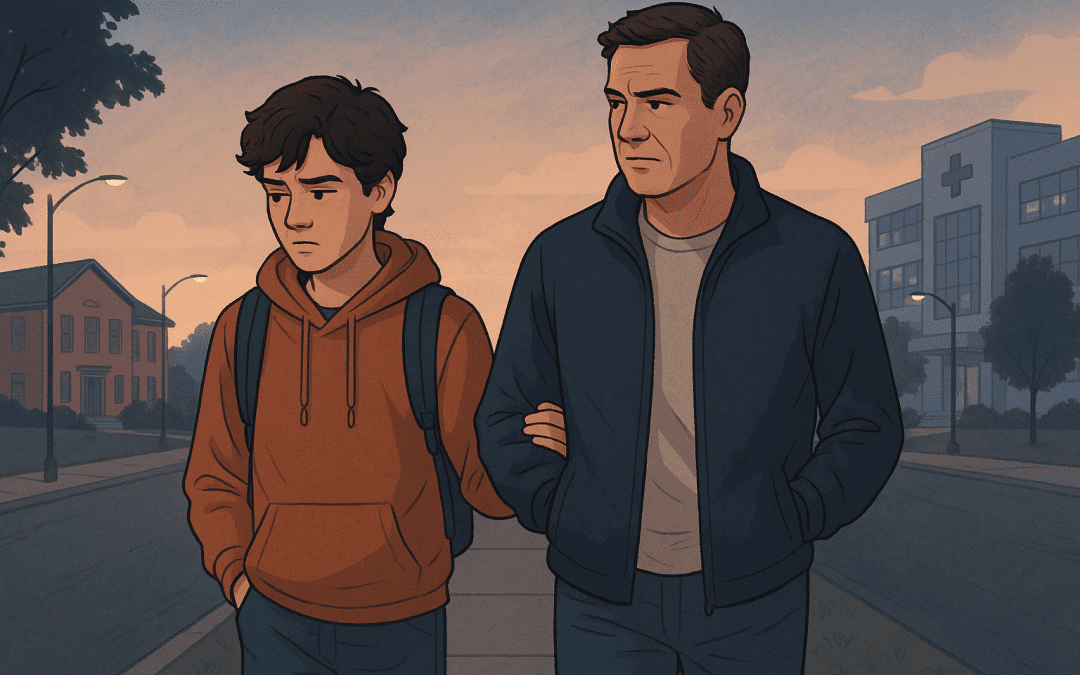
    Gareth did what parents do: he sought help when his son, Simon, was hurting. He expected diagnostic curiosity, a slow unspooling of causes — trauma, bullying, autism. Instead he got a pitch.

    “Your son says he is a girl,” the pediatrician reported. Gareth said what many would: “Of course I do not affirm that.” The reply? A stark ultimatum framed as care: choose affirmation or your child’s life.

    Think about that. When did medicine become a tool for coercion? When did disagreement become a weaponized label: unsafe, abusive, hateful?

    Gareth made a choice most institutions would call heartless: he refused to be seduced by the glove of instant validation. He chose the long, ugly work of parenting. He held steady.

    Reality is slow. Ideology is fast.

    What changed Simon was not a clinic or a trending activist slogan. It was confronting the wound he had been running from. In college, he finally processed an assault that had shaped his identity and choices. The identity that once felt inevitable unraveled when he faced the actual trauma underneath.

    No hormone, no surgery, just time and truth. He saw his father’s steadiness for what it was: love that resisted easy answers. That’s not the PR line you’ll hear from institutions invested in routes that bill quicker and scale easier.

    Why parental rights matter

    parental rights: who steers the child?

    This fight is ultimately about who has the duty and authority to raise children. Are parents mere facilitators for the state and corporate networks? Or are they the primary moral guardians?

    If a doctor is comfortable threatening a parent’s relationship with their child unless the parent consents to an irreversible medical pathway, then we have to ask: who owns the child’s future? When disagreement becomes grounds for labeling parents abusive, the state’s therapeutic arm is not protecting children — it is appropriating control.

    Liberty-minded listeners: this is classical liberalism’s problem. Parental rights are the original check on centralized power. When those rights erode, institutions expand.

    Practical truth for parents in the blast zone

    If you’re facing this pressure, first: breathe. You are not the crazy one for insisting on caution. You are not bigoted for asking for a thorough assessment. You are not abusing your child for resisting an ideological conveyor belt.

    Ask questions. Demand multi-disciplinary evaluations. Insist on trauma screens, developmental history, and time to process. Share your concerns with other adults you trust — spouse, pastor, community elders. Document interactions. Don’t outsource moral responsibility to a clinician whose incentives favor speed and procedure over nuance.

    Love that resists

    There’s a bitter truth: love sometimes looks like resistance. It means saying no when society screams yes. It means risking accusations of hate to protect a child’s future from irretrievable decisions made in the fog.

    That resistance isn’t cruelty. It is courage. It’s parenting.

    Conclusion: parental rights as a frontline freedom

    Parental rights are not a culture-war slogan. They’re the firewall between children and a conveyor-belt industry that profits from identity instant-gratification. Protecting those rights means protecting the slow work of human flourishing — the messy, inconvenient path that actually grows people.

    So ask yourself: would you trade a child’s future for a lie that costs less to administer? Hold the line. Insist on truth. Protect your children from a lobby that mistakes moral convenience for care. Parental rights aren’t negotiable — they’re the first freedom we must defend.

    Spun Web Technology SMART SEO

    Spun Web Technology SMART SEO

  • transgender lobby Uncensored: Rebel Parents Fight Back

    transgender lobby Uncensored: Rebel Parents Fight Back

    We live in a time when institutions move faster than common sense. When a hurting teenager types a line into a search bar, an entire medical and social apparatus can converge on that moment and pronounce a destiny. That’s what happened to Simon. That’s what’s happening across the country. And if you’re a parent paying attention, you should be alarmed.

    Simon was autistic, anxious, bullied, and desperate for an answer. He told a doctor he felt “like a girl inside,” and the system reflexively affirmed him. No pause. No exploration. No honest conversation about alternatives or risks. Within weeks, referrals, recommendations, and a push toward medicalization followed—hormones, social transitions, the whole irreversible arc.

    His father said no.

    You know what the reaction was? He was branded the enemy. Told he didn’t love his child. Threatened with state intervention. Offered a false binary—submit or be blamed for your child’s death. Emotional blackmail dressed up as care.

    But Simon never went to the gender clinic. He didn’t get hormones. Over time—through lousy, ugly conversations and a lot of pain—he desisted and came back to himself. Today he thanks the father who refused to be bullied by a rush to medical solutions.

    This is more than one story. It’s a sign of how the transgender lobby operates inside hospitals, schools, and social services: quick to affirm, slow to question, eager to expand influence, and appallingly indifferent to long-term consequences for vulnerable kids.

    How the transgender lobby captures vulnerable teens

    Let’s be blunt. The transgender lobby thrives on certainty. Not the kind rooted in evidence, but the kind rooted in immediacy: “Yes, you are trans,” followed by a litany of next steps. Therapists eager to affirm, clinics ready to prescribe, schools prepared to accommodate without parental consent. Momentum builds, and once medical steps are taken, reversal becomes painful, stigmatized, and medically complex.

    Why does this happen?

    – Incentives: Clinics expand services; advocacy groups gain cultural power.
    – Narratives: Trans identity framed as an immediate solution to distress, rather than a signal to explore underlying issues.
    – Fear: Professionals weaponize accusations (“not affirming is abusive”) to silence dissenting parents.

    Sound extreme? Ask any parent who has been gaslit by professionals into questioning their instincts.

    Parents are not the problem

    Here’s a subversive thought: maybe moms and dads—flawed, tired, imperfect—are closer to the truth than a clinic’s protocol. Parents know their children’s histories, traumas, and coping mechanisms. They see patterns professionals, rushed by policies or ideology, often don’t.

    Saying “no” isn’t cruelty. It can be the most radical act of love.

    Holding the line might mean months or years of estrangement. It might mean being vilified in public forums. It may mean navigating a legal and medical maze to protect a child from irreversible harm. But when the alternative is a lifetime altered by permanent interventions taken in the heat of adolescent crisis, refusing to comply becomes an ethical stance.

    The cost of resistance—and the payoff

    Let’s not sugarcoat it. Parents who resist face ostracism. They are excluded from school meetings. They’re accused of bigotry. They’re told to be quiet for the “child’s well-being.” Social media amplifies the pile-on. Public officials tiptoe. Many professionals fold under pressure.

    And yet, there is a payoff. Some children, like Simon, drift back into themselves when allowed to explore identity outside the surgical pathway. They reconnect with family. They heal from the root causes of their distress—bullying, depression, autism-related challenges—not by erasing sex but by addressing mental health and social support.

    Is that a guarantee? No. Life isn’t that neat. But the point is: rushing to alter bodies and social identities is not the only path, and for many kids, it’s not the right path.

    What every parent under pressure needs to know

    You are not stupid. You are not alone. You do not need permission from a therapist lined up with the transgender lobby to trust your judgment.

    Practical steps:
    – Insist on comprehensive evaluations that explore trauma, mental health, and neurodiversity before any gender-based medical decision.
    – Document interactions with professionals.
    – Seek second (and third) opinions from clinicians who prioritize cautious, evidence-based care.
    – Find other parents—real communities, not curated Twitter mobs—to share strategies and moral support.

    Courage is not the absence of fear. Courage is choosing the long view for your child when institutions demand instant answers.

    The fight for sanity in a polarized era

    This is a culture war disguised as medical care. The transgender lobby has become adept at reframing parental skepticism as abuse, and that’s a rhetorical tactic to silence dissent and push a broader agenda.

    But resistance is not reactionary—it’s responsible. It’s about asking the hard questions: Who benefits from immediate affirmation-only policies? What do we lose when irreversible choices are normalized for kids in crisis? Why are warnings and safeguards treated like political betrayals?

    If you are a parent in the crosshairs, this is your permission slip to pursue the truth for your child. If you are a listener who pays attention to liberty and individual rights, ask yourself why institutions are so quick to override families.

    Watch Simon’s full conversation. Share it with a parent who needs courage. Tell your story. The transgender lobby’s narrative is loud—but it is not inevitable. Parents fighting back are reshaping the conversation, one stubborn, loving “no” at a time.

    Spun Web Technology SMART SEO

    Spun Web Technology SMART SEO

  • GET OUT NOW: Rogue Radio for Liberty Rebels

    GET OUT NOW: Rogue Radio for Liberty Rebels

    We live in a world engineered for compliance. Media streams a steady diet of comfort, fear, and carefully curated outrage. Institutions want you docile, predictable, and trackable. That’s not news to you. You listen to independent channels, you ask questions, you smell the rot beneath glossy headlines. So here’s a dispatch for the restive: GET OUT NOW — not as panic, but as a mindset and a plan.

    This is about refusing to be a passive citizen in someone else’s experiment. It’s about breaking broadcast rhythms, knocking holes in the narrative, and building self-reliant channels of truth. Sound extreme? Good. Normal was never meant to serve liberty.

    Why GET OUT NOW matters

    Getting out isn’t just physical departure. It’s an un-censorable stance. It’s opting out of monetized consent. It’s designing life around principles, not permissions.

    Ask yourself: who benefits from your inertia? Governments and corporations thrive when you accept centralized systems — payment rails, data pipelines, license plates, social scoring. They gain power by normalizing dependency.

    The other side benefits when people unplug. Not because society collapses, but because power gets redistributed. That’s what makes authorities nervous. They want obedient nodes, not autonomous individuals.

    GET OUT NOW: Break the narrative, not the law

    GET OUT NOW is shorthand for practical rebellion. Want rules? Follow them where they make sense. Want freedom? Make moves where the rules are contrived.

    – Diversify your information diet. Replace one mainstream feed with two alternative voices. Add local reporting. Subscribe to independent newsletters. You’ll be surprised how quickly your internal model of the world shifts.
    – Decentralize your money. Keep some fiat for convenience, but learn non-custodial crypto, precious metals, and community barter. Financial sovereignty isn’t about grand gestures; it’s about redundancy.
    – Reclaim your privacy. Use encrypted messaging, minimal-data services, and analog backups. A phone that reports your every move isn’t a tool — it’s a leash.
    – Build parallel institutions. Local networks, barter groups, mutual aid collectives. No, you don’t need to overthrow the state immediately. Start by creating alternatives that people prefer because they actually work.

    Sounds quaint? Try persuading friends with a better service instead of a sermon. People switch when something is superior, not when it’s told to them.

    Disrupt, don’t just disagree

    Debate is a civic sport, but disruption is an art. The mainstream will label you eccentric or dangerous. Let them. The question is: are you content to be a loud voice in a filtered amphitheater, or do you want to redirect the stage?

    Push on friction points. Hack bureaucracy with smart paperwork strategies. Make common-sense exceptions viral through community practice. Leak your knowledge into practical, replicable actions. That’s how subcultures become movements.

    What about safety?

    Yes, there are costs. Getting out invites pushback. Expect surveillance, legal pressure, and social ostracism. Prepare for it.

    – Keep legal counsel on-call when you need it.
    – Document everything.
    – Use plausible redundancy in communications.
    – Grow local allies; isolation is the enemy of liberty.

    But fear is the establishment’s favorite tool. They use it to keep you compliant. Facing that fear, rationally and strategically, is the only way to build durable alternatives.

    The radio of tomorrow is rogue

    Mainstream radio and streaming services are echo chambers for advertiser-friendly narratives. Rogue radio — real rogue radio — is raw, community-driven, and honest. It’s not polished PR. It’s voice, argument, and resource-sharing. It’s listeners who aren’t passive and hosts who aren’t gatekeepers.

    Imagine localized broadcasts that prioritize community resilience. Emergency networks run by neighbors, not monopolies. Talk shows that connect people to mutual aid, legal clinics, and off-grid solutions. That isn’t fantasy. It’s a road map.

    Take action, not permission

    If you’re waiting for permission to act, you’re already complying. GET OUT NOW means choose autonomy in the next 30 days: start a newsletter, host an independent podcast, build a neighborhood exchange, or teach a skill that untethers people from centralized systems.

    What’s the first concrete step? Pick one dependency to reduce. Your primary social login? Cancel it. Your main cloud backup? Mirror it. Your default news source? Replace it with two independent outlets. Small acts create ripples.

    Closing the signal loop

    GET OUT NOW is a call to curiosity and accountability. It’s a refusal to let the powerful define normal. You won’t convert everyone — but you will create an ecosystem where liberty is practical and contagious.

    So here’s the last question: are you going to keep tuning into a scripted narrative, or are you going to build the channels that actually serve people? If you choose the latter, start today. The broadcast is changing. Be the signal, not the noise. GET OUT NOW.

    Spun Web Technology SMART SEO

    Spun Web Technology SMART SEO

  • school is a scam: Uncensored Underground Rebel Brief

    school is a scam: Uncensored Underground Rebel Brief

    It’s time to say it plainly: school is a scam. Not every classroom, not every teacher — but the system. The factory-line schooling model that sells conformity, certificates, and life-long debt as “education” is broken by design. If you’re listening to Disruptarian Radio, you already smell the rot. You don’t need another polite critique. You want blunt truth, alternatives, and an argument that bites.

    Why call it a scam? Because the product sold and the product delivered are miles apart. The promise is upward mobility, critical thinking, and a ticket to the middle-class dream. The reality is credentialism, standardized obedience, and economic extracts disguised as “tuition.” The school complex packages compliance as civics and memorization as mastery. And society is paying for it — with tax dollars, with youth time, with human potential.

    school is a scam: The anatomy of institutional failure

    Start with incentives. Public and private schooling have aligned with bureaucratic preservation, not with student liberation. Administrators measure success by test scores and graduation rates. Teachers are punished or rewarded based on metrics that reduce learning to spreadsheets. Unions defend jobs, not innovation. Corporations sell curricula, software, and standardized tests. Who wins? The middlemen.

    Next, examine outcomes. A diploma has become a filter, not proof of competence. Employers screen by degrees and gatekeep entry-level roles that could be learned on the job. Students pile into costly majors that promise status but deliver poor ROI. Meanwhile, vocational skills atrophy, and creativity is punished if it doesn’t fit the rubric.

    Then there’s the culture of compliance. Classrooms teach obedience: sit, listen, regurgitate. Dissent is managed. Curiosity? Too messy. The model trains citizens to accept authority and defer to systems that rarely earn it. Ask yourself: do we want more citizens who follow orders or more people who can think for themselves?

    Finally, the money. Student loans are a modern indenture. Debt servitude in the name of education enriches banks, private colleges, and a predatory ecosystem. How is taking on decades of debt to chase a credential that may not match labor demand anything other than a racket?

    Standardized tests, credential inflation, and bureaucratic bloat aren’t bugs — they’re features. They consolidate power. They create scarcity where abundance could exist.

    Why isn’t there a revolt?

    Because the system controls the language. From kindergarten to postgraduate study, schooling frames the conversation about worth and possibility. Parents, exhausted and fearful, buy into the system. Politicians promise funding and reforms that change nothing structural. The conveyor belt hums on.

    Ready for some uncomfortable questions? What if the degree is just a signaling device? What if “education” could be cheaper, faster, and more honest? What if the authority of schools is more social ritual than objective necessity?

    Practical irreverence: alternatives that actually work

    If you agree that school is a scam, you’re not just a critic — you’re an insurgent. Here are real alternatives that don’t require waiting for the system to reform itself.

    – Apprenticeships and micro-internships: Learn the job by doing it. Employers should pay for training, not extract candidates through unpaid “experience.” Real skills beat curated resumes.

    – Microcredentials and skill portfolios: Replace bulky degrees with digital badges, verified portfolios, and project-based proof. Let markets judge talent, not institutions.

    – Unschooling and self-directed learning: For those brave enough to opt out, self-curated learning tied to projects and mentors can outpace classroom conformity. Kids taught to solve real problems build durable competence.

    – Community learning networks: Decentralize education. Peer-to-peer study circles, skill swaps, and local labs reforge learning into a civic act, not a voucher for obedience.

    – Lifelong learning economies: Stop front-loading education until age 22 and expecting it to last 40 years. Continuous, employer-supported reskilling aligns supply with demand and liberates workers.

    How to act without waiting

    Refuse the scripts. When universities or schools demand endless prerequisites, ask for portfolio evaluations. When hiring, test for applied ability, not paper. Support apprenticeship initiatives and community education projects. Vote with your wallet: opt out of overpriced programs and fund practical alternatives. Teach your kids entrepreneurship, coding, home economics, and critical media literacy before algebra.

    Skeptical of this rhetoric? Good. Skepticism keeps systems honest. But don’t confuse critique for cynicism. Saying school is a scam is not a call to chaos — it’s a call to replace failure with freedom.

    A closing provocation

    Imagine a world where education is tailored, affordable, and honest. Where credential signals real ability and where debt is not the toll for aspiration. Where institutions serve learners rather than leech them. That future won’t arrive by incrementalist policy briefs. It will arrive because enough people stop treating credentialism as inevitable and start building alternative structures.

    School is a scam if we let it be. Or it’s an evolving set of institutions we remake to respect autonomy, creativity, and emergence. Which will we choose? The quiet comfort of the conveyor belt or the disruptive thrill of building something better?

    Spun Web Technology SMART SEO

    Spun Web Technology SMART SEO

  • Epstein files Uncensored: Rogue Truths & Rebel Talk

    Epstein files Uncensored: Rogue Truths & Rebel Talk

    They promised transparency. We got redactions, sealed dockets, and a media lullaby. The Epstein files are the opposite of closure — they’re a mirror held up to a system that rewards secrecy, wealth, and connections. If you’re listening to Disruptarian Radio, this isn’t news. It’s confirmation that power protects itself. So let’s slice through the formal language and uncomfortable silences.

    Why the fuss over the Epstein files?

    Because those files are more than paperwork. They’re a roadmap of influence: legal maneuvers, non-prosecution deals, questionable plea bargains, and a parade of lawyers, politicians, and institutions that benefited from discretion. The mainstream frames this as a criminal case; we know it’s also a study in institutional preservation.

    What do the Epstein files reveal?

    Files don’t shout. They whisper. But those whispers add up.

    – Patterns of preferential treatment. Outsize legal teams, deferred prosecutions, and agreements that shielded powerful actors from scrutiny.
    – A culture of hush. NDAs, sealed records, and settlements that keep victims silent and public actors insulated.
    – Systemic complacency. Investigations that stall, jurisdictions that minimize, and reporters who recycle official narratives instead of interrogating them.

    None of this is neatly conspiratorial. It’s the mechanics of how power operates when it’s dared to be questioned. And yes, documents, testimony, and investigative reports paint a portrait of a justice system more tangled than the headlines let on.

    H2: Epstein files — what the public record actually tells us

    Let’s be blunt: public records are fragments, not a complete story. But those fragments are dangerous to the status quo.

    You’ll find legal strategies designed to bury scandal rather than resolve it. You’ll see prosecutors cut deals that favor convenience over justice. And you’ll notice institutions acting more like PR departments than civic guardians.

    Why care? Because these are the same institutions that handle everything from corporate fraud to political corruption. If they can be gamed here, they can be gamed anywhere. That’s the lesson the Epstein files scream at anyone willing to listen.

    Who benefits from the silence?

    Not victims. Not the truth.

    The list is predictably elite: powerful lawyers, institutions keen to avoid reputational damage, and networks of influence that prefer discretion over disruption. Money and status buy patience, time, and legal complexity. They buy the right to let stories die slow and quiet.

    And the media? A mixed bag. Some outlets pursued the story doggedly. Others sanitized it. Too many treated sensational elements as spectacle rather than a symptom. The question we should ask: when the press is selective, who enforces accountability?

    Rogue truths: why alternative perspectives matter

    If you’re distrustful of official narratives, you aren’t paranoid — you’re pragmatic. Systems evolve to perpetuate themselves. Alternative media isn’t just contrarian for fun. It can be the flashlight in a dark courtroom.

    Rogue truths come from piecing together what’s left behind: court filings, sworn statements, FOIA leaks, and the lived testimony of those who won’t be silenced. These truths aren’t always neat. They dislocate comfortable stories. They force us to reconcile how power protects its own.

    How should reform look?

    Straight answers rarely come from the powerful. They come from pressure. Public oversight. Independent prosecutors with teeth. Open courtrooms, fewer sealed records, greater protection for victims who speak out.

    We don’t need platitudes. We need structural changes:
    – Abolish or strictly limit sweetheart deals that bypass victims’ rights.
    – Make NDAs ineffective when they conceal criminal activity.
    – Require transparency in plea negotiations and prosecutorial discretion.
    – Protect journalists and whistleblowers who expose systemic failures.

    Skeptics will say reform is naïve. Realists will say it’s necessary.

    What about the conspiracy angle?

    Let’s not fetishize mystery. Not every anomaly is a grand conspiracy. But it is fair to question why ordinary rules didn’t seem to apply. When institutions respond with obfuscation, the absence of clarity becomes its own argument.

    Conspiracy theorists like tidy narratives. Disruptionists like evidence — messy, incremental, and uncomfortable. The Epstein files give us both motive and method to keep asking questions.

    Closing the loop: why the Epstein files still matter

    The Epstein files matter because they teach us how power preserves itself and how the law can be both a tool of justice and a shield for privilege. They matter because the victims deserve more than quiet settlements. They matter because every time a file is sealed or a detail suppressed, democratic norms erode a little.

    So what do we do? We stay loud. We demand records. We protect truth-tellers. We push for legal reforms that reduce the gap between public interest and private settlements.

    The Epstein files are not just a scandal archived in courtrooms. They’re a test. Do we accept a justice system that lets wealth and status rewrite accountability? Or do we insist, loudly and persistently, that transparency and fairness aren’t optional?

    Disruptarian Radio listeners don’t accept the easy answers. We pry. We persist. The Epstein files are an invitation to do exactly that — to keep poking the system until it either reforms or implodes. Which would you prefer?

    Spun Web Technology SMART SEO

    Spun Web Technology SMART SEO

  • Rebel Riddims: Uncensored Beats for the Rebel Mind

    Rebel Riddims: Uncensored Beats for the Rebel Mind

    Rebel Riddims — the soundtrack for people who refuse the script

    There’s music that comforts, music that distracts, and then there’s Rebel Riddims — the kind of sound that pulls a chair out from under the status quo and dares you to sit in a different story. DJ Disruptarian didn’t arrive to soothe you. He came to unsettle, to prod, to hand you a beat that doubles as a question: who wrote the rules you’re living by?

    This isn’t marketing fluff. From the opening snares to the last echo, Rebel Riddims carries a thesis: freedom tastes better when served loud and unfiltered. It blends reggae’s soul, hip-hop’s bite, and a restless, uncompromising spirit that treats genre like a suggestion, not a boundary.

    Why Rebel Riddims matters now

    We live in an age of playlists engineered to keep you passive. The dominant culture packages distraction as comfort and calls it peace. Rebel Riddims answers that smothering lullaby with rhythm that insists on clarity. Tracks like Forever Your Dad are more than nostalgia — they’re small rebellions. They force you to think about identity, obligation, and the stories families pass down without consent.

    Isn’t that the point of real art? To make us uncomfortable enough to examine what we accept as natural? DJ Disruptarian’s work reminds us that music can be a tool for cognition, not just consumption.

    The beat as manifesto

    Rebel Riddims doesn’t hide a manifesto in academic language. It drops it in the middle of a bassline. Every hook is a slogan; every duo of verses, a debate. The project rejects sanitized radio-friendly compromise and instead champions narratives that mainstream outlets avoid: parenthood reframed, liberty reasserted, cultural identities reclaimed from corporate packaging.

    There’s a politics here, but it’s the old-school kind — personal before institutional. It’s about empowering listeners to redraw the boundaries of their lives. When a record causes someone to question their assumptions about family, authority, or belonging, it has done the work that many pundits only pretend to perform.

    Forever Your Dad — a case study in subtle disruption

    Don’t let the sentimental title fool you. Forever Your Dad is both tribute and interrogation. It honors the father figure while asking what fatherhood means in an era of shifting roles and blurred expectations. It refuses to let the trope of the “uninvolved dad” dominate the story without pushback.

    That duality is the song’s power: it’s intimate and public at once. You can nod along to the melody and later find yourself reconsidering the narratives you took for granted. That’s disruptive art — familiar enough to pull you in, complex enough to leave you different.

    Disruptive philosophy, not shock for shock’s sake

    DJ Disruptarian isn’t interested in controversy as spectacle. His disruption is disciplined. Rebel Riddims is crafted with intention: sharp lyrics, layered production, and emotionally intelligent storytelling. The point isn’t to offend everyone — it’s to free those who feel boxed in by neat cultural categories.

    Question authority, yes. But do it with nuance. The tracks push for critical thinking, not blanket contrarianism. They’re an invitation to rebuild identity from the ground up, brick by deliberate brick.

    Culture shifts start with sound

    Music moves faster than institutions. A hook can reach minds in a way op-eds never will. Rebel Riddims exploits that speed. It puts ideas into the bloodstream of culture through danceable grooves and memorable lines. And because it refuses to be silent about freedom, authenticity, and accountability, it becomes a rallying point for listeners who suspect the mainstream narrative doesn’t have their best interests at heart.

    This is why independent stations, podcasts, and underground networks matter. They amplify voices like DJ Disruptarian’s when corporate playlists smother them. They make room for music that isn’t selling bottled identity but offering one you can actually own.

    Where Rebel Riddims leads you

    Follow these tracks and you end up somewhere constructive, not just contrarian. You get a renewed sense of personal sovereignty, a sharper skepticism toward packaged truths, and the tools to interrogate the cultural myths that shape your choices.

    Rebel Riddims is more than an album title. It’s a call: listen, think, and don’t let the noise dictate your life. If you’re tired of being fed soft rebellion wrapped in safe consumption, this is your remedy.

    In a media landscape full of curated consensus, Rebel Riddims stands for raw, unapologetic thinking — a rhythm section for the rebel mind. Plug in, but don’t zone out. Question loudly. Dance recklessly. And remember: real liberation often begins with a single disruptive beat.

    Spun Web Technology SMART SEO

    Spun Web Technology SMART SEO

  • Get Woke Go Broke: Uncensored Rebel Music

    Get Woke Go Broke: Uncensored Rebel Music

    Get Woke Go Broke — A Warning, Not a Punchline

    Say it out loud: Get Woke Go Broke. It’s not a meme. It’s a cultural speed bump that keeps catching brands, labels, and artists who confuse activism for authenticity. In the music world, that confusion gets expensive fast. Fans smell inauthenticity like a bad mix on the main stage. They don’t just unsubscribe; they organize, they meme, they boycott. The result? Cash flows dry up and reputations take hits.

    This isn’t about silencing voices. It’s about the consequences when performance replaces principle. When artists swap nuance for virtue signaling, when record companies prioritize optics over art, the backlash is inevitable. The phrase “Get Woke Go Broke” captures that dynamic — a marketplace verdict on pretense.

    Why audiences turn on artists

    Fans aren’t gullible. They’re the opposite: savvy, suspicious, and hyper-connected. The internet isn’t a megaphone for corporate narratives anymore; it’s a jury. Fans dissect lyrics, tour behavior, collabs, and promotional stunts. They don’t just look for talent — they look for truth. When an artist suddenly pivots into sanctimonious moralizing, fans feel sold out.

    Why? Because art is a contract. Fans buy into a persona, a sonic identity, a promise. Break that promise and you break the relationship. People don’t mind change — they mind being lectured. They’ll forgive growth, they won’t forgive hypocrisy.

    And remember: outrage is monetizable. A viral backlash can tank streaming numbers faster than a label can spin a PR statement. That’s not theory. It’s a business reality.

    Disruption in the music industry

    This is cultural disruption, plain and simple. The music industry has always been a tug-of-war between commerce and expression. Today, the tug is amplified by social platforms and corporate risk aversion. Labels are terrified of controversy, so they sanitize artists, trim edges, and hand-feed approved messages. The result? Bland radio and algorithm-optimized sameness.

    But disruption lives in the margins. Indie artists, underground bands, and DIY producers thrive because they operate outside corporate filters. They take risks, tell unvarnished stories, and connect with listeners who crave rawness. Those artists understand a truth big labels forget: you don’t win by pandering to every trending narrative. You win by being real.

    Isn’t that the point of music in the first place—to provoke, to comfort, to reflect without a corporate script?

    Authenticity over political theater

    Let’s be blunt: political content isn’t the enemy. Real, thoughtful engagement with social issues can elevate art. The problem is performative politics — the stage-managed virtue poses, the hashtags that feel rehearsed. That’s when “Get Woke Go Broke” stops being a slogan and becomes a prediction.

    Artists who tackle tough issues honestly — mental health, inequality, addiction, personal betrayal — tend to resonate deeper than those who deliver neatly packaged, focus-group-friendly takes. Why? Because audiences want nuance, humanity, and risk. They want art that reflects messy, complicated reality, not sanitized talking points.

    So when musicians adopt a preachy script to placate a vocal minority or to chase trending applause, they often alienate the base that supported them through the hard times. Authenticity isn’t a marketing tactic. It’s the only sustainable one.

    Where liberty and creativity meet

    This is where Disruptarian listeners lean in: liberty and creativity are linked. Freedom of expression means artists must be free to offend, to experiment, to fail. A culture that punishes experimentation because it offends a transient sensibility is stunting the very art it claims to protect.

    Artists who refuse to kowtow to cancel culture and corporate pressure often find a new kind of success — not always chart-topping, but fiercely loyal. That audience pays more attention, buys merch, fills venues, and shares fervently. That’s the economics of authenticity.

    It’s time to ask: would you rather have a million passive streams engineered by playlists, or a smaller, engaged audience that actually listens, shows up, and supports the artist through thick and thin?

    The future: adapt without selling out

    “Get Woke Go Broke” will keep being debated, but its core lesson matters: don’t confuse alignment with authenticity. Labels and artists who survive the next decade will be those who respect their audience’s intelligence and refuse to treat politics as a checkbox.

    Take risks. Be honest. Own your contradictions. If you’re in it for the art, your audience will find you. If you’re in it for PR optics, the market will find you too — and promptly unsubscribe.

    To every musician, producer, and indie label listening: trust your voice more than a focus group. The loudest, angriest online crowd isn’t the market. Your true listeners are.

    Get Woke Go Broke isn’t a threat; it’s a reality check. Keep making real music and the rest will follow.

    Spun Web Technology SMART SEO

    Spun Web Technology SMART SEO