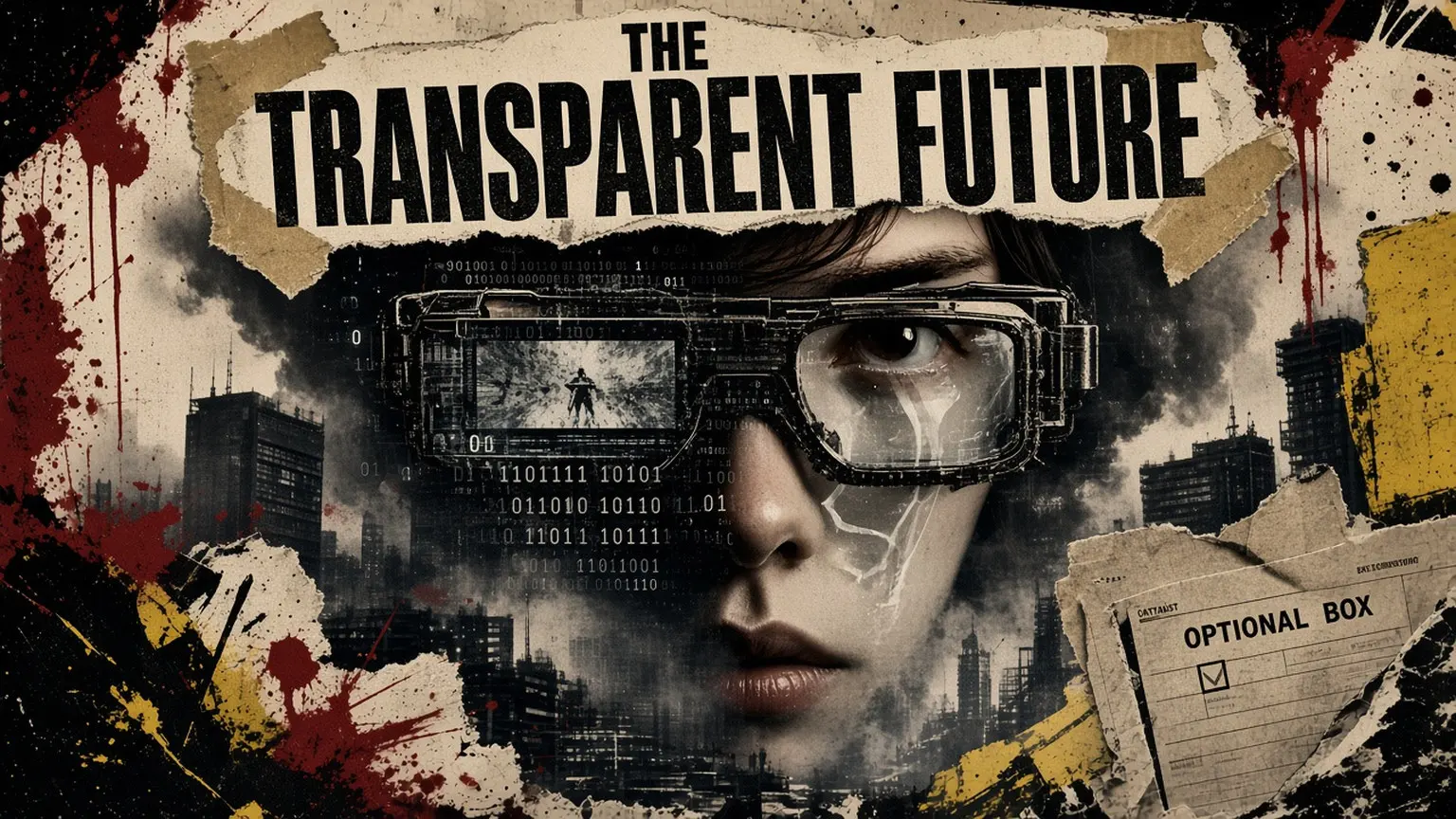
In New Haven, a pair of glasses can tell whether you mean what you say. Payments clear on sincerity, and honesty has become part of how the city runs. The Transparent Future is a novel about what happens when that system starts asking questions a person never agreed to answer.
Adrian is the engineer who helps make it work. He knows the glasses are not magic. They do not make a person incapable of being wrong. In the opening chapter he buys a cable from a merchant who has the schedule wrong, and the record settles the disagreement faster than an argument about memory. For the purchase, Adrian opens a personal session, selects the terms, and closes the session when they are done. A marker vanishes from the edge of his vision. The city has made sincerity into infrastructure.
The first morning of the book already shows the texture of that city. Trams move through New Haven. A public screen carries a statement from Tasha Williams, standing in front of the city seal, about the community income allocation settling into the clearing system, funded by AI partners and administered through the city trust. People line up at service kiosks. Ordinary errands run through sessions, reviews, and records. Even a replacement cable comes with a warranty attached to the correct item, and a clock that is five minutes fast.
Then a colleague in data review sends him a message. Lila has found something in the cooperation branch, and she wants ten minutes before a maintenance meeting. The coffee, she says, is for him. He should bring the version list. That is how the trouble starts: not with a speech about tyranny, but with a person who reads the rules closely enough to see where they do not match the form.
The optional box
The next chapter is called “The optional box.” Lila shows Adrian a box on the public income-service form, one that asks about the meetings you attend and the people you meet there. The form says the box is optional. The decision rules behind it say something else. Leave it blank and your money quietly stops.
That is the kind of lie the book is interested in. Not a dramatic confession in a dark room, but a design choice that tells a citizen one thing and enforces another. If honesty has become part of how the city runs, who gets to decide what counts as honest, and who gets to hide the enforcement in the fine print?
Adrian has to decide what a lie actually is, and who gets to decide. He does not do it alone. The story gathers a handful of old friends, a card table in the Old Town, and a city that would rather not hear the question. I will not summarize the plot past those opening moves. The pleasure of the book is watching ordinary competence, friendship, and small favors run up against a system that claims to have solved deception.
Trust, privacy, and the kindnesses the machines do not get
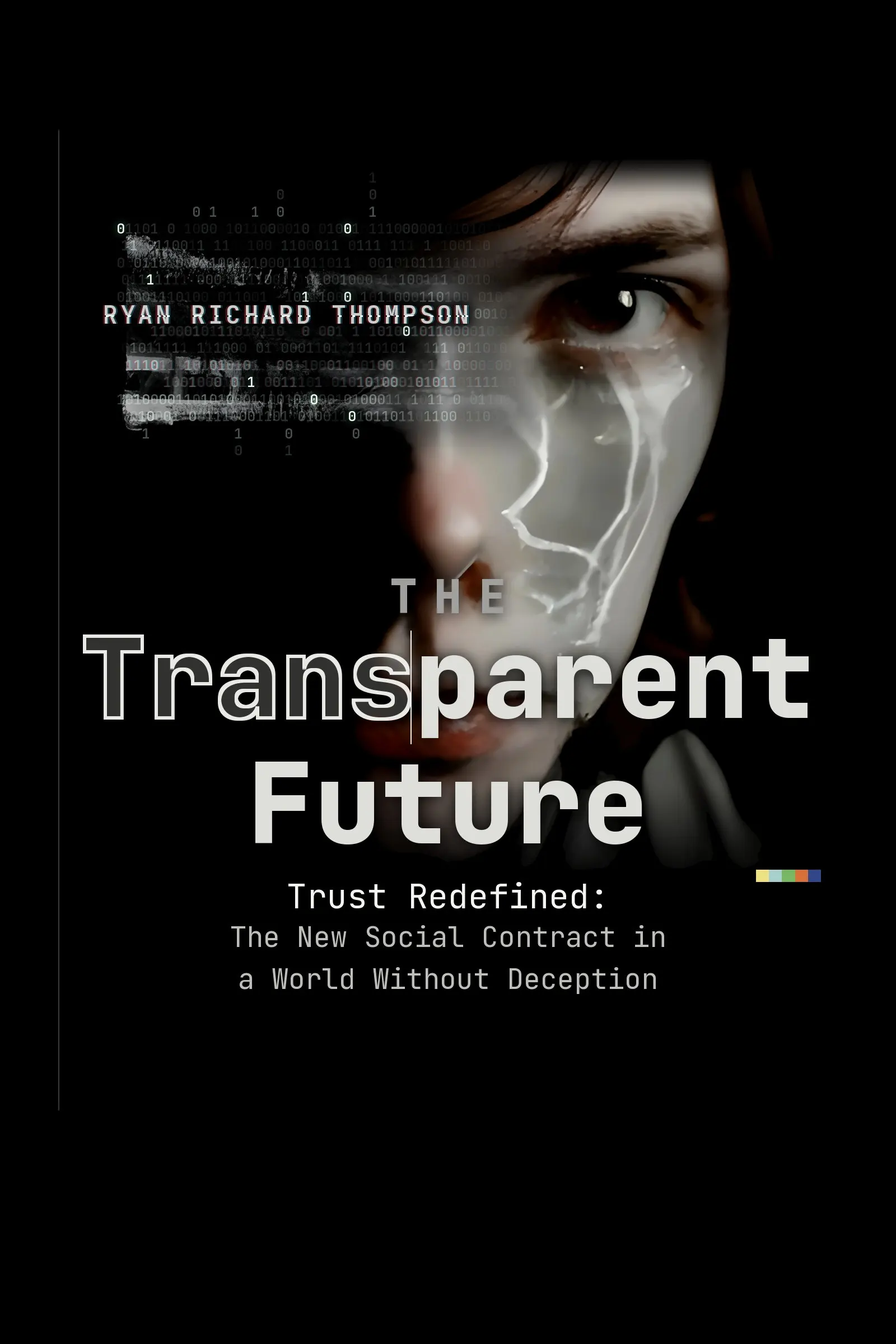
The subtitle on the title page is Trust Redefined: The New Social Contract in a World Without Deception. I meant that as a warning, not a sales pitch for the world inside the novel. A society that can measure sincerity still has to decide what it will do with the measurement. It still has to decide what remains private. It still has to decide whether a person may keep a kindness that does not belong in a database.
I have spent years thinking about tools that try to tell sincerity from deception. This novel is the story I wrote when I asked what those tools would do if they were no longer a specialist’s instrument, but part of how a city paid its people, settled its arguments, and decided who still received help. The danger in New Haven is not only surveillance. It is the quiet transfer of judgment from a person you can answer to a process you cannot see.
Chapter 1 stays at ground level on purpose. Adrian comes out of a game and back into the street. A friend needs a part for an arm, and the question of an extra charge comes up in ordinary daylight. In a lobby, another friend hesitates over what to say next. At a counter, a merchant is mistaken about a delivery, and the recorded schedule settles it faster than a fight about what either of them remembers. Across the plaza, a public screen talks about income allocation as if it were as natural as the trams. The novel lets those details accumulate before it asks the larger question, because that is how a system like this would actually arrive in a person’s day: as errands, sessions, and small favors, long before it looks like a crisis.
I did not write New Haven as a cartoon of evil. The city claims to have solved a real problem. People lie, and lies do damage. A tool that can tell whether you mean what you say will always have a market, and it will always have a cost. The cost in this story is not only being watched. It is the quiet shift of judgment from a person you can answer to a process you cannot see, and the pressure to treat a box on a form as optional when the rules behind it are not.
If you read dystopian fiction, technological thrillers, or stories about privacy in a measured world, this is a novel about trust, privacy, and the small kindnesses people keep from the machines. It is also a story about whether a man who helped build a system can still tell when that system has stopped telling the truth.
The subtitle calls this a new social contract in a world without deception. I wanted readers to feel both the promise and the threat in that phrase. A city that can settle a payment on sincerity can also decide that your income depends on a confession you were told you could skip. The friends around the card table in the Old Town matter because they are not a committee. They are people who still know Adrian as a person, not as a file. The novel asks whether that kind of knowledge can survive a system built to replace it.
I will leave the rest of the plot on the page, where it belongs. What I will say is that the book is less interested in a single villain than in a design. Once honesty is treated as infrastructure, the most dangerous words in the city may be the ones printed on a form: optional, voluntary, nothing to hide.
More books by Ryan Richard Thompson
- This Ragged Life Renewed: A memoir of rebellion, faith, loss, and starting over.
- Echoes of Power: Paul, Rome, and the making of the early Church, with the first edition’s mistakes corrected in the open.
- The Unsettled Story: Ancient scriptures and the questions they leave open.
- Pillars of Strength: Fatherhood, family distance, and the weight of truth.
- The Gravity of Sacrifice: A published Mars novel about a father and the cost of going.
- The Weight of Evidence: What research can and cannot say about parental alienation.
Buy the book: The Transparent Future is available in print and ebook at the Disruptarian shop.
Leave a Reply