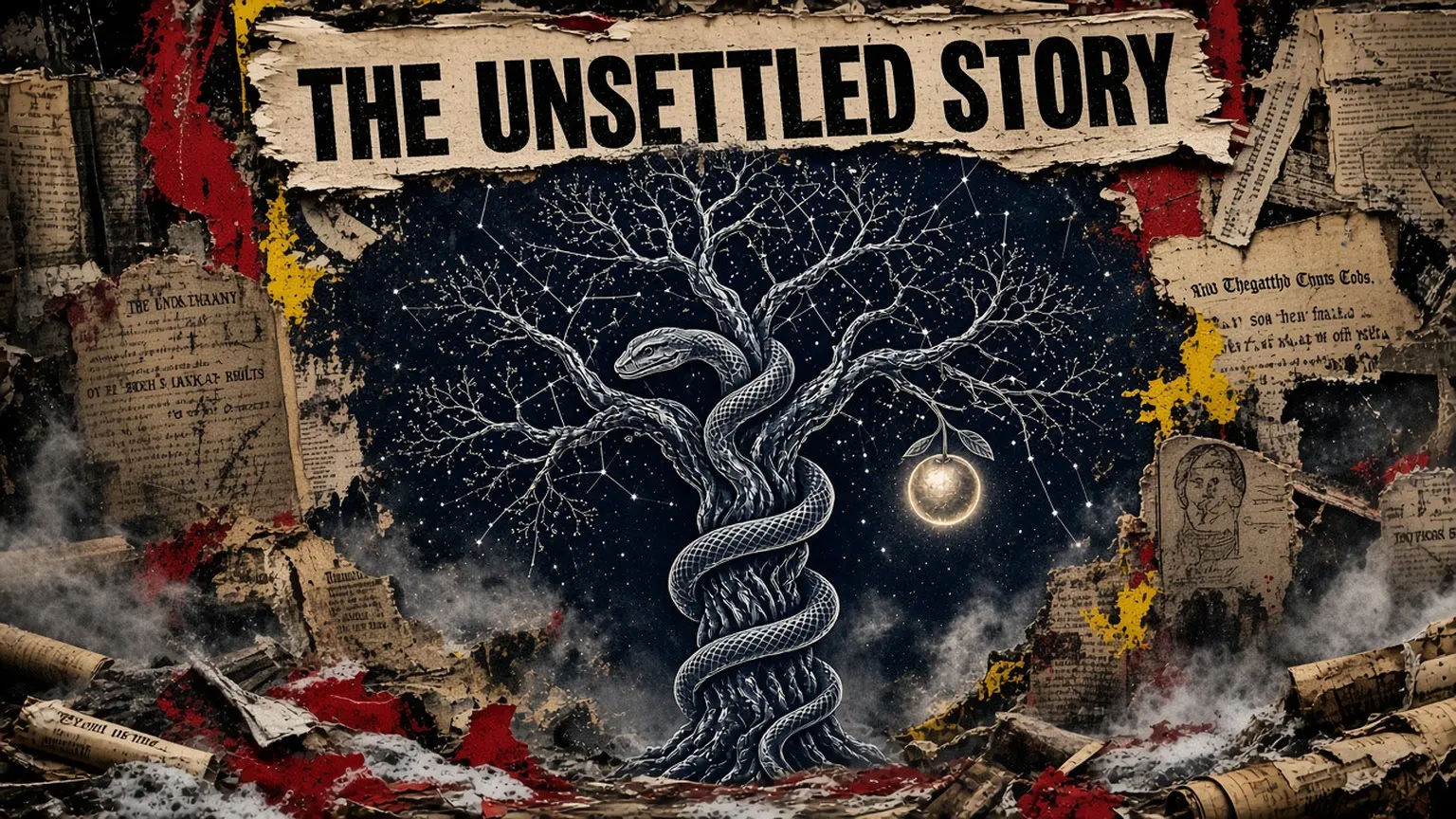
Ancient books have a way of reopening questions we thought were settled. The Unsettled Story is my investigation of those questions, written for readers who have inherited religious answers and still carry older, larger ones.
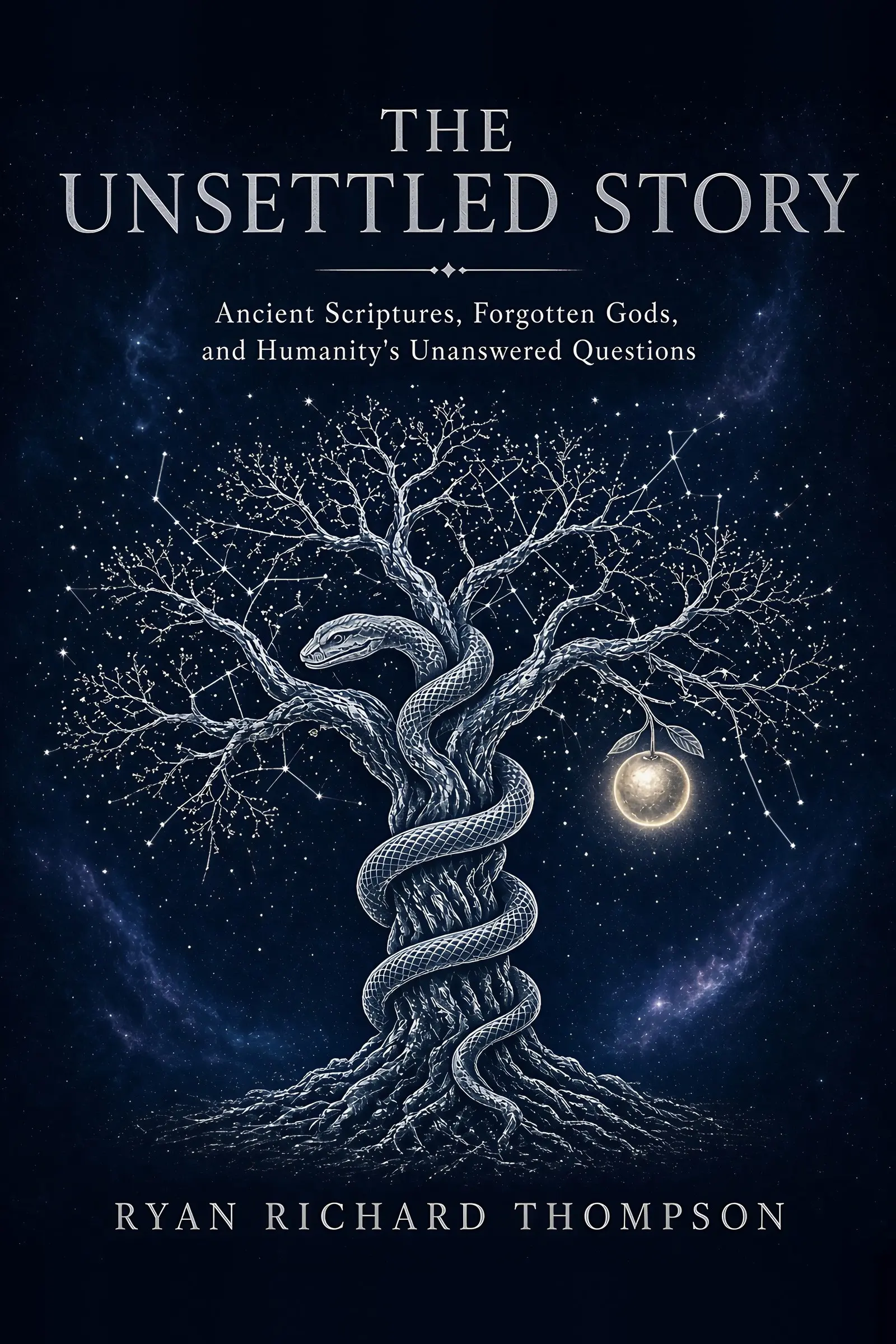
I grew up around people who believed much of the wider church had gotten its own history wrong. In the Mormon world of my childhood, we were taught that important truths had been lost, that authority had been taken away, and that scripture had been misunderstood, changed, or left out. God, we were told, had restored what the world had forgotten. There was one problem with growing up around people who questioned everybody else’s religion. Eventually, I started questioning theirs.
I did not come to that point as a gifted young theologian. I spent much of my youth doing my best to avoid the life the people around me said I ought to live. I partied. I used drugs. I got into trouble, sometimes serious trouble. I had a talent for rebelling against authority, even when rebellion made my own life worse. I was not the fellow anyone would have picked to write a book about ancient scripture. To be fair, I would not have picked myself either.
The questions stayed with me anyway. If the established churches could have been wrong about something so important, how would I know that the people correcting them were right? Was a restored account automatically more reliable because it called itself restored? And what did we really know about the books that were supposed to have been lost? I have told the winter story that changed how I approached faith in This Ragged Life Renewed. I do not repeat it here as mechanical proof of a miracle. I can tell you what it meant to me, and that it did not close the questions. It made me more willing to read.
A method that refuses to flatten the sources
This book follows the threads that led me beyond the boundaries of the faith I was raised in: the Watchers of the Book of Enoch, the gods and flood survivors of Mesopotamia, the Epic of Gilgamesh, the Book of Jubilees, the Secret Book of John and the Nag Hammadi library, Pistis Sophia, the Hermetic writings, Egyptian books of death and creation, and the early sacred writings of India.
I do not treat every resemblance as proof, or every missing book as a conspiracy. I put the texts, their manuscript histories, and their later interpreters side by side, then ask what the evidence can actually bear. Each chapter keeps four things apart: what an ancient text says, its historical setting, scholarly interpretation, and modern theory. A cuneiform tablet does not become a biblical chapter because a story sounds familiar. An Ethiopian Christian text is not a lost Western artifact waiting for Western readers to discover it. A translation is not the ancient language itself.
Part One is organized around ten questions. Who created humanity? Who were the Watchers? What came before Noah? Were we here before birth? What is Kolob? Is the highest God also the maker of the world? What was the serpent? Were there visitors from heaven? What lies beyond death? How many beginnings were there? Part Two goes to the libraries behind those questions, from Mesopotamian tablets to 1 Enoch, Jubilees, the Secret Book of John, Egyptian funerary books, the Vedas and Upanishads, Pistis Sophia, and the Hermetic writings. The book includes a glossary, a full bibliography, and public-domain translations named for every quotation.
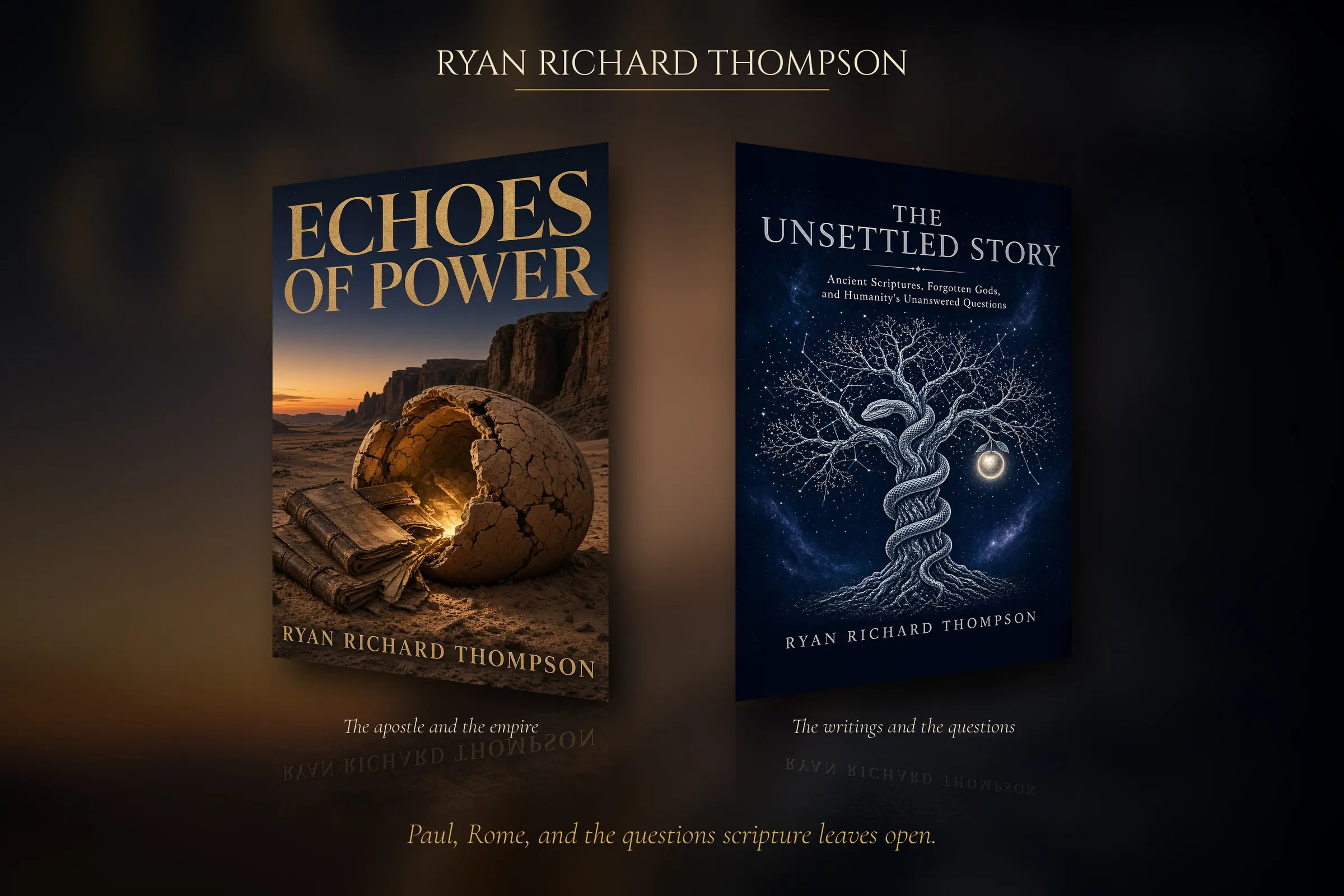
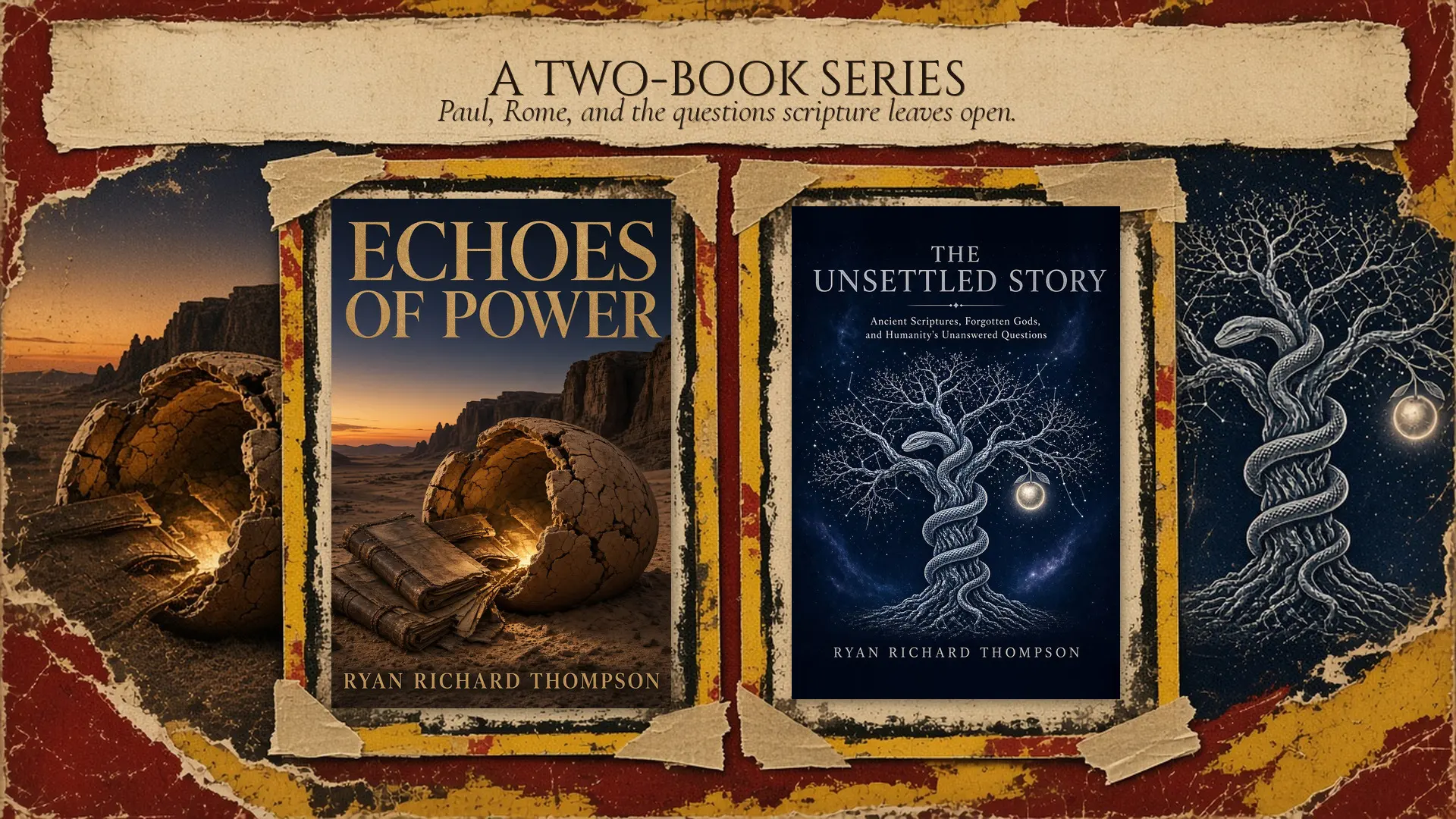
This book is part of a two-book series. Echoes of Power follows Paul, Rome, and the making of the early Church. The Unsettled Story turns to ancient scriptures and the questions they leave open. Both are at the Disruptarian shop: buy Echoes of Power and buy The Unsettled Story.
What I would not let the evidence become
In the epilogue I wrote that I have become less interested in winning a case. I still care about whether claims are true. I still believe truth matters. But I have less patience for the kind of certainty that treats a question as dangerous because it cannot be answered on command. An honest “I do not know” can be the beginning of study, not its failure.
The reader has the same responsibility I do. Follow the notes. Read translations beside other translations. Pay attention to the date of a manuscript, the date of a story, and the date of the theory being offered about it. Ask what a text says before asking what it proves. Notice when a resemblance is specific and when it is only a familiar word or a desire for a pattern. There may be connections nobody has understood yet. There may also be plain explanations for resemblances that feel extraordinary, and some books are simply gone. None of that is a reason to stop looking.
In the epilogue I looked at those ten questions again. The texts do not agree about who created humanity. I can see a family resemblance among the stories, and I can see that it does not reach as far as a shared original. The Watchers taught knowledge that 1 Enoch calls worthless, incomplete: the trouble is not knowledge itself, but teachers who knew less than they thought. The fuller Gnostic serpent stories are later than Genesis, not before it. The Hermetic writings closed the book with a lesson in dating. For more than a century, learned Europeans believed Hermes Trismegistus was an Egyptian sage older than Moses, until Isaac Casaubon showed in 1614 that the Greek was the Greek of the Christian era. The texts did not lose their beauty when they lost their false age. They are simply worth reading as what they are.
Part Two went to the libraries behind the questions: tablets from Nineveh and Sulaymaniyah, Enoch and Jubilees in Ge’ez and in the caves at Qumran, Coptic codices from Nag Hammadi and Berlin, Egyptian papyri and stones, Vedic hymns kept alive by memory. Almost all of them reached English readers in the last two hundred years. That fact alone changed how I think about the word “hidden.” Most of these books were not hidden by anyone. They were lost, unread, or waiting for someone who could read them. 1 Enoch remained part of the Ethiopian Orthodox Tewahedo tradition. An Ethiopian Christian text is not a lost Western artifact waiting for Western readers to discover it. None of the survival histories is evidence that a single institution suppressed every one of them.
The discoveries did not make the purpose of Christ smaller in my mind. They made me wonder whether the human story, and the language used to tell it, might be wider than the boundaries I had first been given. That is not a claim that every excluded text should become scripture, or that resemblance has already proved a common source. A person can take an ancient text seriously without forcing it to settle a modern argument.
I did not write this book to close the door behind me. I wrote it because the door was already open, and I wanted to see how far the questions would go. If you have been told that the old answers are settled, and you are still not sure they are, this is the investigation I could stand behind.
More books by Ryan Richard Thompson
- This Ragged Life Renewed: A memoir of rebellion, faith, loss, and starting over.
- Echoes of Power: Paul, Rome, and the making of the early Church, with the first edition’s mistakes corrected in the open.
- The Transparent Future: A novel about trust in a city that measures honesty.
- Pillars of Strength: Fatherhood, family distance, and the weight of truth.
- The Gravity of Sacrifice: A published Mars novel about a father and the cost of going.
- The Weight of Evidence: What research can and cannot say about parental alienation.
Buy the book: The Unsettled Story is available in paperback, hardcover, and ebook at the Disruptarian shop.
Leave a Reply