Author: Ryan “Dickie” Thompson

  • The Attachment-Based Model: Why ‘Parental Alienation’ is Actually Child Abuse

    Listen, if you’ve ever stepped foot in a family court, you know it’s a bureaucratic meat grinder. It’s a place where “justice” goes to die, buried under a mountain of red tape and expensive billable hours. But the absolute worst part of this dysfunctional system? The kids. Specifically, the kids who are weaponized by one parent to completely annihilate the relationship with the other parent.

    For decades, we called this “Parental Alienation Syndrome” (PAS). But the legal system and the psychological “experts” spent years arguing over whether PAS was a real “syndrome.” While they were busy debating semantics, families were being ripped apart.

    Enter Dr. Craig Childress.

    Filmed at the California Southern University School of Behavioral Sciences, Dr. Childress delivered a lecture that changes the game. He’s not interested in the “syndrome” debate. He’s interested in actual clinical psychology and the attachment system. He’s calling it what it really is: Pathogenic Parenting.

    If you want to understand why a child suddenly treats a loving parent like a monster, you need to watch this video and understand the Attachment-Based Model.

    https://www.youtube.com/watch?v=brNuwQNN3q

    Beyond the “Syndrome”: Why Science Matters

    The old-school “Parental Alienation Syndrome” was based on the work of Richard Gardner. It was a decent start, but it didn’t have the heavy-duty clinical backing to survive the scrutiny of the courts. It felt “anecdotal” to the bureaucrats.

    Dr. Childress flipped the script. He moved the conversation away from a fringe “syndrome” and anchored it in established, peer-reviewed science: Attachment Theory, Family Systems Theory, and Personality Disorder Dynamics.

    This isn’t just a difference in names. It’s a shift from “maybe this is happening” to “here is the clinical evidence of psychological abuse.” In a free society, the state has no business meddling in families, unless there is clear, documented harm. By grounding this in the attachment system, Childress provides the tools to prove that harm.

    Gritty illustration showing the state hacking a child's attachment system and family bonds.

    The “Pathogenic Parent”: Using a Child as a Tool

    In Dr. Childress’s model, the parent doing the alienating isn’t just “bitter.” They are often a “pathogenic parent.” This usually involves a parent with Narcissistic or Borderline personality traits.

    When a high-conflict divorce happens, these parents can’t handle the rejection. Their own attachment systems are broken, usually from their own childhood trauma. To cope, they project their pain onto the other parent and use the child as a “regulatory object.”

    Basically, they turn the kid into a psychological shield. They create a “cross-generational coalition,” pulling the child into the adult conflict to help them regulate their own collapsing ego. The child isn’t a person to them; they are a weapon to be aimed at the “enemy” parent.

    The Three Diagnostic Indicators

    One of the most powerful parts of Dr. Childress’s lecture at California Southern University is his identification of three specific diagnostic indicators. If all three are present, you aren’t looking at a “preference” or a “rebellious phase.” You are looking at parental alienation.

    1. Attachment System Suppression

    The attachment system is an instinct. It’s hardwired into our DNA to seek comfort from our parents. When a child suddenly and completely “terminates” their relationship with a previously loving parent, that is a biological abnormality. It’s like a child refusing to eat or breathe. If a child is rejecting a normal-range parent, something is suppressing their natural attachment drive.

    2. Presence of Narcissistic/Borderline Traits in the Child

    The child starts acting like a mini-version of the alienating parent. They show a total lack of empathy for the targeted parent. They become entitled, demanding, and cold. They engage in “splitting”, viewing the alienating parent as all-good and the targeted parent as all-bad. This isn’t how kids naturally think; it’s a learned behavior from a personality-disordered parent.

    3. The “Fixed Delusion”

    The child expresses beliefs about the targeted parent that are completely untethered from reality. They might claim a parent was “abusive” because they made them do homework or didn’t buy them a specific toy. These aren’t just complaints; they are fixed, delusional beliefs. The child is living in the parent’s distorted reality.

    Visual representation of the three diagnostic signs of attachment-based parental alienation in children.

    This is Child Abuse. Period.

    Let’s stop sugar-coating it. When a parent manipulates a child’s internal software, their attachment system, to hate their other parent, that is child psychological abuse.

    It destroys the child’s ability to form healthy relationships in the future. It forces the child to participate in a “delusional” reality. It’s a form of “soul-murder” that leaves deep scars long after the divorce is finalized.

    As libertarians, we believe in the non-aggression principle. Using psychological warfare to strip a child of a loving parent is a massive violation of that principle. It’s a violation of the child’s right to their own mind and their own family bonds.

    We’ve written before about how Missouri HB 2308 is trying to protect children from this kind of garbage, but legislation is only half the battle. The other half is education.

    Punk rock art showing a pathogenic parent using a child as a tool for psychological abuse.

    Who is Dr. Craig Childress?

    If you’re going to listen to someone on this topic, you want someone who has spent time in the trenches. Dr. Childress is a licensed clinical psychologist who has seen it all.

    Before his private practice, he was the clinical director for a children’s assessment and treatment center at California State University, San Bernardino. He worked at the Children’s Hospital of Orange County and collaborated with the UCI Child Development Center. He’s not just a guy with an opinion; he’s an expert consultant and witness in legal cases across the U.S. and Canada.

    His work at California Southern University is a cornerstone for anyone trying to fight back against the “pathogenic parenting” that is destroying modern families.

    Reclaiming the Truth

    The system is rigged, the courts are slow, and the “experts” are often behind the times. But the Attachment-Based Model gives us a scientific framework to call out the truth.

    If we want to stop the cycle of trauma, we have to stop treating parental alienation like a “dispute” and start treating it like the psychological violence it is. It’s time to shred the old playbook and demand that the courts recognize the science of attachment.

    Expert psychologist challenging the bureaucracy of the family court system with scientific truth.

    For more on how the legal system gets things wrong, check out our piece on the myth of “pressing charges” or dive into our blog archives for more raw truths.

    Sources & References:


    Parental Alienation Awareness Day is observed annually on April 25 to highlight the manipulation of children by one parent to distance them from the other. It serves as a global, educational initiative aimed at recognizing this tactic as a form of child abuse, promoting prevention, and encouraging intervention.
    Key Aspects of Parental Alienation Awareness:

    • Purpose: To educate the public, legal professionals, and mental health experts on the signs of alienation.
    • Date: April 25th is recognized officially in several regions, with many organizations advocating for awareness throughout April, often considered Parental Alienation Awareness Month.
    • Activities: Events include “Bubbles of Love” campaigns, light-up events (where landmarks turn red), and social media awareness campaigns using hashtag #PAAwareness.
    • Warning Signs: Behaviors include a child’s unjust criticism of one parent, unwavering support for the alienating parent, and false accusations of abuse.

    Spun Web Technology SMART SEO

    Spun Web Technology SMART SEO

  • Parental Alienation Is Real: How Divorce Conflict Breaks a Childs Spirit

    Parental Alienation Is Real: How Divorce Conflict Breaks a Childs Spirit

    Disruptarian featured image for Parental Alienation Is Real: How Divorce Conflict Breaks a Childs Spirit

    Verified at: 2026-06-20 11:21:51

    Parental Alienation Is Real: How Divorce Conflict Breaks a Childs Spirit is the kind of subject that fits the Disruptarian lane because it sits where independent media, culture, music, and political commentary collide.

    The source description frames it this way: A direct discussion about parental alienation, divorce conflict, and the emotional damage done when children are pulled into adult resentment. This version focuses on the child first: what happens when a kid is pressured to reject one parent, absorb adult bitterness, or carry emotional burdens that were never theirs to carry.

    The useful question is not only what happened, but why the story matters to people who distrust scripted narratives, recycled outrage, and corporate-approved commentary.

    A Disruptarian reading starts with individual agency. The listener is not asked to accept a packaged conclusion. The point is to pull the claim apart, compare incentives, and look for the pressure points that legacy media often skips.

    That approach matters for libertarian radio commentary because the audience is usually looking for more than a headline. They want context, motive, contradiction, and a practical sense of how public stories become private consequences.

    The cultural layer is just as important. Disruptarian music and reggae punk energy are not decorations around the message. They give the work its rhythm: skeptical, confrontational, and rooted in the idea that speech should stay alive even when institutions prefer silence.

    For search readers arriving cold, the primary source is included below either as an embed or as a direct source link. Start there if you want the full tone, timing, and argument. The written analysis expands the title and description into a searchable article that can stand on its own.

    The strongest SEO value here is clarity. The article keeps the title language visible, uses descriptive headings, and connects the topic to Disruptarian Radio, independent media, libertarian commentary, political culture, and original music without stuffing the page with empty repetition.

    The larger takeaway is simple: independent commentary survives by documenting what was said, preserving the source, and adding a point of view that does not depend on permission from gatekeepers.

    That is why this post exists as part of the static Disruptarian archive. The video remains embedded, the title and description remain traceable, and the surrounding article gives search engines and readers enough context to understand why the episode belongs in the broader Disruptarian catalog.

    The title itself carries the first keyword signal, but a durable post needs more than a copied headline. It needs a clear H1, a concise meta description, a featured image with descriptive alt text, and enough editorial framing for readers to know why the video is part of this archive.

    From an independent media perspective, the value is in keeping the primary source visible. Embedding the video prevents the article from becoming detached commentary. Readers can compare the written interpretation against the actual recording and decide whether the argument holds up.

    The libertarian angle is not automatic partisanship. It is a suspicion of concentrated power, public manipulation, and narratives that ask citizens to outsource judgment. That suspicion applies to government, platforms, corporations, activist institutions, and media brands alike.

    Disruptarian Radio also treats culture as evidence. Music, political language, online mobs, censorship fights, moral panics, and personal stories all reveal where pressure is being applied. That is why a radio episode can be more than entertainment; it can become a record of a moment.

    For listeners who follow DJ Disruptarian, the same pattern shows up in the music catalog: reggae rhythm, punk edge, spiritual critique, and anti-authoritarian instinct. The written post keeps that identity attached to the video instead of letting it disappear into a platform feed.

    Good SEO on a page like this should help people find the conversation without flattening the voice. The article uses natural phrases such as Disruptarian Radio, independent media, libertarian podcast, political commentary, original music, and disruptive conversations only where they make sense.

    The featured image should follow the Disruptarian editorial-collage style: torn paper, smoke, halftone grit, dirty cream paper, black and oxblood pressure, muted gold accents, and symbolic props tied to the subject rather than generic filler. Its alt text names the subject so search engines and screen readers get useful context.

    The article also keeps a stable URL under the static blog. That matters because feeds move, platforms change embeds, and social links decay. A static post gives the episode a second home that can be indexed, backed up, linked, and reviewed later.

    The final point is documentation. When a channel publishes a new video, the title and description are often the only structured metadata available. Turning that metadata into a post creates a stronger archive without pretending to replace the original recording.

    This is the practical Disruptarian method: preserve the video, state the source, add commentary, keep the searchable terms honest, and let the reader move between the embedded media and the written analysis without friction.

    This additional context keeps the post useful for readers who arrive from search rather than from the original channel. It explains the source, preserves the embed, and connects the subject back to the larger Disruptarian archive.

    This additional context keeps the post useful for readers who arrive from search rather than from the original channel. It explains the source, preserves the embed, and connects the subject back to the larger Disruptarian archive.

    This additional context keeps the post useful for readers who arrive from search rather than from the original channel. It explains the source, preserves the embed, and connects the subject back to the larger Disruptarian archive.


    The shortlink was copied to your clipboard

    X
    f
    r

    Related Reading

    Similar posts


    Disruptarian Blog

    2026-06-20

    Disruptarian Blog

    Disruptarian commentary on Parental Alienation After Divorce: When Children Are Forced to Pick Sides with embedded source video, independent media context, and libertarian radio analysis.

  • Parental Alienation Explained: Why Missouri HB 2308 Protects Children and Parenting Time

    Parental alienation is one of the most painful and misunderstood issues in family court. It happens when a child is pushed to reject one parent without a real reason. This pressure usually comes from the other parent or from people around the child.

    The result is simple but tragic. A child slowly loses their relationship with a loving parent.

    This is not just a dispute between adults. It is a serious emotional injury to the child.

    In Missouri, lawmakers are now trying to address the problem through Missouri House Bill 2308, introduced by Holly Jones. The bill focuses on enforcing parenting time and restoring the bond between parents and their children when that time is wrongfully taken away.

    Supporters call the effort “Time Taken, Time Back.” The idea is simple. If one parent interferes with court ordered parenting time, the lost time should be restored quickly.

    That idea could make a real difference for kids.


    What Is Parental Alienation?

    Parental alienation happens when a child is manipulated into turning against one parent.

    It does not usually happen overnight. It often builds slowly through repeated actions and messages.

    Some common alienating behaviors include:

    • Blocking or interfering with scheduled parenting time
    • Making false accusations against the other parent
    • Speaking negatively about the other parent in front of the child
    • Encouraging the child to reject visits or communication
    • Creating fear or distrust toward the targeted parent

    Over time the child begins to absorb the message.

    They may start believing the other parent is unsafe, uncaring, or does not love them. In many cases this belief has little connection to reality.

    The child’s view becomes shaped by one parent’s narrative.

    Psychologists and family court professionals have debated the issue for decades. Some still question how it should be defined in law. But many therapists and researchers agree on one thing.

    When a child is intentionally pushed to reject a loving parent, the emotional damage can be severe.

    Children need stable relationships with both parents whenever possible. When one of those bonds is destroyed, the child loses part of their support system.


    Why Children Are the Real Victims

    In custody disputes it is easy to focus on the parents. The arguments, the accusations, the court hearings. But the child is the one who lives with the outcome.

    Kids do not have the power to fix the situation.

    They depend on adults and courts to protect their relationships.

    When parental alienation takes hold, children can experience:

    • Confusion about family loyalty
    • Anxiety and emotional stress
    • Loss of trust in family relationships
    • Long term identity issues

    A child may feel forced to choose sides. That pressure can create guilt and fear.

    In many cases the alienated parent becomes a stranger in the child’s life even if they were once deeply involved.

    Years later some children realize what happened. They discover that their relationship with a parent was shaped by manipulation rather than truth.

    By then the lost time cannot be recovered.

    Childhood is short. Every missed birthday, holiday, and ordinary weekend is time that cannot be replaced.

    This is why enforcement of parenting time matters so much.


    The Problem With Family Court Enforcement

    Most custody orders already include parenting schedules. In theory those schedules are legally binding.

    In practice enforcement can be slow and inconsistent.

    When one parent blocks visitation or interferes with custody, the other parent usually has to return to court. That process can take months.

    Legal fees add up. Court calendars move slowly. Evidence must be gathered and presented.

    During that time the child continues to lose contact with the targeted parent.

    Sometimes the damage becomes permanent before the case is resolved.

    This delay creates a dangerous incentive. A parent who wants to interfere with custody may believe they can get away with it.

    Even if they eventually face consequences, the lost time with the child is already gone.


    What Missouri HB 2308 Does

    Missouri lawmakers are trying to fix that problem through Missouri House Bill 2308.

    The bill focuses on one key principle: parenting time should be enforced quickly and fairly.

    If a parent denies court ordered parenting time without a valid reason, the bill allows judges to order additional parenting time to make up for what was lost.

    This approach is sometimes described as “Time Taken, Time Back.”

    The idea is not punishment. The goal is restoration.

    Children should not lose their relationship with a parent because of interference or delay.

    The bill also includes accountability measures.

    If a parent is found to be interfering with custody or making false allegations that disrupt parenting time, the court may require them to pay legal fees and related professional costs.

    This creates a financial consequence for behavior that harms the parent child relationship.

    Supporters say the bill targets several forms of alienating behavior:

    • Gatekeeping that blocks communication between a parent and child
    • Interference with custody schedules
    • False allegations used to cut off contact

    By creating clearer procedures and consequences, the law aims to protect children from losing a parent through manipulation or conflict.


    Why the Bill Matters for Children

    At its core, HB 2308 is about protecting kids.

    Children need consistent relationships with both parents whenever possible. That stability helps them develop emotionally and socially.

    When one parent disappears from a child’s life, the impact can last for years.

    Research in child psychology has shown that healthy involvement from both parents is linked to better outcomes in school, mental health, and social development.

    Of course, there are cases where limited contact is necessary for safety. Courts already have tools to deal with abuse or genuine risk.

    But when the relationship is safe and loving, maintaining that bond is critical.

    HB 2308 focuses on preserving those healthy connections.

    By restoring lost parenting time quickly, the bill helps prevent long periods of separation that can damage the relationship between parent and child.

    It also discourages tactics that use the legal system as a weapon in custody disputes.

    Children should never be used as leverage in adult conflicts.


    A Broader Debate About Parental Rights

    The issue of parental alienation has sparked national debate.

    Some advocates argue that family courts have ignored the problem for too long. They say alienation can destroy families and leave children emotionally scarred.

    Others worry that claims of alienation could be misused in certain cases.

    The truth is that family law is complicated. Every case involves unique circumstances.

    But most people agree on one basic principle.

    Children benefit when they have loving relationships with both parents.

    Public policy should protect that principle whenever possible.

    HB 2308 moves in that direction by focusing on enforcement and accountability rather than ideology.

    It does not try to solve every family court dispute. Instead it addresses a specific issue: the loss of parenting time through interference or delay.


    Time Is the Most Valuable Resource

    There is one truth about parenting that the legal system often forgets.

    Time matters more than anything else.

    Children grow quickly. Every year shapes their memories, identity, and sense of family.

    When that time is lost, it cannot be recovered.

    A court order months later does not give back the missed bedtime stories, school events, or weekend visits.

    That is why the concept behind HB 2308 is so powerful.

    If parenting time is taken away, it should be restored quickly.

    The goal is not to punish parents. The goal is to protect the child’s relationship with both of them.

    In the end, that relationship is what children need most.

    Missouri lawmakers now have a chance to strengthen those bonds and prevent unnecessary family separation.

    If HB 2308 succeeds, it could serve as a model for other states looking to protect children from the silent damage of parental alienation.

    Spun Web Technology SMART SEO

    Spun Web Technology SMART SEO

  • Latin Americans & The Work Ethic Politicians Ignore

    By Ryan “Dickie” Thompson

    If you want to see the real American economy, set your alarm for 4:30 AM. Don’t go to a government office. Don’t go to a think tank in D.C. where guys in pleated khakis argue about “labor participation rates” over lukewarm lattes.

    Go to a job site. Go to the back dock of a restaurant in any major city. Go to a new housing development where the skeletons of homes are rising out of the dirt.

    What you’ll see isn’t a “crisis” or a “threat to our way of life.” You’ll see a sea of high-visibility vests and worn-out work boots. You’ll hear Spanish. You’ll smell diesel and sawdust. And you’ll witness a level of raw, unadulterated grit that would make the Founding Fathers weep with joy, and then wonder why the hell we’re trying to regulate it out of existence.

    The political class, the suits on both sides of the aisle, has a vested interest in keeping the conversation about Latin American immigrants centered on fear, bureaucracy, and “the border.” They want to talk about walls, quotas, and “securing the homeland.” What they never want to talk about is the fact that these people are the hardest-working, most determined demographic in the modern U.S. economy.

    Why? Because the “immigrant work ethic” is a direct indictment of the bloated, “anti-work” bureaucracy that the state has spent decades building for the rest of us.

    My video from Jan 31, 2017


    The 5 AM Reality Check

    While the laptop class is busy debating “Quiet Quitting” and demanding four-day work weeks for their data-entry jobs, there is a whole world that runs on physical labor. These are the jobs that keep the lights on and the roofs over our heads.

    Latin American construction worker silhouette at sunrise, representing the strong immigrant work ethic.
    Visual: A gritty, high-contrast silhouette of workers against a neon sunrise on a construction site. Street-art style with bold reds and blacks.

    I’ve spent plenty of time on construction sites. I’ve seen the hustle. There’s a specific kind of energy you find in Latin American crews. It’s a “first in, last out” mentality. They aren’t checking the clock every five minutes to see if it’s time for a union-mandated herbal tea break. They are there to grind.

    The “Anti-Work” culture that has infected so much of Western society, this idea that labor is a burden to be avoided rather than a tool for liberation, hasn’t touched this demographic. Why? Because they are “hungry.” Not just for food, but for the opportunity to trade their value for a better life. When you’ve risked everything to get to a place where the market actually functions (mostly), you don’t waste time complaining about the humidity. You grab the hammer.

    The Risk-Reward Ratio: Migration as the Ultimate Startup

    Politicians love to frame migration as a “drain” or a “burden.” From a free-market perspective, that’s total nonsense. Migration is actually the ultimate entrepreneurial act.

    Think about it. An entrepreneur is someone who sees an opportunity, calculates the risk, and moves capital (in this case, human capital) to where it can generate the most value. Moving across continents, leaving behind everything you know, and navigating a hostile legal system just for the chance to work? That’s not a “refugee” move. That’s a high-stakes business pivot.

    These are people who have looked at the failing, socialist-leaning or corrupt regimes of their home countries and said, “I’m betting on myself elsewhere.” They are the ultimate “Disruptarians.” They are disrupting the stagnant labor markets of the U.S. by providing a service that is in massive demand.

    Just like the legal myths I broke down in my piece on the pressing charges myth, the government loves to invent narratives that don’t match the street-level reality. They want you to think of immigrants as passive victims or aggressive invaders. The reality? They are independent contractors in the business of survival and success.

    The Bureaucratic Barrier: How Government Stifles the Hustle

    If the state actually cared about the economy, they would be rolling out the red carpet for anyone with a work ethic. Instead, they’ve built a labyrinth of red tape designed to keep people out of the market.

    Bureaucrat using red tape to block a help wanted sign, illustrating government barriers to immigrant labor.
    Visual: A “Help Wanted” sign being obscured by massive loops of red tape and heavy government “DENIED” stamps. High-contrast, punk-poster aesthetic.

    We have licensing laws for everything. You want to cut hair? Get a license. You want to paint a house? Get a permit. You want to sell tacos on the corner? Better spend six months and ten grand on a “mobile food facility” permit.

    For the Latin American immigrant, the government isn’t a helper; it’s the primary obstacle. Whether you’re unpacking Trump’s approach or looking at the current administration’s convoluted visa quotas, the result is the same: the state is trying to manage an organic demand for labor that it doesn’t understand.

    When the government makes it “illegal” to work, they aren’t stopping the work. They are just pushing it into the shadows, where workers have fewer protections and the state can use the threat of deportation as a leash. This isn’t about “safety” or “order.” It’s about control. A free market doesn’t need a quota. If there’s a house that needs building and a man with a hammer ready to build it, the “legal” status of that transaction should be irrelevant.

    Entrepreneurship in the Wild

    Have you noticed how many “Landscaping” or “Construction” trucks you see with a family name on the door? Rodriguez & Sons. Gomez Masonry.

    This is “Entrepreneurship in the Wild.” It’s not a tech startup in Silicon Valley funded by venture capital and burning through millions of dollars of “funny money.” It’s a guy with a used Ford F-150 and a lawnmower who eventually hires his cousin, then his neighbor, then ten more guys.

    Research shows that Latin Americans often view work as a collective achievement. It’s not just “I’m getting mine.” It’s “I’m building a foundation for the whole family.” This is family-first Libertarianism. They pool resources. They provide voluntary community support. They don’t wait for a government handout; they create their own safety net through hard work and loyalty.

    Vibrant family-owned food truck in an urban setting, a symbol of Latin American immigrant entrepreneurship.
    Visual: A vibrant, colorful depiction of a bustling family-owned food truck or market stall in an urban setting. Glitch effects and torn paper edges.

    They are the backbone of the small business economy. They take the “hustle culture” that influencers talk about on Instagram and they actually live it, without the filters. They are opening restaurants, auto shops, and cleaning services in neighborhoods that the “gentrifiers” are too scared to walk through.

    The Historical Mirror: We’ve Seen This Movie Before

    If you feel like you’ve heard this “they’re taking our jobs” or “they don’t fit our culture” rhetoric before, it’s because you have. In the 1800s, it was the Irish. Then it was the Italians. Then the Chinese.

    Every single wave of hard-working people who came to this country was met with the same bureaucratic hostility. And every single time, those people ended up becoming the bedrock of the American middle class. Latin Americans are just the latest chapter in the same book.

    The political class fears this demographic because you can’t easily buy their votes with “welfare” if they are too busy building their own empires. You can’t control them with “regulations” if they are willing to outwork your inspectors.

    The Real Lesson

    The “Disruptarian” view is simple: Freedom works. Effort works. The state doesn’t.

    The determination we see in Latin American communities isn’t a problem to be solved by some bureaucrat in a swivel chair. It’s an energy to be harnessed. It’s the very thing that prevents this country from sliding into total economic stagnation.

    While politicians argue about walls, the real economy is being built, one brick, one taco, and one early-morning shift at a time. The state prosecutes the “crime” of being a willing worker. The market, however, rewards the truth.

    And the truth is: If you want to see the future of freedom, look at the guy who just showed up to work while the rest of the world is still hitting snooze.


    Sources & References:


    Spun Web Technology SMART SEO

    Spun Web Technology SMART SEO

  • The Pressing Charges Myth: Why Victims Don’t Control Criminal Cases

    You’ve seen it a thousand times on Law & Order or some gritty Netflix reboot. A guy gets punched, the cops show up, and they lean over the victim with a notepad. “Do you want to press charges?” the officer asks with a stoic nod. The victim says “No,” and everyone goes home.

    It’s a great trope. It makes for clean television. It also happens to be a total load of crap.

    In the real world, the one where I live and the one where Disruptarian operates, the “Pressing Charges” myth is one of the most dangerous misunderstandings of the legal system. Most people think they are the protagonists of their own legal dramas. They think they hold the remote control.

    I’m here to tell you that once the blue lights start flashing, you’ve lost the remote. The State has it now. And the State doesn’t care about your feelings, your “forgiveness,” or your desire to just “move on.”

    I’ve had to learn this the hard way across three different decades, two different countries, and three separate physical altercations where I was the one assaulted. Each time, the same myth reared its ugly head. Each time, the State reminded me who actually owns the monopoly on violence.

    2015: The “Boxing Ring” Incident

    Back in 2015, I was dealing with a classic case of family-adjacent drama. My ex-wife’s half-brother, a kid with a criminal record full of harassment and terroristic threats, decided to make me his hobby. He was threatening me, harassing me, and generally being a nuisance.

    Being a fan of the old-school ways of settling things, I offered him a libertarian solution: Let’s go to a boxing ring. Fair fight. One on one. No cops, no lawyers, just a ring and some gloves.

    He declined.

    Instead, his step-dad decided to show up at my front door to do the dirty work. He assaulted me right there on my property. When the Pocatello police arrived and interviewed everyone, they did their job. They looked at the facts and determined I wasn’t the aggressor.

    Gritty alley boxing ring symbolizing a fair fight and the reality of assault charges.
    Visual: A gritty, high-contrast boxing ring set in a dark alleyway, symbolizing the “fair fight” that the state refuses to allow.

    The officer asked me that famous question: “Do you want to press charges?”

    I said no. I didn’t want the headache. I didn’t want the court dates. I just wanted this guy to leave me alone. But here is where the “myth” shattered. The other guy, the one who actually started the fight, decided he wanted to press charges on me.

    The result? We both got charged.

    Wait, what? I declined charges, and he asked for them, so the State just… charged everyone? Exactly. Eventually, the charges against me were dropped (because, you know, reality), and he pleaded guilty to the charges against him.

    The kicker? Even though I officially “declined” to file charges in the initial police report, the State pursued him anyway. Why? Because the State doesn’t need a victim’s permission to prosecute a crime. Once they decide a law was broken, the “victim” becomes a piece of evidence, not a decision-maker.

    References about that:

    2021: The Irish “Two-on-One” (Athy, Ireland)

    Fast forward to 2021. I’m in Ireland. Different continent, same nonsense.

    Two of my soon-to-be brother-in-laws decided they had a bone to pick with me. My fiancé called me, frantic, telling me they were on their way and I should lock the door and hide.

    Ref:  https://archive.org/details/videoplayback_20260309_1835

    I don’t hide.

    I told her I’d be a man, and they should be men, and we could settle it one at a time. Of course, they didn’t do that. They showed up and jumped me two-on-one. I stood my ground, didn’t move an inch, and waited for them to bring the fight to me.

    Glitch-art recording device showing the importance of evidence in an assault investigation.
    Visual: A stylized, glitch-art representation of a recording device, emphasizing the importance of documenting reality when the state gets involved.

    Two irish boys against one American

    Two irish boys against one American (charges filed)

    Predictably, after the dust settled, they ran to the Gardai (Irish police) and tried to claim I was the one who assaulted them. It was a classic “cry-bully” move. But just like in 2015, the authorities looked at the evidence. They looked at the footage of the initial confrontation.

    They were arrested and charged. I wasn’t.

    But the lesson remained: they tried to use the legal system as a weapon. They thought that by being the first to “press charges,” they could control the narrative. They forgot that the police have something called discretion. The police looked at who pursued whom, who stood their ground, and who was the aggressor. The “victim’s” request was just a suggestion.

    2024: The Pronoun Sucker Punch

    The most recent incident happened just last year. This one was over something as absurd as “incorrect pronouns.” My kid’s step-father didn’t like my choice of words, so he ran out of his house and hit me with a sucker punch.

    I didn’t punch back. I used training. I grabbed him by the neck, took him to the ground, and held him there. I had to bite the back of his neck at one point because my ex-wife was literally kicking me while I was trying to restrain her husband.

    When the police met me later at a Starbucks, I showed them my recordings. I always record. Always.

    A judge's gavel smashing red tape to represent the myth of pressing charges and state discretion.
    Visual: A heavy metal gavel smashing a neon sign that says “PRESSING CHARGES” into pieces.

    The officers asked if I wanted to pursue charges. Again, I said no. I’m not a fan of the prison-industrial complex, and I don’t think every scrap needs a judge. So, no one was arrested.

    But later, my kid told me something that made me laugh: “The reason you didn’t get arrested is because Mom decided not to take you to court.”

    That is the height of the myth. The idea that my ex-wife “allowed” me to stay free is a complete fantasy. The police told me directly that the new husband wanted me charged. The reason I wasn’t arrested wasn’t because of her “mercy”, it was because the police looked at / listened to the evidence, saw I was sucker-punched and acted in self-defense, and exercised their discretion to not charge me.

    The Cold, Hard Truth About “Pressing Charges”

    Let’s break down the mechanics here, because if you’re a Disruptarian, you need to understand how the machine works.

    1. The State is the Plaintiff: In a criminal case, the caption isn’t Thompson vs. Step-Dad. It’s The People of the State vs. Defendant or The State vs. Defendant. The “victim” is just a witness for the State. You are the accuser, but you aren’t the boss.
    2. Prosecutorial Discretion: The District Attorney (or the prosecutor) has the sole power to file or drop charges. They can look at a victim who is begging them to drop a case and say, “No thanks, we have a video and a medical report. We’re going to trial.”
    3. Domestic Violence and Public Safety: In many places, the police must make an arrest if they see evidence of domestic violence, regardless of what the “victim” wants. The State has decided that “public safety” outweighs individual autonomy in these moments.
    4. Evidence-Based Prosecution: With the rise of body cams, doorbell cameras, and smartphones, the State doesn’t even need you to testify anymore. They can run a “victimless” prosecution using your 911 call and the video footage.

    The Libertarian Perspective

    From a libertarian standpoint, this is the ultimate overreach. Two grown men have a dispute, one assaults the other, and a third party (the State) steps in, ignores the wishes of both parties, and uses the situation to fill its coffers or meet its arrest quotas.

    The State doesn’t care about justice; it cares about the monopoly. It cannot allow citizens to settle their own disputes, even peacefully or through mutual agreement, because that would prove the State is unnecessary.

    But until we live in that voluntaryist utopia, you have to play the game by the rules that exist. And the rules say: You do not control the charges.

    If you get into a fight, don’t assume that “not pressing charges” is a Get Out of Jail Free card for the other guy, or for you. The police are an independent variable. They are an entity with their own agenda, and once they are on the scene, the situation belongs to them.

    Final Thoughts

    The next time you hear someone threaten to “press charges,” or conversely, someone who thinks they’re safe because the victim “forgave” them, remember these three stories.

    The legal system isn’t a tool for your personal use. It’s a wild animal that the State keeps on a leash. Sometimes it bites the person you want it to bite. Sometimes it turns around and bites you. And sometimes, it just stands there and barks while the State collects its fees.

    Keep your cameras rolling, keep your hands up, and never, ever assume the State is on your side just because you were the one who got hit first.

    Stay rebellious.

    Ryan “Dickie” Thompson
    Founder, Disruptarian Radio


    Sources & References:


    Spun Web Technology SMART SEO

    Spun Web Technology SMART SEO

  • Accountability vs Responsibility: Hard Truths, Harder Questions, and the 14-Year-Old Reality

    Before we dive into the deep end of the pool, we need to clear the air. People toss the words “responsibility” and “accountability” around like they’re interchangeable. They aren’t. In the world of Disruptarian Radio, where we value individual agency over bureaucratic sludge, getting these definitions right is the difference between being a free agent and being a cog in someone else’s machine.

    Responsibility means you are connected to the outcome of something. It’s the duty. It’s the task. It’s being the one “in charge” of the gear.

    Accountability is much heavier. It means you accept total ownership of what happens next. It’s the internal commitment to answer for the results, good, bad, or ugly. Responsibility can be delegated; accountability cannot. You can give someone the responsibility to fix a leak, but if the house floods, the accountability still sits on your shoulders.

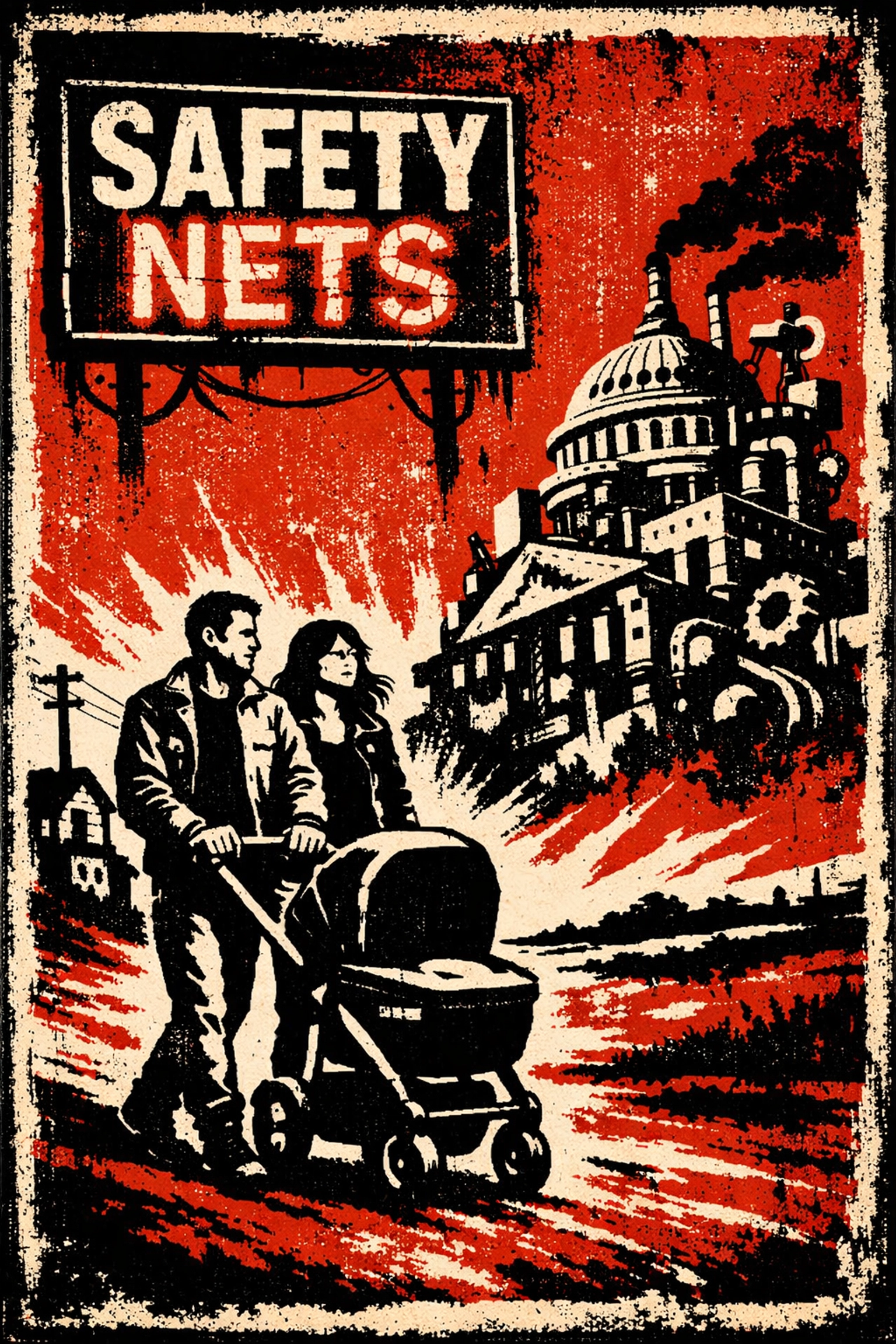
    Older generations lived much closer to the intersection of both. If you didn’t plant, you didn’t eat. If you broke something, you fixed it. There was no middleman to absorb the blow. Today? You could argue that most modern systems, government programs, massive institutions, safety nets, and corporate bureaucracies, are designed specifically to separate people from the consequences of their actions.

    Sometimes those nets catch people who truly need them. But more often, they strip away the expectation that a human being must personally deal with the results of their life choices. That disconnect is where the rot starts, and it matters most when we stop talking about abstract “systems” and start talking about the hardest issues we face: teen pregnancy, abortion, and moral agency.

    The Question My Son Asked

    The catalyst for this whole thought process wasn’t some high-level policy debate. it was a conversation at home. My son asked a question built around a hypothetical, a brutal, gut-wrenching one.

    He asked: If I had been born female, and I was fourteen, and I was raped… would abortion be justified?

    And then he followed it up with the real kicker: Even if it was justified, would that still be participating in a form of eugenic thinking, where society decides that because a life started in trauma or under “wrong” conditions, it simply shouldn’t exist?

    I didn’t pretend I had an easy, pre-packaged answer. Because I don’t. These are the moments where generational thinking hits a wall. Some people have an answer ready before you even finish the sentence. Others wrestle with the moral weight until it leaves a mark. My response wasn’t a lecture or a sermon; it was a perspective grounded in the reality of human agency.

    “The question to me from my son was

    “”So you think that if I was a girl at birth, at my current age, and a man raped me, getting an abortion because I shouldn’t have to deal with a pregnancy at 14, it would be me partaking in the ideologies of eugenics?”

    My Actual Reply to My Son

    I told him my thoughts honestly.

    And I want to keep this exactly how I said it.

    Because sometimes raw honesty communicates better than polished writing.

    Here was my reply:

    Our neighbors in Puerto Rico, in fact our landlords started their family and had their first child at age 14

    This man in that video from the Philippines was age 12

    It’s pretty common in recent generations

    Mom’s mother, grandma Donna got pregnant at age 15

    🤷

    Is it right?

    Is it wrong?

    I dunno

    But I had my first legal job at age 14 it’s on record because I paid social security taxes for it

    And I had my first apartment by age 15

    I wouldn’t have started a family back then personally

    I actually waited intentionally until I was 27 for that

    But I am just saying, it’s not uncommon

    Sometimes the best answer you can give a kid is honesty.

    Not a sermon.

    Just reality.

    Father and teenage son having a gritty conversation about accountability and responsibility.
    Image: father and teenage son having serious conversation at kitchen table | ALT: accountability vs responsibility conversation between generations

    Adoption vs Abortion: A Path for Life

    I told him something simple, though I know it’s not easy. I believe adoption is a better option whenever it is physically and mentally possible.

    This isn’t because I think pregnancy is a walk in the park or that trauma is trivial. Far from it. It’s because adoption creates a path where life continues, and the massive weight of responsibility shifts to someone who is actually prepared and waiting to raise a child.

    According to the U.S. Department of Health and Human Services, hundreds of thousands of children are adopted every year, and there are countless families actively waiting to adopt infants (https://www.acf.hhs.gov/cb ). There is a massive demand for life. When we talk about “solutions,” we have to acknowledge that there are alternatives that don’t involve termination.

    But I also told him that acknowledging that option doesn’t magically erase the complexity of rape or the horror of trauma. Hard questions don’t come with easy answers, and anyone telling you otherwise is likely trying to sell you a political platform. We’re talking about the Gospel of Disruption here, challenging the status quo means looking at the raw, uncomfortable truth.

    Is It Physically Possible? The 14-Year-Old Reality

    I asked my son a rhetorical question: Is it physically possible to have a child at age fourteen?

    Biologically, the answer is a resounding yes. According to the CDC, teenage pregnancy has been a constant throughout human history (https://www.cdc.gov/teenpregnancy). Now, does that make it ideal? No. Does it mean it fits into our modern, Western timeline of “success”? Usually not.

    But it makes it real.

    Modern conversations often assume that a 14-year-old parent is some kind of unprecedented medical anomaly or a sign of total societal collapse. But history, and the rest of the world, has a very different story to tell.

    Defiant young mother with infant showing a historical perspective on teen pregnancy norms.
    Image: historical painting of young mother with infant child | ALT: historical perspective on teen pregnancy across generations

    A Story from Puerto Rico and Beyond

    I gave my son examples from our own life. Our neighbors in Puerto Rico, who were also our landlords, started their family when they were fourteen. They didn’t have a safety net or a government agency holding their hands. They worked. They struggled. And they raised a large family of successful, hardworking, responsible adults.

    Stories like that fly in the face of the modern narrative that says a teenage parent is a guaranteed “broken outcome.” Sometimes they are. But sometimes they aren’t. Life is messy, and reality rarely fits inside the neat, ideological boxes politicians build for us.

    Even the historical figures we hold in high regard lived by different rules. Mary, the mother of Jesus, is widely believed by historians and theologians to have been between 14 and 16 when she gave birth. In ancient cultures, starting a family early wasn’t a “crisis”; it was the norm. Our modern assumptions aren’t universal truths, they are cultural shifts.

    Then there’s the global perspective. When I was in the Philippines recently, I talked to a taxi driver who told me, with zero fanfare, that he started his family at age twelve. TWELVE.

    [Video: Taxi driver in the Philippines describing starting a family at age 12 | Note: Real world example of generational differences in responsibility and family norms]
    https://www.youtube.com/shorts/0brhSYjq3qA

    Different cultures have vastly different expectations of when “adulthood” begins. Those expectations shape how people view responsibility. If you’re told you’re a child until you’re 25, you’ll act like it. If you’re told you’re a man at 13, you’ll step up.

    Personal History: My Own Timeline

    I wanted to be honest with my son about my own journey. I didn’t want to give him a “do as I say” speech. I gave him the “this is what happened” facts.

    • I had my first legal job at 14. It’s on the record because I paid Social Security taxes on it.
    • I had my first apartment at 15.
    • I was fully responsible for my own survival before I was legally allowed to drive a car alone.

    Teenage worker with toolbox representing individual agency and early generational responsibility.
    Image: teenage worker at a small job site carrying tools | ALT: generational responsibility starting work at age 14

    I told him: I wouldn’t have started a family back then. I actually waited intentionally until I was 27 to have kids. But I’m saying it’s not uncommon, and it’s not impossible.

    We have to separate two distinct questions that people always mix up:

    1. Is abortion a reasonable response to rape?
    2. Is it “wrong” to have a baby at age fourteen?

    Those are not the same issue. One is a question of moral response to trauma; the other is a question of biological and cultural capacity. When we mix them, we lose the ability to have a rational conversation about either.

    The Institutional Critique

    The reason we struggle so much with these topics today is that we’ve outsourced our accountability. We’ve handed our problems over to the state, the courts, and the bureaucracies. We’ve been told that we aren’t capable of handling “hard things” on our own.

    When you remove the expectation of personal responsibility, you create a vacuum of agency. You turn people into victims of their circumstances rather than masters of their fates. This is why some people see Hidden Scrolls and ancient wisdom as “dangerous”, because it reminds us that we used to be stronger, more resilient, and more accountable.

    Older generations accepted responsibility earlier because they had to. Today, many people are financially dependent on their parents or the government well into their twenties. Neither model is perfect, but the shift has fundamentally changed how we answer moral questions. If adulthood starts “later,” then teenage pregnancy feels like an end-of-the-world scenario. If adulthood starts “earlier,” it feels like a difficult but manageable reality.

    Independent young couple with a baby stroller choosing personal accountability over state systems.
    Image: young couple walking through a rural neighborhood with a baby stroller | ALT: accountability vs responsibility in generational family life

    Conclusion: Agency over Victimhood

    I’m glad my son asked me that brutal question. I’m glad he’s wrestling with the concept of eugenics vs. trauma vs. life. It means he’s thinking. It means he’s not just regurgitating the “correct” opinions he hears on social media.

    Raising kids isn’t about giving them all the answers. It’s about teaching them how to carry the weight of the questions.

    Responsibility says your choices matter.
    Accountability says you own the consequences.

    Whether we are talking about work, family, or the most difficult moral dilemmas a human can face, the goal is always the same: Agency. We need to stop looking to systems to save us and start looking at how we can reclaim the ownership of our own lives.

    Keep it real. Keep it disruptive.

    , Ryan “Dickie” Thompson


    Sources & References:


    Spun Web Technology SMART SEO

    Spun Web Technology SMART SEO
  • The Puppet Masters and the Planes: Trump’s New Foreign Policy Breaks My Heart

    I’m sitting here on a Sunday morning, March 1, 2026, looking at the news feeds, and I’ve got that familiar, bitter taste in my mouth. It’s the taste of being right about something you really, really wanted to be wrong about.

    I supported Donald Trump in the last election. There, I said it. I’m a libertarian, a “Punk Rock” agitator who usually wants to set the entire federal apparatus on fire (metaphorically, mostly), but I backed the guy. Why? Because of his first term. For four years, despite the constant screeching from the media, the world felt a little quieter. He wasn’t starting new crusades. He was talking to people. He was ending conflicts. I fell for the “Peace Candidate” pitch because, frankly, I’m tired of seeing my tax dollars turned into shrapnel in countries I can’t find on a map.

    But now? We’re two months into 2026, and the old script is back from the dead. We’ve got “Operation Absolute Resolve” in Venezuela, where U.S. Special Forces snatched Nicolás Maduro off the streets of Caracas like a scene from a Tom Clancy fever dream. We’ve got “Operation Midnight Hammer” raining fire on Iran’s nuclear sites.

    And once again, Congress is sitting in the corner like a forgotten houseplant while the President acts like a King.

    The Balanced Libertarian Reality Check

    Let’s not get it twisted. I am not a fan of the Ayatollah. I am not a fan of Maduro. These are objectively bad people. Maduro has turned a prosperous nation into a starving cage, and his circle is responsible for documented human rights abuses that would make your skin crawl. Iran’s Revolutionary Guard (IRGC) isn’t a social club; they are a hard-power arm of a regime that exports terror and treats its own citizens like disposable property.

    If you think these guys are “harmless,” you’re living in a bubble. They pose a threat to their neighbors, and yes, even to us.

    But here is the libertarian line we keep crossing: Does the “badness” of a foreign dictator give a U.S. President the right to bypass the Constitution?

    A free country doesn’t stay free by normalizing executive war. When we drop bombs first and “sort out the legal details” later, we aren’t defending liberty, we’re expanding the State. War is the ultimate health of the State. It expands debt, justifies surveillance, and gives the executive branch powers that never quite go away when the smoke clears.

    Satirical art of a state leader on a throne of war shells, showing the libertarian critique of executive power expansion.

    The Ghost of Obama and the Nobel Irony

    This isn’t just a “Trump problem.” It’s a Washington disease. Remember Barack Obama? The man who won a Nobel Peace Prize in 2009 for… well, mostly for not being George W. Bush?

    Obama went on to bomb at least eight countries, often without a whisper of Congressional approval. Libya in 2011 was the peak of the absurdity, the administration literally argued that dropping bombs from the sky didn’t constitute “hostilities” under the War Powers Resolution. It was an insult to anyone who actually values the rule of law.

    And speaking of that 2009 Nobel Peace Prize, have you seen the news from Norway lately?

    As of February 2026, Thorbjørn Jagland, the former chairman of the Norwegian Nobel Committee, the guy who was the central figure in handing that prize to Obama, has been charged with aggravated corruption. The BBC and Norwegian outlets are reporting that these charges stem from the recently released U.S. Justice Department files concerning the late Jeffrey Epstein. Apparently, Jagland and Epstein had a “close relationship” that the DOJ is finally peeling back the layers on.

    Think about that. The guy who branded Obama a “man of peace” while the drones were being fueled up is now caught in the Epstein web. It’s all one big, dirty circle, isn’t it? The elites protect the elites, they give each other trophies, and they use the military to keep the gears of the machine turning.

    The Puppet Masters: Why Trump is Cracking

    I wanted to believe Trump was his own man. But looking at these strikes in Iran and the raid in Venezuela, I’m feeling that “I told you so” moment creeping up.

    There’s a theory, and the more I see, the more it makes sense, that Trump has been beholden to “puppet masters” (the big bankers) since his financial collapse in the late 80s and early 90s. When his Atlantic City empire was cratering, the big banks didn’t bankrupt him. They could have wiped him out. Instead, they kept him afloat. Why? Because his name was a brand they could use, and a man in debt is a man who can be controlled.

    If you haven’t seen the breakdown of how the Rothschilds and Wilbur Ross (who later became his Commerce Secretary) “saved” him, you need to watch this: The Truth About Trump’s Finances .

    When you owe the bank $10,000, you have a problem. When you owe the bank $4 billion, the bank has a problem, unless they own you. This might explain why, despite his “America First” rhetoric, we are right back to the Neocon playbook of regime change and Middle Eastern escalations. The “banksters” and the Military Industrial Complex want their ROI, and peace doesn’t pay dividends for Raytheon or Goldman Sachs.

    Stencil art of a banker puppet master controlling a politician, depicting the financial leverage over US foreign policy.

    The Epstein Files and the Jumpy President

    This also sheds a new light on why Trump was reportedly so upset about the DOJ releasing those 3.5 million pages of Epstein files under the Epstein Files Transparency Act in late 2025.

    When the powerful start acting jumpy about document dumps, it’s usually because of leverage. Whether it’s the Jagland connection or names we haven’t even processed yet, the “everyone is compromised” feeling is at an all-time high. When a President acts above the law in foreign policy, you have to ask: Who is he actually trying to impress? Or more importantly, who is he afraid of?

    Check out our deep dive into the Epstein Files Release and the political fallout to see how deep this rabbit hole goes.

    A Better Way: Leading by Example

    Libertarianism isn’t about being weak; it’s about being smart. We can influence the world without turning it into a parking lot.

    1. Economic Pressure, Not Explosives: If we want to hurt Maduro or the IRGC, we go after their assets. We go after the money laundering networks and the luxury pipelines that keep the ruling class fat while the people starve.
    2. Lead by Example: A country that respects its own Constitution and stays out of debt is a more powerful “shining city on a hill” than one that is $35 trillion in the hole and dropping Hellfire missiles on every corner of the globe.
    3. Make Congress Own It: If Iran is truly a “clear and present danger” that requires war, then let the representatives of the people vote on it. Debate it. Prove it. Don’t hide behind “executive actions” and “limited engagements.”

    We’re seeing left-wing violence and riots at home because people feel the system is broken and unresponsive. When the government ignores the law abroad, it loses the moral authority to enforce it at home.

    Final Thoughts

    I’m disappointed. I was hopeful, but I’m not blind. The “Peace Record” of the first term is being erased by the “War Record” of the second.

    If we excuse “our guy” for acting like a king, we have no right to complain when the “other guy” does the same thing. Principles have to come before personalities. Right now, the principles of non-intervention and constitutional war powers are being shredded, and the only people winning are the bankers and the bureaucrats.

    Stay skeptical. Stay loud. Don’t let the flags distract you from the fact that your freedom is being sold to the highest bidder.


    Sources & References:

    • Was the US capture of Venezuela’s president legal? | Reuters
    • Trump’s Iran strikes mark his biggest foreign policy gamble | Reuters
    • Council of Europe strips former head of immunity over Epstein probe (Jagland) | Reuters
    • Department of Justice Publishes 3.5 Million Pages in Epstein Files Release | DOJ Press Release
    • The Truth About Trump’s Finances & Bankers | YouTube Analysis
    • Obama on War, Then and Now | FactCheck.org
    • Independent International Fact-Finding Mission on Venezuela | OHCHR

    Sonny, here is the new post for the blog: /blog/puppet-masters-planes-trump-foreign-policy. Please schedule this for promotion across all channels. Hit the “Anti-Establishment” and “Constitutional Rights” angles hard. Let’s get people talking.

    Spun Web Technology SMART SEO

    Spun Web Technology SMART SEO

  • A Father’s Letter on Gender Dysphoria, Parental Alienation, and Why Hate Is Unproductive

    A Letter to My Children

    Kids,

    I am writing this to you in public because the attacks against me are public. I will not respond with hate. I will respond with truth.

    Recently, your mother posted on social media, “Surprise asshole, your kids get to tell you who they are.” That statement is meant to paint me as someone who refuses to listen. Someone who hates. Someone who rejects.

    That is not who I am. And if you ever doubt it, look at the record.

    Years ago, when your sibling chose a new name, I adjusted immediately. I called her by that name. I respected it. After she had been using it for some time, I tattooed that name on my arm next to the rest of you. That is permanent ink. That is not symbolic support. That is commitment.

    I originally named her Jennie, after my grandmother. My grandmother was my anchor in a chaotic childhood. She was my best friend. She was steady. I honored her by giving her name to my daughter. I even made a tribute to my grandmother here:
    Ryan Thompson Tribute to Grandma Jennie | https://www.youtube.com/watch?v=65Y5zT1e7kU

    And years ago, I wrote about my daughter as “the little tiny girl with a great big name, and little tiny toes.” That archive still exists:
    Our Illegal Birth Welcome Baby Jennie | https://web.archive.org/web/20120808020229/http://xcannabis.com/2009/03/our-illegal-birth-welcome-baby-jennie/

    That is the record of a father who loves his child.

    So when someone claims I hate gay people or reject my children, it collapses under the weight of evidence.

    Hate Is Unproductive

    Back in 2016, I published a piece and video titled Hate Is Unproductive, Homosexuals Are Not Our Enemy. I stand by that today.

    Hate Is Unproductive Video | https://www.youtube.com/watch?v=GkVeFOgmni8
    Republished Blog Post | /blog/republish-article-from-2016-titled-hate-is-unproductive-homosexuals-are-not-our-enemy/

    The message was simple. Hate solves nothing. Homosexuals are not the enemy. Government overreach is the enemy. Authoritarianism is the enemy. Collectivism is the enemy.

    I have publicly supported gay marriage. I have publicly defended the rights of consenting adults to live as they choose. My entire libertarian philosophy is built on voluntary association and limited government. Adults can love who they want. The state has no business in it.

    That has never changed.

    What has not changed either is this: I believe gender dysphoria is a mental illness. That belief is not rooted in hate. It is rooted in caution. It is rooted in concern for children making permanent medical decisions.

    Those two positions are not contradictions.

    The Line I Draw

    The only firm line I draw is this: children should not make irreversible medical decisions before they are old enough to understand the lifelong consequences.

    Puberty blockers. Cross sex hormones. Surgeries. These are not cosmetic changes. They alter bone density. Fertility. Sexual function. Physical development. Some of these changes are not reversible.

    We are already seeing the first wave of lawsuits from young adults who were transitioned as minors and now regret it. One of the first successful cases against providers of so called gender affirming care has already occurred. More will follow.

    Gender Affirming Care Lawsuits Against Medical Providers | /blog/gender-affirming-care-lawsuits-minors/

    That is not hate. That is medical accountability.

    As a father, my job is not to affirm every impulse. My job is to protect you from permanent harm until you are old enough to choose for yourself.

    If you are 25 and want to alter your body, that is your choice. That is liberty. But if you are 13 or 14, and still learning algebra, that is not informed consent. That is experimentation on minors.

    I will not support that. And refusing to support that is not hatred.

    I Have Seen This Before

    I grew up watching parental alienation happen in real time. I watched my own mother wage war against my father. I watched bitterness weaponized. I watched children used as leverage.

    There is even a recorded conversation between me and my grandmother where we discussed how my mother prevented my half siblings from speaking to my father on his deathbed. That recording exists here:
    Grandma Talking About Dad’s Kids | https://archive.org/details/auto-biography-ryan-thompson/grandma-talking-about-dads-kids.mp4

    I watched a marriage of over 30 years collapse into resentment so deep that children became tools for revenge.

    When you grow up in that, you recognize the pattern.

    When someone promises they will turn your kids against you if you leave, that is not an idle threat. And when it begins happening, it feels familiar.

    That does not mean I respond with revenge. It means I respond with consistency.

    The Record Is Public

    You can go back decades on my public record.

    Utah Pirate Radio | https://www.youtube.com/@utahpirateradio

    Years of videos. Years of libertarian commentary. Years of defending free speech, gay marriage, voluntary association, and pushing back against authoritarian conservatives.

    In 2016, we were in Puerto Rico discussing immigration and Trump. Your mother publicly chimed in supporting those policies. That video exists:
    Puerto Rico Immigration Discussion 2016 | https://www.facebook.com/790371788/videos/10154784185651789/

    People can change their views. That is their right. But rewriting history to claim I have always been hateful is false.

    If I had hatred toward homosexuals, there would be years of evidence of it. Instead, the evidence shows the opposite.

    What I Actually Said

    I once said I hoped my children would not choose a homosexual lifestyle. That statement has been twisted into “he hates gay people” or “he would reject gay kids.”

    That is not what I said. And not what I meant.

    Statistically, gay men account for a disproportionate percentage of new HIV cases. That is a public health fact. Beyond health, there are social pressures and stigmas that still exist. A father naturally hopes for the path with fewer obstacles for his children.

    Hope is not hatred.

    If one of you told me you were gay, I would not disown you. I would not cut you off. I would not stop loving you.

    But I am allowed to have opinions about what I believe leads to flourishing and what carries risk. That is part of being an adult. That is part of being a parent.

    Consistency Matters

    The hardest thing to fake is long term consistency. My views on liberty have been steady for decades. Limited government. Individual responsibility. Free speech. Voluntary association.

    Adults have the right to make their own choices. The state should stay out of bedrooms. The state should stay out of marriage.

    The state should also stay out of pressuring children into irreversible medical pathways.

    You can disagree with me. But you cannot honestly say I am inconsistent.

    Love Without Lies

    Kids, here is what I want you to hear.

    You are not weapons. You are not tools in a culture war. You are not leverage in a divorce.

    You are my children.

    If you tell me who you are, I will listen. If you change your name, I will adjust. If you struggle, I will show up.

    But I will not lie to make peace. I will not pretend biology is meaningless. I will not pretend that every modern medical trend is beyond question. I will not stay silent to avoid being called names.

    Hate is unproductive. It destroys families. It poisons hearts. It blinds people.

    Truth can be uncomfortable. But truth is not hate.

    One day you will look back and see who stayed steady. Who kept the same principles. Who did not shift with the political winds.

    When that day comes, I hope you see that my position was never about rejecting you. It was about protecting you.

    And no matter what happens in public arguments, that has never changed.

    I love you. Always.


    Sources and Links