Author: Ryan “Dickie” Thompson

  • Thailand’s Cannabis Crackdown: Why I’m Rethinking My Retirement Plan


    When I landed in Thailand in late July 2025, I felt a deep sense of relief. For a long time, Thailand had been one of the few countries in Asia brave enough to break ranks with the global war on drugs, and instead chart its own path by legalizing cannabis.

    As a liberty-minded American, I saw this as a bold move in the right direction—an embrace of individual freedom and market innovation. I’ve spent years advocating for limited government, personal responsibility, and voluntary exchange. So being in Thailand, where cannabis was once sold openly and legally in brightly lit dispensaries, felt like coming home.

    Unfortunately, that freedom didn’t last.


    My Visit to Thailand: July–August 2025

    I traveled across Thailand for several weeks—from the bustling streets of Bangkok to the serene mountains of Chiang Mai, and then down to the islands near Krabi. Everywhere I went, cannabis had left a positive imprint: cleaner storefronts, honest entrepreneurs, and a growing industry that reminded me of the early days of legalization in California.

    I visited dispensaries that looked like high-end apothecaries—run by locals, with knowledgeable staff and customers ranging from curious tourists to elderly Thais seeking pain relief. I even considered putting down roots here and retiring in this vibrant and culturally rich country.

    From the golden Buddhist temples to the elephant sanctuaries, Thailand’s beauty was undeniable. But what struck me the most was how cannabis seemed to fit seamlessly into Thai society. Not as some destructive vice, but as a plant—medicinal, recreational, and economic.

    Then I got the news.


    A Tragic Reversal: The End of Recreational Cannabis

    On June 25, just a few weeks before I arrived, Thailand’s Ministry of Public Health passed a law that abruptly reversed recreational cannabis use. Dispensaries were ordered to sell cannabis only for medical purposes—and even that came with a mountain of red tape.

    Suddenly, a customer had to get a prescription from a doctor. Their identity, nationality, medical diagnosis, and dosage had to be documented in a central database. Dispensaries were required to register on a government platform, adhere to strict cultivation standards (GACP), and face potential jail time and fines if they broke the rules.

    This wasn’t a gentle policy shift. It was a policy gut punch.

    Legal sales plummeted by up to 90%, according to business owners. Many small shop owners simply couldn’t comply with the new rules. They’d invested their life savings into their stores, only to be pushed to the brink of financial ruin. Some began operating in a legal grey zone just to survive. Others shut down entirely.


    What Caused the Crackdown?

    The short answer: politics.

    Thailand’s cannabis legalization was never fully protected under constitutional or stable regulatory frameworks. Instead, it became a political football. The ruling Pheu Thai Party, which had previously shown signs of support, suddenly pushed cannabis toward re-criminalization. Meanwhile, the Bhumjaithai Party, which had originally spearheaded legalization, was squeezed out of influence after coalition breakdowns and a leaked phone call scandal involving Cambodia’s ex-PM Hun Sen.

    So what’s the result? A deeply schizophrenic national policy—where cannabis is technically still legal, but treated like a controlled substance in practice.

    Public Health Minister Somsak Thepsuthin defended the policy, saying:

    “Thailand should not be seen as a destination for recreational cannabis use.”

    That’s an odd statement coming from a country that previously welcomed tourists to cannabis-friendly neighborhoods like Khaosan Road or Chiang Mai’s Old Town.


    The Real Impact: Back to the Black Market

    Just like in any top-down crackdown, the unintended consequences hit hard.

    Since the June reversal, the black market for cannabis has exploded. Prices underground are 60–80% cheaper than in the tightly regulated dispensaries. Some sellers now offer bulk cannabis through social media or discreet online shops. Growers, like one known only as “Anawat,” gave up trying to go legit and now operate entirely under the table.

    Even legitimate dispensaries feel forced to “bend” the rules just to keep their doors open—filling out fake prescriptions, skipping the database entry, or quietly serving tourists who refuse to get registered.

    This is what always happens when the government overreaches: people opt out. They adapt. They find voluntary alternatives.

    And yet the government calls this “progress.”


    Why I’m Rethinking My Retirement Plan

    I’ve always admired Thailand for its entrepreneurial energy and stunning landscapes. The people are warm. The food is world-class. And for a while, it seemed like the government was finally respecting the rights of individuals to make choices about their own bodies and businesses.

    But now I’m not so sure.

    This cannabis policy reversal, combined with recent tensions at the Cambodian border and political infighting, shows me that Thailand’s laws are not grounded in principle—but in power.

    I can’t plan a future in a country that changes its laws based on the whims of shifting coalitions or media optics. I’m not looking to live in a place where legal business owners face jail time for selling a plant that was fully legal just weeks before.

    So yes, I’m rethinking my plans. Retirement in Thailand? Maybe not. At least not until the country finds some legal consistency—and stops punishing people for daring to be free.


    What Freedom Should Look Like

    Let’s be clear: this isn’t just about cannabis.

    It’s about freedom.
    It’s about the right to control your own body, to start a business, to buy and sell in peace without government intrusion.

    Countries like Thailand had a chance to lead on this front. To show the world that you don’t need to be the West to support liberty. For a brief moment, they were leading. But that moment has passed—for now.

    Liberty doesn’t have to be chaotic. Legal cannabis didn’t destroy Thai society—it created jobs, helped patients, and boosted tourism. What’s destroying it now is political gamesmanship, fear-mongering, and central control.

    As a libertarian, I’ll always advocate for personal responsibility and voluntary association. Let adults decide what’s best for them. Let the market decide what survives.

    That’s not just good policy—it’s moral policy.


    Final Thoughts

    I still love Thailand. I still recommend visiting. Experience the temples, the street food, the elephants, the kindness of the people. But if you’re a cannabis user or a freedom-minded retiree like me, be warned: the climate of freedom here has gotten colder.

    Until Thailand finds its footing again, I’ll be exploring new plans—and new destinations—where freedom isn’t just a fad.

    Because real liberty isn’t seasonal. It’s foundational.

    Spun Web Technology SMART SEO

    Spun Web Technology SMART SEO

  • The Truth Hurts: Rosie O’Donnell Apologizes After Falsely Blaming MAGA for Deadly Church Shooting

    By: Ryan “Dickie” Thompson

    Another tragic mass shooting shook the nation recently. This time, it happened inside a Minneapolis Catholic Church where children gathered for a back-to-school mass. Two kids were killed. Over a dozen others were injured. But before the facts were known—before families could even begin grieving—left-wing celebrities like Rosie O’Donnell jumped in to exploit the tragedy for political points, wrongly blaming the attack on a “white supremacist MAGA supporter.”

    Except… it wasn’t.

    The Shooter Wasn’t MAGA — He Was Trans

    The actual shooter, Robin Westman, is a trans-identifying biological male, formerly known as Robert Westman. He left behind a violent manifesto, loaded with anti-Christian hate, anti-Trump rhetoric, and crude threats—including the words “Kill Donald Trump” carved into his weapons.

    This wasn’t just random violence. This was a targeted hate crime against Christians and conservatives—something the media and political left desperately tried to hide.

    Rosie O’Donnell’s Apology: Too Little, Too Late

    Rosie O’Donnell, known for her endless rants against Trump and the MAGA movement, was forced to issue a groveling apology after falsely accusing the shooter of being a Republican white supremacist. In her own words:

    “I did not do my due diligence before I made that emotional statement… I said things about the shooter that were incorrect. I assumed, like most shooters, they followed a standard M.O. — NRA-loving gun people.”

    Let that sink in.

    Rosie admitted she assumed the shooter was MAGA—not based on evidence, but based on her own ideological prejudice. And when the truth came out, the best she could offer was a TikTok video blaming her cold sore and being “run down.”

    This is what passes for journalism and activism among Hollywood elites.

    The Media’s Pattern of Misinformation

    Rosie wasn’t alone. Mainstream outlets—from ABC to The New York Times—rushed to obscure the shooter’s gender identity and political motives. ABC even tried to imply the shooter might be “alt-right” simply because Trump’s name appeared on the gun, leaving out the critical context that the gun said “Kill Donald Trump.”

    As Jeff Mees pointed out in a viral Sky News clip:

    “This is not just an innocent mistake. It’s blatant misinformation. It’s disingenuous. It’s deceptive. It’s malicious and it’s manipulative.”

    Why does this keep happening?

    We saw it with the Nashville Covenant School shooting in 2023—also carried out by a trans-identifying individual. And again, media coverage quickly pivoted to protect the ideology rather than investigate the motive.

    Trans Mass Shooters Are Statistically Overrepresented

    Let’s get real.

    According to per capita data from the past decade, trans-identifying individuals commit mass shootings at a rate significantly higher than any other demographic group. This isn’t a talking point. It’s math.

    Yet the media treats any mention of this trend as “hateful” or “bigoted.” They’d rather label law-abiding gun owners and conservatives as terrorists than confront an uncomfortable truth: affirming mental illness doesn’t make people safer. It can make them violent.

    And that’s exactly what happened in Minneapolis.

    The Shooter’s Background: Affirmation, Not Rejection

    Robin Westman wasn’t bullied or abandoned. His mother worked at the very school where the attack took place. His family fully supported his gender transition, even helping him legally change his name in court. His uncle, a public official, actively pushed LGBTQ+ policies in Minnesota.

    In short, Westman was “affirmed” every step of the way—yet still murdered innocent children in cold blood.

    Why? Because affirmation doesn’t cure delusion. It enables it.

    Government Gaslighting: Mayor Jacob Frey’s Shameful Response

    Instead of mourning the dead or confronting the ideological hatred that fueled the shooting, Minneapolis Mayor Jacob Frey took to the podium to deliver a nauseating display of woke deflection.

    “Anybody using this as an opportunity to villainize our trans community… has lost their sense of common humanity.”

    Excuse me?

    Two Catholic children were just gunned down during a mass. Their classmates are fighting for their lives. And the mayor’s first instinct is to protect the reputation of the trans community rather than address the actual threat?

    He even mocked the idea of prayer, saying:

    “These kids were literally praying when they were killed… Don’t just say this is about thoughts and prayers.”

    That’s not leadership. That’s ideological propaganda.

    Rosie’s “MAGA Shooter” Lie Is Part of a Pattern

    Let’s not forget: this isn’t Rosie O’Donnell’s first time spreading lies about conservatives. She once called Trump a Nazi. She’s accused Republican voters of racism, sexism, and treason. And she’s not alone. The left-wing playbook always looks the same:

    1. A tragedy occurs.
    2. Blame MAGA.
    3. Ignore facts.
    4. Shift focus to “hate speech” or gun control.
    5. Play victim if called out.

    But what makes this case especially vile is that the real motive—hatred of Christians and Trump supporters—was not only ignored, it was flipped. The victims were painted as the aggressors. The shooter was treated as the misunderstood.

    Christians and Conservatives: The New Scapegoats

    Let’s call this what it is: transgender terrorism driven by anti-Christian, anti-American ideology—enabled by weak leadership and dishonest media.

    And while Rosie backtracked, the broader machine hasn’t missed a beat. Social media platforms shadowban any post mentioning the shooter’s gender. News anchors wring their hands over “misinformation” while ignoring actual threats.

    Why?

    Because to the establishment, Christians and conservatives are easier to blame. We don’t riot. We don’t burn cities. We don’t get violent. So we’re safe targets.

    Meanwhile, radicals get cover. They get praised. They get parades and press conferences.

    The Dangerous Cost of Ignoring Reality

    When Rosie O’Donnell and the media jump to blame MAGA every time tragedy strikes, they create a climate of hate against conservatives that justifies more violence.

    And when that violence comes—from trans activists, Antifa mobs, or radicalized ideologues—it’s buried.

    This isn’t just about bias. It’s about safety.

    • What happens the next time a disturbed activist walks into a church with a manifesto?
    • What happens when police hesitate to act because they’re afraid of being labeled “transphobic”?
    • What happens when facts become hate speech?

    Enough Is Enough

    We don’t need more apologies from celebrities like Rosie O’Donnell. We need accountability.

    We need politicians who protect children—not ideologies.

    We need media outlets that report facts—not feelings.

    And we need to stop pretending that pretending fixes things.

    Trans-identifying individuals are not above criticism. If data shows they are statistically more likely to commit mass violence, then that fact must be discussed—openly, honestly, and without apology.

    It is not bigotry to tell the truth.

    What happened at the Annunciation Catholic Church is not just a tragedy. It’s a wake-up call.

    Let’s hope America finally hears it.


    Sources:

    Spun Web Technology SMART SEO

    Spun Web Technology SMART SEO

  • Stable Coins to Punk Songs: The Radical Music Freedom Fight

    Stable Coins to Punk Songs: The Radical Music Freedom Fight

    Ryan “Dickie” Thompson here, and it’s time for a reality check. The powers in Washington are tugging at strings that impact your every groove, beat, and the cryptocurrency you tuck away. From the tunes you stream on Spotify to what you stash in your Bitcoin wallet, it seems like Uncle Sam is lurking in the wings, ready to interfere with your artistic liberties. Most folks are blissfully unaware of this unfolding drama. Let’s dive deep into how the political machinery is warping your music, your money, and your right to create without needing a bureaucrat’s blessing.

    The Government’s Music Monopoly Scam

    Brace yourselves: streaming music is anything but a free market—it’s a tightly controlled monopoly. That’s right, the same government that can’t balance its own budget is determining how much your favorite artists earn. Every time you hit play on Spotify or Apple Music, you’re unwittingly part of a system where artists can’t negotiate their own rates. Faceless bureaucrats at the Copyright Royalty Board—yes, it exists—decide how crumbs get divided. Songwriters who own their music get roughly a tenth of a penny per stream, while platforms rake in billions, leaving artists scraping by on ramen noodles, praying their side gig covers rent. This mess began in the ’90s when the government naively attempted to help artists transition to digital. Instead, it snuffed out market dynamics and cemented rates that won’t even buy you a stick of gum. Classic government incompetence, wouldn’t you say?

    Politicians Playing DJ with Your Royalties

    It gets worse. Politicians are proposing more government “solutions” to fix the very mess they created. Enter the American Music Fairness Act—sounds noble, doesn’t it? This bill aims to force radio stations to pay even more royalties under the guise of fairness. Senators from both sides of the aisle love to push initiatives like this, but guess what? Bigger radio stations will pass their costs to you, the listener, while small independent stations—those genuinely supporting underground and punk music—risk being squeezed out entirely. It’s enough to make any music lover scream.

    Trump’s Double-Edged Musical Legacy

    Regardless of where you stand on Trump, the impact he’s made on the music industry is undeniable. The Music Modernization Act he signed in 2018 offered some help to artists. This bipartisan effort streamlined digital licensing and extended royalty protections to pre-1972 recordings, ultimately boosting independent creators. However, his 10% import tariff on vinyl and merchandise announced in 2025 also means fans pay more for physical music. Classic government—gives with one hand, takes with the other.

    The Tax Man Wants His Cut (But Maybe Less Now?)

    Here’s where things become intriguing for you creative souls. With the Songwriters Capital Gains Tax Equity Act coming in 2025, songwriters can treat catalog sales as capital gains rather than regular income. This means that when you cash in on your precious catalog, Uncle Sam might take a slightly reduced slice of the pie—capped at 20% for long-term gains. However, don’t get too excited; this is still the government deciding how much of your hard-earned money you keep, albeit doing it with a slightly less greedy hand.

    Blockchain: The Punk Rock Revolution

    Now we’re venturing into really exciting territory for those of us who value freedom. NFTs and blockchain are pioneering decentralized systems that cut out the red tape altogether. Picture this: NFTs allow artists to link digital files directly to their intellectual property through smart contracts. Imagine being able to sell usage rights without some opaque government board dictating prices or corporate platforms taking a hefty cut. This is the punk rock ethos of creative freedom—ditching middlemen, regulators, and corporate overlords. While traditional streaming remains suffocated by federal control, blockchain-based platforms roam in relatively unregulated space. Artists finally have the power to craft their own destinies, set their own prices, and interact straight with their fans. It’s the free market in its purest form, one untouched by political interference.

    The Bigger Picture: Freedom vs. Control

    What really fires me up about this situation is how the government creates problems, only to present more government as the magic fix. They’ve turned music streaming into a regulated monopoly where artists can’t negotiate fair rates, and as a “solution,” they propose further regulations that only deepen the bureaucracy. Tariffs make music more expensive for the average listener. The inevitable “solution” will likely involve yet another subsidized program benefitting well-connected insiders while ignoring truly innovative approaches like decentralized royalty systems that empower artists.

    What This Means for Artists and Fans

    Every decision from politicians impacts your ability to earn a living as a creative. From streaming rates set by unseen bureaucrats to tax regulations on your situation—these influences are more pervasive than you realize. But here’s your silver lining: emerging technologies like blockchain and NFTs are charting paths where artists can operate outside the confines of traditional systems. While politicians squabble over the existing pie, savvy creators are busy crafting entirely new ones. The future of artistic freedom doesn’t lie in petitioning for better regulations; it lies in building frameworks that don’t require permission.

    The Path Forward

    As a punk rocker and a libertarian, I urge you to challenge the status quo that keeps artists tethered to government-regulated infrastructures. Support platforms that enable creators to maintain control over their work. Buy music direct from artists whenever possible and dive into blockchain platforms. Above all, recognize that every vote, every law, and every regulation tangibly affects your creative freedom. The connection from stable coins to punk songs is not merely symbolic; it embodies the struggle between economic liberty and regulatory capture. The suits in Washington might want to dictate how you create, distribute, and monetize your art, but technology is providing us the power to resist their control. Let’s crank up the volume and seize back what’s ours!

    Spun Web Technology SMART SEO

    Spun Web Technology SMART SEO

  • Stop Wasting Time on Spotify Pennies: Try These 7 Blockchain Revenue Hacks

    Look, I'm gonna level with you. If you're still chasing Spotify streams like they're gonna pay your rent, you're basically working for free while Daniel Ek buys another yacht. The streaming cartel has rigged the game so hard that you need 4 million plays just to make minimum wage for one month. That's not a business model—that's a goddamn pyramid scheme.

    But here's the thing: while the music industry suits are busy counting their blood money, blockchain technology is quietly building the tools to make them obsolete. I'm talking about real revenue streams that put money directly in your pocket, not some corporate middleman's.

    Time to stop begging for scraps and start building wealth. Here are seven blockchain revenue hacks that'll make Spotify's pennies look like the joke they are.

    1. Launch Your Own Music NFTs (The Right Way)

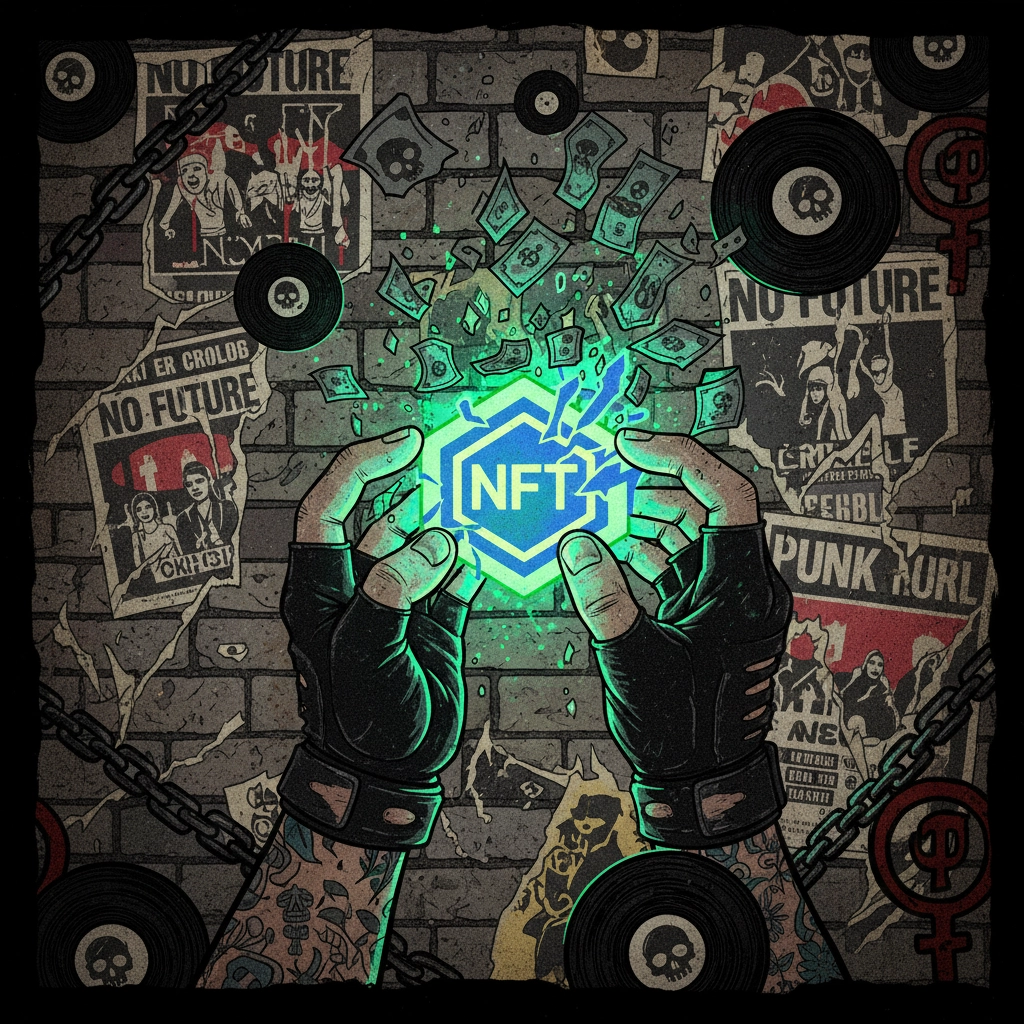
    Forget those overpriced monkey pictures. Music NFTs are about creating exclusive experiences for your real fans. Mint limited edition versions of your tracks with unlockable content—backstage footage, personal voice memos, or early access to new releases.

    The beauty? You set the price. While Spotify pays you $0.003 per stream, a single music NFT can sell for $50-500 depending on your fanbase. Do the math. One NFT sale equals 16,000+ Spotify streams.

    image_1

    2. Set Up Smart Contract Royalties That Actually Work

    Traditional royalties are a bureaucratic nightmare. Blockchain smart contracts cut through the bullshit. Every time your music gets used—whether it's in a TikTok video, podcast intro, or commercial—the smart contract automatically pays you.

    No more waiting 6 months for some accountant to "process" your royalties. No more mysterious deductions. The blockchain doesn't lie, and it doesn't take coffee breaks. Check out how decentralized royalties actually work and why they're the future.

    3. Create Fan Investment Opportunities

    Here's where it gets interesting. Instead of begging fans to "like and subscribe," let them actually invest in your success. Blockchain platforms let you tokenize future earnings from albums, tours, or merchandise.

    Your fans buy tokens representing a share of your next album's profits. When the album makes money, token holders get paid automatically through smart contracts. It's like Kickstarter, but your supporters actually own something valuable.

    4. Build a Direct-to-Fan Subscription Model

    Platforms like Bandcamp are cool, but they still take their cut. Blockchain lets you build a completely direct relationship with your audience. Set up a token-gated subscription where fans pay monthly in cryptocurrency for exclusive content.

    No platform fees. No algorithm manipulation. No corporate overlord deciding who sees your content. Just you and your fans, cutting out every parasitic middleman.

    image_2

    5. Monetize Your Music Data

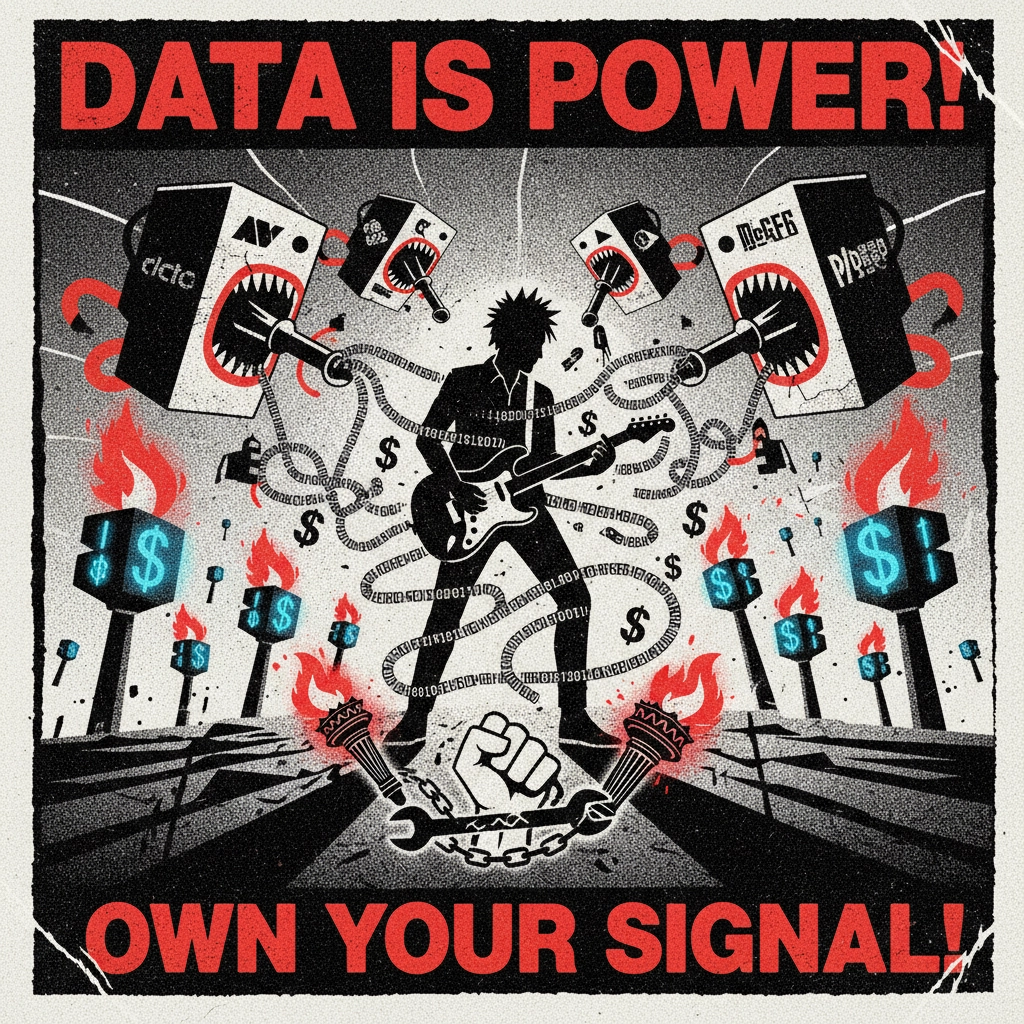
    Every stream generates valuable data about listening habits, demographics, and preferences. Guess who's making money from that data? Not you. Spotify and Apple Music sell your audience insights to advertisers while paying you peanuts.

    Blockchain platforms are emerging that let artists own and monetize their own data. Instead of giving away this valuable information, you can sell it directly to brands, researchers, or other musicians looking to understand market trends.

    6. Launch Community-Driven Music Investment DAOs

    A DAO (Decentralized Autonomous Organization) is basically a business that runs itself through smart contracts. Create a DAO where your community collectively funds and profits from your music projects.

    Fans contribute cryptocurrency to fund your next album or tour. In return, they get voting rights on creative decisions and automatic profit sharing when the project succeeds. It's democracy meets capitalism, with no record label breathing down your neck.

    7. Exploit Cross-Chain Arbitrage Opportunities

    This one's advanced, but it's where the real money lives. Different blockchain networks value the same digital assets differently. If your music NFT sells for 0.1 ETH on Ethereum but 0.15 ETH equivalent on Polygon, you've got an arbitrage opportunity.

    Smart traders are making serious money moving assets between chains to exploit these price differences. As a musician, you can mint your content on multiple blockchains and profit from the price gaps.

    image_3

    The Real Revolution Is Economic Freedom

    Look, I'm not saying blockchain is perfect. The technology is still evolving, and yeah, there are scammers and speculators muddying the waters. But for the first time in decades, musicians have tools to bypass the corporate gatekeepers completely.

    The streaming platforms want you dependent on their algorithms and their pennies. They've built a system where artists compete against each other for scraps while the platform owners get rich. That's not free market capitalism—that's digital feudalism.

    Blockchain flips the script. Instead of begging Spotify's algorithm for visibility, you're building direct economic relationships with people who actually value your work. Instead of getting paid months later through some opaque royalty system, smart contracts pay you instantly.

    Start Small, Think Big

    You don't need to revolutionize the entire music industry overnight. Pick one of these hacks and test it with your most engaged fans. Maybe start with music NFTs or a simple token-gated subscription model.

    The key is ownership. Own your audience data. Own your distribution channels. Own your revenue streams. Every dollar you make through blockchain is a dollar you're not giving to some Silicon Valley algorithm farmer.

    Want to learn how fans can actually invest in artists? We've got the breakdown of exactly how these investment models work and why they're exploding right now.

    The music industry establishment doesn't want you to know about these opportunities. They profit when you're desperate and dependent. But you're not stuck in their system anymore.

    Time to stop playing their rigged game and start building your own. The tools are here. The technology works. The only question is whether you're ready to take control of your own financial destiny.

    Because Spotify sure as hell isn't going to do it for you.

    Spun Web Technology SMART SEO

    Spun Web Technology SMART SEO

  • Are Record Labels Dead? How Smart Contracts Are Killing Music Industry Middlemen

    Ryan “Dickie” Thompson here, and I’m about to tell you why the music industry’s corporate overlords are shitting their pants.

    The writing’s on the wall, written in blockchain code and smart contract rebellion. After decades of fat-cat record executives getting rich off artists’ sweat and blood, technology has finally handed musicians the tools to tell these parasitic middlemen to take a long walk off a short pier.

    Record labels aren’t technically dead yet, but they’re bleeding out faster than a stuck pig at a barbecue. And honestly? Good fucking riddance.

    The Old System Was Pure Highway Robbery

    Let’s get real about how this scam worked. For generations, the music industry operated like a protection racket where record labels played the role of mob bosses. They controlled every pipeline—radio play, distribution, marketing, even which songs got recorded. Artists had two choices: kiss the ring or stay broke in their garage.

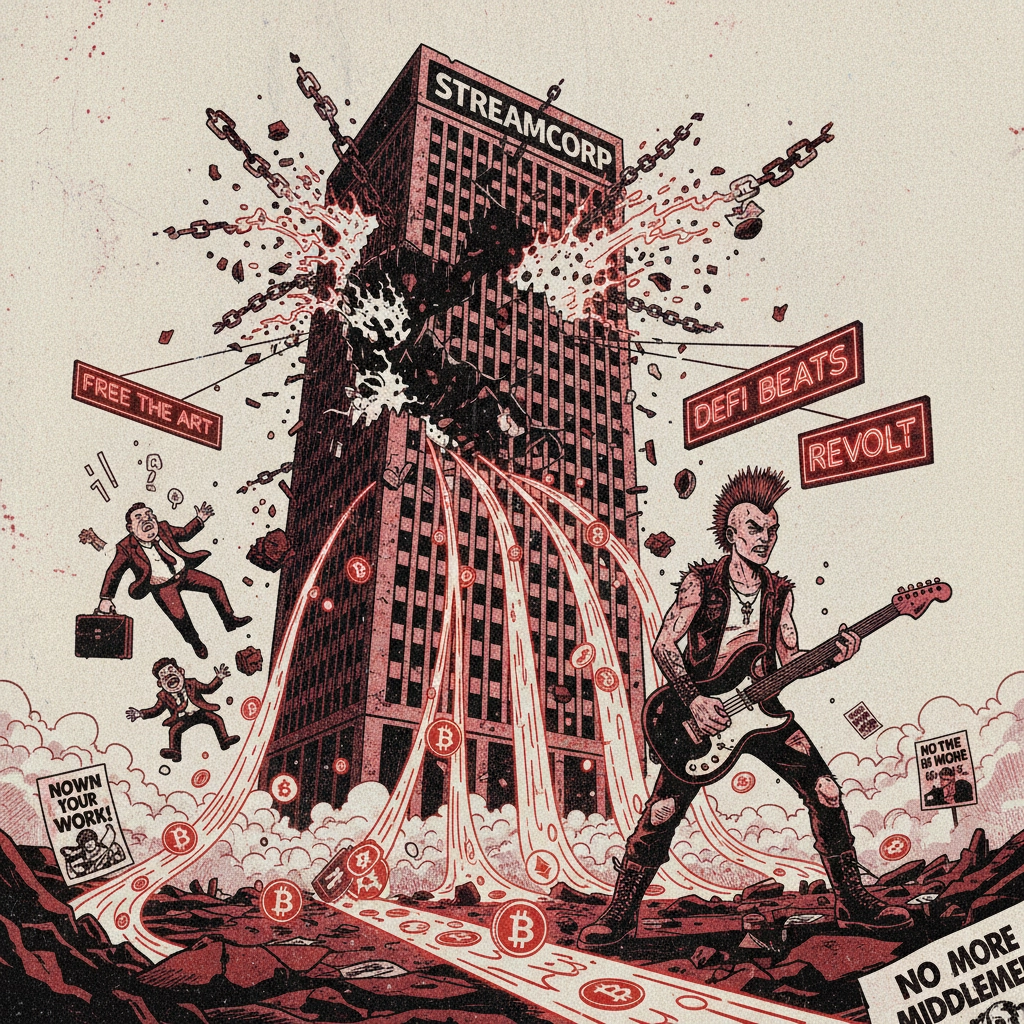
    These corporate leeches would swoop in, sign desperate musicians to slave contracts, then skim 85-90% of the profits while the actual creators got table scraps. Meanwhile, they’d lecture artists about being “grateful for the opportunity” while buying third yachts with money that should’ve gone to the people who actually made the music.

    image_1

    The math was simple: create artificial scarcity, control all distribution channels, then extort everyone who wanted to play the game. It was brilliant if you were a sociopathic executive. It was hell if you had actual talent.

    But here’s the thing about oppressive systems—eventually, technology comes along and burns them down.

    Smart Contracts: The Great Equalizer

    Smart contracts are like having an incorruptible robot lawyer that never sleeps, never takes bribes, and executes agreements exactly as written. When an artist uploads their track to a blockchain platform, they can program automatic royalty splits that bypass every single middleman who used to take their cut.

    No more waiting six months for a check that’s been “processed” through seventeen different departments. No more mysterious “administrative fees” that somehow eat half your earnings. No more executives deciding whether you deserve to get paid this quarter.

    The code doesn’t lie, doesn’t steal, and doesn’t give a damn about industry politics.

    image_2

    Take decentralized royalty systems—when someone streams your song, smart contracts instantly calculate splits and distribute payments to everyone involved. Band members, producers, sound engineers, even your grandmother who helped with backing vocals can get their share within seconds, not months.

    It’s like watching the Death Star explode, except the Death Star was built out of corporate greed and the rebels are armed with mathematics.

    Artists Are Breaking Their Chains

    Here’s where it gets beautiful: over 90% of music on Spotify now comes from independent artists. That’s not just a statistic—that’s a revolution in progress.

    Musicians are realizing they don’t need permission from suit-wearing parasites to build careers. Platforms like Audius let artists upload directly to fans. NFT marketplaces enable musicians to sell exclusive content and experiences. Blockchain investment platforms let fans become stakeholders in their favorite artists’ success.

    The gatekeepers are becoming irrelevant, and they know it.

    Imogen Heap figured this out early with her Mycelia project—using blockchain to create transparent, direct relationships between artists and fans. No label executives needed. No corporate middlemen taking their pound of flesh. Just artists creating, fans supporting, and everyone getting a fair deal.

    It’s the free market actually working the way it’s supposed to, without corporate cronies rigging the game.

    The Numbers Don’t Lie

    While record labels survived the first internet disruption by partnering with streaming services, they’ve created their own destruction. Streaming platforms pay artists almost nothing—we’re talking fractions of pennies per stream—while major labels report record profits.

    This isn’t sustainability; it’s exploitation with extra steps.

    image_3

    The disconnect is staggering. Artists create all the value, but executives who contribute nothing beyond bureaucracy and gate-keeping take home the biggest checks. It’s like having coal miners work twelve-hour shifts while the mine owner’s son gets rich for showing up to ribbon-cutting ceremonies.

    Smart contracts eliminate this parasitic layer entirely. When fans pay for music, artists get paid immediately. No executive bonuses. No corporate “overhead.” No mysterious accounting that somehow makes profitable albums appear to lose money.

    Direct Democracy in Music

    Blockchain platforms are creating something the old system never allowed: direct democracy between artists and fans. Musicians can fund projects through tokenization, sell exclusive experiences as NFTs, and build subscriber communities that pay monthly for early access to new tracks.

    It’s crowdfunding meets capitalism meets middle finger to corporate control.

    Fans become investors. Artists become entrepreneurs. Record executives become unemployed.

    The beauty is that it rewards actual talent and fan engagement instead of political connections and marketing budgets. If your music sucks, no amount of label backing will save you. If your music rocks, you can build a direct pipeline to the people who actually matter—your audience.

    image_4

    The Death Rattle

    Sure, major labels still have deep pockets and established relationships with radio stations and streaming services. But their advantages are eroding daily.

    Independent artists are out-innovating them, out-hustling them, and most importantly, out-earning them on a per-unit basis. When you cut out five layers of corporate fat, suddenly music becomes profitable at much smaller scales.

    Plus, younger fans don’t give a shit about traditional media gatekeepers. They discover music through TikTok, YouTube, Discord, and peer-to-peer recommendations. The old promotional machinery that labels controlled is becoming as relevant as telegraph operators.

    What This Really Means

    This transformation isn’t just about technology—it’s about freedom. Freedom from corporate gatekeepers who decide what art gets made. Freedom from exploitation contracts that trap artists in debt slavery. Freedom from artificial scarcity that keeps great music buried while promoting manufactured pop garbage.

    Smart contracts and blockchain platforms are returning power to its rightful owners: the creators and their audiences. It’s the most libertarian development in entertainment since the printing press broke the Church’s monopoly on books.

    Record labels aren’t dead yet, but they’re terminal. And when they finally flatline, we’ll all be better off. The future belongs to artists who create directly for fans who choose freely.

    That’s not just disruption—that’s justice.

    Want to dive deeper into how blockchain is revolutionizing artist earnings? Check out our breakdown on decentralized royalties and discover the technology that’s putting power back in artists’ hands.

    Spun Web Technology SMART SEO

    Spun Web Technology SMART SEO

  • One Epic Month in Thailand 🇹🇭 | Elephants, Temples & Lifelong Friends – July/Aug 2025

    One Epic Month in Thailand 🇹🇭 | Elephants, Temples & Lifelong Friends – July/Aug 2025

    Disruptarian featured image for One Epic Month in Thailand 🇹🇭 | Elephants, Temples & Lifelong Friends – July/Aug 2025

    Verified at: 2026-06-21T11:34:44

    One Epic Month in Thailand 🇹🇭 | Elephants, Temples & Lifelong Friends – July/Aug 2025 is the kind of subject that fits the Disruptarian lane because it sits where independent media, culture, music, and political commentary collide.

    The source description frames it this way: A Rumble-focused Disruptarian version of One Epic Month in Thailand 🇹🇭 | Elephants, Temples & Lifelong Friends – July/Aug 2025. Ryan Thompson frames the topic through travel journal and street-level documentary footage, with a direct independent-media voice and no corporate filter. Original YouTube title: One Epic Month in Thailand 🇹🇭 | Elephants, Temples & Lifelong Friends – July/Aug 2025. Original source video: https://www.youtube.com/watch?v=wgSVp63RYmY Disruptarian: https://www.disruptarian.com

    The useful question is not only what happened, but why the story matters to people who distrust scripted narratives, recycled outrage, and corporate-approved commentary.

    A Disruptarian reading starts with individual agency. The listener is not asked to accept a packaged conclusion. The point is to pull the claim apart, compare incentives, and look for the pressure points that legacy media often skips.

    That approach matters for libertarian radio commentary because the audience is usually looking for more than a headline. They want context, motive, contradiction, and a practical sense of how public stories become private consequences.

    The cultural layer is just as important. Disruptarian music and reggae punk energy are not decorations around the message. They give the work its rhythm: skeptical, confrontational, and rooted in the idea that speech should stay alive even when institutions prefer silence.

    For search readers arriving cold, the primary source is included below either as an embed or as a direct source link. Start there if you want the full tone, timing, and argument. The written analysis expands the title and description into a searchable article that can stand on its own.

    The strongest SEO value here is clarity. The article keeps the title language visible, uses descriptive headings, and connects the topic to Disruptarian Radio, independent media, libertarian commentary, political culture, and original music without stuffing the page with empty repetition.

    The larger takeaway is simple: independent commentary survives by documenting what was said, preserving the source, and adding a point of view that does not depend on permission from gatekeepers.

    That is why this post exists as part of the static Disruptarian archive. The video remains embedded, the title and description remain traceable, and the surrounding article gives search engines and readers enough context to understand why the episode belongs in the broader Disruptarian catalog.

    The title itself carries the first keyword signal, but a durable post needs more than a copied headline. It needs a clear H1, a concise meta description, a featured image with descriptive alt text, and enough editorial framing for readers to know why the video is part of this archive.

    From an independent media perspective, the value is in keeping the primary source visible. Embedding the video prevents the article from becoming detached commentary. Readers can compare the written interpretation against the actual recording and decide whether the argument holds up.

    The libertarian angle is not automatic partisanship. It is a suspicion of concentrated power, public manipulation, and narratives that ask citizens to outsource judgment. That suspicion applies to government, platforms, corporations, activist institutions, and media brands alike.

    Disruptarian Radio also treats culture as evidence. Music, political language, online mobs, censorship fights, moral panics, and personal stories all reveal where pressure is being applied. That is why a radio episode can be more than entertainment; it can become a record of a moment.

    For listeners who follow DJ Disruptarian, the same pattern shows up in the music catalog: reggae rhythm, punk edge, spiritual critique, and anti-authoritarian instinct. The written post keeps that identity attached to the video instead of letting it disappear into a platform feed.

    Good SEO on a page like this should help people find the conversation without flattening the voice. The article uses natural phrases such as Disruptarian Radio, independent media, libertarian podcast, political commentary, original music, and disruptive conversations only where they make sense.

    The featured image should follow the Disruptarian editorial-collage style: torn paper, smoke, halftone grit, dirty cream paper, black and oxblood pressure, muted gold accents, and symbolic props tied to the subject rather than generic filler. Its alt text names the subject so search engines and screen readers get useful context.

    The article also keeps a stable URL under the static blog. That matters because feeds move, platforms change embeds, and social links decay. A static post gives the episode a second home that can be indexed, backed up, linked, and reviewed later.

    The final point is documentation. When a channel publishes a new video, the title and description are often the only structured metadata available. Turning that metadata into a post creates a stronger archive without pretending to replace the original recording.

    This is the practical Disruptarian method: preserve the video, state the source, add commentary, keep the searchable terms honest, and let the reader move between the embedded media and the written analysis without friction.

    This additional context keeps the post useful for readers who arrive from search rather than from the original channel. It explains the source, preserves the embed, and connects the subject back to the larger Disruptarian archive.

    This additional context keeps the post useful for readers who arrive from search rather than from the original channel. It explains the source, preserves the embed, and connects the subject back to the larger Disruptarian archive.

    This additional context keeps the post useful for readers who arrive from search rather than from the original channel. It explains the source, preserves the embed, and connects the subject back to the larger Disruptarian archive.


    The shortlink was copied to your clipboard

    X
    f
    r

    Related Reading

    Similar posts


    Disruptarian Blog

    2026-06-21

    Disruptarian Blog

    Disruptarian commentary on Chiang Mai Thailand 2025 Intro with embedded source video, independent media context, and libertarian radio analysis.

  • Men Are Dying in Silence: The Suicide Epidemic No One Wants to Talk About


    You’re not supposed to talk about it.

    You’re not supposed to say that men are suffering. That men are killing themselves. That the world—especially the Western world—has become a place where being a man is more dangerous emotionally than ever before.

    But I’m going to say it. Loud and clear. Because men are dying in silence, and silence is killing them.

    The Numbers Don’t Lie

    Let’s start with the hard truth. In nearly every developed country, men are 3 to 5 times more likely to die by suicide than women. In the United States, the suicide rate for men is nearly four times that of women. In the UK, three-quarters of all suicides are men. In Australia, men account for over 75% of all suicide deaths.

    Women attempt suicide more often—but men are the ones dying.

    This isn’t about minimizing women’s struggles. It’s about refusing to ignore a deadly trend because it’s politically inconvenient. If these numbers were reversed, the media would call it a gender genocide. But because it’s men, they shrug and blame “toxic masculinity.”

    Spoiler alert: That narrative is a lie.


    Masculinity Is Not the Problem

    We’ve built a culture where masculinity is treated like a disease. Boys are told to sit down, shut up, be less aggressive, stop competing, and express their feelings—but not too much, or they’re weak.

    They grow up in schools where male teachers are nearly extinct. They’re medicated more, punished harder, and fall behind in literacy and college admission rates. And when they try to talk about it?

    They’re told to “man up.”

    We’ve created a system that tells men their natural traits are problematic. Then we wonder why they don’t open up.

    Masculinity isn’t toxic. A culture that hates men is.


    Emotional Stoicism vs. Cultural Censorship

    Let’s talk about stoicism. Yes, men are less likely to talk about their feelings. But that’s not the full story. Many want to talk. They just don’t feel safe doing it.

    Why?

    Because when men express emotional vulnerability, they’re often mocked, dismissed, or told to “go to therapy” as a punchline.

    Even in relationships, many men report that opening up emotionally makes their partners lose respect for them. Society punishes men for showing weakness—and then blames them for staying silent.

    This isn’t emotional repression. It’s emotional survival.


    The Provider Burden

    Now let’s talk about another silent killer: pressure.

    Even in 2025, most men are still expected to be the primary breadwinners. They carry the weight of keeping a roof over their family’s heads, food on the table, and the car running.

    If the family falls apart, guess who’s blamed?
    If the bills aren’t paid, guess who’s a failure?
    If the marriage crumbles, guess who gets raked over the coals?

    Men live with a pressure cooker on their chest every day. They can’t afford to fall apart—so they bottle it up until it explodes. And often, that explosion is suicide.


    Social Isolation and the Vanishing Brotherhood

    In 1990, nearly half of men said they had at least one close friend they could confide in. Today, that number has dropped to around one in five.

    Men are lonely. They’re isolated. They’re adrift.

    Masculine friendships are being replaced by online echo chambers and shallow entertainment. The old-school brotherhoods—like veteran halls, bowling leagues, garage bands, even church men’s groups—are gone. And nothing has replaced them.

    When a man hits rock bottom, who’s going to notice?


    Feminist Framing: Men’s Pain, Women Most Affected

    Here’s the most disgusting twist: even when men’s struggles are acknowledged, it’s often reframed as a burden on women.

    We hear terms like “mankeeping,” where women complain about being their husband’s emotional support. As if caring for your spouse is unpaid labor.

    Let me be crystal clear: if emotional intimacy in marriage is slavery to you, you should never get married.

    These narratives reinforce the idea that male suffering is an inconvenience, not a crisis. And that’s a dangerous lie.


    When Men Break, They Break Quietly

    The scariest part of male suicide isn’t just the numbers. It’s how silently it happens.

    Men don’t usually announce their pain. They don’t post cry-for-help tweets or drop dramatic hints. When a man decides he’s done, it’s often calculated. Quick. Final.

    They pick up a gun. Or a rope. Or step in front of a train. And that’s it.

    There’s no warning shot. Just a funeral.


    How Do We Fight Back?

    We don’t need more hashtags or awareness campaigns. We need a cultural revolution. One that starts with truth, not slogans.

    1. Stop demonizing masculinity.
    Men are not defective women. Their traits—strength, stoicism, competitiveness—are not toxic. They’re valuable. Let boys be boys without apology.

    2. Build male communities.
    We need real spaces for men. Brotherhood. Mentorship. Purpose. Men need to belong to something bigger than themselves. You can’t just medicate isolation.

    3. Acknowledge the provider burden.
    Stop pretending men have it easy. Recognize the emotional weight that comes with responsibility. Respect it.

    4. Encourage real emotional expression.
    Not performative crying. Real, honest talk. Let men open up without mocking them or turning them into memes.

    5. Hold women accountable, too.
    Marriage is a two-way street. If a woman resents supporting her husband emotionally, she’s part of the problem.


    The Punk Rock Libertarian Take

    This suicide epidemic? It’s what happens when authoritarian culture meets soft tyranny.

    We’ve created a system where men are disposable. Not because of some accidental oversight—but because the state and the media complex benefit from weak, demoralized men.

    A strong, self-sufficient man doesn’t depend on the system. He doesn’t bow to fear. He doesn’t outsource his purpose to politicians or pills. He leads. He builds. He fights.

    That kind of man? He’s dangerous to the machine.

    So they smear him. They mock him. They ignore him when he breaks.

    But here’s the truth:

    Men are not victims. They are warriors.
    But even warriors bleed. And the real revolution? Is giving them space to heal—without shame.


    Final Thoughts

    If you’re reading this and you’re a man struggling in silence, let me say this plainly:

    You’re not weak. You’re not broken. You’re not alone.

    You’re a human being. You matter. And the fight isn’t over.

    And if you’re someone who claims to care about “mental health” but ignores this issue because it’s not politically convenient—shame on you.

    Men are dying. And it’s time to break the silence before it breaks more of us.

    1. World Health Organization (WHO) – Suicide Worldwide in 2019 Report
      This global report details suicide trends and reveals that men consistently have higher suicide rates than women across most regions.
      🔗 https://www.who.int/publications/i/item/9789240026643

    1. American Foundation for Suicide Prevention – Suicide Statistics
      Comprehensive statistics from the U.S. showing that nearly 80% of suicide deaths are men, with detailed breakdowns by age and method.
      🔗 https://afsp.org/suicide-statistics

    1. BBC Future – Why More Men Kill Themselves Than Women
      The original article that explores the gender paradox in suicide and the social, emotional, and cultural dynamics involved.
      🔗 https://www.bbc.com/future/article/20190313-why-more-men-kill-themselves-than-women

    1. Vox – Are Men Okay? Our Modern Masculinity Problem, Explained
      A deep dive into the struggles modern men face in relationships, education, and emotional expression—featuring insights from Scott Galloway.
      🔗 https://www.vox.com/the-gray-area/390781/masculinity-scott-galloway-young-men-struggling

    1. National Institute of Mental Health (NIMH) – Men and Mental Health
      A science-backed overview of how men experience, report, and are treated for mental illness—emphasizing underdiagnosis and stigma.
      🔗 https://www.nimh.nih.gov/health/topics/men-and-mental-health

    Spun Web Technology SMART SEO

    Spun Web Technology SMART SEO

  • Marriage Is Not Slavery: Why “Mankeeping” Is Just Feminist Narcissism in Disguise


    There was a time when marriage was considered a sacred bond—one forged in commitment, sacrifice, and yes, unequal but complementary roles. Today, we’re watching that understanding crumble in real time, thanks to the hysterical self-centeredness of fourth-wave feminism.

    Just when you think we’ve hit peak absurdity, the feminists come up with something even more ridiculous. The latest buzzword making the rounds in elite media circles? “Mankeeping.”

    No, it’s not a joke.

    According to The New York Times, “mankeeping” is the unpaid emotional labor women do in relationships. Think things like listening to your husband, encouraging him, and supporting him emotionally. You know—being a wife.

    Apparently, that’s now considered slavery.


    The Emotional Labor Hoax

    Let’s be clear: Feminists are not inventing anything new. They’re just rebranding their narcissism with trendy jargon.

    Matt Walsh recently broke this down perfectly in one of his video segments. In it, he mocked the idea that emotional support in marriage should come with a price tag. Under this twisted worldview, a woman listening to her husband talk about his day is unpaid labor. Should he leave $300 on the nightstand for the privilege of being vulnerable with his wife?

    Feminists have managed to do what the Soviets couldn’t: turn the nuclear family against itself from the inside out.


    A Symbiotic Relationship, Not a Scorecard

    Marriage was never meant to be a 50/50 spreadsheet. It’s give-and-take. Sometimes it’s 70/30. Sometimes 90/10. Real marriages are messy, imbalanced, and constantly in flux. That’s the beauty of it.

    Your wife might be the social glue that holds things together. She plans the parties, she remembers birthdays, she buys the Christmas gifts. Great. Meanwhile, your husband might carry 100% of the financial burden, stress, and pressure of keeping your family fed and sheltered.

    Is that equal? No.
    Is it fair? Absolutely.

    Equality is not sameness. That’s the great lie modern feminism sells.


    Feminism’s Bait-and-Switch

    What feminism offers women today is a trade. And it’s a bad one.

    • Trade meaning for independence.
    • Trade family for corporate ladder climbing.
    • Trade deep relationships for fleeting hook-ups.
    • Trade joy in sacrifice for bitterness in self-interest.

    Instead of being honored as the emotional rock of a family, women are being told they’re unpaid workers. Instead of taking pride in nurturing a home, they’re taught to resent it. Instead of seeing their husbands as partners, they’re told to view them as burdens.

    This ideology poisons everything it touches.


    When Feminism Becomes a Self-Fulfilling Curse

    The real kicker? These women adopt the “mankeeping” mindset, start resenting their husbands for needing them emotionally, pull back their affection, and then act surprised when their marriages fall apart.

    As Matt Walsh pointed out, emotional and physical intimacy go hand in hand. When women begin to see basic emotional support as exploitation, they inevitably withdraw affection. That’s not a marriage anymore—it’s a roommate agreement.

    And what happens next? The man becomes isolated, cold, distant. Sometimes he seeks validation elsewhere, even if it’s wrong to do so. But the collapse didn’t begin with the affair—it began when one spouse decided that caring was a chore.


    Marriage Is a Role, Not a Costume

    Too many modern women want the title of “wife” but not the responsibilities that come with it. They want the wedding but not the marriage. They want the Instagram photos but not the daily devotion. They say they’ve been “liberated,” but what they really are is lost.

    They don’t want to cook.
    They don’t want to clean.
    They don’t want to offer affection.
    They don’t want to raise children.
    They don’t want to listen.
    They don’t want to be inconvenienced.

    But they still want to be called a wife.

    Sorry. That’s not how it works.


    Men Bear Real, Crushing Burdens Too

    Let’s flip the script for a second.

    Do you know what 100% of married men carry that no feminist wants to talk about?

    The burden of provision.
    Men are the default breadwinners in most marriages—by choice or by expectation. They walk through every day with the weight of everything on their backs. Mortgage. Tuition. Groceries. Car repairs. Emergencies. College savings.

    And you don’t hear men crying that this is emotional labor.
    They just do it.

    Because that’s what men do when they love their families.

    So when a woman whines that planning dinner or asking her husband how his day was is “unpaid emotional work,” it’s insulting. Not just to her husband, but to the very concept of commitment.


    The Feminist Victim Complex

    Notice the pattern: no matter who is suffering, women are the victims.

    • Men are lonely? Women suffer because they have to listen.
    • Men are emotionally stunted? Women suffer because they have to help.
    • Men open up to their wives? Women suffer because it’s exhausting.

    According to this worldview, women are always the martyrs. And men? They’re just the problem.

    It’s exhausting. It’s childish. And it’s dangerous.


    You’re Not a Slave—You’re a Spouse

    The idea that marriage is slavery is not only foolish, it’s destructive. It rips apart families and replaces love with ledger sheets.

    Let’s be blunt: if a woman can’t stand the idea of offering love, support, and emotional connection to her husband, then she shouldn’t get married. Full stop.

    Marriage is not a socialist commune. It’s not a contractual 50/50 agreement. It’s a covenant. And covenants involve sacrifice.

    If you want a partner, you have to be one. If you want loyalty, offer it. If you want love, give it first.


    Final Thought

    Feminism today isn’t empowering women—it’s weaponizing them. It’s convincing them that love is labor, that sacrifice is slavery, and that commitment is control.

    But real marriages, the kind that last and bring joy and build strong children and stable societies, are built on something deeper than hourly rates and emotional balance sheets.

    They’re built on service.

    And if that word sounds offensive to you, then maybe you’re not ready for marriage.

    Because the truth is simple:
    A good wife isn’t oppressed.
    She’s honored.
    She’s vital.
    And she’s irreplaceable.

    And so is a good husband.

    Spun Web Technology SMART SEO

    Spun Web Technology SMART SEO

  • 70,000 Monks Break Vow of Silence to Nominate Donald Trump for Nobel Peace Prize — Here’s Why It Matters


    It sounds unbelievable. But it’s true. 70,000 Buddhist monks—known for vows of silence and detachment from politics—just broke that vow to support one man: Donald J. Trump. Their goal? To nominate him for the Nobel Peace Prize.

    This is the kind of story the mainstream media hopes you never hear. Because it’s not just a feel-good headline. It’s a total rebuke of the globalist establishment that’s run the world into the ground for decades.


    What Happened?

    In Cambodia, a nation scarred by past wars and foreign interference, 70,000 Buddhist monks stood together to back a surprising nomination. Their words were simple but powerful:

    “We are standing here today with hearts full of appreciation. Today, 70,000 Cambodian Buddhist monks are wholeheartedly supportive of our Cambodian Prime Minister Hunet to nominate you, Mr. President Trump, for the Nobel Peace Prize.”

    That’s not some publicity stunt. These monks broke their spiritual vow to recognize the man they believe is stopping wars and restoring peace around the world. And their reasoning? The historic peace deal brokered between Cambodia and Thailand—something most Western outlets ignored entirely.


    Peace Over Politics

    You might ask: Why would monks support Trump?

    Because they don’t care about left or right, red or blue. They care about results. And Trump delivered.

    While other presidents dropped bombs and destabilized nations under the banner of “democracy,” Trump did something radically different—he brokered peace deals. Real ones. Between real enemies.

    Cambodia and Thailand had been simmering on the edge of conflict for years. Under Trump’s quiet diplomacy and pressure campaigns, they agreed to terms. That’s not just a win for the region—that’s a major victory for humanity.


    Compare That to Biden

    While Trump was flying around the world, shaking hands, ending wars, and handing out peace plans, what was Joe Biden doing?

    He couldn’t even keep American cities peaceful, let alone bring calm to global hotspots. Under Biden, the world has slipped deeper into chaos: war in Ukraine, escalation in the Middle East, and skyrocketing global instability.

    And let’s be honest—if 70,000 monks nominated Biden for anything, it’d be the “Peace Through Confusion” award.


    Trump: The Only Adult in the Room

    Let’s go behind the scenes.

    Recently, Trump hosted a global summit, bringing leaders from Europe and Ukraine to the table. Cameras caught European heads of state sitting around Trump’s desk like obedient schoolchildren. Even French President Emmanuel Macron called him “Mr. President” with the tone of a student addressing his teacher.

    Why? Because they know Trump means business. He doesn’t play games. He brings maps, facts, and military muscle to the discussion. And when it’s time to talk to Putin? Trump doesn’t hesitate. He picks up the phone and starts making moves.

    Mainstream media threw a fit. CNN called it “disturbing.” But here’s the reality: You can’t end wars without talking to the people who start them. Obama did it. Hillary did it. Biden tried to. So why is it suddenly scandalous when Trump does the same?

    Because Trump gets results—and that terrifies them.


    The Art of the Peace Deal

    Susan Rice, a top Obama official, claimed Trump “doesn’t understand the art of the deal.” That’s rich coming from the crew that gave us Iran’s nuclear chaos and the rise of ISIS.

    Trump, on the other hand, did what they couldn’t:

    • Peace between Israel and Arab states.
    • Pressure on North Korea without war.
    • Strength and diplomacy with Russia.
    • And now, even 70,000 Buddhist monks see his role in bringing peace to Southeast Asia.

    They’re not political donors. They’re not lobbyists. They’re monks. And they just risked everything—including spiritual vows—to say: This man deserves the Nobel Peace Prize.


    Strength Through Faith

    Some say Trump changed after the recent assassination attempt in Butler. After surviving a bullet to the head, he’s made it clear—his mission is bigger than politics. He believes God spared him to finish the job: stop the killing, restore peace, and put America—and peace—first.

    He even joked:

    “I want to try and get to heaven if possible… If I can get to heaven, this [peace deal] will be one of the reasons.”

    That’s not a man doing this for the cameras. That’s a man thinking about eternity.


    The Establishment Is Terrified

    Think about it:

    • Monks in Asia are chanting Trump’s name.
    • Europeans are sitting quietly at his table.
    • The media is screaming.
    • And Democrats are losing their grip.

    Even liberal commentator Stephen A. Smith admitted it was Biden who let Ukraine descend into full-scale war. Under Trump? It never happened.

    And now Trump’s not just ending wars. He’s flipping the whole global order.


    What Happens Next?

    Talks are underway for a historic meeting between Putin and Zelensky. Trump is acting as the go-between. Cities like Budapest and Geneva are offering to host. A peace deal may be closer than anyone expected.

    And if it happens, the Nobel Committee will have no choice but to recognize what 70,000 monks already see:

    Donald Trump is the Peace President.


    Final Thoughts

    This isn’t about politics. It’s about peace.

    Trump isn’t perfect. But he’s strong. He’s focused. And he gets things done. That’s why the monks are standing up. That’s why Europe is sitting down. And that’s why the media is melting down.

    So here’s the question: Do you want peace? Or do you want more of the same chaos from the globalist elite?

    Because the choice is clear. And 70,000 monks already made theirs.

    White House Press Briefings

    Cambodian Daily – Statement from Buddhist Monks

    Peace Deal Coverage – Cambodia/Thailand

    CNN Comments on Trump-Putin Call

    Susan Rice on Trump Diplomacy

    Stephen A. Smith Remarks – Trump vs Biden

    Trump Interview – Post-Butler Shooting

    Spun Web Technology SMART SEO

    Spun Web Technology SMART SEO

  • The Mutilation of Children in the Name of “Trans-Therapy”

    By Ryan “Dickie” Thompson – Disruptarian.com


    Introduction: A Punk Rock Reality Check

    If you’ve been following the headlines, you’ve probably noticed a disturbing new trend—medical bureaucrats, activist doctors, and self-anointed “gender specialists” are championing what they call “gender-affirming care” for kids. Let’s be clear: this is not “affirmation.” It is not compassion. It is not medicine in the Hippocratic sense.

    It is mutilation.

    And if you strip away the sanitized buzzwords, the doublespeak, and the “equity & inclusion” slogans plastered over it, that’s all it is. Kids—confused, vulnerable, still developing—are being used as guinea pigs in a social experiment unprecedented in history.

    But don’t just take my word for it. Let’s lay out the receipts.

    reference to this Tennessee state House of Representatives meeting on HB01 in 2023.


    WPATH: The Self-Appointed Authority

    At the center of this whole circus sits WPATH—the World Professional Association for Transgender Health. WPATH is the body behind the Standards of Care (SOC), guidelines that have been treated as gospel by hospitals, schools, and woke legislators.

    WPATH’s intent is plain: they want to normalize and expand access to medical transition, including for minors. Their bias? Advocacy masquerading as science. And while WPATH is highly influential—many professional medical organizations cite their work—they are not a neutral authority. Their credibility is often challenged because their guidelines lean more activist than evidence-based.

    The recent HHS “Treatment for Pediatric Gender Dysphoria” report (May 2025) laid this bare. It said the “gold standard” of WPATH guidelines are built on weak evidence, low-quality studies, and ideological assumptions. In other words, WPATH is leading the parade while blindfolded, and kids are paying the price.


    What the HHS Report Actually Said

    The Trump-ordered HHS report (May 1, 2025) is a bombshell, even if legacy media tried to bury it under outrage pieces. It concluded:

    1. Weak Evidence for Benefits: Studies on puberty blockers, cross-sex hormones, and surgeries for kids are low-quality, short-term, and often contradictory.
    2. Evidence of Harm Exists: While long-term data is sparse, known risks include sterility, sexual dysfunction, bone loss, and irreversible physical changes.
    3. Medical Transition = Experimental: Treating minors with blockers and surgeries is “experimental” and not backed by credible science.
    4. Psychotherapy Preferred: The report pushed “exploratory therapy” (talk therapy) as a safer path—though even here, evidence is thin.

    That’s not me editorializing. That’s the federal government’s own Office of Population Affairs saying: this is not proven medicine, it’s a human experiment.


    Suicide: The Emotional Blackmail Card

    The biggest club activists swing in this debate is suicide. The line goes: “If you don’t affirm and transition these kids, they’ll kill themselves.”

    Matt Walsh, love him or hate him, dismantled this claim in testimony before a state legislature. He pointed out:

    • No long-term studies show transition prevents suicide.
    • WPATH’s own commissioned study couldn’t prove a link.
    • If millions of “hidden trans kids” were truly killing themselves throughout history, we’d see an unbroken epidemic of child suicide—yet the surge in youth suicides is new, and it tracks alongside the rise of “affirmation,” not its absence.

    This doesn’t trivialize suicide. It recognizes the truth: weaponizing suicide statistics is manipulative and false. If anything, pushing kids into transition may increase suicidality down the line.


    Regret and Detransition: Stories They Don’t Want You to Hear

    The activist lobby insists regret is “rare.” And sure, systematic reviews peg regret rates at around 1% to 3%. But let’s be blunt: even one child irreversibly sterilized, mutilated, or left suicidal is too many.

    And the reality is much grimmer when you start listening to the people themselves:

    • Chloe Cole: Put on puberty blockers and testosterone at 12, double mastectomy at 15. By 17, she regretted it all. She now speaks openly about the betrayal she feels from doctors and adults who told her this was “affirmation.”
    • Ritchie Herron: British man who underwent genital surgery. Now suffers chronic pain, incontinence, and deep regret. His words: “I live neutered.”
    • Eden Knight: A Saudi trans woman forced to detransition under family pressure. Her story ends in suicide—a brutal reminder of what coercion and lack of genuine choice looks like.
    • Cristina Hineman: Detransitioner suing Planned Parenthood, claiming she was rushed into hormones and surgery, leaving her with PTSD.
    • Clementine Breen: Transitioned as a minor under Dr. Johanna Olson-Kennedy’s care. Puberty blockers, testosterone, mastectomy—all before 13. Now she’s suing for irreversible harm.
    • Walt Heyer: Transitioned, lived as a woman for 8 years, then detransitioned. He’s spent decades counseling others with regret.

    These aren’t “rare unicorns.” They are canaries in the coal mine.


    The Data Nobody Likes to Talk About

    Let’s talk numbers for a second.

    • Jorgensen (2023): 22% of transitioners reported regret, 11% ambivalent, 67% positive.
    • MacKinnon (2022, JAMA): Again, 22% regret, 11% ambivalence.
    • AP Review (2023): Across 27 studies of 8,000 people, about 1% regret—BUT many studies had short follow-up windows (2–5 years), hardly long enough for permanent effects like infertility or loss of sexual function to sink in.

    Here’s the kicker: regret may not even show up for a decade or more. Which means these “low regret” numbers may just be delayed explosions waiting to go off.


    The “Mutilation” Question

    Some recoil at the word “mutilation.” Let me justify it.

    When a 12-year-old is chemically sterilized with puberty blockers, that’s not medicine—it’s sterilization.
    When a 15-year-old girl’s healthy breasts are cut off, that’s not therapy—it’s mutilation.
    When testosterone deepens a girl’s voice and grows her facial hair forever, that’s not affirmation—it’s irreversible harm.

    If we were talking about any other context—say, a religious sect cutting body parts off children—we’d call it abuse, plain and simple. But slap a rainbow flag on it, call it “gender-affirming,” and suddenly it’s celebrated as progressive.


    Who’s Driving This?

    1. WPATH & Advocacy Doctors – Setting activist guidelines.
    2. Hospitals & Universities – Like Vanderbilt, openly marketing puberty blockers and mastectomies for minors until public backlash forced “pauses.”
    3. Big Pharma – Every puberty blocker, every hormone prescription is a lifelong customer. That’s a profit stream, not a cure.
    4. Political Actors – Using trans kids as pawns in a culture war, cynically painting any resistance as “hate.”

    This isn’t compassion. It’s an industry.


    What True Compassion Looks Like

    Let’s flip the script. What would real compassion look like?

    • Time, not rush: Allow kids to grow, develop, and explore without carving permanent changes into their bodies.
    • Psychological support: Help kids through mental health challenges, trauma, and identity confusion without pushing drugs and scalpels.
    • Accountability: Hold doctors, therapists, and schools accountable when they rush minors into life-altering decisions.
    • Truth-telling: Stop pretending puberty blockers are “reversible.” Stop pretending mastectomies are anything but permanent amputations.

    My Own Story: No Blame, Just Accountability

    I don’t write this as an outsider to family trauma. I grew up in a violent home. My brother took his own life under the weight of abuse. I was beaten. I was told I wasn’t enough.

    And yet, even at 19, when I wrote my autobiography (link here ), I made a decision: no blame. I owned my failures, my successes. I gave my parents compassion, even as I held myself accountable.

    That’s the path I want for my daughter, for your kids, for every kid confused in this upside-down world: responsibility, not blame. Growth, not victimhood.

    But what today’s “gender-affirming” industry is selling isn’t accountability. It’s the easy road: blame biology, blame society, blame mom and dad—then cut, drug, and mutilate. That is not a solution. That is surrender.


    Conclusion: Punk Rock Parenting

    Here’s the truth, raw and uncut: kids are not political props. They’re not lab rats. And they sure as hell aren’t canvas for an activist surgeon’s ideology.

    The mutilation of children under the guise of “trans-therapy” is the scandal of our age. Years from now, society will look back in horror, asking how we ever let this happen.

    I don’t care if it makes me unpopular with elites or activists—I will stand on this hill: children deserve protection, not mutilation.

    Let’s give them time, love, guidance, and yes—boundaries. Let’s reject the lie that the only path to peace is through a scalpel. Let’s stop the experiment before another generation is scarred for life.

    Because if we don’t, the regret stories won’t be “rare.” They’ll be everywhere. And the blood will be on our hands.

    —Ryan “Dickie” Thompson
    Disruptarian.com – The Punk Rock Libertarian Voice

    Sources and References

    I tried to be balanced, even giving opposing points of view and references in this post.
    The ultimate point is, that this transing kids thing is a very new phenomenon and we can not rely on any studies, because there is no long term study to reference. But what we do have, does not show proof that gender affirming care has any positive effect what-so-ever.

    Spun Web Technology SMART SEO

    Spun Web Technology SMART SEO