Browse merch

Author: Ryan “Dickie” Thompson

  • Truth Hurts, but It’s Worth Fighting For: Why I Stand Against Gender Ideology and Still Defend Women’s Rights
    By Ryan Thompson – The Punk Rock Libertarian
    Disruptarian.com


    In a time when reality has become optional, standing by biological truth has somehow become a revolutionary act. If you’re looking for comfort, you won’t find it here. But if you want truth—raw, unfiltered, and backed by both logic and lived experience—keep reading.

    We are living through a cultural coup where language is weaponized, facts are denied, and those who dare to speak up are vilified. What was once considered obvious—that women are adult human females—is now considered hate speech in some corners of the internet and the institutional left. But thankfully, some people still have the spine to say no more.

    Take billionaires like Elon Musk and J.K. Rowling—people with everything to lose. These aren’t anonymous trolls hiding behind keyboards; they’re global icons standing in the firing line of cancel culture to say the same thing I’ve been saying for years: women’s rights are not up for negotiation. They’ve stood firm while mobs smear them, activists deface property with swastikas on Teslas, and extremists paint Nazi symbols on their own bodies to protest basic biology. You can’t make this lunacy up.

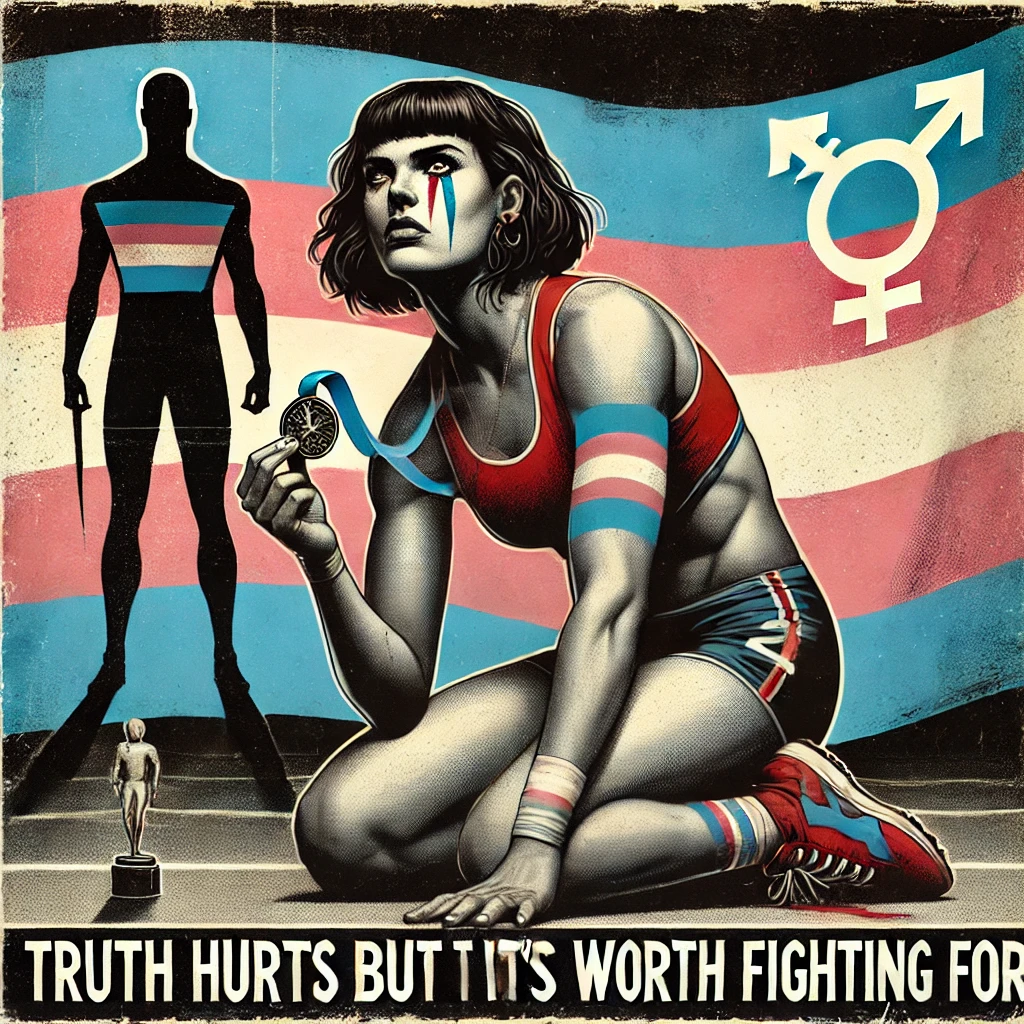
    But even more inspiring to me than Musk or Rowling are the female athletes who’ve risked everything—careers, scholarships, reputations—to protest what can only be described as trans lunacy. Women like Riley Gaines and Stephanie Turner, who just wanted a fair chance to compete, now find themselves targeted by a vicious outrage machine that demands total submission to its ideology.

    They didn’t cave. They didn’t conform. They took a knee—literally and figuratively—for truth. And for that, they are heroes.


    My Own Personal Costs for Speaking the Truth

    I’ve lost good friends over this issue. That’s the cost of staying grounded in reality while others get high on ideology. What’s more painful is how my own kids have been weaponized against me—pawns in a culture war they never asked to be part of.

    My ex-wife is now married to a “trans man.” Is that a transsexual or a transvestite? I’m honestly not sure anymore. The definitions shift like sand under a tide of political correctness. What I do know is this: just because someone identifies a certain way doesn’t mean I’m obligated to pretend biology doesn’t exist. And it certainly doesn’t mean I stop fighting for my daughters’ right to safe, female-only spaces, or my son’s right to know the difference between male and female.

    I’ve always supported gay rights. That’s a matter of record—20+ years of blog posts, videos, and social media receipts. I protested when California tried to end gay marriage back in 2008. That history is documented here. But supporting gay rights doesn’t require me to abandon the truth.

    You can stand with the gay community and defend women’s spaces. These aren’t contradictory positions unless you’re living in a world where basic definitions get rewritten by Twitter mobs and DEI consultants.


    The Math Doesn’t Lie

    Dr. Jordan Peterson recently weighed in on this madness . He recounted how a Disney executive once proudly claimed she had two kids—one trans, one pansexual. Statistically, Peterson broke it down: the odds of having one trans kid are around 1 in 3,000, and pansexuality is even rarer. The combined probability? Roughly 1 in 9 million.

    Now, compare that with the odds of being a narcissist virtue-signaling your children’s identities to win social points: significantly higher. As Peterson concluded, maybe these aren’t organic expressions of identity. Maybe this is the result of parental projection and cultural grooming, not some innate biological truth.

    Peterson’s words hit home. According to the latest rebranding of my own family dynamic, 4 out of 5 of my kids are now some variation of this new trend. That’s statistically impossible unless we’ve created a cultural petri dish where identity is molded by ideology, not nature.


    This Isn’t Hate. It’s Love for Truth.

    To my children, and to everyone who questions my motives: I’m not doing this because I’m hateful. I’m doing this because I love you—and I refuse to lie to you. Saint Augustine said it best:

    “Right is right even if no one is doing it; wrong is wrong even if everyone is doing it.”

    It’s easier to go along. It’s safer to stay quiet. But truth isn’t always easy or safe. Sometimes it costs you everything. And if that’s the price I pay for defending women’s sports, prison safety, and the integrity of language, then so be it.


    Real-World Consequences

    This isn’t just about sports. It’s about what happens when you let ideology rewrite reality:

    • Biological males housed in women’s prisons, resulting in documented cases of rape and abuse.
    • 900 medals won by trans-identified male athletes in women’s competitions, as confirmed by a UN study.
    • Girls losing scholarships, spots on teams, and their dignity—while being told they’re bigots for speaking up.

    These aren’t hypotheticals. These are real people, real lives, and real consequences. And yet, the woke industrial complex keeps telling us to sit down and shut up.

    No thanks.


    Final Word: The Revolution Will Be Based in Reality

    I’m not giving up on my kids. I’m not giving up on women. And I’m definitely not giving up on truth—no matter how uncomfortable it makes the world around me.

    We didn’t ask for this fight. But now that it’s here, we’ve got two choices: conform or confront. I choose to confront. Because I’d rather lose everything standing for reality than gain the world by living a lie.

    This is Ryan Thompson, the Punk Rock Libertarian. Standing against ideological tyranny. Standing for biology. And standing with the women, girls, and truth-tellers who refuse to be erased.


    References:

    Spun Web Technology SMART SEO

    Spun Web Technology SMART SEO

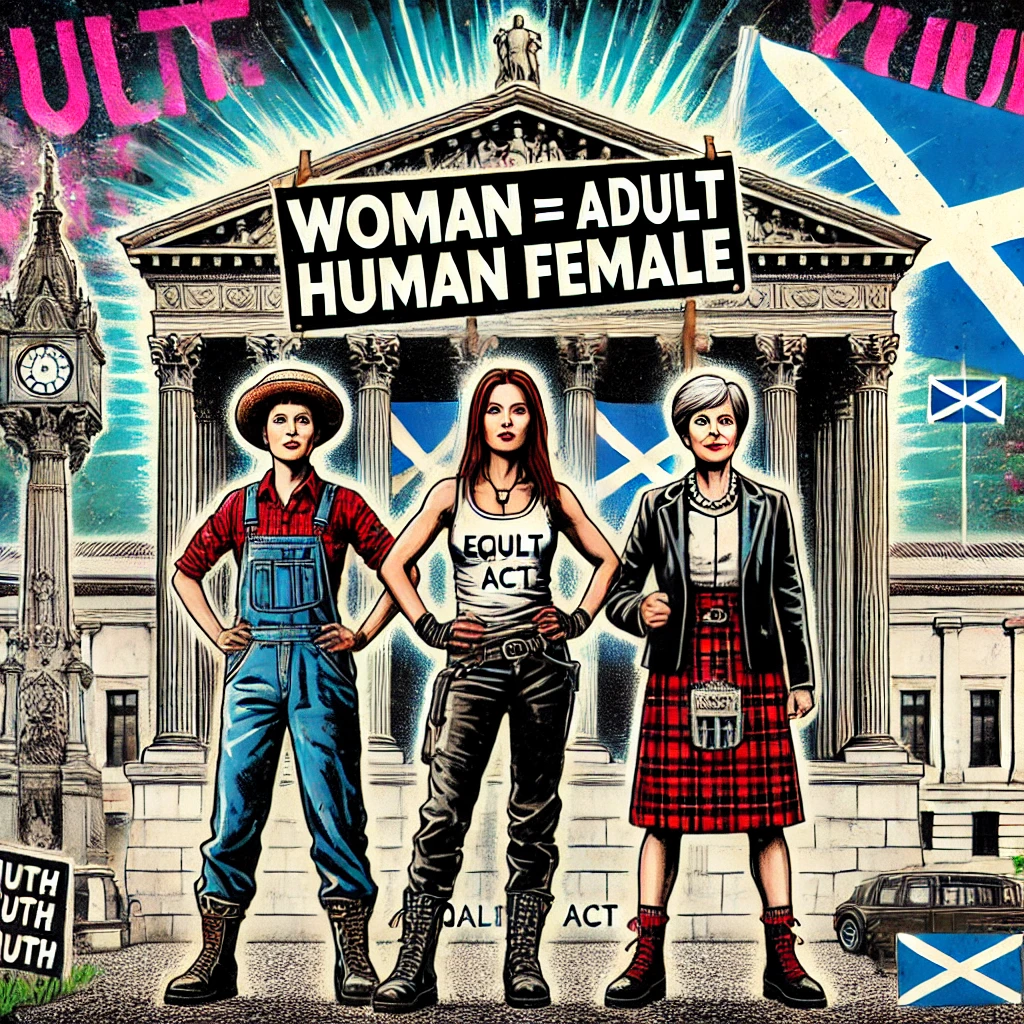
  • Wizards, Warriors, and Women’s Rights: How Three Scottish Mums Took Down Gender Ideology in Court

    By Ryan Thompson, “The Punk Rock Libertarian”
    Disruptarian.com


    You don’t need to be a wizard to fight the dark arts of state-sponsored insanity—you just need guts, grit, and a spine made of iron. And that’s exactly what three ordinary Scottish women brought to the table when they took on the Scottish government and won a Supreme Court case that has shaken the foundations of the gender ideology machine.

    This ruling wasn’t just a legal technicality. It was a landmark affirmation that words still mean things, and that the term “woman” in UK equality law refers to adult biological females—not a feeling, not an identity, not a man in a dress waving a certificate.

    And here’s the best part: this victory wasn’t orchestrated by politicians, billionaires, or think tanks. It was won by three battle-hardened women who met on Mumsnet, said “enough,” and organized themselves into a grassroots resistance with a very punk rock motto: biology is not bigotry.

    Let’s name names. These women are Trina Budge, Susan Smith, and Marion Calder—co-founders of For Women Scotland, a group that has done more for women’s rights in the UK than the modern feminist movement has managed in decades. And now even J.K. Rowling, never one to back down from a culture war, is praising them as “extraordinary, tenacious Scottish women” who “protected the rights of women and girls across the UK.”

    Here’s what happened. And why it matters.


    When Reality Fights Back

    In 2018, the Scottish government proposed radical reforms to the Gender Recognition Act. Their plan? Allow anyone to legally change their gender without a medical diagnosis. Just self-declare your new identity and presto—you’re a woman now. No surgery, no hormone treatment, just vibes and a bureaucratic blessing.

    Trina, Susan, and Marion weren’t having it.

    They watched as publicly funded lobby groups like Stonewall began strong-arming government institutions, rewriting guidance, and promoting policies that opened up every female-only space—from prisons to rape crisis centers—to any male who claimed to be a woman. This wasn’t inclusion. It was erasure.

    And when these women raised concerns? They were slandered as bigots, shouted down, and targeted by activists. But they refused to back down.

    They did what any good disruptarian would do: they organized, they educated, and they took their fight to court.


    The Supreme Court Speaks: Woman Means Woman

    Fast forward to 2024. After years of tireless work, legal challenges, and public awareness campaigns, For Women Scotland brought a crucial case to the UK Supreme Court. The question at the heart of the legal battle: Does the Equality Act’s reference to “sex” mean biological sex, or can it be interpreted to include those with a Gender Recognition Certificate?

    The Supreme Court answered clearly: “Sex” means biological sex. Not gender identity. Not self-perception. Not a legal shortcut. Just the immutable, biological reality you were born with.

    This ruling changes everything. It means that single-sex spaces must be protected for actual females. It opens the door for rolling back ideological policies in schools, hospitals, sports, prisons, and beyond. It reaffirms that women’s rights aren’t up for redefinition to suit activist agendas.

    It’s a turning point. And it was made possible not by the political class—but by moms with laptops and guts of steel.


    The Elite vs. The Everyday Woman

    Here’s what the media won’t tell you: this battle isn’t about trans rights. It’s about elite institutions imposing a belief system that denies reality, overrules public consensus, and punishes dissent. And it’s working-class women—nurses, mothers, farmers, teachers—who are getting steamrolled in the name of “progress.”

    While career politicians dance around the issue, terrified of offending Twitter mobs, the majority of regular people know the truth: sex matters. Biology matters. Safety, fairness, and privacy matter.

    Just ask any girl who lost a gold medal to a male runner. Ask the female prisoners forced to share a cell with violent men. Ask the sexual assault survivor retraumatized when a biological male walked into her support group.

    What Trina, Susan, and Marion have done is give voice to these women. They’ve said the quiet part out loud—that gender ideology has consequences, and someone has to fight back.


    J.K. Rowling’s Solidarity—And the Cultural Shift

    Even J.K. Rowling, once a darling of the liberal establishment, has become a lightning rod for daring to say “women are real.” But instead of retreating, she doubled down—praising For Women Scotland for doing what too many institutions are too cowardly to do: defend the legal rights of females.

    Rowling’s support matters because it signals a broader cultural shift. People are waking up. They’re realizing that defending women’s rights is not hate speech, and that questioning gender ideology isn’t “transphobia”—it’s truth-telling.

    In her own words, Rowling said, “It took three extraordinary, tenacious Scottish women with an army behind them.” That army is growing. And it’s not just in Scotland. Across the Western world, people are waking up to the authoritarian drift behind identity politics—and saying no more.


    The Punk Rock Spirit of Resistance

    Let’s be real. This win didn’t happen because the system suddenly got its act together. It happened because a few individuals refused to comply, refused to be silenced, and refused to surrender reality to postmodern nonsense.

    That’s punk rock. That’s disruptarian. That’s exactly the kind of energy we need in this moment.

    We don’t need more think tanks. We need more truth-tellers. More moms who don’t care about being called names. More citizens who understand that truth isn’t mean—it’s necessary.

    We are not obligated to bend reality to suit someone else’s identity. Especially not when it costs women their rights, their safety, and their dignity.


    Final Word: Be Like These Women

    So what’s the lesson?

    You don’t need power to make change. You don’t need money, media clout, or a blue check. You just need courage. And a few friends who’ve got your back.

    Trina, Susan, and Marion remind us that resistance starts with ordinary people who say, “That’s enough.” And when enough people do that? Empires crumble. Institutions reverse course. Judges listen.

    The ruling they helped secure isn’t just a win for British law. It’s a warning shot to every politician, activist, and NGO that thinks they can rewrite reality without consequence.

    Not on our watch.

    This is Ryan Thompson, the Punk Rock Libertarian—saluting the women who proved that three moms with laptops are more powerful than a thousand bureaucrats with ideology. Fight on. Speak loud. And never apologize for defending the truth.


    🖤 Want more raw truth from the frontlines of liberty? Subscribe, share, and stay tuned at Disruptarian.com—where the revolution is decentralized, the facts are sacred, and the punks are reclaiming reality.

    Source: https://www.express.co.uk/news/politics/2042784/jk-rowling-praises-extraordinary-women

    Spun Web Technology SMART SEO

    Spun Web Technology SMART SEO

  • Trump vs. Mills: The Legal War Over Title IX and the Fight to Keep Women’s Sports Female

    By Ryan Thompson, “The Punk Rock Libertarian”


    When government power clashes with biological reality, you know we’ve got another ideological dumpster fire to put out. This time, it’s happening in Maine, where Democratic Governor Janet Mills is squaring off with Donald Trump’s administration over a topic that’s become both a political flashpoint and a battleground for civil liberties: transgender participation in girls’ and women’s sports.

    Let’s get this out of the way right now: This isn’t about hating anyone. It’s about truth, fairness, and protecting the rights of women and girls—the very people Title IX was written to safeguard. And as usual, the left is trying to twist language, bully institutions, and weaponize compassion to push an agenda that doesn’t hold up under scrutiny.

    So what’s really going down in Vacationland? Let’s break it down, Disruptarian-style.


    Title IX: A Law Based on Sex, Not Identity Politics

    At the core of the dispute is Title IX of the Education Amendments of 1972, a federal law that prohibits sex-based discrimination in any educational program or activity receiving federal funding. That includes sports.

    But here’s the kicker—Title IX was written when “sex” meant biological sex, not someone’s chosen gender identity or how they feel when they wake up in the morning. Over the years, activists and politicians have tried to reinterpret that definition to include “gender identity,” and in the process, women’s rights have been thrown under the ideological bus.

    That’s why the Trump administration’s recent lawsuit against Maine matters. It’s not just about athletic scores. It’s about defending the integrity of a law designed to create equal opportunities for biological females—not to allow male-bodied competitors to take their podiums, scholarships, or safety.


    What Triggered the Lawsuit? Maine’s Open Defiance

    According to Attorney General Pam Bondi and representatives from the Trump administration, Maine has been repeatedly warned. The Department of Justice and the Department of Education both found clear violations of Title IX, including:

    • A biological male placing first in women’s ski and cross-country events in 2024.
    • Another male athlete winning the women’s pole vault competition in 2025, knocking a real girl out of a regional championship.
    • Violations around access to female-only spaces, including locker rooms and bathrooms.

    This isn’t hypothetical. It’s not about “what ifs.” Real girls are losing opportunities, safety, and dignity because schools in Maine are prioritizing ideology over evidence.

    Governor Mills had the audacity to brush off federal warnings with a smug “See you in court.” Well, the Trump administration took her up on that offer—and now the Maine Department of Education is being sued for civil rights violations.


    The Trump Administration’s Executive Action: Drawing the Line

    On February 5th, 2025, President Trump signed an executive order reinforcing Title IX’s original meaning: sports categories must be divided based on biological sex, not gender identity. The order instructed all federally funded schools and state education departments to stop allowing male athletes in women’s sports.

    It wasn’t a new law—it was a demand to follow the law. And when states like Maine refused? The DOJ pulled the trigger with this lawsuit, warning that continued noncompliance would lead to cuts in federal funding.

    And rightly so. If a state can’t—or won’t—uphold basic civil rights protections, it shouldn’t get a dime of taxpayer money. That’s accountability, not overreach.


    Janet Mills and the Progressive Machine: Ideology Over Integrity

    Governor Janet Mills and her allies in the Maine legislature seem more concerned with appeasing radical activists than protecting the young women in their schools. They’ve chosen to pander instead of lead—and the consequences are falling on the shoulders of high school girls who just want a fair shot at sports.

    Let me put it plainly: Allowing biological males into female sports isn’t progressive—it’s regressive. It reverses decades of progress made by women’s rights advocates. It undermines the whole reason Title IX exists. And it’s an absolute betrayal of the girls who’ve trained for years to compete fairly.

    This isn’t equality. This is state-sanctioned favoritism for a tiny, vocal minority at the expense of actual civil rights.


    The Libertarian Angle: Voluntary Association, Not Government Mandates

    Now, some libertarians might ask—why should the federal government be involved at all?

    Fair question. In a perfect libertarian world, the federal government wouldn’t be micromanaging sports programs. But we don’t live in a perfect world—we live in a country where the state already is involved through funding, regulation, and oversight. As long as federal money is on the table, there needs to be clarity and consistency in how laws like Title IX are enforced.

    And if a state wants to take that federal money, it needs to abide by the strings that come with it—or give it up. That’s not tyranny. That’s contract law.

    What we can’t allow is a scenario where ideological reinterpretations of long-standing laws are forced on the rest of us through threats, smears, and emotional blackmail.


    Backlash from the Grassroots: Maine’s Parents and Athletes Fight Back

    This isn’t just about DC bureaucrats and Augusta politicos. Regular Mainers are standing up.

    State Rep. Laurel Libby called out Governor Mills and the Maine Principals’ Association for discriminating against girls. She praised local school boards like MSAD70, which voted unanimously to align with the federal interpretation of Title IX—two-thirds of Maine residents agree that biological males have no place in girls’ sports.

    That’s not bigotry. That’s basic fairness.

    And it’s refreshing to see parents, athletes, and state lawmakers stepping up while too many others remain silent out of fear of being canceled.


    What Happens Next? Court Battles and a Cultural Reckoning

    Governor Mills wanted a court battle. She got one.

    This legal fight could set national precedent. If the courts uphold the Trump administration’s stance—and they should—it will reinforce the rightful interpretation of Title IX and potentially end the ideological chaos infecting school sports across America.

    But the battle doesn’t end in the courtroom. This is part of a broader cultural war over truth, language, and reality. It’s not just about whether a boy can run in a girls’ track meet—it’s about whether we’re going to keep letting politics redefine basic biology to fit activist narratives.


    Final Word: Reality Is Not Up for Debate

    We live in a time where saying “men aren’t women” is treated like hate speech. Where protecting girls in locker rooms is controversial. Where common sense is slandered as bigotry.

    But enough is enough.

    The Trump administration’s lawsuit against Maine is more than a political move—it’s a stand for truth in law and liberty in practice. And every liberty-loving citizen should be paying attention, because if we lose the right to speak the truth, the rest of our freedoms are on borrowed time.

    This is Ryan Thompson, the Punk Rock Libertarian—reminding you that when reality is outlawed, resistance becomes a duty.

    Let girls have their sports. Let boys be boys. And let the truth be louder than the lies.


    Want more raw takes, principled content, and liberty-first news? Stay tuned at Disruptarian.com, where the revolution is intellectual, the facts are sacred, and the BS ends at the door.

    Spun Web Technology SMART SEO

    Spun Web Technology SMART SEO

  • UK Supreme Court Restores Sanity: “Woman” Means Biological Woman – And That’s a Win for Reality

    By Ryan Thompson, “The Punk Rock Libertarian”

    In a rare moment of judicial clarity, the UK Supreme Court has delivered a landmark decision that says what most people already knew but were too afraid to say out loud: woman means biological woman. Not a feeling, not a certificate, not a costume. Just biology—immutable, observable, and yes, politically inconvenient for some.

    On the surface, this case might seem narrow. A women’s rights group—For Women Scotland—challenged the Scottish government’s interpretation of the 2010 Equality Act. Specifically, the issue was whether the law’s references to “sex” and “woman” could include people who have legally changed their gender via a certificate. The Supreme Court didn’t waffle, didn’t virtue signal, didn’t dodge. They ruled unanimously: “woman” means adult biological female.

    And in doing so, they did something rare these days—they put the brakes on the derailing train of postmodern gender politics.


    Why This Ruling Matters for Everyone—Not Just the UK

    Some will brush this off as just a Scottish issue or a dry legal technicality. Don’t. This ruling is a lighthouse in a storm of ideological capture that’s sweeping across the Anglosphere—from pronoun policing in classrooms to biological males dominating women’s sports. What the Supreme Court just did is confirm that legal fictions have limits, especially when they clash with objective reality.

    This decision doesn’t outlaw transgender identities. It doesn’t strip anyone of dignity or protection from discrimination. What it does do is reaffirm that rights based on sex—like safeguarding single-sex prisons, sports, shelters, and services—must be rooted in biological sex, not personal identity.

    That’s a win for common sense. And more importantly, it’s a win for liberty.


    Liberty Without Truth Is Just Another Lie

    As libertarians, we fight for individual freedom, voluntary association, and limited government. But we don’t buy into the modern Left’s idea that freedom means denying biological reality or forcing others to validate subjective identities at the point of a government gun.

    The Scottish government, in all its woke enthusiasm, tried to redefine legal categories in the name of inclusion. It wanted public boards to increase “female representation”—a noble enough goal—by allowing biological males with gender recognition certificates to count as women.

    Think about that. They used an initiative meant to elevate women to elevate people who aren’t women, by any rational definition.

    That’s not progress. That’s policy malpractice.


    The Supreme Court Didn’t “Exclude” Trans People—It Just Refused to Redefine Women

    Critics of the ruling are already out in force, crying discrimination and regression. But even the court was clear: transgender individuals are still protected under the Equality Act. You can’t discriminate against someone just because they transitioned.

    What the ruling does say is that these protections don’t include the right to overwrite legal definitions or trample over sex-based rights. No one is entitled to a legal fantasy that forces others to comply with it.

    And that’s the line libertarians need to hold.

    Freedom of identity? Absolutely. But not freedom to compel others to share in your personal mythology.


    Scottish Government’s Loss Is a Victory for Grassroots Women’s Rights

    This wasn’t a top-down movement. The challenge came from For Women Scotland, a grassroots women’s rights group tired of being gaslit by their own government. These are everyday women who saw their spaces, sports, and legal protections being eroded in the name of “inclusivity.”

    The Scottish courts upheld the government’s interpretation. So these women took it all the way to the UK Supreme Court—and won.

    That’s the kind of bottom-up resistance libertarians can admire. Civil society doing what the state won’t: defending individual rights based on reality, not ideology.


    Implications Beyond the Courtroom: Prisons, Sports, and Safe Spaces

    This ruling is going to ripple across multiple arenas, even if the court claimed it was a narrow decision. Because the logic of the ruling affects far more than public boards.

    Think about women’s prisons. We’ve already seen the horror stories—biological males identifying as women housed in female prisons, with predictably dangerous outcomes. Think about sports, where fairness is obliterated the moment you allow male-bodied athletes to compete against women.

    This ruling won’t directly change policies in those areas—yet—but it strengthens the legal backbone of anyone willing to challenge the madness.


    Let’s Talk About Who Lost—and Why That’s a Good Thing

    The biggest loser here? The Scottish government and its bureaucratic elite who thought they could slip ideological language into law under the radar. They framed it as “inclusion,” but it was always about control—control of language, of institutions, and of dissent.

    By saying “woman” means anyone with a government-approved certificate, they weren’t expanding rights—they were diluting them. They were turning the concept of “woman” into an open membership club you could join with the right paperwork.

    That’s not equality. That’s erasure.


    Reality Is the New Punk Rock

    In 2025, telling the truth is rebellious. Saying that men aren’t women? That’ll get you canceled on campus, flagged on social media, and possibly investigated in Scotland.

    But here’s the thing: liberty doesn’t survive in a house of lies. If the state can compel you to deny your own senses—to say a man is a woman because it’s politically correct—then your mind isn’t your own anymore. It belongs to the collective.

    And that’s the death of freedom.

    This court ruling is a middle finger to that authoritarian creep. It’s a call back to objective truth as the foundation of just law.


    What’s Next?

    The Scottish and UK governments will have to respond. Some politicians are already signaling that they’ll look for ways around the ruling. Expect attempts to amend the Equality Act or sneak ideological language back in through other channels.

    But for now, the line is drawn. And the message is clear: the law doesn’t have to bend to ideological fashion. Not if we’re willing to fight back.


    Final Word

    To the activists at For Women Scotland—cheers. You took on a Goliath, armed only with facts, courage, and the conviction that truth still matters. And you won.

    To the libertarians reading this: this isn’t just a win for women. It’s a win for everyone who believes that freedom and reality must walk hand in hand.

    Don’t let the statists gaslight you. Don’t let the ideologues redefine your language. And don’t ever be afraid to say: a woman is an adult human female.

    Because sometimes, in a world gone mad, the most radical thing you can do… is speak the truth.


    🔥 This is Ryan Thompson, the Punk Rock Libertarian. Fighting for truth, liberty, and a future grounded in reality—not fantasy.

    Spun Web Technology SMART SEO

    Spun Web Technology SMART SEO

  • Parental Alienation: When Love Is Turned Against You

    By Ryan Richard Thompson | Disruptarian.com

    Some topics don’t get talked about until it’s too late. Parental alienation is one of them.

    This isn’t just some academic phrase. It’s not a theoretical debate or a hashtag activism trend. This is real. It’s raw. And for those of us who’ve lived through it, it’s personal.

    For me, it started long before the divorce was final. Long before courtrooms and custody schedules. It began with a whisper—a subtle threat buried in an argument: “If you leave me, I’ll turn the kids against you.” At the time, I brushed it off. I thought: she wouldn’t actually do that.

    I was wrong.

    By 2015, I’d started documenting . Not because I was paranoid, but because I was watching it unfold in real time. What I thought were isolated incidents—undermining comments, subtle sabotages of father-child time, twisting of narratives—were actually coordinated tactics. I didn’t know it then, but I was in the middle of psychological warfare. And the battlefield was my children’s perception of me.


    The Slow Burn of Alienation

    Parental alienation doesn’t happen all at once. It’s not a bomb—it’s a slow leak. It starts with missed phone calls, awkward silences, passive-aggressive texts. Then it morphs into your child echoing things you know you never said or did. Suddenly, you’re a stranger in your own family’s story.

    In my case, it took years to recognize the full scope. I filed for divorce three times between 2014 and 2020. Each time I hoped for reconciliation. Each time the same patterns resurfaced. The emotional blackmail. The positioning as a victim. The subtle but deliberate erosion of my bond with the kids.

    During one of our reconciliations, my son moved in with me for four months. I saw flashes of the kid I knew: joyful, curious, full of energy. But after returning to his mother’s care during the pandemic, things changed. Quickly.


    The Projection Game

    One of the darkest moments came when my ex-wife claimed that not only was I misogynistic—but that our son was, too. Her “evidence”? That he didn’t want to clean his room and suggested his sisters do it instead. That’s normal sibling banter. But it was reframed as a sign of toxic masculinity, allegedly passed down from me.

    Let me be clear: my son is one of the most diplomatic, honest young men I’ve ever met. That narrative wasn’t him—it was a projection. A way to villainize both of us with a single brushstroke. And it worked. It became part of the case against me in the court of public opinion, if not the legal one.

    This is what parental alienation does. It rewrites reality. It inserts a false script into the minds of children and convinces them they wrote it themselves.


    Weaponized Communication and Family Court Failures

    When co-parenting turns into courtroom strategy, every message becomes a minefield. Normal texts get twisted into accusations. Emails become “evidence.” And don’t get me started on court-appointed experts who don’t understand alienation at all. Some of them do more harm than good.

    I eventually found an attorney who got it—someone who had seen this before and knew how to present it in court. I requested a custody evaluation with a psychologist who understood these dynamics. It wasn’t cheap. But it turned everything around.

    Still, even with evidence, logic, and expert support, the process was grueling. The system wasn’t built for this. Most judges have no idea how subtle—and how devastating—parental alienation can be. They expect bruises and broken bones. What they miss is the slow crushing of a child’s spirit when they’re forced to reject a parent who still shows up, still cares, still fights to be there.


    Losing My Kids, But Not My Integrity

    I’ve watched my children change in ways that break my heart. My daughter is now taking testosterone. And let me say this clearly: I support my kids. I want them to live as their authentic selves. That’s not the issue.

    What keeps me up at night is the context.

    These changes didn’t happen in a vacuum. They occurred in an environment where I was systematically excluded from major decisions, conversations, and care plans. I wasn’t part of the discussion—I was the scapegoat, the “unsafe” parent, the emotional outsider. I had become a stranger to my own children, not through absence, but through erasure.

    And that’s the essence of alienation. It doesn’t just rob you of your kids—it robs your kids of you.


    Why I Wrote the Book

    Out of all this pain came something unexpected: a mission. I wrote my ebook, Truth, Integrity, and Fatherhood: A Life Examined, not just to vent or rage—but to document. For myself. For my kids. For the other parents going through this silent war with no name.

    Because when your children grow up—and they will—they’ll start asking questions. And when they do, I want the truth to be there, waiting. Not angry. Not bitter. Just true.


    Moving Forward, Not Giving Up

    Every now and then, I still catch glimpses of who my kids used to be. In a voice, a joke, a random memory. And it reminds me that they’re still in there somewhere—beneath the noise, beyond the narrative.

    I haven’t given up hope. But I’ve stopped putting my life on hold for it. I’ve built new routines, found new support systems, and leaned into the fight for awareness. Because this isn’t just about one family—it’s about thousands.

    Parental alienation isn’t rare. It’s just rarely acknowledged.


    Let’s Shine a Light

    April 25–26, 2025 is Parental Alienation Awareness Day. Wear a blue ribbon. Share your story. Talk to your lawmakers. Post about it. Host a meetup. Do something—anything—to let other parents know they’re not alone.

    And if you’re walking through this fire right now, let me say this: Document everything. Don’t retaliate. Stay consistent. Keep showing up.

    You may feel powerless now, but your steady presence will outlast the lies.


    Read the book:
    👉 Truth, Integrity, and Fatherhood: A Life Examined – Free eBook

    Listen to the full episode:
    🎙️ Disruptarian Radio: Parental Alienation – The Silent War on Fathers


    If this resonates, share it. We fight back by refusing to disappear.
    — Ryan Richard Thompson | Disruptarian.com


    Spun Web Technology SMART SEO

    Spun Web Technology SMART SEO

  • The War on the Nuclear Family: From Marx to Modern Movements

    What’s up, rebels? Ryan Thompson here, the punk rock libertarian behind Disruptarian.com—and today, I’m diving deep into a topic that hits every single one of us where it counts: the nuclear family. That old-school, traditional, two-parent household model that built Western civilization—yeah, that one. If you think it’s under fire, you’re not imagining things. From Marx to modern Marxists, there’s been a long, steady ideological assault on the family. Let’s break it down.

    Joining me on Disruptarian Radio was the brilliant Anna McMullen—a writer, researcher, and cultural watchdog who’s been tracking these anti-family ideologies for years. Together, we peeled back the layers of what might just be the most coordinated cultural takedown in history. And guess what? It’s not just about families. It’s about control.

    Marx and Engels: Abolish the Family

    Let’s rewind to 1848. Karl Marx and Friedrich Engels didn’t mince words. In the Communist Manifesto, they literally called for the abolition of the family. This wasn’t some fringe footnote—it was central to their ideology. According to Marx and Engels, the family among the bourgeoisie was just a “money relation,” a tool of oppression. Among the working class? They claimed it already didn’t exist.

    Their goal? Create the “New Man.” A state-raised, ideology-loyal citizen. The family, where values are passed down, love is shared, and independence is nurtured—was the enemy. Marx even wrote that education should be wrestled away from parents and given to the state. You see where this is going, right?

    Soviet Union: Theory Becomes Tyranny

    Fast-forward to 1917. The Bolsheviks come to power and start putting Marxist family-busting theories into practice. Alexandra Kollontai, the USSR’s first People’s Commissar for Welfare, straight-up trashed the nuclear family, calling it “narrow and petty.” She and her comrades envisioned communal dining, state-run child-rearing, and effortless divorce (yes, at one point you could divorce via postcard). The goal was clear: weaken the family, strengthen the state.

    Soviet kids were even encouraged to snitch on their parents. The most infamous case? Pavlik Morozov, a child who ratted out his dad and was glorified as a hero. Loyalty to family was out. Loyalty to the regime was in.

    Hungary’s Lukacs and the Frankfurt School

    Just when you thought it couldn’t get weirder, enter George Lukacs in Hungary, 1919. This guy was the commissar of culture and education for a short-lived communist regime, and he pushed radical sex-ed and anti-family propaganda on schoolchildren. He wanted kids to ditch religion, reject monogamy, and question their parents’ values. Sound familiar?

    After Hungary’s red experiment failed, Lukacs fled and later helped inspire the Frankfurt School in Germany. These neo-Marxists (think Adorno, Horkheimer, Marcuse) developed Critical Theory, blaming the “patriarchal family” for producing “authoritarian personalities.” In other words: Dad = Dictator. If you wanted to prevent fascism, they claimed, you had to destroy the traditional family.

    Marcuse and the Sexual Revolution

    Herbert Marcuse brought these ideas to America and wrote Eros and Civilization, the playbook for the 1960s Sexual Revolution. He openly admitted that sexual liberation was a way to destroy the nuclear family. Marriage, monogamy, family loyalty? All obstacles to the new revolutionary order. According to Marcuse, even the body itself should be politicized for pleasure to disintegrate traditional family bonds.

    You think today’s chaos is random? Nope. It’s a long play.

    Black Lives Matter: The Same Ideology Rebranded

    And here’s where it gets modern. The Black Lives Matter Global Network Foundation had a guiding principle on their site for years that said they aim to “disrupt the Western-prescribed nuclear family structure.” Their co-founder, Patrisse Cullors, proudly identified as a “trained Marxist.” Where did she train? Under communist organizer Eric Mann, who was explicit in saying the goal was to overthrow the U.S. government. BLM’s official curriculum even made its way into public schools, peddling these same anti-family ideas.

    Let me be clear: BLM the slogan is not BLM the organization. One’s about basic dignity. The other’s about dismantling Western society brick by brick. Know the difference.

    Feminism and the Family Breakdown

    Then there’s feminism. The early waves had legit grievances—voting rights, workplace equality. Totally fair. But then it went off the rails. Second-wave feminists like Kate Millett openly discussed using sexuality, prostitution, and promiscuity to destroy the family unit. Her sister Mallory Millet even testified to those early meetings where dismantling monogamy was the stated goal.

    Feminism evolved from empowerment to demonizing motherhood and homemaking. By the ‘80s and ‘90s, the idea that marriage was slavery and children were burdens became disturbingly mainstream in academic and pop culture circles.

    MeToo and the Pendulum Swing

    Even movements like MeToo, which began with noble intentions, took a dark turn. Yes, we should hold abusers accountable. But it morphed into a no-due-process witch hunt. Men feared mentoring women. Workplaces became warzones. Dating turned into a legal risk.

    And here’s the thing: when you frame every male-female relationship as a power imbalance, you torpedo the possibility of love, trust, and—yes—family formation. That’s not equality. That’s sabotage.

    The Real Impact on Children and Society

    All of this ideology comes with real consequences. Decades of research show that kids raised in stable, two-parent homes have better outcomes across the board—education, mental health, career prospects. When we replace parental care with state indoctrination or unstable family arrangements, kids lose.

    Sociologists from both the left and right, from Charles Murray to William Julius Wilson, have confirmed the same thing: the breakdown of the family leads to higher crime, poverty, and community collapse. And yet, these ideologues push the same tired blueprint.

    Final Thoughts: Fight for the Family

    So, what’s the play here, fellow disruptarians? Do we just roll over and let this ideological wrecking ball crush the family? Hell no. We expose it, challenge it, and rebuild stronger.

    This isn’t about nostalgia or clinging to the past. It’s about recognizing that the nuclear family isn’t oppressive—it’s resilient. It’s the bedrock of civilization. The first school, the first church, the first government. And if we lose it, we lose the future.

    So wake up. Speak up. Be the resistance.

    Until next time—stay fierce, stay free, and always question everything.

    —Ryan Thompson, The Punk Rock Libertarian | Disruptarian.com

    Spun Web Technology SMART SEO

    Spun Web Technology SMART SEO

  • Is the Nuclear Family Under Attack? Communism, Feminism, and BLM

    Is the Nuclear Family Under Attack? Communism, Feminism, and BLM

    Disruptarian featured image for Is the Nuclear Family Under Attack? Communism, Feminism, and BLM

    Verified at: 2026-06-22 7:31:07

    Is the Nuclear Family Under Attack? Communism, Feminism, and BLM is the kind of subject that fits the Disruptarian lane because it sits where independent media, culture, music, and political commentary collide.

    The source description frames it this way: Ryan Thompson examines the argument that the nuclear family has been targeted by modern political movements, from communist theory to feminist shifts and BLM-era ideology. This long-form Disruptarian episode looks at family structure, cultural pressure, activist language, and why the household became a political battleground. Original YouTube title: Is the Nuclear Family Under Attack? Communist Roots, Feminist Shifts & BLM Ideology Source: https://www.youtube.com/watch?v=Uq2LVzcc5Aw Disruptarian: https://www.disruptarian.com

    The useful question is not only what happened, but why the story matters to people who distrust scripted narratives, recycled outrage, and corporate-approved commentary.

    A Disruptarian reading starts with individual agency. The listener is not asked to accept a packaged conclusion. The point is to pull the claim apart, compare incentives, and look for the pressure points that legacy media often skips.

    That approach matters for libertarian radio commentary because the audience is usually looking for more than a headline. They want context, motive, contradiction, and a practical sense of how public stories become private consequences.

    The cultural layer is just as important. Disruptarian music and reggae punk energy are not decorations around the message. They give the work its rhythm: skeptical, confrontational, and rooted in the idea that speech should stay alive even when institutions prefer silence.

    For search readers arriving cold, the primary source is included below either as an embed or as a direct source link. Start there if you want the full tone, timing, and argument. The written analysis expands the title and description into a searchable article that can stand on its own.

    The strongest SEO value here is clarity. The article keeps the title language visible, uses descriptive headings, and connects the topic to Disruptarian Radio, independent media, libertarian commentary, political culture, and original music without stuffing the page with empty repetition.

    The larger takeaway is simple: independent commentary survives by documenting what was said, preserving the source, and adding a point of view that does not depend on permission from gatekeepers.

    That is why this post exists as part of the static Disruptarian archive. The video remains embedded, the title and description remain traceable, and the surrounding article gives search engines and readers enough context to understand why the episode belongs in the broader Disruptarian catalog.

    The title itself carries the first keyword signal, but a durable post needs more than a copied headline. It needs a clear H1, a concise meta description, a featured image with descriptive alt text, and enough editorial framing for readers to know why the video is part of this archive.

    From an independent media perspective, the value is in keeping the primary source visible. Embedding the video prevents the article from becoming detached commentary. Readers can compare the written interpretation against the actual recording and decide whether the argument holds up.

    The libertarian angle is not automatic partisanship. It is a suspicion of concentrated power, public manipulation, and narratives that ask citizens to outsource judgment. That suspicion applies to government, platforms, corporations, activist institutions, and media brands alike.

    Disruptarian Radio also treats culture as evidence. Music, political language, online mobs, censorship fights, moral panics, and personal stories all reveal where pressure is being applied. That is why a radio episode can be more than entertainment; it can become a record of a moment.

    For listeners who follow DJ Disruptarian, the same pattern shows up in the music catalog: reggae rhythm, punk edge, spiritual critique, and anti-authoritarian instinct. The written post keeps that identity attached to the video instead of letting it disappear into a platform feed.

    Good SEO on a page like this should help people find the conversation without flattening the voice. The article uses natural phrases such as Disruptarian Radio, independent media, libertarian podcast, political commentary, original music, and disruptive conversations only where they make sense.

    The featured image should follow the Disruptarian editorial-collage style: torn paper, smoke, halftone grit, dirty cream paper, black and oxblood pressure, muted gold accents, and symbolic props tied to the subject rather than generic filler. Its alt text names the subject so search engines and screen readers get useful context.

    The article also keeps a stable URL under the static blog. That matters because feeds move, platforms change embeds, and social links decay. A static post gives the episode a second home that can be indexed, backed up, linked, and reviewed later.

    The final point is documentation. When a channel publishes a new video, the title and description are often the only structured metadata available. Turning that metadata into a post creates a stronger archive without pretending to replace the original recording.

    This is the practical Disruptarian method: preserve the video, state the source, add commentary, keep the searchable terms honest, and let the reader move between the embedded media and the written analysis without friction.

    This additional context keeps the post useful for readers who arrive from search rather than from the original channel. It explains the source, preserves the embed, and connects the subject back to the larger Disruptarian archive.

    This additional context keeps the post useful for readers who arrive from search rather than from the original channel. It explains the source, preserves the embed, and connects the subject back to the larger Disruptarian archive.

    This additional context keeps the post useful for readers who arrive from search rather than from the original channel. It explains the source, preserves the embed, and connects the subject back to the larger Disruptarian archive.


    The shortlink was copied to your clipboard

    X
    f
    r

    Related Reading

    Similar posts


    Disruptarian Blog

    2026-06-21

    Disruptarian Blog

    Disruptarian commentary on Everyone I Disagree With Is a Nazi: Racism, Religion and Reality with embedded source video, independent media context, and libertarian radio analysis.

  • Trump vs China Tariff War: Hollywood Wokeness and Michelle Obama’s Podcast Flop Exposed

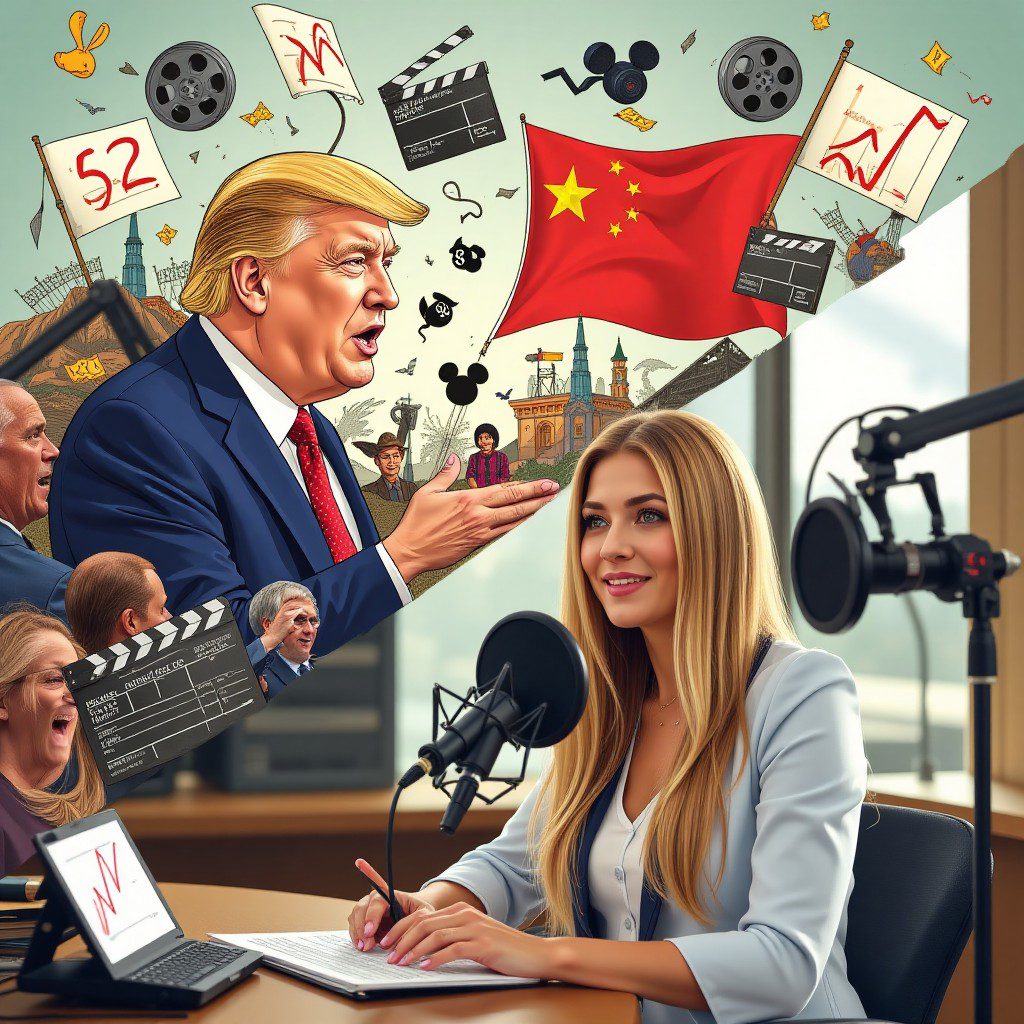
    What’s up, disruptors and liberty-loving rebels? It’s your favorite punk-rock libertarian, Ryan Thompson, coming at you once again to shake up the narrative and cut straight through the establishment nonsense. Today, we’ve got a hell of a juicy topic—Hollywood crying foul as President Trump plays chicken with China. Buckle up, because this is going to be a ride wilder than the box office disaster that was Disney’s Snow White remake.

    Let’s set the stage here: China’s decided to hit back in this epic tariff war by limiting American movies. And honestly, when asked about it, Trump’s response was classic, pure gold: “I think I’ve heard of worse things.” Now, folks, tell me that isn’t peak Trump—dismissive, sarcastic, and completely unfazed. And the internet’s loving it, with users dropping truth bombs like, “This trade war is more entertaining than Hollywood has been for the last 10 years anyway.” Harsh? Maybe. Accurate? Hell yeah.

    Look, Hollywood’s been pumping out woke virtue-signaling garbage for years now, lecturing us from ivory towers about climate change while zipping around in private jets and producing carbon emissions that would embarrass a small country. Take Disney’s remake of Snow White, for example. What a catastrophe! It didn’t just bomb financially; it actually managed to anger both sides. The woke left hated it for creating more carbon emissions than even a Fast & Furious flick (I kid you not, even Vin Diesel’s racing obsession couldn’t outpollute Snow White), and the right loathed it for wrecking yet another classic fairy tale with bland political correctness.

    Brianna Lyman nailed it on Power Hour, pointing out the insufferable hypocrisy. Hollywood elites preach endlessly about carbon footprints while producing movies that blow pollution stats out of the water. Seriously, Disney, how do you lecture ordinary Americans about driving gas-powered trucks when your virtue-signal projects emit more toxins than an industrial plant? This is textbook “rules for thee, not for me.”

    And let’s pivot a bit here—another spectacular flop hitting the news is Michelle Obama’s podcast. Now, I don’t usually take pleasure in watching something crash and burn, but man, this one’s just too good. Michelle’s podcast “IMO” launched with fanfare, only to tank faster than a snowflake in July, dropping to 34th place on Spotify within weeks. Democrats hoped she’d become the Joe Rogan of the left, but reality slapped them hard. Turns out, Americans aren’t interested in lectures from the Obamas anymore. Their cultural clout, once a force, has evaporated quicker than their empty promises of “hope and change.”

    Why did Trump and his Republican allies dominate the podcast game? Simple: they captured the cultural zeitgeist by addressing real issues, confronting establishment narratives, and unapologetically embracing America-first ideals. Michelle Obama missed that memo big time. Her brand of elite moralizing doesn’t resonate with folks who’ve shifted right, folks fed up with being told how to think, what to watch, and how to live their lives.

    Meanwhile, Trump’s tariff showdown with China escalates, now at a staggering 145% on Chinese goods. While globalists panic and “experts” clutch their pearls, Trump’s playing 4D chess, isolating China and forcing the world to negotiate fair trade deals. Hillary Ford had it right—this isn’t chaos; it’s calculated brinkmanship. It’s about leveling the playing field. Why should America continue being the global piggy bank? The UK’s media cries foul when slapped with reciprocal tariffs, conveniently forgetting they tax U.S. goods equally. India, too, learned a lesson as Trump slashed their outrageous tariffs.

    Even the EU’s Ursula von der Leyen, typically tone-deaf to tax concerns, suddenly found religion on fair trade, backing down from tariff threats. Trump’s approach—though messy—is delivering results. The global elite and media throw tantrums because their cozy, unfair systems are crumbling.

    Of course, Trump’s strategy isn’t without risks. Short-term market volatility and disruptions are inevitable. But remember this golden nugget: the only folks who get hurt on a roller coaster are those who jump off. Hold tight and trust the ride. Americans have faced worse storms, and historically, resilience is our hallmark.

    Now, some pundits fret Americans won’t endure the short-term pain of economic battles. Let’s get real—Trump supporters get it. They understand that genuine change demands sacrifice. Democrats might still sit down grumbling whenever Trump proposes anything sensible, like lowering taxes, but perhaps they should voluntarily keep paying higher rates if they’re so opposed.

    What this entire scenario underscores is a stark ideological divide. Republicans, conservatives, and libertarians recognize that shaking the tree is sometimes necessary to knock down rotten fruit. Hollywood, legacy media, and leftist cultural figures fail to grasp this, continuing their endless sermons from atop collapsing pedestals.

    Bottom line? Hollywood’s woes and Michelle Obama’s podcast flop symbolize a broader rejection of elitist arrogance. Trump’s tariffs against China represent an overdue correction, ending decades of lopsided trade abuse. Sure, it’s a wild ride—but disruption is exactly what’s needed.

    So, my fellow disruptarians, don’t fear the chaos. Embrace it, celebrate it. Because in the end, liberty thrives in the chaos that disrupts the oppressive comfort of the status quo.

    Stay rebellious, stay free, and keep questioning everything.

    Until next time, rock on.

    – Ryan Thompson, The Punk Rock Libertarian

    Spun Web Technology SMART SEO

    Spun Web Technology SMART SEO

  • Tariffs vs. Income Tax: A Historical and Philosophical Analysis

    By Ryan Thompson, Disruptarian.com April 11, 2025

    Most Americans today accept income taxation as an immutable fact of life—a permanent, inescapable obligation that funds our federal government. Yet for the majority of our nation’s history, the United States operated under a fundamentally different system. Before 1913, the federal government never claimed direct ownership over any portion of citizens’ paychecks. Instead, our nation funded itself primarily through tariffs on imported goods—a system with profound implications for liberty, sovereignty, and the relationship between citizens and their government.

    The distinction between these taxation methods goes far beyond mere policy preference. It represents two fundamentally different conceptions of the state’s relationship to the individual. Income tax directly confiscates a percentage of an individual’s labor. When the government claims ownership over any portion of your work—whether 10% or 90%—it establishes a relationship dangerously resembling partial slavery. Your labor is no longer fully yours; someone else maintains a claim on it regardless of your consent.

    Tariffs, while still a form of taxation, operate entirely differently. They apply only to specific voluntary transactions—namely, the importation of foreign goods. Unlike income tax, which creates inescapable obligations based simply on your productivity, tariffs can be legally avoided through different purchasing choices. This preservative of choice maintains a crucial element of liberty that income taxation lacks entirely.

    President Trump’s embrace of tariffs in his 2025 economic agenda has reignited this debate, but what many observers miss is the remarkable consistency he has demonstrated on this issue. In 1988, nearly four decades ago and long before his political career began, Trump appeared on Oprah Winfrey’s show advocating for protective tariffs in almost the same language he uses today. “I’d make our allies pay their fair share,” he told Winfrey. “I’m tired of watching other countries ripping off the United States.”

    What makes this historical consistency even more fascinating is that Trump was a registered Democrat at that time. This highlights an often-overlooked aspect of American political history: support for tariffs was traditionally a Democratic position for much of our nation’s development. From Thomas Jefferson through Woodrow Wilson, Democratic presidents and party leaders generally favored tariff policies specifically designed to protect American industries and workers from foreign competition.

    This historical alignment began shifting dramatically in recent decades. Beginning primarily with the Clinton administration, Democrats increasingly embraced globalization and free trade agreements like NAFTA, effectively abandoning their historical protectionist roots. Meanwhile, the Republican Party, which had traditionally favored free trade, has under Trump’s influence moved toward economic nationalism and protective tariffs.

    The founders of our republic understood the distinction between direct and indirect taxation profoundly well. They deliberately chose import duties—tariffs—as the primary federal funding mechanism, and this wasn’t accidental. It reflected their philosophical view of government’s proper relationship to its citizens. Alexander Hamilton, our first Treasury Secretary, established this system where virtually all federal revenue came from customs duties on imported goods, and this approach funded the government for over a century.

    James Madison wrote extensively about taxation, believing that direct taxation which claimed a portion of every citizen’s productivity was incompatible with the principles of a free republic. The Constitution initially prohibited direct taxes unless they were apportioned among the states according to population, making a national income tax effectively impossible until the passage of the 16th Amendment in 1913.

    For the first 124 years of our nation’s existence, the federal government operated primarily on tariff revenue. The America that became an industrial powerhouse, that built transcontinental railroads, that began to emerge as a world power—all happened under a tariff-based revenue system, not an income tax system. During wartime—like the Civil War—temporary income taxes were sometimes implemented, but Americans consistently rejected them becoming permanent until the early 20th century.

    The scale of government under these two systems reveals another crucial distinction. The federal system our founders created operated on roughly 3% of our current GDP. Today’s massive federal apparatus consumes around 20-25% of GDP annually. Our current federal government could never run solely on tariff revenue—and that’s precisely the point. The normalization of income tax hasn’t just provided alternative funding; it has transformed what government could become.

    By creating a direct claim on every American’s labor, we established a system that could grow almost without limitation. When you can automatically take a percentage of the entire economy, the constraints on government expansion largely disappear. This explains why the post-1913 era has seen exponential growth in federal spending and authority—growth that would have been impossible under the original tariff-based system.

    Trump’s return to a tariff-focused economic approach in 2025 isn’t merely a practical policy shift—it represents a philosophical realignment with earlier American principles. While he’s not dismantling the income tax system, his emphasis on tariffs does reconnect with those historical funding mechanisms. It reintroduces the idea that taxation should primarily occur at the border rather than the paycheck.

    His economic nationalism aligns with ideas that would have resonated strongly with many early American leaders from both parties. The protective tariff was, after all, a cornerstone of what Andrew Jackson’s Democrats called the “American System”—a set of policies designed to strengthen domestic manufacturing and reduce dependence on foreign goods.

    What’s ultimately at stake in this discussion is a fundamental question about liberty: Can citizens truly be free if the government maintains an automatic claim on their labor? Or is a transaction-based tax system, however imperfect, more compatible with a free society?

    While no taxation perfectly aligns with libertarian principles, the distinction matters immensely: income tax claims ownership over persons, while tariffs merely affect transactions. One reaches inescapably into every productive citizen’s pocket; the other applies only to specific choices about where to purchase goods.

    As we debate tax policy in 2025, we would do well to remember that the question isn’t simply one of economic efficiency or revenue generation. It’s about what kind of relationship we want between citizens and their government—and whether that relationship preserves the liberty and self-ownership that our founders considered essential to a free republic.

    The America of 1789-1913 proved that a nation could function, prosper, and even rise to global prominence without claiming direct ownership over citizens’ labor. Whether we can—or should—return to such a system is a question worth serious consideration, regardless of one’s political affiliation. What’s certain is that how we choose to fund government reflects our deeper values about liberty, property, and the proper limits of state power.

    Spun Web Technology SMART SEO

    Spun Web Technology SMART SEO

  • Tariffs vs. Income Tax: Liberty, Consistency, and Government Power

    Tariffs vs. Income Tax: Liberty, Consistency, and Government Power

    Disruptarian featured image for Tariffs vs. Income Tax: Liberty, Consistency, and Government Power

    Verified at: 2026-06-22 7:38:41

    Tariffs vs. Income Tax: Liberty, Consistency, and Government Power is the kind of subject that fits the Disruptarian lane because it sits where independent media, culture, music, and political commentary collide.

    The source description frames it this way: Ryan Thompson compares tariffs and income tax through a liberty-first lens, asking which form of taxation is more consistent with limited government and personal freedom. This Disruptarian episode looks at trade, revenue, economic nationalism, worker impact, and the political language used to sell taxes as policy. Original YouTube title: Tariffs vs. Income Tax: A Question of Liberty and Consistency Source: https://www.youtube.com/watch?v=SIHu67PfQHk Disruptarian: https://www.disruptarian.com

    The useful question is not only what happened, but why the story matters to people who distrust scripted narratives, recycled outrage, and corporate-approved commentary.

    A Disruptarian reading starts with individual agency. The listener is not asked to accept a packaged conclusion. The point is to pull the claim apart, compare incentives, and look for the pressure points that legacy media often skips.

    That approach matters for libertarian radio commentary because the audience is usually looking for more than a headline. They want context, motive, contradiction, and a practical sense of how public stories become private consequences.

    The cultural layer is just as important. Disruptarian music and reggae punk energy are not decorations around the message. They give the work its rhythm: skeptical, confrontational, and rooted in the idea that speech should stay alive even when institutions prefer silence.

    For search readers arriving cold, the primary source is included below either as an embed or as a direct source link. Start there if you want the full tone, timing, and argument. The written analysis expands the title and description into a searchable article that can stand on its own.

    The strongest SEO value here is clarity. The article keeps the title language visible, uses descriptive headings, and connects the topic to Disruptarian Radio, independent media, libertarian commentary, political culture, and original music without stuffing the page with empty repetition.

    The larger takeaway is simple: independent commentary survives by documenting what was said, preserving the source, and adding a point of view that does not depend on permission from gatekeepers.

    That is why this post exists as part of the static Disruptarian archive. The video remains embedded, the title and description remain traceable, and the surrounding article gives search engines and readers enough context to understand why the episode belongs in the broader Disruptarian catalog.

    The title itself carries the first keyword signal, but a durable post needs more than a copied headline. It needs a clear H1, a concise meta description, a featured image with descriptive alt text, and enough editorial framing for readers to know why the video is part of this archive.

    From an independent media perspective, the value is in keeping the primary source visible. Embedding the video prevents the article from becoming detached commentary. Readers can compare the written interpretation against the actual recording and decide whether the argument holds up.

    The libertarian angle is not automatic partisanship. It is a suspicion of concentrated power, public manipulation, and narratives that ask citizens to outsource judgment. That suspicion applies to government, platforms, corporations, activist institutions, and media brands alike.

    Disruptarian Radio also treats culture as evidence. Music, political language, online mobs, censorship fights, moral panics, and personal stories all reveal where pressure is being applied. That is why a radio episode can be more than entertainment; it can become a record of a moment.

    For listeners who follow DJ Disruptarian, the same pattern shows up in the music catalog: reggae rhythm, punk edge, spiritual critique, and anti-authoritarian instinct. The written post keeps that identity attached to the video instead of letting it disappear into a platform feed.

    Good SEO on a page like this should help people find the conversation without flattening the voice. The article uses natural phrases such as Disruptarian Radio, independent media, libertarian podcast, political commentary, original music, and disruptive conversations only where they make sense.

    The featured image should follow the Disruptarian editorial-collage style: torn paper, smoke, halftone grit, dirty cream paper, black and oxblood pressure, muted gold accents, and symbolic props tied to the subject rather than generic filler. Its alt text names the subject so search engines and screen readers get useful context.

    The article also keeps a stable URL under the static blog. That matters because feeds move, platforms change embeds, and social links decay. A static post gives the episode a second home that can be indexed, backed up, linked, and reviewed later.

    The final point is documentation. When a channel publishes a new video, the title and description are often the only structured metadata available. Turning that metadata into a post creates a stronger archive without pretending to replace the original recording.

    This is the practical Disruptarian method: preserve the video, state the source, add commentary, keep the searchable terms honest, and let the reader move between the embedded media and the written analysis without friction.

    This additional context keeps the post useful for readers who arrive from search rather than from the original channel. It explains the source, preserves the embed, and connects the subject back to the larger Disruptarian archive.

    This additional context keeps the post useful for readers who arrive from search rather than from the original channel. It explains the source, preserves the embed, and connects the subject back to the larger Disruptarian archive.

    This additional context keeps the post useful for readers who arrive from search rather than from the original channel. It explains the source, preserves the embed, and connects the subject back to the larger Disruptarian archive.


    The shortlink was copied to your clipboard

    X
    f
    r

    Related Reading

    Similar posts


    Disruptarian Blog

    2026-06-22

    Disruptarian Blog

    Disruptarian commentary on Social Security Is Not an Entitlement: Response to Elon Musk's Ponzi Claim with embedded source video, independent media context, and libertarian radio analysis.