Category: Culture

  • The Most Massive Attack on Free Speech in U.S. History – And They’re Still Lying About It

    By Ryan “Dickie” Thompson, The Punk Rock Libertarian

    I’ve seen censorship. I’ve been banned, shadowbanned, locked out, flagged, and algorithmically buried more times than I can count. But what we heard in Congress this week should send shivers down the spine of anyone who claims to care about freedom—whether you lean left, right, or live completely off that axis like I do.

    Watch this hereing here
    Click for the hearing

    https://www.youtube.com/watch?v=yUQfDNX1Tbc

    Let me break it down in plain language for those too busy living life to sort through 150-page court opinions and political grandstanding.

    In a congressional hearing that featured testimony from Robert F. Kennedy Jr., Dr. Aaron Kheriaty, and attorney John Sauer—three people who have taken real hits for speaking uncomfortable truths—we heard confirmation of what many of us already knew but couldn’t yet prove: The federal government, under Joe Biden’s administration, systematically pressured social media companies to silence dissent.

    Not opinions that were illegal. Not speech that incited violence. Just wrongthink.

    And now, thanks to a lawsuit led by the Attorneys General of Louisiana and Missouri, and thanks to a federal court’s ruling, we know what was done—and who did it.

    “Conspiracy Theory” Until It Wasn’t

    Remember when people said the lab leak theory was a crazy right-wing conspiracy? Banned.

    Remember when doctors said lockdowns were more harmful than helpful? Banned.

    Remember when folks like me shared articles critical of vaccine mandates, mask laws, or Hunter Biden’s laptop? Banned, shadowbanned, or labeled as “misinformation” by state-fueled fact-checkers.

    All of it orchestrated behind the scenes by government operatives using back channels, direct emails, and “partner portals” to flag, throttle, or erase inconvenient content from the digital public square. They didn’t need to pass laws. They used coercion, intimidation, and soft censorship—because they knew it would never survive constitutional scrutiny if they were honest about it.

    They even tried to shut down this very hearing, as Rep. Mike Johnson pointed out. Before a single word of testimony could be given, House Democrats attempted to block RFK Jr. from speaking. Why? Because the truth is radioactive to those who live by illusion.

    The New Church Committee Moment?

    What we’re looking at here isn’t just political bias or social media manipulation—it’s the weaponization of the federal government against the First Amendment. Just like the Church Committee in the 1970s exposed the CIA’s domestic surveillance programs, this moment is peeling back the layers on a system that now uses Big Tech as a proxy army to do what the government itself is forbidden to do.

    We’re not talking about rogue interns or confused bureaucrats. We’re talking about systemic collusion between federal agencies—including the FBI, DOJ, HHS, and the White House—and Silicon Valley. We’re talking about coordinated takedown requests, weekly meetings, pressure campaigns, and veiled threats of regulation or antitrust action.

    That’s not private industry. That’s not capitalism. That’s fascism by any historical definition—corporate and government power merging to crush opposition.

    And it’s not just about the past. As long as these bureaucrats remain in power, and as long as tech giants remain unaccountable, this will happen again. It might already be happening.

    Dissent Is Not Disinformation

    One of the most revealing moments in the hearing came when Rep. Johnson highlighted the federal court’s opinion: “If the allegations made by the plaintiffs are true, the present case arguably involves the most massive attack on free speech in United States history.”

    Not my words. Not some fringe YouTuber’s words. A sitting federal judge’s words.

    Let that sink in.

    Millions of Americans were censored—many without knowing it. Their posts were throttled, their reach collapsed, their accounts de-boosted or demonetized. Not because they were wrong, but because they were inconvenient.

    This isn’t about left vs. right. It’s about liberty vs. authoritarianism.

    The Gatekeepers Are Panicking

    Watch the hearing footage. Listen to the panic in the voices of those trying to discredit the witnesses. They didn’t argue with the facts—they dismissed them entirely. They ridiculed the idea that the government would ever conspire to silence people. They sneered at Kennedy, called him a political pawn, and tried to shame him for testifying.

    That’s not debate. That’s desperation.

    They’re terrified that Americans are finally waking up. They’re scared that the paper trail exists—20,000 pages of communications between federal officials and Big Tech. They’re scared that whistleblowers are talking. They’re scared that, for once, their grip on the narrative is slipping.

    And they’re especially scared because this isn’t going away. The Fifth Circuit is now reviewing the case, and more lawsuits are coming. The American people want answers—and they deserve them.

    We Don’t Need Permission to Speak

    Here’s what this whole case confirms for me, as a punk rock libertarian who’s lived by one rule since the first time I got thrown out of a venue for speaking my mind:

    We don’t need permission to speak.

    Free speech is not a privilege. It’s not a perk for compliant citizens. It’s a right. And that right doesn’t end because some bureaucrat thinks your post might cause “vaccine hesitancy” or because you criticized a powerful family.

    The Constitution doesn’t come with an asterisk. There is no “unless Twitter disagrees” clause in the First Amendment.

    If the state can silence dissenters through private intermediaries, then the First Amendment is a lie. And we either fight for it now or we lose it forever.

    What Comes Next

    This court ruling was just the beginning. The evidence is overwhelming. The suppression was systematic. The implications are profound. Now we need:

    • Criminal investigations into officials who violated constitutional rights.
    • Real accountability for tech platforms that acted as state censors.
    • Legislation that draws a bright red line between government and digital speech platforms.
    • A public reckoning with the media outlets that refused to cover this scandal because they were complicit in it.

    But more than that, we need people like you and me to keep speaking. Keep questioning. Keep pushing back.

    Because the next censorship wave is coming—they’ll just rebrand it again. “Public health.” “Election security.” “Hate speech.” They’ll always find a reason. The only antidote is unrelenting, unfiltered truth.

    Spun Web Technology SMART SEO

    Spun Web Technology SMART SEO

  • The Biggest Free Speech Scandal in U.S. History? Explosive Testimony Reveals Gov-Backed Censors

    The Biggest Free Speech Scandal in U.S. History? Explosive Testimony Reveals Gov-Backed Censors

    Disruptarian featured image for The Biggest Free Speech Scandal in U.S. History? Explosive Testimony Reveals Gov-Backed Censors

    Verified at: 2026-06-22 5:34:33

    The Biggest Free Speech Scandal in U.S. History? Explosive Testimony Reveals Gov-Backed Censors is the kind of subject that fits the Disruptarian lane because it sits where independent media, culture, music, and political commentary collide.

    The source description frames it this way: A Rumble-focused Disruptarian version of The Biggest Free Speech Scandal in U.S. History? Explosive Testimony Reveals Gov-Backed Censors. Ryan Thompson frames the topic through political commentary, culture war pressure, media narratives, and public trust, with a direct independent-media voice and no corporate filter. Original YouTube title: The Biggest Free Speech Scandal in U.S. History? Explosive Testimony Reveals Gov-Backed Censorship. Original source video: https://www.youtube.com/watch?v=yUQfDNX1Tbc Disruptarian: https://www.disruptarian.com

    The useful question is not only what happened, but why the story matters to people who distrust scripted narratives, recycled outrage, and corporate-approved commentary.

    A Disruptarian reading starts with individual agency. The listener is not asked to accept a packaged conclusion. The point is to pull the claim apart, compare incentives, and look for the pressure points that legacy media often skips.

    That approach matters for libertarian radio commentary because the audience is usually looking for more than a headline. They want context, motive, contradiction, and a practical sense of how public stories become private consequences.

    The cultural layer is just as important. Disruptarian music and reggae punk energy are not decorations around the message. They give the work its rhythm: skeptical, confrontational, and rooted in the idea that speech should stay alive even when institutions prefer silence.

    For search readers arriving cold, the primary source is included below either as an embed or as a direct source link. Start there if you want the full tone, timing, and argument. The written analysis expands the title and description into a searchable article that can stand on its own.

    The strongest SEO value here is clarity. The article keeps the title language visible, uses descriptive headings, and connects the topic to Disruptarian Radio, independent media, libertarian commentary, political culture, and original music without stuffing the page with empty repetition.

    The larger takeaway is simple: independent commentary survives by documenting what was said, preserving the source, and adding a point of view that does not depend on permission from gatekeepers.

    That is why this post exists as part of the static Disruptarian archive. The video remains embedded, the title and description remain traceable, and the surrounding article gives search engines and readers enough context to understand why the episode belongs in the broader Disruptarian catalog.

    The title itself carries the first keyword signal, but a durable post needs more than a copied headline. It needs a clear H1, a concise meta description, a featured image with descriptive alt text, and enough editorial framing for readers to know why the video is part of this archive.

    From an independent media perspective, the value is in keeping the primary source visible. Embedding the video prevents the article from becoming detached commentary. Readers can compare the written interpretation against the actual recording and decide whether the argument holds up.

    The libertarian angle is not automatic partisanship. It is a suspicion of concentrated power, public manipulation, and narratives that ask citizens to outsource judgment. That suspicion applies to government, platforms, corporations, activist institutions, and media brands alike.

    Disruptarian Radio also treats culture as evidence. Music, political language, online mobs, censorship fights, moral panics, and personal stories all reveal where pressure is being applied. That is why a radio episode can be more than entertainment; it can become a record of a moment.

    For listeners who follow DJ Disruptarian, the same pattern shows up in the music catalog: reggae rhythm, punk edge, spiritual critique, and anti-authoritarian instinct. The written post keeps that identity attached to the video instead of letting it disappear into a platform feed.

    Good SEO on a page like this should help people find the conversation without flattening the voice. The article uses natural phrases such as Disruptarian Radio, independent media, libertarian podcast, political commentary, original music, and disruptive conversations only where they make sense.

    The featured image should follow the Disruptarian editorial-collage style: torn paper, smoke, halftone grit, dirty cream paper, black and oxblood pressure, muted gold accents, and symbolic props tied to the subject rather than generic filler. Its alt text names the subject so search engines and screen readers get useful context.

    The article also keeps a stable URL under the static blog. That matters because feeds move, platforms change embeds, and social links decay. A static post gives the episode a second home that can be indexed, backed up, linked, and reviewed later.

    The final point is documentation. When a channel publishes a new video, the title and description are often the only structured metadata available. Turning that metadata into a post creates a stronger archive without pretending to replace the original recording.

    This is the practical Disruptarian method: preserve the video, state the source, add commentary, keep the searchable terms honest, and let the reader move between the embedded media and the written analysis without friction.

    This additional context keeps the post useful for readers who arrive from search rather than from the original channel. It explains the source, preserves the embed, and connects the subject back to the larger Disruptarian archive.

    This additional context keeps the post useful for readers who arrive from search rather than from the original channel. It explains the source, preserves the embed, and connects the subject back to the larger Disruptarian archive.

    This additional context keeps the post useful for readers who arrive from search rather than from the original channel. It explains the source, preserves the embed, and connects the subject back to the larger Disruptarian archive.


    The shortlink was copied to your clipboard

    X
    f
    r

    Related Reading

    Similar posts


    Disruptarian Blog

    2026-06-21

    Disruptarian Blog

    Disruptarian commentary on The Rebirth of Banned Words: Language Control, Cultural Shifts & The Free Speech Rebellion with embedded source video, independent media context, and libertarian radio analysis.

  • The Death of Truth: Orwell’s Warning About the State’s Monopoly on History

    By Ryan “Dickie” Thompson – The Punk Rock Libertarian

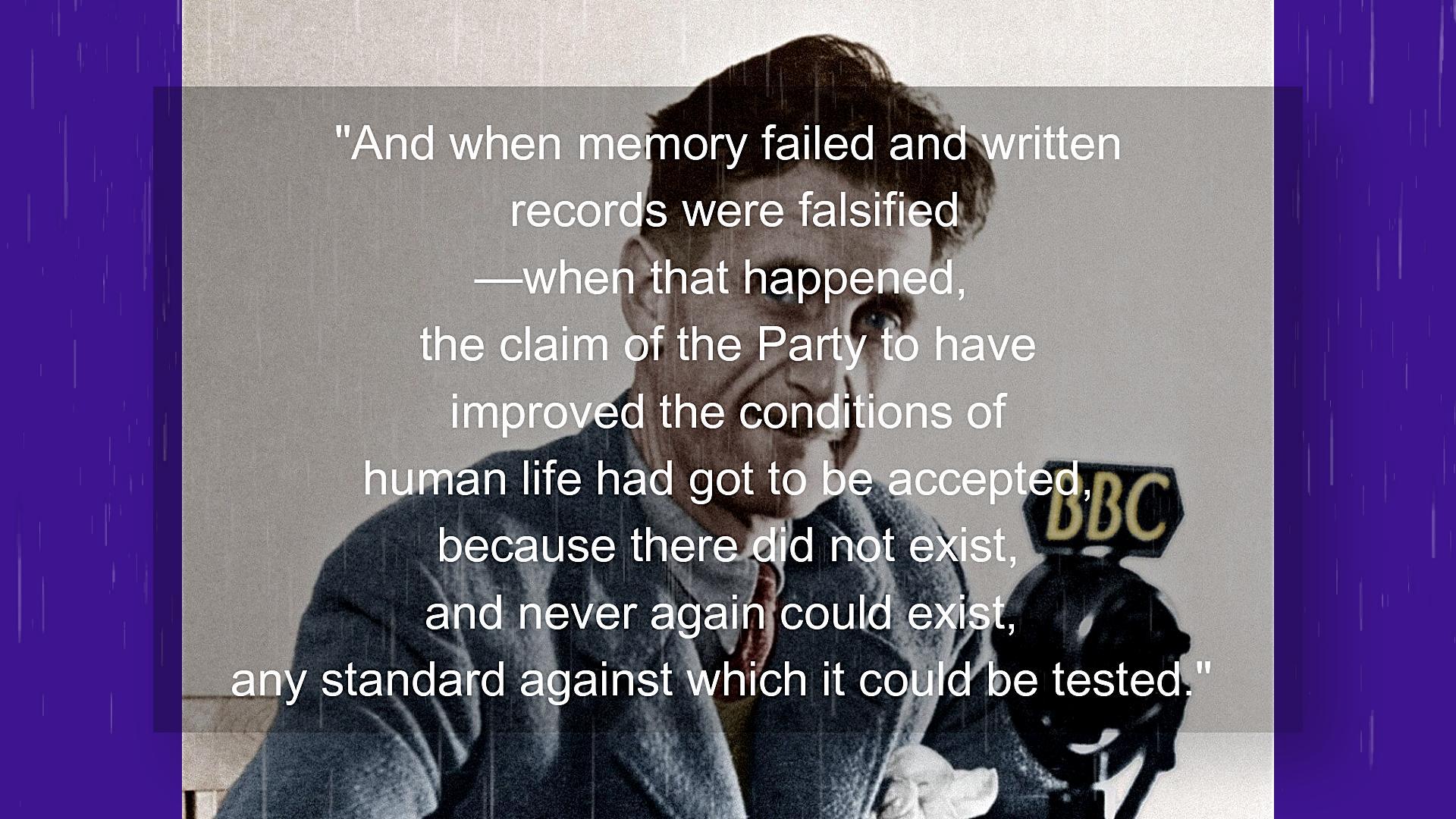
    “And when memory failed and written records were falsified—when that happened, the claim of the Party to have improved the conditions of human life had got to be accepted, because there did not exist, and never again could exist, any standard against which it could be tested.”
    – George Orwell, 1984

    Let’s talk about memory. Not your childhood memories or that summer road trip with the broken-down van. I’m talking about collective memory—what we remember as a culture, as a people, as a nation. And more importantly, who controls that memory.

    George Orwell didn’t write 1984 as fiction. Not really. It was a warning label—slapped right onto the dystopian machinery of state power. The quote above, one of the most chilling in the entire book, is a punch to the gut of anyone who values liberty, truth, and resistance.

    Let’s break this down and apply it to what’s going on right now—in your life, in your country, and in the ever-growing reach of state and corporate power.


    Truth, Memory, and the War on Reality

    Orwell understood something terrifying: if you control the past, you control the present. If you erase the evidence, if you falsify the records, and if you shame or silence the dissenters—you win. Not because you’re right. But because no one can prove you’re wrong.

    This isn’t theoretical. It’s not just literature. It’s happening today in real-time. Governments across the world, including our own, revise history, bury facts, and rewrite narratives that don’t serve their agenda.

    Look at how easily narratives are flipped. One day a foreign nation is our ally, the next it’s our existential threat. One administration builds a surveillance state; the next pretends it never existed. Today’s conspiracy theory is tomorrow’s historical record—once it’s been scrubbed, sanitized, and sold back to us in textbooks and press briefings.

    We’re not just dealing with lies—we’re dealing with the elimination of the very tools needed to detect lies.


    The Standard Has Been Deleted

    Orwell’s quote cuts deeper than just censorship. He’s describing a process where all standards—all comparisons to a past reality—are removed. When memory fails and the written record is falsified, there’s no longer a yardstick to measure truth. You’re trapped in a world where the only thing that’s “real” is what the Party says today… even if it contradicts what they said yesterday.

    This isn’t just dangerous—it’s totalitarianism at its finest. It’s not about convincing you. It’s about obliterating your ability to even question.

    The philosopher Karl Popper once said, “Those who promise us paradise on earth never produced anything but a hell.” The Party in 1984 promises progress, improvement, utopia. But if you can’t measure what life was like before, how do you know you’re better off?

    You don’t. And that’s the point.


    Big Brother and Big Tech: Modern-Day Memory Holes

    Let’s drag this out of the 20th century and into the digital age.

    Google, Facebook, X (formerly Twitter), and YouTube now serve as the de facto Ministry of Truth. Content gets pulled. Channels get banned. Search results are “curated” to match “community standards.” You post the wrong information, even if it’s factually accurate, and poof—you’re erased.

    The digital memory hole is a real thing. And it’s expanding.

    History is now mediated through biased algorithms. Truth is subject to “fact-checkers” funded by political operatives and corporate interests. And memory—our shared cultural history—is erased one click at a time.


    How Libertarians Fight Back

    This is why I, and many like me, beat the drum of liberty so hard. Because when you strip away the noise, the headlines, the talking points, what’s at stake is reality itself. The state wants a monopoly on reality—and it’s willing to destroy language, logic, and liberty to get it.

    As libertarians, we believe truth is discovered, not decreed. We don’t outsource memory to the state. We defend decentralization. We record our own history. We don’t burn books—we write them. We don’t delete posts—we back them up.

    Disruptarianism is about refusing to accept the manufactured consensus. It’s about questioning everything—even (especially) when it makes you unpopular. Because, as Orwell would tell you, being in the minority doesn’t mean you’re mad. Sometimes, it means you’re the only one who remembers what truth looks like.


    Don’t Let the Standard Die

    Let me leave you with this:

    The worst kind of tyranny doesn’t come with jackboots and surveillance drones. It comes wrapped in comfort. In convenience. In the polite lie that says, “The past doesn’t matter.” But it does. And the only way we lose the future is by surrendering the past.

    If there’s no standard—no record—no memory—then the truth becomes whatever the powerful say it is. And freedom? Freedom dies with it.

    So write things down. Save the screenshots. Record your conversations. Read banned books. Back up your blogs. Share the content they try to censor. Because if you don’t—if we don’t—then Orwell’s warning becomes prophecy.

    And this time, there won’t be anyone left to remember what we lost.


    Stay free. Stay vigilant. Stay Disruptarian.

    — Ryan “Dickie” Thompson
    The Punk Rock Libertarian

    Spun Web Technology SMART SEO

    Spun Web Technology SMART SEO

  • Nicholas Ochs and the Fallacy of Fear

    By Ryan Thompson, Punk Rock Libertarian

    You ever lose a friend over a lie?

    Well, I did. A guy I fought shoulder-to-shoulder with back in 2010 and 2011—collecting signatures for I-1068 and I-1149 to decriminalize cannabis in Washington—decided that supporting Trump made me a white supremacist sympathizer. Why? Because Trump called for Antifa to be considered a domestic terrorist group and I lumped in Proud Boys in the same converastion. Suddenly, I’m a Nazi apologist because I don’t parrot the script. Reference to this CLICK

    But here’s the thing: facts don’t care about your hashtags.

    Meet Nicholas Ochs

    Instead of arguing in circles with my ex-comrade, I brought in someone who could speak from firsthand experience: Nicholas Ochs. Founder of the Hawaii Proud Boys chapter. Former congressional candidate. Husband to a beautiful black woman. Father to two amazing mixed-race kids. And an all-around solid dude.

    Nich is as far from the white supremacist caricature as one could get. And yet, because he wears a yellow Fred Perry and doesn’t kneel before the cathedral of woke orthodoxy, people slap the label on him.

    That’s where the nominal fallacy kicks in—the idea that calling something a name explains it. These people hear “Proud Boys” and their brains short-circuit. They stop thinking. They start screaming.

    Are the Proud Boys Racist?

    I asked Nicholas directly: “Would the Proud Boys tolerate racists, neo-Nazis, or white supremacists in their chapters?”

    His answer wasn’t a bullet point. It was a picture. A family photo. Him, his wife, his kids. Love on full display.

    And if that’s not enough for you, consider this: I’ve been to Hawaii. I’ve met his chapter. Polynesians. Asians. Latinos. Veterans. Christians. Atheists. Even gay members. This isn’t a whites-only cult. It’s a fraternal order that values Western civilization, self-reliance, and standing your ground. And yes, they fight. Sometimes literally. But not because of race. Because they’re done kneeling to false narratives.

    How the Censorship Played Out

    After Nicholas chimed in to calmly clear up the Proud Boy myth, things got predictably unhinged. My former ally—who used to be an AR-15 toting cannabis grower and free market radical—began deleting my comments. Not just the ones about Proud Boys. Everything.

    When I pointed out the censorship, he doubled down by removing me as a friend.

    No debate. No facts. No courage.

    This is the modern liberal archetype: hear something uncomfortable, label it evil, and hit the block button.

    My Take? Give Me 1 Nick Over 10 Cowards

    Here’s the reality check. I’d rather have one Nicholas Ochs as a friend or neighbor than ten of these limp-wristed, censorship-happy, intellectually dishonest liberals. I don’t care what side you’re on politically—if your instinct is to lie, censor, and run instead of standing in the fire of truth, you’re part of the problem.

    We used to fight for liberty together. Now, they fight to silence anyone who doesn’t chant the same slogans.

    This is why Disruptarian exists. To cut through the noise. To amplify truth. And to call out cowardice where it festers.

    Final Thought

    Nicholas Ochs and the Proud Boys aren’t perfect. No one is. But if you’re going to call someone a racist, you better have receipts. Because the new punk rock isn’t blue hair and safe spaces—it’s mixed-race families, independent thought, and standing your ground against the mob.

    And if you can’t handle that, maybe you’re not as anti-fascist as you think.


    Stay loud. Stay free. Stay disruptive.

    • Ryan Thompson, Disruptarian.com
    Spun Web Technology SMART SEO

    Spun Web Technology SMART SEO

  • Truth Hurts, but It’s Worth Fighting For: Why I Stand Against Gender Ideology and Still Defend Women’s Rights

    By Ryan Thompson – The Punk Rock Libertarian
    Disruptarian.com


    In a time when reality has become optional, standing by biological truth has somehow become a revolutionary act. If you’re looking for comfort, you won’t find it here. But if you want truth—raw, unfiltered, and backed by both logic and lived experience—keep reading.

    We are living through a cultural coup where language is weaponized, facts are denied, and those who dare to speak up are vilified. What was once considered obvious—that women are adult human females—is now considered hate speech in some corners of the internet and the institutional left. But thankfully, some people still have the spine to say no more.

    Take billionaires like Elon Musk and J.K. Rowling—people with everything to lose. These aren’t anonymous trolls hiding behind keyboards; they’re global icons standing in the firing line of cancel culture to say the same thing I’ve been saying for years: women’s rights are not up for negotiation. They’ve stood firm while mobs smear them, activists deface property with swastikas on Teslas, and extremists paint Nazi symbols on their own bodies to protest basic biology. You can’t make this lunacy up.

    But even more inspiring to me than Musk or Rowling are the female athletes who’ve risked everything—careers, scholarships, reputations—to protest what can only be described as trans lunacy. Women like Riley Gaines and Stephanie Turner, who just wanted a fair chance to compete, now find themselves targeted by a vicious outrage machine that demands total submission to its ideology.

    They didn’t cave. They didn’t conform. They took a knee—literally and figuratively—for truth. And for that, they are heroes.


    My Own Personal Costs for Speaking the Truth

    I’ve lost good friends over this issue. That’s the cost of staying grounded in reality while others get high on ideology. What’s more painful is how my own kids have been weaponized against me—pawns in a culture war they never asked to be part of.

    My ex-wife is now married to a “trans man.” Is that a transsexual or a transvestite? I’m honestly not sure anymore. The definitions shift like sand under a tide of political correctness. What I do know is this: just because someone identifies a certain way doesn’t mean I’m obligated to pretend biology doesn’t exist. And it certainly doesn’t mean I stop fighting for my daughters’ right to safe, female-only spaces, or my son’s right to know the difference between male and female.

    I’ve always supported gay rights. That’s a matter of record—20+ years of blog posts, videos, and social media receipts. I protested when California tried to end gay marriage back in 2008. That history is documented here. But supporting gay rights doesn’t require me to abandon the truth.

    You can stand with the gay community and defend women’s spaces. These aren’t contradictory positions unless you’re living in a world where basic definitions get rewritten by Twitter mobs and DEI consultants.


    The Math Doesn’t Lie

    Dr. Jordan Peterson recently weighed in on this madness . He recounted how a Disney executive once proudly claimed she had two kids—one trans, one pansexual. Statistically, Peterson broke it down: the odds of having one trans kid are around 1 in 3,000, and pansexuality is even rarer. The combined probability? Roughly 1 in 9 million.

    Now, compare that with the odds of being a narcissist virtue-signaling your children’s identities to win social points: significantly higher. As Peterson concluded, maybe these aren’t organic expressions of identity. Maybe this is the result of parental projection and cultural grooming, not some innate biological truth.

    Peterson’s words hit home. According to the latest rebranding of my own family dynamic, 4 out of 5 of my kids are now some variation of this new trend. That’s statistically impossible unless we’ve created a cultural petri dish where identity is molded by ideology, not nature.


    This Isn’t Hate. It’s Love for Truth.

    To my children, and to everyone who questions my motives: I’m not doing this because I’m hateful. I’m doing this because I love you—and I refuse to lie to you. Saint Augustine said it best:

    “Right is right even if no one is doing it; wrong is wrong even if everyone is doing it.”

    It’s easier to go along. It’s safer to stay quiet. But truth isn’t always easy or safe. Sometimes it costs you everything. And if that’s the price I pay for defending women’s sports, prison safety, and the integrity of language, then so be it.


    Real-World Consequences

    This isn’t just about sports. It’s about what happens when you let ideology rewrite reality:

    • Biological males housed in women’s prisons, resulting in documented cases of rape and abuse.
    • 900 medals won by trans-identified male athletes in women’s competitions, as confirmed by a UN study.
    • Girls losing scholarships, spots on teams, and their dignity—while being told they’re bigots for speaking up.

    These aren’t hypotheticals. These are real people, real lives, and real consequences. And yet, the woke industrial complex keeps telling us to sit down and shut up.

    No thanks.


    Final Word: The Revolution Will Be Based in Reality

    I’m not giving up on my kids. I’m not giving up on women. And I’m definitely not giving up on truth—no matter how uncomfortable it makes the world around me.

    We didn’t ask for this fight. But now that it’s here, we’ve got two choices: conform or confront. I choose to confront. Because I’d rather lose everything standing for reality than gain the world by living a lie.

    This is Ryan Thompson, the Punk Rock Libertarian. Standing against ideological tyranny. Standing for biology. And standing with the women, girls, and truth-tellers who refuse to be erased.


    References:

    Spun Web Technology SMART SEO

    Spun Web Technology SMART SEO

  • Is the Nuclear Family Under Attack? Communism, Feminism, and BLM

    Is the Nuclear Family Under Attack? Communism, Feminism, and BLM

    Disruptarian featured image for Is the Nuclear Family Under Attack? Communism, Feminism, and BLM

    Verified at: 2026-06-22 7:31:07

    Is the Nuclear Family Under Attack? Communism, Feminism, and BLM is the kind of subject that fits the Disruptarian lane because it sits where independent media, culture, music, and political commentary collide.

    The source description frames it this way: Ryan Thompson examines the argument that the nuclear family has been targeted by modern political movements, from communist theory to feminist shifts and BLM-era ideology. This long-form Disruptarian episode looks at family structure, cultural pressure, activist language, and why the household became a political battleground. Original YouTube title: Is the Nuclear Family Under Attack? Communist Roots, Feminist Shifts & BLM Ideology Source: https://www.youtube.com/watch?v=Uq2LVzcc5Aw Disruptarian: https://www.disruptarian.com

    The useful question is not only what happened, but why the story matters to people who distrust scripted narratives, recycled outrage, and corporate-approved commentary.

    A Disruptarian reading starts with individual agency. The listener is not asked to accept a packaged conclusion. The point is to pull the claim apart, compare incentives, and look for the pressure points that legacy media often skips.

    That approach matters for libertarian radio commentary because the audience is usually looking for more than a headline. They want context, motive, contradiction, and a practical sense of how public stories become private consequences.

    The cultural layer is just as important. Disruptarian music and reggae punk energy are not decorations around the message. They give the work its rhythm: skeptical, confrontational, and rooted in the idea that speech should stay alive even when institutions prefer silence.

    For search readers arriving cold, the primary source is included below either as an embed or as a direct source link. Start there if you want the full tone, timing, and argument. The written analysis expands the title and description into a searchable article that can stand on its own.

    The strongest SEO value here is clarity. The article keeps the title language visible, uses descriptive headings, and connects the topic to Disruptarian Radio, independent media, libertarian commentary, political culture, and original music without stuffing the page with empty repetition.

    The larger takeaway is simple: independent commentary survives by documenting what was said, preserving the source, and adding a point of view that does not depend on permission from gatekeepers.

    That is why this post exists as part of the static Disruptarian archive. The video remains embedded, the title and description remain traceable, and the surrounding article gives search engines and readers enough context to understand why the episode belongs in the broader Disruptarian catalog.

    The title itself carries the first keyword signal, but a durable post needs more than a copied headline. It needs a clear H1, a concise meta description, a featured image with descriptive alt text, and enough editorial framing for readers to know why the video is part of this archive.

    From an independent media perspective, the value is in keeping the primary source visible. Embedding the video prevents the article from becoming detached commentary. Readers can compare the written interpretation against the actual recording and decide whether the argument holds up.

    The libertarian angle is not automatic partisanship. It is a suspicion of concentrated power, public manipulation, and narratives that ask citizens to outsource judgment. That suspicion applies to government, platforms, corporations, activist institutions, and media brands alike.

    Disruptarian Radio also treats culture as evidence. Music, political language, online mobs, censorship fights, moral panics, and personal stories all reveal where pressure is being applied. That is why a radio episode can be more than entertainment; it can become a record of a moment.

    For listeners who follow DJ Disruptarian, the same pattern shows up in the music catalog: reggae rhythm, punk edge, spiritual critique, and anti-authoritarian instinct. The written post keeps that identity attached to the video instead of letting it disappear into a platform feed.

    Good SEO on a page like this should help people find the conversation without flattening the voice. The article uses natural phrases such as Disruptarian Radio, independent media, libertarian podcast, political commentary, original music, and disruptive conversations only where they make sense.

    The featured image should follow the Disruptarian editorial-collage style: torn paper, smoke, halftone grit, dirty cream paper, black and oxblood pressure, muted gold accents, and symbolic props tied to the subject rather than generic filler. Its alt text names the subject so search engines and screen readers get useful context.

    The article also keeps a stable URL under the static blog. That matters because feeds move, platforms change embeds, and social links decay. A static post gives the episode a second home that can be indexed, backed up, linked, and reviewed later.

    The final point is documentation. When a channel publishes a new video, the title and description are often the only structured metadata available. Turning that metadata into a post creates a stronger archive without pretending to replace the original recording.

    This is the practical Disruptarian method: preserve the video, state the source, add commentary, keep the searchable terms honest, and let the reader move between the embedded media and the written analysis without friction.

    This additional context keeps the post useful for readers who arrive from search rather than from the original channel. It explains the source, preserves the embed, and connects the subject back to the larger Disruptarian archive.

    This additional context keeps the post useful for readers who arrive from search rather than from the original channel. It explains the source, preserves the embed, and connects the subject back to the larger Disruptarian archive.

    This additional context keeps the post useful for readers who arrive from search rather than from the original channel. It explains the source, preserves the embed, and connects the subject back to the larger Disruptarian archive.


    The shortlink was copied to your clipboard

    X
    f
    r

    Related Reading

    Similar posts


    Disruptarian Blog

    2026-06-21

    Disruptarian Blog

    Disruptarian commentary on Everyone I Disagree With Is a Nazi: Racism, Religion and Reality with embedded source video, independent media context, and libertarian radio analysis.

  • Trump’s 100 Days: The Most Bizarre Presidency in History?

    Trump's 100 Days: The Most Bizarre Presidency in History?

    Disruptarian featured image for Trump's 100 Days: The Most Bizarre Presidency in History?

    Verified at: 2026-06-22 8:05:02

    Trump's 100 Days: The Most Bizarre Presidency in History? is the kind of subject that fits the Disruptarian lane because it sits where independent media, culture, music, and political commentary collide.

    The source description frames it this way: Ryan Thompson reviews Trump's first 100 days through a Disruptarian lens, calling out the strange mix of spectacle, policy fights, media panic, institutional backlash, and populist energy. This episode frames the presidency as a case study in political theater and public distrust. Original YouTube title: Trump's 100 Days: The Most Bizarre Presidency in History Source: https://www.youtube.com/watch?v=y2p4NBFQ5-w Disruptarian: https://www.disruptarian.com

    The useful question is not only what happened, but why the story matters to people who distrust scripted narratives, recycled outrage, and corporate-approved commentary.

    A Disruptarian reading starts with individual agency. The listener is not asked to accept a packaged conclusion. The point is to pull the claim apart, compare incentives, and look for the pressure points that legacy media often skips.

    That approach matters for libertarian radio commentary because the audience is usually looking for more than a headline. They want context, motive, contradiction, and a practical sense of how public stories become private consequences.

    The cultural layer is just as important. Disruptarian music and reggae punk energy are not decorations around the message. They give the work its rhythm: skeptical, confrontational, and rooted in the idea that speech should stay alive even when institutions prefer silence.

    For search readers arriving cold, the primary source is included below either as an embed or as a direct source link. Start there if you want the full tone, timing, and argument. The written analysis expands the title and description into a searchable article that can stand on its own.

    The strongest SEO value here is clarity. The article keeps the title language visible, uses descriptive headings, and connects the topic to Disruptarian Radio, independent media, libertarian commentary, political culture, and original music without stuffing the page with empty repetition.

    The larger takeaway is simple: independent commentary survives by documenting what was said, preserving the source, and adding a point of view that does not depend on permission from gatekeepers.

    That is why this post exists as part of the static Disruptarian archive. The video remains embedded, the title and description remain traceable, and the surrounding article gives search engines and readers enough context to understand why the episode belongs in the broader Disruptarian catalog.

    The title itself carries the first keyword signal, but a durable post needs more than a copied headline. It needs a clear H1, a concise meta description, a featured image with descriptive alt text, and enough editorial framing for readers to know why the video is part of this archive.

    From an independent media perspective, the value is in keeping the primary source visible. Embedding the video prevents the article from becoming detached commentary. Readers can compare the written interpretation against the actual recording and decide whether the argument holds up.

    The libertarian angle is not automatic partisanship. It is a suspicion of concentrated power, public manipulation, and narratives that ask citizens to outsource judgment. That suspicion applies to government, platforms, corporations, activist institutions, and media brands alike.

    Disruptarian Radio also treats culture as evidence. Music, political language, online mobs, censorship fights, moral panics, and personal stories all reveal where pressure is being applied. That is why a radio episode can be more than entertainment; it can become a record of a moment.

    For listeners who follow DJ Disruptarian, the same pattern shows up in the music catalog: reggae rhythm, punk edge, spiritual critique, and anti-authoritarian instinct. The written post keeps that identity attached to the video instead of letting it disappear into a platform feed.

    Good SEO on a page like this should help people find the conversation without flattening the voice. The article uses natural phrases such as Disruptarian Radio, independent media, libertarian podcast, political commentary, original music, and disruptive conversations only where they make sense.

    The featured image should follow the Disruptarian editorial-collage style: torn paper, smoke, halftone grit, dirty cream paper, black and oxblood pressure, muted gold accents, and symbolic props tied to the subject rather than generic filler. Its alt text names the subject so search engines and screen readers get useful context.

    The article also keeps a stable URL under the static blog. That matters because feeds move, platforms change embeds, and social links decay. A static post gives the episode a second home that can be indexed, backed up, linked, and reviewed later.

    The final point is documentation. When a channel publishes a new video, the title and description are often the only structured metadata available. Turning that metadata into a post creates a stronger archive without pretending to replace the original recording.

    This is the practical Disruptarian method: preserve the video, state the source, add commentary, keep the searchable terms honest, and let the reader move between the embedded media and the written analysis without friction.

    This additional context keeps the post useful for readers who arrive from search rather than from the original channel. It explains the source, preserves the embed, and connects the subject back to the larger Disruptarian archive.

    This additional context keeps the post useful for readers who arrive from search rather than from the original channel. It explains the source, preserves the embed, and connects the subject back to the larger Disruptarian archive.

    This additional context keeps the post useful for readers who arrive from search rather than from the original channel. It explains the source, preserves the embed, and connects the subject back to the larger Disruptarian archive.


    The shortlink was copied to your clipboard

    X
    f
    r

    Related Reading

    Similar posts


    Disruptarian Blog

    2026-06-20

    Disruptarian Blog

    Disruptarian commentary on AI Could Save Humanity or Destroy It: The Truth About the Machine Future with embedded source video, independent media context, and libertarian radio analysis.

  • The Impact of Rhetoric: A Study of Donald Trump’s Press Conference Techniques

    [ad_1]


    In a world where communication is key to success, rhetoric has become an art form that can either elevate or destroy reputations. The 45th President of the United States, Donald Trump, has mastered the art of rhetoric, often using his press conferences to shape public opinion and assert his dominance. As a libertarian with a strong affinity for free-market principles, it is essential to analyze Trump’s press conference techniques, highlighting the impact they have on the public discourse, the media, and the overall political landscape.

    Rhetorical Devices and the Art of Persuasion

    Trump’s press conferences are a masterclass in the use of rhetorical devices, which he employs to persuade, educate, and entertain his audience. One of the most striking aspects of his oratory skills is his ability to use repetition. Repeating phrases and catchphrases, such as “fake news” and “alternative facts,” has become a hallmark of his communication strategy. This technique creates a sense of familiarity and reinforces his message, making it more memorable and easier to adapt to his target audience.

    Another significant tool in Trump’s rhetorical arsenal is name-calling. Labeling his opponents with pejorative terms, such as “liars” and “fascist,” is a clear attempt to discredit them and undermine their credibility. This strategy is often used to marginalize his critics, creating an “us versus them” mentality. In doing so, Trump taps into his supporters’ emotions, creating a sense of tribal loyalty and assuaging their frustrations with the perceived establishment.

    Trump’s use of hyperbole is another notable feature of his rhetoric. Making grand, sweeping statements, such as “the greatest economy in the history of the world,” is a clear attempt to create a sense of excitement and optimism. This technique, although often exaggerated, resonates with his audience, who crave simple, easy-to-understand solutions to complex problems. By emphasizing the importance of “winning” and “making deals,” Trump taps into the collective desire for success and prosperity.

    The Impact of Rhetoric on the Media and Public discourse

    The impact of Trump’s rhetoric on the media and public discourse is profound. His constant barrage of criticism towards the media has created a sense of divisions and mistrust. The term “fake news” has become a rallying cry for his supporters, while his opponents see it as a campaign to discredit and silence critical voices. This polarization has resulted in a fragmented media landscape, where ideological lenses dominate the narrative and nuance is lost.

    Trump’s criticism of the media has also led to a resurgence of attacks on the press’s credibility and freedom. His supporters often label the media as “elitist” and “out-of-touch,” perpetuating a dangerous myth that the press is somehow complicit in a grand conspiracy against him. This rhetoric has emboldened those who seek to restrict press freedom, creating a slippery slope towards authoritarianism.

    The impact of Trump’s rhetoric on public discourse is also far-reaching. His use of name-calling and belittling has created a toxic environment, where respectful debate and dialogue are increasingly rare. The constant emphasis on “winning” and “being right” has led to a culture of aggression and competition, rather than collaboration and compromise. This atmosphere has resulted in a society where people are more likely to shout down opposing views, rather than engage in constructive dialogue.

    Conclusion

    Donald Trump’s press conference techniques are a reflection of his larger strategy: to dominate the narrative, create a sense of chaos, and exploit divisions. While his rhetoric has undoubtedly had a significant impact on the media and public discourse, it is crucial to recognize the broader context in which it operates. As a libertarian, it is essential to emphasize the importance of free markets, limited government, and individual freedoms.

    In a time where the line between fact and fiction is increasingly blurred, it is crucial to promote transparency, critical thinking, and civil discourse. By recognizing the art of rhetoric for what it is – a tool – and not getting caught up in the spectacle, we can begin to build a more constructive and inclusive society. After all, as the ancient Greek philosopher Aristotle noted, “The whole is more than the sum of its parts.”

    Frequently Asked Questions (FAQs)

    Q: How effective is Trump’s rhetoric in shaping public opinion?
    A: Trump’s rhetoric has had a significant impact on public opinion, often swaying his supporters and creating a sense of unity. However, his divisive language and attacks on the media have also contributed to a more polarized society.

    Q: What is the impact of Trump’s name-calling and belittling on public discourse?
    A: Trump’s use of pejorative labels and condescension has created a toxic environment, where respectful dialogue and debate are increasingly rare. This has led to a culture of aggression and competition, rather than collaboration and compromise.

    Q: How does Trump’s use of repetition and hyperbole affect his message?
    A: Trump’s repetition of catchphrases and grand statements has made his message more memorable and easier to digest. However, this approach also perpetuates a sense of oversimplification and lack of nuance, which can be problematic.

    Q: What is the relationship between Trump’s rhetoric and the media?
    A: Trump’s constant criticism of the media has created a sense of mistrust and division, leading to a more fragmented media landscape. This has also emboldened those seeking to restrict press freedom and manipulate the narrative.

    For the latest updates on Trump’s executive orders, please visit the following RSS feed: https://www.google.com/alerts/feeds/06455995707270231308/7375395045206426847

    #Impact #Rhetoric #Study #Donald #Trumps #Press #Conference #Techniques


    [ad_2]

    Spun Web Technology SMART SEO
    Spun Web Technology SMART SEO

  • The Roots and Branches of Rastafari: Exploring the History and Growth of a Movement

    [ad_1]

    The Rastafarian movement, born in Jamaica in the 1930s, has evolved into a global phenomenon, with devotees of the movement spread across the world. From its humble beginnings to its current status as a recognized religion, Rastafarianism has weathered numerous challenges and controversies. This article delves into the history and growth of Rastafarianism, exploring its roots, branches, and its influence on popular culture.

    Origins and Early Years
    ————————

    The roots of Rastafarianism can be traced back to the 1930s in Jamaica, where a young Bob Marley, a 13-year-old Ethiopian exile, arrived on the island. Marley’s arrival marked the beginning of a new era for the Rastafarian movement. The movement’s spiritual leader, Leonard Howell, characterized himself as the “Gazi,” or “pronouncer of the name of the Lord.” Howell preached that Haile Selassie I of Ethiopia was the returned messiah, the Black Jesus, and the Lord of Lords. This message resonated with the marginalized and oppressed African- descended people in Jamaica, who felt disconnected from their roots and their African heritage.

    Early Rastafarians combined elements of Christianity, African traditions, and mysticism, creating a unique blend of spiritual practices and beliefs. They adhered to a strict code of conduct, pro-abstinence, and opposed material wealth. Similarly, they rejected the modern, Western concept of time, instead embracing the traditional Ethiopian calendar and its cycles of time. The movement’s emphasis on reggae music, dreadlocks, and natural hair styles became a distinct part of the Rastafarian aesthetic.

    Expansion and Globalization
    ————————-

    By the 1960s, Rastafarianism had spread beyond Jamaica’s borders, reaching the United States, Europe, and other parts of the world. The movement’s popularity was buoyed by the success of reggae music, particularly the music of Bob Marley and the Wailers. Marley’s universal messages of unity, equality, and social justice resonated with people from all walks of life. The movement’s diversity and flexibility allowed it to adapt to different cultures and customs, giving rise to various Rastafarian sub-strains.

    As Rastafarianism spread, so did its influence on popular culture. Reggae music, associated with Rastafarianism, became a dominant force in the 1970s and 1980s. Iconic figures like Bob Marley and Peter Tosh, well-known Rastafarian artists, contributed to the movement’s visibility. Rastafarianism also seeped into the mainstream, as Western and Eastern cultures collectively embraced its distinctive esthetic and spirituality.

    Challenges and Controversies
    ————————-

    Despite its global growth and influence, Rastafarianism faced numerous challenges and controversies. Critics accused the movement of being anti-Semitic, due to its identification of Haile Selassie as the Messiah. This perception was fueled by the movement’s use of Ethiopian and African imagery, some of which featured African slaves who fought against white dominance. The Rastafarian movement also faced internal conflicts, particularly in the 1970s and 1980s, with some factions splintering off to form independent groups.

    Modern-day Rastafarianism
    ————————-

    In recent years, Rastafarianism has continued to evolve, adapting to the digital age and embracing social media. Rastafarian clergy and spiritual leaders, such as Ras Kassa, have leveraged social media to spread the movement’s message, creating online communities and streaming their sermons and teachings. This digital revolution has facilitated global connections and networking among Rastafarians, fostering a sense of community and unity.

    As the world becomes increasingly interconnected, Rastafarianism has become a significant cultural force, influencing art, music, and fashion. The movement’s emphasis on self-determination, black pride, and Pan-Africanism resonates with marginalized communities worldwide. The Rastafarian movement has also led to the creation of various organizations, initiatives, and foundations, including the Rastafarian Liberation Network and the African Unification Center, which prioritize the upliftment of African- descended people and the promotion of social justice.

    In Conclusion
    ————–

    Rastafarianism, born in Jamaica, has grown into a global phenomenon, shaped by its unique blend of Christian, African, and mystical traditions. From its early years, characterized by social and political activism, to its current influence on popular culture, Rastafarianism has defied conventions and pushed boundaries. As a global movement, Rastafarianism continues to evolve, responding to the needs of marginalized communities and inspiring social change.

    FAQs
    —-

    Q: What are the core beliefs of Rastafarianism?

    A: Rastafarianism emphasizes the divinity of Haile Selassie I, the Black Jesus, and the Lord of Lords. It also emphasizes the importance of social justice, equality, and unity, as well as the rejection of material wealth and the embracing of natural, African-based practices.

    Q: What role does music play in Rastafarianism?

    A: Music, particularly reggae, is an integral part of Rastafarianism, often used to spread the movement’s message and stimulate positive change.

    Q: How does Rastafarianism view time?

    A: Rastafarians reject the Western concept of time, instead using the Ethiopian calendar and its cycles, which emphasize the importance of community and connection to the natural world.

    Q: What is the significance of dreadlocks in Rastafarianism?

    A: Dreadlocks, or “dreads,” are a symbol of spiritual development and a physical representation of the Rastafarian connection to their African heritage.

    For more information on Rastafarianism and its various aspects, consider exploring the following online resources:

    https://rastafari.com
    https://rastafari.org
    https://www.rastafariunity.org
    https://www.rastafariunifiedchurch.com

    Podcast ideas for Disruptarian Radio:

    1. “Rastafarianism 101: Exploring the Movement’s Fundamentals”
    2. “The Cultural Impact of Rastafarianism: From Reggae to Fashion”
    3. “Ras Kassa: An Insider’s Perspective on Rastafarianism”
    4. “Pan-Africanism and Rastafarianism: Exploring the Connection”
    5. “Rastafarianism in the Digital Age: The Impact of Social Media on the Movement”

    Feel free to explore and expand on these ideas, highlighting the nuances and complexities of Rastafarianism. By shedding light on this fascinating topic, you can help break down barriers and spark meaningful conversations about social justice, identity, and community.

    #Roots #Branches #Rastafari #Exploring #History #Growth #Movement
    [ad_2]

    Spun Web Technology SMART SEO

    Spun Web Technology SMART SEO

  • President Trump will sign order Thursday to shut down Education Department

    Advertisement: [ad_1]

    The Art of Liberation: Why the Free Market is the Ultimate Engine of Prosperity

    In a world where the pursuit of happiness is a cornerstone of human existence, it’s crucial to understand that true liberation lies not in government intervention, but in the unfettered power of the free market. The term “laissez-faire” may evoke feelings of worry and apprehension in some, but the concept is far more liberating than many might initially think.

    Imagine a world where individuals are free to pursue their passions, unfettered by the yoke of government restriction. Where entrepreneurs can innovate without constant regulatory hurdles, and where consumers can make their own choices, unencumbered by artificial constraints. This is the world of the free market, where true liberation lies.

    But what about the arguments against the free market? “What about market failures?” “What about inequality?” “What about the vulnerable and marginalized?” Ah, but these concerns are precisely where the free market shines.

    Market failures, for instance, are simply a call to innovate and adapt. In the face of uncertainty, entrepreneurs and inventors will rise to the challenge, creating new solutions that benefit society as a whole. And as for inequality, the free market is the most effective tool for lifting people out of poverty and creating a more just society.

    Think of it this way: in a free market, those with the most talent, hard work, and creativity will rise to the top, solving real-world problems in innovative ways. And as they do, they’ll create opportunities for others to join them, fostering a cycle of economic mobility and progress.

    As for the vulnerable and marginalized, there’s no better way to help them than by giving them access to education, training, and job opportunities. The free market is the ultimate social safety net, providing a platform for people to improve their lives through their own agency.

    Of course, there are ongoing debates about the role of government in a free market society. Some argue that the state has a vital role to play in regulating everything from the economy to personal behavior. But the truth is, government intervention often does more harm than good. It stifles innovation, siphons off resources, and creates dependency.

    In a world where individuals are free to make their own choices, the free market becomes the ultimate driving force for progress. Instead of top-down control, people are empowered to shape their own destinies, to innovate, and to create meaningful change.

    So, what’s the ultimate recipe for liberation? It’s not a advanced degree in economics, nor is it a fancy new policy. It’s simple: give people the freedom to make their own choices, away from the shackles of government interference. Let the market do its magic, and watch as innovation and prosperity bloom.

    And what about the naysayers who claim the free market is cruel, unfair, and unkind? Ah, they’re just lacking a deeper understanding of human nature. For it’s in the free market that we find the most profound expression of human dignity, creativity, and resilience.

    In conclusion, the free market is not just an economic system – it’s a liberating force that has the power to transform human lives, communities, and societies. So, let’s stop the debate and get on board the train of progress. The free market is the ultimate engine of prosperity, and we’re all better off for it.

    #President #Trump #sign #order #Thursday #shut #Education #Department

    Advertisement: [ad_2]

    Source link

    Spun Web Technology SMART SEO

    Spun Web Technology SMART SEO