Category: Culture

  • Stop Wasting Time on Spotify Pennies: Try These 7 Blockchain Revenue Hacks

    Look, I'm gonna level with you. If you're still chasing Spotify streams like they're gonna pay your rent, you're basically working for free while Daniel Ek buys another yacht. The streaming cartel has rigged the game so hard that you need 4 million plays just to make minimum wage for one month. That's not a business model—that's a goddamn pyramid scheme.

    But here's the thing: while the music industry suits are busy counting their blood money, blockchain technology is quietly building the tools to make them obsolete. I'm talking about real revenue streams that put money directly in your pocket, not some corporate middleman's.

    Time to stop begging for scraps and start building wealth. Here are seven blockchain revenue hacks that'll make Spotify's pennies look like the joke they are.

    1. Launch Your Own Music NFTs (The Right Way)

    Forget those overpriced monkey pictures. Music NFTs are about creating exclusive experiences for your real fans. Mint limited edition versions of your tracks with unlockable content—backstage footage, personal voice memos, or early access to new releases.

    The beauty? You set the price. While Spotify pays you $0.003 per stream, a single music NFT can sell for $50-500 depending on your fanbase. Do the math. One NFT sale equals 16,000+ Spotify streams.
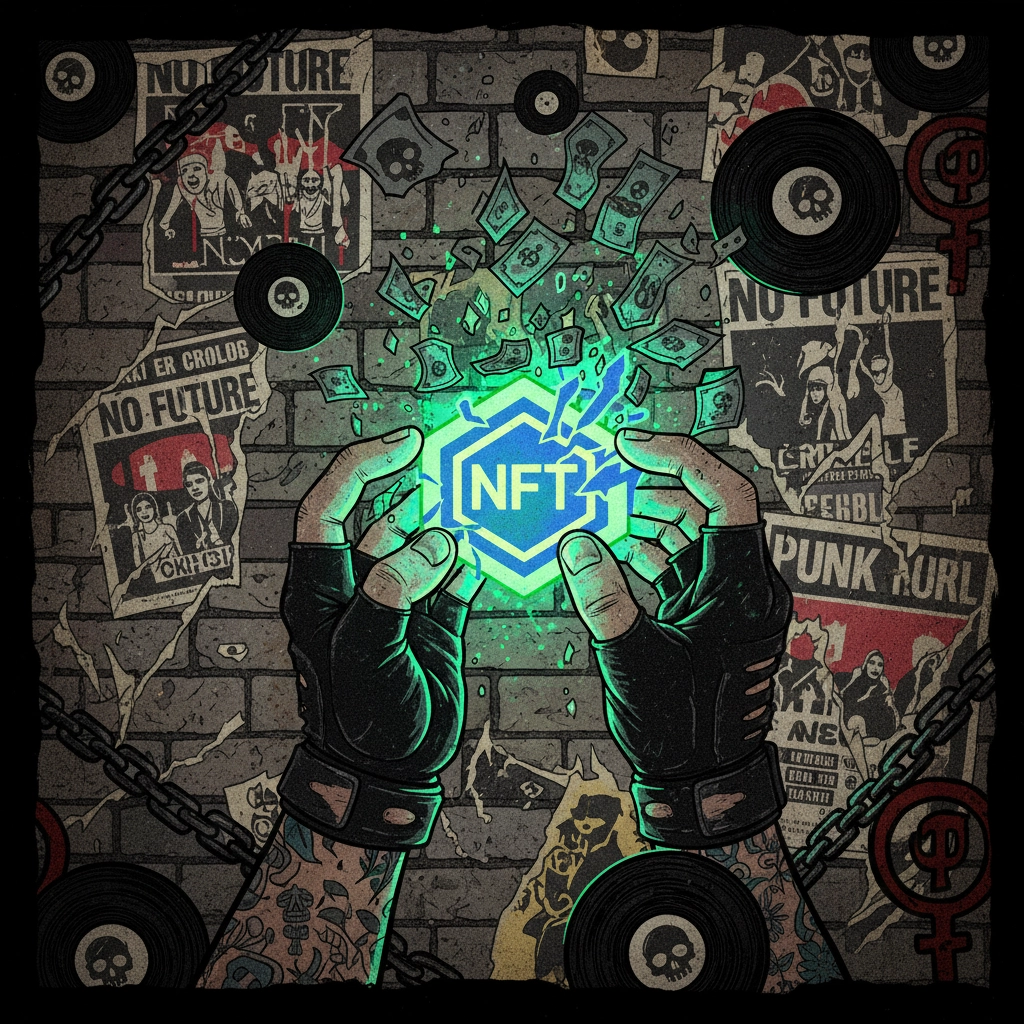
    image_1

    2. Set Up Smart Contract Royalties That Actually Work

    Traditional royalties are a bureaucratic nightmare. Blockchain smart contracts cut through the bullshit. Every time your music gets used—whether it's in a TikTok video, podcast intro, or commercial—the smart contract automatically pays you.

    No more waiting 6 months for some accountant to "process" your royalties. No more mysterious deductions. The blockchain doesn't lie, and it doesn't take coffee breaks. Check out how decentralized royalties actually work and why they're the future.

    3. Create Fan Investment Opportunities

    Here's where it gets interesting. Instead of begging fans to "like and subscribe," let them actually invest in your success. Blockchain platforms let you tokenize future earnings from albums, tours, or merchandise.

    Your fans buy tokens representing a share of your next album's profits. When the album makes money, token holders get paid automatically through smart contracts. It's like Kickstarter, but your supporters actually own something valuable.

    4. Build a Direct-to-Fan Subscription Model

    Platforms like Bandcamp are cool, but they still take their cut. Blockchain lets you build a completely direct relationship with your audience. Set up a token-gated subscription where fans pay monthly in cryptocurrency for exclusive content.

    No platform fees. No algorithm manipulation. No corporate overlord deciding who sees your content. Just you and your fans, cutting out every parasitic middleman.
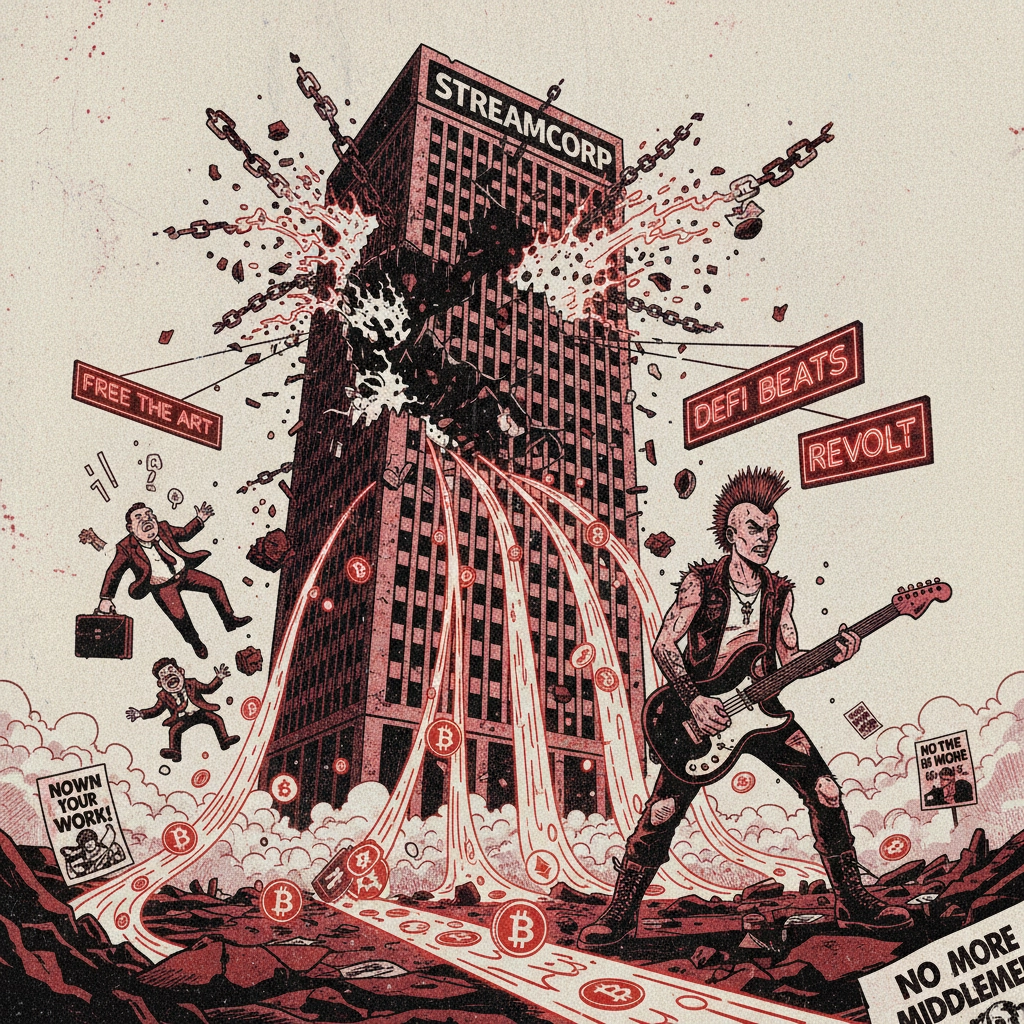
    image_2

    5. Monetize Your Music Data

    Every stream generates valuable data about listening habits, demographics, and preferences. Guess who's making money from that data? Not you. Spotify and Apple Music sell your audience insights to advertisers while paying you peanuts.

    Blockchain platforms are emerging that let artists own and monetize their own data. Instead of giving away this valuable information, you can sell it directly to brands, researchers, or other musicians looking to understand market trends.

    6. Launch Community-Driven Music Investment DAOs

    A DAO (Decentralized Autonomous Organization) is basically a business that runs itself through smart contracts. Create a DAO where your community collectively funds and profits from your music projects.

    Fans contribute cryptocurrency to fund your next album or tour. In return, they get voting rights on creative decisions and automatic profit sharing when the project succeeds. It's democracy meets capitalism, with no record label breathing down your neck.

    7. Exploit Cross-Chain Arbitrage Opportunities

    This one's advanced, but it's where the real money lives. Different blockchain networks value the same digital assets differently. If your music NFT sells for 0.1 ETH on Ethereum but 0.15 ETH equivalent on Polygon, you've got an arbitrage opportunity.

    Smart traders are making serious money moving assets between chains to exploit these price differences. As a musician, you can mint your content on multiple blockchains and profit from the price gaps.
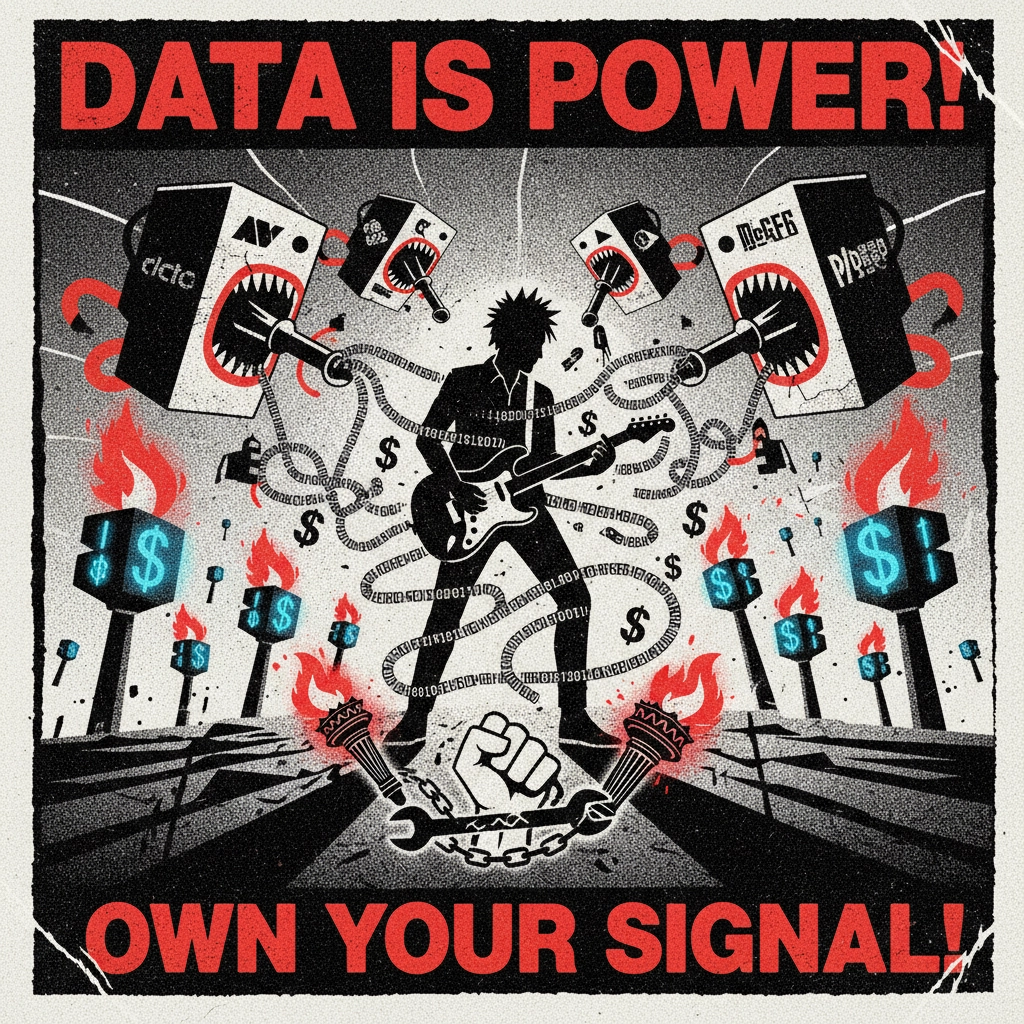
    image_3

    The Real Revolution Is Economic Freedom

    Look, I'm not saying blockchain is perfect. The technology is still evolving, and yeah, there are scammers and speculators muddying the waters. But for the first time in decades, musicians have tools to bypass the corporate gatekeepers completely.

    The streaming platforms want you dependent on their algorithms and their pennies. They've built a system where artists compete against each other for scraps while the platform owners get rich. That's not free market capitalism—that's digital feudalism.

    Blockchain flips the script. Instead of begging Spotify's algorithm for visibility, you're building direct economic relationships with people who actually value your work. Instead of getting paid months later through some opaque royalty system, smart contracts pay you instantly.

    Start Small, Think Big

    You don't need to revolutionize the entire music industry overnight. Pick one of these hacks and test it with your most engaged fans. Maybe start with music NFTs or a simple token-gated subscription model.

    The key is ownership. Own your audience data. Own your distribution channels. Own your revenue streams. Every dollar you make through blockchain is a dollar you're not giving to some Silicon Valley algorithm farmer.

    Want to learn how fans can actually invest in artists? We've got the breakdown of exactly how these investment models work and why they're exploding right now.

    The music industry establishment doesn't want you to know about these opportunities. They profit when you're desperate and dependent. But you're not stuck in their system anymore.

    Time to stop playing their rigged game and start building your own. The tools are here. The technology works. The only question is whether you're ready to take control of your own financial destiny.

    Because Spotify sure as hell isn't going to do it for you.

    Spun Web Technology SMART SEO

    Spun Web Technology SMART SEO

  • Arbitrage Sports Betting – The Loophole in the House’s Game

    By Ryan “Dickie” Thompson – Disruptarian Radio

    This is not financial advice. It’s not an endorsement. It’s simply a logical breakdown of a phenomenon that’s been quietly exploited by everyone from weekend gamblers to Warren Buffett himself (yes, that Warren Buffett — see The Art of Stock Arbitrage ).

    If you’ve been anywhere near sports betting circles, you’ve seen the circus — celebrity endorsements, “get-rich betting tips,” and enough hype to make your grandmother clutch her pearls. She’d probably tell you betting on sports is foolish, and she’s mostly right — the odds are built to make the house rich, not you.

    But there’s a wrinkle in the system.
    A rare and fascinating one.

    It’s called arbitrage sports betting — or “arbing” if you want to sound like you’ve been doing this since the horse-and-buggy days of bookmakers. It’s not gambling in the traditional sense, because it doesn’t rely on guessing who will win. Instead, it exploits a pricing discrepancy between different betting platforms to lock in a profit no matter the outcome.


    How It Works – Betting on Both Horses in the Race

    Imagine the Golden State Warriors are playing the Chicago Bulls.
    Bookmaker A offers 2.83 odds on the Warriors winning.
    Bookmaker B offers 1.67 odds on the Bulls winning.

    With the right calculations, you can place one bet on each outcome — in the exact proportions — so that no matter who wins, you walk away with more than you spent.

    Example:

    • Total money to bet: $1,000
    • Bet $370 on the Warriors (at 2.83)
    • Bet $630 on the Bulls (at 1.67)

    If the Warriors win: you get $1,047 back.
    If the Bulls win: you get $1,052 back.

    Either way, you’ve turned $1,000 into about $1,050 — a guaranteed ~$50 profit without “risking it all on a hunch.”


    The Catch

    Before you start counting your future yacht money, understand this:

    • Such discrepancies in odds don’t happen constantly. Hunting for them manually is like sifting for gold with a spaghetti strainer — you’ll waste hours.
    • Bookmakers hate arbitrage bettors. It’s a lose-lose for them, so they share data, run algorithms, and will restrict or ban accounts they suspect are doing it.

    This means if you go too big too fast, you could get limited to $50 bets or shown the door entirely.


    The Tech Makes It Possible

    In the past, arbitrage betting was the realm of spreadsheet warriors. Now, AI-driven tools like OddsJam and ArbitrageCalc do the heavy lifting — scanning thousands of games across dozens of platforms in real time, flagging those rare mismatched odds that create risk-free opportunities.

    One documented week-long experiment (by YouTuber Baxter Persse) used such software to generate over $2,600 in profit in just seven days — starting small, scaling up, and catching one particularly juicy 17% arbitrage opportunity.


    Why Warren Buffett’s Name Comes Up

    While Buffett isn’t known for betting on basketball games, the principle behind sports arbitrage is identical to what he’s done in financial markets:

    • Identify two markets valuing the same asset differently.
    • Buy in the cheaper market, sell in the more expensive one.
    • Pocket the spread with minimal risk.

    In stocks, it’s called merger arbitrage. In sports, it’s called arbing. Different arenas, same mindset.


    Reality Check

    Arbitrage sports betting is not a lifetime career for most people:

    • Platforms evolve to detect it.
    • Opportunities can dry up during slow seasons.
    • Managing multiple accounts and bankrolls can get messy.

    But as long as new betting platforms keep popping up — and they are, constantly — these opportunities will exist in some form. For those with discipline, the right tools, and a tolerance for account restrictions, it can be a short-term profit machine.

    For everyone else? It’s an interesting look at how even the “always-win” business of sports betting can have cracks in the foundation.


    Sources & Further Reading:

    Spun Web Technology SMART SEO

    Spun Web Technology SMART SEO

  • The Flexibility of Plastic People: When Convictions Bend for Convenience

    By Ryan “Dickie” Thompson

    I was married for 18 years. Before I met my wife, she had gone from being a practicing Wiccan witch to a Born-Again Christian—a decision she made at her brother’s church.

    I had found my relationship with Christ a few years earlier, though my past—like hers—was very different from my life in Christ today:
    Read My Story

    We both claimed to believe in traditional values. She was, at that time, the only woman I knew without tattoos or piercings—not even in her ears. We seemed to be on the same page in every way.


    The Turning Point

    After my car accident, everything changed. She staged what I can only describe as a hostile takeover of everything—financially and otherwise—arguing that because I had looked at porn, I didn’t deserve respect.

    But this wasn’t a new topic. We had discussed it before marriage with no negative pushback. In fact, I brought it up with her again before the accident, explaining that I felt we were becoming less intimate and that I felt sexually neglected. I was honest that I had been turning to porn and was not satisfied in our relationship.

    Two months later, I was in a horrific crash:
    News Report


    Before the Crash

    At the time, I was working 96 hours a week, not counting travel. I had driven from Northern California to Seattle for training and work, going three days without sleep.

    The night before the crash, I recorded this video—grateful to be working hard for my family:
    Watch Here

    Thirteen days earlier, I had filmed another video about volunteering to help wounded warriors in the Tough Mudder endurance challenge:
    Watch Here

    And here’s me in the hospital after the accident:
    Watch Here


    The Fallout

    Two weeks after the crash, while I was in a wheelchair with over 40 broken bones, she unleashed a barrage of condemnation over the porn issue—this time in front of her mother, stepdad, and my children. This was something I had always discussed privately with her in the past.

    Before we were married, she had a scholarship to attend Westminster in Salt Lake City. I volunteered to pay for our housing, food, and expenses while she was in school. To do that, I quit my comfortable job at MSN/Microsoft—where I had made significant strides in technical support—and took a higher-paying but grueling steel construction job at Action Target.

    While I was away working, she quit school and moved back to her parents’ house without telling me.

    The first time we discussed porn was before marriage, when a hotel bill for movies (porn) came up. The second time was in May 2013, shortly before my accident. Both times, I brought it up. I never hid it.


    Divorce and More Betrayals

    Over the next seven years, this issue kept coming up. I filed for divorce three times—canceling twice before finally following through in 2020.

    In September 2020, we agreed to end the marriage. I went to Ireland to be with a mutual friend, but she stirred up drama there as well. For years, she had been backstabbing me in our friend groups while traveling, lying to me, and betraying me—something I documented here:
    Watch Here

    Three months later, we were done for good.


    The Shift

    She soon found a new partner—a transgender man who dressed as a woman—and abandoned everything Christian or traditional. She began openly hating Trump and supporting every part of the LGBT political agenda.

    She calls it “growth.”
    I call it being plastic—bending to fit whatever is popular at the moment.

    From Wiccan → Christian → LGBT activist… that’s not growth, that’s drift.

    Meanwhile, I remain a disciple of Christ. My understanding has deepened, but my convictions are the same.


    A Warning to Others

    If your partner or friends can change their values with the cultural winds, you will probably be betrayed at some point. Stick with those who are rock solid, not those who have no constitution.

    Sadly, my ex-wife has influenced our kids into identifying with various forms of LGBT ideology. They now swear constantly and have grown hateful—something I never would have imagined years ago.

    Here are my kids in 2015, before she threatened to turn them against me. She even made this Father’s Day video:
    Watch Here

    Looking back, I realize I never truly knew her in those last seven years of our marriage.

    Sincerely,
    Ryan “Dickie” Thompson


    Sources:

    Spun Web Technology SMART SEO

    Spun Web Technology SMART SEO

  • Treat Trans Ideology Like a Religion | Ryan Thompson on Disruptarian Radio

    Treat Trans Ideology Like a Religion | Ryan Thompson on Disruptarian Radio

    Disruptarian featured image for Treat Trans Ideology Like a Religion | Ryan Thompson on Disruptarian Radio

    Verified at: 2026-06-21T12:55:31

    Treat Trans Ideology Like a Religion | Ryan Thompson on Disruptarian Radio is the kind of subject that fits the Disruptarian lane because it sits where independent media, culture, music, and political commentary collide.

    The source description frames it this way: A Rumble-focused Disruptarian version of Treat Trans Ideology Like a Religion | Ryan Thompson on Disruptarian Radio. Ryan Thompson frames the topic through political commentary, culture war pressure, media narratives, and public trust, with a direct independent-media voice and no corporate filter. Original YouTube title: Treat Trans Ideology Like a Religion | Ryan “Dickie” Thompson on Disruptarian Radio. Original source video: https://www.youtube.com/watch?v=h7gNtI7jVPk Disruptarian: https://www.disruptarian.com

    The useful question is not only what happened, but why the story matters to people who distrust scripted narratives, recycled outrage, and corporate-approved commentary.

    A Disruptarian reading starts with individual agency. The listener is not asked to accept a packaged conclusion. The point is to pull the claim apart, compare incentives, and look for the pressure points that legacy media often skips.

    That approach matters for libertarian radio commentary because the audience is usually looking for more than a headline. They want context, motive, contradiction, and a practical sense of how public stories become private consequences.

    The cultural layer is just as important. Disruptarian music and reggae punk energy are not decorations around the message. They give the work its rhythm: skeptical, confrontational, and rooted in the idea that speech should stay alive even when institutions prefer silence.

    For search readers arriving cold, the primary source is included below either as an embed or as a direct source link. Start there if you want the full tone, timing, and argument. The written analysis expands the title and description into a searchable article that can stand on its own.

    The strongest SEO value here is clarity. The article keeps the title language visible, uses descriptive headings, and connects the topic to Disruptarian Radio, independent media, libertarian commentary, political culture, and original music without stuffing the page with empty repetition.

    The larger takeaway is simple: independent commentary survives by documenting what was said, preserving the source, and adding a point of view that does not depend on permission from gatekeepers.

    That is why this post exists as part of the static Disruptarian archive. The video remains embedded, the title and description remain traceable, and the surrounding article gives search engines and readers enough context to understand why the episode belongs in the broader Disruptarian catalog.

    The title itself carries the first keyword signal, but a durable post needs more than a copied headline. It needs a clear H1, a concise meta description, a featured image with descriptive alt text, and enough editorial framing for readers to know why the video is part of this archive.

    From an independent media perspective, the value is in keeping the primary source visible. Embedding the video prevents the article from becoming detached commentary. Readers can compare the written interpretation against the actual recording and decide whether the argument holds up.

    The libertarian angle is not automatic partisanship. It is a suspicion of concentrated power, public manipulation, and narratives that ask citizens to outsource judgment. That suspicion applies to government, platforms, corporations, activist institutions, and media brands alike.

    Disruptarian Radio also treats culture as evidence. Music, political language, online mobs, censorship fights, moral panics, and personal stories all reveal where pressure is being applied. That is why a radio episode can be more than entertainment; it can become a record of a moment.

    For listeners who follow DJ Disruptarian, the same pattern shows up in the music catalog: reggae rhythm, punk edge, spiritual critique, and anti-authoritarian instinct. The written post keeps that identity attached to the video instead of letting it disappear into a platform feed.

    Good SEO on a page like this should help people find the conversation without flattening the voice. The article uses natural phrases such as Disruptarian Radio, independent media, libertarian podcast, political commentary, original music, and disruptive conversations only where they make sense.

    The featured image should follow the Disruptarian editorial-collage style: torn paper, smoke, halftone grit, dirty cream paper, black and oxblood pressure, muted gold accents, and symbolic props tied to the subject rather than generic filler. Its alt text names the subject so search engines and screen readers get useful context.

    The article also keeps a stable URL under the static blog. That matters because feeds move, platforms change embeds, and social links decay. A static post gives the episode a second home that can be indexed, backed up, linked, and reviewed later.

    The final point is documentation. When a channel publishes a new video, the title and description are often the only structured metadata available. Turning that metadata into a post creates a stronger archive without pretending to replace the original recording.

    This is the practical Disruptarian method: preserve the video, state the source, add commentary, keep the searchable terms honest, and let the reader move between the embedded media and the written analysis without friction.

    This additional context keeps the post useful for readers who arrive from search rather than from the original channel. It explains the source, preserves the embed, and connects the subject back to the larger Disruptarian archive.

    This additional context keeps the post useful for readers who arrive from search rather than from the original channel. It explains the source, preserves the embed, and connects the subject back to the larger Disruptarian archive.

    This additional context keeps the post useful for readers who arrive from search rather than from the original channel. It explains the source, preserves the embed, and connects the subject back to the larger Disruptarian archive.


    The shortlink was copied to your clipboard

    X
    f
    r

    Related Reading

    Similar posts


    Disruptarian Blog

    2026-06-21

    Disruptarian Blog

    Disruptarian commentary on Charlie Kirk Assassinated September 10th 2025 – My commentary with embedded source video, independent media context, and libertarian radio analysis.

  • Why Treating Trans Ideology Like a Religion Makes the Most Sense

    By Ryan “Dickie” Thompson

    In the culture war over gender identity, one of the most underused and overlooked solutions is the simplest: treat trans ideology the same way we treat religion. That’s not meant as a put-down. It’s actually a framework that could help bring clarity, fairness, and peace to an increasingly divisive issue. If someone sincerely believes they were born in the wrong body, that’s fine. But just like with religion, belief does not obligate others to agree or participate.

    Let’s break it down. My response based on the following Vlog by “King Critical”


    What is a Religion?

    According to Merriam-Webster, religion is:

    “A personal set or institutionalized system of religious attitudes, beliefs, and practices.”

    • a particular system of faith and worship.plural noun: religions“the world’s great religions”
    • a pursuit or interest to which someone ascribes  supreme importance.”consumerism is the new religion”

    This can include belief in things that are unverifiable or faith-based—heaven, karma, reincarnation, or divine intervention. Religious belief isn’t something we demand everyone else affirm. A Catholic doesn’t expect a Muslim to accept the Trinity. A Buddhist doesn’t insist a Christian agree with reincarnation. You’re free to believe as you wish, but you’re not free to force others to participate in your belief system.

    This is the logical, fair approach. It respects freedom of conscience while protecting others from being compelled into ideological compliance.

    So how does this relate to trans identity?


    Trans Identity as a Belief System

    When someone says they are a “woman trapped in a man’s body,” what they are really expressing is a deeply held personal belief. This is not a biological fact. Biologically, sex is binary and determined by chromosomes (XX or XY). Gender dysphoria, the discomfort some people feel with their sexed body, is real. But the idea that someone is the opposite sex based on feelings is metaphysical, not material.

    That makes it a belief. And not just a private belief, but one that increasingly comes with rituals (pronoun declarations), dogma (“trans women are women”), and even heresy laws (misgendering is hate speech).

    This belief system doesn’t require evidence. It requires affirmation. That’s the core of faith.

    So if we follow the logic, trans identity is not just a personal statement. It functions like a religion.


    Why This Matters

    Here’s the thing: If someone believes something sincerely, that belief can still be wrong or not universally applicable. Take religion. A devout Hindu might believe eating beef is sinful. But they don’t have the right to stop you from ordering a cheeseburger.

    Likewise, someone can believe they are a woman, but they shouldn’t have the right to compel everyone else to see them as such.

    Trans ideology insists that others change their speech, views, and even their policies to comply with a personal identity belief. That’s coercion. And that’s the exact kind of overreach that would never be tolerated if it came from a religious group.

    If a Christian demanded the state recognize the Holy Trinity on official documents or forced public schools to teach that Jesus is Lord, people would call it out for what it is: religious imposition.

    So why is it any different when the state rewrites legal definitions of sex to accommodate gender identity?


    No Trinity Recognition Act, No Gender Recognition Act

    As noted in my breakdown of the debate with Papa Gut, if we acknowledge trans identity as a belief system, then the very existence of legal mechanisms like the Gender Recognition Act becomes questionable. Why? Because we don’t legally validate other faith-based claims.

    There is no law that says the government must recognize someone’s belief in the Trinity, karma, or reincarnation. And rightly so. The state has no business affirming religious or metaphysical claims.

    So why does it affirm gender identity, which is, at its core, a metaphysical claim?


    The Moral Weight of Labels

    Trans ideology turns labels like “man” and “woman” into moral statements rather than biological descriptions. If you misgender someone, it’s treated not as a factual mistake but as a moral sin.

    But this only makes sense if we assume there is moral significance to these categories. In reality, “woman” is simply a biological term, not a badge of honor or insult.

    To call a man a woman because he feels like one is like calling a person Catholic because they light a candle and say Hail Mary—without believing in Catholic doctrine. It’s a superficial performance of identity, not actual membership in the category.


    Why This Framework Works

    Treating trans identity like a religion has benefits for everyone:

    • Freedom of belief: Trans individuals can believe what they want and live according to that belief.
    • Freedom from coercion: Others aren’t forced to affirm, adopt, or participate in beliefs they don’t share.
    • Boundaries for policy: The state doesn’t write laws based on metaphysical beliefs.
    • Respect for science: Biological sex remains a stable and factual category.

    You can be kind without capitulating. You can be respectful without affirming untruths. Just like you can respect a Muslim without saying “There is no god but Allah,” you can respect a trans-identifying individual without saying “trans women are women.”


    A Year in Southeast Asia Changed My Perspective

    I’ve spent the last year traveling throughout Southeast Asia. In all that time, I haven’t seen a single Pride flag. Not one trans flag either. No pronoun pins. No obligatory public displays of affirmation. And yet—here’s the kicker—there are still feminine boys, masculine women, gays, cross-dressers, and more.

    They exist. They live. They are seen. But they are not demanding to be affirmed. And nobody is forced to play along. Yet I haven’t seen a spike in suicides, assaults, or mental breakdowns. The people living outside gender norms seem just fine.

    This raises an important question: If constant affirmation isn’t required there, why is it a moral mandate in the West? Maybe affirmation culture is not the solution we’re told it is. Maybe it’s a symptom of deeper issues, not a cure.


    The Parental Standard: Belief Without Force

    As a father, I’ve spent years raising my kids in a home where I live by strong Christian convictions. I’ve shared my testimony at Baptist conventions. My belief in Jesus isn’t lukewarm—it’s central to who I am.

    But I’ve never forced my children to adopt my faith. I don’t require them to pray, quote scripture, or attend church. That’s because I believe in conscience, not coercion.

    So it doesn’t sit right when someone expects me to adopt their belief system. I don’t ask my kids to recite creeds. Why should they ask me to affirm a metaphysical claim I don’t believe?

    Requiring me to use someone’s self-declared pronouns is like requiring someone to say grace before meals or confess a Bible verse in conversation. It’s religious behavior cloaked in the language of identity.

    Let people believe what they want. But don’t force others to speak your creed.


    Conclusion: Believe What You Want, But Don’t Make It Law

    If people want to believe they are a different gender than their biology, they are free to do so. That’s part of a free society. But freedom of belief is not freedom to force others to join in.

    Treating trans ideology like a religion is a way to defuse the conflict without denying anyone’s rights. Believe what you want. Live how you want. But don’t force others to pretend your belief is fact.

    In a pluralistic society, the best way to maintain peace is to keep belief voluntary and private. That includes religion. And that includes gender ideology.ntity politics, trans activism, gender law

    good ideas do not require force
    Spun Web Technology SMART SEO

    Spun Web Technology SMART SEO

  • A Tribute and an Apology: A Son’s Reckoning with Legacy, Grief, and Healing

    By Ryan “Dickie” Thompson

    When Ryan “Dickie” Thompson titled his June 26, 2025 vlog “A Tribute and an Apology,” he signaled something raw, real, and deeply personal. In his conversation on Disruptarian Radio, hosted by Amy, he let listeners into the heart of a complex journey—a man shaped by his father’s legacy, scarred by family conflict, and determined to break the cycle of silence that so many men endure.

    1. A Father of Integrity—Richard Glen Thompson

    Ryan paints his father as a man of fierce purpose: a civic-minded rancher, construction business owner, and city‑planning advocate in Mapleton, Utah. He carried “a principle that his ideals weren’t just beliefs—they were calls to action.” When Mapleton’s sewage‑system crisis arose, his father proposed a major overhaul—sourcing pumps from Geneva Steel, drafting plans—only to see the vision sidelined at the time. Years later the city is still exporting their waste to Spanish Fork to be processed at premium rates.
    Where if the city collected and then processed the waste to be treated locally, the cost of this process would save the city 10-20% per year. Which if combined as a whole, would have ben savings to the city and to tax payers millions and millions of dollars. Since the 1990s.

    But then politics, and gentrification systems installed there, will push out ways to make it more affordable to live there. Growth is not a primary issue for these cities, and by design.

    So I see the metric. But still what my father was proposing was a sound and easily executed solution to localized infrastructure, and still could be sold at a premium rate, and people are still happy to pay that fee, just to live there.

    It’s just an interesting milepoint that I compare now looking back, first hand, how certain forks in the road, my both feel like a bad but necessary choice to make. One way would have worked in it’s own way. The other also able to nearly autonomously be able to function perfectly and more productively in its own way.

    At home, Richard was the proud patriarch of nine children and eighteen grandchildren. Ryan remembers him introducing himself with beaming pride: “I have nine children.” He speaks warmly of growing up on a ranch in Arizona: learning responsibility and resilience, confronting loss—like a tough year when calves died while Dad was away—and realizing that nothing worth building comes easy.

    2. The Cowboy Code: Grit, Honor, and Empathy

    To Ryan, his father was a real‑life cowboy: gritty, honest, and anchored in a code of honor. That cowboy spirit permeated his work—whether repairing machinery, building homes, or tending animals. Ryan says that Dad “demanded both excellence and honesty” and taught lessons through both tenderness and tough love. Even when he didn’t always see eye‑to‑eye, Ryan recognizes those moments now as foundational to his own character.

    3. Childhood Conflicted: Anger, Absence, and Misdirection

    But not all was idyllic. Ryan admits he grew up angry. His father worked sixteen‑ to eighteen‑hour days; he missed him and misunderstood his absence as rejection. Even more painful was the home conflict: emotional manipulation, false accusations—enough to bring charges against his father after a confrontational incident involving a chair. Ryan says, “I watched the truth get twisted until reality became… unrecognizable.” It taught him the hard way that if you have no documentation or defense, lies can feel like reality.

    He even credits this trauma with shaping his later life: launching a security business and documenting everything, so he—and any other man—couldn’t be taken by surprise or silenced by falsehood. Leading to two projects www.veracitylife.com (completed), and presently www.veracityintegrity.com (active as of 2025)

    4. Rebuilding Fatherhood: Marriage, Workaholism, and Tragedy

    Determined to rewrite that narrative, Ryan built businesses so his wife could homeschool and pursue her passions. He worked one hundred‑hour weeks, eliminating bars, distractions, friends—only work and family. But it almost killed him. Burned out, fatigued, he drove straight from Northern California to Seattle, worked nonstop, then was hit head‑on by a drunk driver who died instantly.

    Before the accident (volunteering to complete the Tough Mudder)
    Hours before the accident (talking about my long long work days, with sometimes no sleep for a week)
    After the accident (why I blog) while in the hospital

    In a wheelchair and humiliated by the ordeal, he faced the unfiltered consequences of modern parenthood—mockery and accusations—not for abuse, but for being emotionally checked out and dependent on pornography during lonely stretches. His wife exposed him in front of her parents and his kids over something he had tried to be honest about. He found himself vilified—“the villain”—despite having sacrificed everything he had for his family.

    5. The Silent Crisis: Men’s Pain and Social Pressure

    Ryan sees his story as part of a broader epidemic. “Men… silently suffering” endure the most dangerous jobs, die younger, lose custody more often, and still are told to “man up.” The stigma around vulnerability kills—literally. He points to men’s high suicide rates and insists our silence is deadly. “We need to create a space where men can speak their truth without fear of further condemnation.”

    He acknowledges that women face burdens too, but stresses that men’s burdens are unique, deserving acknowledgment. It’s not a competition—it’s a call for honesty, empathy, and space for men to feel deeply without shame.

    6. Reconnecting: To Children, Family, and Hope

    To his kids, Ryan says, “I never stopped loving you.” He didn’t leave because he gave up—he fled to survive. He’s reconnecting with their sister abroad, careful, honest. His hope: that his children will feel safe enough to reach out, to meet with forgiveness, understanding, and opened arms.

    And he issues a broader invitation: share this story not for him, but for the next man carrying his own private burden. To offer solace where isolation threatens.

    7. Lessons for Disruptarian Readers

    Ryan’s experience speaks powerfully to libertarian and free‑market values:

    1. Individual Responsibility & Accountability. He took agency—starting businesses, documenting truth, building bridges—rather than leaning on government or victimhood.
      Ryan’s autobiography from when he was 20 is here: mystory.behindzioncurtain.com (archive)
    2. Stoic Resilience. Echoing his father’s integrity, he endured loss, injustice, injury, and betrayal while refusing to be defined by bitterness.
    3. Voluntary Connection & Healing. Without mandates, he’s actively rebuilding broken relationships through honesty, humility, and open invitation.
    4. Breaking Silence to Save Lives. Emotional freedom isn’t just philosophical—it’s life‑saving. By speaking openly about pain, he champions the ultimate voluntary exchange: vulnerability for hope.
    Spun Web Technology SMART SEO

    Spun Web Technology SMART SEO

  • The Weaponization of Family: How Parental Alienation is Tearing Apart American Homes—And Freedom Itself


    In the endless culture wars, there’s one battlefield that gets ignored—because it’s quiet, personal, and devastating: parental alienation. This isn’t just some squabble between exes. It’s a full-blown psychological and legal campaign where one parent manipulates a child to hate or reject the other parent, often without any valid reason.

    As a punk rock libertarian, I see this as a direct assault on freedom, family, and the individual. And it’s happening on a massive scale.

    A peer-reviewed study published in Children and Youth Services Review reveals that:

    • Over 30% of parents in the U.S. and Canada report being alienated from a child by the other parent.
    • 22 million American parents are targeted by alienation behaviors and are not retaliating.
    • Over 3.8 million children are moderately to severely alienated from a parent.
    • Half of these alienated parents have considered suicide in the last year.

    This is a national tragedy that’s been swept under the rug. And you don’t have to look far to see it playing out—just look at the lives of Elon Musk and Brad Pitt.


    Elon Musk and the Ideological Divide

    Elon Musk isn’t just the world’s richest man—he’s also a father who’s been publicly estranged from his child.

    His child, originally named Xavier Musk, legally changed their name and gender to Vivian Jenna Wilson in 2022 and completely severed ties with Musk. Vivian reportedly said, “I no longer wish to be related to my biological father in any way.”

    Musk, never one to hold back, blamed the rift on radical ideology, calling it a “woke mind virus” that infected elite schools and progressive social circles. He believes this ideological manipulation pushed his child to disown him.

    Critics call this excuse-making. But when 22 million parents report being alienated by ideological or emotional manipulation, Musk’s case doesn’t seem so outlandish. This is what happens when cultural extremism gets personal—and children become the weapons.


    Brad Pitt: Hollywood’s Cautionary Tale

    Then there’s Brad Pitt, once the king of Hollywood, now the estranged father of six children shared with Angelina Jolie. The couple split in 2016 after allegations of abuse—which were later dismissed by both the FBI and the L.A. Department of Child and Family Services.

    Yet Jolie has pursued sole custody for years, and at least one of their children—Shiloh Jolie-Pitt—recently dropped the “Pitt” from her name.

    Shiloh was once praised for “defying gender norms” as a child who dressed in suits and was embraced by LGBTQ-positive media. But as she matures, her retreat from the spotlight and name change signal a shift—and a possible wedge between her and her father.

    Is this just adolescent evolution? Or is this another case of a parent being systematically erased?

    In many families, the lines between progressive ideology and parental alienation are not so easily drawn. But the effect is the same: the severing of the father-child bond, often using the court and cultural pressure as tools.


    This Is Psychological Warfare—Not Just Custody Battles

    Parental alienation isn’t just unfortunate. It’s abuse.

    It’s:

    • Rewriting a child’s memory of their parent
    • Withholding contact or poisoning communication
    • Encouraging a child to “choose” sides
    • Using therapists and legal systems to validate emotional manipulation

    The Children and Youth Services Review study makes it clear—alienation can be deeply traumatic. It warps a child’s identity and sense of security. And for the parent being cut out? Half of them are so crushed, they’ve considered ending their lives.

    That’s not just tragic. That’s criminal.


    From a Libertarian Lens: This Is Tyranny in the Home

    Libertarians stand for voluntary relationships, mutual consent, and individual freedom. What is parental alienation if not the coercive control of a child’s loyalty by an embittered parent backed by a broken legal system?

    The state too often enables this dysfunction. Courts are slow to identify alienation, quick to believe false allegations, and terrified of challenging ideological narratives, especially around gender, identity, and mental health.

    Here’s the truth: if a child is being used as a pawn in a social or political cause, that child is not free.


    What Needs to Happen: Real Reform for Real Families

    If we’re serious about liberty, then family court reform and recognition of parental alienation as abuse must be on the table. Here’s what we demand:

    • Shared parenting by default: Unless there is clear evidence of abuse, both parents should have equal rights.
    • Penalties for alienation tactics: Courts must treat manipulation of children as psychological abuse—not “strategy.”
    • Judicial education: Judges, lawyers, and therapists must be trained to spot alienation and prevent bias.
    • Respect for parental due process: No parent should lose access to their child without a full, fair hearing.
    • Ideological neutrality in schools and therapy: Children must be shielded from one-sided ideological influence during formative years.

    Final Word: Family Is Not a Battleground

    Whether it’s Elon Musk, Brad Pitt, or your average divorced dad in Des Moines, no parent should be erased because they don’t fit a narrative. Alienation is not liberation—it’s indoctrination and emotional extortion.

    As a punk rock libertarian, I’ll always fight for the rights of parents to raise their kids free from coercion, courts, and cultural brainwashing.

    Family is the most voluntary association there is—let’s defend it like we mean it.


    🔍 Sources and Further Reading

    • Harman, Jennifer, Matthew J. Sullivan, and Edward Kruk. (2019). Parental alienation: The development of a model to understand parent-child relationships after separation. Children and Youth Services Review, Volume 106. ScienceDirect Study
    • “Elon Musk Says Trans Child Was Figuratively Killed by the ‘Woke Mind Virus’.” New York Post, July 2023. NY Post
    • “Vivian Jenna Wilson Breaks Silence on Elon Musk.” Teen Vogue. Teen Vogue
    • “Shiloh Jolie-Pitt Drops ‘Pitt’ From Her Name.” Hello Magazine, May 2024. Hello Magazine
    • “Parental Alienation.” Wikipedia Overview. Wikipedia
    • How feminism and communism was weaponized against the family Disruptarian Radio November 16th 2024

    Spun Web Technology SMART SEO

    Spun Web Technology SMART SEO

  • Christians Under Siege in Capitol Hill: Seattle’s New No-Go Zone for Truth and Faith

    By Ryan “Dickie” Thompson
    Disruptarian.com | The Punk Rock Libertarian

    I lived in Capitol Hill, Seattle, in the 1990s. Back then it was weird, loud, and a little smelly—but it was also alive. You could argue politics in the street, play punk rock at Cal Anderson Park, and walk home without a mob demanding ideological purity. Fast forward to now: it’s no longer just weird—it’s occupied. And not in a charming squatters’ rights kind of way. It’s a cultural no-fly zone for Christians, conservatives, and anyone who still believes men can’t get pregnant.

    This past weekend, Seattle’s Capitol Hill proved that while CHAZ (the Capitol Hill Autonomous Zone) may be dead on paper, its spirit of lawlessness and radical intolerance lives on.

    CHAZ 2.0: Still Burning, Just Without the Borders

    Remember CHAZ? The six-block clown circus turned “autonomous nation” in 2020 where warlords with SoundCloud rap careers played dictator while black kids got shot in the name of peace? The place where socialists discovered you can’t live on weed, murals, and stolen Clif Bars alone? Yeah, that experiment collapsed like a trust-fund Marxist on their first day without a barista. But the ethos of CHAZ remains. In 2025, Capitol Hill is still the wild west—except the sheriffs are drag queens, and the outlaws are Christians holding hymnals.

    At Cal Anderson Park, a peaceful Christian concert organized by Mayday USA was violently shut down by Antifa militants and trans activists. The event was legal, permitted, family-friendly, and faith-driven. Songs of praise were met with shrieks of rage. Bibles were confronted with fists, middle fingers, and shrill accusations of “hate.” All while the police stood by—until they eventually shut down the Christian event at the request of the city.

    Let me say that again: the government of Seattle ended a legal, peaceful Christian event because trans activists and Antifa decided to assault them.

    Welcome to the new America—where you can wave a sex toy at a child in the name of “Pride” but get handcuffed for singing “Amazing Grace.”

    A Clash of Kingdoms: Good vs. Godless

    The footage is chilling. Christians singing, children clapping, families praying. Then, in true demon-summoning fashion, comes the mob—blue hair, balaclavas, screeching voices and profane signs. They throw water balloons, push police, and storm the stage like it’s Berlin circa 1933. All because someone dared to stand in a public park and declare that children shouldn’t be chemically castrated.

    You know who used to do that kind of thing? The Taliban. Or ISIS. Or, apparently now—Seattle progressives.

    Matt Walsh said it right: this wasn’t a protest, it was a “kingdom clash.” One side came to worship the Creator. The other came to unleash chaos. One side sang about love and forgiveness. The other side spat venom and screamed “F your kids!” at families with strollers. This isn’t political discourse anymore. It’s spiritual warfare in Birkenstocks and fishnets.

    CHAZ: The Cult That Refused to Die

    Seattle’s mayor—Bruce Harrell—released a statement blaming the Christians for provoking the mob. His logic? Holding a Christian event in a historically gay neighborhood was somehow an act of aggression. Never mind that the mayor’s office itself suggested Cal Anderson Park as the venue. That’s right. They told Christians to hold the event there, then punished them for obeying.

    This is gaslighting turned into policy.

    We’re told Christians should have known better. But what about this: What kind of country lets a radical mob dictate who can speak and who can’t—based on ideology? That’s not liberty. That’s soft totalitarianism in rainbow wrapping.

    The city’s law enforcement arrested 22 left-wing agitators—then let them all go without charges. Except one guy who allegedly tossed an explosive. Everyone else? Free to go. Free to do it again. And believe me—they will.

    Capitol Hill: Seattle’s Constitutional Dead Zone

    What’s happening in Seattle isn’t isolated. It’s a blueprint. A test balloon. If they can strip away First Amendment rights in Capitol Hill, they’ll do it in Portland, New York, Chicago, and your hometown too.

    Let’s be crystal clear: this was not just an assault on Christians—it was an assault on the Constitution.

    The “heckler’s veto” is now government policy. If your presence offends the woke mob, you’re the problem. If they attack you, it’s your fault. If you fight back, you’re labeled “far right.”

    This kind of thing used to be called “mob rule.” Now it’s called “inclusive policy.”

    But don’t worry—Seattle’s reviewing how the Christians got the permit. That’s right. The government isn’t investigating the violent criminals. They’re investigating why Christians were allowed to exist in public.

    Where Do We Go From Here?

    Here’s where: We fight back. Not with fists. Not with vandalism. With our presence. With our voices. With our refusal to be bullied out of public life.

    Christians in Seattle are already doing it. After being attacked in Cal Anderson Park, they marched peacefully on City Hall. Singing. Praying. Daring to show that their faith still stands while the culture around them burns.

    And we should join them. Because this isn’t just about Seattle. This is about every American who still believes that the Bill of Rights doesn’t stop at the city limits of a progressive stronghold.

    They want to turn Capitol Hill into a no-go zone for Christianity. A place where truth is a hate crime. We cannot let that stand.

    Final Thoughts from a Former Capitol Hill Resident

    I knew Capitol Hill when it was edgy, not tyrannical. When weird meant quirky, not violent. When you could walk down Pike Street and debate a Marxist or a Mormon without worrying about being attacked for your views.

    Now? That neighborhood’s become a parody of itself—where your worth is determined by your pronouns and your right to gather depends on your politics.

    But here’s the Punk Rock Libertarian gospel: We don’t back down.

    The radicals don’t own Seattle. They don’t own Capitol Hill. They don’t own truth. And they sure as hell don’t own Jesus Christ.

    So bring your guitars. Bring your families. Bring your Bibles. Because the next time they try to cancel worship, we’ll be louder. We’ll be stronger. And we won’t go quietly into their rainbow-flagged darkness.

    We’ll meet them in the park. And this time, we’ll sing even louder.

    Spun Web Technology SMART SEO

    Spun Web Technology SMART SEO

  • The Unspoken Stats: What Trans Violence Tells Us About the Culture of Silence

    Ignoring the Stats: The Real Risk of Trans-Identifying Male Violence
    By Ryan “Dickie” Thompson | Disruptarian.com


    In today’s politically fragile climate, questioning any part of the dominant trans narrative invites swift retribution. But behind the slogans, hashtags, and corporate-sponsored rainbows lies an inconvenient—and dangerous—truth: male-born individuals who identify as trans women are statistically more likely to commit acts of sexual and violent crime than both women and even biological men in general.

    This isn’t speculation. It’s backed by data from government records, prison systems, and legal filings, especially from countries like the UK that still track such things accurately—despite intense pressure not to.

    What’s most concerning? In many cases, these individuals are not only shielded from criticism by political correctness—they’re actively protected by state policies that allow self-identifying males into women’s prisons, shelters, and restrooms.

    If we care about truth, public safety, and the dignity of women, it’s time to stop pretending that these facts don’t exist.


    The UK Data: A Warning We Shouldn’t Ignore

    A report by the UK-based group Fair Play For Women pulled from Freedom of Information requests reveals an alarming disparity: among male-born transgender inmates in England and Wales, 60% were convicted of violent crimes, and 50% were convicted of sexual offenses, including rape.

    To put that in perspective:

    • Among the general male prison population, only 18% are serving time for sexual offenses.
    • That means trans-identifying males are nearly three times more likely to be imprisoned for sex crimes than even other men.

    And these are not cherry-picked anecdotes. These figures are drawn from the Ministry of Justice’s own data.

    In one infamous case, a biological male named Karen White—who self-identified as a trans woman—was placed in a UK women’s prison despite having been convicted of raping multiple women. Within days of arrival, he assaulted two more female inmates. This wasn’t a tragic oversight. It was an ideological policy in action.


    State-Sanctioned Ideology Over Safety

    Why is this happening?

    Because gender self-identification policies are now prioritized over biological reality. That means anyone who claims to be a woman—regardless of medical transition, criminal record, or sex crime history—can often gain access to women’s facilities and legal protections.

    In many U.S. states and across much of Europe, questioning this policy is seen as “hate.” But the victims of this approach are not bigots—they’re women. Often, vulnerable women in shelters, prisons, or domestic violence support programs, who now find themselves sharing space with male-bodied offenders.

    The trans activist movement insists these are isolated incidents. But with violent crime rates disproportionately higher among trans-identifying males, the real question is: how many women have to suffer before we reconsider our approach?


    Silencing the Truth

    Bringing these facts to light has become a cultural heresy. Writers like Abigail Shrier, feminist icons like J.K. Rowling, and even formerly progressive LGBTQ+ voices have all faced boycotts, censorship, and even death threats for daring to question the dogma.

    Yet none of them have called for violence or hate. They’ve simply asked: “Shouldn’t women have the right to say no to sharing intimate spaces with biological males—especially violent ones?”

    Apparently, that question is now taboo.

    But as history shows, truth doesn’t stop being true just because it’s unpopular.


    When Violence Becomes Activism: The Rise of Transtifa

    While the majority of this issue centers around criminal trends among trans-identifying males, there’s another layer worth addressing: the increasing militancy of trans activism itself.

    This is where Transtifa comes in—a loosely affiliated but growing movement of radical trans activists who adopt Antifa tactics: black bloc, masked intimidation, and violent protest.

    According to reports from TRT World and Newsweek, Transtifa activists have shown up at women’s rights rallies, physically attacking speakers, throwing projectiles, and even carrying weapons—all under the justification of fighting “transphobia.”

    These actions aren’t just disruptive—they are meant to instill fear. And they are rarely condemned by mainstream media, much less investigated. Why? Because the perpetrators often claim to represent an “oppressed group,” and therefore get a pass under the guise of social justice.

    Make no mistake: Transtifa is not a fringe element. It reflects the ideological hard edge of a movement that increasingly refuses to engage in debate and instead seeks dominance through intimidation.


    Not All Trans People Are Violent—But the Silence Is

    Let’s be clear: not every trans-identifying individual is violent, and many just want to live their lives in peace. But the refusal to address the significant and measurable risk posed by a subset of trans-identifying males does not help them—it undermines public trust and creates backlash.

    It’s possible—and necessary—to uphold the dignity of all people while also protecting truth, safety, and basic biological reality.

    Silencing the discussion doesn’t reduce harm. It increases it. Especially for women, who are now forced to accept male-bodied individuals in spaces they fought decades to claim as their own.


    What Needs to Change?

    1. Track crime by biological sex, not gender identity.
    2. Reform prison and shelter policies to prioritize safety over self-declared identity.
    3. Protect women’s spaces and services based on biological reality.
    4. Call out violent activism, no matter who it comes from.
    5. Reclaim the right to speak the truth—even when it’s controversial.

    This isn’t about hate. It’s about balance. The trans community deserves respect and safety, yes. But so do the women and children who are increasingly at risk because of unchallenged ideology.


    Final Thoughts: Biology Isn’t Bigotry

    We can support individual freedoms without surrendering common sense. We can be compassionate without being complicit in lies. And we can build a society where rights are protected without rewriting reality.

    Trans-identifying males commit violent crimes at disproportionate rates. Some are infiltrating women’s spaces under bad-faith pretenses. Others are using violence and intimidation to suppress discussion.

    And our silence? It’s making us complicit.

    At Disruptarian, we choose truth over trend.
    Because biology isn’t bigotry.
    It’s reality.


    📌 Reference Section: Sources Cited

    Spun Web Technology SMART SEO

    Spun Web Technology SMART SEO

  • Punk and Libertarianism: Soulmates of Rebellion

    At first glance, punk rock and free market capitalism might seem like unlikely allies. After all, punk is often associated with anti-corporate rage, and libertarianism with market forces. But dig deeper and you’ll find that both movements despise centralized control—whether it’s from governments, corporations, or social conformity.

    Both punk and free market libertarianism share core values:

    • Self-ownership: You are not a cog in the machine. You own your life, body, thoughts, and labor.
    • DIY ethos: Build it yourself. Promote it yourself. No gatekeepers needed.
    • Anti-authoritarianism: Skepticism toward anyone claiming moral authority over your life.
    • Voluntary association: Collaborate freely, without coercion or top-down mandates.
    • Decentralization: Whether it’s culture or commerce, local > federal, personal > collective.

    Punk created its own underground economy—independent labels, venues, distribution, merch. That’s agorism, baby. Free markets don’t mean Wall Street suits and hedge funds. It means anyone can trade, create, or collaborate without begging the state or corporations for permission.

    As Thompson writes in his article Loyalty to Disruption, Not Trends:

    “Punk isn’t just music. It’s a philosophy of resistance. When you take that energy and aim it at government overreach, censorship, or economic coercion, you get the punk rock libertarian—disrupting systems, not just chords.”


    Icons of Punk Rock Libertarianism: Loud, Free, Unapologetic

    1. Johnny Ramone (The Ramones)

    One of the most iconic right-libertarian punks, Johnny Ramone was a Reagan-loving, small-government advocate in a sea of leftist artists. He wasn’t shy about it either: “God bless President Bush, and God bless America.” In punk circles, that was heresy—and Johnny didn’t care. He stood by individual liberty and responsibility till the end.

    2. John Lydon (Sex Pistols / PiL)

    Better known as Johnny Rotten, Lydon has evolved from chaos punk to anti-woke icon. His open support for Brexit and Trump shocked many, but it was consistent with his anti-establishment spirit. As he put it: “He’s the only president I’ve ever liked.” Lydon is punk’s reminder that rebellion doesn’t come with a left-wing badge.

    3. Ryan “Dickie” Thompson (Punk Rock Libertarians)

    The Punk Rock Libertarian and the founder of Disruptarian.com, Thompson has become a huge voice of punk liberty culture—blending anti-statism with cultural commentary, and never flinching from unpopular truths. His media work bridges the gap between libertarian theory and street-level punk attitude.

    4. Michale Graves (Ex-Misfits)

    Graves transitioned from horror punk to political punk, openly supporting freedom movements and rejecting big government narratives. He’s played shows for pro-freedom causes and has consistently criticized censorship and leftist groupthink.

    5. Zoltan Teglas (Ignite)

    Though more subtle in his messaging, Teglas has voiced support for individual liberty and environmental market-based solutions. He’s anti-corporate and anti-state—placing him in the punk libertarian camp.

    6. Henry Rollins (Black Flag)

    While not explicitly libertarian, Rollins promotes self-reliance, distrust of authority, and personal responsibility. His message: build yourself, question power, and live on your terms—sound pretty libertarian to us.

    7. Fat Mike (NOFX)

    Although he leans left culturally, Fat Mike’s entire business model through Fat Wreck Chords is a masterclass in DIY capitalism. He’s a fierce critic of the state and its wars, and his satire hits both parties hard.

    8. Greg Graffin (Bad Religion)

    An intellectual punk who teaches evolution and preaches skepticism, Graffin’s lyrics hammer home autonomy, freedom of thought, and rebellion against authoritarianism—whether religious or governmental.

    9. Lars Frederiksen (Rancid)

    With working-class grit and anti-corporate spirit, Lars embodies liberty-minded punk. He’s promoted individual rights and has opposed government surveillance and censorship.

    10. Eric July (BackWordz / YoungRippa)

    The perfect fusion of hip hop, metalcore, and libertarian fire. Eric July doesn’t just talk about liberty—he lives it, from economic independence to running his own publishing company. Punk in attitude, libertarian in principle.


    The Sound of Self-Ownership: Punk as Market Anarchy

    When a punk band decides to book a tour without a promoter, press their own vinyl, or hand-make merch—what they’re doing is voluntary free market exchange. No subsidies, no licensing boards, no bureaucrats. Just creators and audiences, deciding value together.

    That’s the beauty of the punk economy. And it mirrors exactly what libertarians advocate for in the broader economy: remove the middlemen, lower the barriers, let the people choose.

    DIY punk culture was a sandbox of free market libertarianism before the LP ever hit the table.

    “The free market isn’t just Wall Street. It’s a kid with a guitar, a distro list, and a van,” says Thompson. “That’s capitalism—without the state.”


    Punk Rock Against the New Conformity

    One of the greatest ironies today is that punk, which once stood for rebellion, is often used as a mouthpiece for leftist orthodoxy. Many modern punks tow the line on speech policing, economic intervention, and political censorship. But true punk rock libertarianism calls this out as a new form of authoritarianism in drag.

    The state has simply changed its wardrobe—from suits to hashtags.

    From cancel culture to COVID mandates, punk rock libertarians have stood against the tide. Artists like John Lydon, Eric July, and Michale Graves have taken heat for refusing to conform to the cultural machine. And they wear it like armor.

    Punk is about saying the uncomfortable truth. Libertarianism is about living it.


    The Cultural Moment: Why Punk Libertarianism Matters Now

    In a world of growing centralization—digital censorship, state surveillance, government overreach—the punk rock libertarian isn’t just relevant. They’re essential.

    They remind us:

    • That freedom of expression matters more than feelings.
    • That markets can be ethical and empowering.
    • That consent is the foundation of all relationships—economic, political, personal.
    • That rebellion without principles is just chaos.

    Liberty is not quiet. It’s loud. It’s brash. It’s screaming from a mic in a basement club to a hundred kids who know something’s wrong.

    That’s the fight Ryan “Dickie” Thompson is leading. That’s the energy behind the Disruptarian movement. And that’s the future of punk—if it dares to be free again.


    Final Note: Moshpits and Markets

    Punk rock and libertarianism may seem like they live in different scenes. But look closer: both reject gatekeepers, both trust the individual, and both believe the best way forward is to burn down coercion and build something better yourself.

    Whether it’s a zine or a business, a band or a free market—the principle is the same: DIY, not DMV.

    That’s not just punk.
    That’s not just libertarian.
    That’s revolution!

    Spun Web Technology SMART SEO

    Spun Web Technology SMART SEO