Rome chose the high priest. The high priest sent Saul to Damascus. Echoes of Power follows one question from Jerusalem to Rome: was the apostle Paul useful to the Roman Empire, and did the empire end up running the early Church?
I grew up in a church that taught me the rest of Christianity had gotten its own history wrong. My family were Latter-day Saints going back to English converts and Utah pioneers, and one of the first things I absorbed was that truths had been lost and scripture had been changed by the churches that came before us. Eventually I turned that lesson around and started questioning the people who had taught it to me. I have told that story in This Ragged Life Renewed. I will not tell it again here.
What matters for this book is what I took from those years. I left the LDS Church. I kept my faith in Christ, and I did not go looking for another institution to replace the one I had walked out of. Years before that winter night in 1998, when I was homeless in Seattle, the first real Christian fellowship I ever found was a ministry that fed street kids like me once or twice a day. What struck me was how little it felt like religion as I had known it. It felt like what Christ taught, without much of man’s idea of how things should be piled on top. I have held on to that difference ever since. It is the reason I can love the faith and still ask hard questions about the people who have claimed to run it.
A question that started in a Bible study
One of those questions started later, at a Bible study in Spokane. We read Romans 13, where Paul tells believers to submit to the governing authorities, and it convicted me to be accountable for my own actions. I still think that was the right lesson for me at the time. Years later I came back to the same chapter with a different question in my head. Paul wrote those lines to Christians living in Nero’s capital, under Nero’s tax collectors. Who did that advice help the most?
I have written about religious history and power on this site for years. I keep coming back to the same subject: who holds power, and what they do to keep it. This book asks that question about the early Church.
The first edition came out in 2023. It started from Asher Norman, an Orthodox Jewish writer who challenges the usual account of Paul and Rome, and it asked whether Paul’s ties to Roman power went deeper than the New Testament admits. It was a short book, mostly an outline with some prose hung on it, and it claimed more than it could show. It said the Council of Nicaea chose the books of the Bible. It named the wrong Herod as Paul’s kinsman, and that was only the start. This second edition corrects all of that in the open, chapter by chapter. Chapter 7 makes the case against my own theory as hard as I can make it.
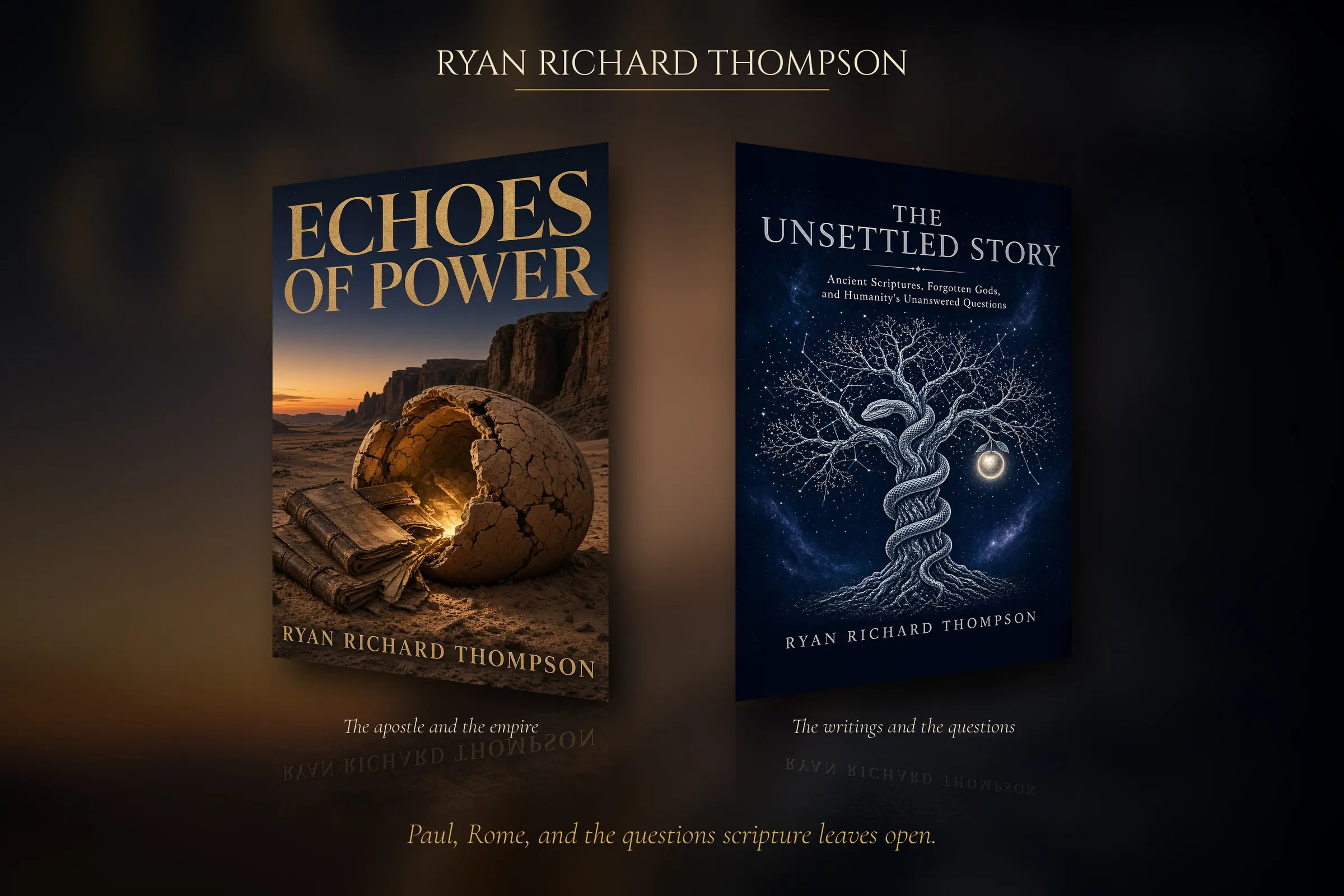
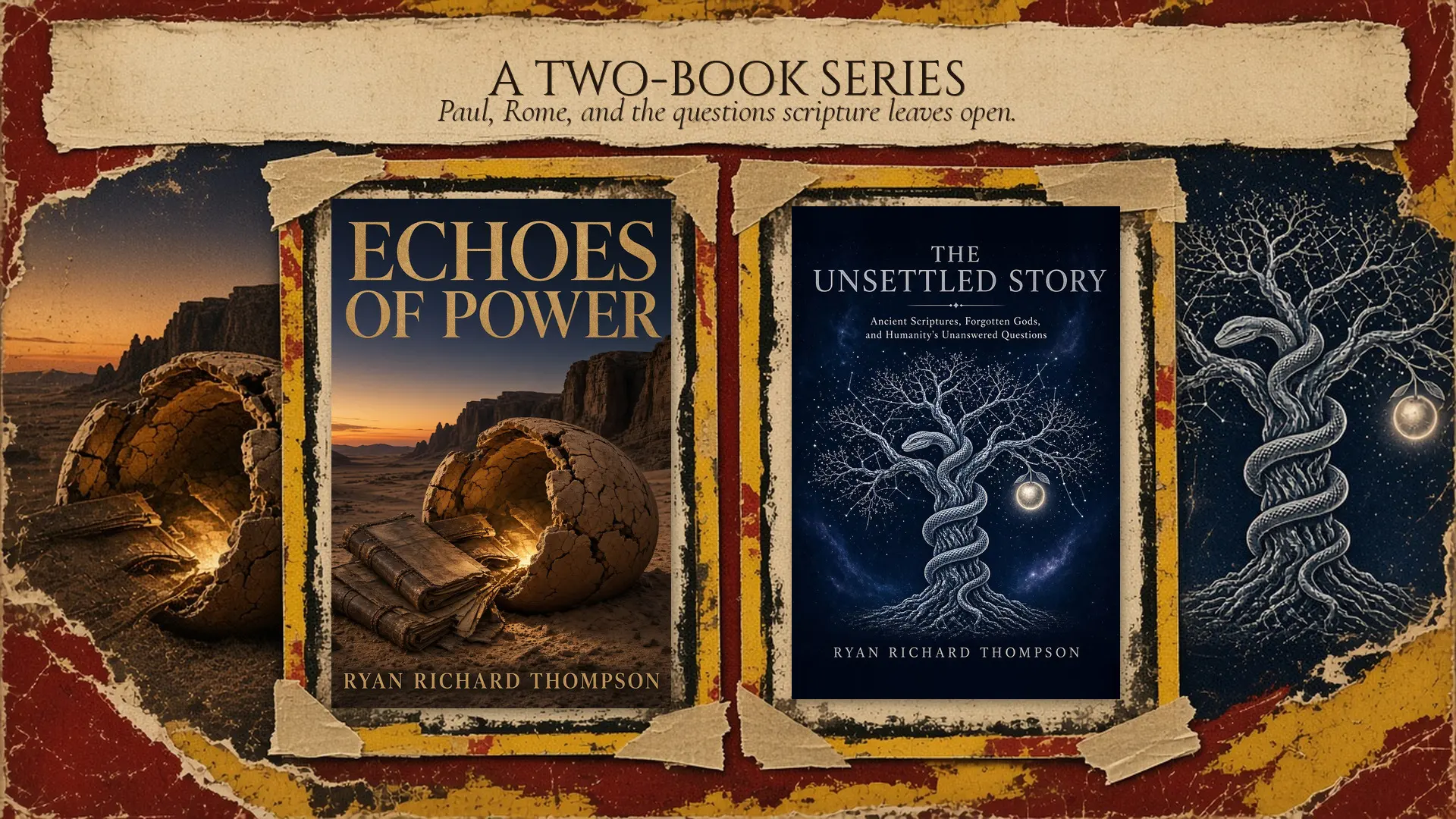
This book is part of a two-book series. Echoes of Power follows Paul, Rome, and the making of the early Church. The Unsettled Story turns to ancient scriptures and the questions they leave open. Both are at the Disruptarian shop: buy Echoes of Power and buy The Unsettled Story.
Two versions of the theory, and what came after
The theory comes in two sizes. The strong version says Paul was Rome’s man, placed and protected by the empire. The soft version says Paul’s accommodation with Rome served the empire whether or not anybody planned it, and that the church which came out on top inherited that accommodation and, three centuries later, a good deal of Rome’s machinery with it.
Part One follows Paul from the high priest’s service to Nero’s Rome and tests both versions against what his letters and the Book of Acts actually say. It starts with the Roman governors who appointed and removed Judea’s high priests, then follows Saul from enforcer for that priesthood to the apostle who wrote Romans 13 and found friends in Caesar’s household. The book opens in Jerusalem, with a high priest who had to get his own robes from a Roman officer.
Part Two follows the Church from the arena to the palace, from the Christians Nero burned in 64 to a Christian emperor ordering books burned about twenty years after the Edict of Milan. It traces Constantine and the Council of Nicaea, the councils that decided which books made the Bible, the gospels and texts left out, the edits in the manuscript margins, and a Roman Church that put on the mitre.
A few ground rules run through the whole book. When something is my guess, I call it my guess. When an idea belongs to a scholar, I name him and tell you whether most of his colleagues agree. Bible quotations come from the World English Bible. Josephus is quoted in Whiston’s translation. This edition adds a timeline, 256 endnotes, a bibliography, and a glossary.
I needed to write this edition before I could write the next one honestly. I collect ancient religious writings at ClovisStar.com, including a lot of books that never made it into anybody’s Bible, and The Unsettled Story is about what those writings say. Before I could read them honestly, I needed to know who drew the line around the Bible, and who held the power when they drew it. That is this book. The first edition was not strong enough to carry that weight. The second one is the book I was trying to write the first time, after I was willing to show my mistakes.
If you have been told that early Christianity was simply a story of faith rising against the world, or simply a story of empire inventing a religion, I think both of those shortcuts fail. The sources are harder than that. Paul’s letters and Acts do not always tell the same story the same way. Josephus is not a footnote. Councils are not magic, and they are not nothing. I would rather put the evidence in order and let a reader see where the strong claim ends and the softer one begins.
Nothing in these pages is aimed at anyone’s faith in Christ, and that goes for Catholics as much as anyone. My argument is with power, and with what it did to a movement that started out on the wrong end of it. If you read early church history, the historical Paul, or the formation of the biblical canon, this is the book I wrote after I was willing to correct myself in public.
More books by Ryan Richard Thompson
- This Ragged Life Renewed: A memoir of rebellion, faith, loss, and starting over.
- The Unsettled Story: Ancient scriptures and the questions they leave open.
- The Transparent Future: A novel about trust in a city that measures honesty.
- Pillars of Strength: Fatherhood, family distance, and the weight of truth.
- The Gravity of Sacrifice: A published Mars novel about a father and the cost of going.
- The Weight of Evidence: What research can and cannot say about parental alienation.
Buy the book: Echoes of Power, Second Edition is available in paperback, hardcover, and ebook at the Disruptarian shop.
Leave a Reply