
Fatherhood looks simple when a house is still full. It looks different when the connection you meant to keep starts to thin, and you have to decide whether to tell the truth about that distance or hide it behind slogans. Pillars of Strength is my honest reflection on hands-on fatherhood, family separation, and the hope of keeping a loving connection alive.
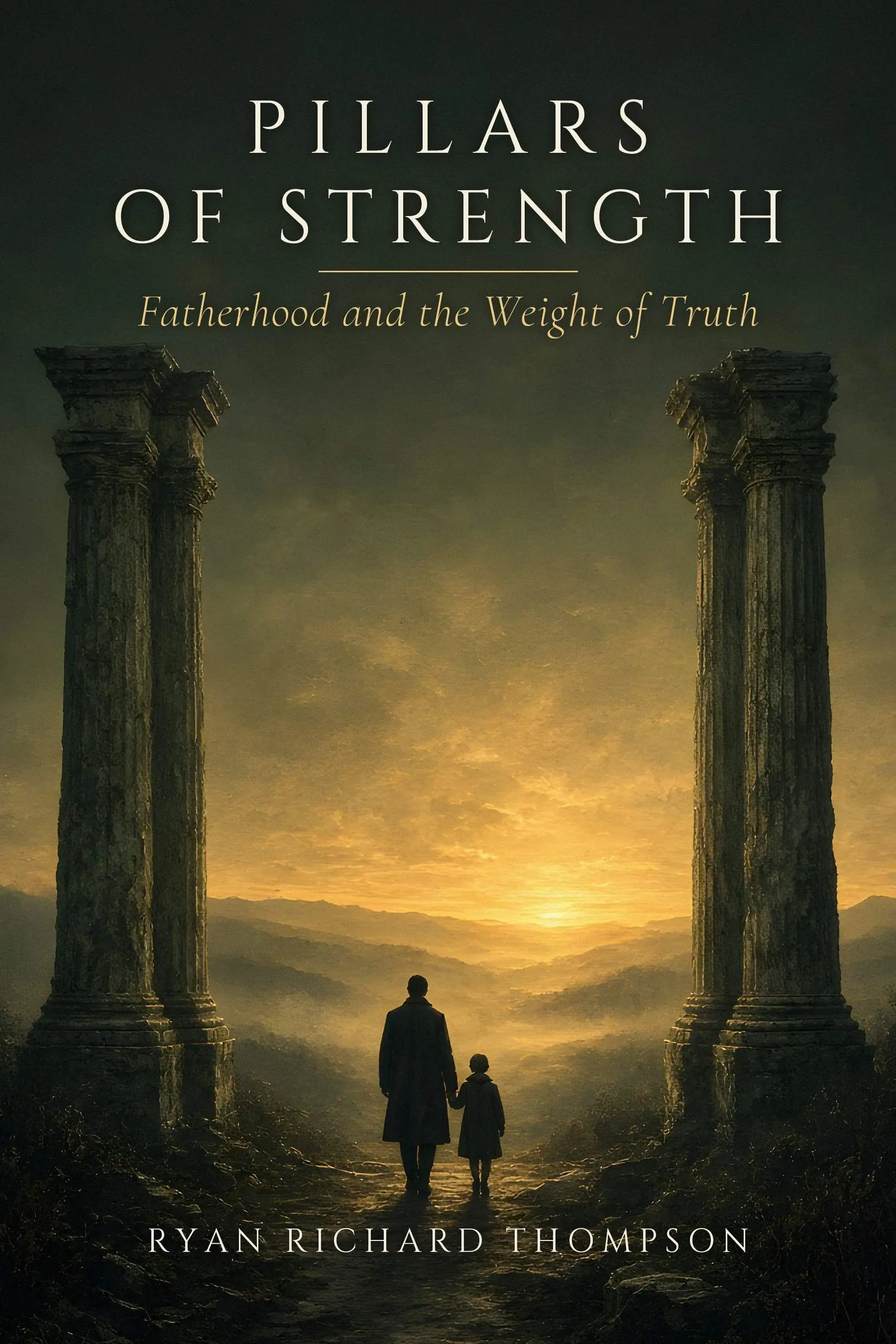
The introduction is called “The Family I Thought I Could Hold Together.” That title is the most accurate one I could give the years this book describes. I thought presence, work, and love would be enough to keep a family close. The book is about what happened when they were not, and about the kind of father I am still trying to be on the other side of that discovery.
The first version of Pillars of Strength was direct and angry in places. I was close to the events, and the writing showed it. This edition does not pretend those feelings never existed. It also does not leave the book there. I wanted a record that my children, if they ever read it, could recognize as an attempt to be fair. I am not using them as a jury. I want them to recognize that the good years were real. I also want them to see that I understand they may remember the difficult years differently. This is my account of the distance that grew between us, not a claim that I can speak for every person involved.
Four paired pillars
Across twenty-one chapters, the book traces the pillars a father stands on. They come in pairs: truth and responsibility, presence and discipline, courage and humility, liberty and forgiveness. They are not a new system I invented and then forced onto the story. They are the names the final part already gives to the qualities I have been trying to practice.
Truth, in this book, is not a performance. It includes the willingness to remember what I got wrong, and to keep evidence close enough that memory cannot drift into a more convenient version of events. “Evidence is a pillar of truth,” I wrote. “It keeps memory honest, at least when we use it carefully.” Responsibility means I do not get to outsource the cost of my choices, or treat other people’s pain as a talking point.
Presence and discipline belong together because showing up is not the same as being useful. Courage and humility belong together because it is easy to be loud and hard to admit limits. Liberty and forgiveness belong together because a child is not a possession, and because a father who talks about freedom has to mean it when the relationship is no longer under his control.
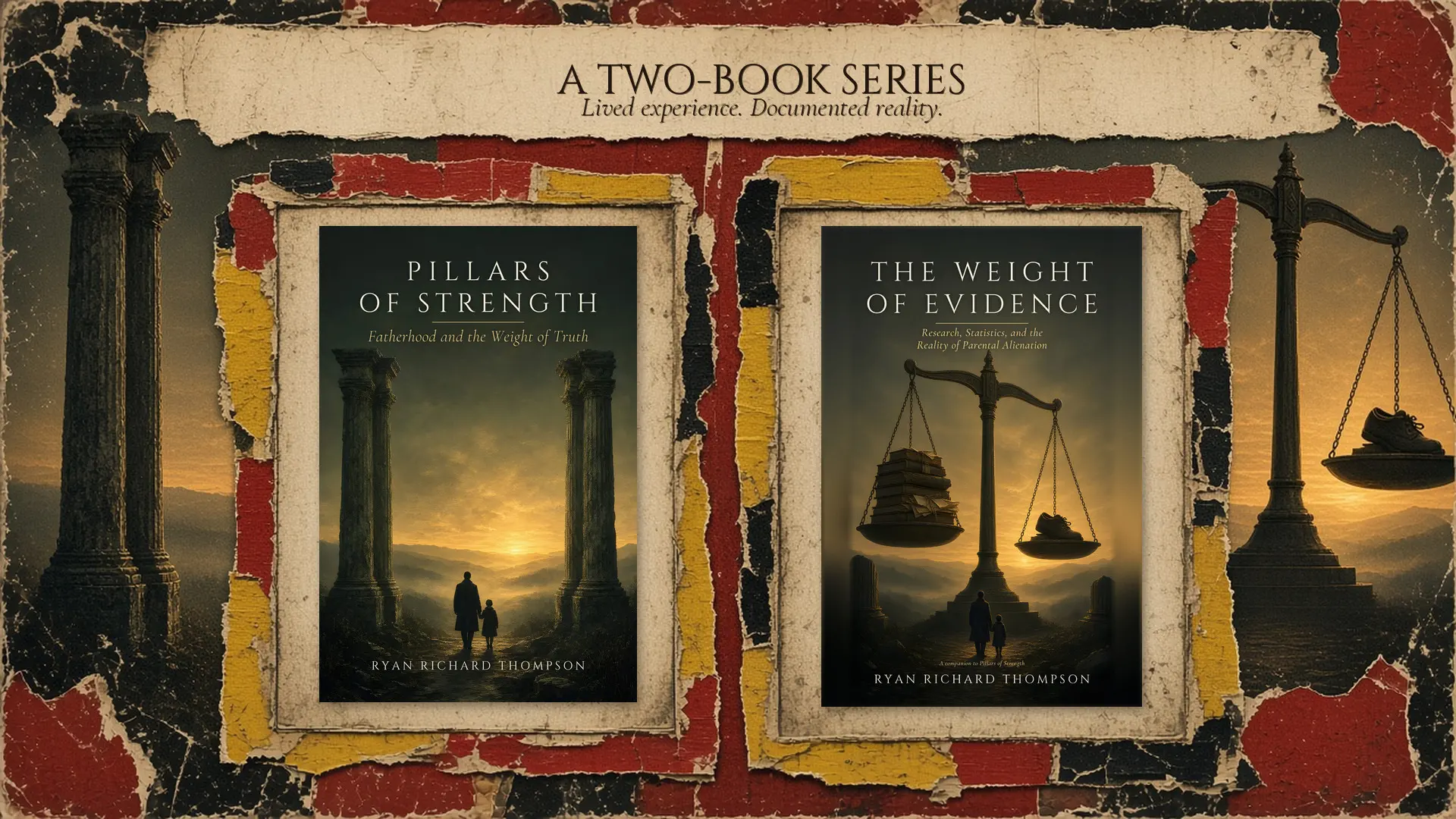
This book is part of a two-book series. Pillars of Strength is the lived account of fatherhood, family distance, and the weight of truth. The Weight of Evidence asks what research can and cannot say about parental alienation. Both are at the Disruptarian shop: buy Pillars of Strength and buy The Weight of Evidence.

The father I inherited, and the father I am trying to be
The book begins with the father I inherited. I learned what a man was supposed to be by watching my dad, Richard Thompson. He had flaws, serious ones, but he worked. He got up and did what needed doing even when the family situation was anything but peaceful. He worked for Granite Construction in Arizona before a serious accident in 1982 changed the course of his life. Our family moved through difficult circumstances, including time in Fountain Green, Utah. Later he worked at Geneva Steel, sometimes through shifts that seemed to go on forever, sometimes sixteen hours. The house depended on his work, and he knew it. I admired the grit in that. I also missed him.
That opening is not nostalgia. It is the first place I had to tell the truth about provision and absence in the same breath. The rest of the book follows that problem into my own fatherhood: the years when we were close, the choices I made, the warning signs I remember, the legal and family disputes, and the uncertainty that remains. I still believe these subjects deserve careful treatment. What I can offer here is more than an argument. I can describe a life.
I still believe these subjects deserve a book, and not only as a private complaint. Family separation, delayed contact, and the hope of remaining a father in a child’s life are not abstract themes to me. They are the last and hardest chapter of a family story that also had good years. I did not want the last chapter to erase the first ones. If this book has a hope, it is that a loving connection can remain possible even after a household is no longer together, and that telling the truth is part of that hope, not an attack on it.
Readers looking for a manual of slogans will be disappointed. The pillars are practices, and practices can fail. I describe warning signs I remember, legal and family disputes, and the uncertainty that remains. I do not claim I can see a child’s inner life from the outside. I do claim that a father owes a careful record of his own conduct, and that presence means more than winning a point.
A personal account has limits. It is one person’s memory, one person’s documents, one person’s understanding of events. It cannot settle every question about another person’s motives or a child’s inner life. That is why I later wrote a second book, The Weight of Evidence, about what published research can and cannot say about parental alienation. Pillars of Strength is the lived account. It is for readers who want a father writing in his own name, without turning his children into exhibits, and without pretending that hope is the same thing as a happy ending.
The Lulu listing calls the book a reflection on fatherhood and the weight of truth, and that is the right emphasis. Truth without love becomes a brief. Love without truth becomes a story that cannot bear contact with the people it is about. I tried to write in the space between those failures. Forgiveness, in the last pairing of pillars, is not a demand I get to make of my children. Liberty, in that same pairing, means I do not get to own the outcome of their lives. If the book has a use for other fathers, I hope it is that combination: stay present, tell the truth, and do not pretend you can hold a family together by force of will alone. The book is short on purpose. It is not an encyclopedia of family law. It is one father’s attempt to name the ground he still has to stand on, even when the house is no longer his to hold together.
More books by Ryan Richard Thompson
- This Ragged Life Renewed: A memoir of rebellion, faith, loss, and starting over.
- Echoes of Power: Paul, Rome, and the making of the early Church, with the first edition’s mistakes corrected in the open.
- The Unsettled Story: Ancient scriptures and the questions they leave open.
- The Transparent Future: A novel about trust in a city that measures honesty.
- The Gravity of Sacrifice: A published Mars novel about a father and the cost of going.
- The Weight of Evidence: What research can and cannot say about parental alienation.
Buy the book: Pillars of Strength is available at the Disruptarian shop.
Leave a Reply